-
-
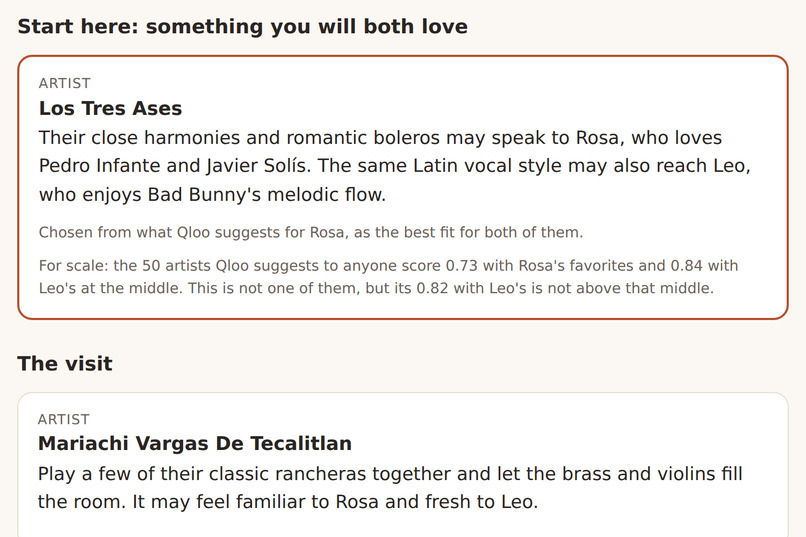
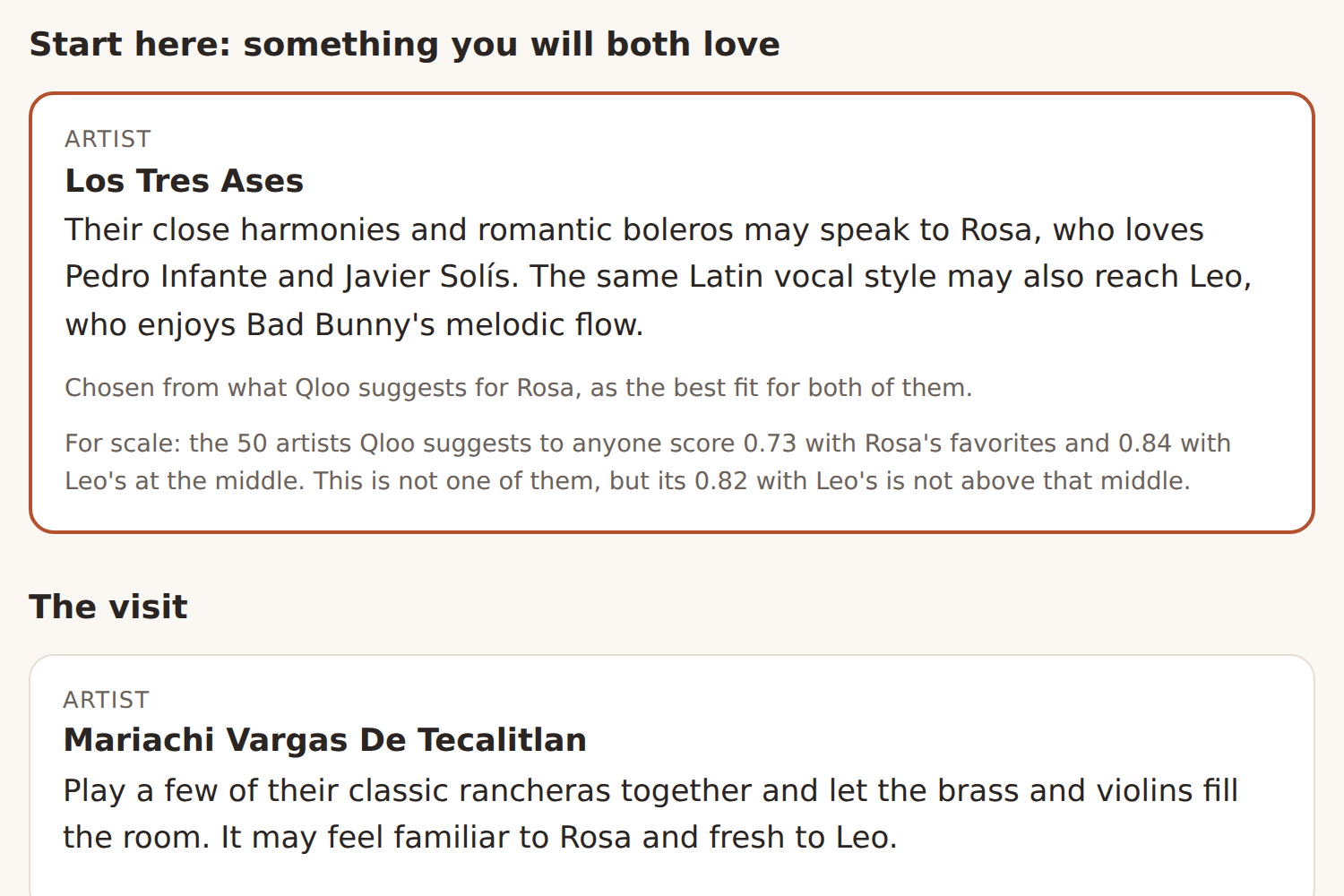
Start here: the one thing both may love, picked by a rule in code from what Qloo suggests for the grandparent.
-
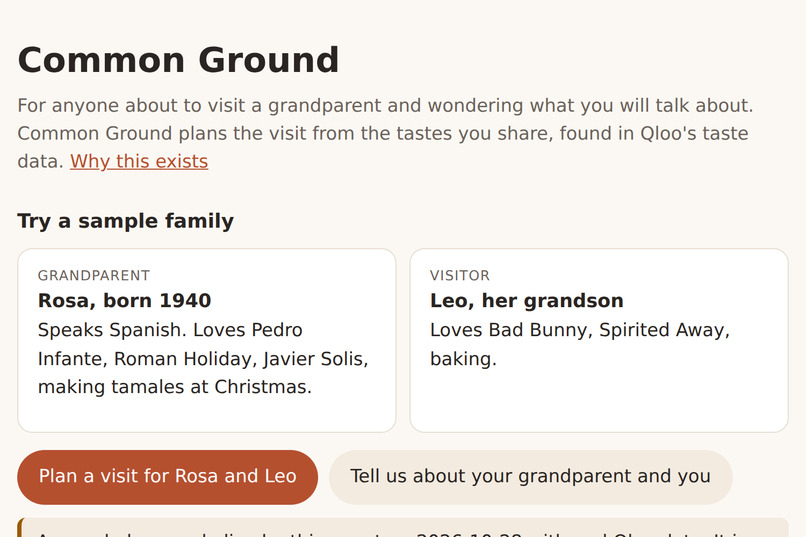
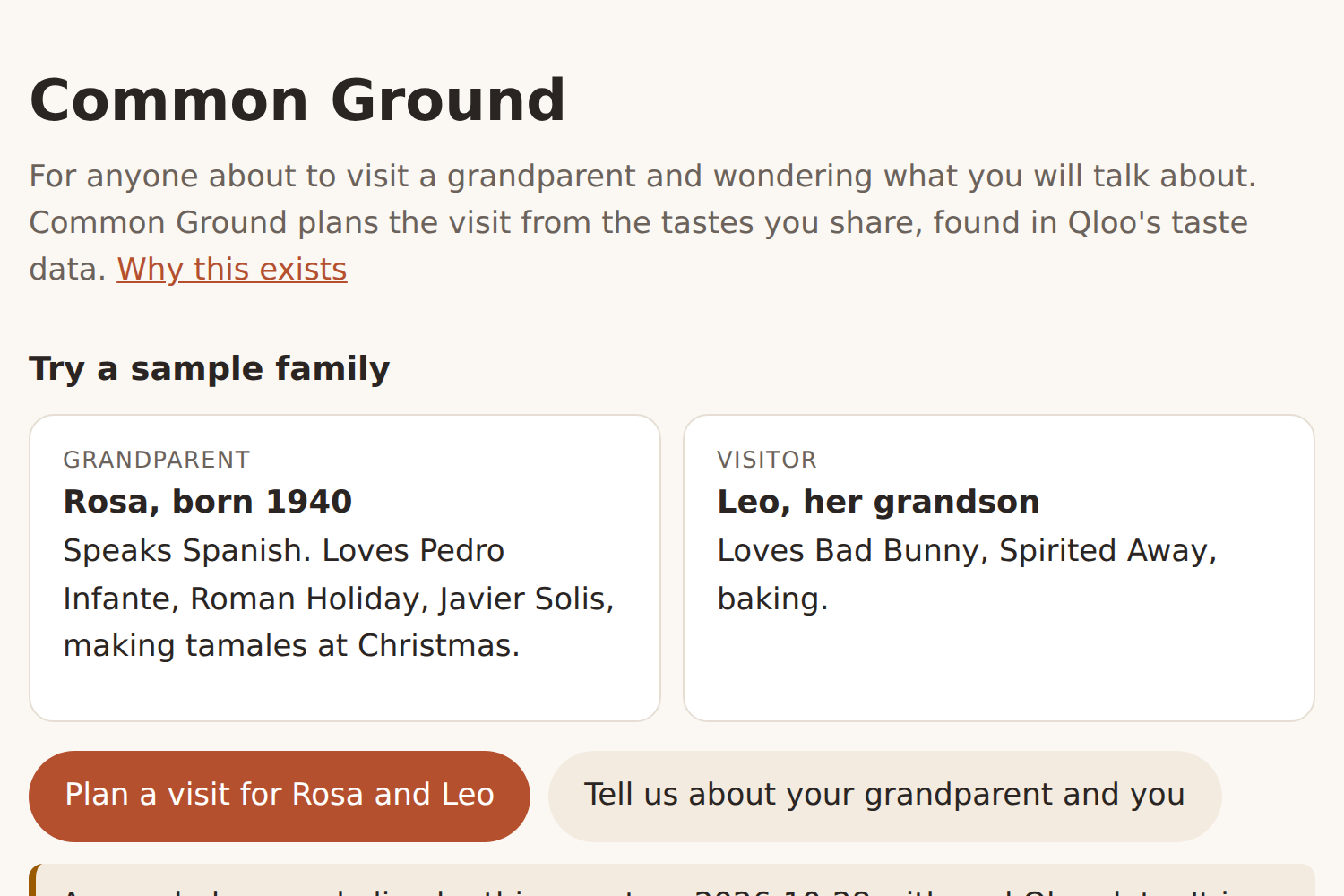
The first screen: the sample family, Rosa and Leo, and the two ways to start a plan.
-
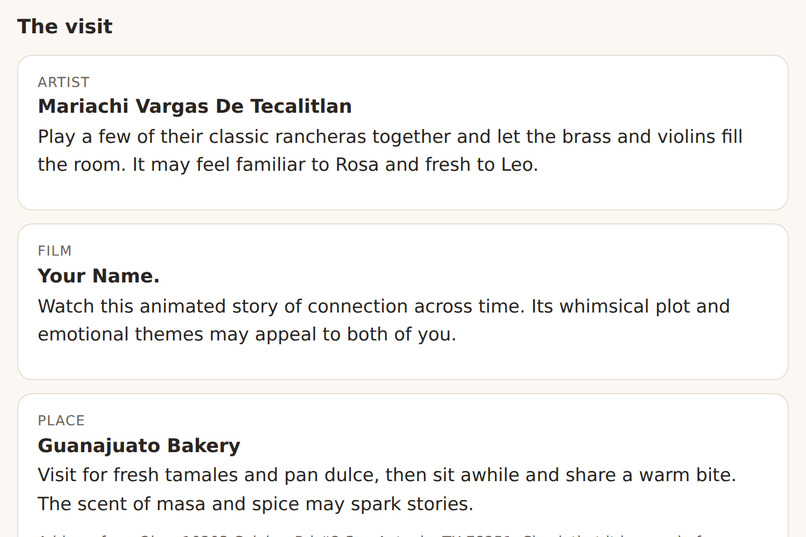
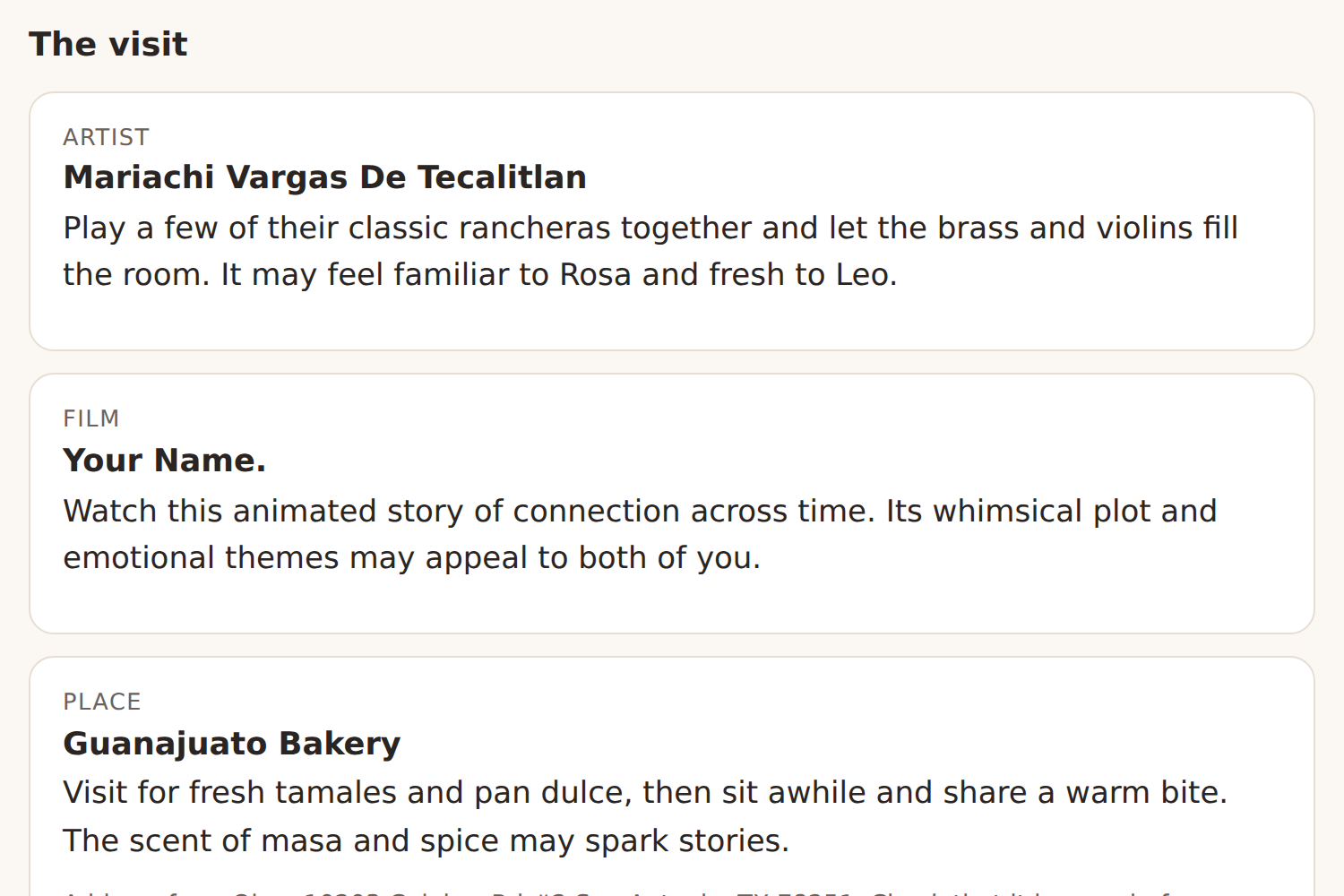
The visit: things to do together, each card naming the Qloo evidence it came from.
-
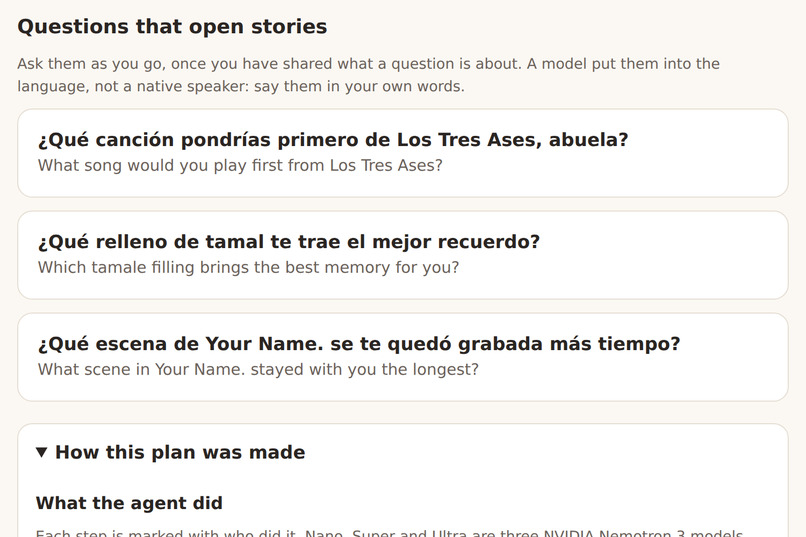
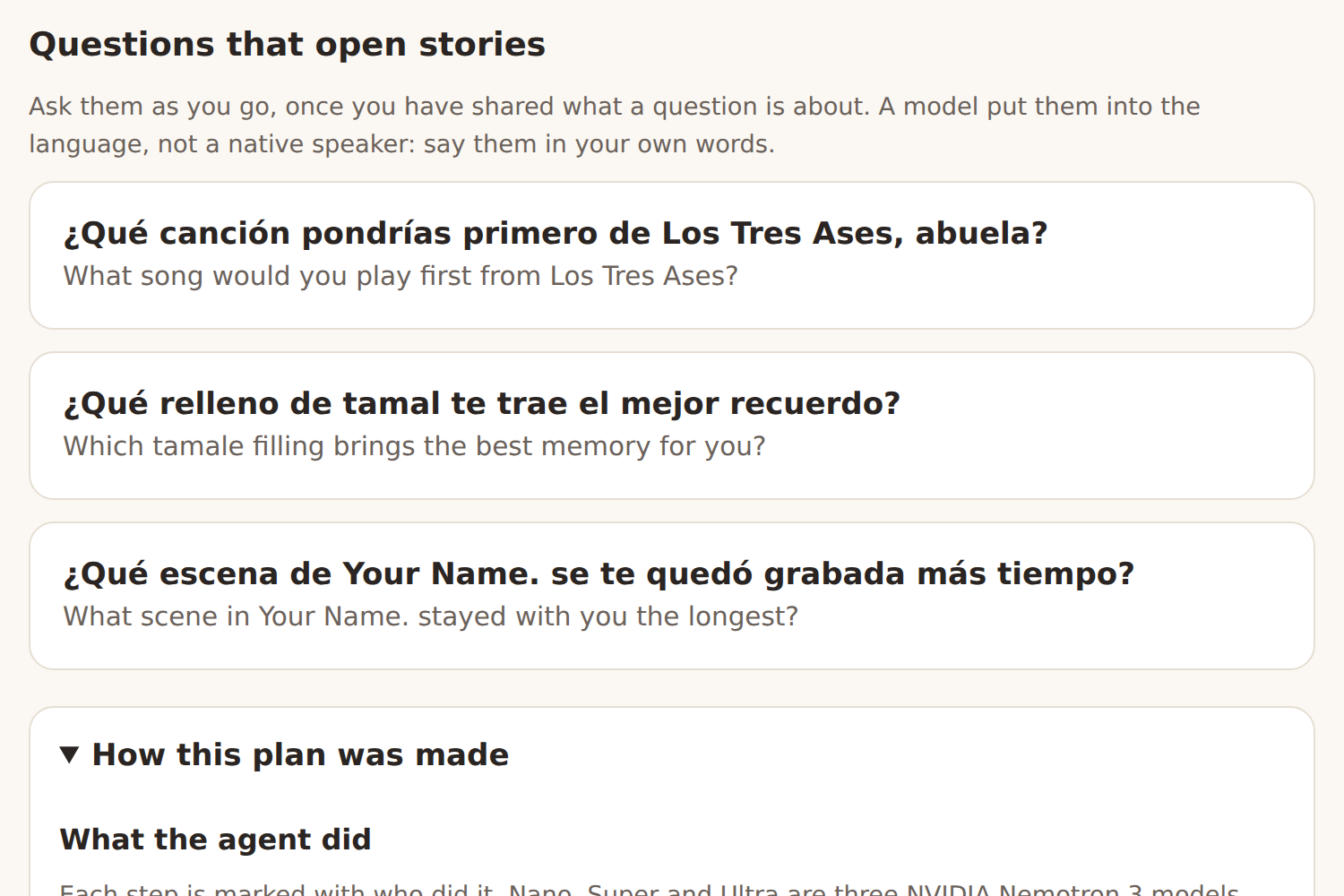
Questions that open stories, in the grandparent's language with the English beside them.
-
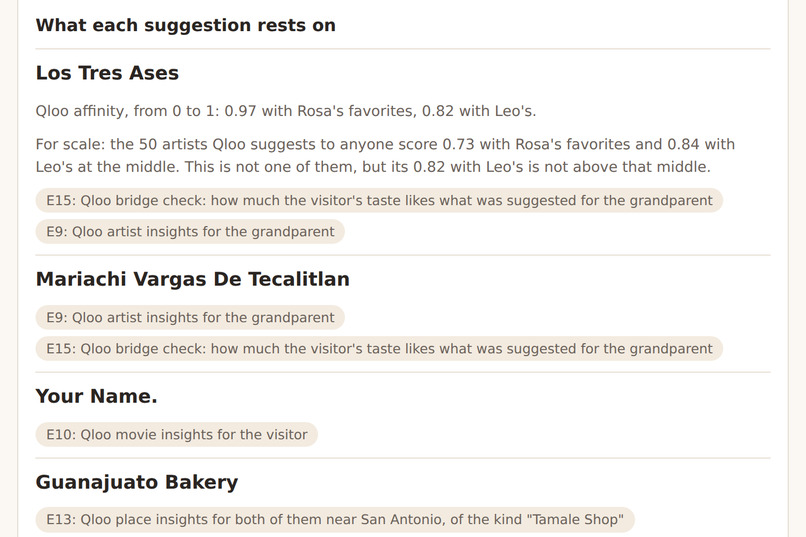
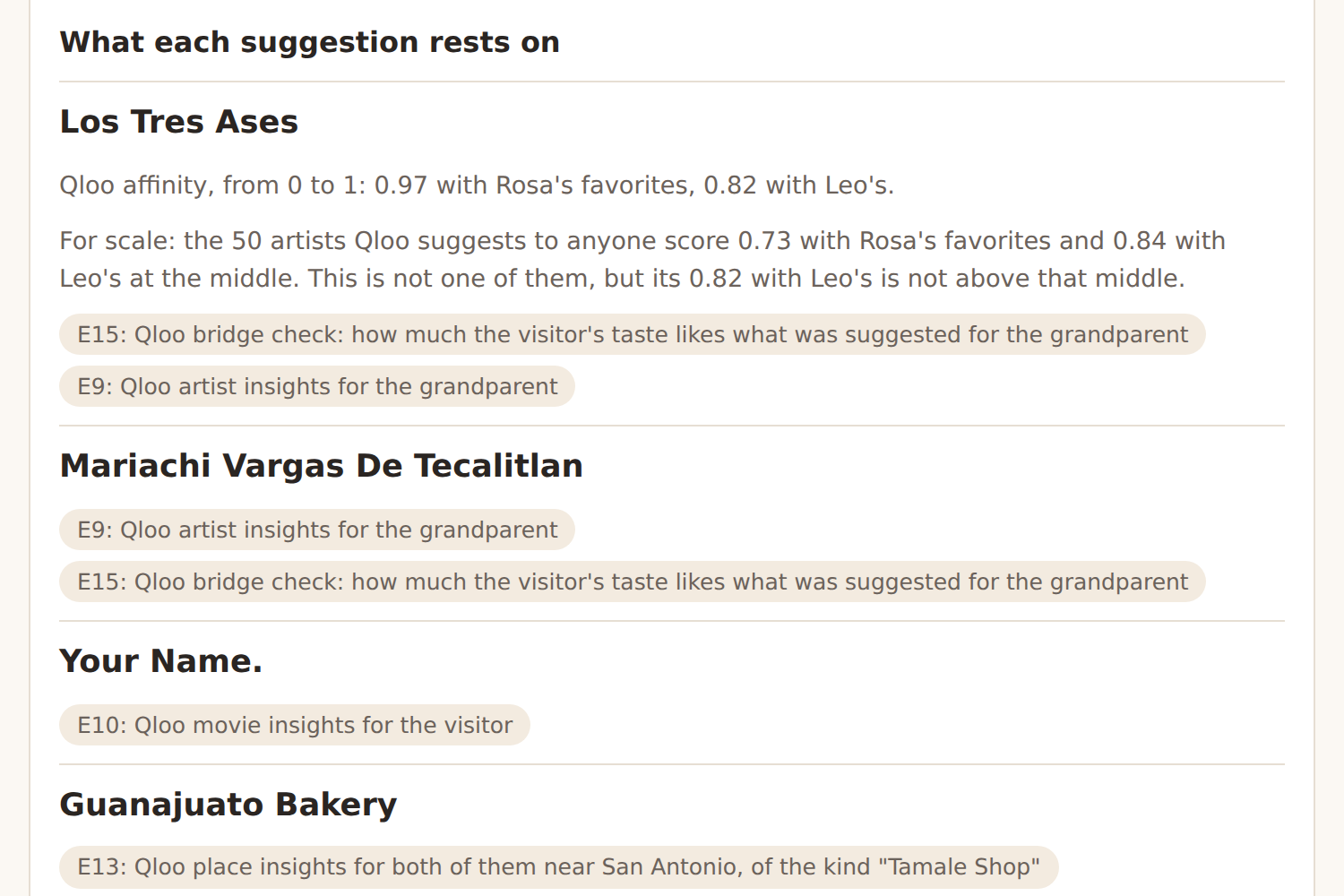
One click away: what each suggestion rests on, with Qloo's affinity for each person and the scale it is held against.
-
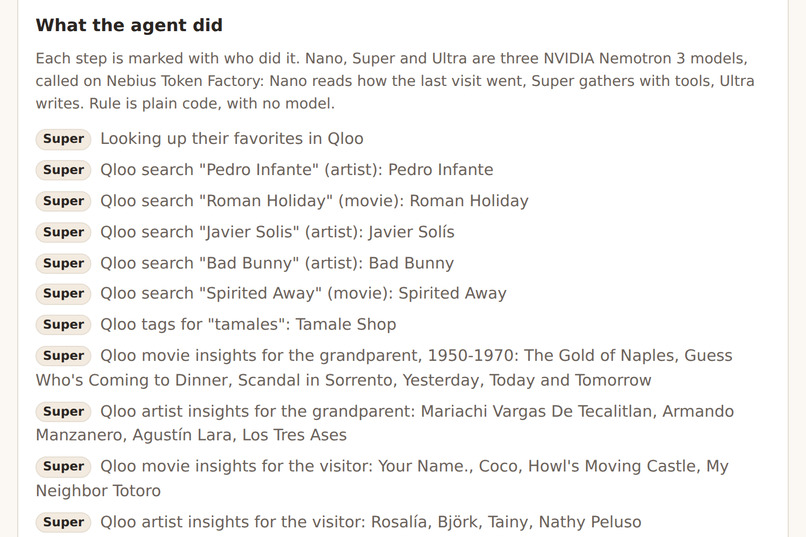
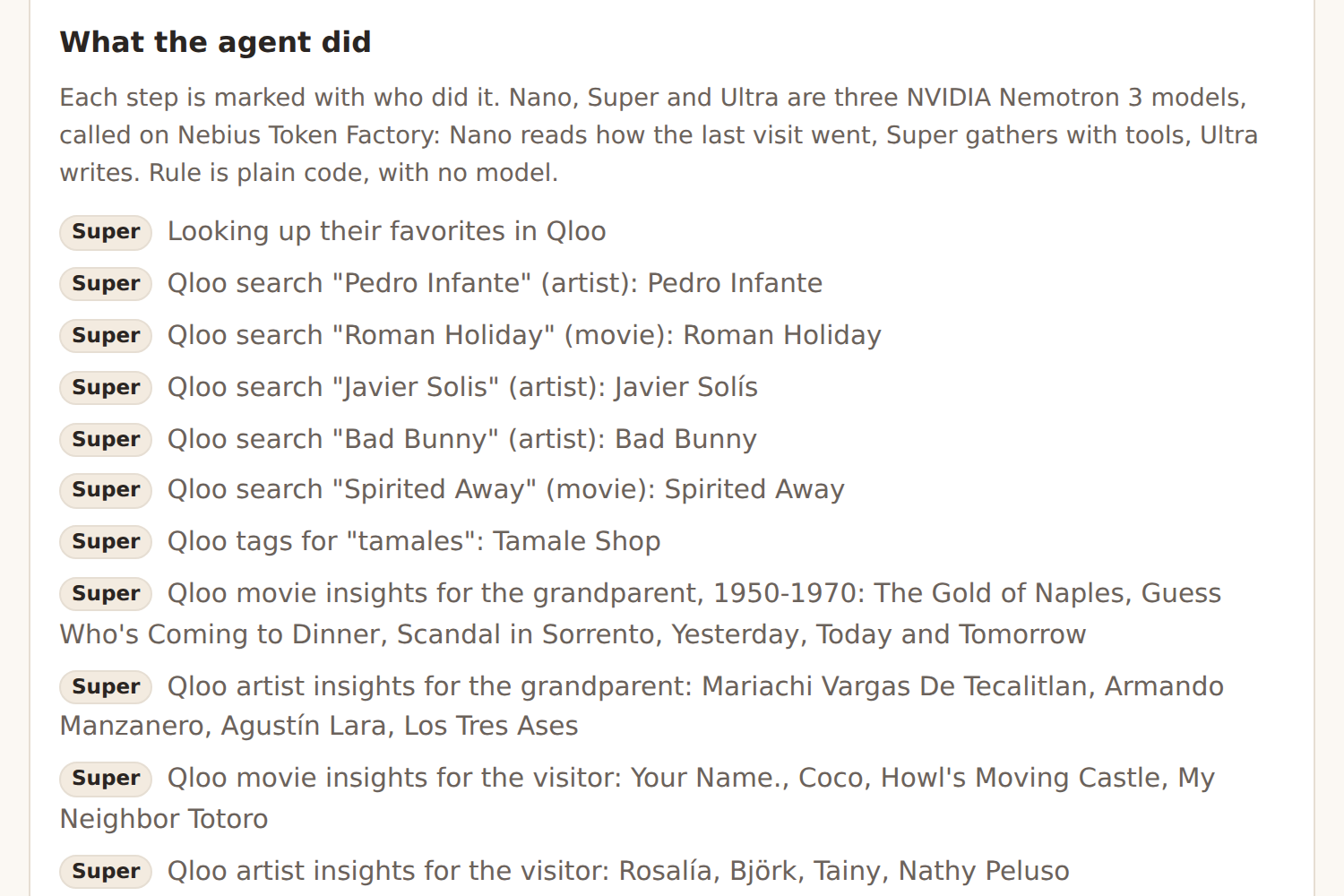
What the agent did: each step marked with the Nemotron model or rule that did it, every Qloo call included.
Why
A visit to a grandparent matters, and it is easy to put off. The distance is real, and so is the worry about what you will talk about once you are there. The World Health Organization estimates that social isolation affects "up to 1 in 3 older adults". In AARP's 2026 study of grandparents in the United States, 29% named "500 miles or more" as how far they live from a grandchild. Common Ground cannot shorten the distance. It can make the next visit easier to begin.
What it does
Give two short lists of favorites, your grandparent's and your own, with a birth year, a language and a city. Common Ground returns one small plan: a thing to start with that you may both love, up to four things to do together, and three questions that open stories, in your grandparent's language with the English beside them. After the visit you tick what landed, and the next plan follows it.
The sample family on the page: Rosa loves Pedro Infante and Javier Solís, and her grandson Leo loves Bad Bunny. Their visit starts with Los Tres Ases, a bolero trio. Qloo scores it 0.97 with Rosa's favorites and 0.82 with Leo's, and the card says plainly that his 0.82 is not above the middle score of the 50 artists Qloo suggests to anyone.
What makes it Qloo-powered
Ask a language model alone for a song to share with a grandparent and every family gets the same answer: four models gave two songs between them, "What a Wonderful World" and "Somewhere Over the Rainbow". Give it both people's favorites and it does something else. In a test fixed in advance on ten invented families, Nemotron 3 Ultra without Qloo gave a pick for 7, and in 4 of those it handed back one of the grandchild's own favorites as the thing to share.
Common Ground never asks a model what two people might share. It asks Qloo, in about 20 calls to four endpoints (search, insights, compare and tags): what Qloo suggests for each person, films from the years of the grandparent's youth, what the two tastes share, a place in the grandparent's city that serves a dish the family named, and how much the grandchild's taste likes each thing Qloo suggested for the grandparent.
A rule in code, not a model, then picks the bridge: of what Qloo suggested for the grandparent, the one the less keen of the two likes best. Popular things score well with almost any taste, so the bridge is also held against what Qloo suggests to anyone, and its card shows how it fared. In the same test the bridge differed from the plain model's pick in 6 of the 7. In the seventh, the sample family, both named the same film; the bridge now comes only from the grandparent's side, and there it is the bolero trio above, the same in 5 runs out of 5.
Every card shows what it rests on, one click away, and rules in code check each draft: a title Qloo did not return is left out, and nothing Qloo suggests is written as something they already love.
The agent
Three Nemotron 3 models share the work, and the page marks each step with who did it: Nano reads how the last visit went, Super gathers the evidence with Qloo and a web search as tools, each call checked against a schema, and Ultra writes the plan. A plan costs about one US cent and takes 10 to 30 seconds.
Who it is for
Grandchildren who live far away, and bilingual families, where questions in the grandparent's own language matter most. Next I want to try it with people who plan visits for a living, such as activity staff in senior living.
Privacy
The two names stay on your device. Qloo gets the favorites as search words, a word for a dish, the years of the grandparent's youth, an age band and the city, never a name. The site keeps nothing you type, and a test fails if the code stops matching the page's list of what goes where.
Limits
- Live planning is open with no login. To keep it free, each address gets thirty plans a day and the site has a daily budget; past that, the page says so and shows a recorded plan.
- The questions in Spanish and Hindi have not been read by a native speaker yet. The page says so.
- A local event found on the web is a lead to check, never a fact.
- Nobody outside the build has used it yet. A family trying it is the next step.
- It is a helper for a family visit, not a medical tool, and it has not yet been tried with a screen reader.
How it was built
I built Common Ground with Claude, Anthropic's AI model, working in Claude Code. Claude wrote the code, the tests and the first draft of this text. The video's narration is an AI voice, made with the open model Kokoro. I chose the idea, set the rules it worked under, made the decisions and approved each release. The code is open source under the Apache License 2.0, and no Qloo response data is kept in the repository.
Built With
- nebius-token-factory
- next.js
- nvidia-nemotron
- playwright
- qloo
- react
- tavily
- typescript
- upstash-redis
- vercel
- vitest
- zod

Log in or sign up for Devpost to join the conversation.