-
-
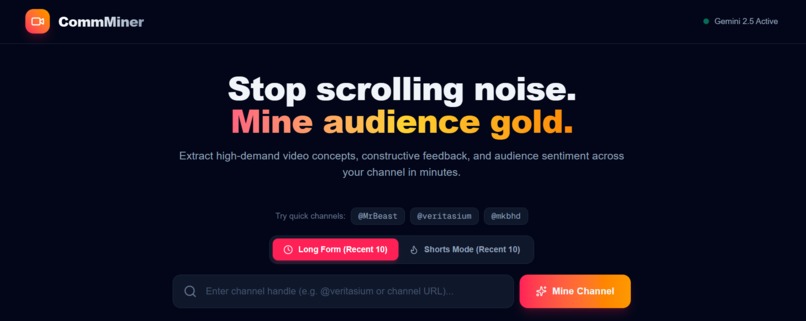
Analyze comments of both long form and short form content
-
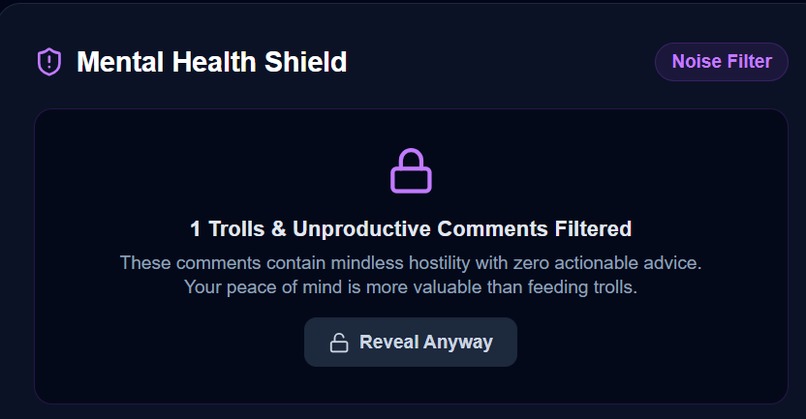
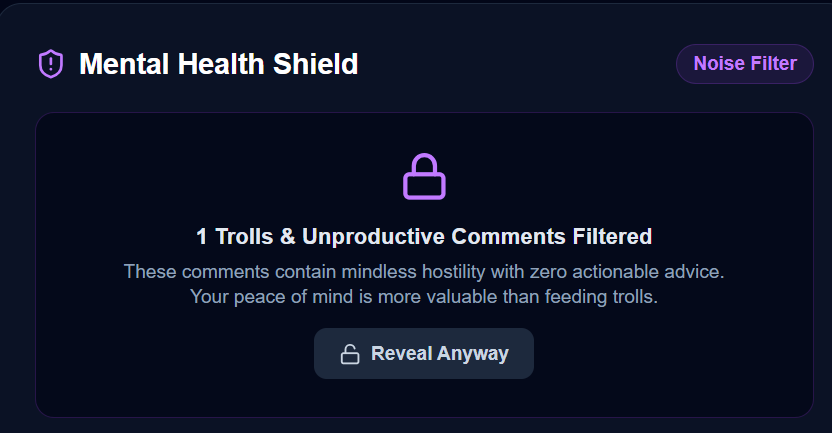
A mental health shield protects the creator from hate comments.
-

An option to get all your channel comment stats in a docs/notion file.
-
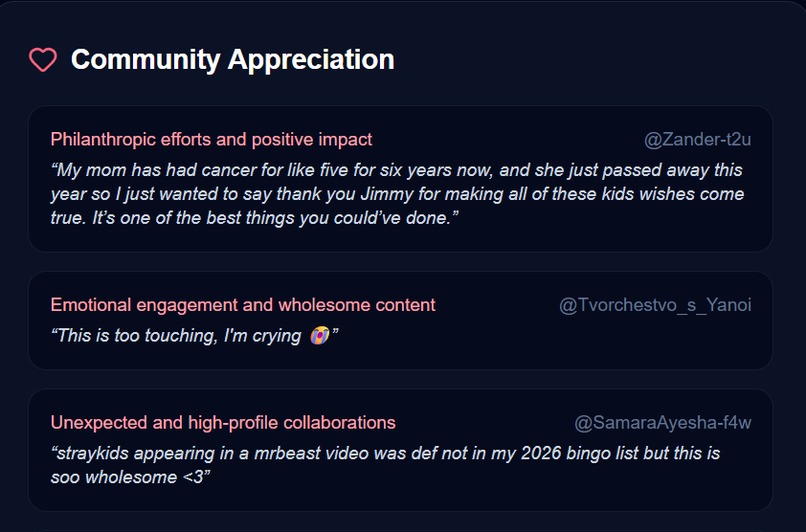
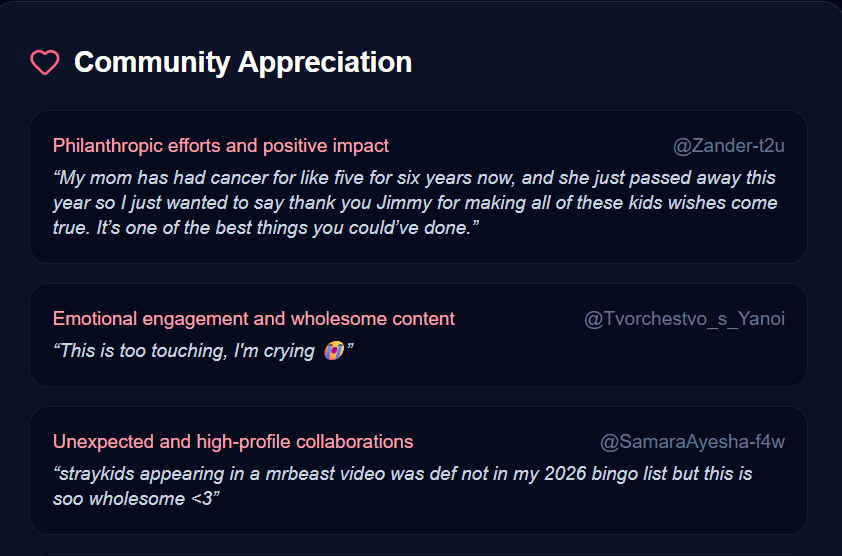
Appreciative comments are summarized to boost the creator's confidence.
-
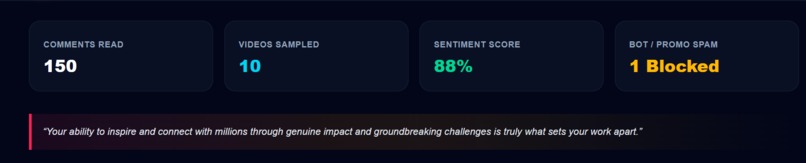
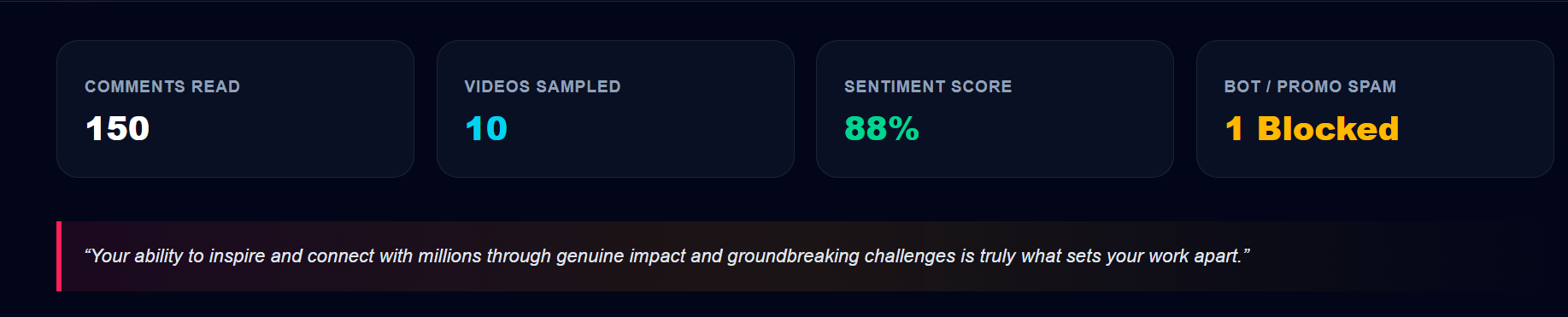
The last 10 videos are analyzed and comments from each video are chosen.
-
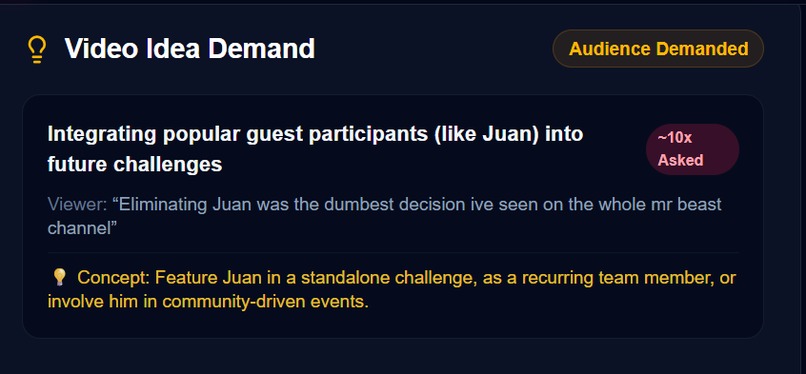
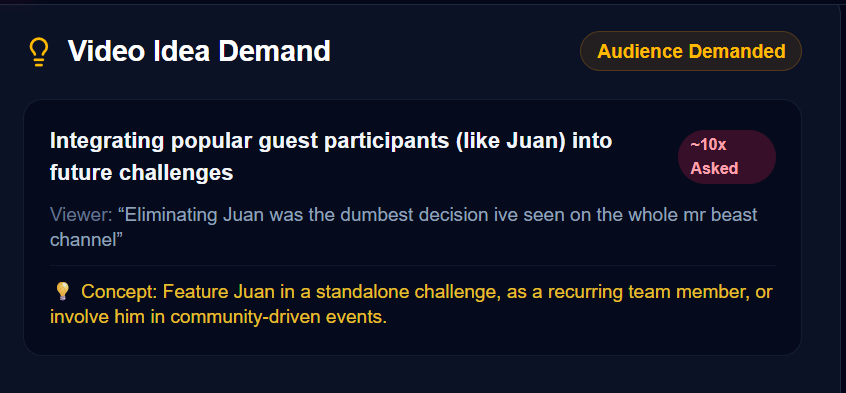
Acts as a bridge telling the viewer's demands to the creator.
-
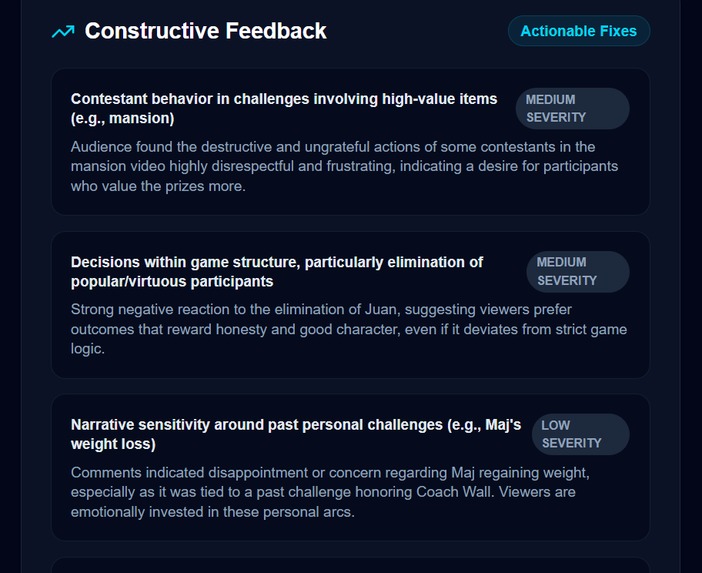
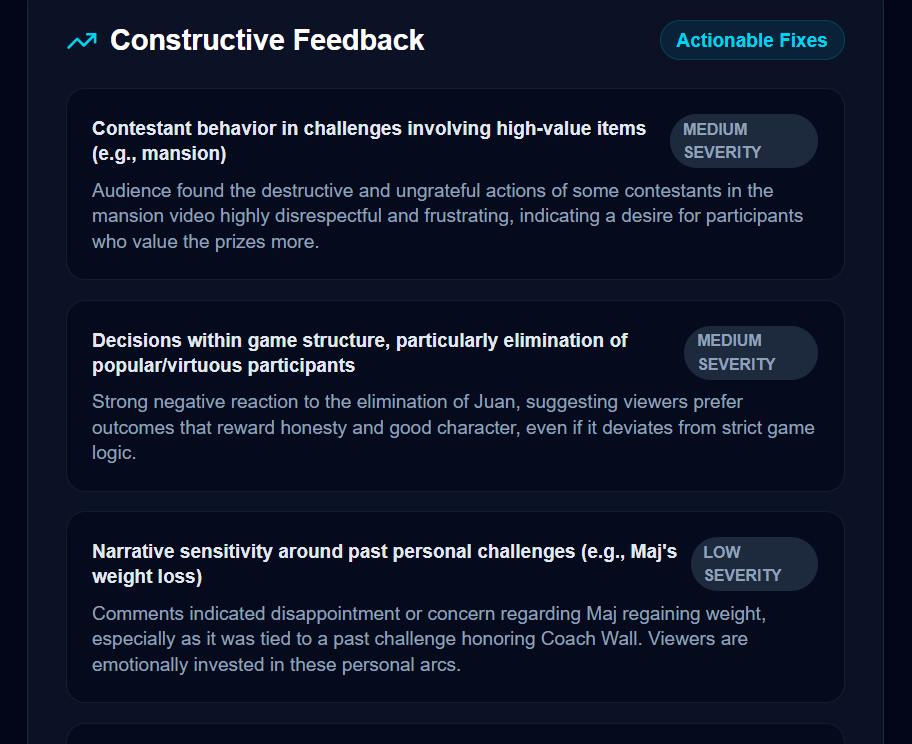
Constructive feedback is always welcome.

Inspiration
Content creation has become an important part of shaping the society's thoughts and opinions. Everyday, millions of people comment on videos sharing their ideas, queries and criticism. The inspiration was to create a bridge between viewers and creators.
What it does
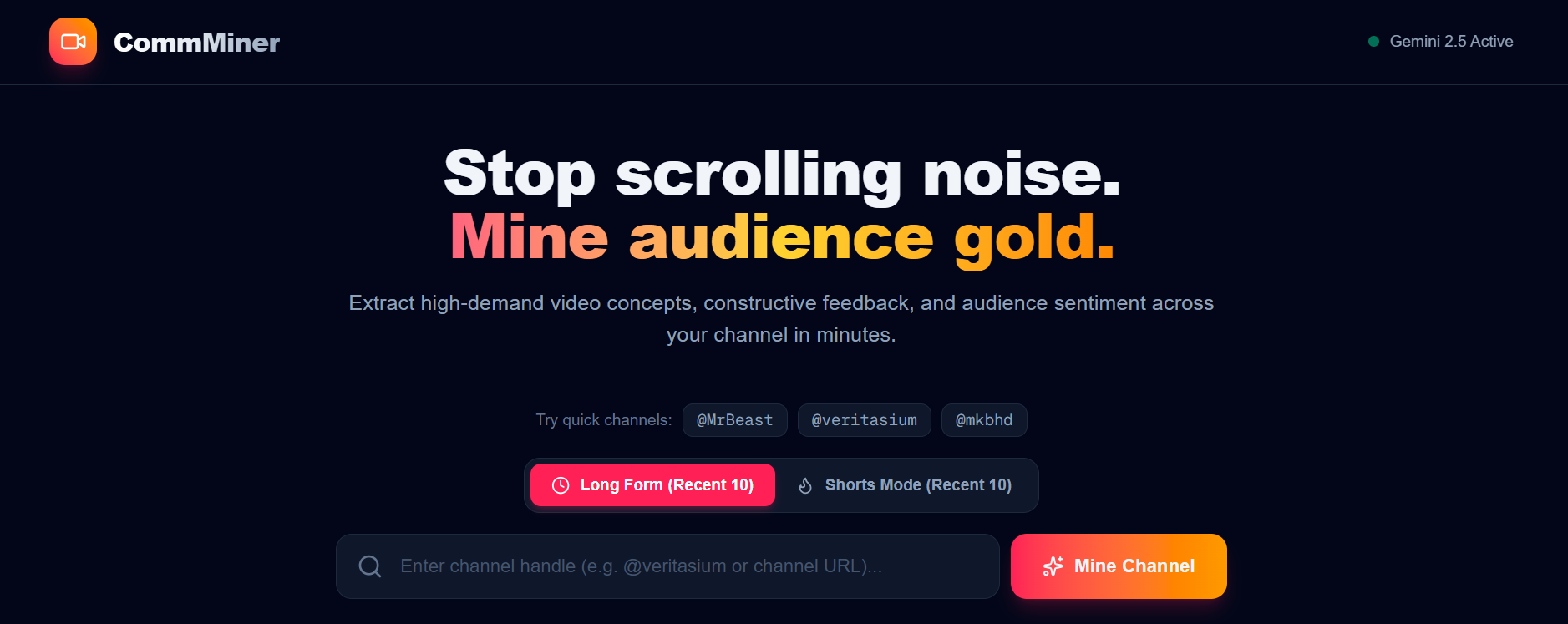
Dynamic Content Sampling: Analyzes the last 10 videos tailored for both Short-Form (Reels/Shorts) and Long-Form content formats via YouTube Data API v3.
Video Idea Goldmine: Clusters repeated audience questions into clear, demanded video concepts with frequency counters.
Actionable Constructive Critique: Filters out fluff to highlight real viewer feedback on technical points, pacing, and clarity (tagged with severity levels).
Mental Health Shield: Protects creator wellbeing by detecting and locking unprovoked hostility behind a wholesome wellness shield.
Bot & Spam Triage: Automatically detects and quarantines copy-paste crypto/promo spam.
1-Click Workspace Export: Generates structured Markdown reports ready to paste directly into Notion, Obsidian, or Google Docs.
How we built it
Frontend: Next.js (App Router), Tailwind CSS, Lucide Icons, responsive dark-mode dashboard deployed on Vercel.
Backend: FastAPI (Python 3), asynchronous endpoints, deployed on Render.
Intelligence Engine: Google Gemini 2.5 Flash with strict JSON schema outputs.
Data Layer: YouTube Data API v3 for high-throughput comment thread and video metadata extraction.
Challenges we ran into
While making this web app, I ran into a few challenges:
YouTube API Quota & Latency Bottlenecks: Initially, making multi-page sequential requests across deep comment threads caused network round-trip delays that took upwards of 2–3 minutes to execute. We solved this by refactoring our extraction pipeline to target the uploads playlist directly, batch-fetching high-signal relevant comment threads across sampled videos to reduce response times from minutes down to 3–4 seconds.
Handling Multilingual Slang & Informal Comments: YouTube comment sections are messy—users write in informal dialects, slang, code-mixed phrases (like Hinglish), and emojis. Crafting structured prompts and response schemas for Google Gemini to accurately differentiate genuine constructive feedback from casual chatter or troll noise required careful schema tuning.
Ensuring Strict Structured Outputs for the UI: Preventing hallucinated markdown or formatting errors in the LLM response was critical for our frontend not to crash. We leveraged Gemini's strict JSON schema enforcement mode (response_mime_type: "application/json") to guarantee deterministic payloads every single time.
Managing Cross-Origin & Asynchronous Deployments: Connecting a containerized FastAPI backend on Render with a serverless Next.js frontend on Vercel introduced CORS configurations, environment variable mappings across production pipelines, and managing cold-start latency gracefully.
Accomplishments that we're proud of
Extracting subtle multilingual nuances (including conversational Hinglish and informal slang) and structuring them into clean video concepts.
Optimizing data extraction to process over 150+ raw comments and return a fully structured intelligence dashboard in under 4 seconds.
Designing the Mental Health Shield to help creators focus on productive critique while shielding them from toxic noise.
What we learned
Audience-Centric AI Architecture: We learned that the most impactful creator tools don't try to replace human creativity with generic AI scripts—they streamline the tedious discovery and pre-production phase by turning qualitative audience feedback into quantitative insights.
Full-Stack Performance Engineering: Balancing heavy API consumption with fast frontend rendering taught us how to optimize payload sizes, write efficient asynchronous backend endpoints in FastAPI, and build responsive, accessible dark-mode UIs with Next.js and Tailwind CSS.
The Importance of Mental Health in Creator Tech: Building the Mental Health Shield taught us the value of thoughtful UX design. Protecting a creator's mental space by isolating unconstructive troll comments while elevating constructive critique creates a far healthier creator workflow.
What's next for CommMiner
YouTube Studio OAuth integration to correlate comment sentiment spikes directly with retention drops and CTR changes. Multi-platform expansion to support Instagram Reels and TikTok comment scraping.
Built With
- fastapi
- git
- google-gemini-api
- next.js
- python
- react
- render
- tailwindcss
- typescript
- uvicorn
- vercel
- youtube-data-api


Log in or sign up for Devpost to join the conversation.