-
-
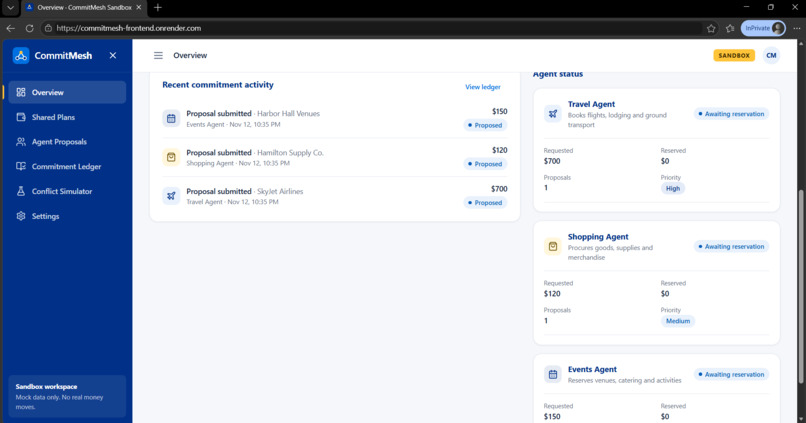
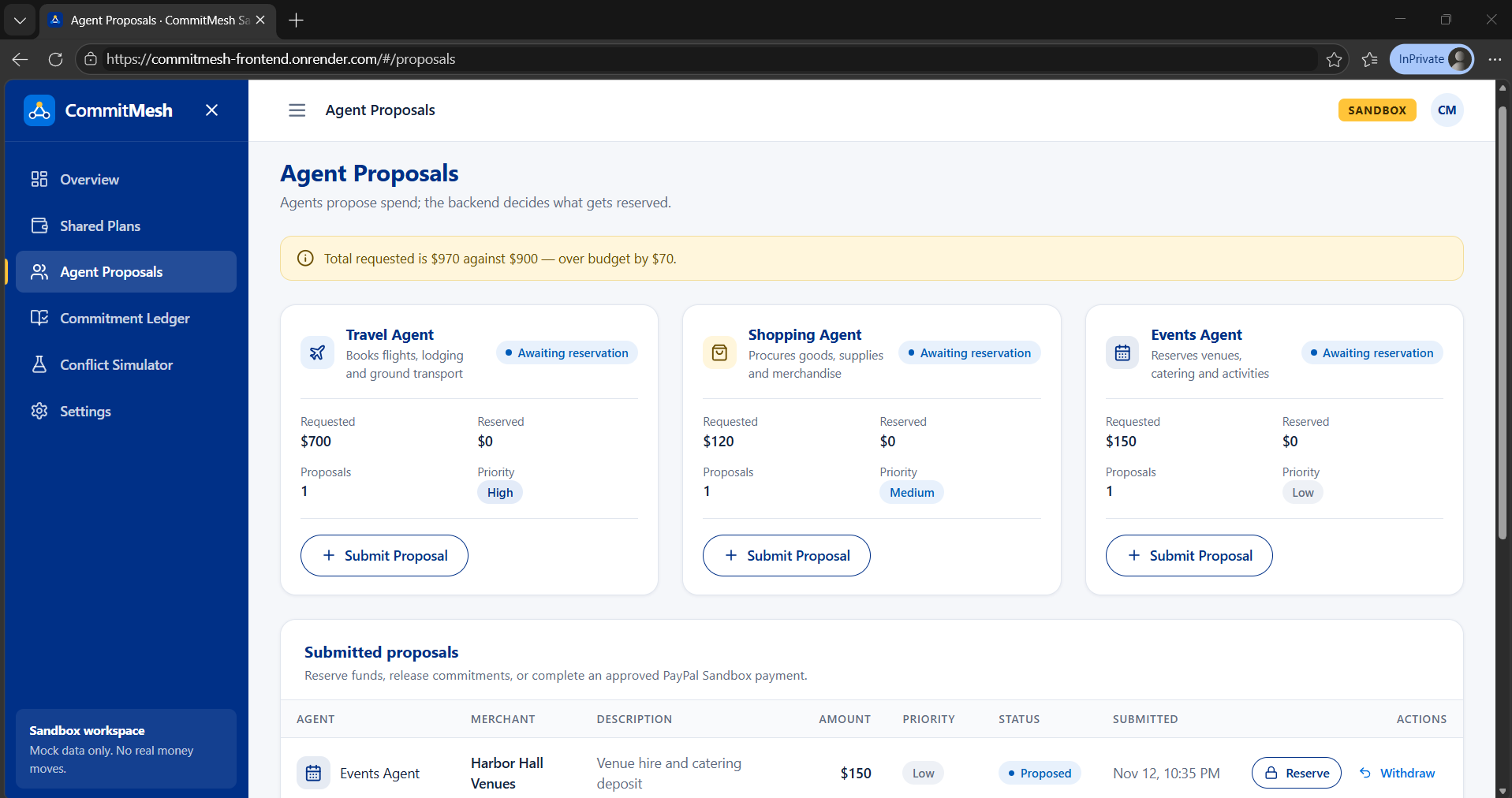
2 -- The 3-AI Agents Individual Intelligent decisions
-
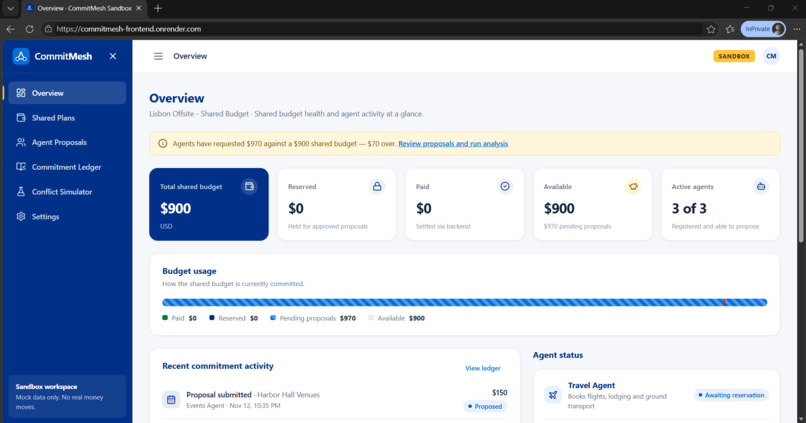
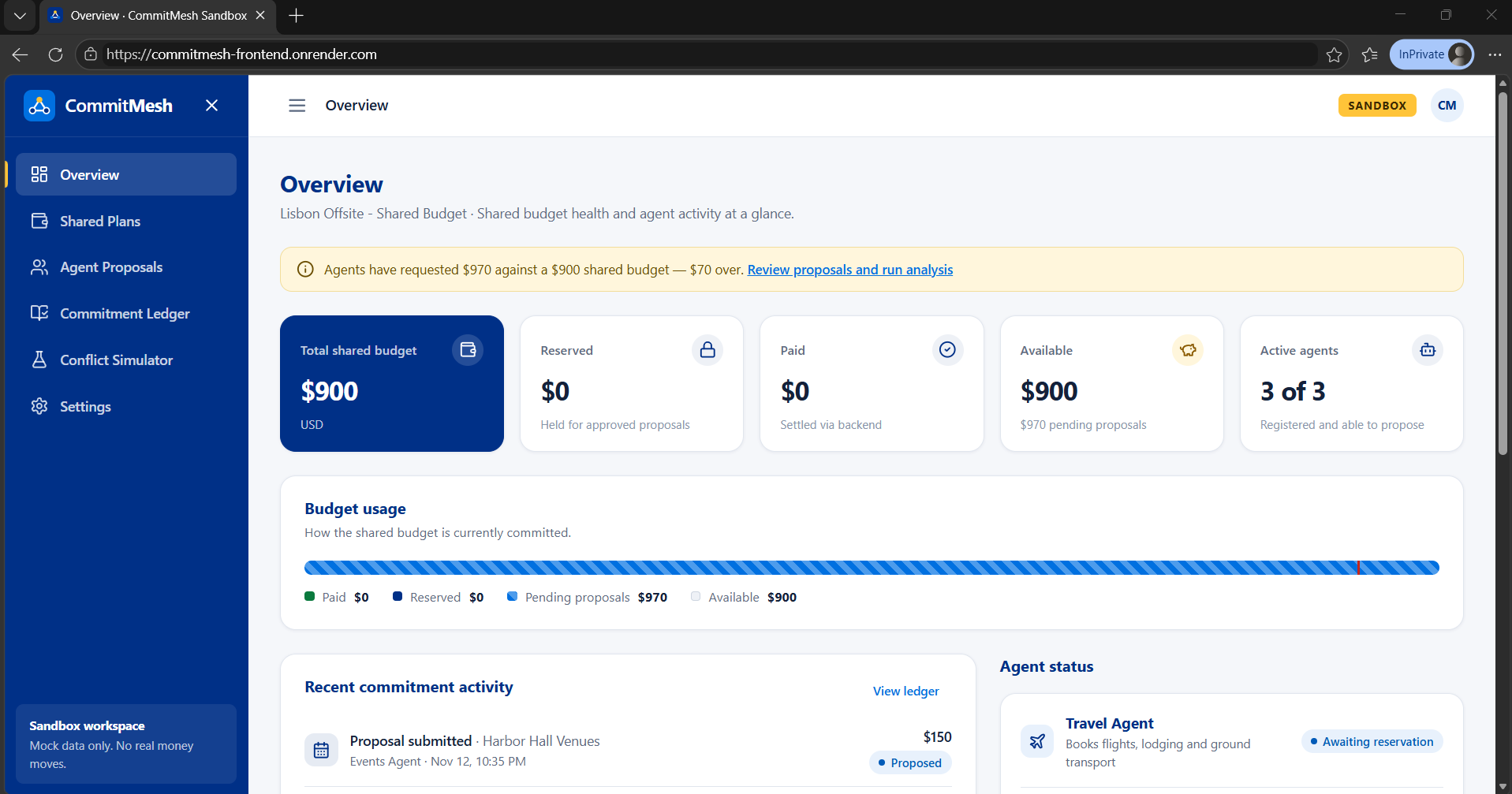
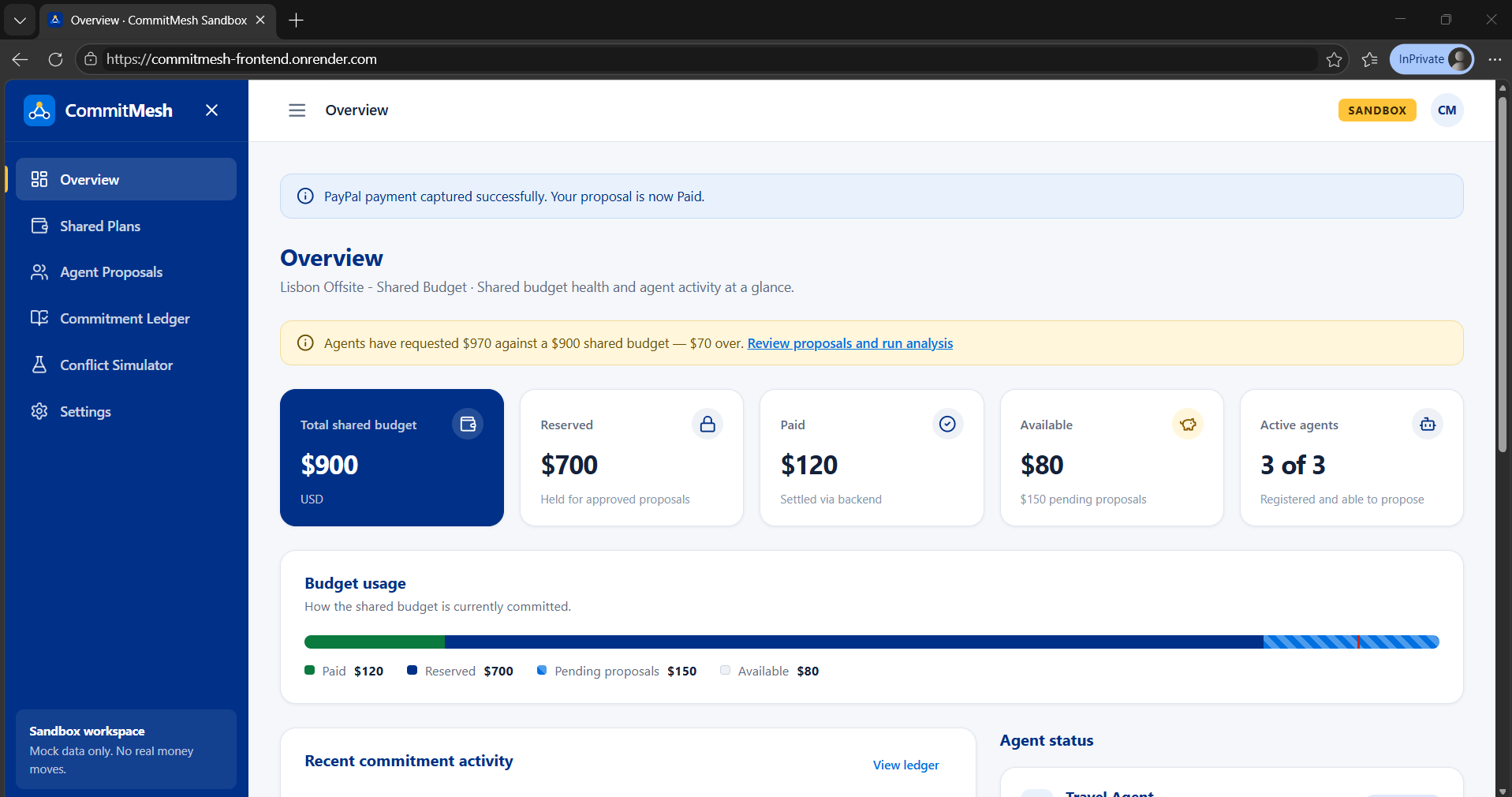
1 -- CommitMesh Overview
-
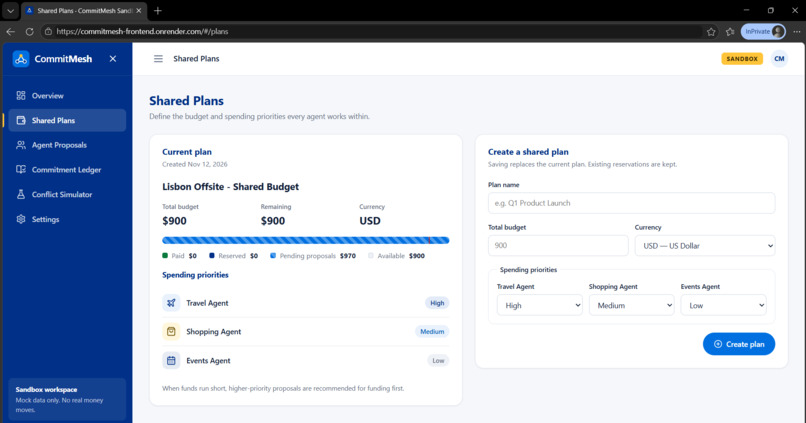
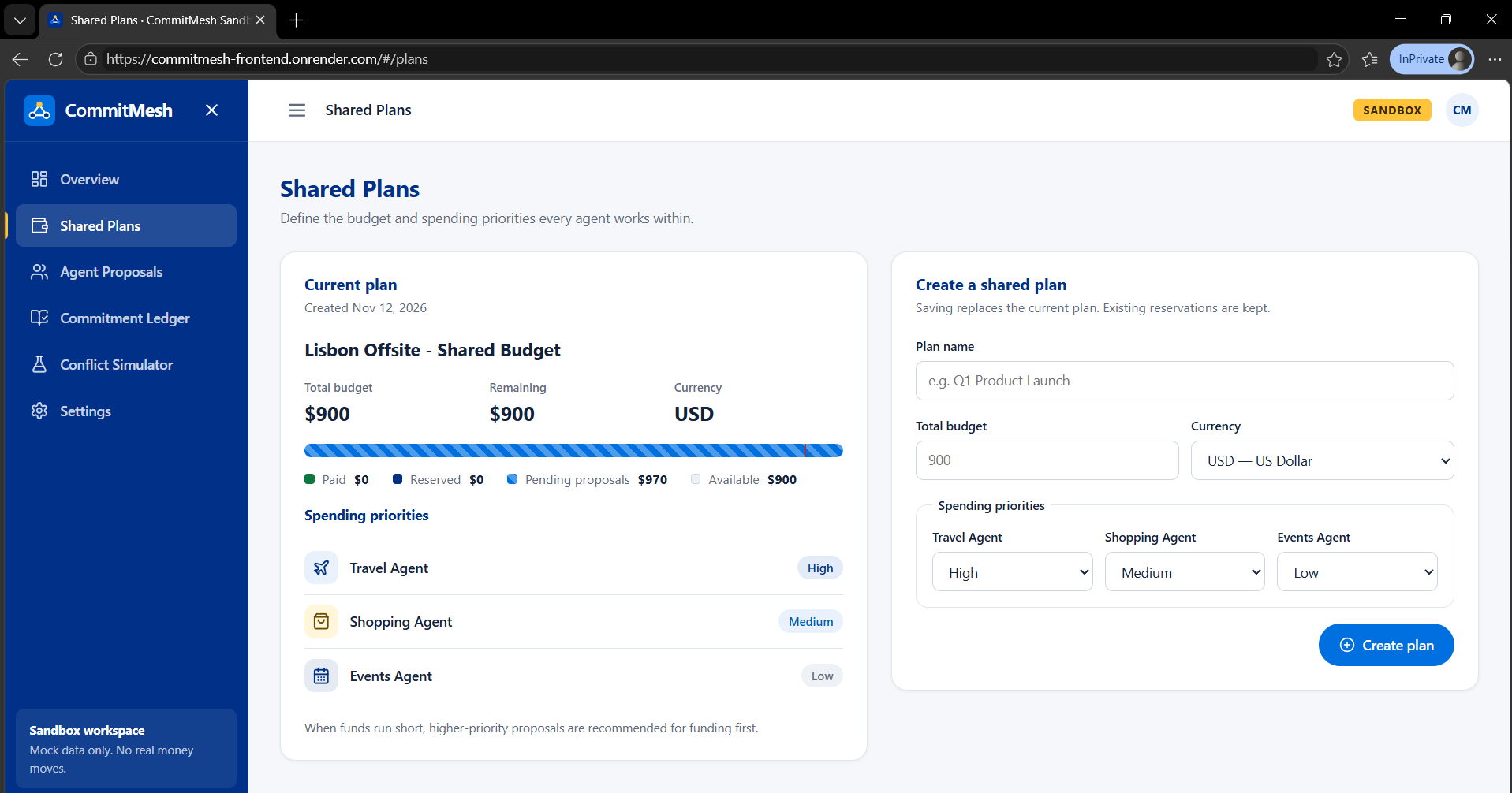
3 -- Shared Plans
-
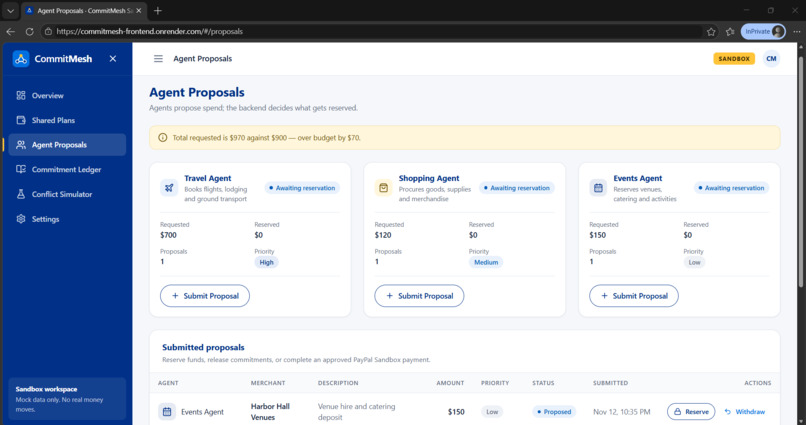
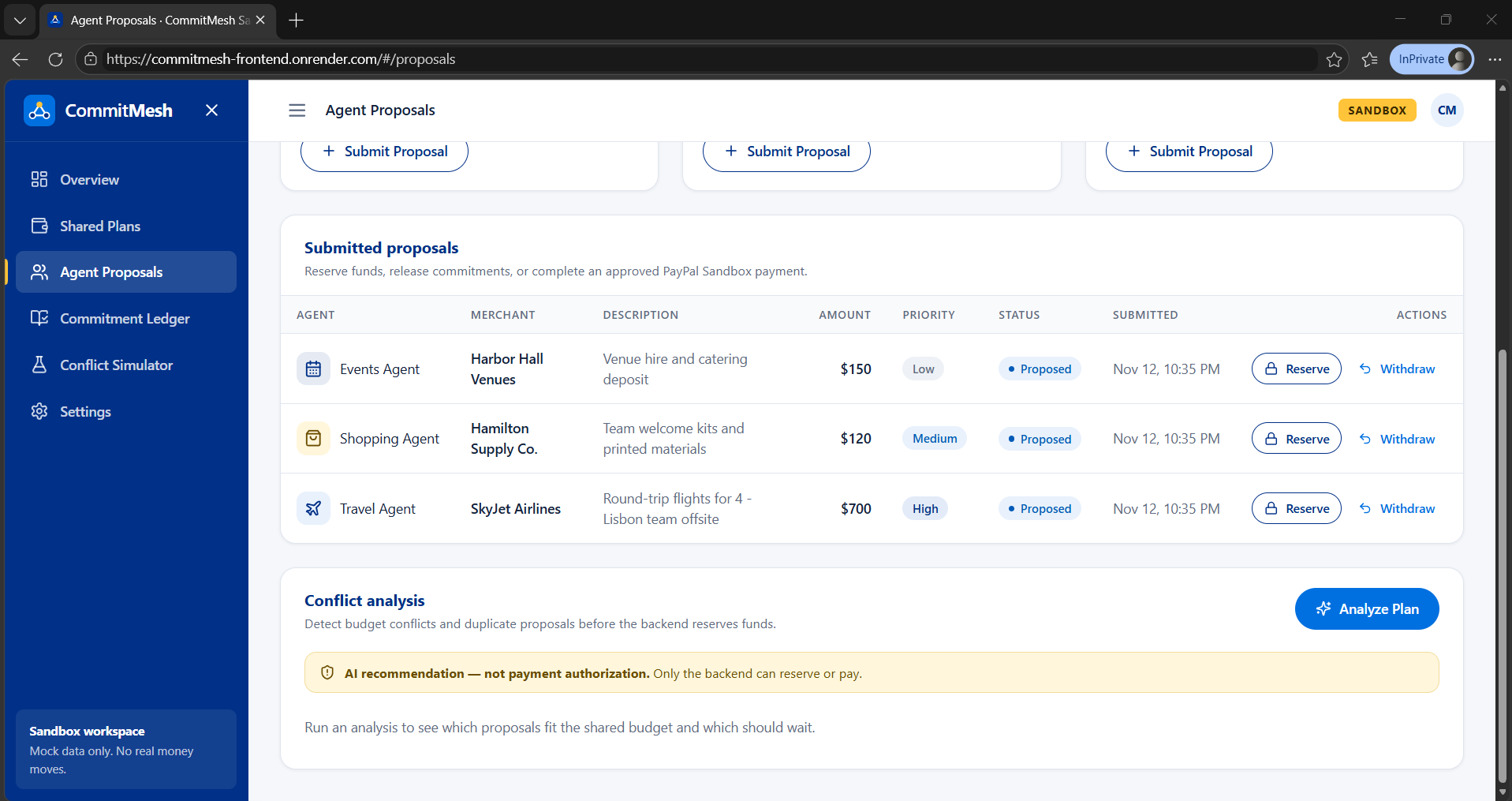
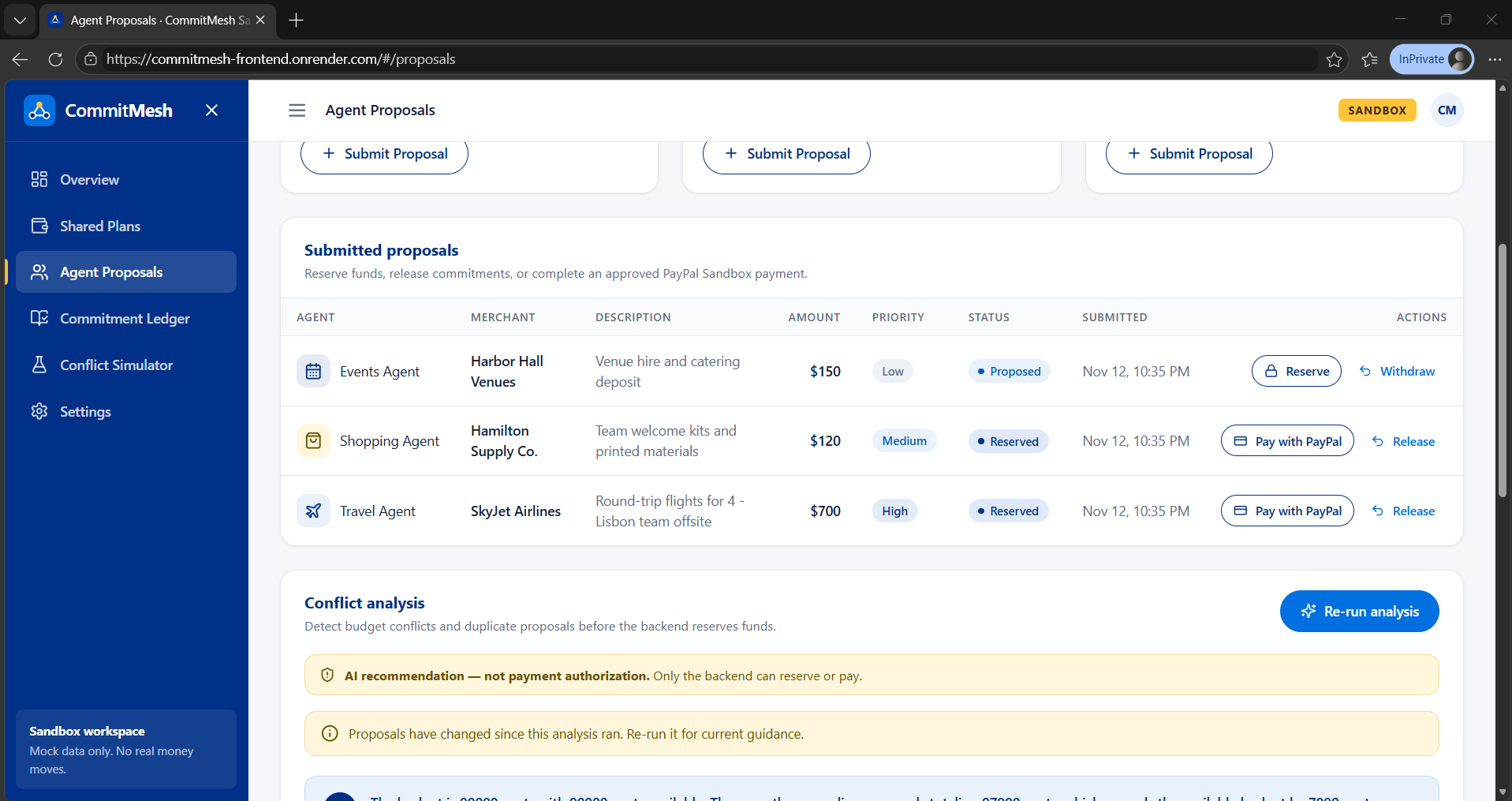
4 -- Agent Proposals
-
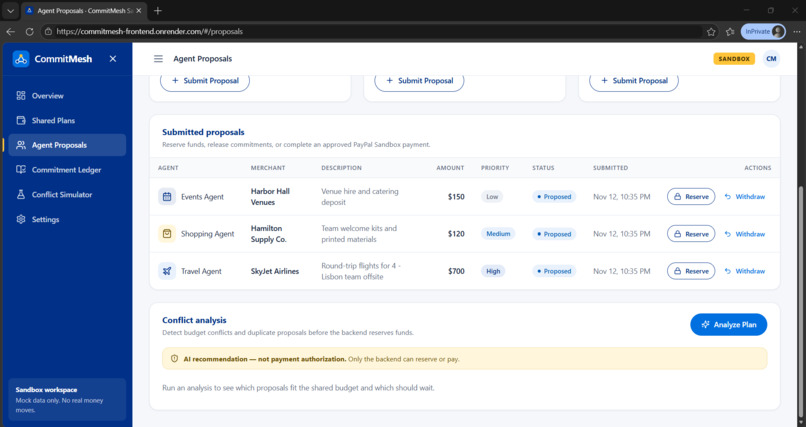
5 -- Reserved funds in submitted proposals, have option to withdraw as well
-
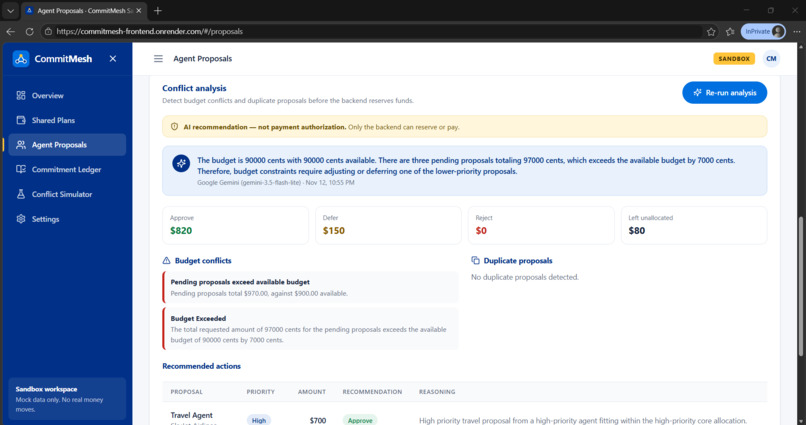
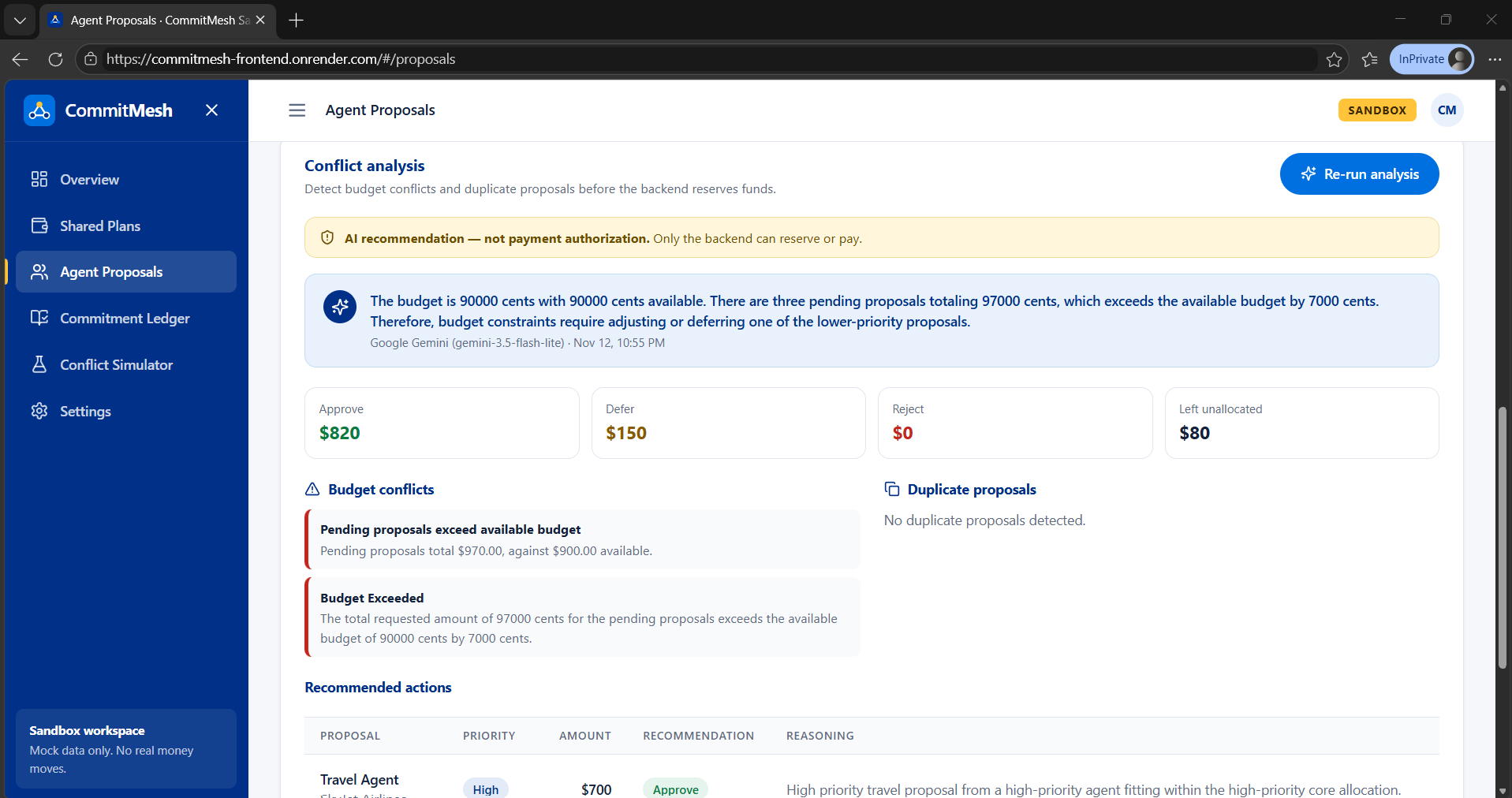
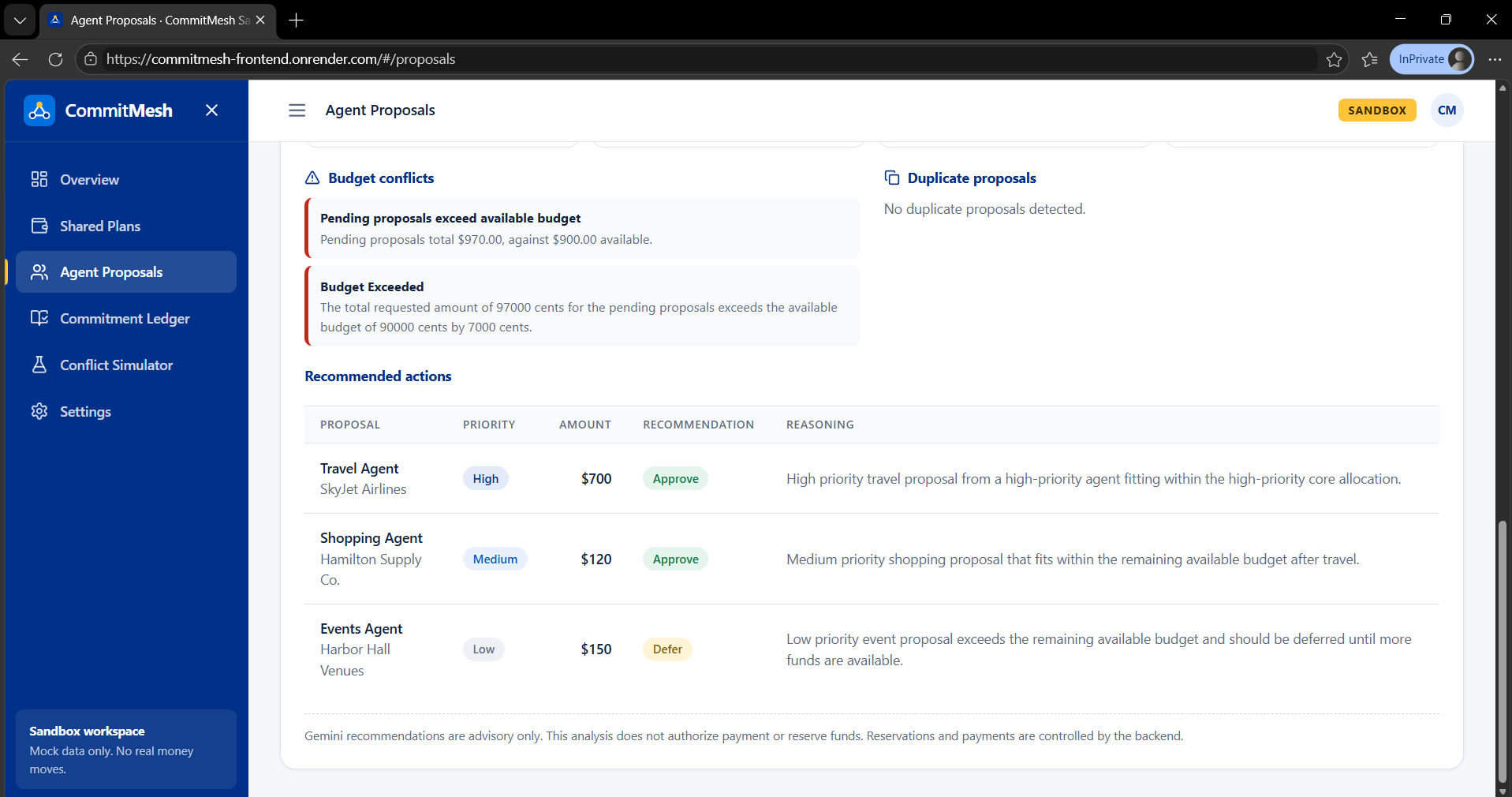
6 -- Gemini AI Analysis
-
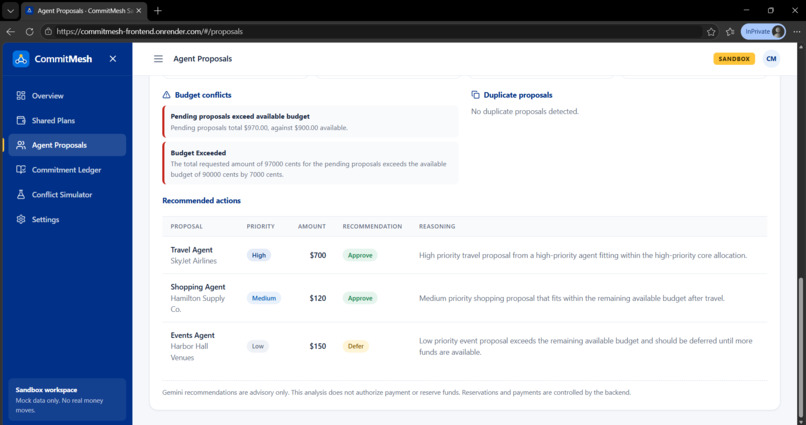
7 -- Gemini AI Analysis Explanded
-
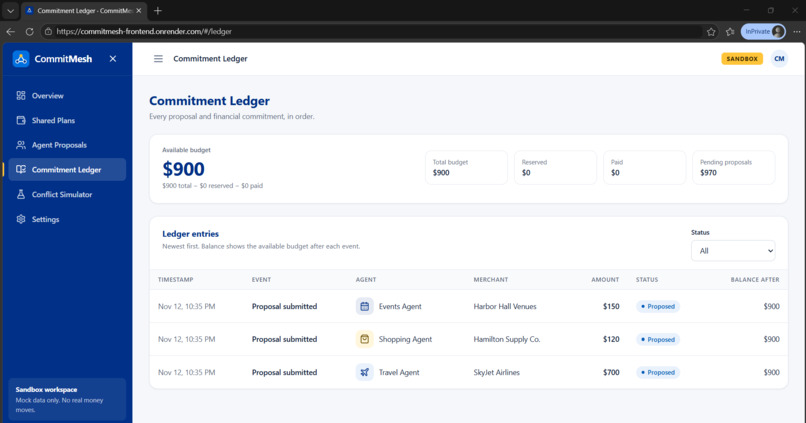
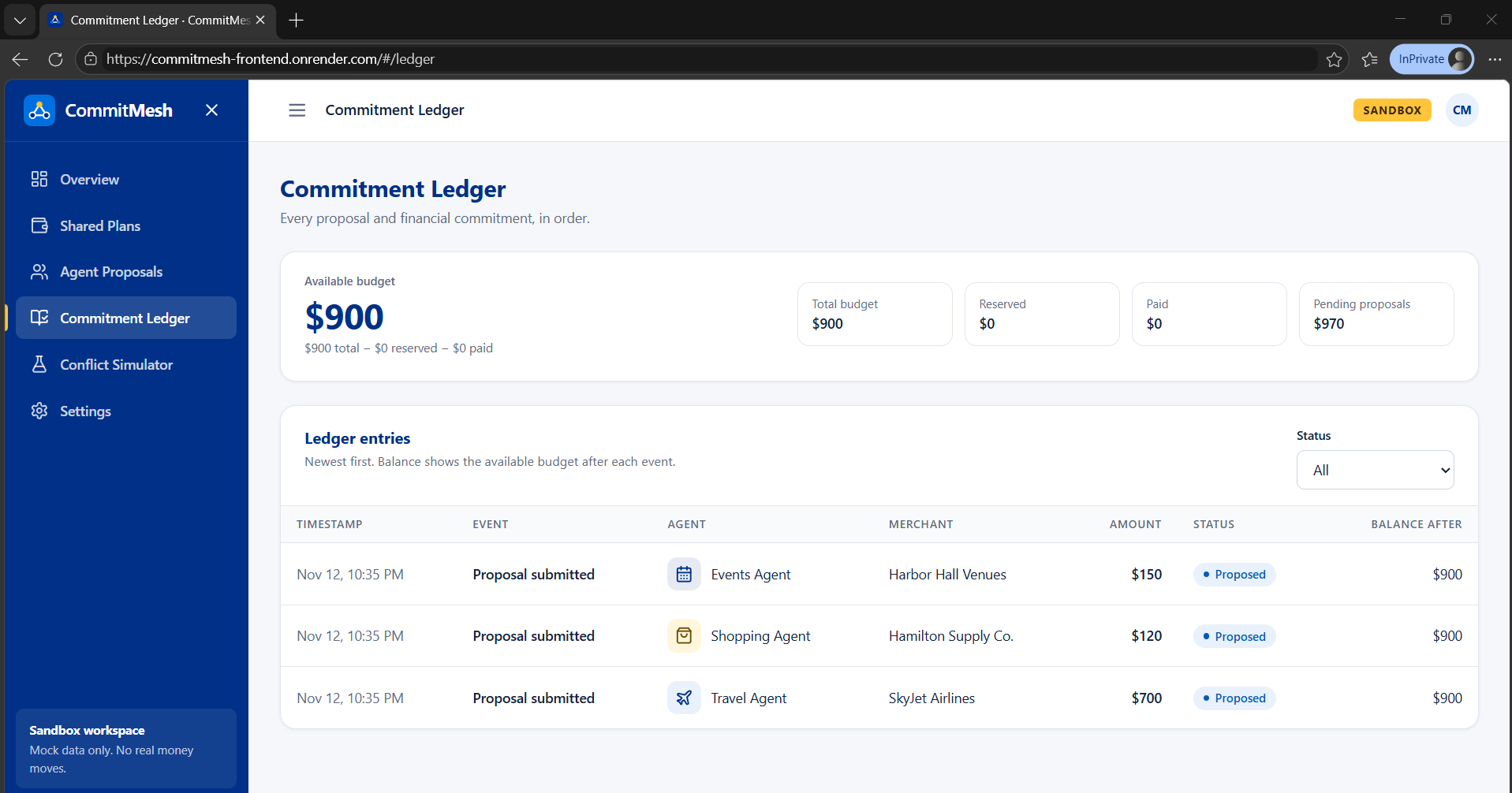
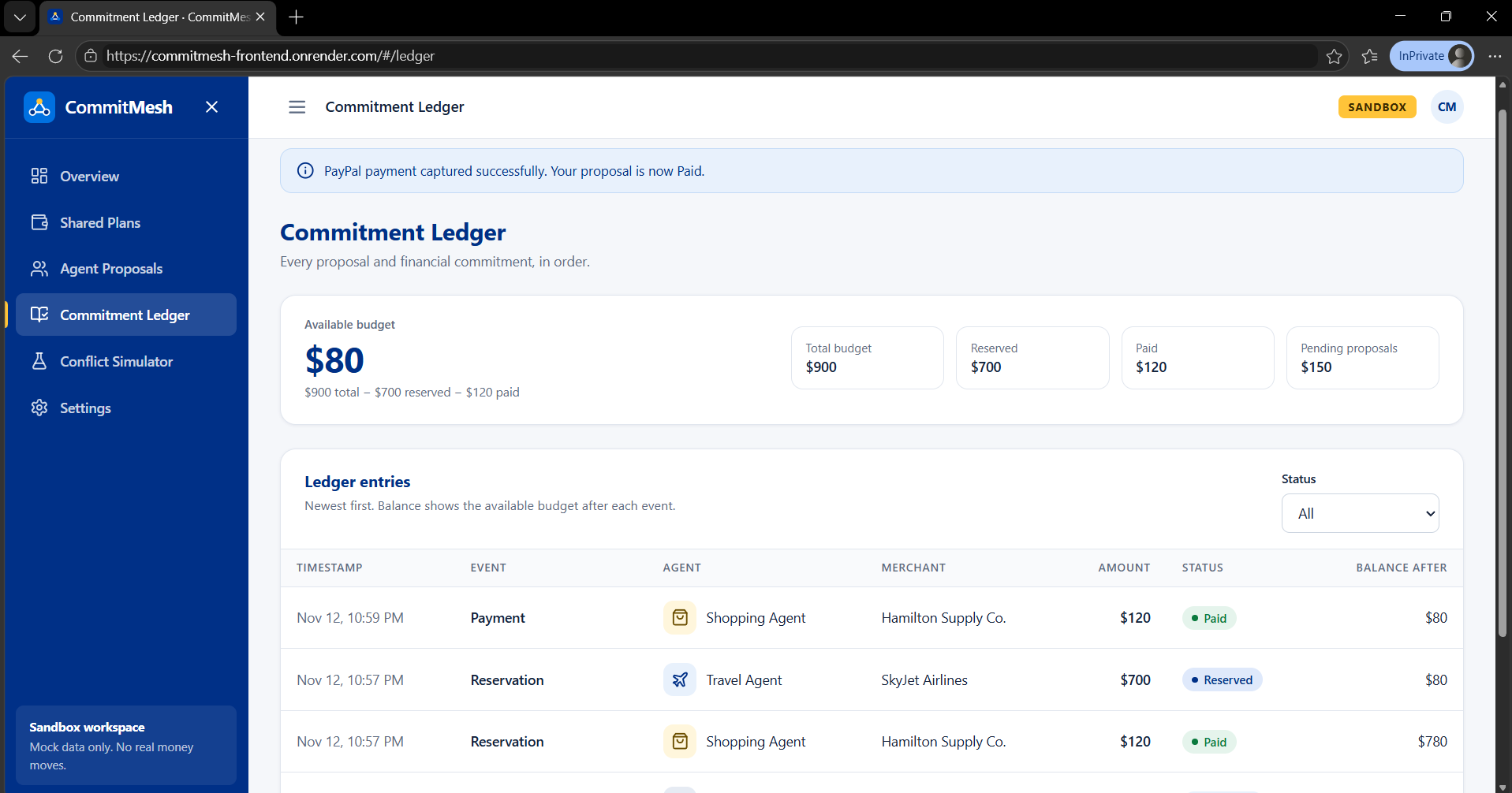
8 -- Commitment Ledger Page
-
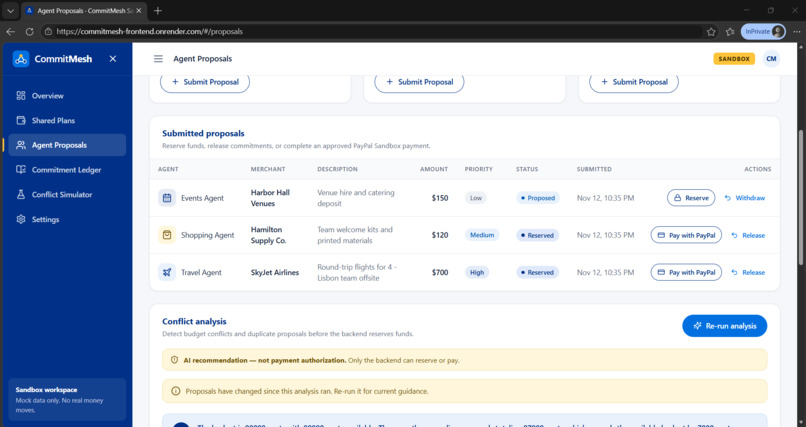
9 -- Submitted Proposals
-

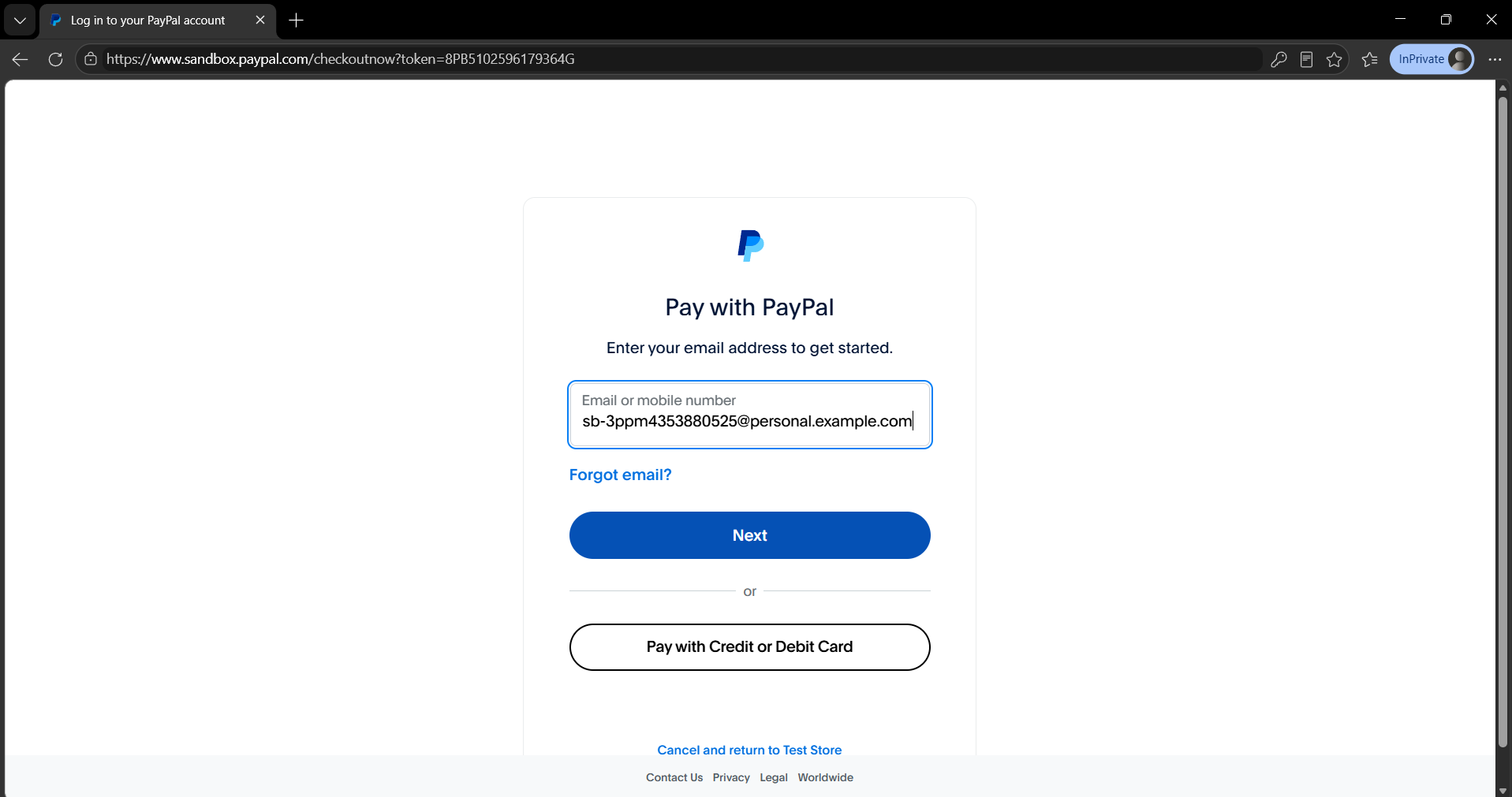
10 -- Payment Profile Email & Password
-

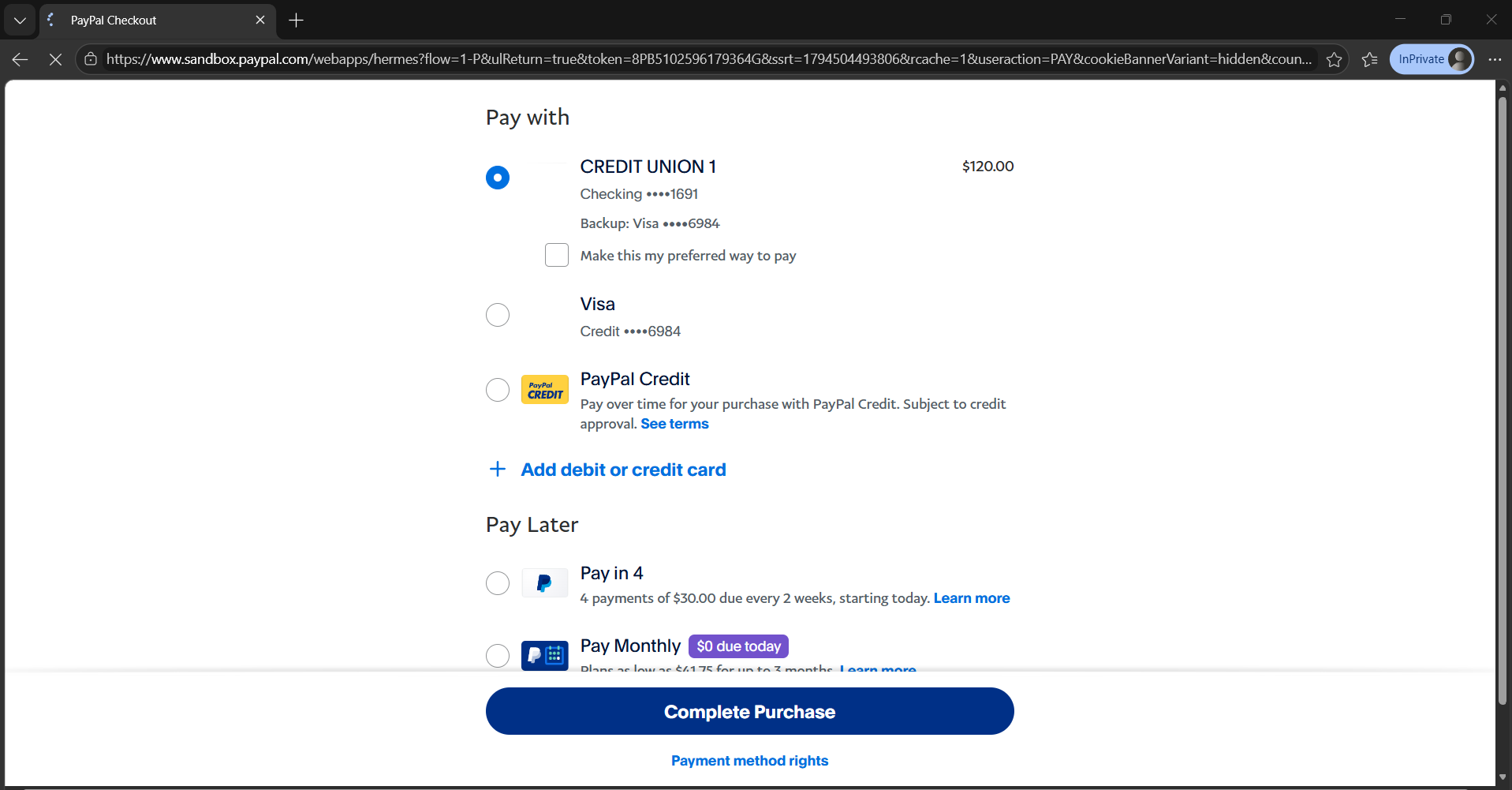
11 -- Payment Option and Complete Payment Access through Paypal
-
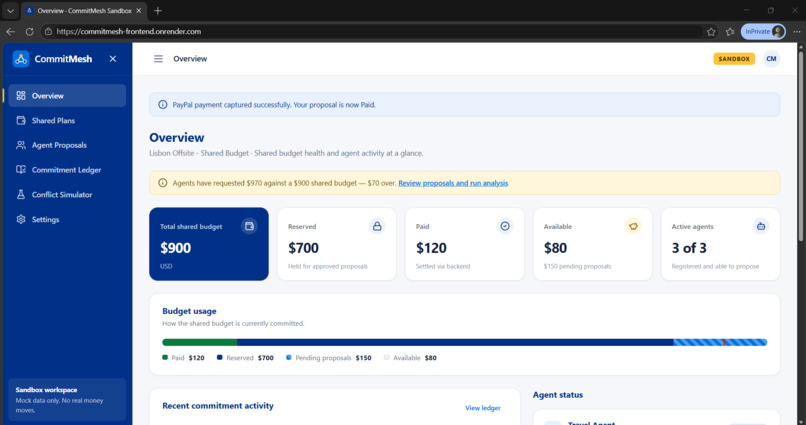
12 -- Updated overview post Payment
-
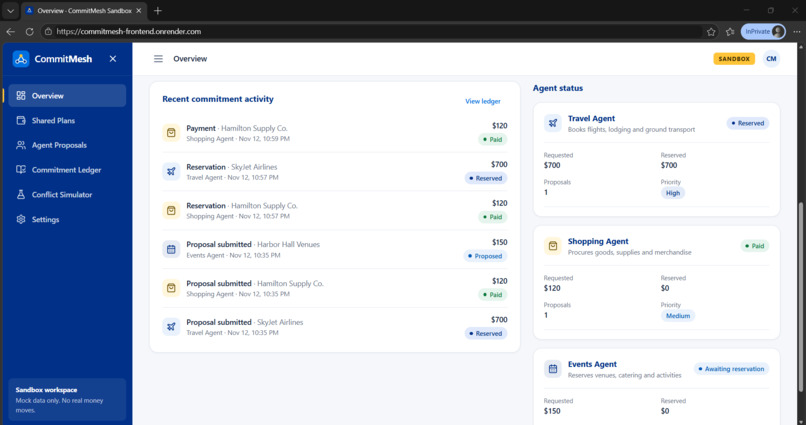
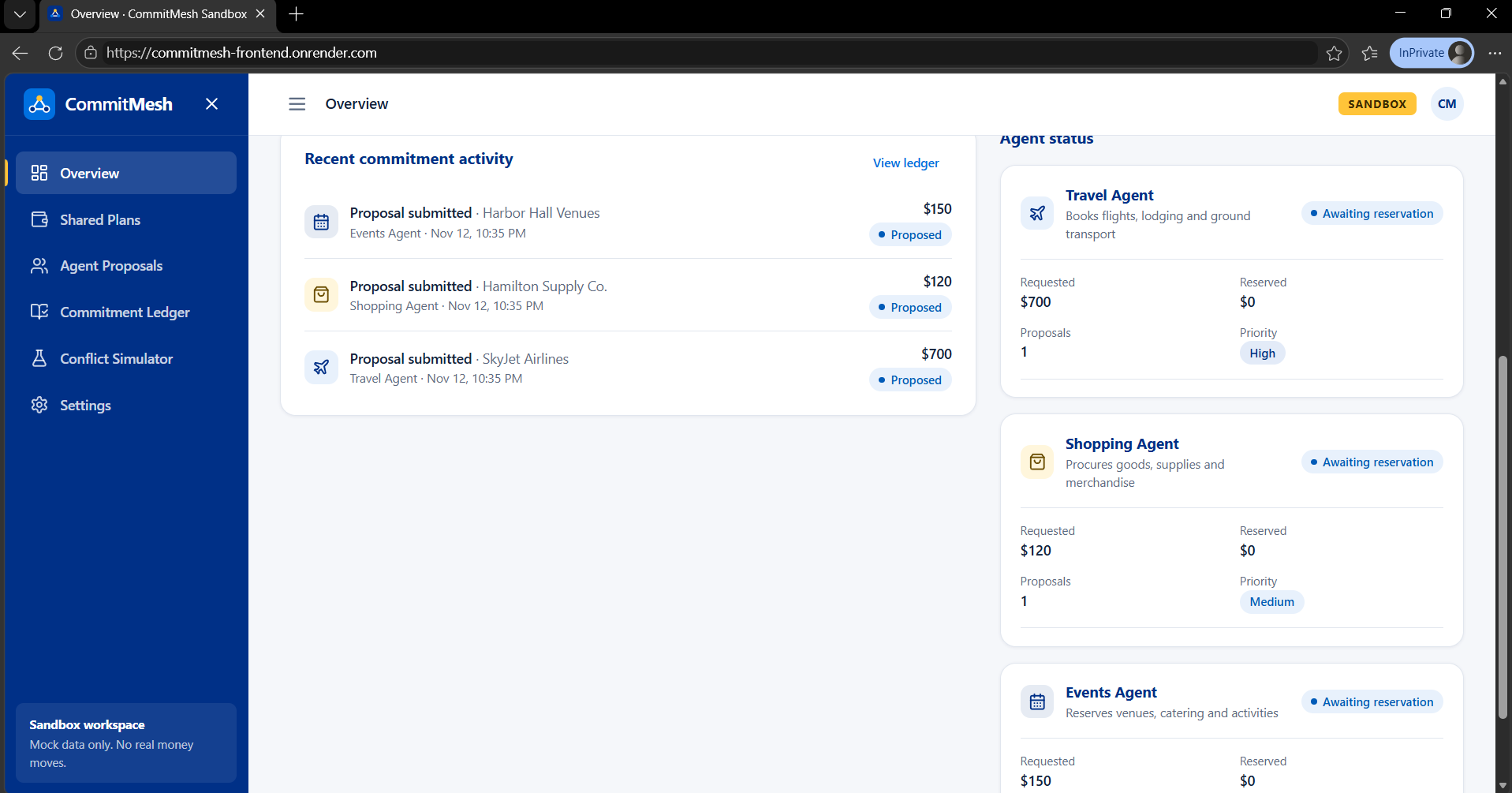
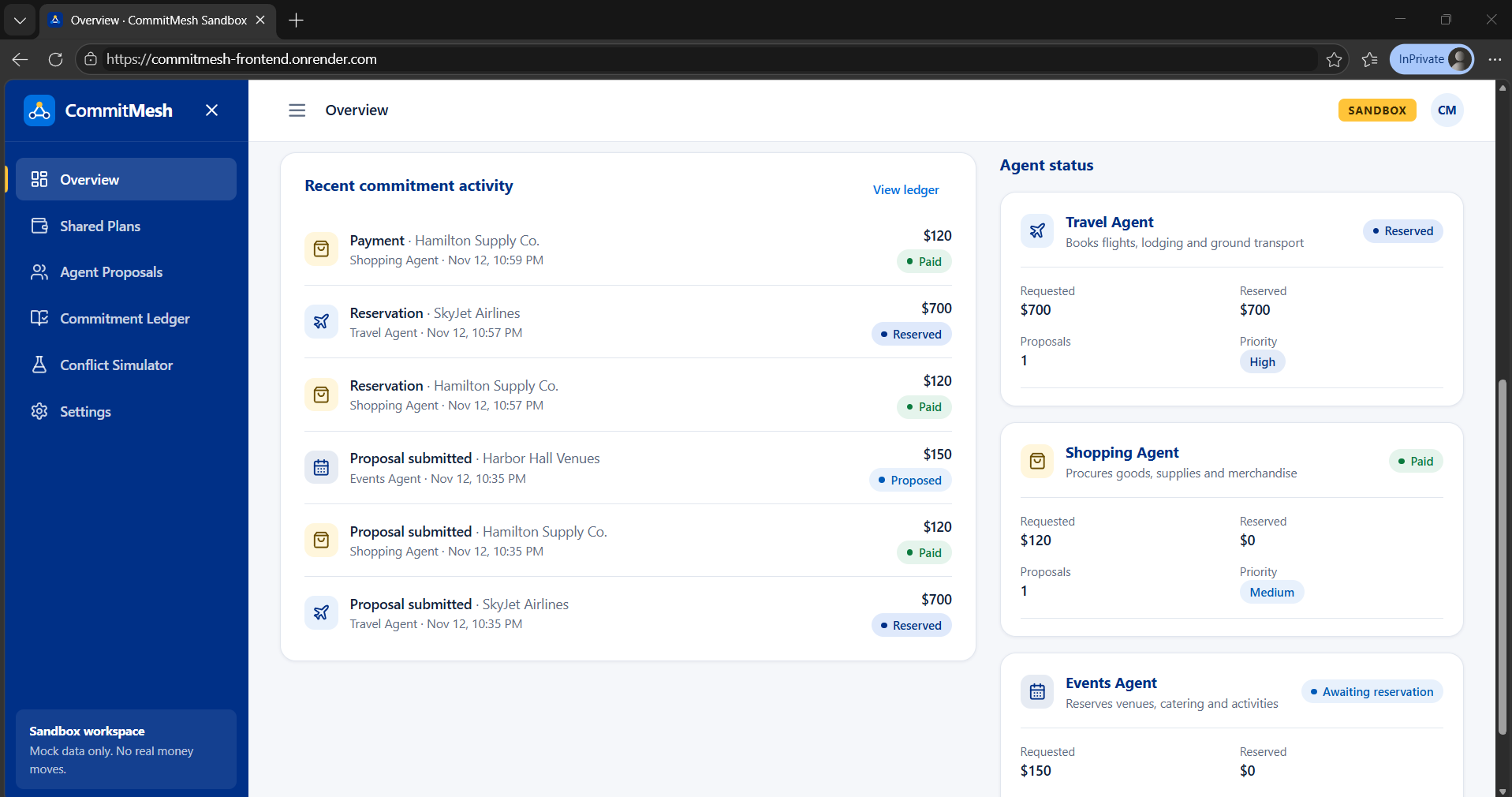
13 -- Recent Commitment Activities
-
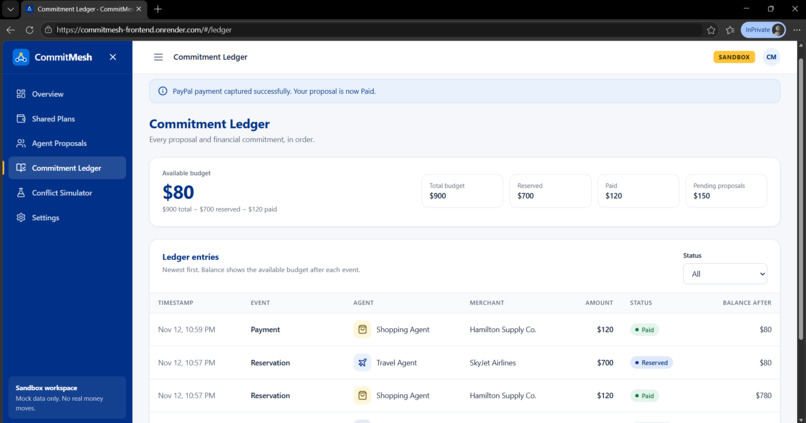
14 -- Updated Ledger Entries
-
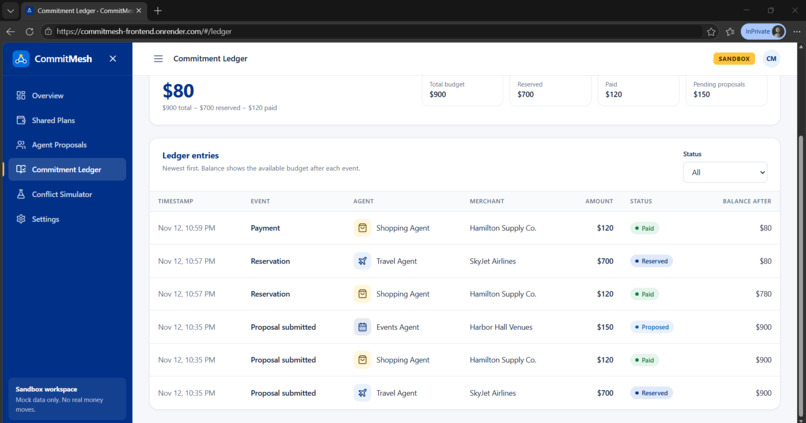
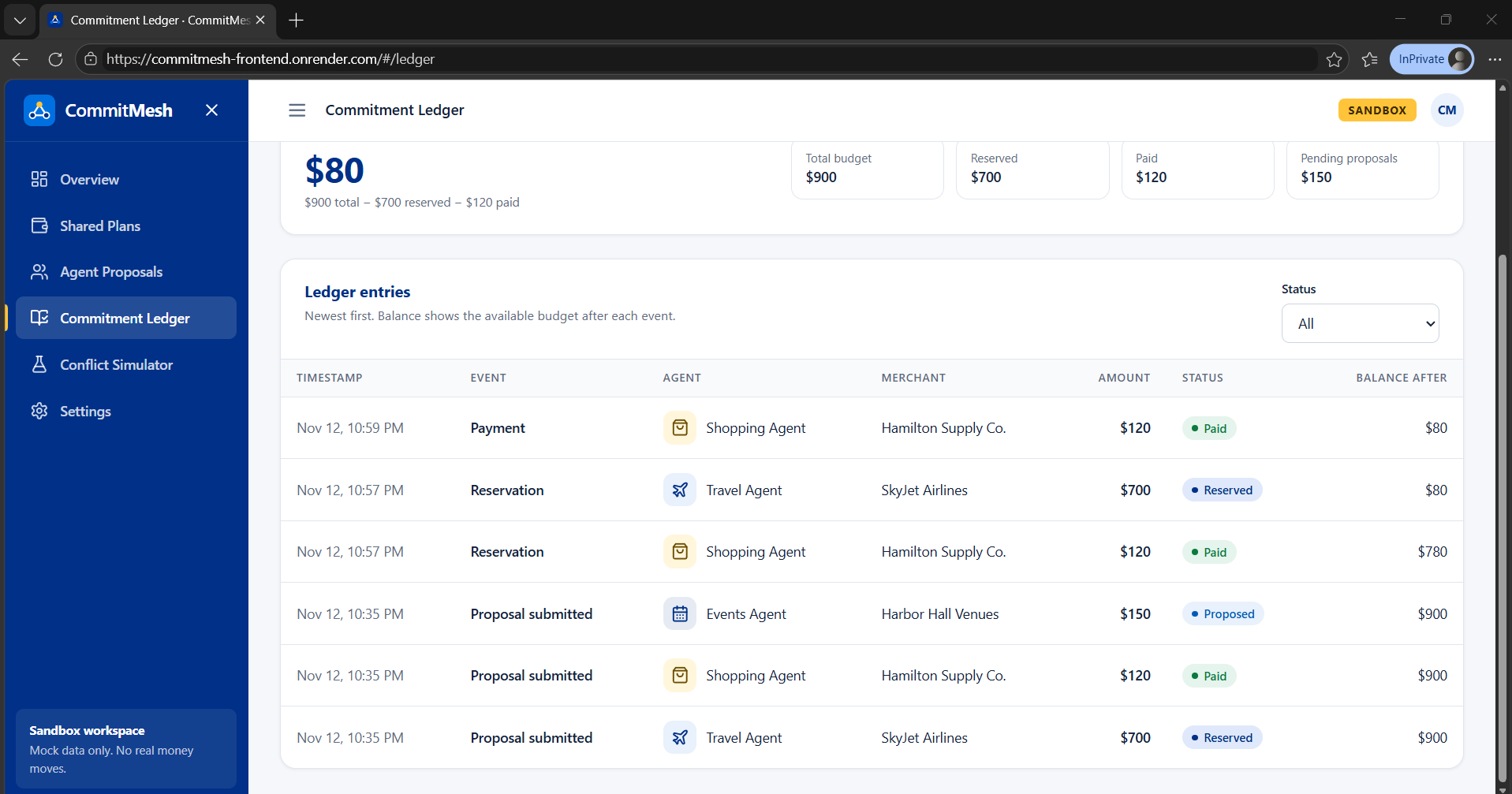
15 -- Final Ledger
Inspiration
AI agents are becoming increasingly capable of making decisions and completing tasks independently. But what happens when multiple agents make spending decisions while sharing the same budget?
An individual agent might make a perfectly reasonable decision, but several agents acting independently can collectively exceed the available budget.
I wanted to explore this problem and build a system where AI agents could coordinate their financial decisions instead of operating in isolation.
That idea became CommitMesh — Individually Intelligent Agents. One Financially Coherent Plan.
What it does
CommitMesh is a shared financial coordination layer that helps multiple AI agent clients coordinate spending proposals against one shared budget.
The project demonstrates three simulated agents representing Travel, Shopping, and Events. Each submits an independent spending proposal.
CommitMesh then:
- Uses Google Gemini AI to analyze proposals, understand priorities, identify conflicts, and recommend a coordinated spending plan.
- Uses deterministic backend logic to validate budget limits and enforce reservation rules.
- Prevents overspending through atomic reservation handling.
- Maintains a commitment ledger that tracks reserved, paid, and deferred proposals.
- Integrates PayPal Checkout to demonstrate buyer-approved payments through PayPal Sandbox.
In the demo, three agents propose a combined expenditure of $970 against a shared budget of $900.
CommitMesh recommends prioritizing Travel ($700) and Shopping ($120), while deferring Events ($150).
The result is $820 committed, with $80 remaining.
How we built it
I built CommitMesh as a full-stack application, combining AI-assisted decision-making with deterministic financial controls.
Frontend:
- React
- TypeScript
- Vite
Backend:
- Node.js
- Express.js
- TypeScript
- MongoDB
- Mongoose
AI Integration:
- Google Gemini API for analyzing proposals, evaluating priorities, and generating coordination recommendations.
Payment Integration:
- PayPal Orders API for creating orders, handling buyer-approved checkout, capturing payments, and updating payment status.
Deployment:
- Render for hosting the frontend and backend.
- MongoDB Atlas for the database.
One important architectural decision was to keep AI recommendations separate from financial enforcement. Gemini helps determine what should be prioritized, but the backend independently validates budgets and controls reservations. This ensures that financial decisions are not based solely on an AI-generated response.
Challenges I ran into
Building CommitMesh independently meant handling the frontend, backend, database, AI integration, payment integration, testing, and deployment myself.
Some of the biggest challenges were:
- AI reliability: Gemini API availability and temporary model errors required troubleshooting and selecting a model that worked reliably for the demo.
- Financial consistency: I needed to ensure that multiple proposals could not reserve more than the available budget, even when requests arrived simultaneously.
- Payment integration: Configuring PayPal Sandbox, testing buyer approval, handling payment capture, and synchronizing the resulting payment status with the application required careful debugging.
- Database and deployment: Connecting MongoDB Atlas to the deployed backend, configuring environment variables, and resolving production deployment issues took several iterations.
- End-to-end integration: Making sure the frontend, backend, Gemini, MongoDB, and PayPal worked together as one complete workflow was one of the most demanding parts.
Accomplishments that we're proud of
I'm proud that I turned an abstract multi-agent coordination problem into a working full-stack demonstration.
Some accomplishments include:
- Built a working multi-agent proposal coordination workflow.
- Integrated Gemini for AI-assisted proposal analysis.
- Implemented deterministic budget validation and atomic reservations.
- Successfully tested concurrent reservation requests, ensuring that only one of two competing $600 reservations succeeds against a $900 budget.
- Integrated PayPal Sandbox checkout and successfully demonstrated a $120 payment.
- Built a commitment ledger that reflects reservation and payment states.
- Deployed the application with a publicly accessible frontend and backend.
- Completed the project end-to-end as a solo developer.
What I learned
This project taught me that building AI-powered financial systems requires more than connecting an application to an AI model.
AI can help interpret information and recommend decisions, but critical financial operations need predictable, independently enforced rules.
I also learned a lot about integrating external APIs, handling payment lifecycles, managing concurrent requests, working with MongoDB, debugging production deployments, and testing a complete full-stack application.
Most importantly, I learned how to take an idea from concept to a deployed, working product while managing every part of the development process independently.
What's next for CommitMesh
The current version is a focused MVP, but the underlying idea has room to grow.
Some directions I would like to explore include:
- Connecting real AI agent frameworks and external agent clients.
- Supporting multiple users, shared budgets, and more complex authorization policies.
- Introducing multi-currency budget coordination.
- Adding configurable spending limits, approval workflows, and richer audit trails.
- Exploring integrations with more payment providers and real-world merchant workflows.
- Improving monitoring, security, and reliability for production use.
My long-term vision is to make CommitMesh a financial coordination layer that allows multiple AI agents to work toward shared goals without losing control of the resources they use.
CommitMesh: Individually intelligent agents. One financially coherent plan.
Built With
- ai
- artificial
- development
- express.js
- fintech
- generative
- intelligence
- mongodb
- mongoose
- multi-agent
- node.js
- react
- render
- restapi
- systems
- typescript
- vite

