-
-
blocked
-
studio
-
evidence
-
contract
-
invoice
Inspiration
The digital creator economy spanning custom Minecraft mods, 3D character models and high-end YouTube thumbnails operates on a foundation of fragile broken trust. Creators fear working without upfront payment due to the risk of ghosting while clients fear paying upfront and receiving a hollow file or disappearing entirely. Traditional escrow platforms are built for e-commerce, not high-ticket digital commissions. This inspired the creation of CommishGuard AI an automated trustless escrow platform that bridges human intent with cryptographic and financial certainty.
What it does
When digital creators and clients work together, trust is always a gamble. Creators are afraid the client will ghost after getting the work, and clients are afraid the creator will take the money and disappear.
1.CommishGuard AI fixes that by acting as a smart, automated middleman:
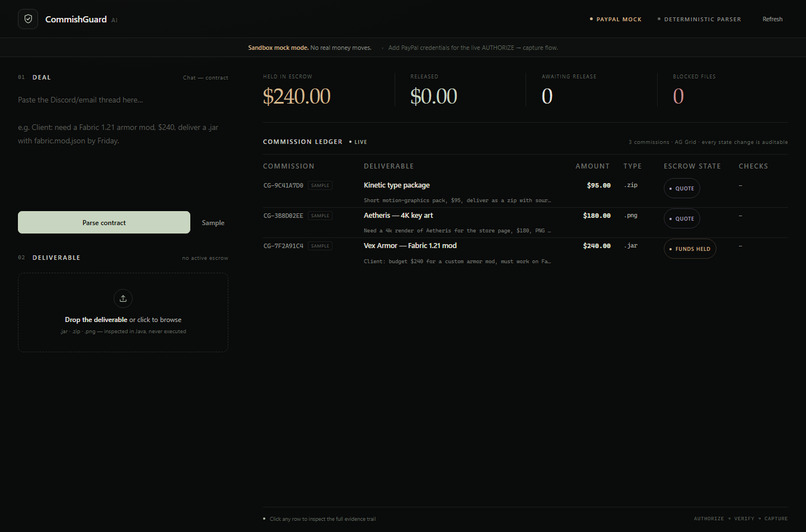
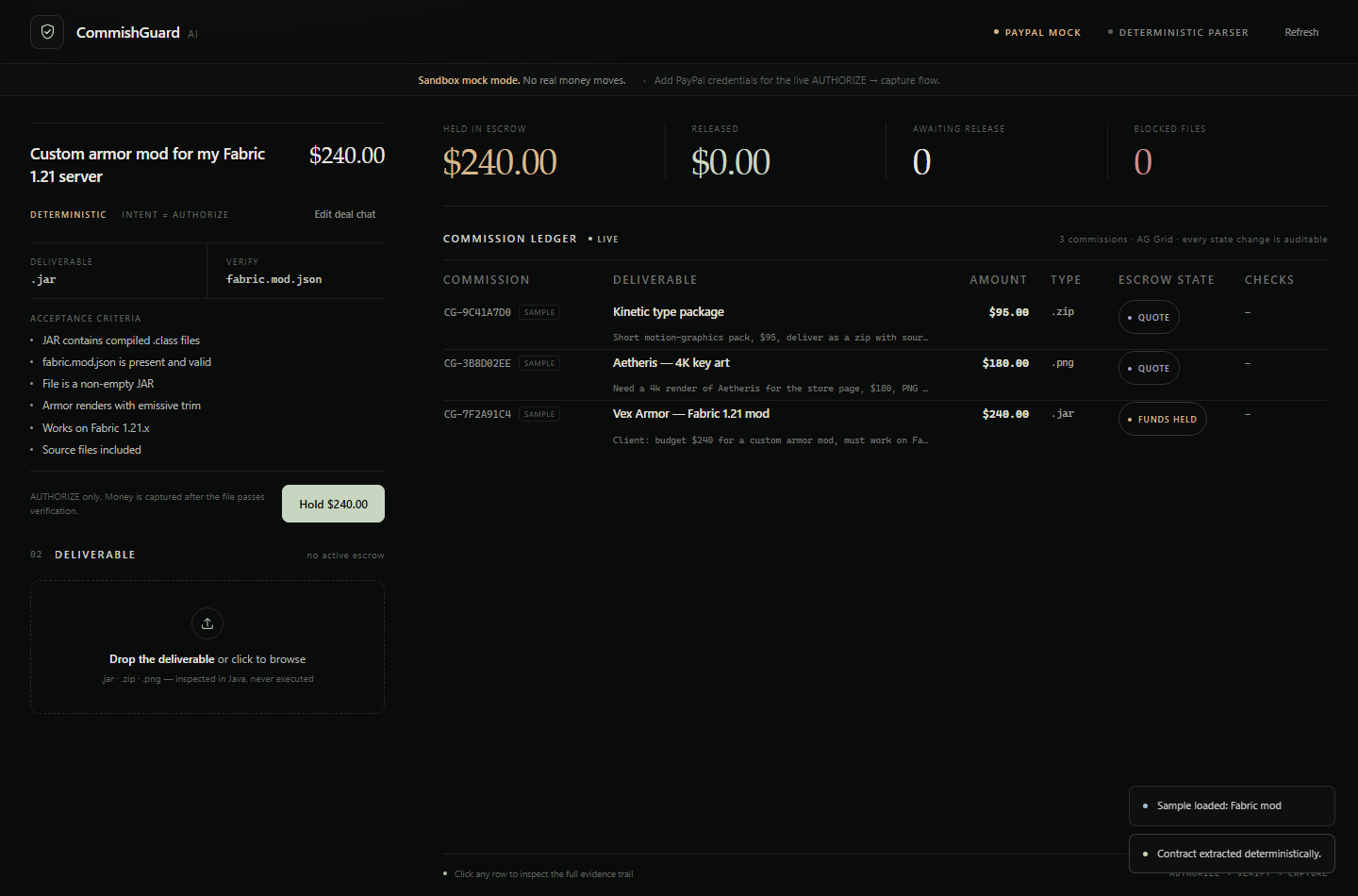
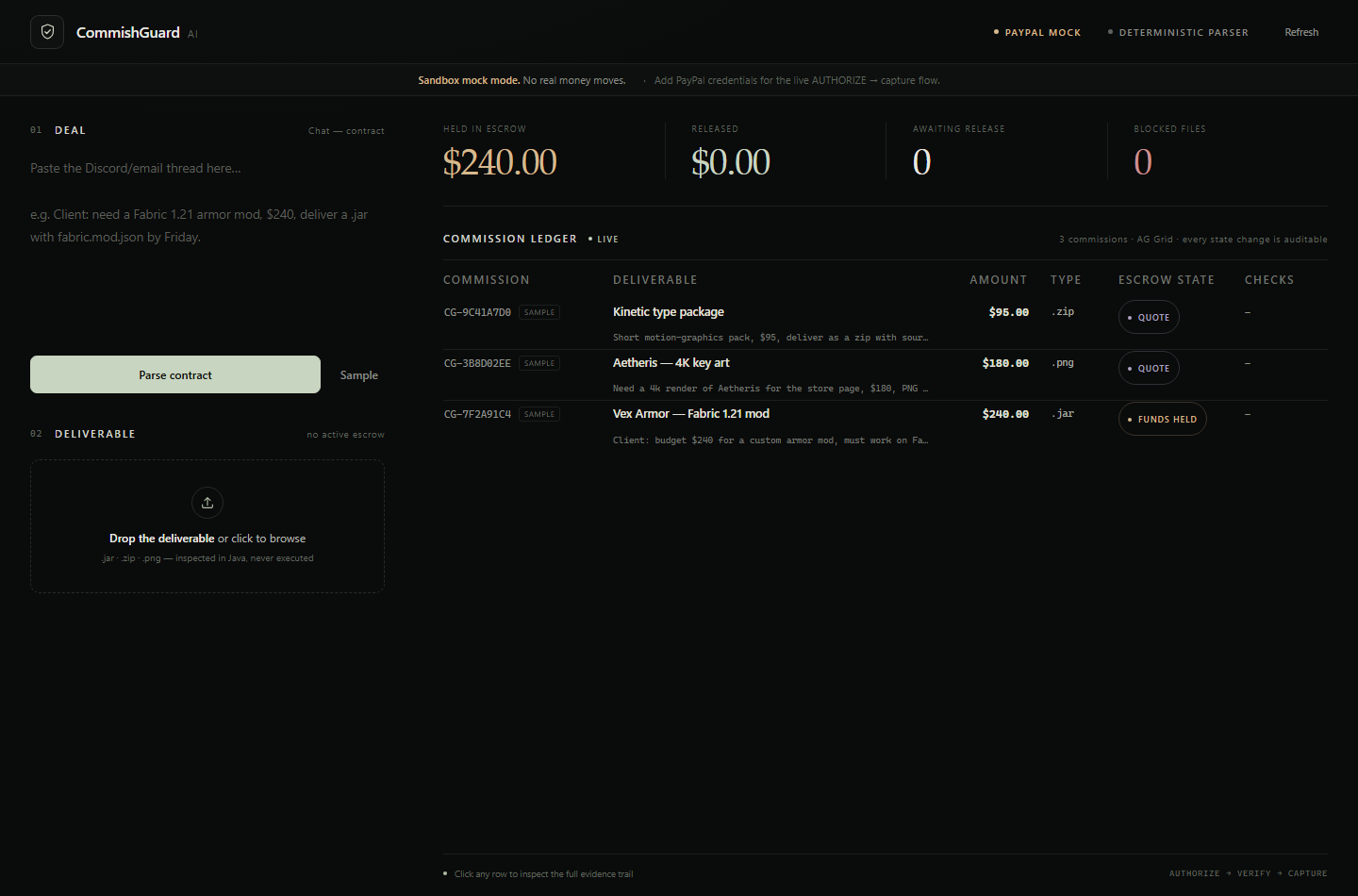
2.AI Contract Parsing: You paste a messy chat or deal discussion, and our AI instantly turns it into a clean, official contract with the exact price, rules, and a 12-point checklist.
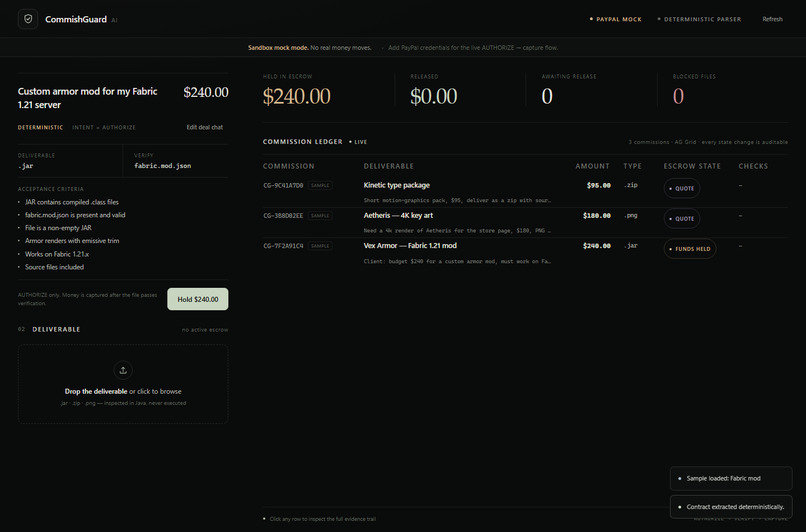
3.Safe PayPal Escrow: The client clicks to fund the deal, and PayPal locks the money securely in a holding state. Nobody touches a dime yet.
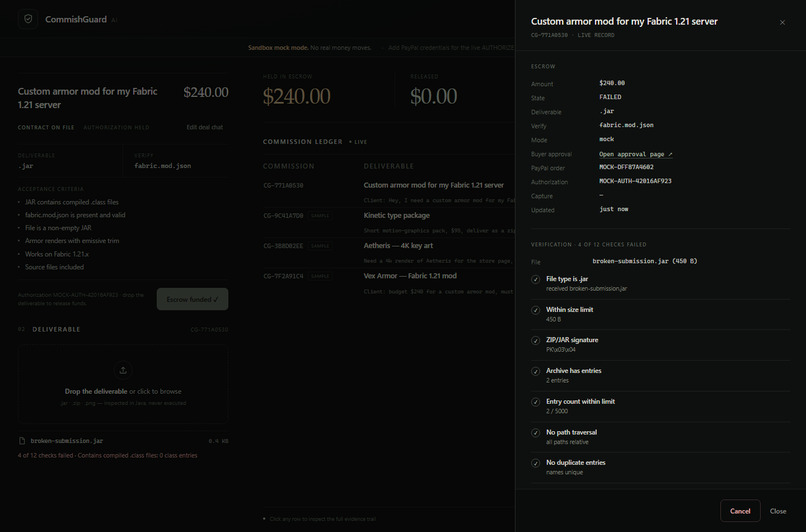
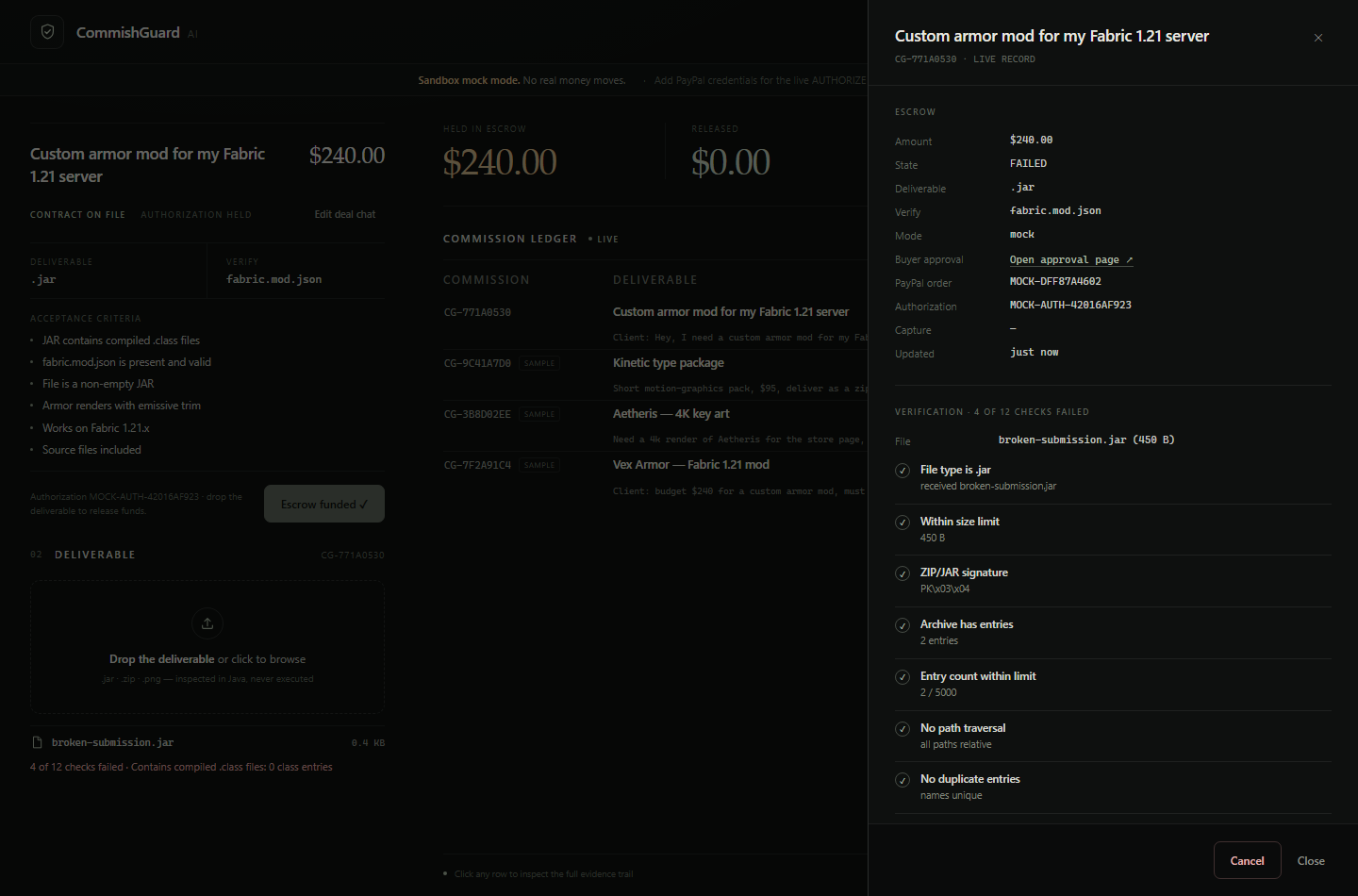
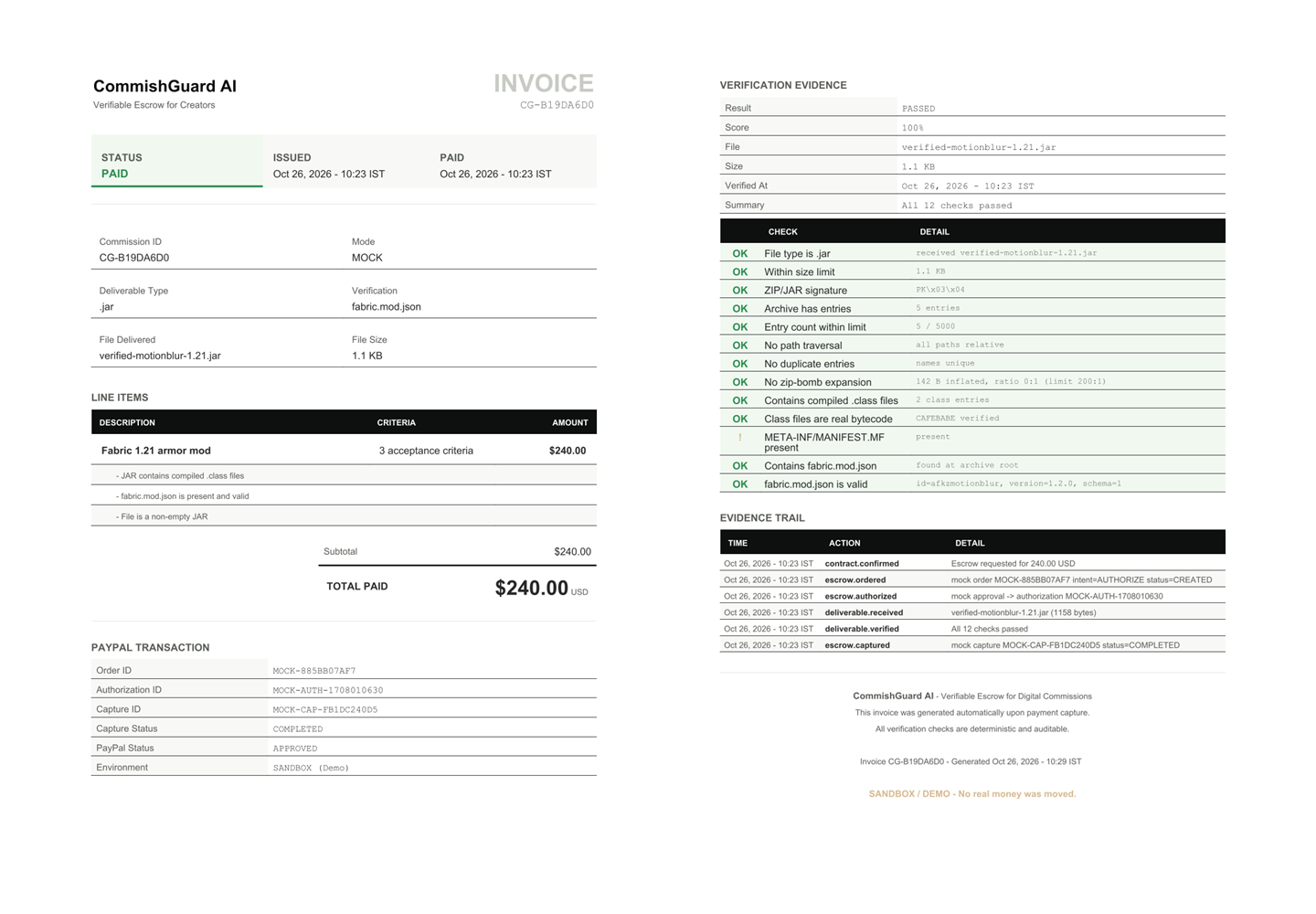
4.Automated Scam Blocker: When the creator uploads their work, our system looks inside the file (checking bytecode, structure, and metadata). If someone tries to upload a fake or empty file to scam the client, it fails the checks instantly and keeps the money locked.
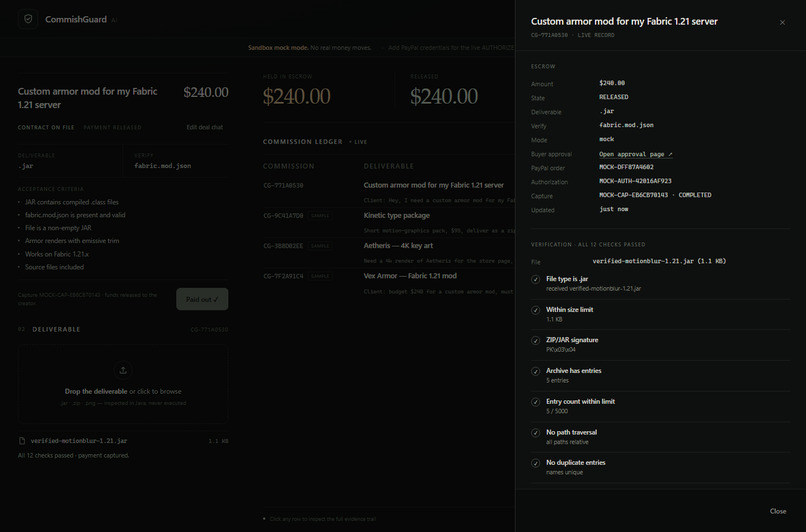
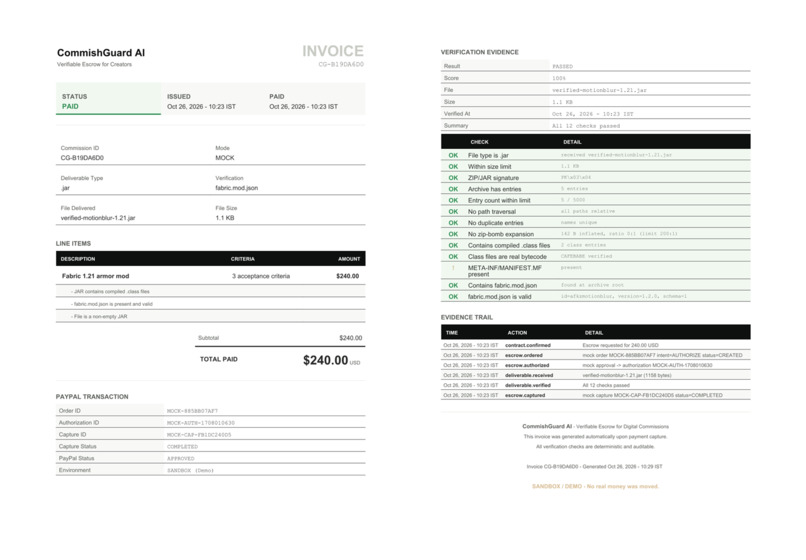
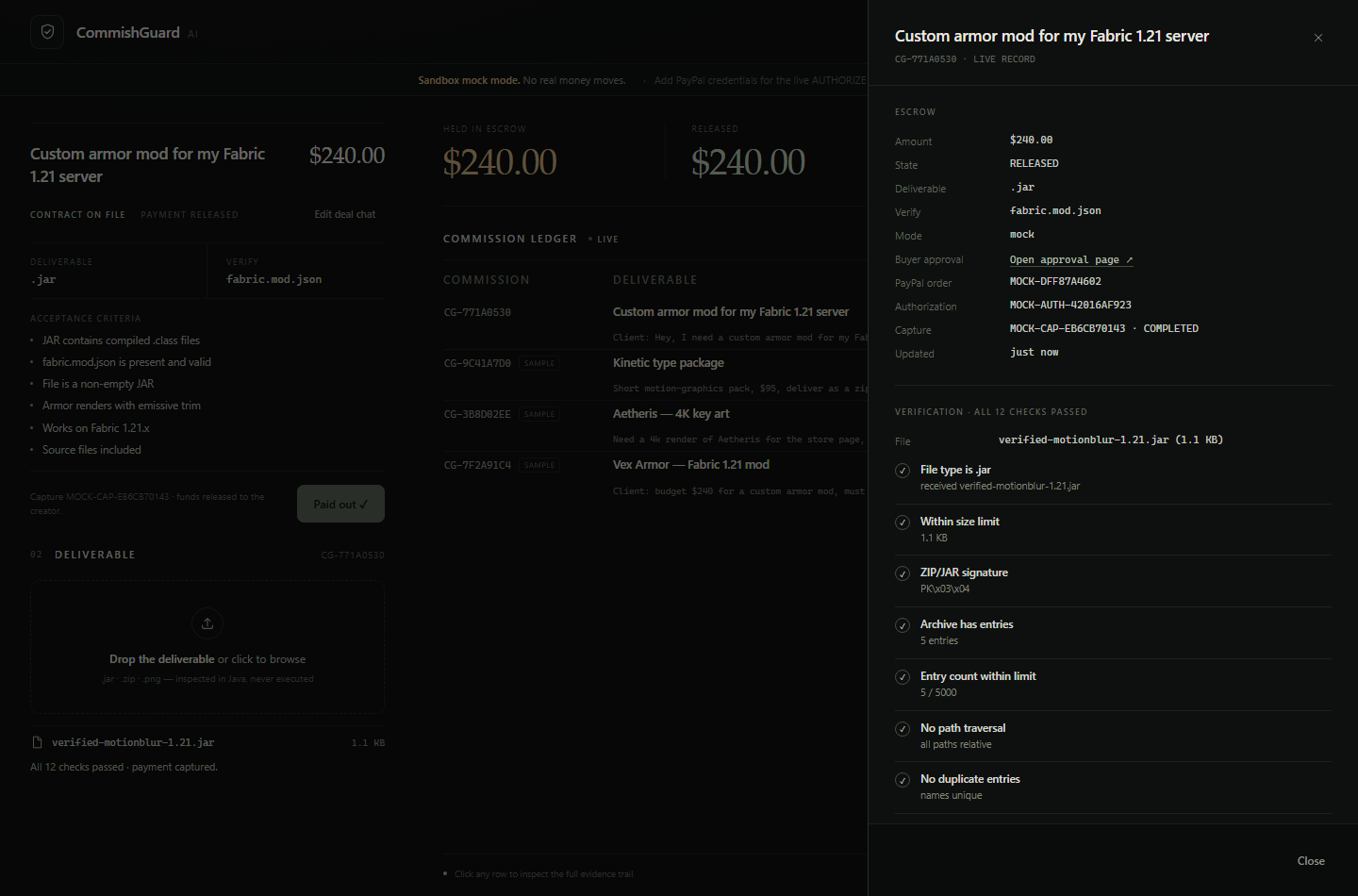
5.Instant Payout: If the file passes all 12 safety checks, our backend automatically tells PayPal to release the funds to the creator. No manual approvals, no waiting around—just verified work for verified pay.
How we built it
Honestly, I built this entire project using "vibecoding" and DeepSeek.
Instead of writing every single line of boilerplate code by hand, I used AI to brainstorm architecture, structure the backend, write the Java logic, and wire up the PayPal and Gemini APIs. I acted as the director and reviewer, guiding the AI to build a complete working product from the secure payment escrow to the deep file-checking system while I focused on making sure everything actually worked together seamlessly.
Challenges we ran into
1.Making AI and Money Play Nice: The biggest challenge was combining AI with real financial transactions. AI can sometimes be a bit unpredictable, so I had to make sure the AI contract parser was completely isolated from the payment system. A parsing hiccup should never be able to mess up real escrow funds or security.
2.Fighting with PayPal's Sandbox: Getting PayPal API to behave properly in a test environment was frustrating. Handling asynchronous authorization holds, making sure the UI didn't falsely claim funds were held before the buyer actually approved it and triggering automated captures took a lot of trial and error.
3.Inspecting Files Safely: Writing code to look inside uploaded .jar files without accidentally running malicious code or breaking on weird zip formats was tricky. I had to figure out how to safely scan archive structures, check class signatures and catch empty files before letting any money move.
Accomplishments that we're proud of
Actually making real PayPal escrow work Getting the app to securely lock and release money based on code. The scam blocker: Stopping fake, empty files from stealing buyer funds. Pulling off vibecoding: Building a full-stack project using DeepSeek and AI collaboration without burning out.
What we learned
1.Separating AI and Money: Learning that financial logic needs strict rules and must stay completely isolated from AI flexibility.
2.Mastering Payment Flows: Figuring out how payment APIs handle authorization holds and async states.
3.The Power of Vibecoding: Discovering how to guide AI tools like DeepSeek as a director to build a full-stack project efficiently.
What's next for Commish Guard AI
add features if the customer does not like the product

Log in or sign up for Devpost to join the conversation.