-
-
-
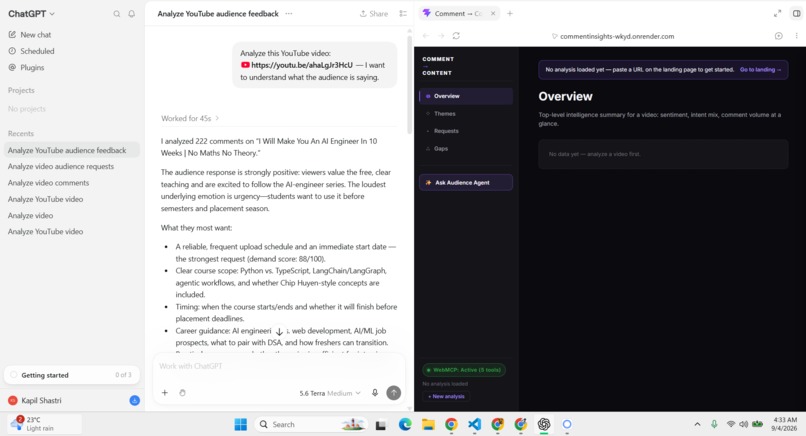
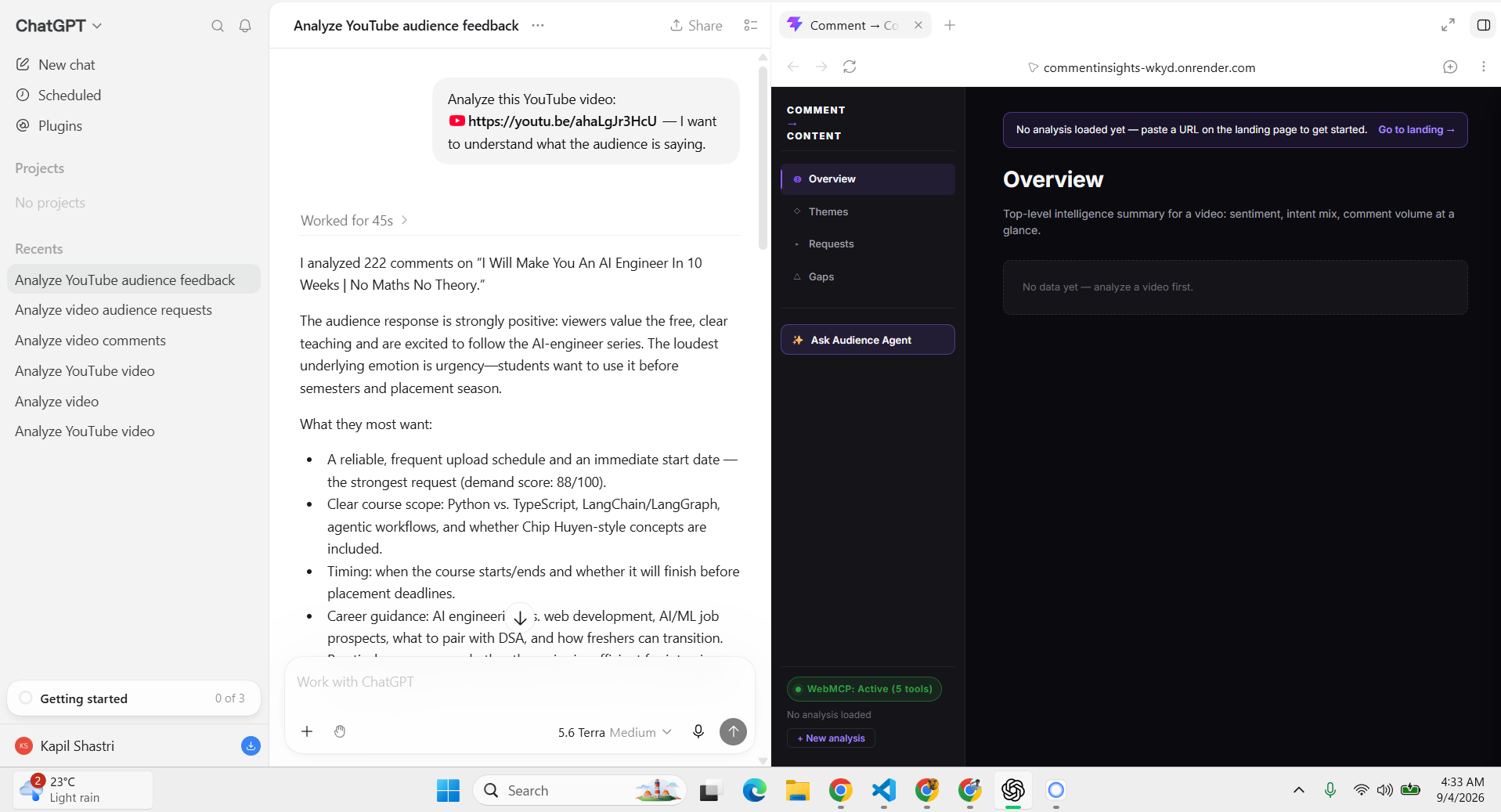
Running in Codex using WebMCPs
-
Inspiration
I was inspired to create a solution that can be used by both the creator and the marketing teams to find the audience insights.
What it does
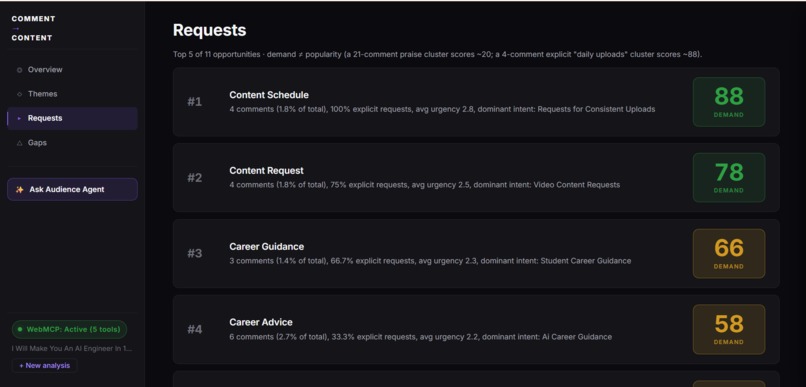
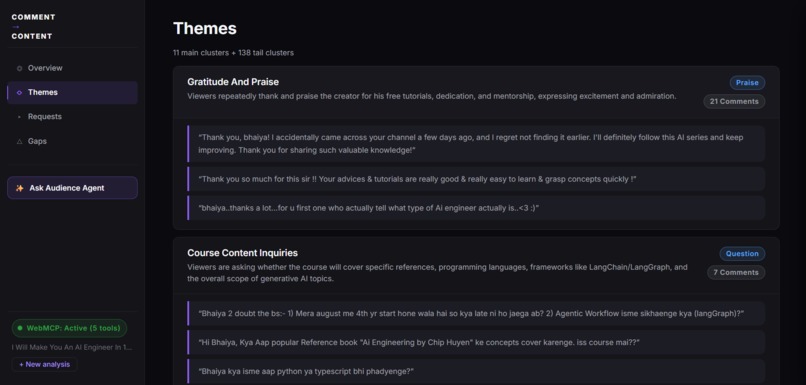
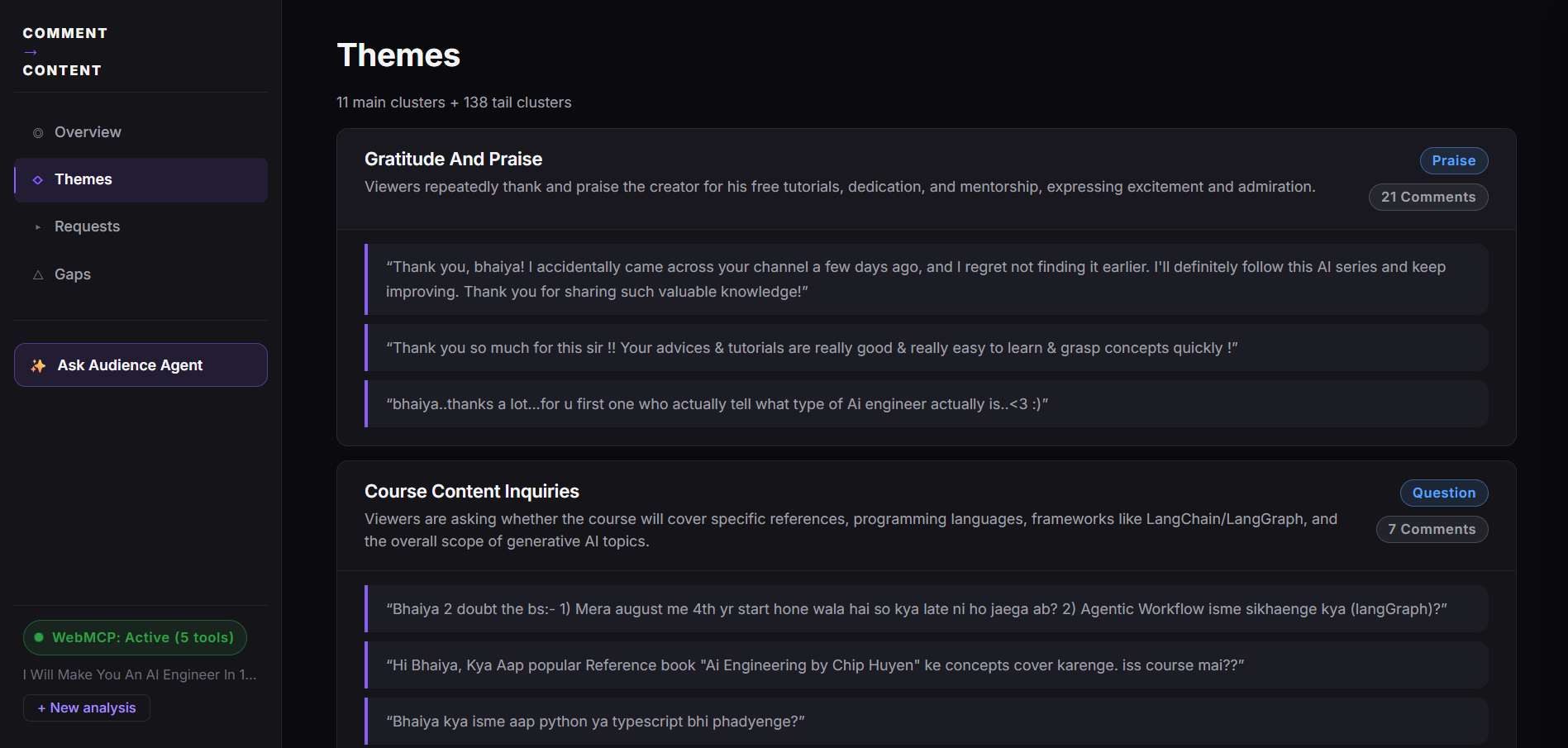
It converts comments into meaningful insights that the creators can use to discover the audience's demands and plan their content accordingly. Also, can be used by marketing teams to find the right content creator that matches their vibes and audience.
How we built it
A React + TypeScript frontend and a Node/Express backend, wired together as a single pipeline: pull YouTube comments, classify each one with an LLM, cluster them into named themes, score demand with a transparent formula, and detect content gaps. The app's real capabilities — get comments, classify, cluster, rank, find gaps — are registered client-side as WebMCP tools via document.modelContext.registerTool(), so an agent visiting the live site can discover and chain them itself.
Challenges we ran into
LLM provider reliability was the biggest fight — we hit rate limits on Groq, a fully deprecated model, a reasoning model silently burning its token budget on blocks, and NVIDIA NIM models getting decommissioned mid-build (410 errors, twice). We debugged our way through each with better logging, batch/concurrency tuning, and provider fallbacks. We also mid-flight realized WebMCP tools are registered client-side in the browser, not as a separate backend MCP server — a real architecture correction partway through the build.
Accomplishments that we're proud of
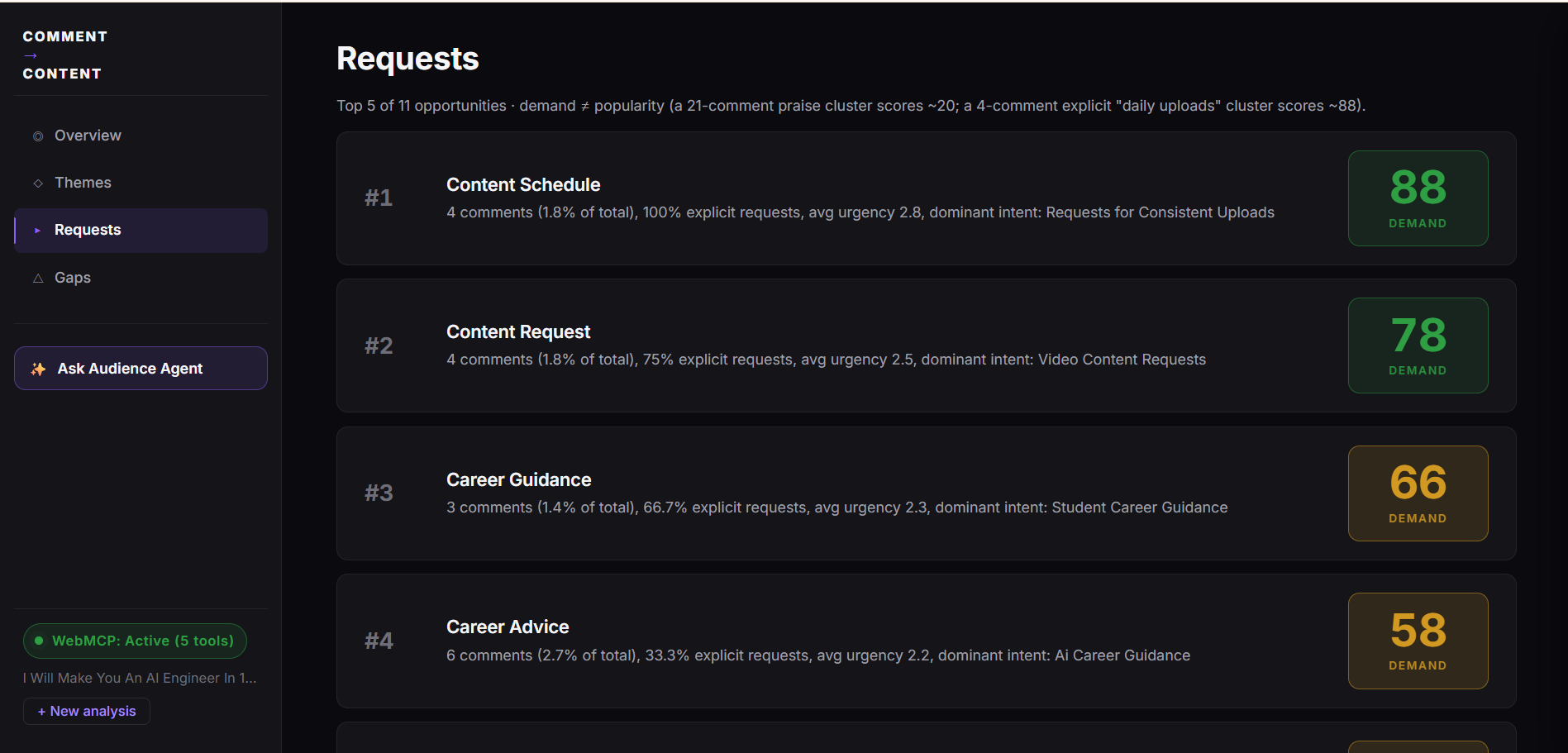
A demand-scoring formula that's fully transparent — every score comes with a plain-English "why," not a black box. Real audience data driving every screen, not mocked examples: 222 real comments, 11 genuine themes, real unanswered questions in the audience's own words. And getting actual multi-step WebMCP tool-chaining working live in the browser, not just a single flat API call dressed up as a "tool."
What we learned
That building for agents is a different discipline than building for humans — the temptation is always to wrap everything into one big convenient function, but the whole point of WebMCP is resisting that and exposing the real steps so an agent can reason about which ones it actually needs. We also relearned, the hard way, that AI provider infrastructure changes constantly and silently — plan for models disappearing mid-project, not just for rate limits.
What's next for CommentIntelligence
Channel-wide analysis across a creator's last several videos to surface patterns, not just one-video insights. Trend detection by re-analyzing over time to see which requests are growing. Expanding the same pipeline beyond YouTube — podcast reviews, App Store reviews, product feedback — since the underlying problem (turn scattered audience text into ranked demand) isn't platform-specific.
Built With
- express.js
- groq
- node.js
- nvidia-nim
- react
- render
- typescript
- vite
- webmcp
- youtube-data-api-v3

Log in or sign up for Devpost to join the conversation.