The Philosophy Behind Comma
When we came together to brainstorm an idea, we wanted to build a product that had a positive impact on women’s wellbeing, both mentally and physiologically. This meant that we had to identify and scope the challenges that women face in regard to their health. So we first began by clarifying the problem that we're solving.
The Problem
A common struggle amongst adult women is forgetting to take their birth control, which can have severe negative consequences. Increased risk of pregnancy, hormonal fluctuations, and physiological symptoms that can derail a woman’s daily life. Additionally, many women also struggle with mental health issues such as anxiety or depression, which can exacerbated by irregular menstrual cycles and hormone fluctuations.
What Comma Does
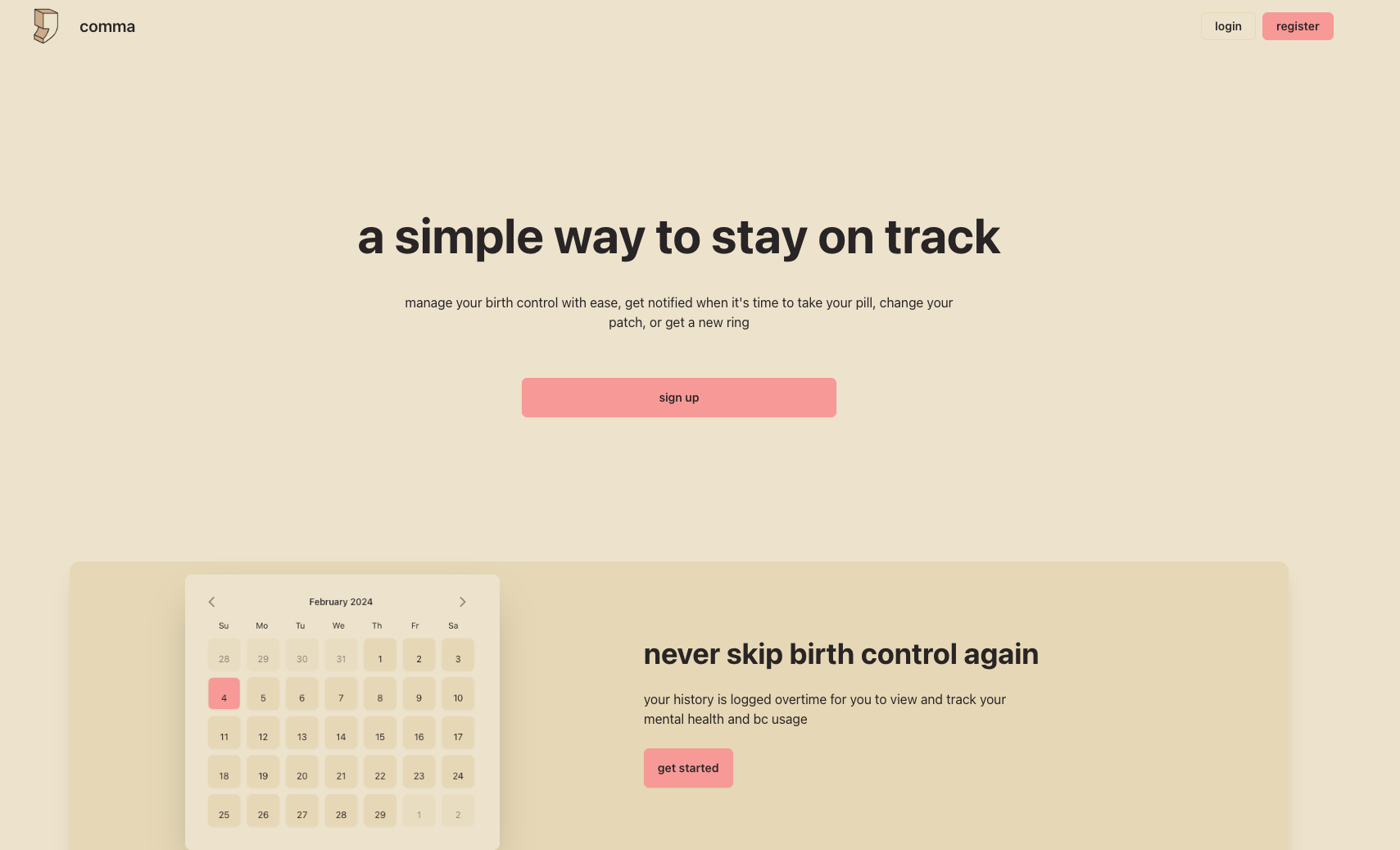
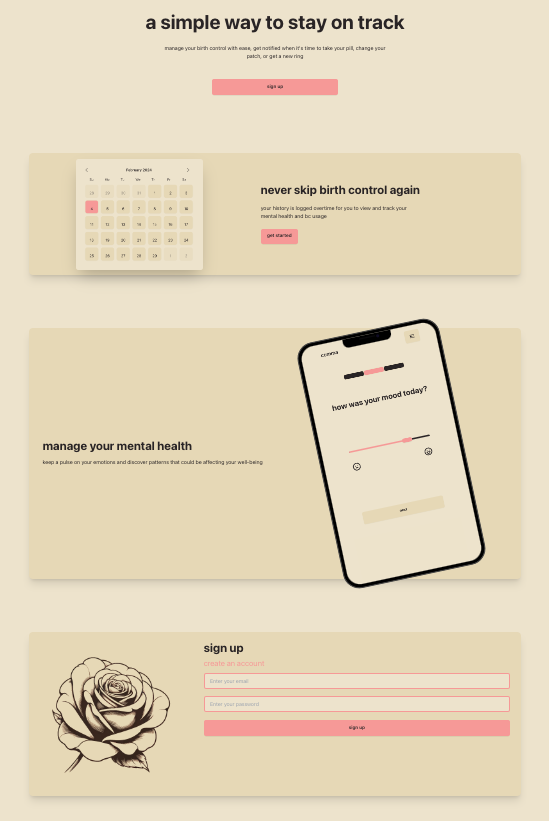
Comma assists women in these struggles by seamlessly integrating birth control reminders, mental health check ins, and healthy habits paired with a friendly and welcoming user interface.
Features
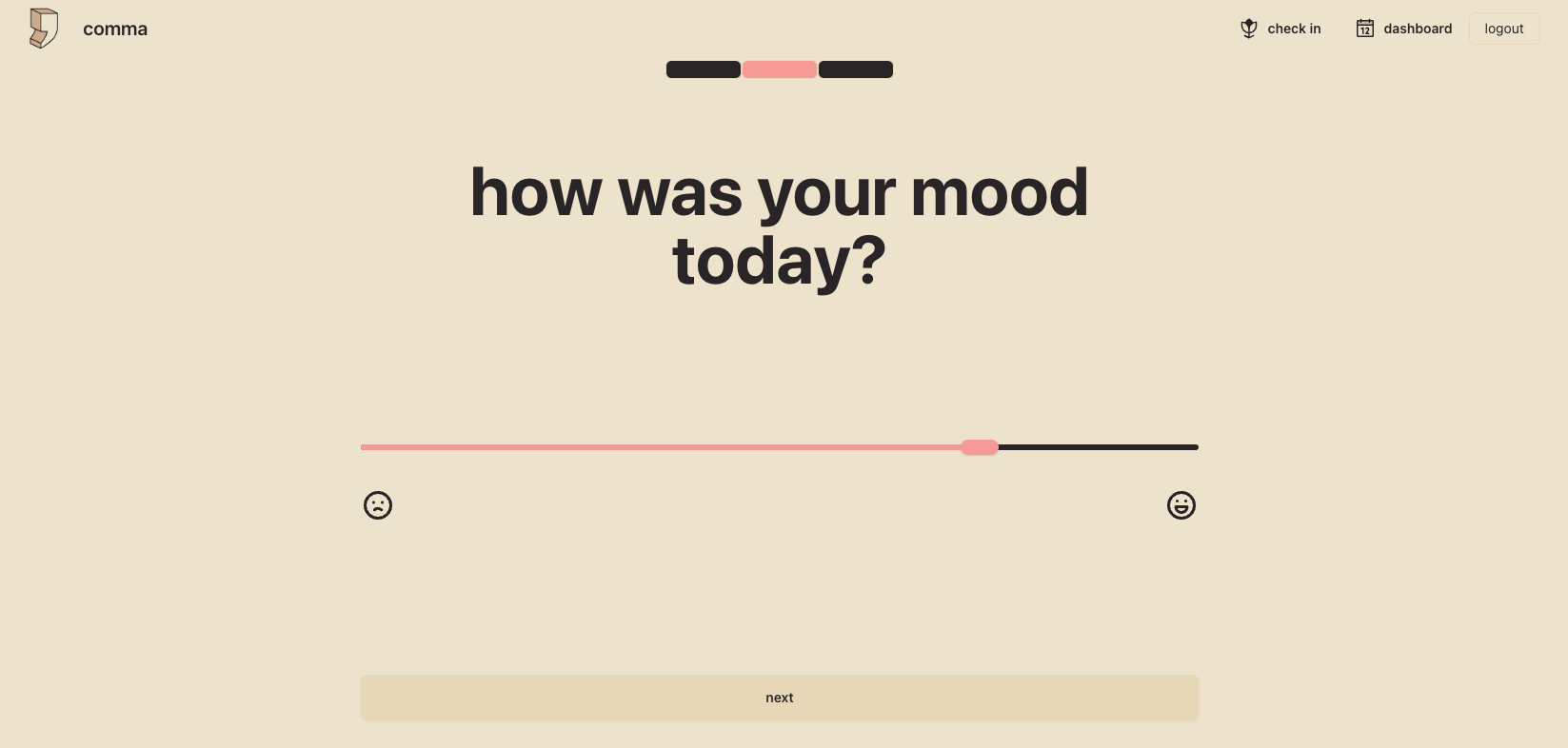
Users can sign up and create an account, which will lead them to their dashboard. Once a day, she will be prompted to check in where she can confirm that she took her birth control, log her emotions for the day, and journal about her thoughts to gain clarity and peace of mind.
How We Built Comma
When building comma, we decided early on that simplicity is key. Instead of building an app with dozens of features, we decided to build a solution that does a few things really well.
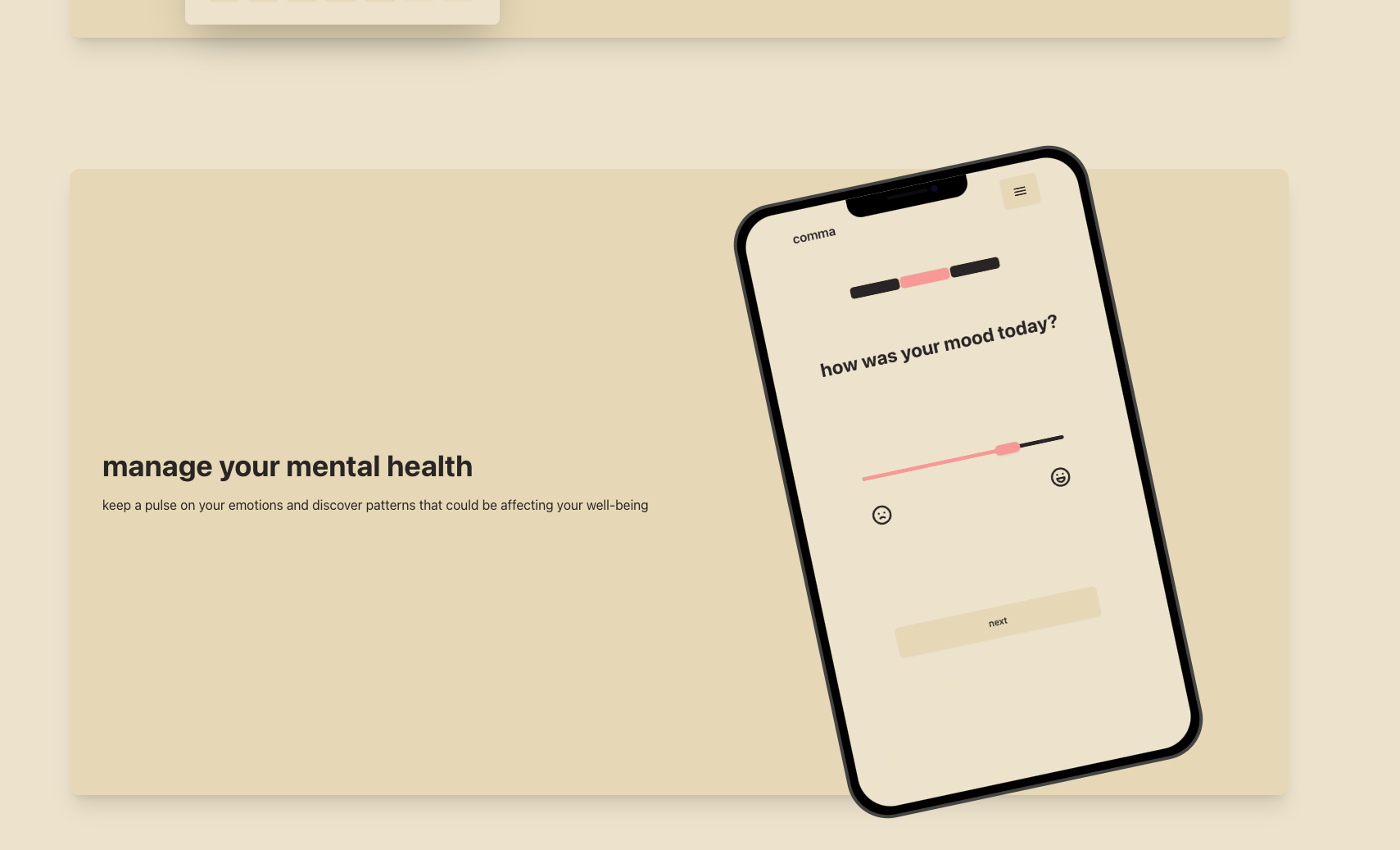
The first element of this is in our design. We wanted a simple, comforting, and friendly user experience to guide women to stability. We chose beige and pink color scheme alongside soft, mellow fonts to do achieve this. We also developed comma from a mobile-first approach, so that our product may be accessible on any device.
Development
After designing mockups in Figma, outline our products features, and settling on a tech stack, we began to code. The first step we took in our development was building the backend using Google Cloud's Firestore data storage, a serverless NoSQL cloud database. After handling the writing and reading of data, we focussed on rapidly developing the frontend and iteratively improving the design of each component. We used React.js to flesh out the front end with TailwindCSS and DaisyUI for our styling.
Built With
- daisyui
- firebase
- firestore
- google-cloud
- react
- tailwind

Log in or sign up for Devpost to join the conversation.