-
-
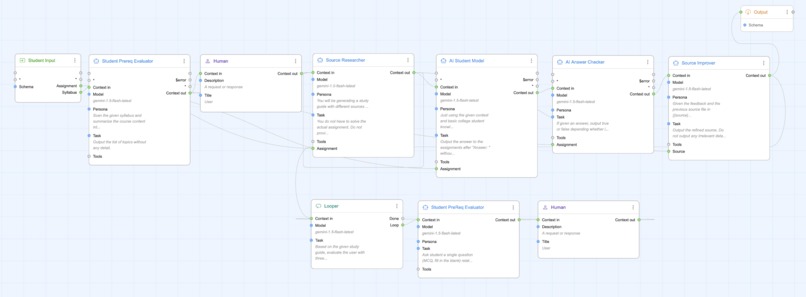
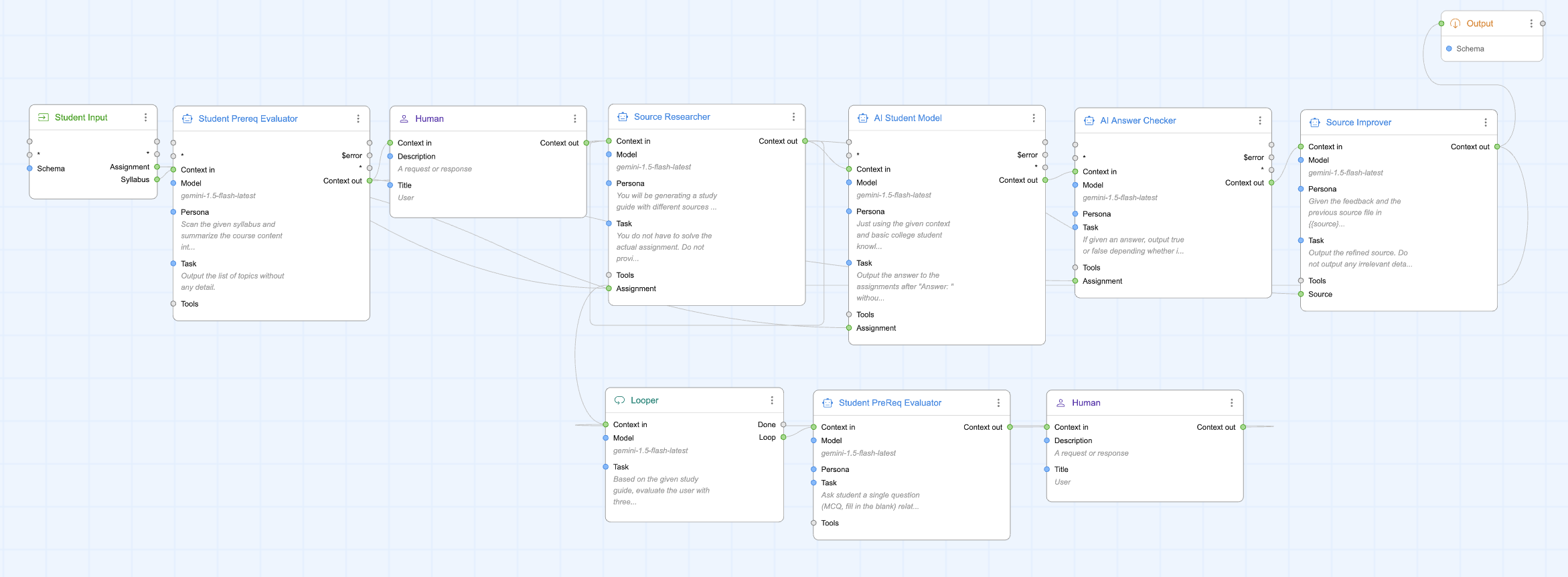
Full breadboard
Inspiration
The inspiration for CatchUp came during this hackathon, when one of us realized just how far behind we were in our coursework — we have an exam on Monday and over 100 unread pages to study. The pressure to both prepare for the exam and participate in the hackathon created a desperate need for a better way to catch up. This moment of stress and urgency sparked the idea for CatchUp — a platform designed to help students quickly get back on track with personalized, AI-driven study plans.
What it does
CatchUp is an AI-powered platform designed to assist students who are behind in their coursework by generating personalized lessons. Students upload materials such as homework, lecture notes, and course PDFs. Using advanced google breadboard, CatchUp evaluates their current understanding and creates tailored lessons aimed at filling knowledge gaps. The platform adapts as students engage with the lessons, providing feedback and automatically generating new content based on progress. CatchUp helps students get back on track by identifying their needs and dynamically creating a structured, efficient path to success.
How we built it
Our project leverages several cutting-edge tools and frameworks to create an efficient, adaptive platform. Here's a breakdown of the technologies and processes we used:
Backend:
- Google's Breadboard Library: We utilized Breadboard for prototyping the generative AI components, allowing us to visualize and streamline the system’s architecture. Breadboard helped us efficiently connect the various generative AI agents and manage the data flow between them.
- Qdrant (Vector Database): Qdrant serves as our vector database, supporting the Retrieval-Augmented Generation (RAG) processes. It enables us to store and retrieve content effectively, enhancing the system's ability to tailor learning materials based on user input.
- Gemini API: The Gemini API is integrated into our platform for AI-based text generation and processing, further enhancing the personalization and adaptive learning capabilities.
- University of Pittsburgh Course API & Textbook API: We connected to these APIs to dynamically pull course materials, ensuring that our system provides students with the most relevant and up-to-date content for their studies.
- Google Search API: For additional learning materials, the Google Search API was integrated to retrieve web resources, further enriching the content CatchUp generates for students.
Frontend:
- React: The frontend is built using React, ensuring a responsive, dynamic user interface that simplifies the student’s interaction with the platform. The UI is designed to be intuitive and adaptable, offering seamless integration with the backend systems.
Authentication:
- Auth0: For authentication and secure access to the platform, we implemented Auth0. This provides a robust and scalable solution for user management, ensuring that only authorized users can access personalized course content and their catch-up plans.
Challenges we ran into
Creating accurate assessments of student knowledge using LLMs Ensuring smooth integration of varied course materials, including video transcripts and PDFs Fine-tuning generative AI to create lessons that are both pedagogically sound and engaging Maintaining a user-friendly interface while incorporating advanced functionalities
Accomplishments that we're proud of
Successful integration of generative AI for personalized learning plan creation A functional platform that dynamically adapts to individual students’ progress Creating an intuitive workflow where students can quickly upload course materials and receive targeted lessons Overcoming technical challenges related to google breadboard and content generation
What we learned
Throughout the CatchUp project, we gained a deeper understanding of: The complexities of AI-driven personalized education Fine-tuning large language models to generate contextually appropriate lessons Using Google's Breadboard for fast AI prototyping Advanced text parsing and extraction techniques to effectively utilize a variety of course materials The importance of user feedback loops in creating adaptive learning experiences
What's next for coming soon
LMS Integration: Seamless integration with popular Learning Management Systems (LMS) to automate lesson creation directly from course syllabi and materials. Expanding Course Types: Incorporating a wider variety of subject areas, including STEM fields, humanities, and social sciences. Enhanced Assessments: Developing more advanced AI assessments that can diagnose specific knowledge gaps and adjust lessons accordingly. Collaborative Learning: Implementing peer-to-peer feedback mechanisms where students can review each other's work and suggest improvements. AI Improvement: Training on larger datasets, such as open educational resources and research papers, to further improve lesson quality and depth.


Log in or sign up for Devpost to join the conversation.