-
-
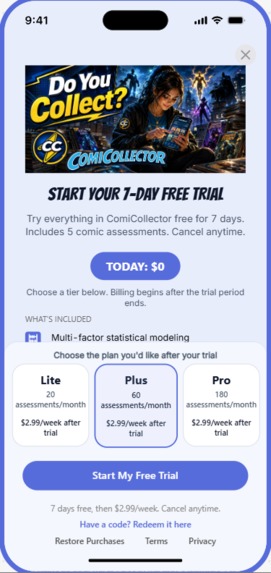
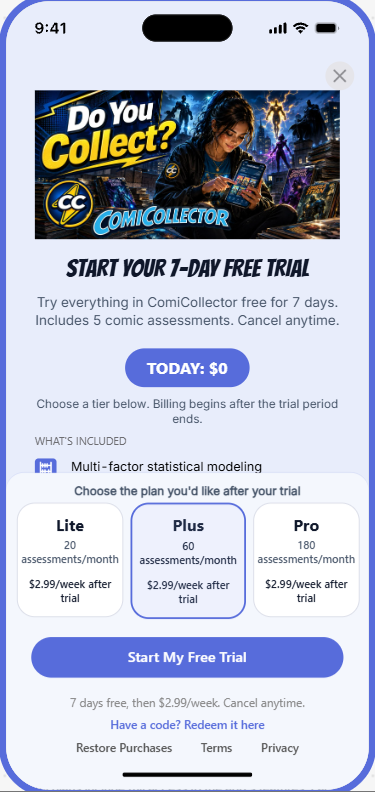
RevenueCat Paywall
-
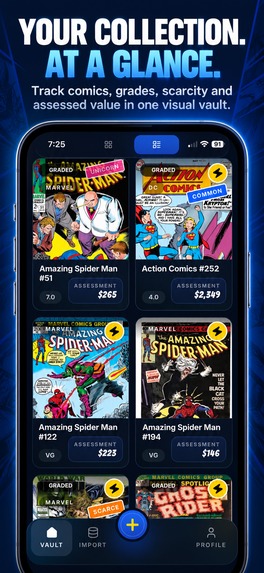
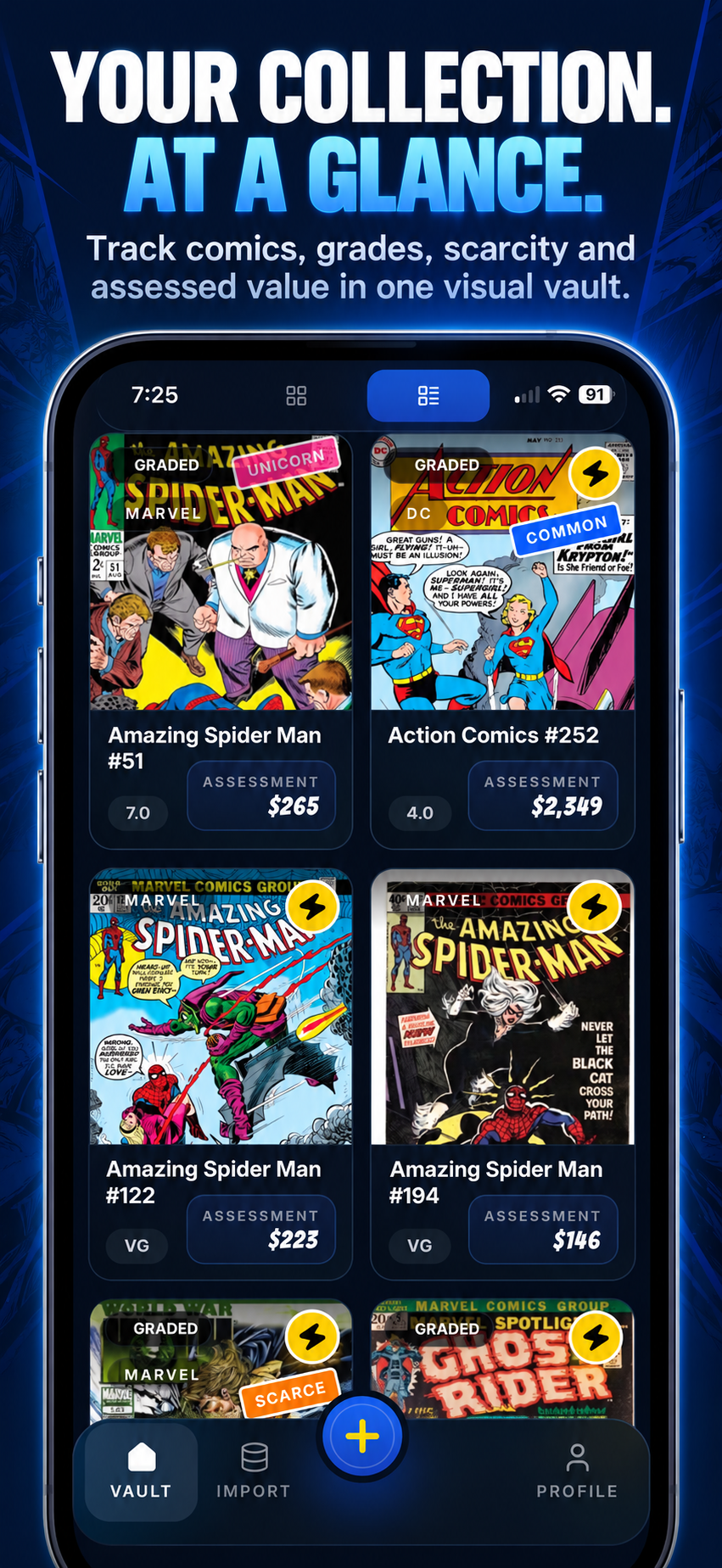
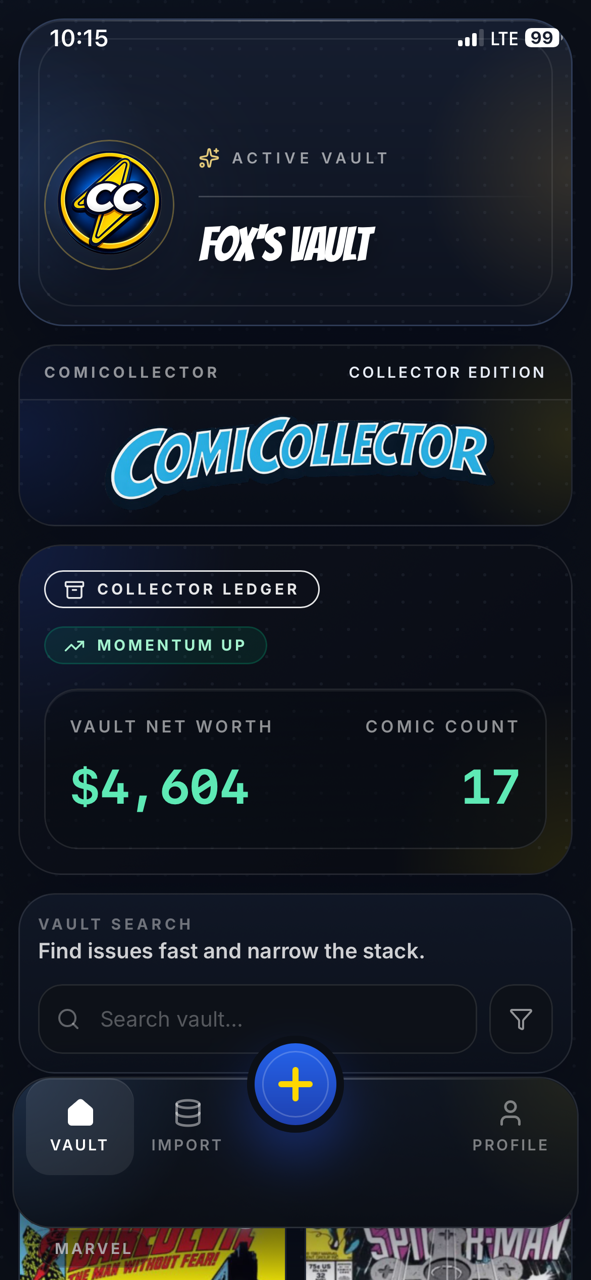
Understand your collection at a glance.
-
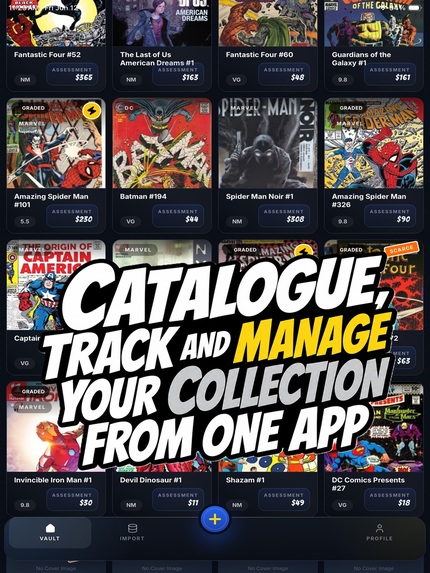
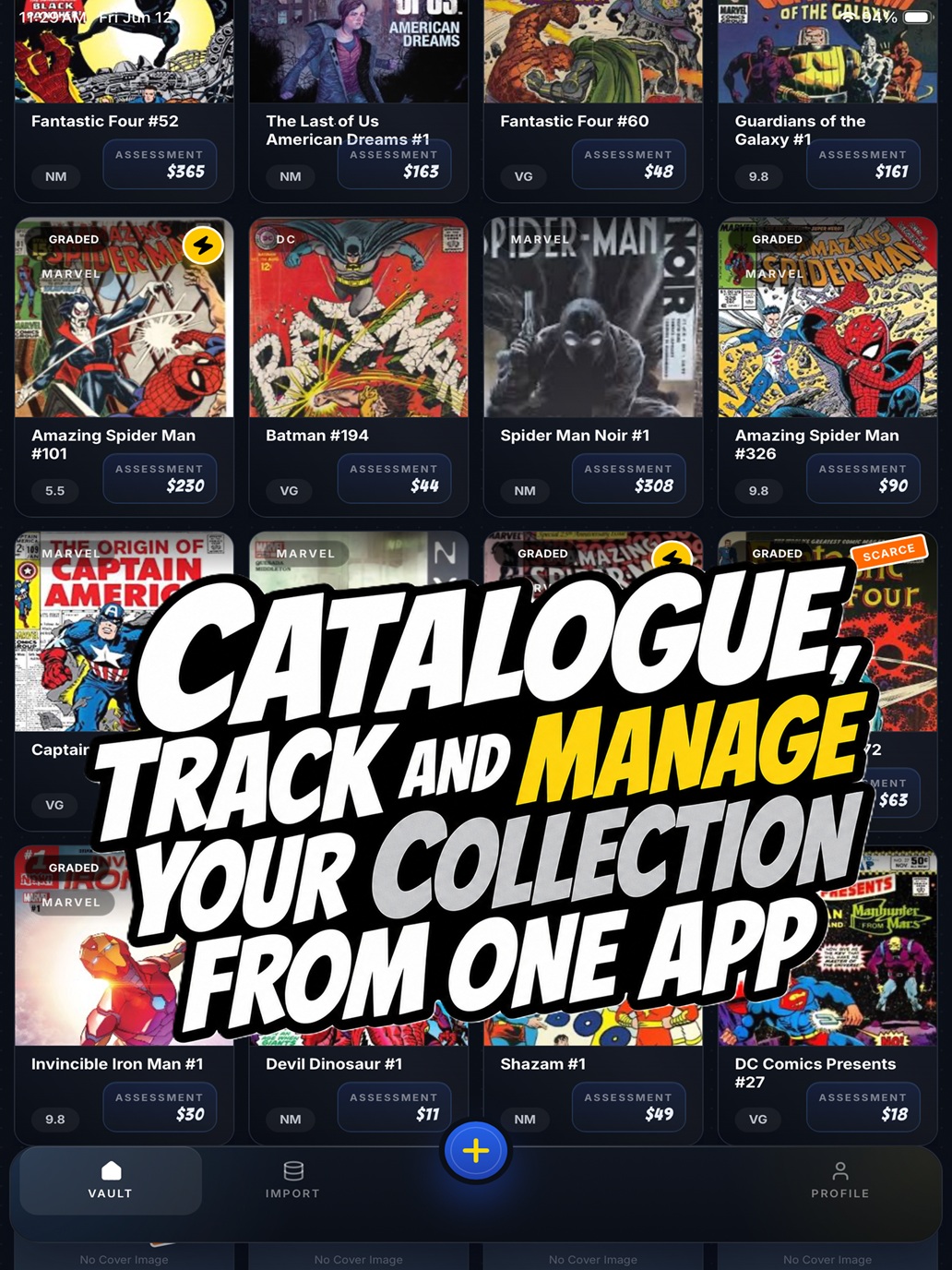
Catalogue, track, manage, repeat. (iPad view)
-

Dynamic load screen while assessing books.
-
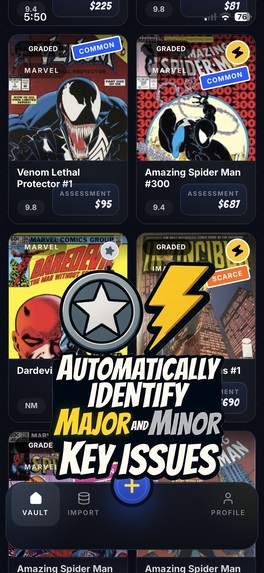
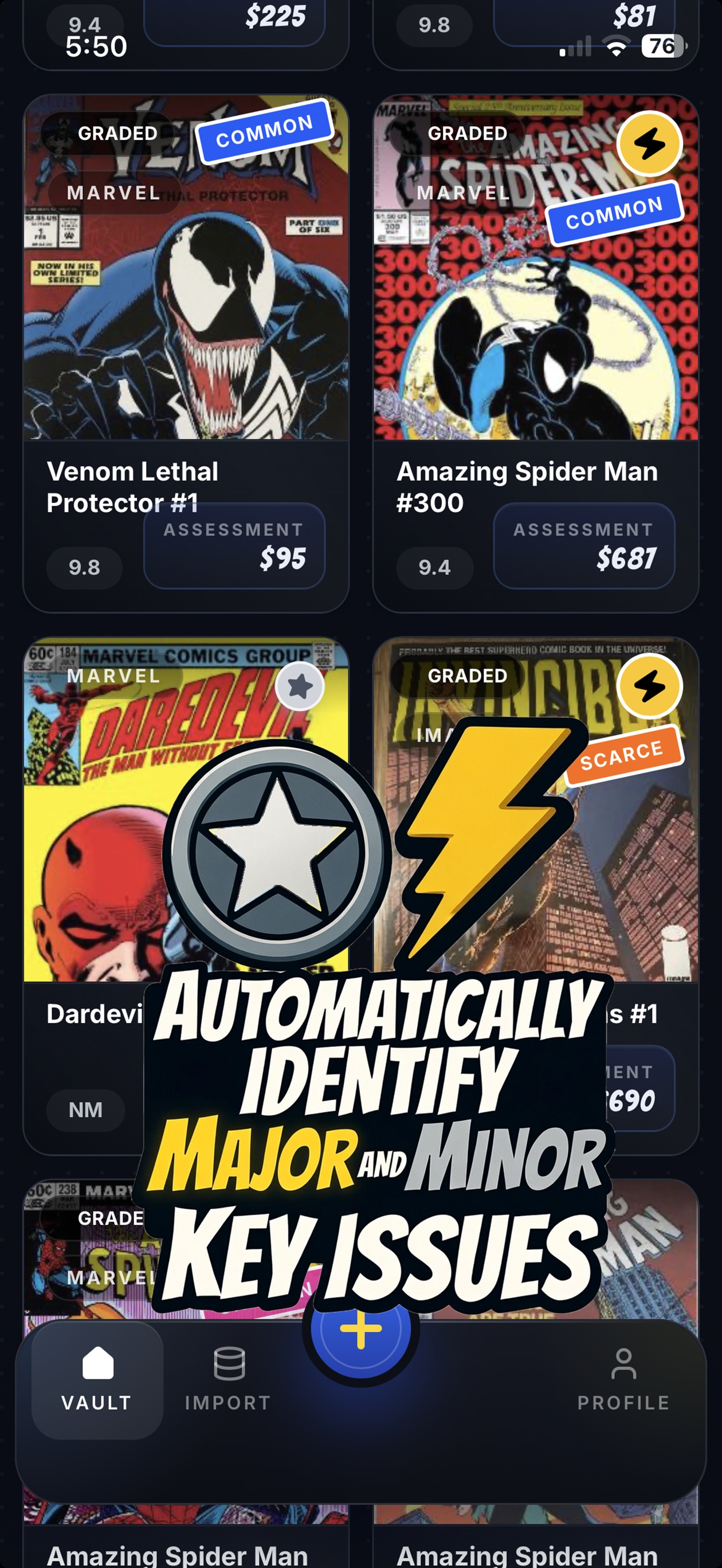
Quickly identify key books with automatically generated Major/Minor key badges.
-
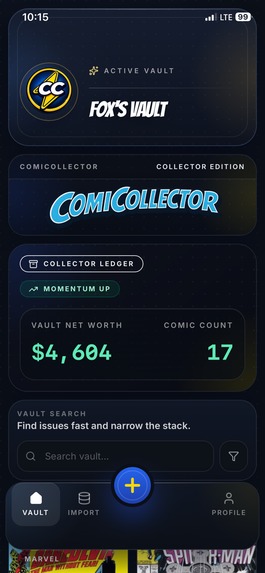
ComiCollector app collection quick reference
-
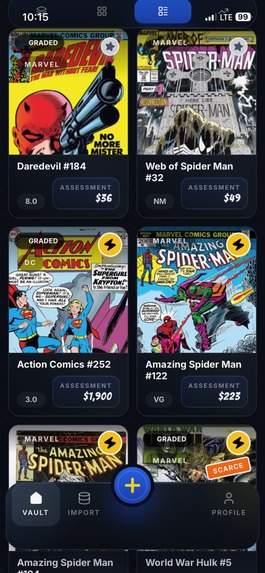
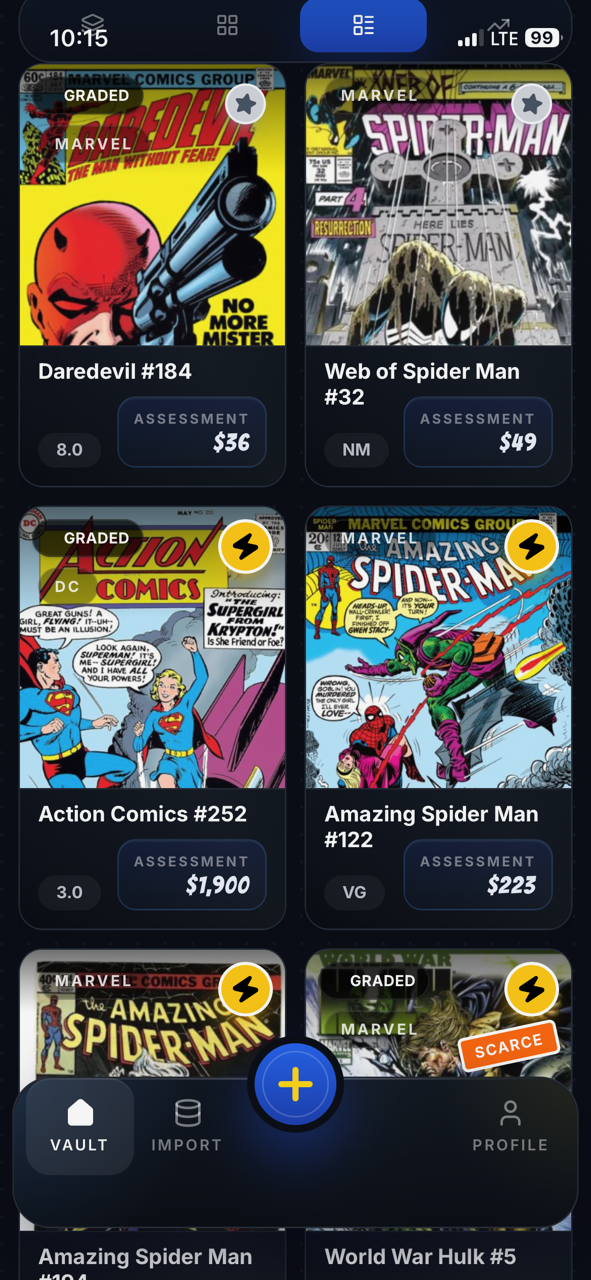
ComiCollector collection in Grid View (Minor Keys have Grey stars)
-
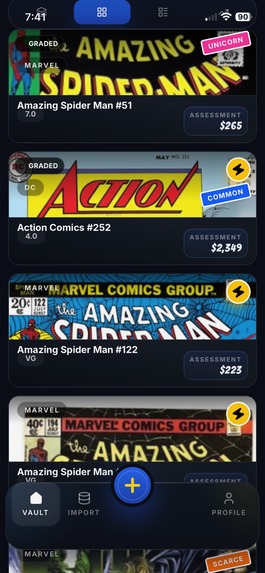
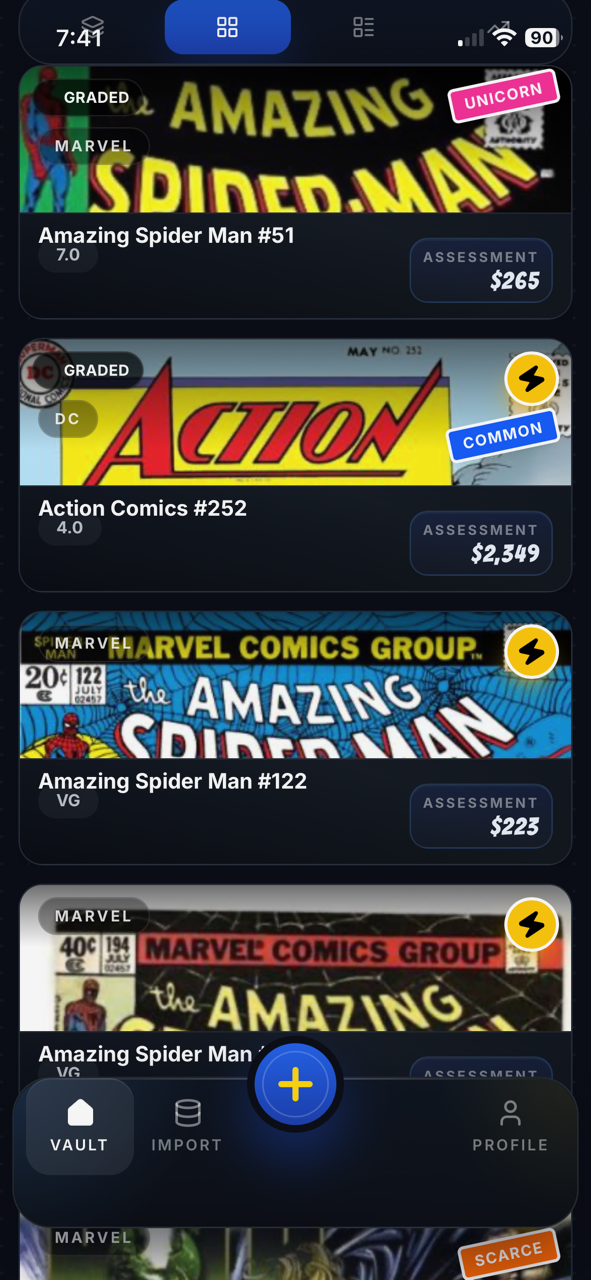
ComiCollector collection displayed in List View (this is one of 3 different display modes that users can choose to display their collection)
-

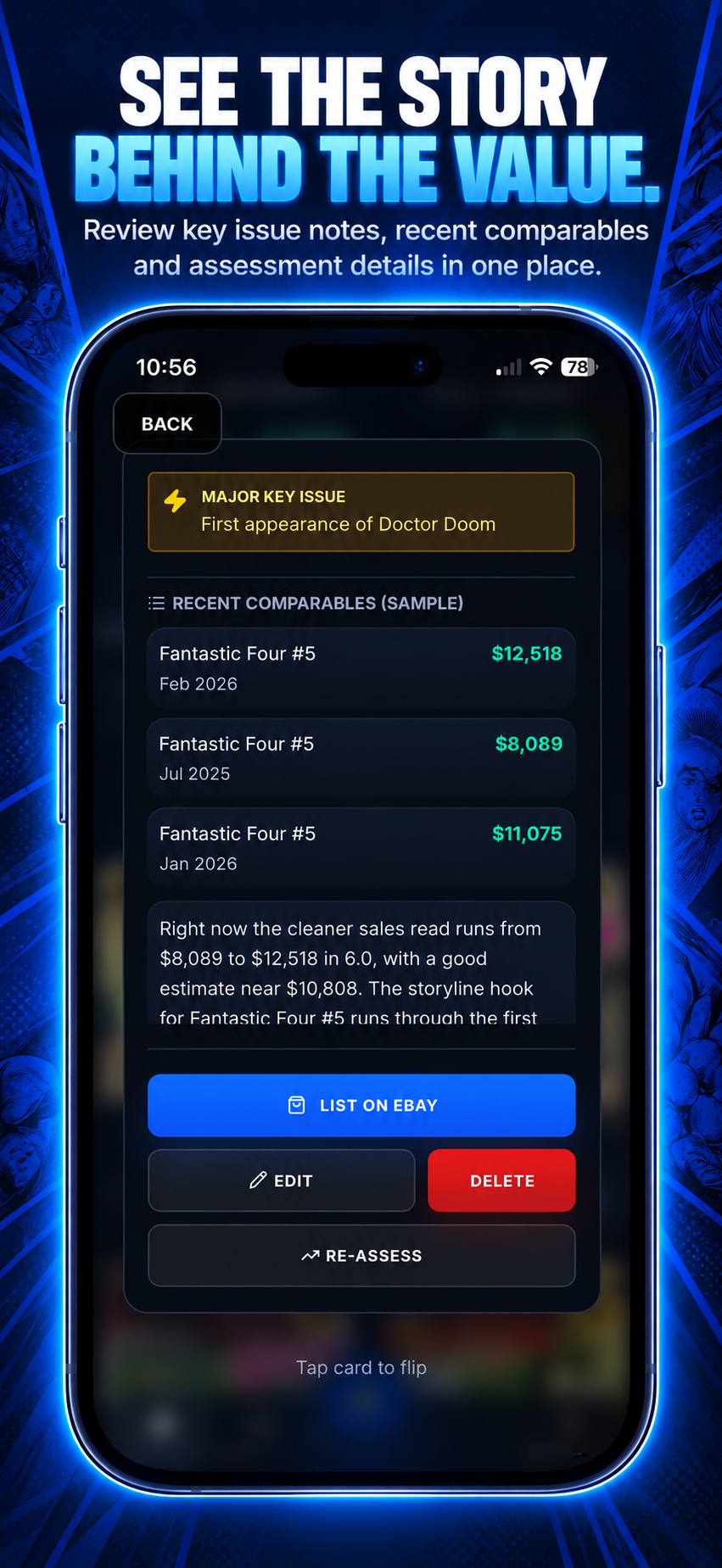
Check the back of each ComicCard for more in-depth information on each book you own.
-
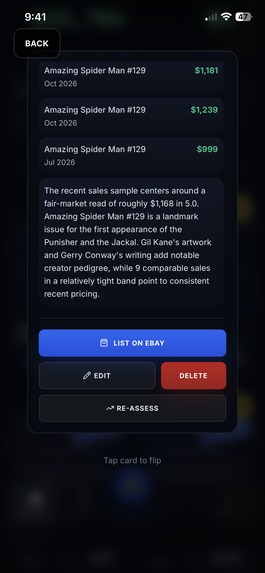
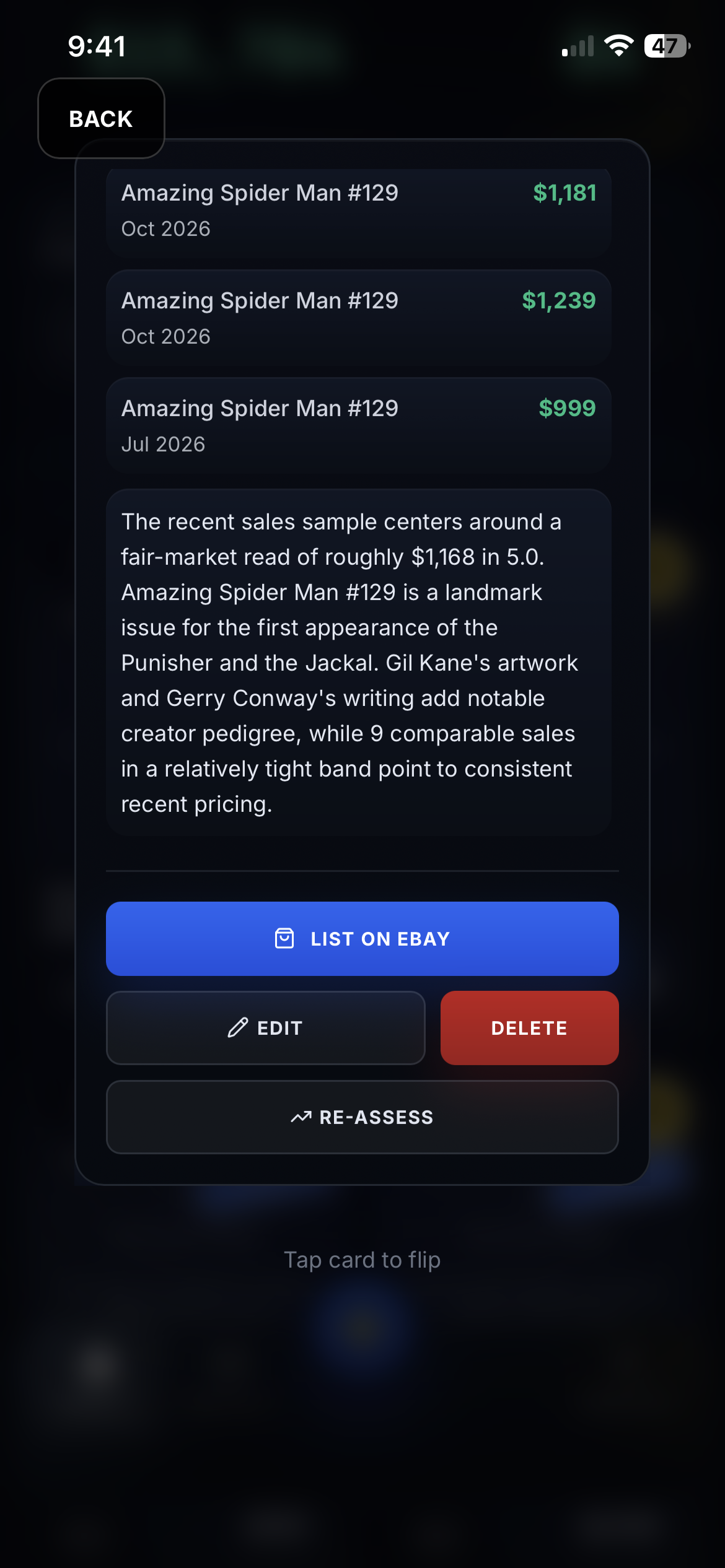
Market Insight Notes are created automatically by ComiCollector for each book you assess.
-
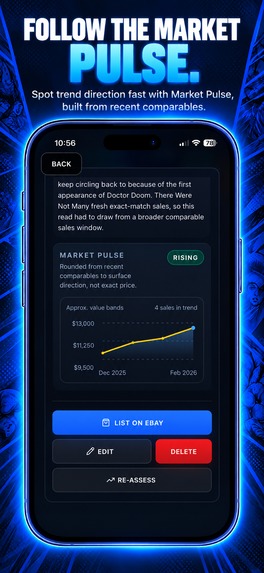
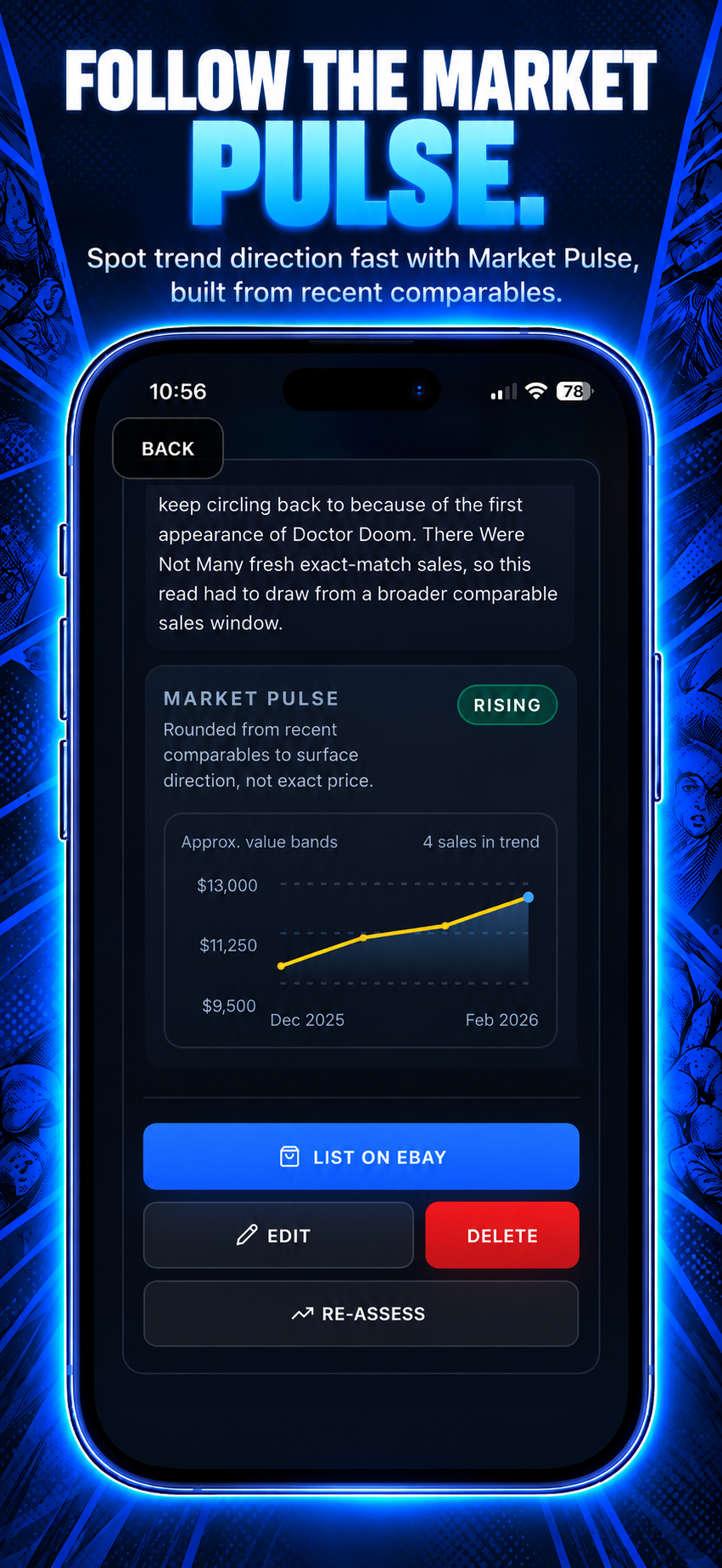
The Market Pulse shows you trends related to each book in your collection (when supporting data is available).
-

One click eBay listings. We even fill out the details for you making listing to eBay seamless.
-

Insurance Ready documentation so you can have serious discussions about protecting your collection.



ComiCollector — Built by a Collector, for Collectors. Do You Collect?
Entering the Grand Prize • HAMM Award • RevenueCat Design Award • Solo Shipper Award — all while dreaming big.
ComiCollector is a mobile platform for collectors who want to catalogue, understand, value, document, and manage their comic collections without jumping between spreadsheets, price guides, marketplaces, and research tools.
The simplest way to explain ComiCollector is this:
I built a market-intelligence platform that can research, filter, interpret, compare, and reason across large amounts of messy comic-market data — then compressed all of that complexity into a front end (app) experience that hides all of the complexity and feels simple to the collector.
Behind a single assessment can be live market research, comparable analysis, condition and grade interpretation, edition filtering, historical evidence, AI-assisted reasoning, reusable market intelligence, confidence checks, and valuation logic.
The collector sees a comic.
They see what matters.
And if they want more, they can go deeper.
Complex underneath. Effortless on top.
Inspiration
I love comic books and I am an avid collector.
But I kept running into the same problem: I had stacks of books, but understanding what I actually owned required jumping between catalogue apps, price guides, marketplaces, spreadsheets, and research tools.
So I built ComiCollector.
The goal was never to create another comic database. I wanted a modern collecting experience that could help collectors quickly understand what they own, what matters, what it may be worth, and where they should look closer.
What ComiCollector Does
ComiCollector is an AI-assisted mobile app for identifying, cataloguing, researching, valuing, documenting, and managing comic books.
Collectors can:
- Catalogue and organize comics
- Research individual issues
- Identify key and significant books
- Evaluate current market evidence
- Estimate values using relevant comparable listings
- Track raw and professionally graded comics
- Surface standout books within a collection
- Track Major Key, Minor Key, Scarcity, Read, and Listed-for-Sale states
- View market movement through Market Pulse
- Generate insurance-ready collection documentation
- Import and export collection data
- Move eligible books toward sale through integrated eBay workflows
Instead of making collectors jump between tools, ComiCollector turns those jobs into one connected experience.
Designing Around the Comics
One of my strongest design goals was simple:
The comic should always be the hero.
Comic books are already highly visual objects. I didn't want to bury them behind a traditional database interface.
ComiCollector uses cover art as the visual foundation of the collection, with information and intelligence layered around it.
Collectors can switch between different collection views, quickly filter large libraries, identify important or graded books, and understand collection status without reading every field.
The goal is for the Vault to feel like a collection — not inventory software.
Complex Underneath. Effortless on Top.
A major challenge was presenting comic valuation without turning ComiCollector into a financial dashboard.
A single assessment may involve:
- Live market research
- Comparable analysis
- Condition and grade interpretation
- Edition filtering
- Historical context
- AI-assisted reasoning
- Confidence checks
- Reusable market intelligence
- Fallback logic
Behind that are systems for market-data storage, caching, background refreshes, subscriptions, quota enforcement, evidence reconciliation, and production deployment.
The backend may make dozens or hundreds of decisions before the collector sees one result.
But the collector shouldn't need to understand that machinery.
They want to know:
What is this worth?
If they want to understand why, ComiCollector lets them go deeper into the supporting evidence on the back of the ComicCard.
Simple first. Depth when you want it.
The complexity is not removed.
It is absorbed by the product so the collector does not have to carry it.
The Hard Part Wasn't Finding Prices
Finding comic prices is easy.
Finding good evidence is hard.
A search for one comic can return the wrong issue, reprints, facsimiles, variants, signed copies, lots, different grades, different editions, and poorly described listings.
A valuation system that blindly averages those numbers isn't intelligence.
It's just arithmetic.
A huge amount of the project went into deciding which market evidence should — and should not — be trusted.
ComiCollector filters poor comparisons, distinguishes between grades and editions, evaluates the remaining evidence, and builds an assessment using the strongest information available.
When previously gathered intelligence can safely be reused, unnecessary research can be avoided, improving both response time and operating efficiency.
How I Built It — By Myself
ComiCollector is a cross-platform mobile application built with:
- React
- TypeScript
- Vite
- Capacitor
- Node.js / Express
- PostgreSQL
- AI and language models
- Live comic-market research and normalization systems
- RevenueCat
It runs on both iOS and Android through Capacitor.
The collector's library is kept primarily on their own device, following Privacy by Design principles, while market intelligence is handled by a backend built to gather, evaluate, store, and reuse evidence.
The production backend already uses a blue/green deployment architecture, allowing server updates and assessment-pipeline changes without deliberately taking the service offline or interrupting assessments already underway.
The current production environment supports early growth, with a defined path toward larger load-balanced AWS and Kubernetes-based infrastructure when demand justifies it.
AI Is a Tool, Not the Source of Truth
AI is part of ComiCollector, but I learned very quickly that AI should not be the source of truth in a detail-sensitive collecting market.
Comic values can change based on grade, printing, variant, edition, certification, volume, and other subtle distinctions.
I tested approaches that relied much more heavily on AI, including camera-first identification, but accuracy, latency, and cost were not reliable enough for the level of precision I wanted.
ComiCollector therefore combines AI with deterministic rules, structured historical data, market evidence, filtering, and guardrails.
AI helps interpret the market. It doesn't get to invent the market.
Challenges
Comic Data Is Messy
Decades of publishing history create enormous ambiguity.
Series restart. Issue numbers are reused. Publishers rename books. Variants multiply. Sellers describe condition differently.
I originally thought these would be edge cases.
Eventually I realized:
The edge cases are core to comic collecting.
Raw Comics Are Hard
Professionally graded comics provide a numerical grade.
Raw comics may be described as "NM," "High Grade," "Beautiful Copy," or nothing at all.
Yet condition can dramatically affect value.
ComiCollector therefore has to interpret the evidence that exists without pretending it is stronger than it really is.
Speed Versus Intelligence
A thorough assessment may require multiple searches and substantial analysis.
That's useful for accuracy.
It isn't useful if the collector has to wait forever, and it isn't sustainable if unnecessary research is repeated every time.
That forced me to think seriously about:
- Caching
- Query efficiency
- Reusable market intelligence
- Background refreshes
- Search depth
- When more research actually improves the answer
When relevant intelligence can safely be reused, ComiCollector can avoid repeating unnecessary external searches and AI work.
That improves both the customer experience and the economics of operating the platform.
Sometimes the smartest AI call is the one you don't make.
Building a Sustainable Product With RevenueCat
I didn't want ComiCollector to be a demo.
I wanted to ship a real product with a business model capable of supporting continued development.
RevenueCat powers ComiCollector's subscription system across both iOS and Android.
The current plans are:
- Lite — $2.99/month — 20 assessments
- Plus — $5.99/month — 60 assessments
- Pro — $11.99/month — 180 assessments
All subscribers receive the core collecting experience. The primary difference between tiers is assessment capacity.
That creates a natural progression: collectors move to higher-capacity plans as their actual usage grows rather than because unrelated features have been artificially withheld.
RevenueCat provides the common entitlement layer across Apple and Google and supports purchase handling, restoration, paywall presentation, introductory offers, and future pricing and packaging experiments.
ComiCollector's subscription model is closely connected to its architecture.
Every market search and AI operation has a cost. Every safe reuse of previously gathered intelligence avoids unnecessary work.
That forced me to think about unit economics at the feature level:
Can this research be reused?
Does another search materially improve the answer?
Can I make the product faster while also making it more efficient to operate?
The model is designed so that:
more customer usage can create higher subscription value
while:
more accumulated intelligence can reduce average delivery cost and improve response speed.
With ComiCollector, monetization became part of the engineering.
What I Learned
The biggest lesson was that a useful AI product requires much more than an AI model.
It requires:
Good data. Good rules. Good judgment. And an understanding of when the system might be wrong.
I also learned that sophisticated technology doesn't require a sophisticated-looking interface.
In fact, the more complicated ComiCollector became internally, the more strongly I felt the interface needed to become simpler.
Complex underneath. Effortless on top.
And I learned the importance of actually shipping.
It is easy to keep adding another feature, optimization, or refinement.
Eventually the product has to get into people's hands.
ComiCollector is now live on both the Apple App Store and Google Play.
Building it required solving product and technical problems.
Growing it now requires learning how to explain it quickly, finding where collectors spend their time, measuring where users drop out, and improving the path from discovery to subscription.
RevenueCat Design Award
Collecting is visual.
Comic books are art objects, and I wanted the application to respect that.
The design challenge was not simply making ComiCollector attractive. It was deciding how to make a huge amount of information disappear until the collector actually needs it.
For the RevenueCat Design Award, I would especially ask judges to look at:
- The cover-first collection experience
- Multiple collection view modes
- The visual hierarchy of ComicCards
- Vault personalization
- The presentation of professionally graded comics
- Major Key, Minor Key, Scarcity, Read, and Listed-for-Sale indicators
- Market Pulse
- Progressive disclosure of deeper market intelligence
- The dynamic assessment/loading experience
- Comic-themed messages and Easter eggs
- Dark and light presentation
- Consistency across iOS and Android
I think of ComiCollector like an iceberg.
The visible interface is the small, simple portion above the waterline.
Below it is a much larger system of market intelligence, historical data, evidence processing, AI, subscriptions, and background infrastructure working so the collector can see something understandable.
The technology should support the collection — not compete with it.
The technology should disappear behind the collection so the collector can simply collect.
What's Next
ComiCollector has shipped.
Now the focus is learning from real collectors.
I want to understand:
- Where users encounter friction
- Which intelligence features provide the most value
- How often subscribers assess books
- Which plans collectors choose
- Where users abandon onboarding or subscription
- How reusable intelligence affects performance and operating cost
- Which acquisition channels turn attention into real users
Future versions will increasingly be shaped by actual usage rather than assumptions made during development.
There is an enormous amount of information scattered across decades of comic collecting.
ComiCollector is my attempt to bring that intelligence together, hide the complexity collectors should not have to think about, and put the information that matters directly into their hands.
Shipaton 2026 Showcase ComiCollector entered RevenueCat Shipaton 2026 and went on to be featured in the official Shipaton Showcase. I’ve put together the full recognition story — including the official Showcase listing, the Devpost entry, and what the recognition means for ComiCollector as it continues to grow. Read the full ComiCollector Shipaton recognition story
So I'll ask the question: Do You Collect?
If you do, you need ComiCollector.
Built With
- ai
- capacitor
- codemagic
- node.js
- postgresql
- react
- revenuecat
- typescript
- vite


Log in or sign up for Devpost to join the conversation.