Introduction / Inspiration
In a world full of digital noise, we’re constantly hit with ads — banners, autoplay videos, pop-ups. Most of them yell for our attention… and most of them vanish from our minds just as fast.
But stories? We tend to remember those. Especially the ones that made us laugh — the kind we used to cut out and stick to the fridge.
That got us thinking: maybe it’s not the message that matters, but the feeling it leaves behind. So we built Comicly — a little tool that turns products into short, funny comics. Not ads. Just tiny stories someone might smile at… and maybe remember later.
What it does
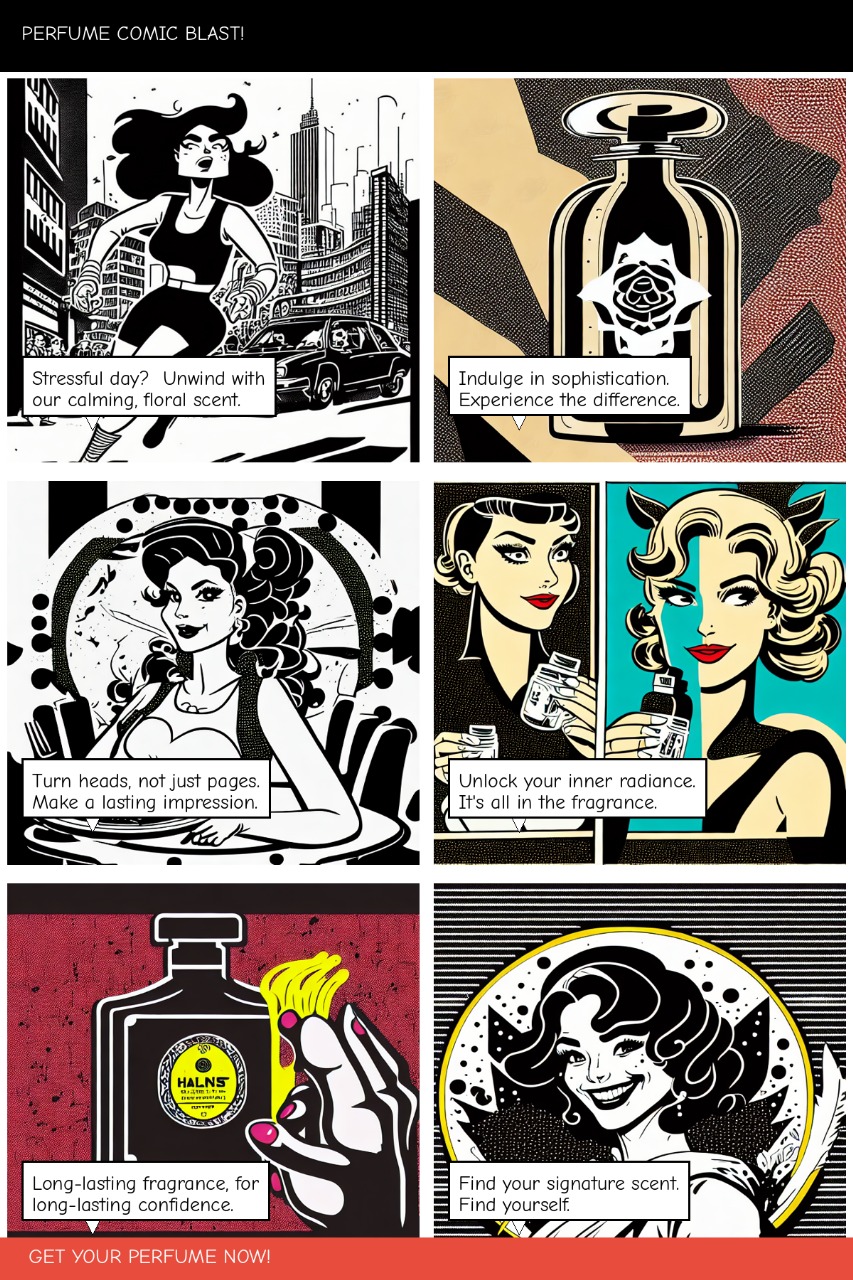
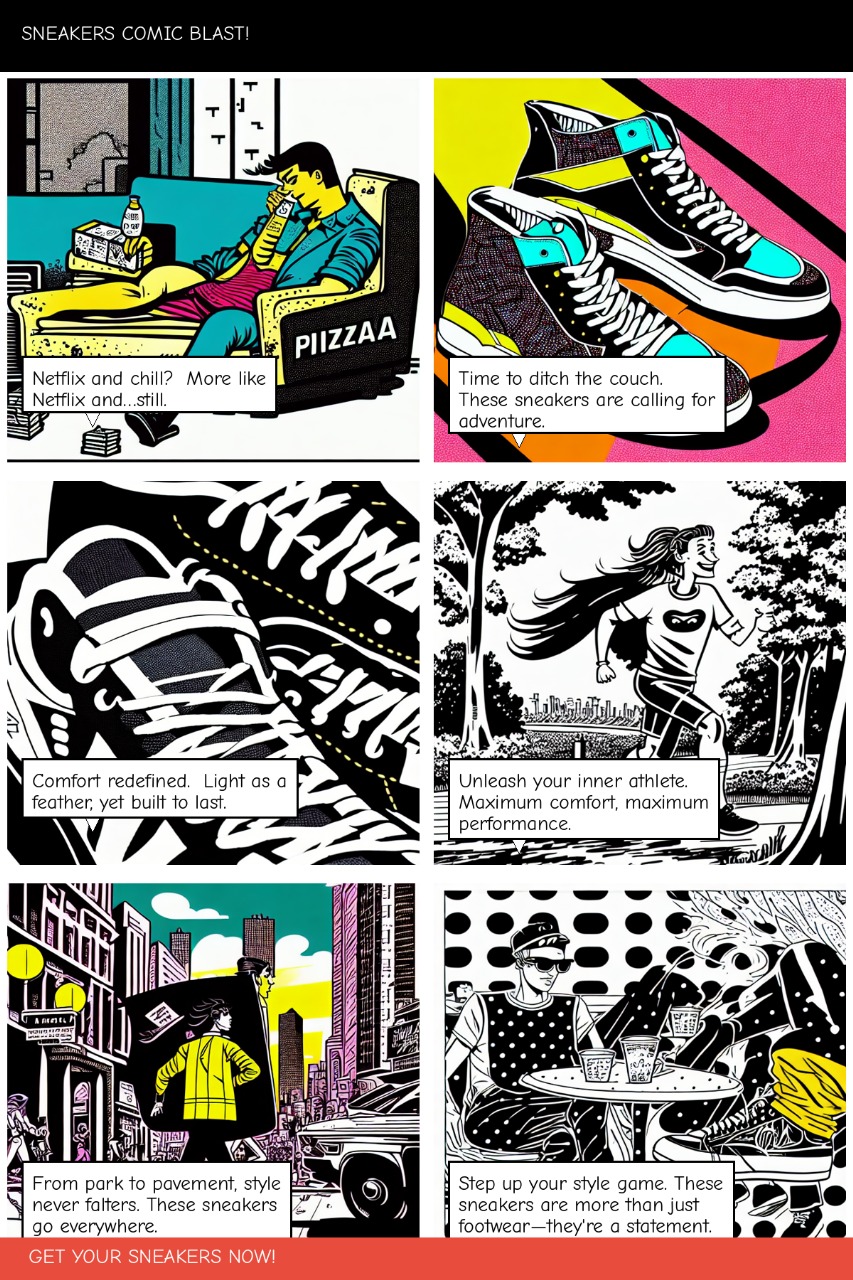
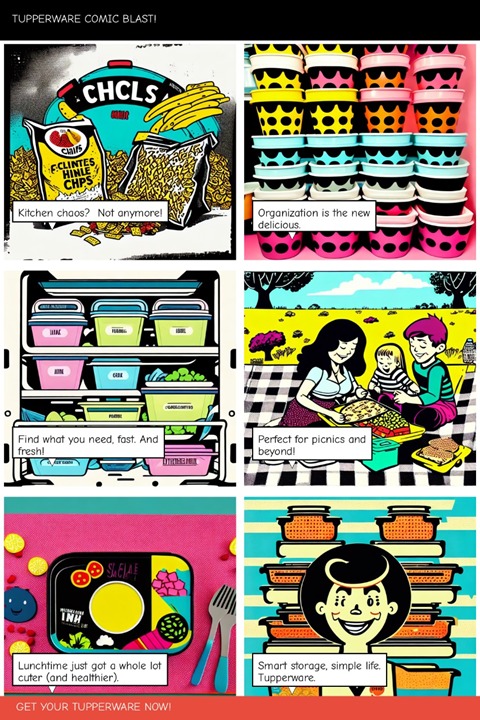
Comicly takes something as ordinary as a product and turns it into a short, illustrated comic — the kind you'd actually want to read and maybe even share.
You just give it a product name, an audience, and how many panels you want. Then, it writes a comic story, creates a scene for each panel using AI-generated art, and lays it all out into a full comic strip — no design or writing skills needed.
It runs locally and uses a multi-agent setup: one writes the script, one illustrates, and one assembles the layout.
It’s for anyone who wants to tell stories about what they’re building — with humor, color, and a little bit of heart.
What we built
Comicly is a multi-agent system that turns any product idea into a short, illustrated comic strip — simple input, full story output. We built it for the Content Creation and Generation category to explore something different: most content generation tools feel a bit forced, like they’re trying too hard to be catchy. Comicly does the opposite — it brings a smile through light, funny little stories that feel personal. Because sometimes, the best way to remember a product isn’t a flashy slogan — it’s a small, delightful tale.
How we built it
We built Comicly using Google’s Agent Development Kit (ADK) as a truly collaborative multi-agent system — not just a prompt chain. Each agent was implemented with LlmAgent and its own BaseTool, taking on a creative studio-like role and working through shared context and adaptive logic. Here's how they work together:
- StoryAgent – uses Gemini 1.5 Flash to write witty, audience-specific comic scripts.
- PanelAgent – renders each scene using Stable Diffusion (
dreamlike-art/dreamlike-diffusion-1.0) via thediffuserslibrary. - LayoutAgent – assembles the comic using Pillow, adding visuals, dialogue, speech bubbles, and a final tagline.
The image generation pipeline is GPU-accelerated and optimized with attention slicing, VAE slicing, and model CPU offload for fast, memory-efficient rendering. And Comicly isn’t a rigid sequence — if an image fails to render properly, the agents adapt and retry with improved prompts, ensuring a complete and coherent output without manual intervention.
All it takes is a few words of input: product name, audience, and number of panels. In return, Comicly delivers a fully-illustrated comic strip — cohesive, expressive, and often smile-inducing — created entirely by agents that feel like a tiny creative studio in code.
Features
1.True Agentic Creation: Each LlmAgent acts independently with its own tool, not just chained prompts. 2.Cohesive Storytelling: Generates full comic narratives — not disjointed text or isolated images. 3.Error-Resilient Workflow: Agents adapt, retry, and recover if any panel or step fails. 4.Built for Content Generation: Unlike static tools, Comicly creates emotional, story-driven content people actually enjoy and remember. 5.Fast & Efficient Generation: GPU-accelerated diffusion with memory-saving optimizations
What we learned
We came into this with no idea how to design a multi-agent system — just a shared curiosity and a fun idea. Over the course of the project, we dove deep into Google’s Agent Development Kit, learned how to coordinate independent agents in Colab, and connected tools like Gemini and Diffusion to bring everything to life.
But what we’ll remember most isn’t just the tech. It’s the moments of surprise and laughter when our comics worked. It’s realizing that we made something people actually enjoyed — something we’d want to see more of in the world. Marketing that doesn’t shout, but connects. Content that doesn’t feel forced, but brings a smile.
It gave us a sense of direction. We’d love to keep exploring this space of creative, human-centered AI and see how far we can take it.
What's next for Comicly
As Comicly continues to evolve, our focus is on expanding its capabilities and enhancing its performance to better meet the needs of our users. Here’s what’s on the horizon: 1.Dynamic story arcs — letting agents improvise new plotlines, not just follow templates, so every comic feels like it was made just for that product. 2.Multi-modal feedback — enabling agents to refine outputs by reacting to each other's work (e.g., script adapting to panel style or panel adjusting for humor). 3.Plug & play API for product teams **— imagine a startup typing /comicly coffee into Slack and getting a sharable product story by lunch. 4.Emotion-aware customization** — adapting tone (funny, heartfelt, sarcastic) using audience or occasion — like a birthday campaign or a product launch.
A new storytelling interface — not just a web app, but something creators can build into newsletters, pitch decks, or even physical packaging.


Log in or sign up for Devpost to join the conversation.