-
-
-
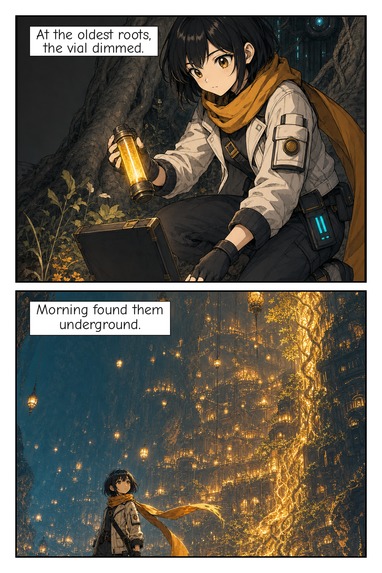
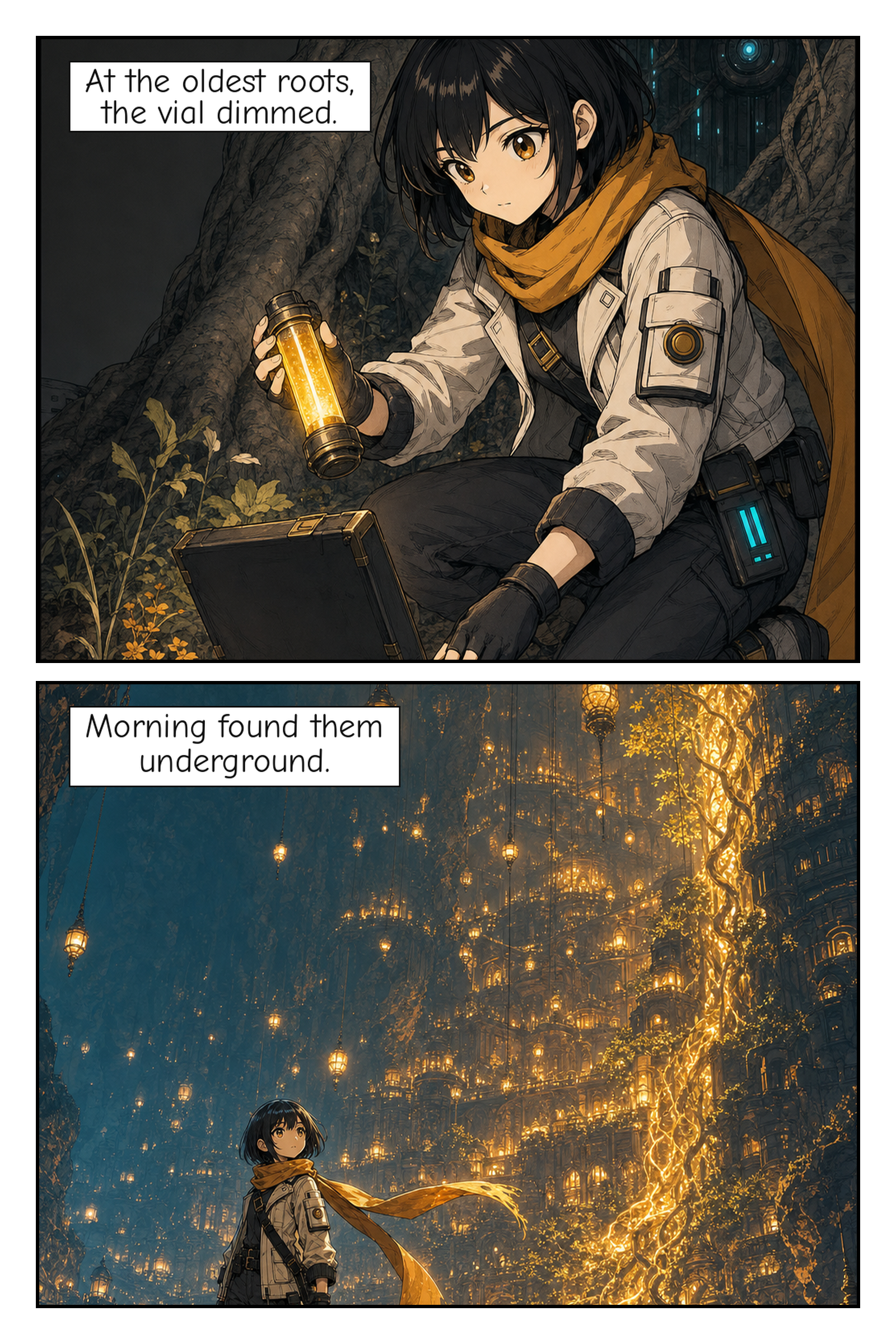
Final Comic Sol output: a polished two-panel comic preserving character and story continuity from a fading vial to an underground dawn.
-
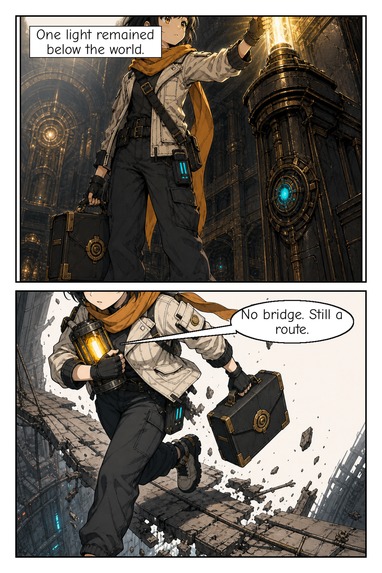
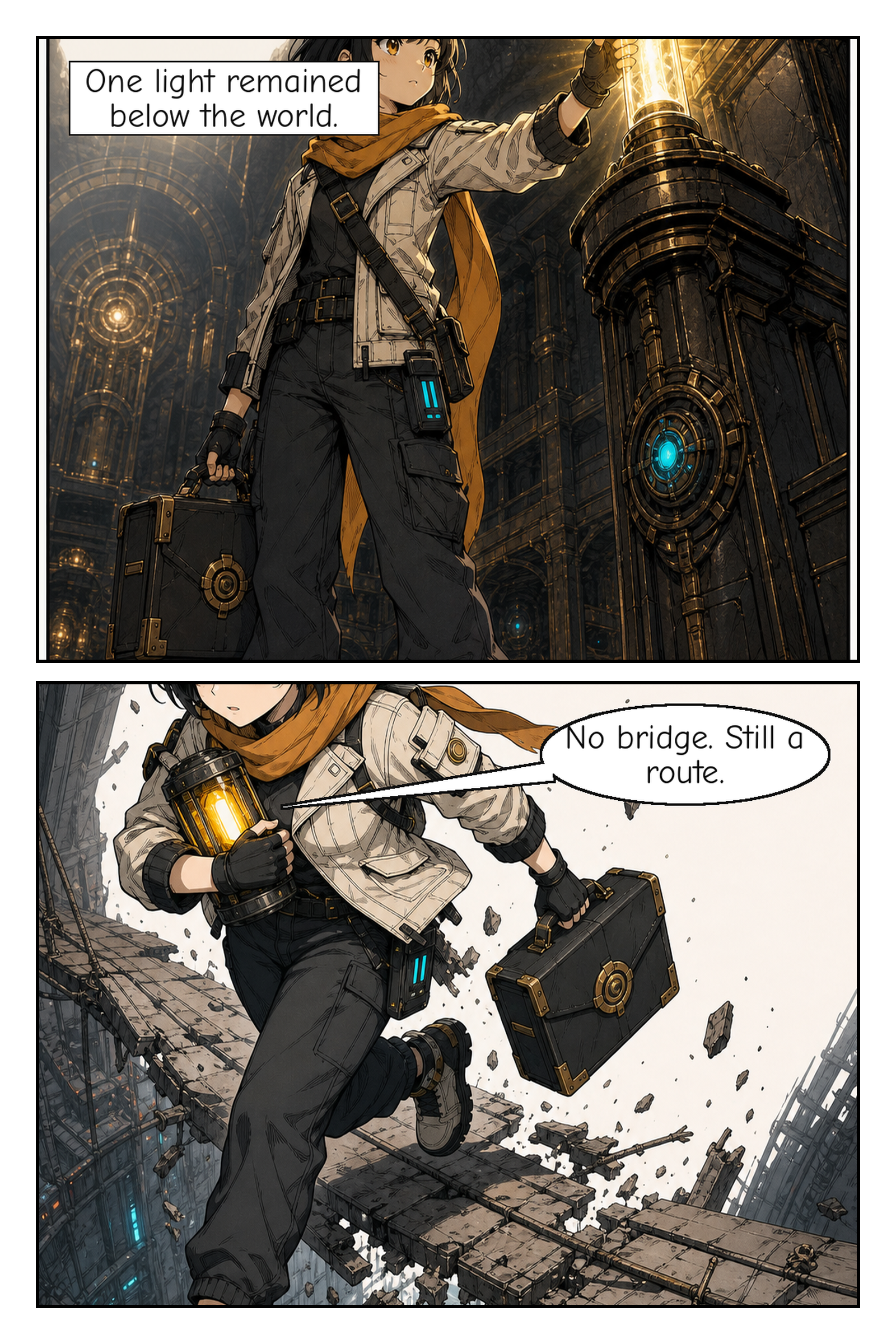
Comic Sol turns story prompts into polished comic pages with consistent characters, props, dialogue, and cinematic panel-to-panel action.
Inspiration
Creative AI workflows usually fail in the space between a raw prompt and a finished deliverable: continuity drifts, text gets malformed, one bad panel forces a full restart, and users cannot inspect what happened. We wanted to build a deterministic, resumable workflow for comic generation where the user keeps editable storyboards, prompts, individual panels, and PDF artifacts—not just one opaque image.
What it does
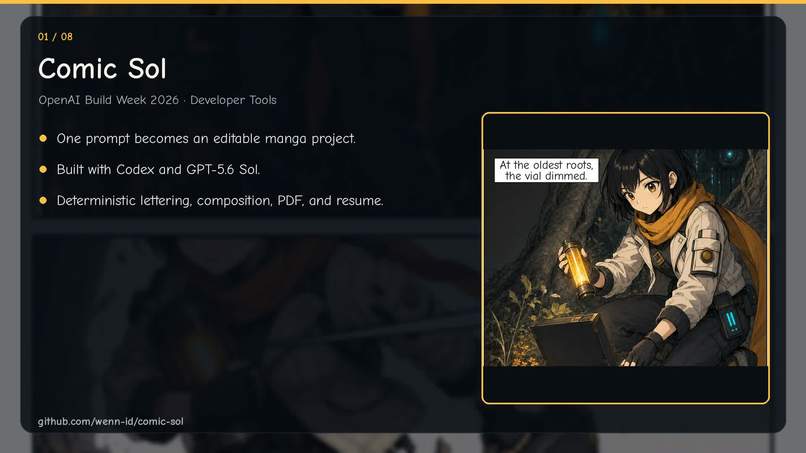
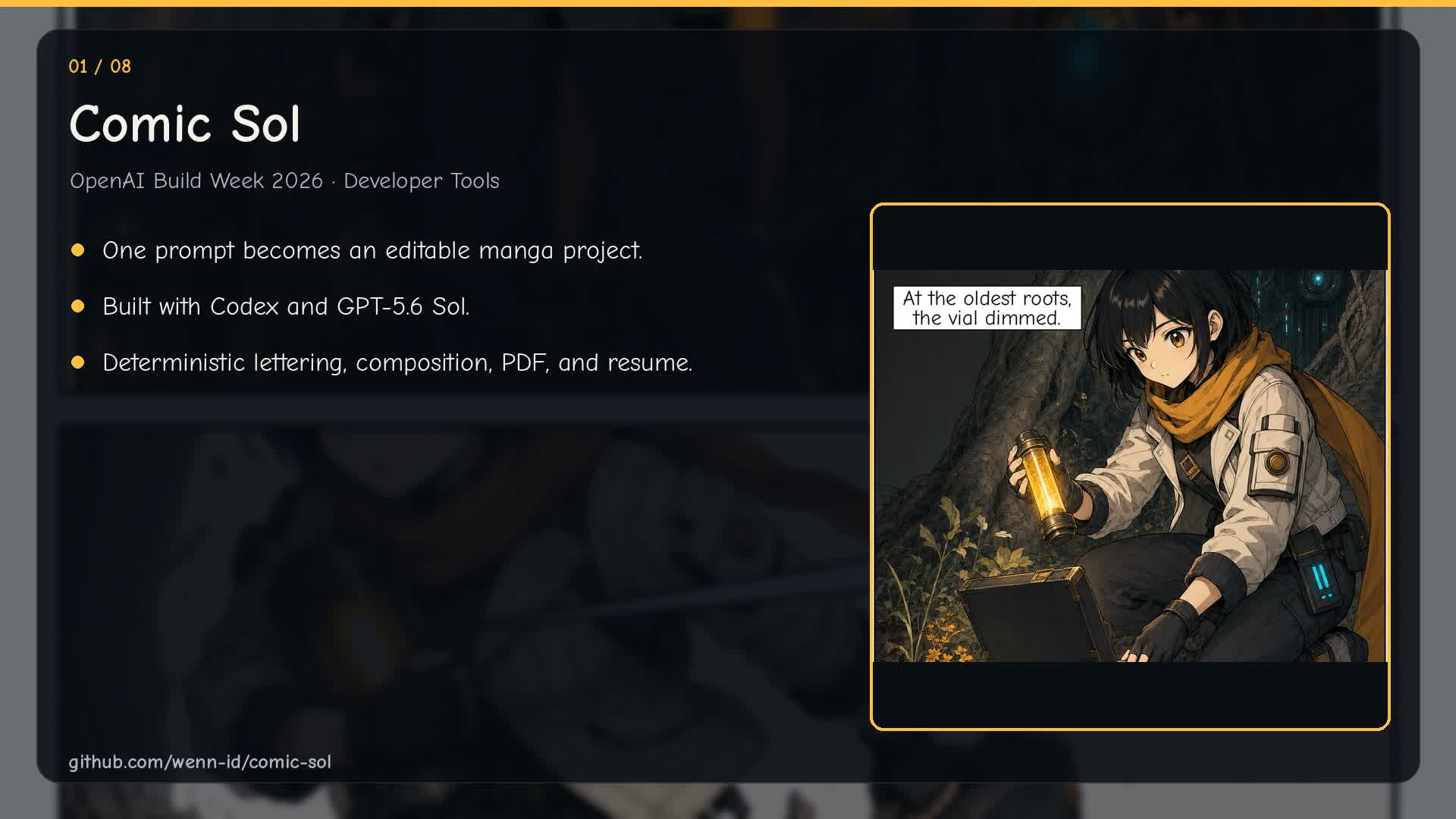
Comic Sol is an installable Codex Skill (CLI tool) that turns a short prompt, pasted story, or local .md file into a complete manga/anime comic project.
- Plans 1–4 pages and up to 12 panels with character/scene continuity.
- Generates canonical character references and clean panel art.
- Letters dialogue/captions deterministically using Pillow (no AI hallucinations for text) and separates image-model SFX.
- Resumes safely: repairs only failed panels and resumes downstream stages without a full restart.
- Composes exact 1600×2400 pages and exports a final PDF atomically.
How we built it
Comic Sol was built end-to-end with OpenAI Codex and GPT-5.6 Sol. Codex converted the initial product brief into a skill contract and implementation plan. It developed the Python pipeline via Test-Driven Development (TDD), handled cross-platform edge cases, and reviewed/integrated supporting audit findings.
Key technical choices:
- Backend-only CLI skill (no web app needed).
- Strict JSON schema validation for intermediate planning.
- Separating agent judgment from deterministic Pillow rendering.
- Progressive generation + downstream invalidation for the resume cache.
Challenges we ran into
Building a robust resume cache was tricky. A single change in a dialogue line shouldn't force regeneration of the image panel, but a change in the visual prompt must. We solved this by splitting generation into distinct stages (planning, storyboard, generation, lettering, composition, export) and hashing the specific inputs for each stage.
We also fought image generation "tail seams" (where speech bubbles crossed panel boundaries). We solved this with shadow-first composition and strict 6-pixel inward borders.
Accomplishments that we're proud of
- A 137-test TDD suite that proves every behavioral edgecase on Linux, WSL, and native Windows.
- True resume capabilities: regenerating one bad panel without losing the other 11.
- Shipping a fully verifiable developer tool built entirely in collaboration with Codex.
What we learned
- Determinism is everything for AI-assisted creative tools. Separating the probabilistic LLM planning from deterministic Pillow rendering made the project viable.
- Testing image generation logic offline requires strict mocking and byte-identical hashing strategies.
What's next for Comic Sol
- Integration with external TTS endpoints for audio-readings of generated panels.
- Custom template definitions for non-manga formats (e.g., western comics, webtoons).
- Exposing the pipeline as an MCP server for deeper IDE integration.
Built With
- gpt-5.6-sol
- openai-codex
- pillow
- python
- unittest


Log in or sign up for Devpost to join the conversation.