-
-
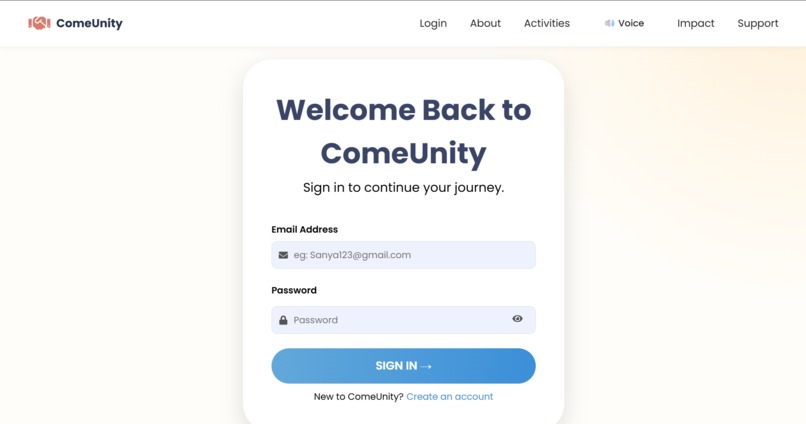
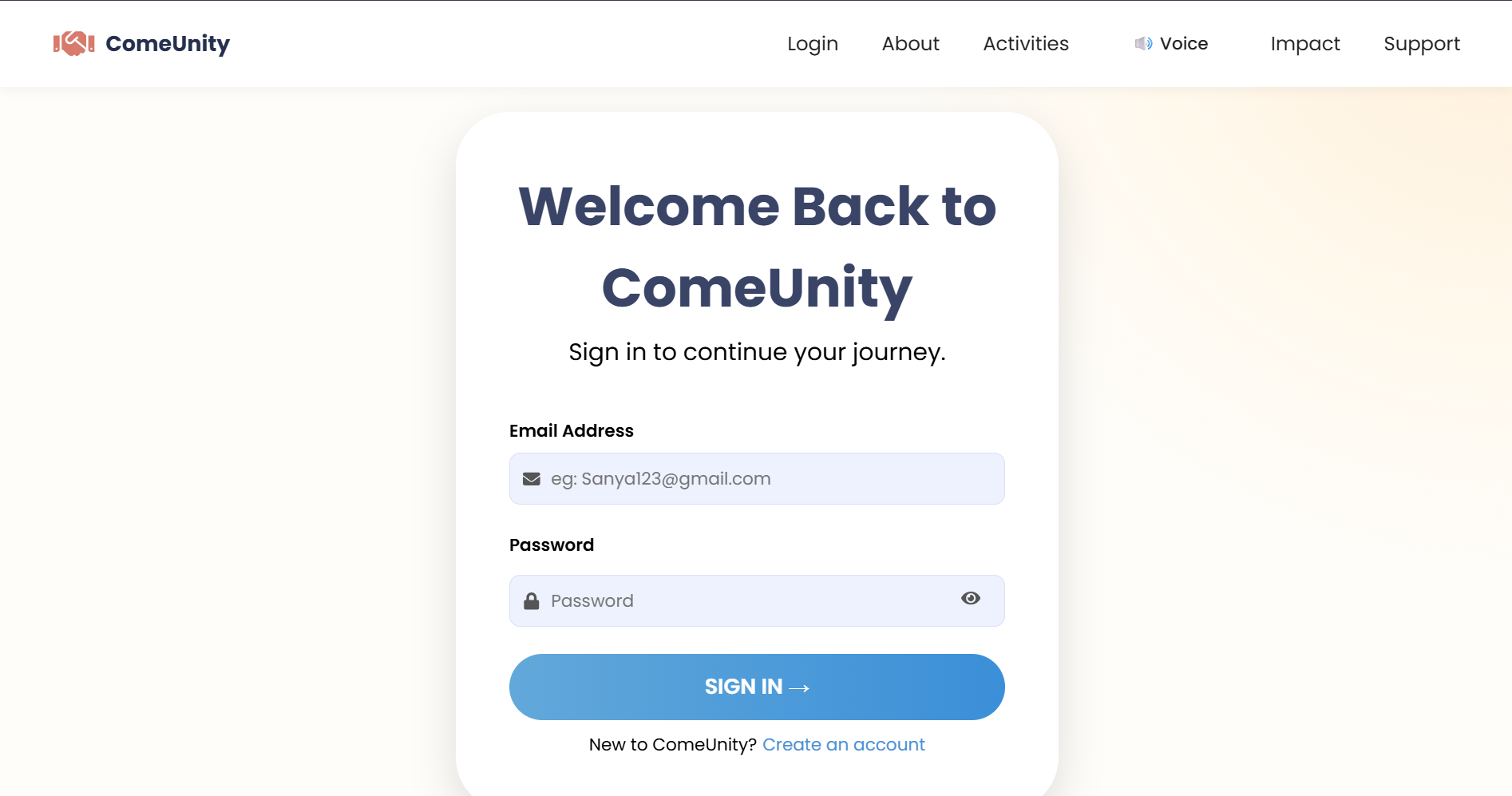
Login page
-
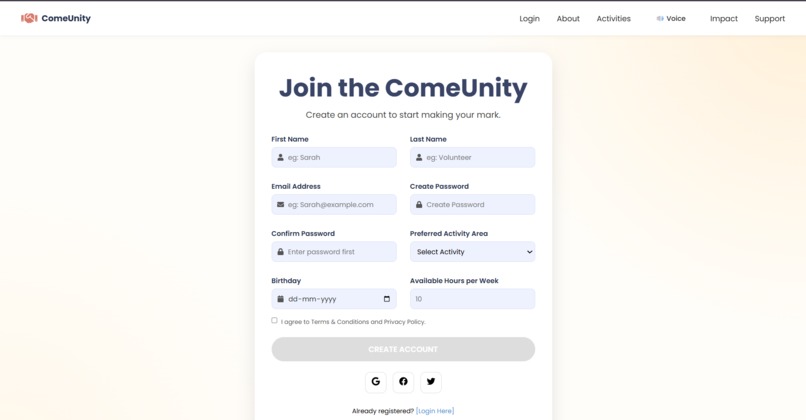
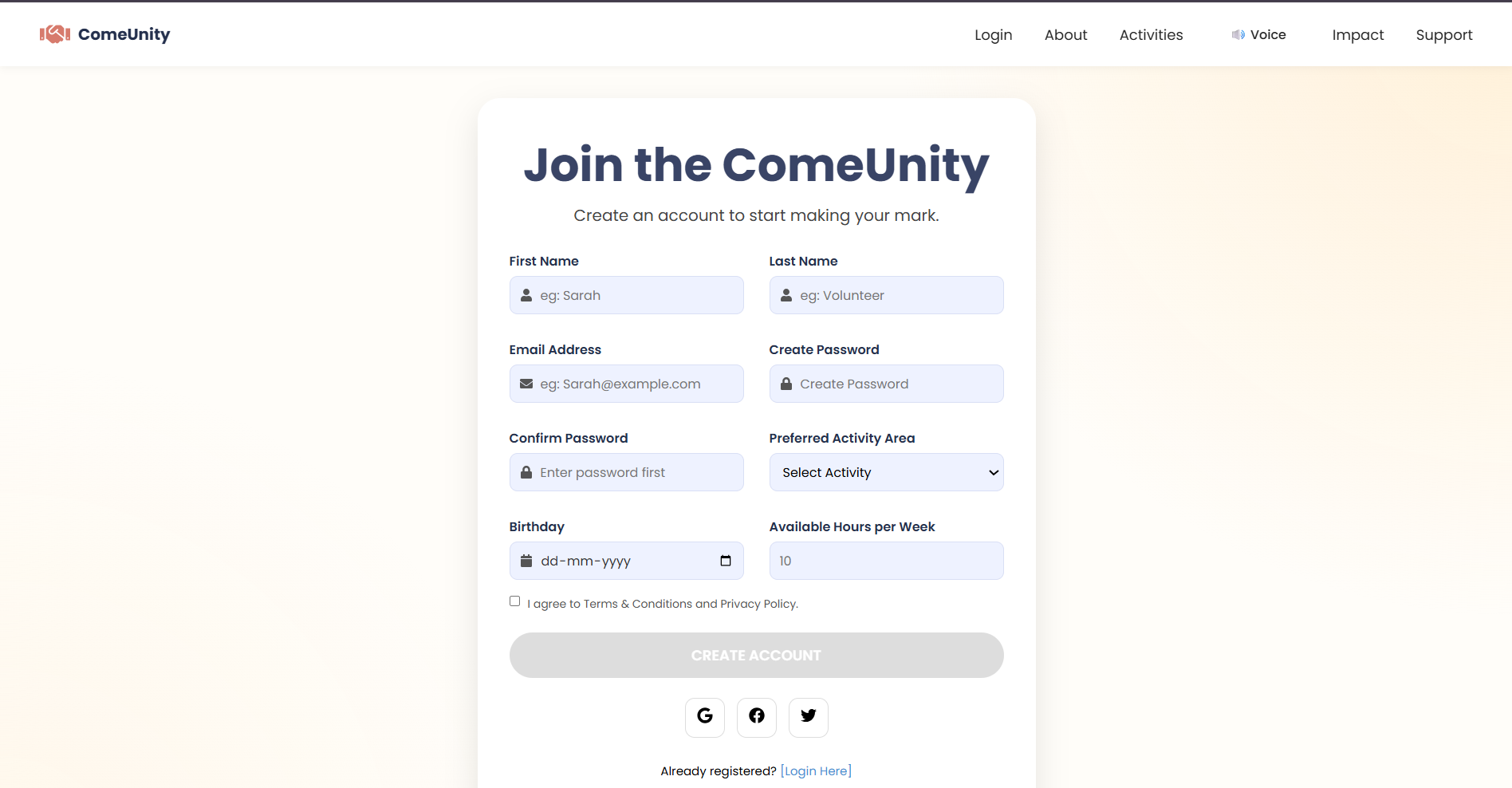
Register page
-
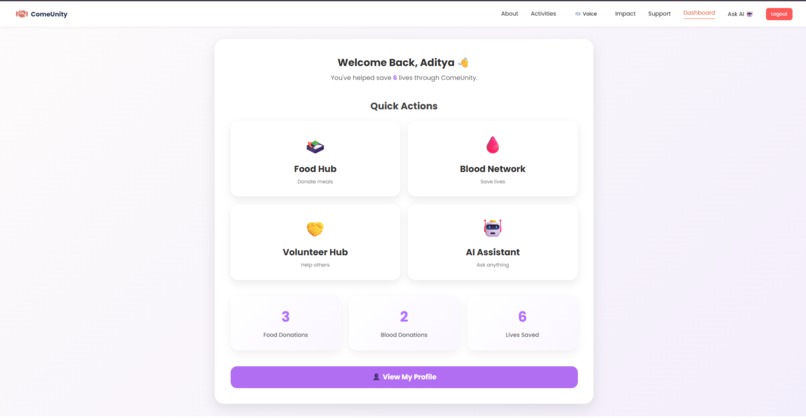
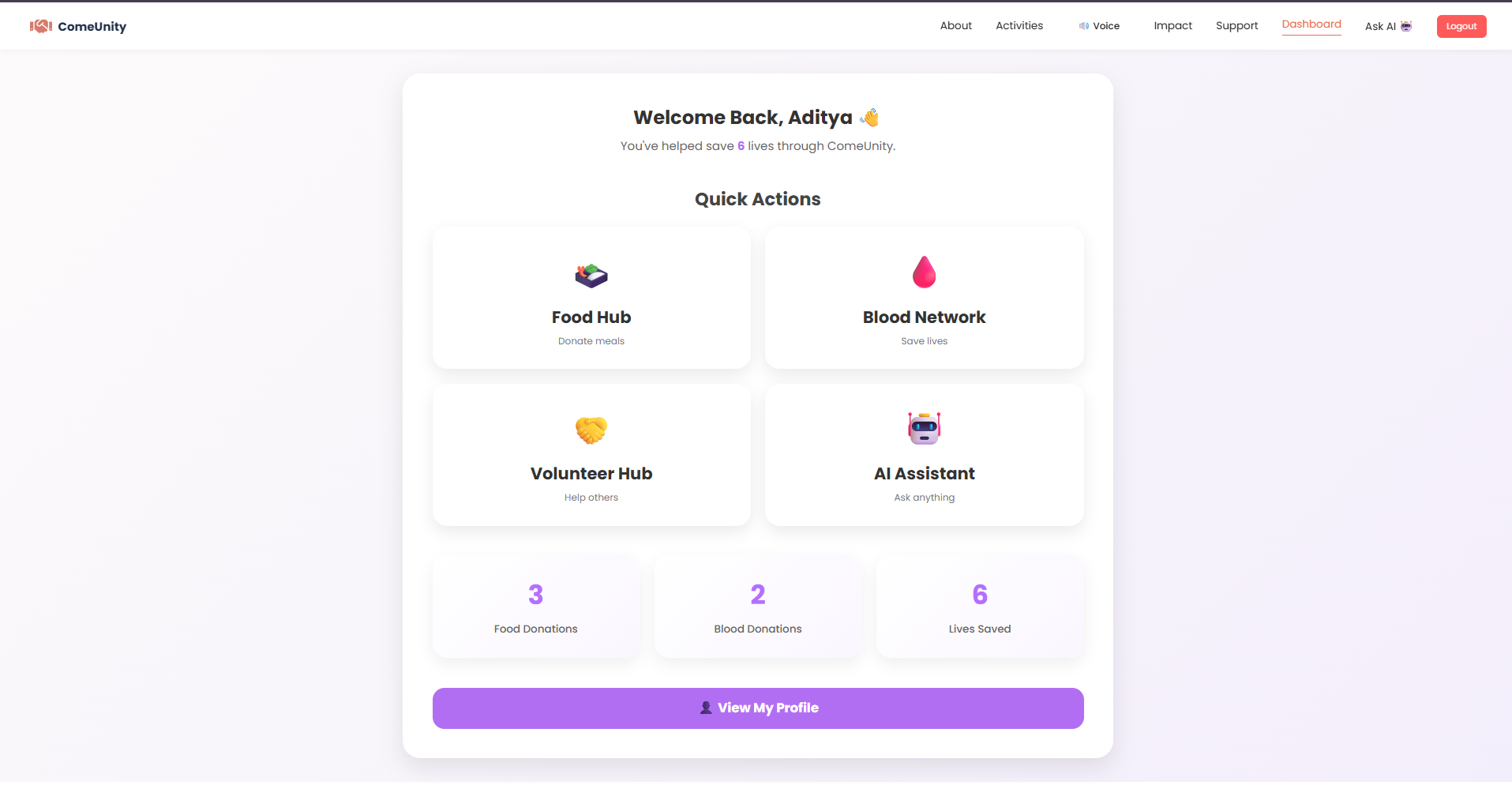
Dashboard
-
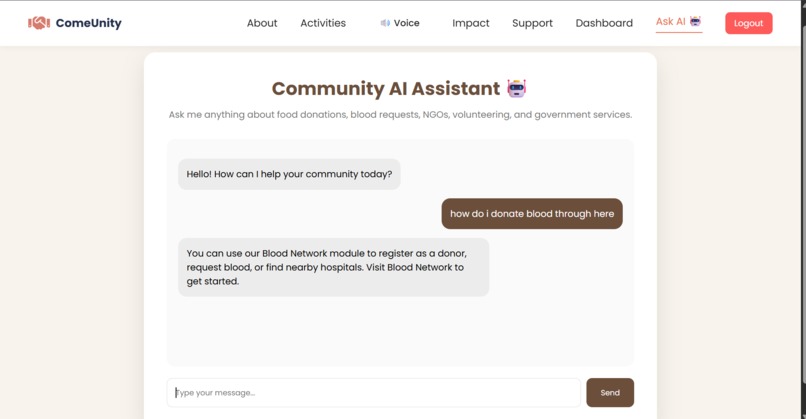
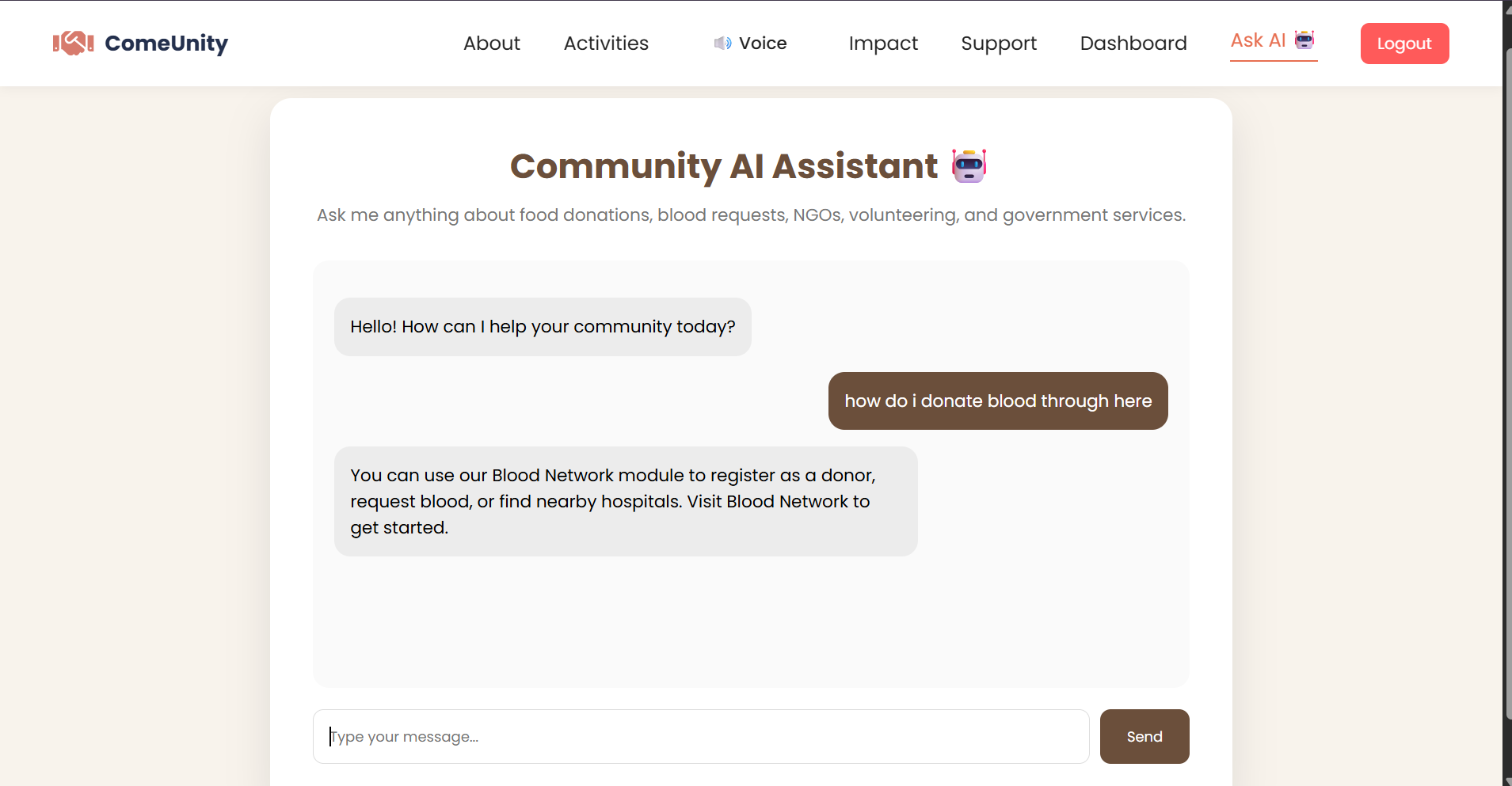
Ai Assistant
-
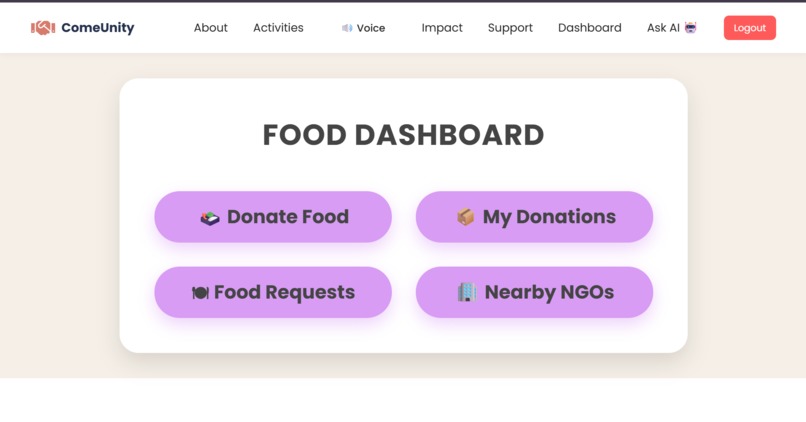
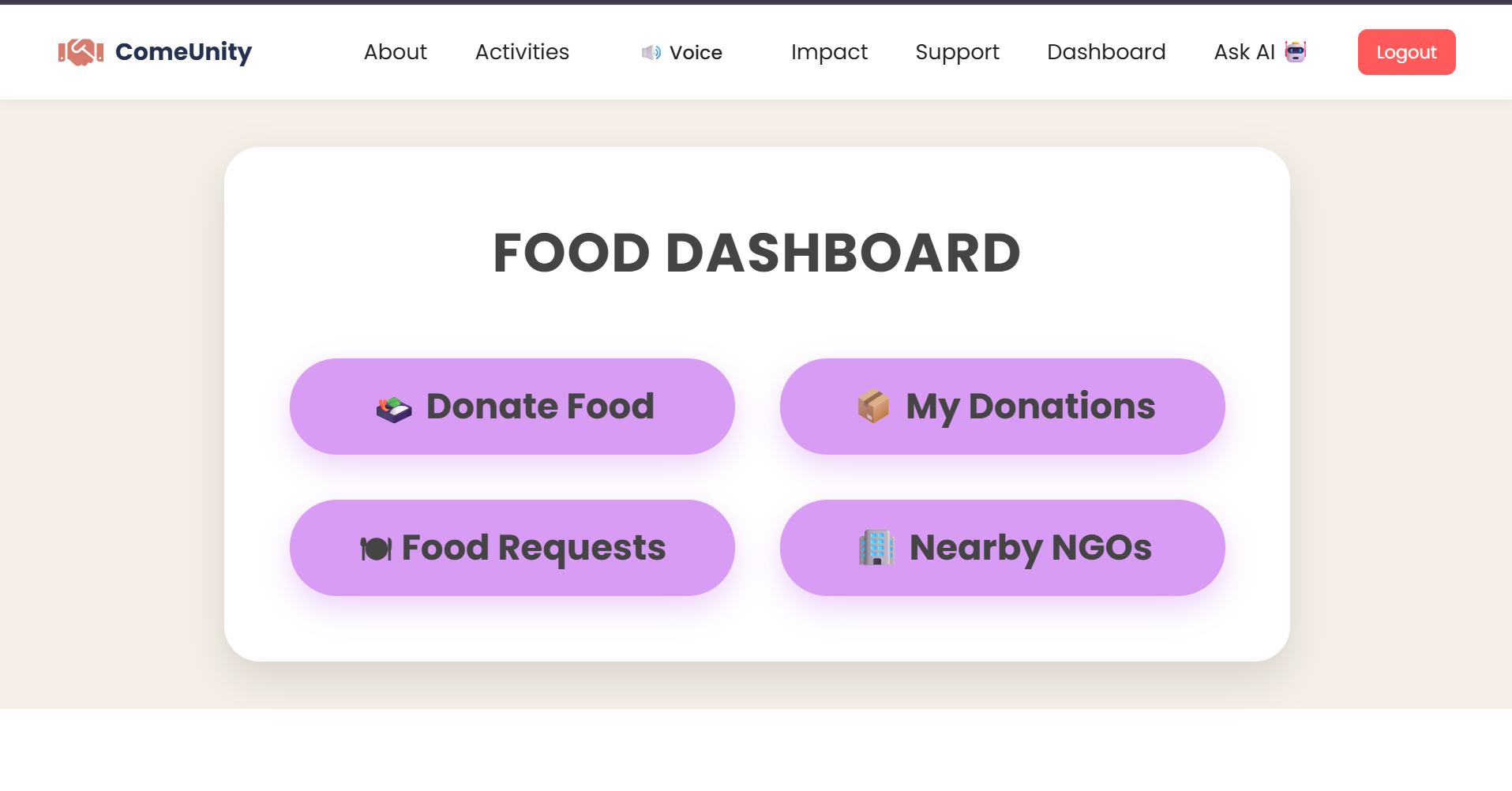
Food Dashboard
-
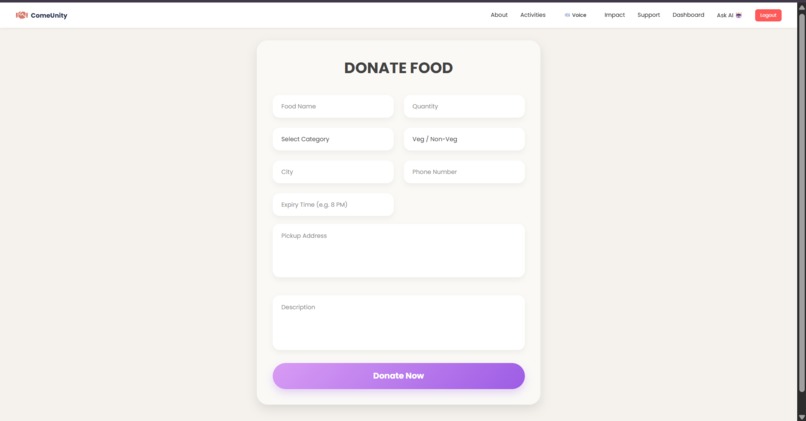
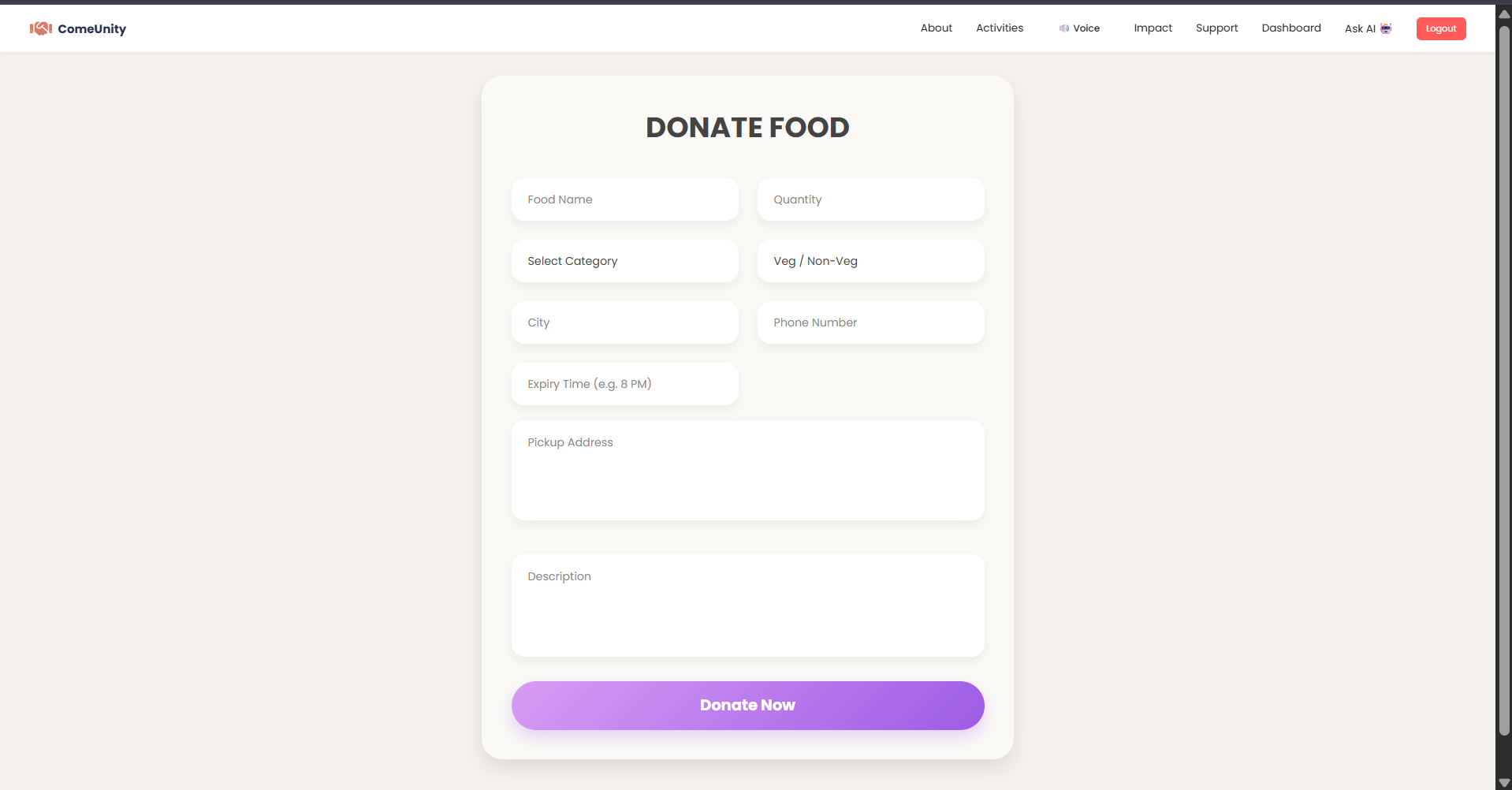
Donate Food
-
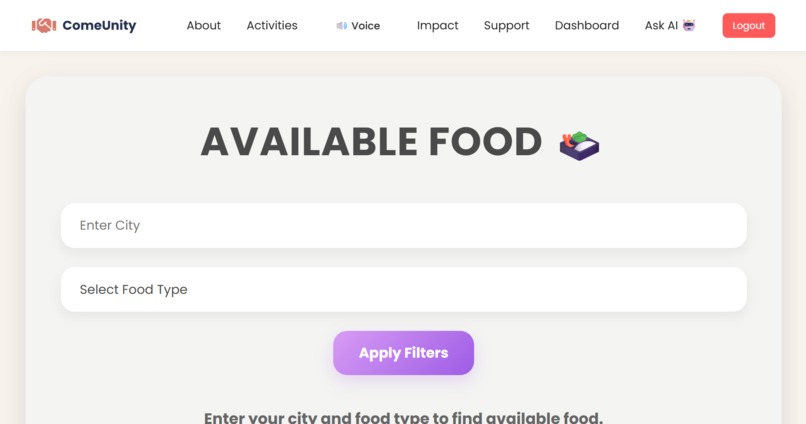
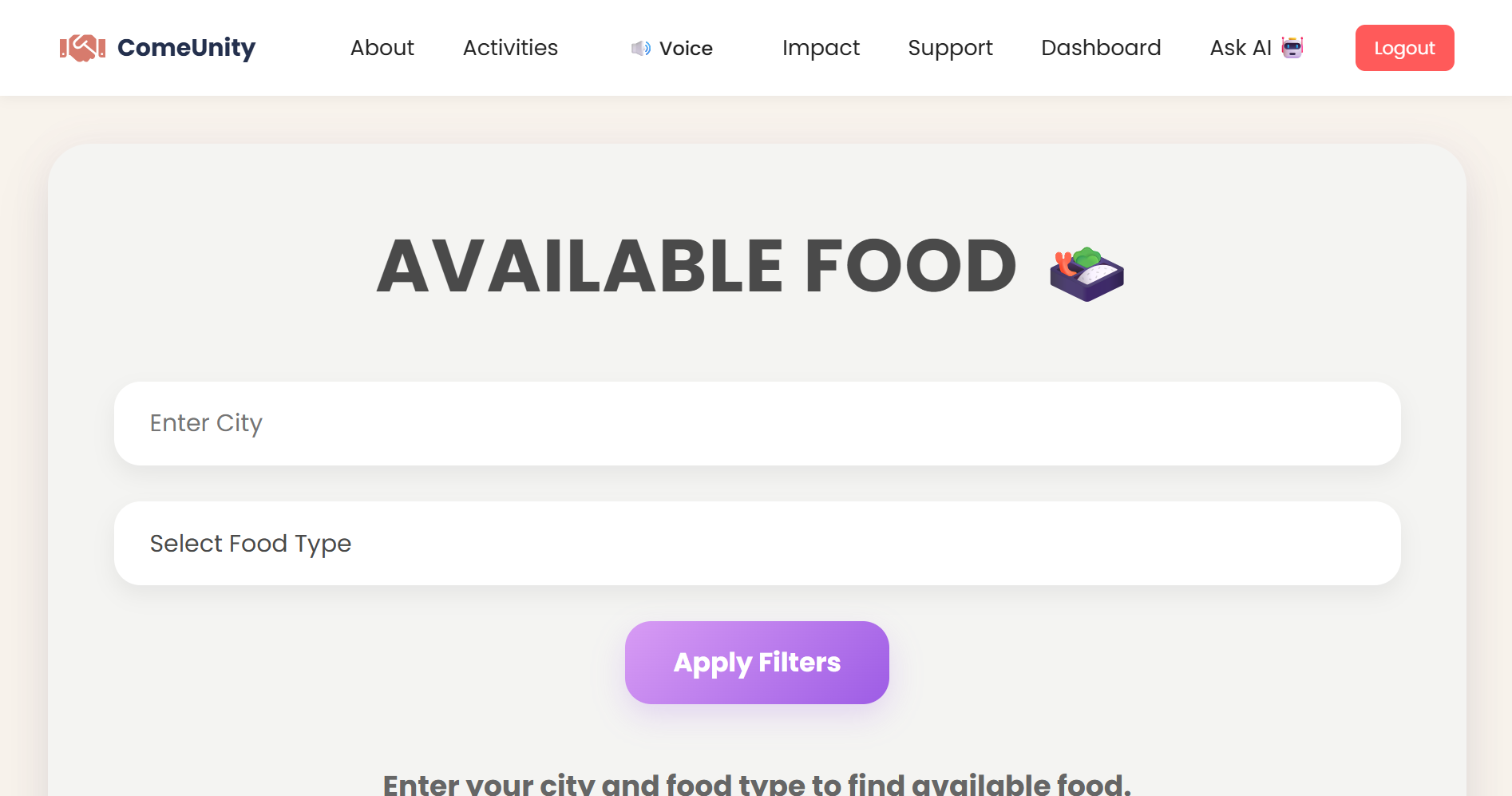
Available Food
-
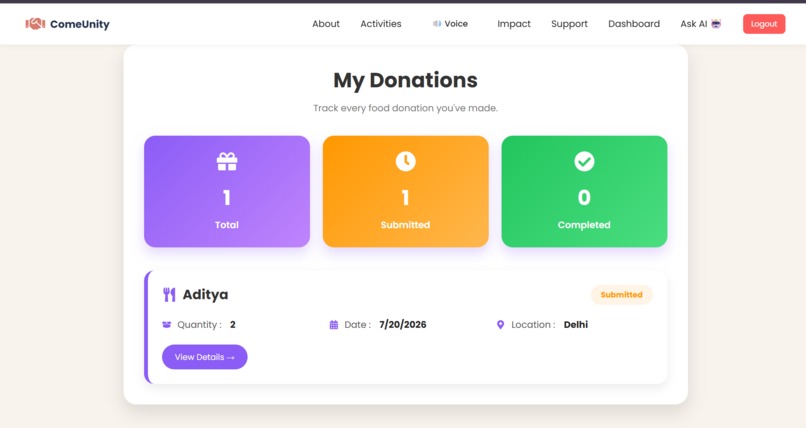
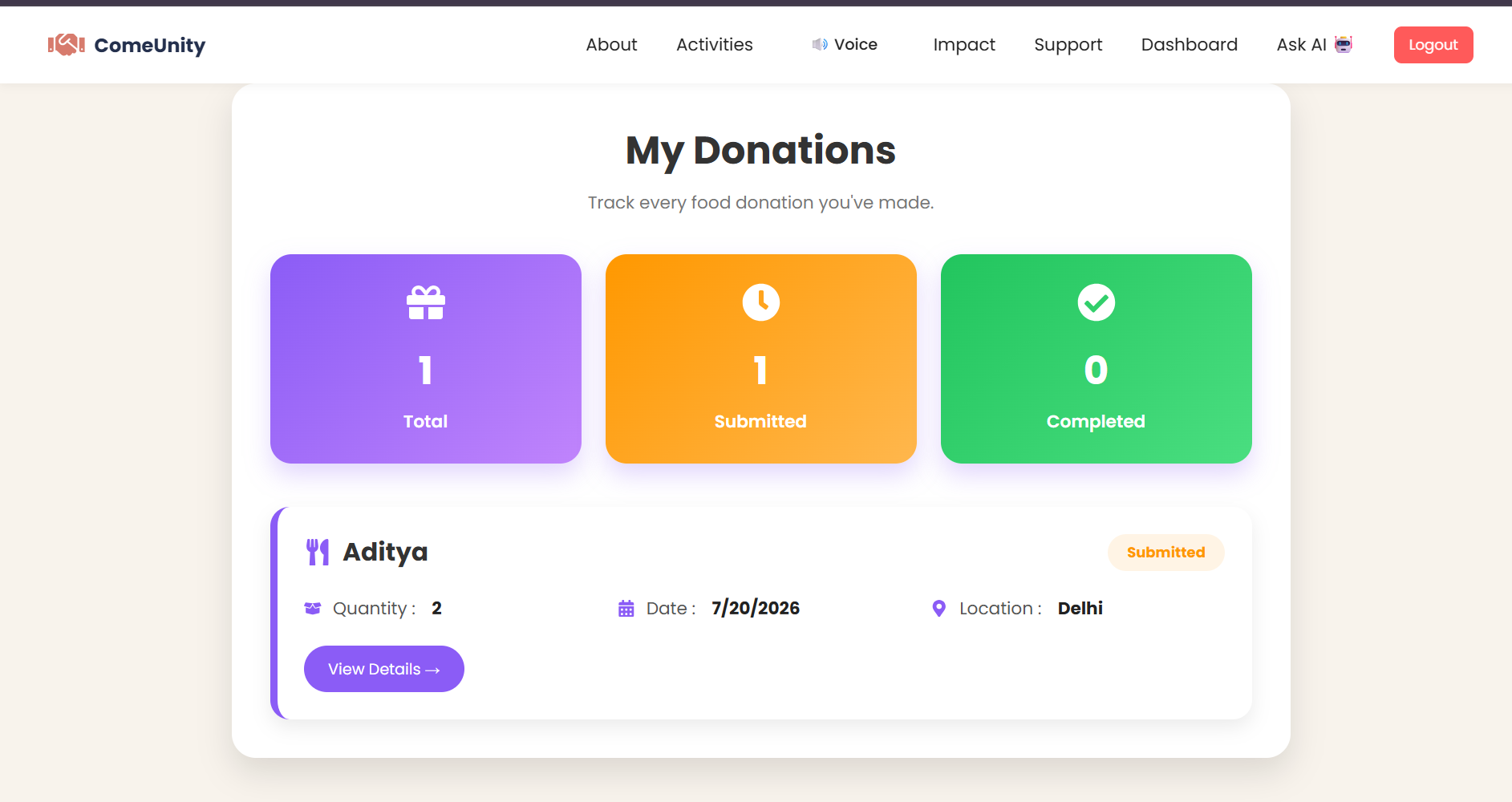
My donations
-
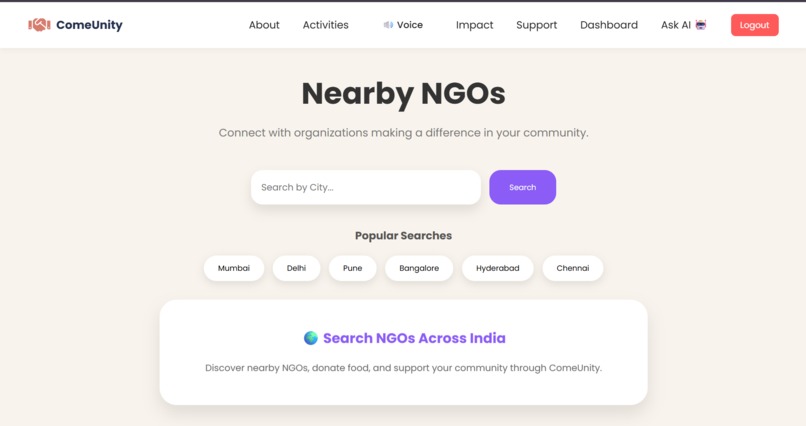
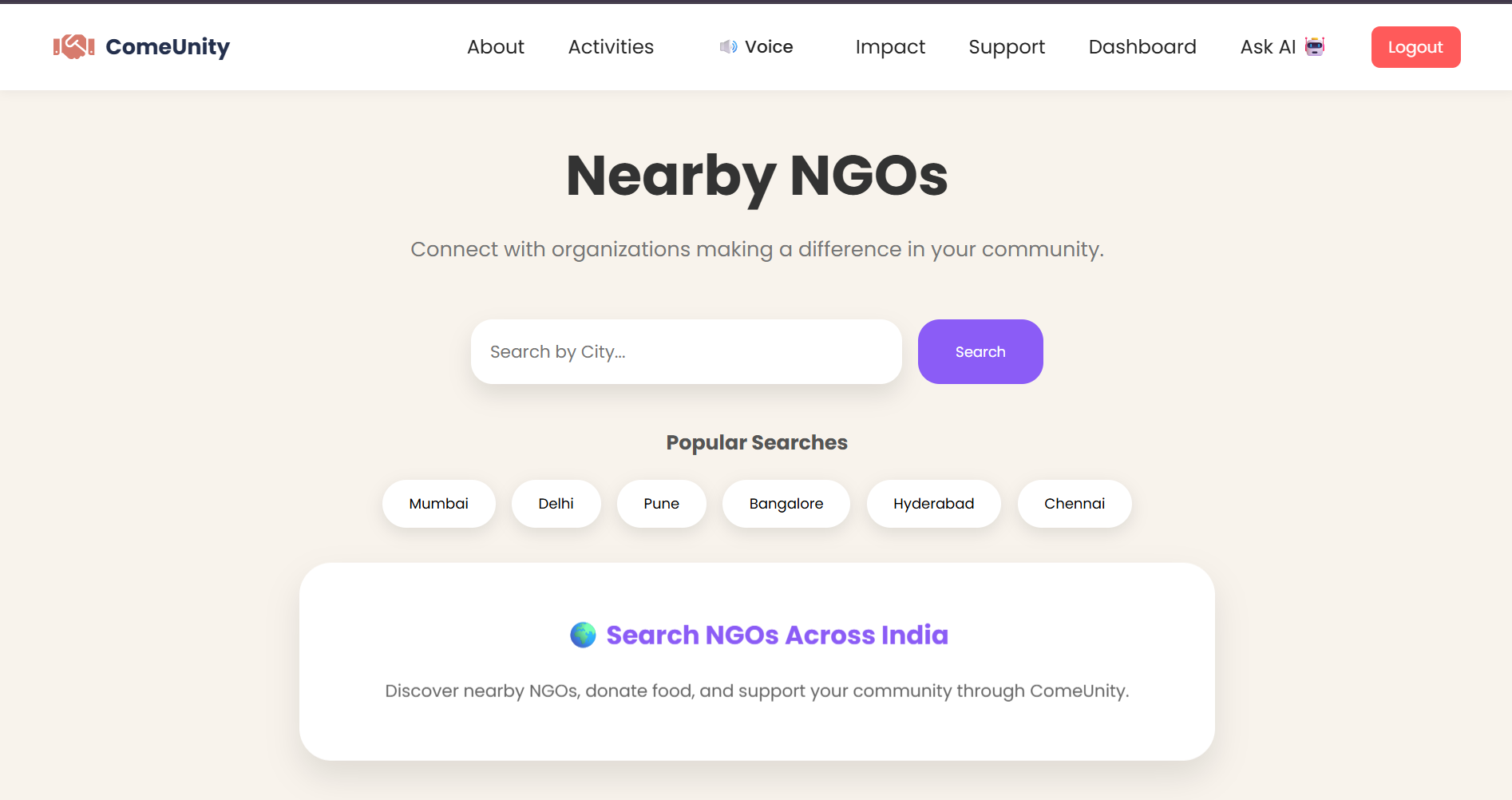
Nearby NGOs
-
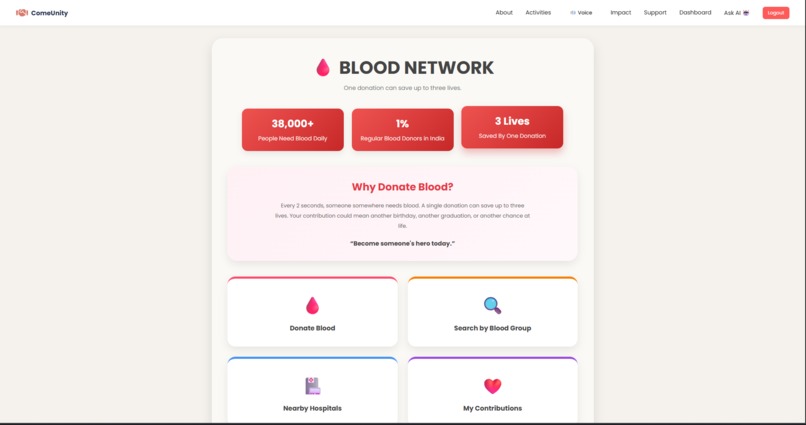
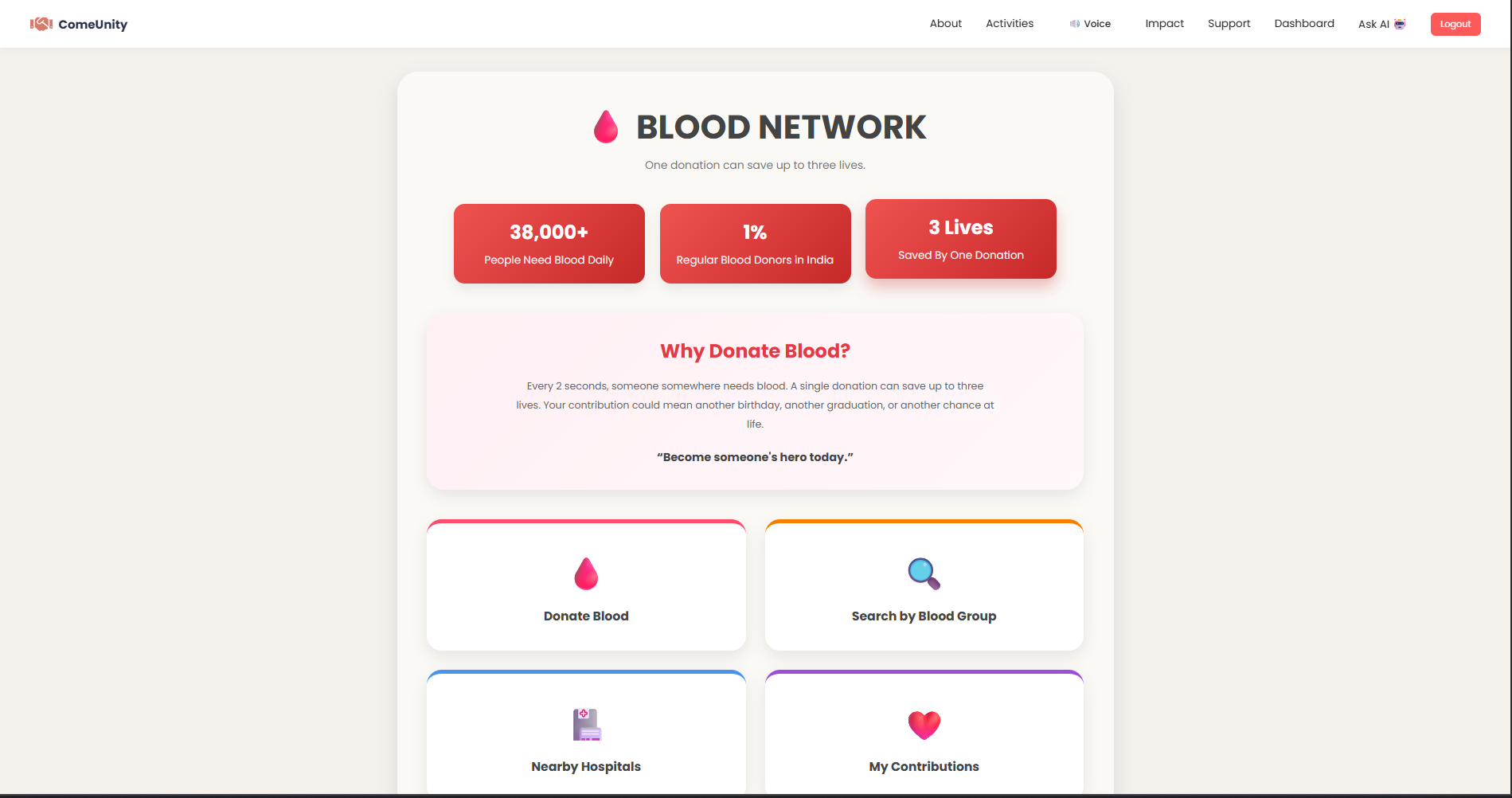
Blood Network
-
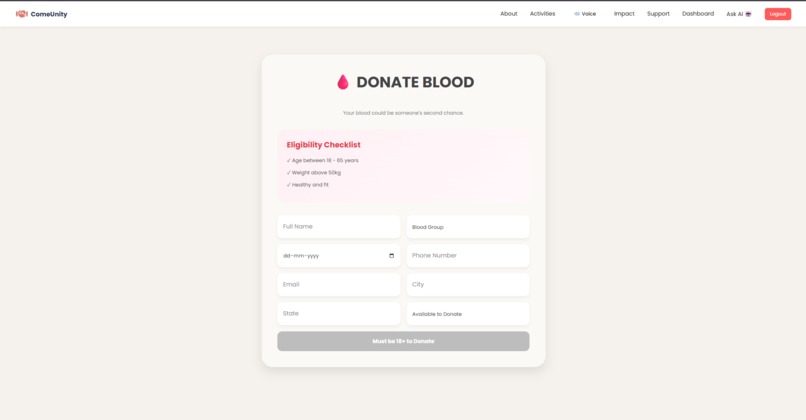
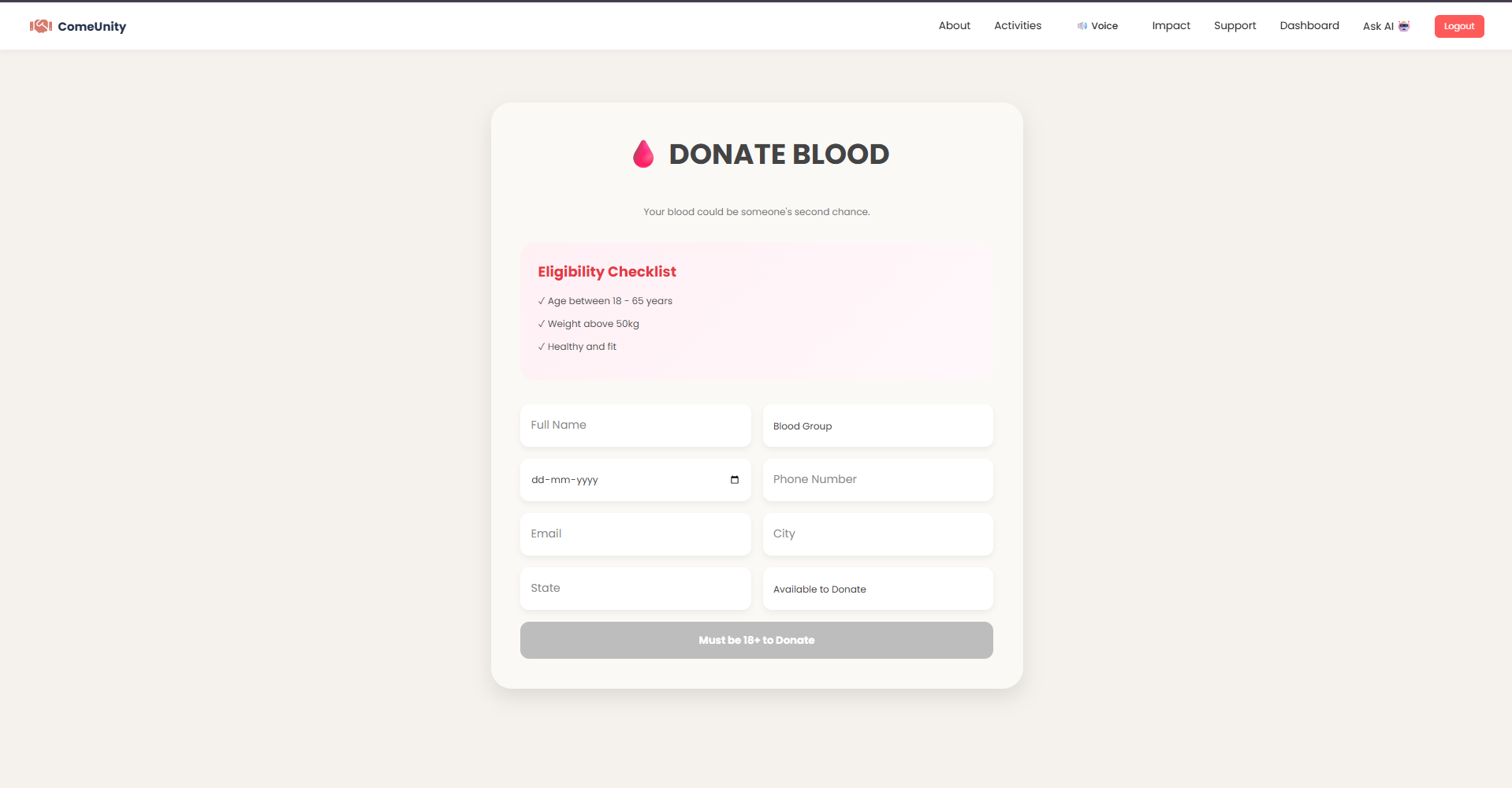
Donate Blood
-
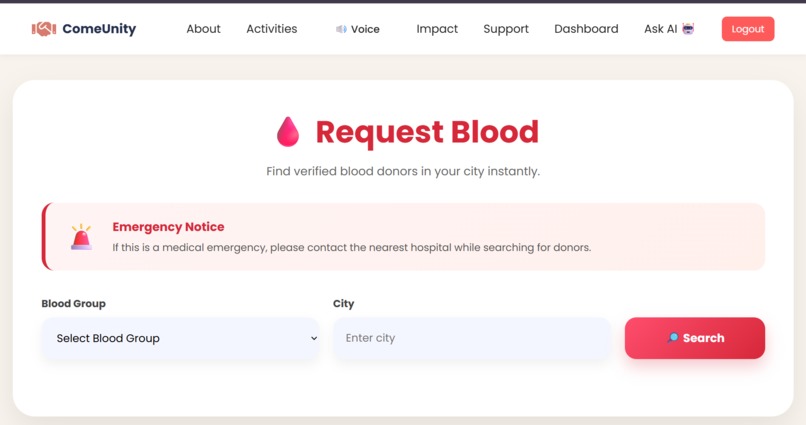
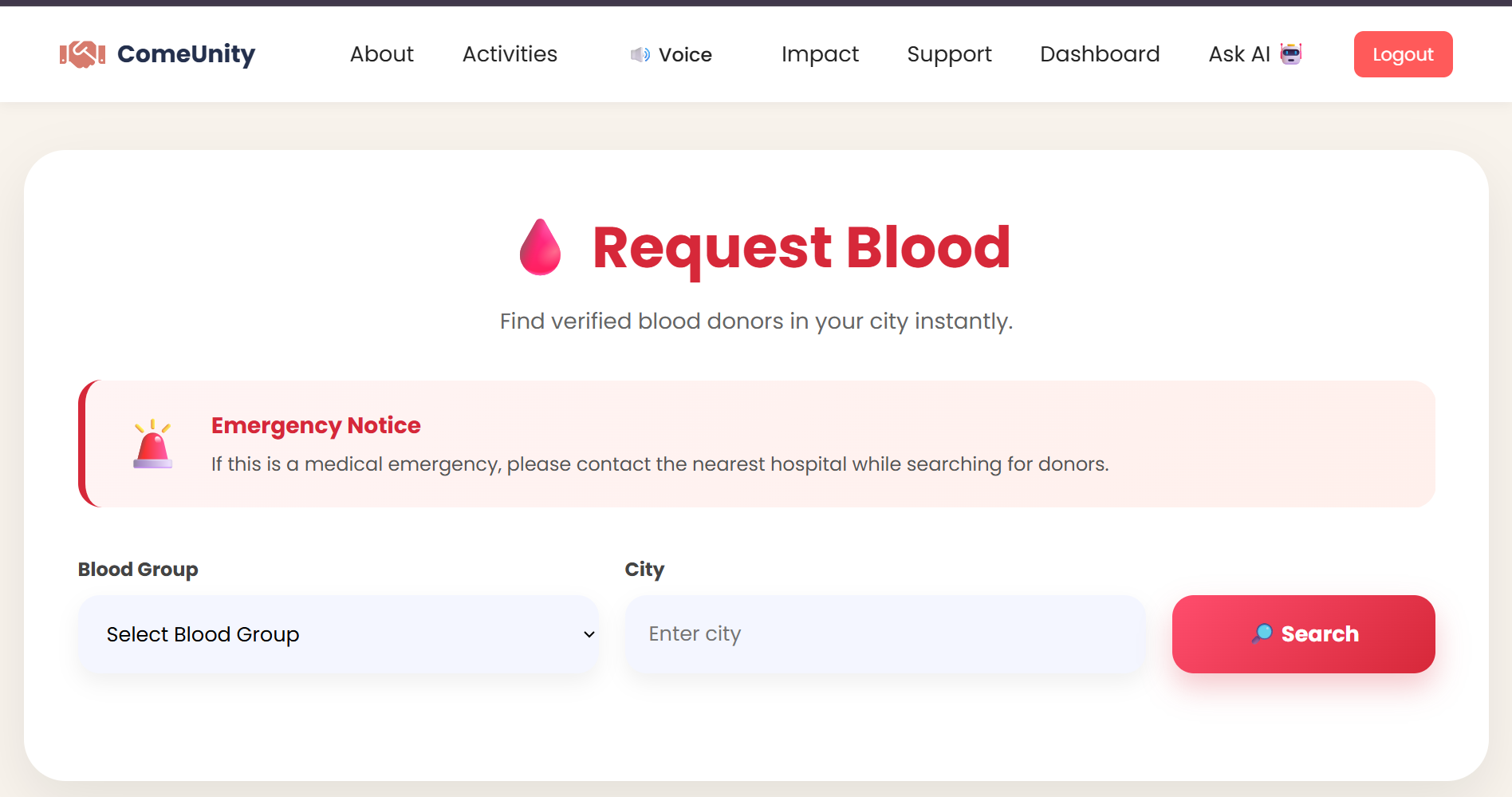
Request Blood
-
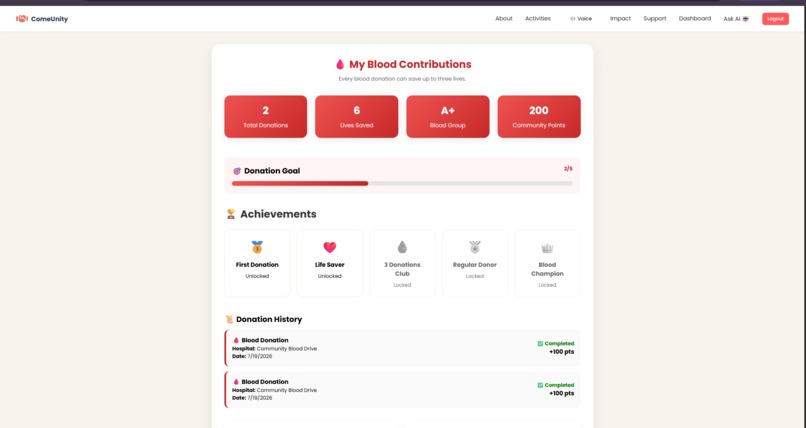
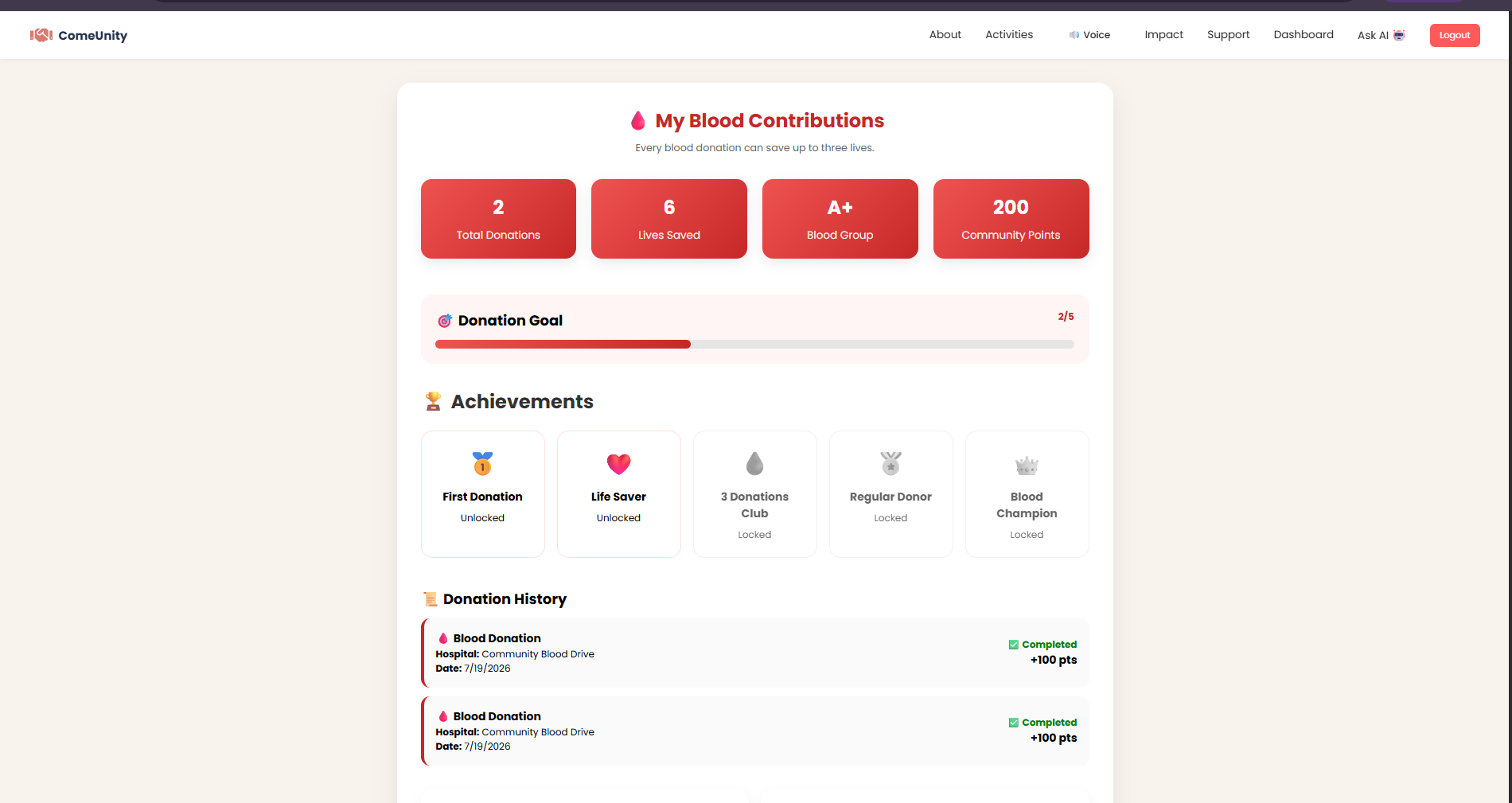
View Contributions
-
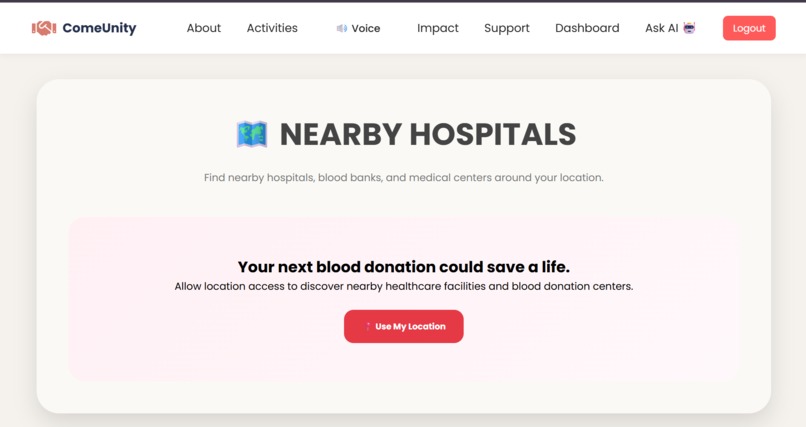
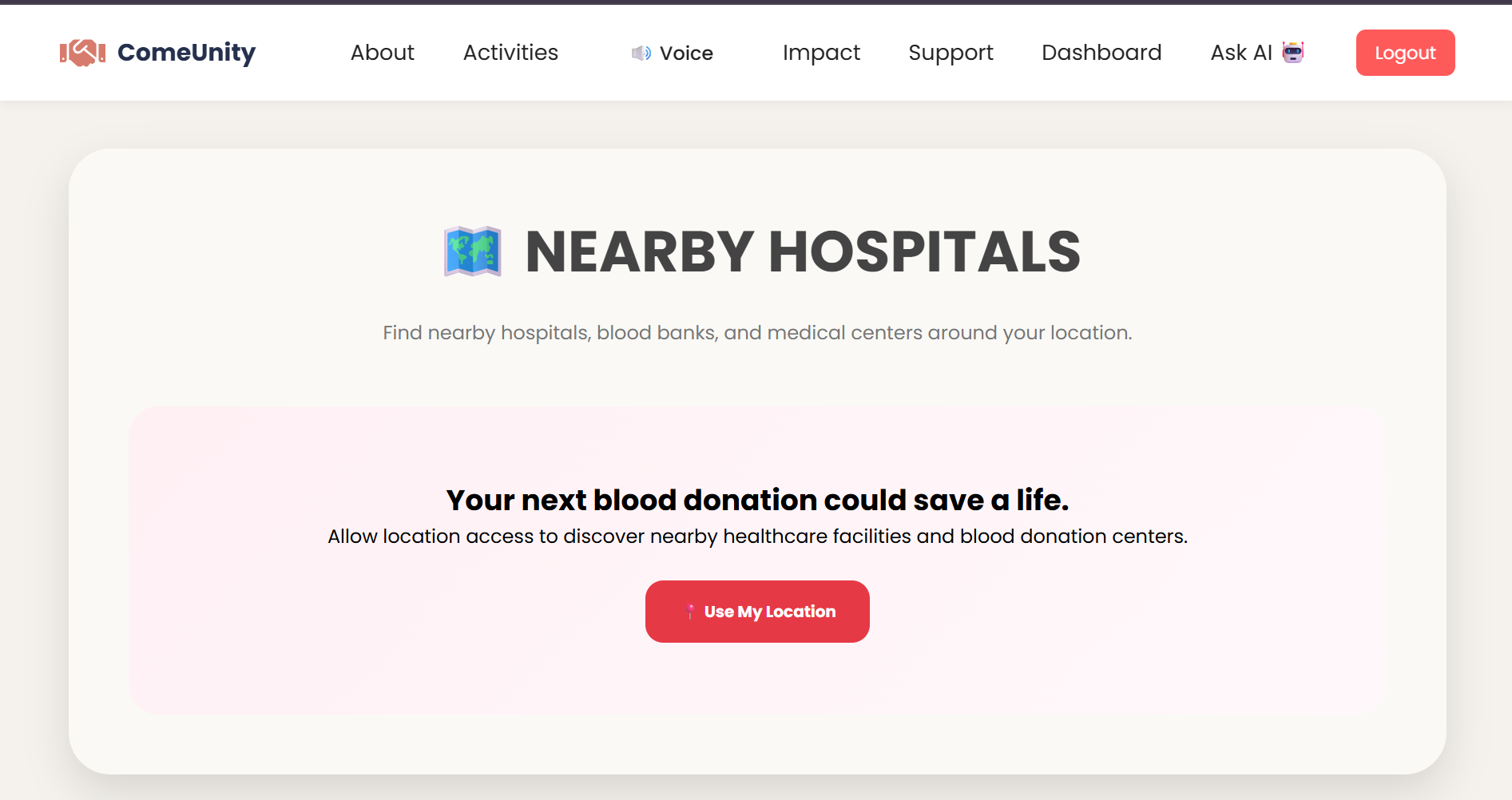
Nearby Hospitals
-
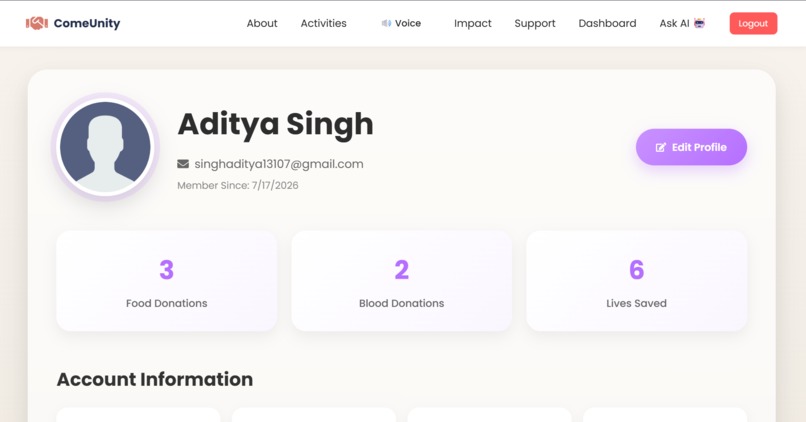
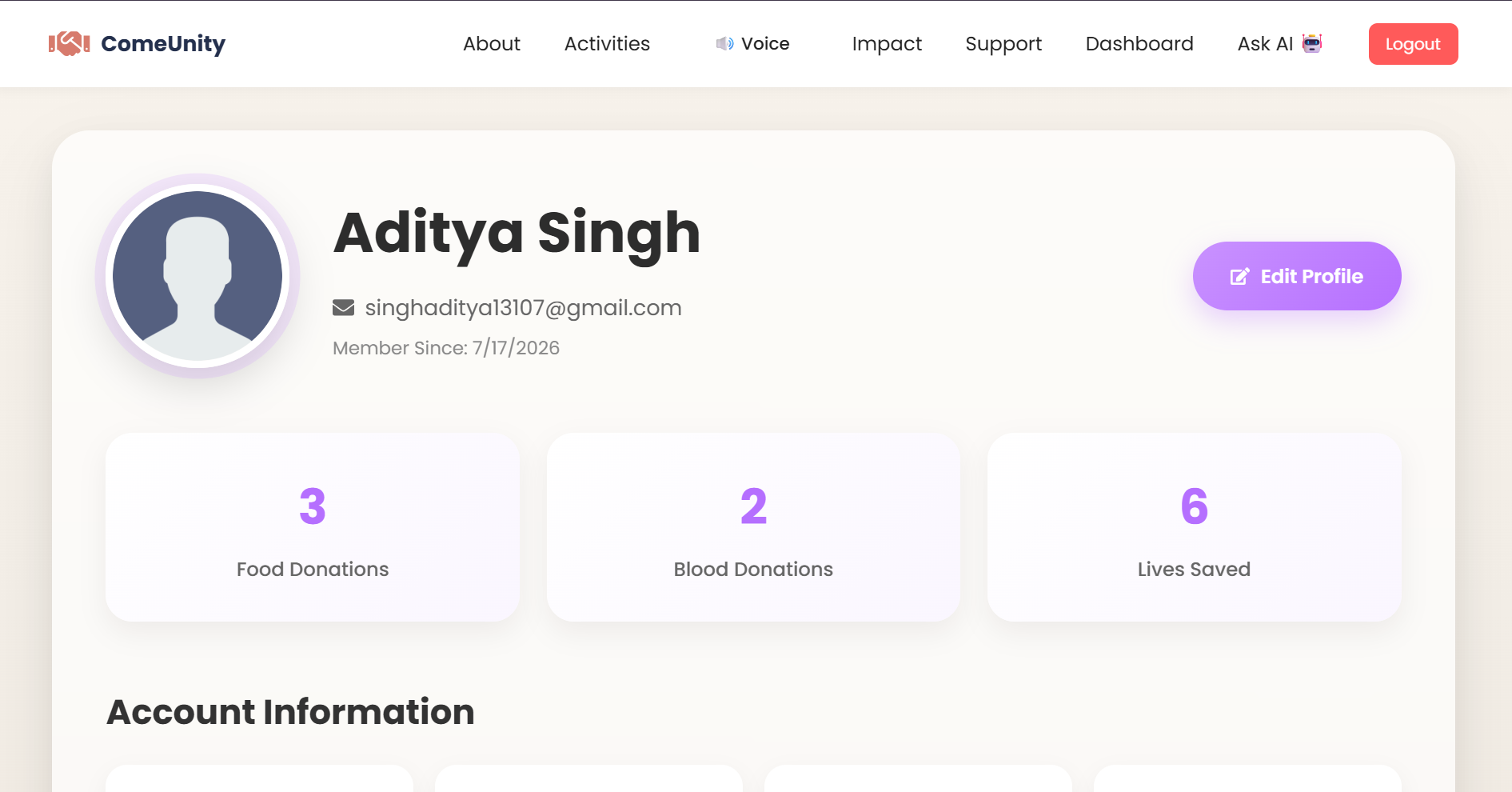
Profile
Inspiration
Every day, millions of people struggle to access basic support because help is fragmented across phone calls, social media groups, websites, and local networks. This challenge is even greater for people with disabilities, elderly individuals, and vulnerable communities who may face barriers in communication, mobility, or accessing information.
We asked ourselves a simple question:
"What if communities had a single, accessible platform that could connect people to help whenever they needed it?"
That question led to ComeUnity – Connecting People to Help, When It Matters Most.
Our goal was to build more than just another application—we wanted to create an inclusive ecosystem where people could independently access food assistance, blood donors, volunteers, NGOs, emergency support, and guidance through an accessible, AI-powered interface.
What it does
ComeUnity is an AI-powered assistive platform designed to improve accessibility, independence, and community support.
Key features include:
- Voice-enabled accessibility mode.
- AI Assistant for guidance and support.
- Food donation and assistance platform.
- Blood donor registration and search.
- Volunteer matching and community engagement.
- NGO discovery and support services.
- Emergency assistance resources.
- Multilingual and inclusive user experience.
- High-contrast mode and screen-reader-friendly design.
ComeUnity empowers users—especially people with disabilities and vulnerable individuals—to access critical services quickly and independently through a single platform.
How we built it
We built ComeUnity using a modern MERN stack:
- Frontend: React + Vite
- Backend: Node.js + Express
- Database: MongoDB Atlas
- Authentication: JWT-based authentication
- AI Integration: AI-powered assistant APIs
- Deployment: Cloud-hosted frontend and backend services
Our development process focused on building a scalable architecture with independent frontend and backend services. We implemented reusable React components, REST APIs, secure authentication, and accessible UI features to ensure a smooth experience for all users.
Accessibility was integrated from the beginning rather than added as an afterthought. Features such as text-to-speech, keyboard navigation, and high-contrast support were prioritized throughout development.
Challenges we ran into
Building an all-in-one assistive platform presented several challenges:
- Designing a user experience that remained simple despite multiple modules.
- Integrating AI capabilities while maintaining responsiveness.
- Ensuring accessibility features worked seamlessly across pages.
- Managing authentication and state across the application.
- Deploying and connecting frontend and backend services reliably.
- Structuring the platform to support future scalability.
One of our biggest challenges was balancing functionality with accessibility. We wanted the application to remain intuitive for every user, regardless of their technical background or abilities.
Accomplishments that we're proud of
We are especially proud that ComeUnity:
- Combines multiple community services into a single platform.
- Places accessibility at the center of the user experience.
- Successfully integrates AI to improve independence and usability.
- Provides a working prototype with real-world applications.
- Demonstrates how technology can strengthen communities and inclusion.
- Was built with scalability in mind for future expansion.
Most importantly, we're proud that ComeUnity focuses on people. Every feature was designed with the belief that access to help should never depend on someone's physical abilities, location, or circumstances.
What we learned
This project taught us valuable lessons about:
- Building accessible and inclusive software.
- Designing user-centered experiences.
- Integrating AI into practical applications.
- Managing full-stack application development.
- Deploying scalable web applications.
- Thinking about technology through the lens of social impact.
We also learned that accessibility is not a feature—it is a design philosophy. Building for inclusivity from day one results in better products for everyone.
What's next for ComeUnity
This project is only the beginning. Our future roadmap includes:
- Real-time emergency alerts.
- Sign language assistance.
- Mobile applications for Android and iOS.
- Predictive resource allocation using AI.
- Community reputation and trust systems.
- Government service integrations.
- Advanced analytics and heat maps.
- Expanded multilingual support.
- Partnerships with NGOs and healthcare organizations.
Our long-term vision is to transform ComeUnity into a global assistive ecosystem that empowers individuals, strengthens communities, and ensures that help is always within reach.
ComeUnity – Connecting People to Help, When It Matters Most.
Because accessibility, independence, and human connection should never be out of reach.

Log in or sign up for Devpost to join the conversation.