
Inspiration
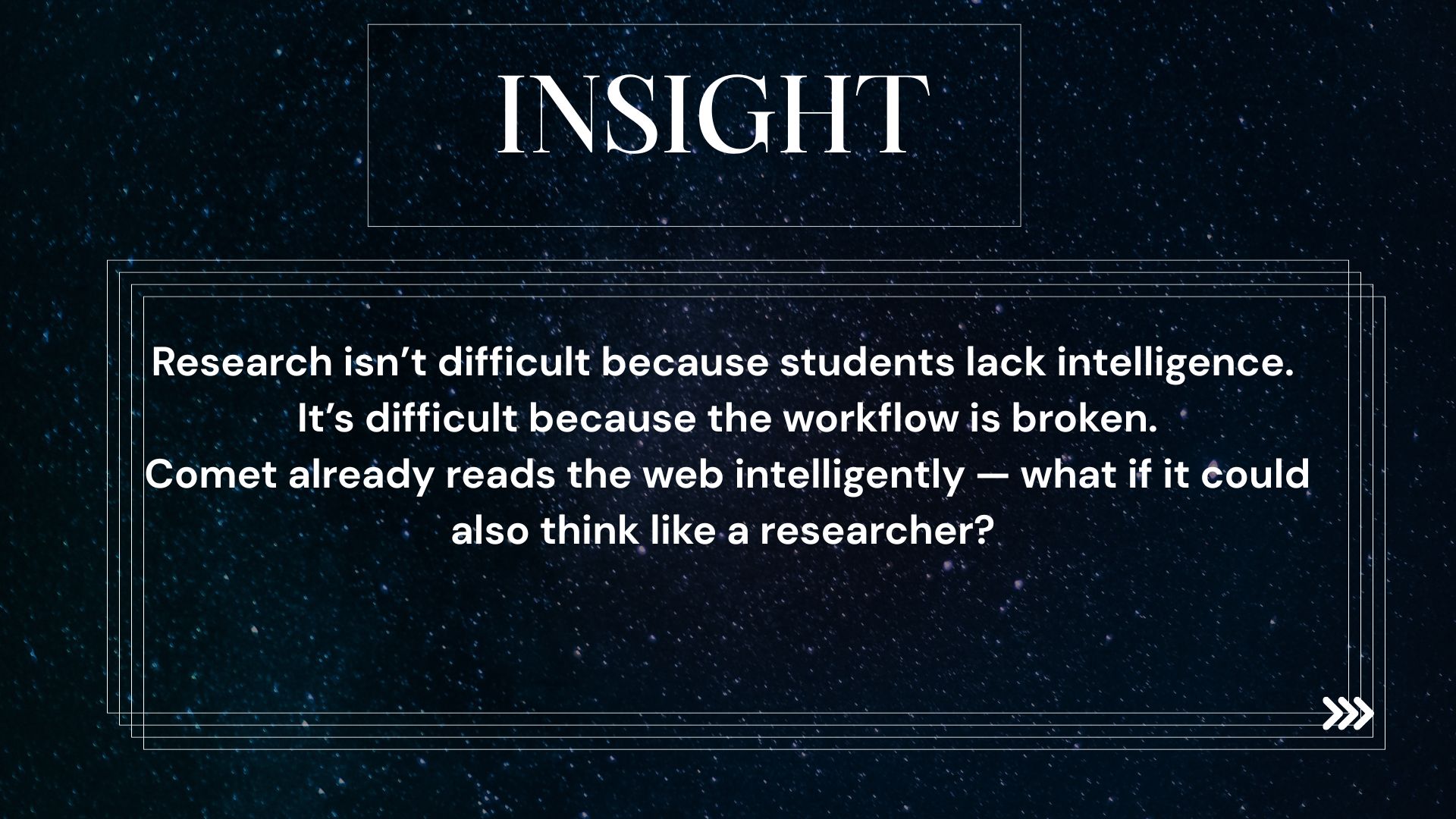
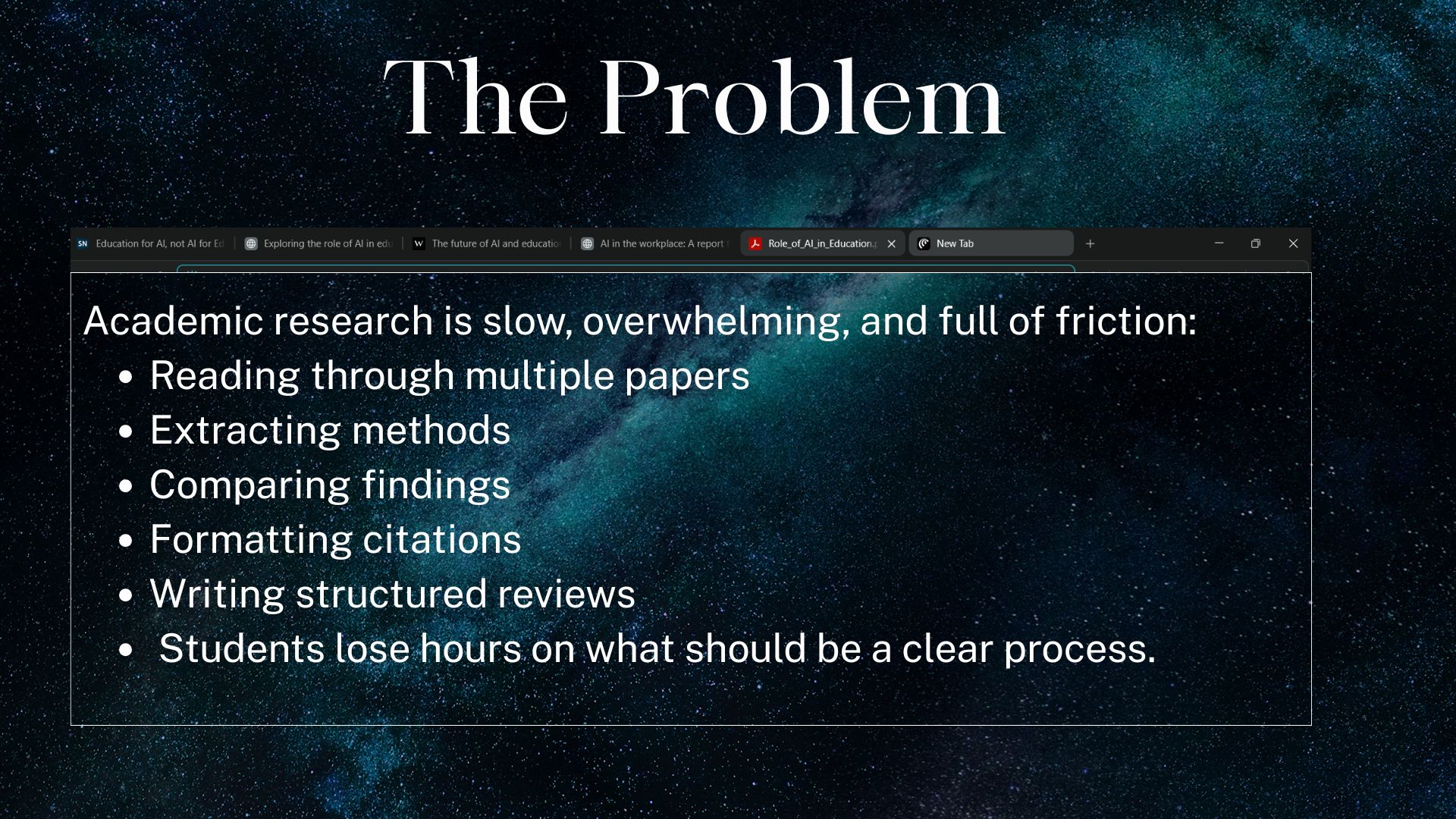
I’ve always felt that the hardest part of any assignment or research project isn’t the writing, it’s the research. Literature reviews take hours. Citations take patience I honestly don’t have. And even when I tried using regular AI tools, the output always felt generic, unstructured, or academically incorrect.
The Build with Comet hackathon felt like the perfect moment to finally fix this for myself. I wanted to turn the one part of academics that drains students the most into something fast, clean, and almost effortless.
The idea started very simply: what if Comet could do a full literature review like a real academic expert? Not just summarize, but analyze methods, compare findings, extract gaps, and build something publishable. That question became my entire project.
What it does
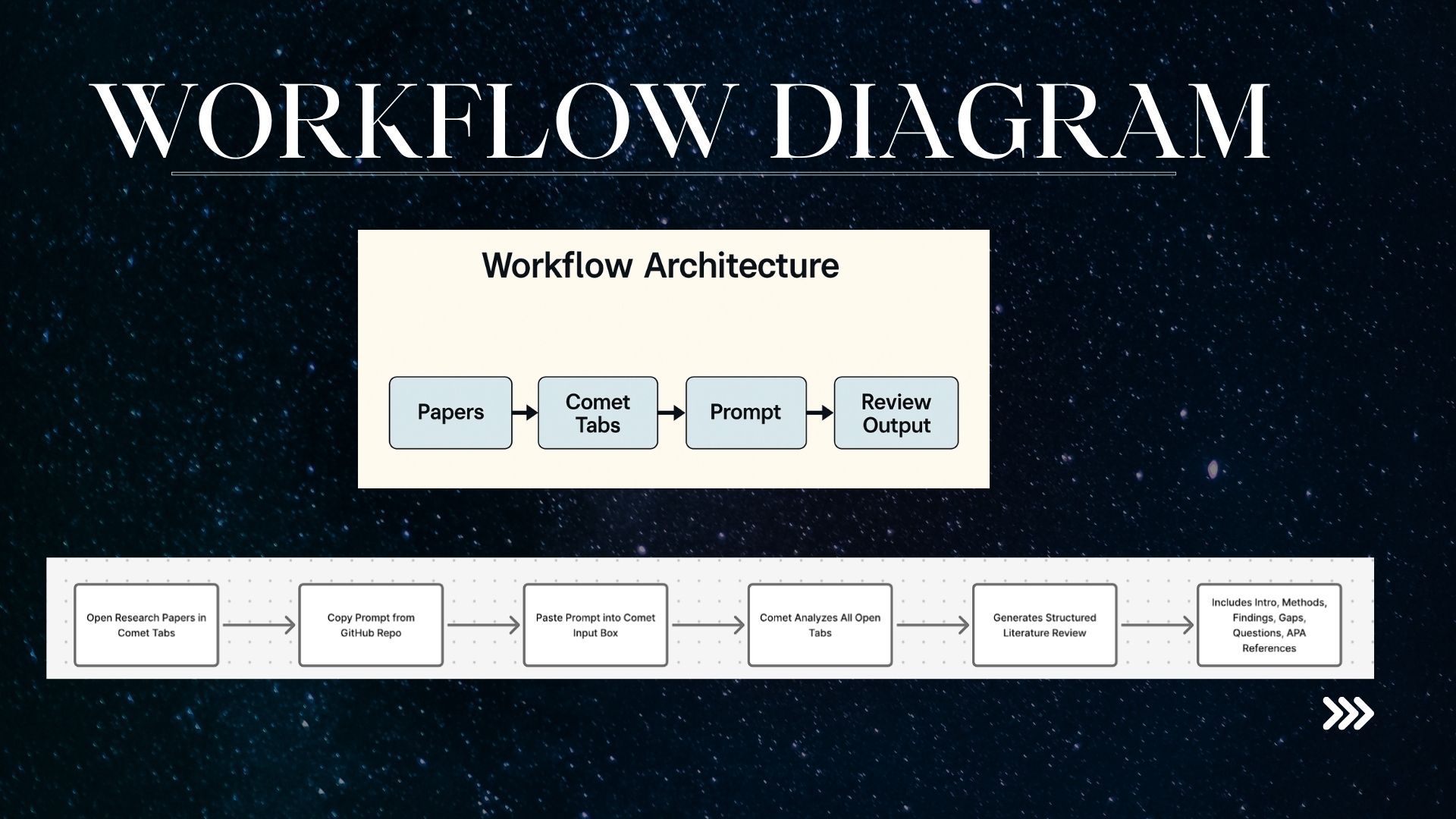
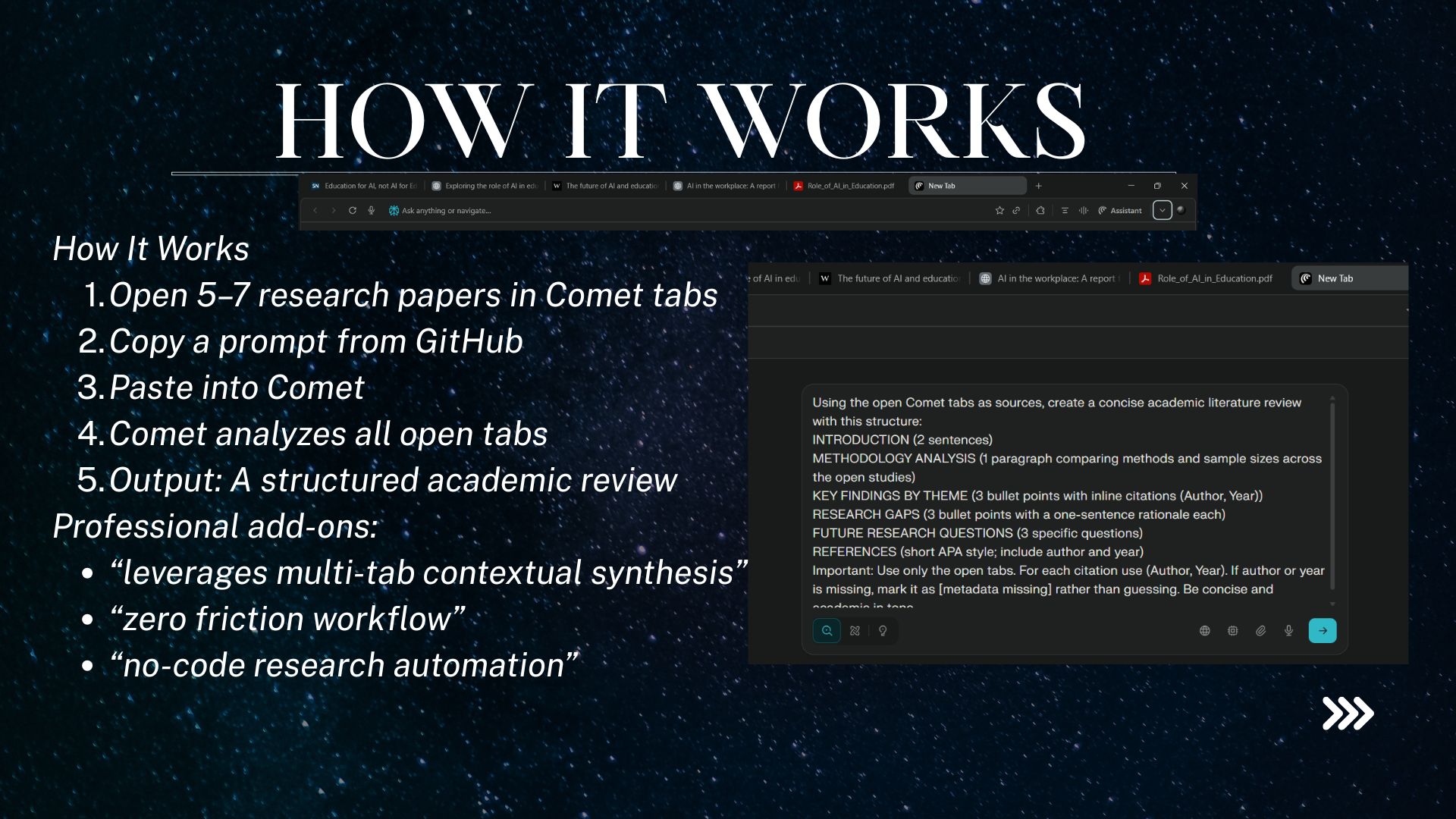
Comet Scholar is a complete academic research workflow built entirely on top of the Perplexity Comet Browser. It transforms multiple open research papers into a structured literature review in minutes.
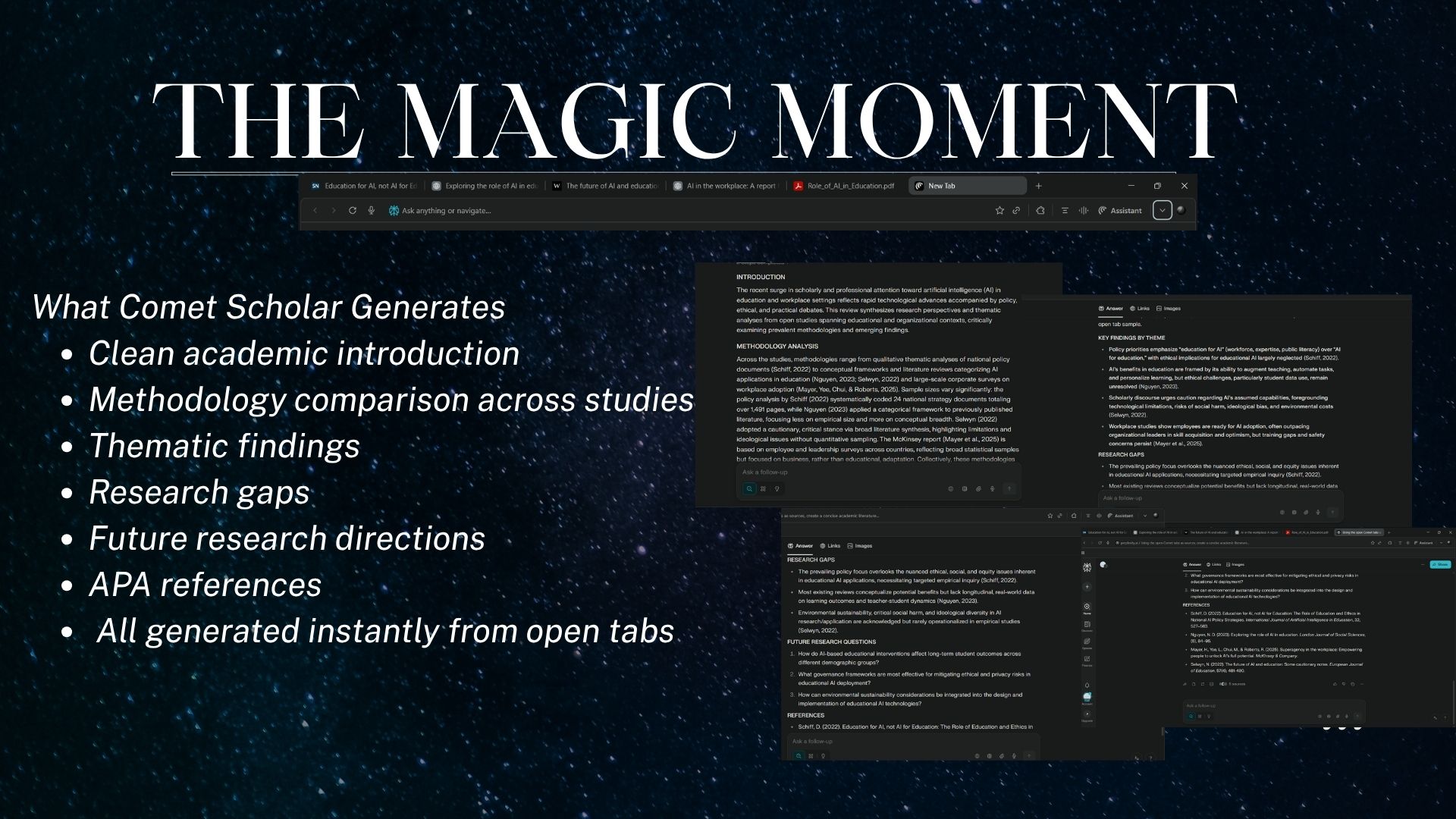
It generates:
A full academic introduction
Methodology comparisons across studies
Thematic findings with proper in-text citations
Structured APA references
Research gaps with explanations
Future research questions
An end-to-end workflow students can use immediately
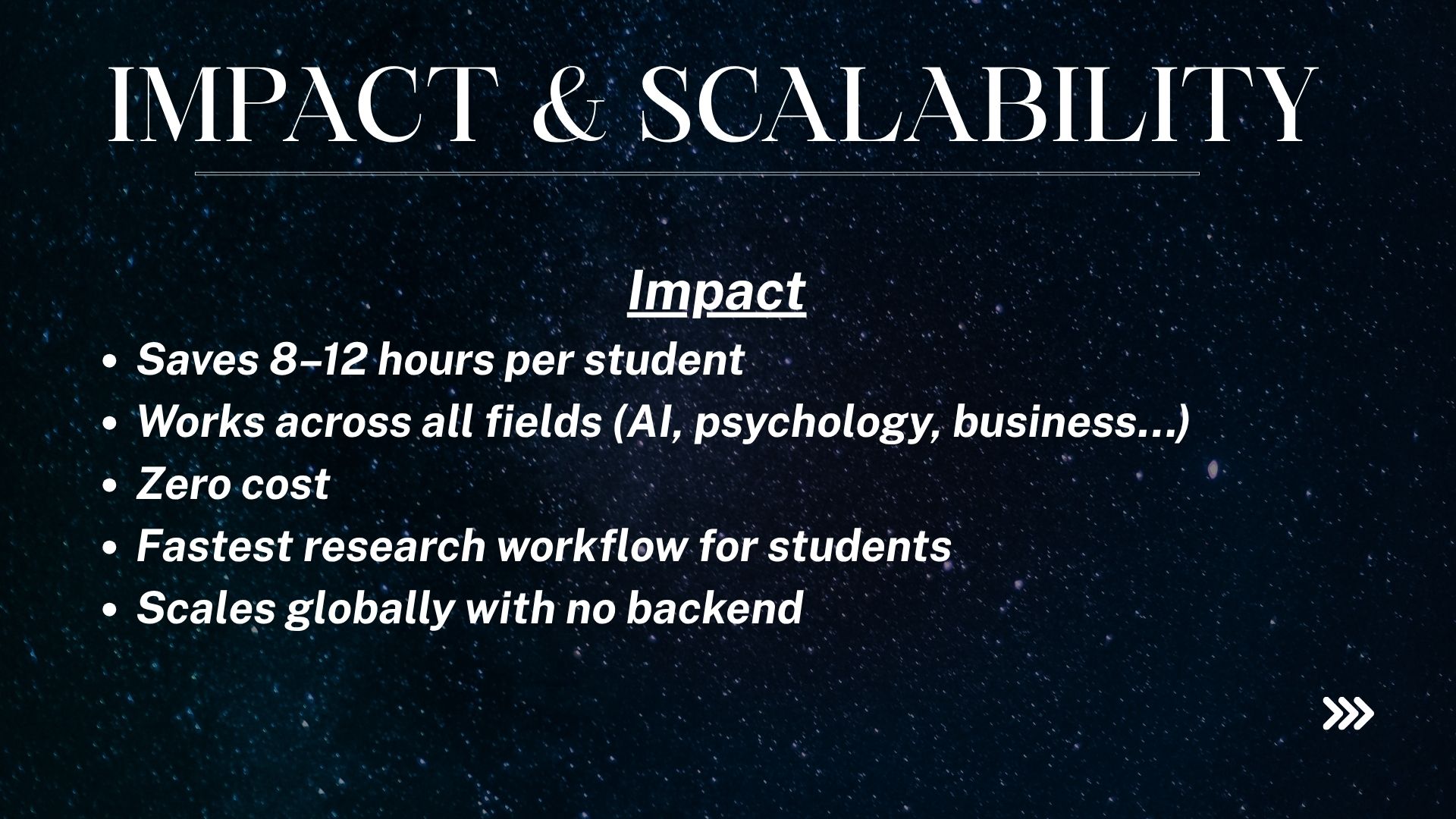
Instead of spending 8–12 hours on a literature review, Comet Scholar brings that down to under 15 minutes.
How I built it
I started by breaking down the academic research process into steps: reading papers, extracting methods, comparing results, finding gaps, and building a narrative. Then I designed prompt systems that guide Comet through each step with academic structure and clarity.
The workflow was built through dozens of iterations, refining how Comet interprets open tabs, ensuring citations stay accurate, and making sure the final output actually resembles a real literature review—not just an AI summary.
I packaged everything into a repeatable workflow with a prompt library, examples, a quick-start guide, metrics, and a demo to show its full capability.
Challenges I ran into
The biggest challenge was getting Comet to act more like an academic researcher and less like a generic summarizer. Early attempts produced output that was too broad, missing depth, or not properly citing sources.
Another challenge was designing prompts that would work consistently across different disciplines. I had to rethink the structure until the workflow became reliable regardless of whether the research was in AI, psychology, health, or economics.
Balancing simplicity with academic precision also took time. I didn’t want the tool to feel complicated, but it still needed to produce high-quality, professional work.
Accomplishments that I’m proud of
The final workflow feels like something I would actually use for real assignments. It’s fast, accurate, and produces structured reviews that would normally take hours.
I’m proud that I built something accessible to any student with no extra cost, no coding setup, and no advanced tools—just Comet and a set of prompts.
I also learned how to take an idea from a personal frustration and turn it into a polished, complete project with documentation, metrics, and a clean user experience.
What I learned
I learned how powerful prompt engineering becomes when it’s treated like real system design. Small changes in structure, intent, and ordering can completely transform the quality of an output.
I also learned how strong Comet is when guided properly—it can navigate multiple research papers at once and synthesize them with surprising depth.
Most importantly, I learned how to design a workflow that feels like a real product, not just a hackathon experiment.
What’s next for Comet Scholar
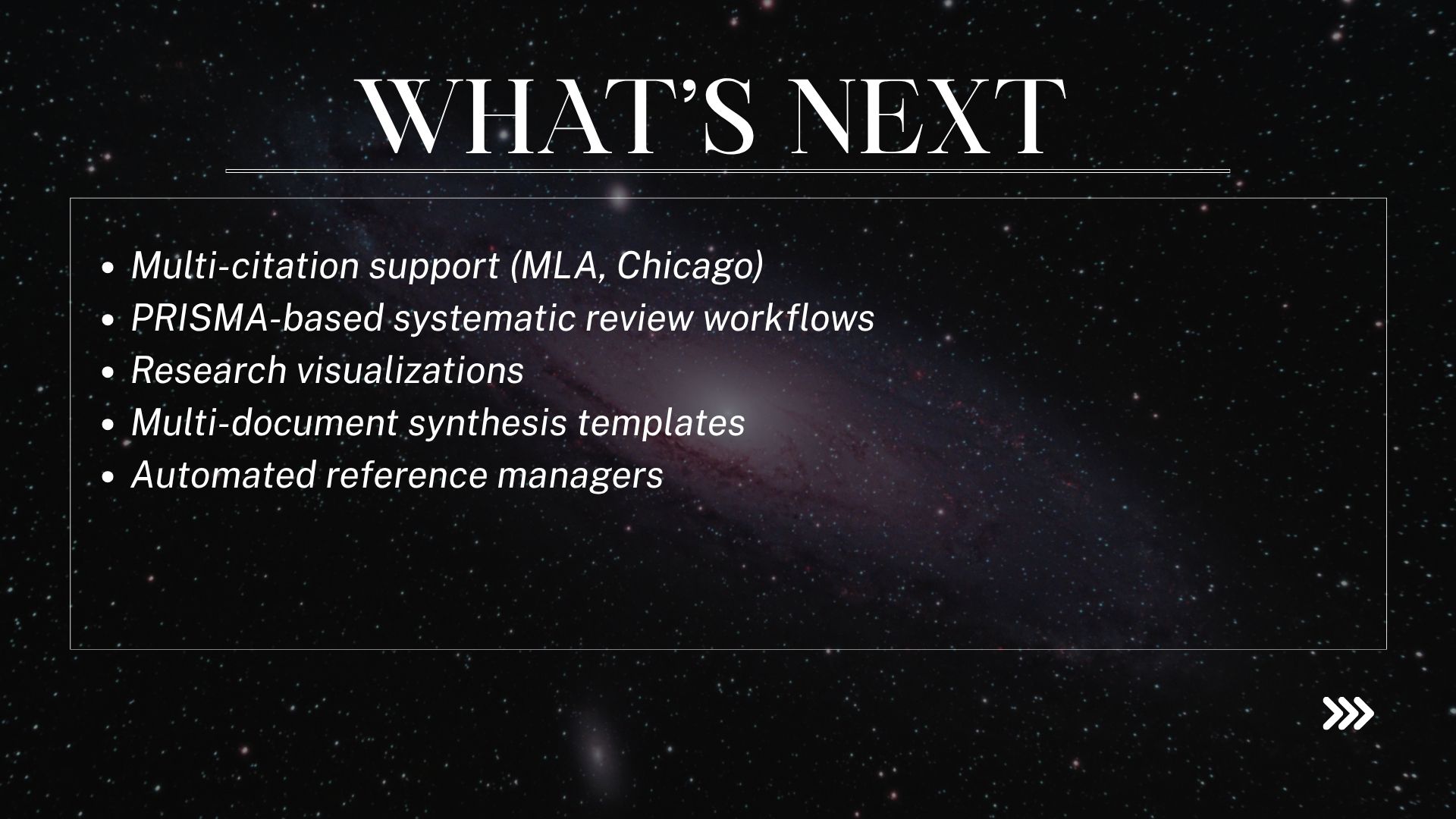
Comet Scholar can grow in several directions. The next steps include supporting more citation formats, enabling export to tools like Zotero, adding templates for systematic reviews, and expanding the workflow for meta-analysis and more specialized academic styles.
I also want to explore visual research outputs, like concept maps or timeline diagrams, generated directly through Comet. The goal is to turn this into a complete academic research assistant that supports students from the first paper they open to the final draft they submit.
Comet Scholar started as a personal fix for a problem I kept running into, but it has the potential to become something much bigger for students everywhere.

Log in or sign up for Devpost to join the conversation.