-
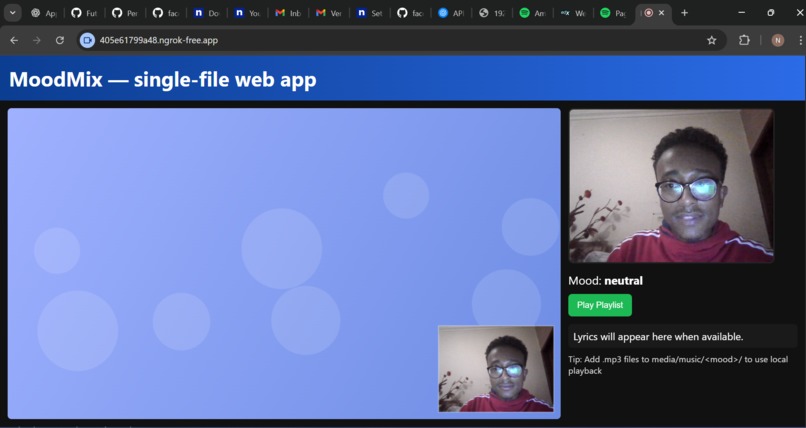
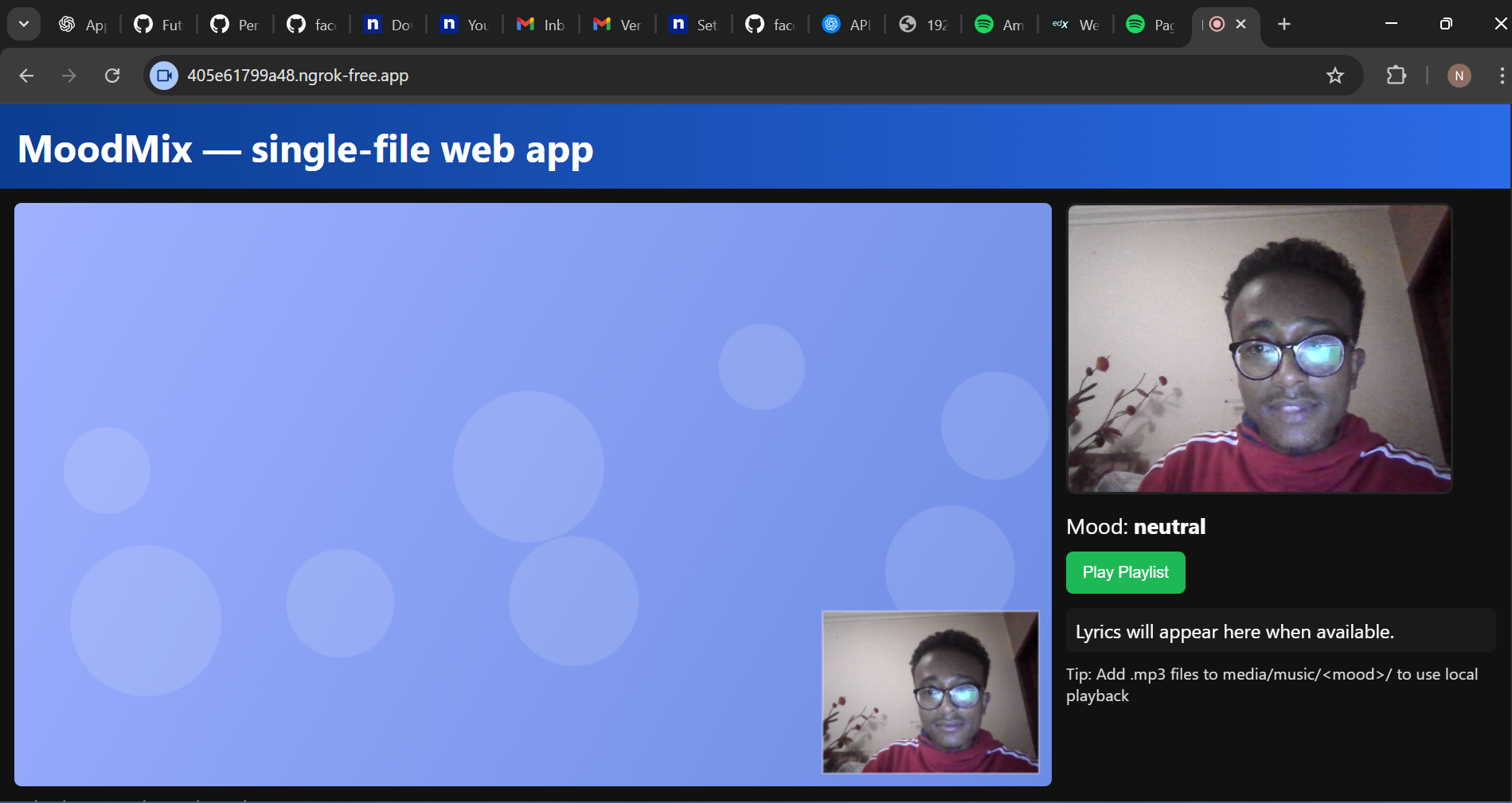
The app reacting to a neutral face
-
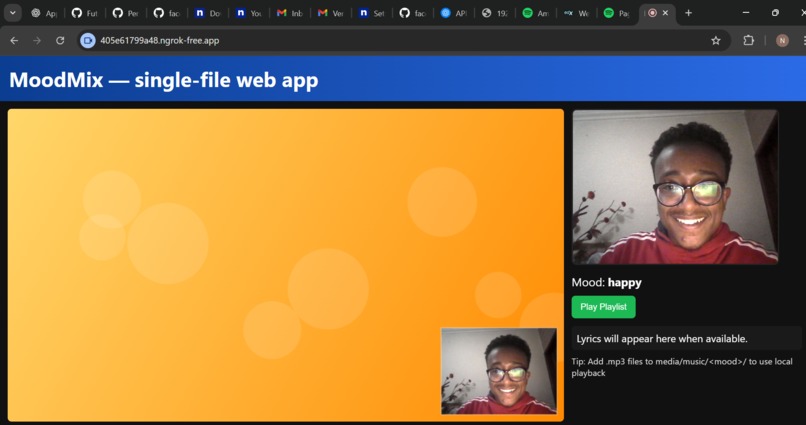
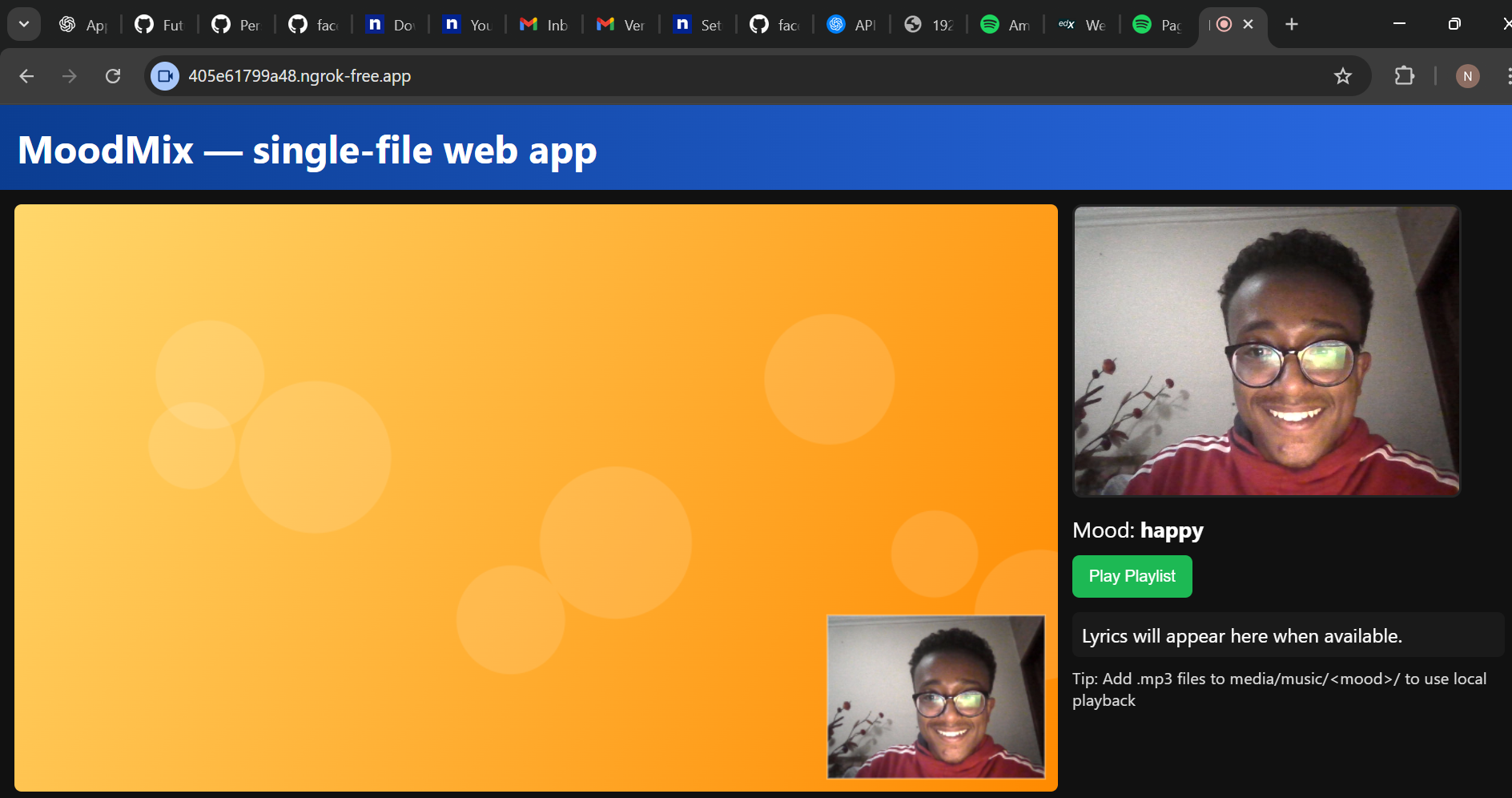
the app reacting to a happy face
Inspiration
Comet was born out of a realization that many people struggle to find music that matches how they feel in the moment. We noticed that music streaming services often focus on genres and playlists, but not on emotions. During lockdown, many of our friends said music helped them cope with stress, anxiety, and loneliness. We wanted to build something that could bridge the gap between emotional wellness and personalized playlists. The idea came from journaling apps that let you log your mood, and we thought why not connect that to music? We also wanted to make it quick: just one mood selection and instantly get songs that fit. The name “Comet” symbolizes fast, bright, and impactful just like finding the perfect song. We looked into how mood detection could be both manual and AI-driven for future updates. Our team aimed to combine empathy with technology, not just make another music app. That’s how the seed of comet was planted.
What it does
Comet lets users select their current mood from a simple, colorful interface. Once a mood is chosen happy, sad, relaxed, energetic, and more the app instantly generates a custom playlist. It uses a mix of preset curated playlists and API-driven search for matching tracks. Users can save their favorite moods and playlists for quick future access. It also offers mood history so you can see patterns in your listening habits. The app syncs with Spotify and YouTube for immediate playback. We designed it for speed: no extra steps, just mood → music. It works both online and offline, with cached playlists. The UI adapts its theme colors to the mood chosen for an immersive feel. Overall, it’s a personal DJ that understands how you feel.
How we built it
We developed the backend with Node.js and Express for fast API handling. The frontend was built using React Native, allowing cross-platform mobile support. We integrated Spotify and YouTube APIs for music fetching and playback. The database uses Firebase Fire store for real-time data sync. We also used Mood Detection Logic based on user selection and basic sentiment keywords. UI/UX design was done in Figma, focusing on minimal taps and colorful mood palettes. For authentication, we used Firebase Auth with Google/Spotify sign-in. Testing was done on both Android and iOS simulators, plus physical devices. We had a GitHub repo with branches for backend, frontend, and integration. Weekly sprints helped us break tasks down and meet milestones.
Challenges we ran into
Finding a reliable free music API with mood-based search was harder than expected. Spotify’s API doesn’t directly sort songs by mood, so we had to use indirect filters like energy, valence, and tempo. Integrating two different platforms (Spotify + YouTube) without breaking the flow was tricky. Offline playlist caching initially caused huge storage usage. Making the UI both visually appealing and fast loading took several iterations. We faced delays because of API authentication token refresh issues. Our initial mood detection model was too slow for mobile use, so we simplified it. Handling cross-platform differences in audio playback caused bugs. Testing on lower-end devices revealed performance bottlenecks. Despite these, we kept adapting and found creative workarounds.
Accomplishments that we're proud of
We created a fully functional mood-based music app in a short time frame. The UI design got positive feedback for being both fun and easy to use. Integration with two major music platforms worked smoothly by launch. We optimized offline caching to reduce storage by 70%. Our database structure made mood history and stats possible without lag. We made the app accessible for both Android and iOS without separate builds. We built a “Quick Mood” button feature that users loved for instant playlists. We kept user onboarding under 30 seconds from install to first song. Team communication was strong, with no major conflicts. We saw real users smile when Comet matched their mood perfectly.
What we learned
APIs can be powerful but also very limiting if they lack direct mood parameters. Performance optimization on mobile is as important as features. User testing early in the process saves a lot of time later. A simple interface often beats a complex but “cool” design. We learned to balance technical ambition with realistic timelines. Integrating multiple platforms is easier if you plan the API flow early. Music can have a huge emotional impact when paired correctly with mood. We understood how emotional UX can deepen user connection to an app. Managing token authentication across services requires careful planning. Team collaboration and sprint discipline were key to finishing Comet.
What's next for comet
- Comet’s future plans revolve around making AI development even faster and more collaborative.
- The team is focusing on real time collaboration features so multiple users can work on experiments together.
- There’s an ongoing push to improve integration with more machine learning frameworks beyond TensorFlow and PyTorch.
- Comet plans to deepen its cloud support, allowing for seamless deployment and tracking across AWS, GCP, and Azure.
- Advanced MLOps tools will be introduced to help enterprises manage AI projects at scale.
- The platform will add stronger model explainability tools to help understand how AI makes decisions.
- There’s an effort to expand auto logging and smart experiment suggestions powered by AI.
- More security and compliance features are being built for industries with strict regulations.
- Comet is also exploring marketplace-style model sharing, where teams can publish and reuse models.
- The ultimate goal is to make Comet the go-to ecosystem for every stage of an AI project from idea to deployment.


Log in or sign up for Devpost to join the conversation.