Inspiration
We grew up watching Star Trek. As little kids, we saw the combadge and the ship’s computer as a futuristic, impossible innovation. How could a simple tap on the chest connect you to someone that could answer questions, do tasks, and act as your second brain?
At Hack the North, we decided to bring that innovation to life.
What it does
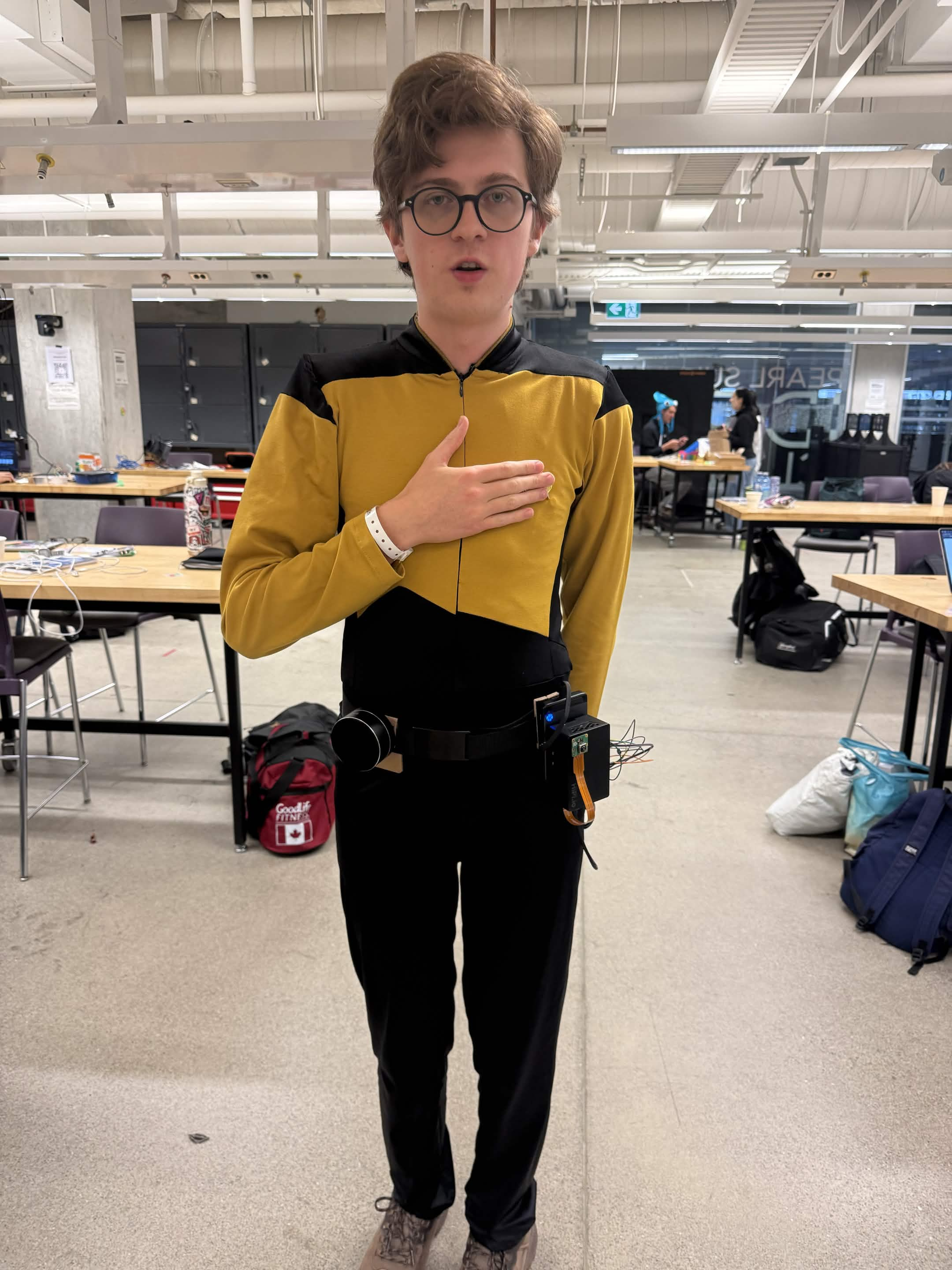
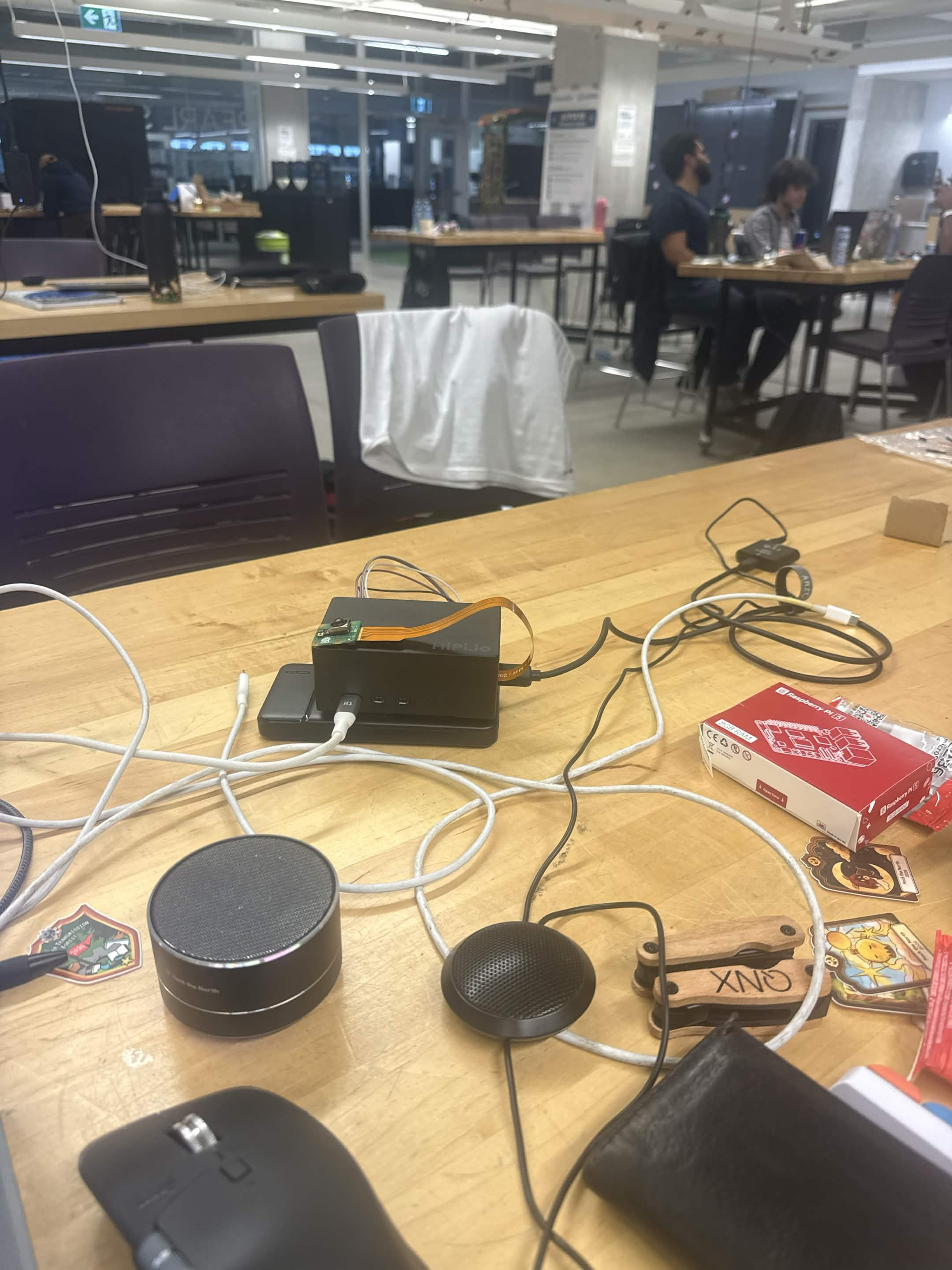
Combadge has a chest-mounted touch sensor, LED, and haptic motor connected through conductive thread to a Raspberry Pi 5 on your belt. The Pi runs QNX 8.0 and connects to a microphone, speaker, and camera.
You can talk naturally with Computer, ask it to look at something through the camera, search the live web, read or draft emails, manage calendar events, search for products, check Shopify inventory, prepare restock emails, and hand off a conversation to a real person by phone.
For example, you could see something you like on a walk and say, “Computer, find me this under $50.” It'll take a snapshot through the camera (its eye) and try to find similar products on Shopify's platform.
How we built it
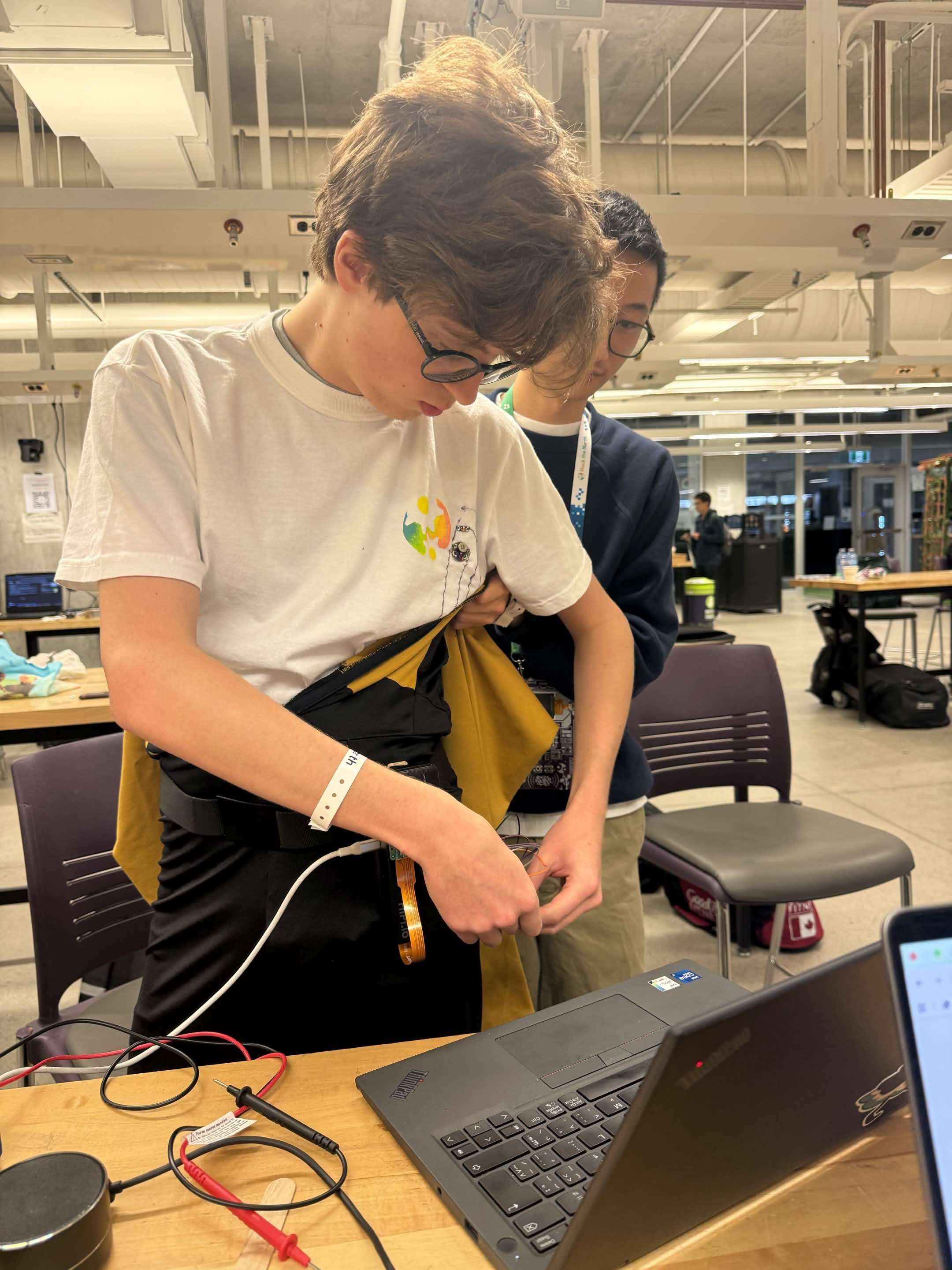
We stitched conductive thread into the shirt to connect the chest-mounted badge to the Raspberry Pi at the waist.
OpenAI GPT-Live powers the voice interface, while GPT-6 Astra handles reasoning and tool use. QNX runs the embedded system. Browserbase gives Computer access to the live web. Composio connects Gmail, Google Calendar, and Shopify. Shopify powers product discovery, checkout creation, and merchant inventory workflows.
Challenges
One of the biggest challenges we faced was trying to get our Pi 5 to connect to our bluetooth speaker. QNX did not expose the bluetooth audio driver interfaces we needed. So we built our own path that sends generated PCM audio directly through our own Bluetooth driver. We also fixed a Python runtime issue that broke large TLS requests and made sure camera and network operations did not block live audio.
Accomplishments
We are especially proud of turning the shirt itself into part of the circuit and building a Bluetooth audio path that our AI agents could help test physically.
But most of all, the four of us got to see the futuristic innovation that amazed us come from the screen to life.
What we learned
We learned that making AI feel natural on real hardware is mostly an integration problem. Audio, networking, drivers, physical design, and interaction all matter.
We also learned how useful an AI coding agent becomes when it can observe the physical result of its own work instead of only checking whether code ran successfully.
What's next
It'd be great if we had a model to transform GPT-Live's voice into Majel Barrett-Roddenberry's, the voice actor for the Star Trek Combadge.
We want to improve audio scheduling, echo cancellation, touch and haptic feedback, durability, comfort, and phone checkout handoff. Ultimately, we want to give you useful computing without pulling your attention away from the combat field that is the real world, just like the people in Star Trek.
Built With
- bluetooth
- browserbase
- btstack
- c
- codex
- composio
- conductive-fabric
- conductive-thread
- gmail
- google-calendar
- gpt-6-astra
- graphql
- mpr121
- openai
- python
- qnx
- raspberry-pi
- shopify
- turbojpeg
- twilio
- websockets


Log in or sign up for Devpost to join the conversation.