-
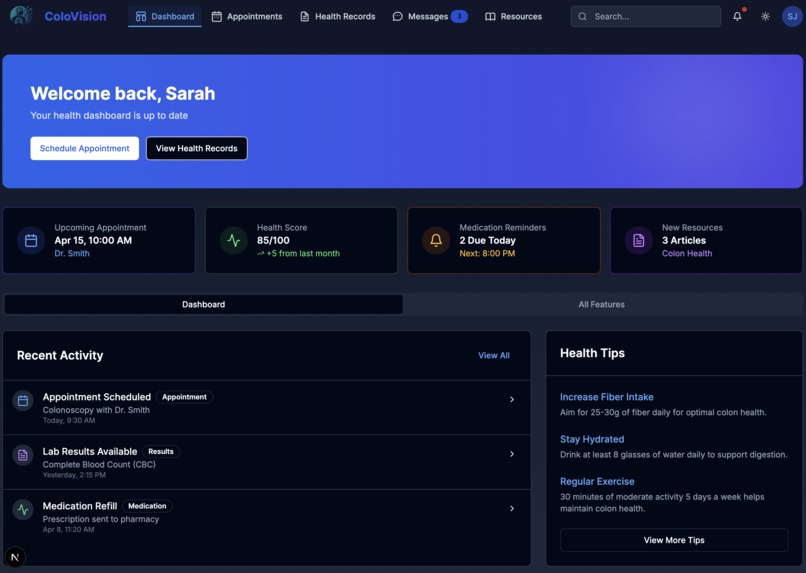
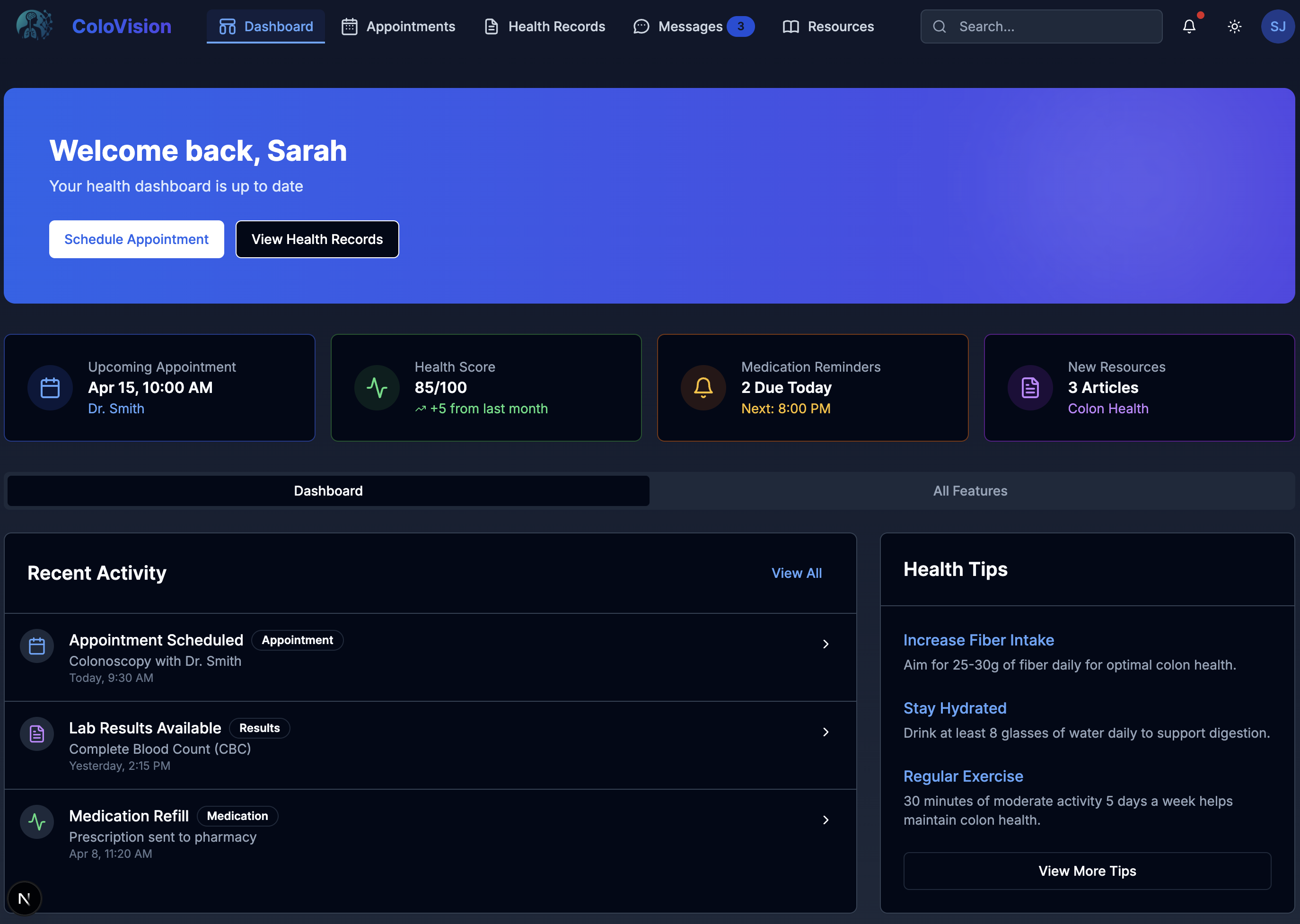
ColoVision Dashboard
Inspiration
ColoVision was born from a desire to revolutionize patient care by transforming traditional medical imaging. We were inspired by the potential of Gaussian splatting to turn 2D colonoscopy images into immersive 3D models, enabling doctors and patients to see the colon in a whole new way. This innovation not only enhances diagnostic accuracy but also empowers patients to engage actively in their healthcare journey.
What it does
ColoVision transforms static 2D colonoscopy images into dynamic, editable 3D renders. The application leverages advanced Gaussian splatting techniques to create detailed visualizations of the colon, helping to detect and monitor polyps early. In addition, the platform allows patients to:
- Track Upcoming Appointments: Stay on top of their screening schedule.
- Interact with their 3D Model: Experiment with and visualize how medications affect their body over time.
- Update Medical Records: Seamlessly upload new imaging results to ensure their medical history is current and accessible by various healthcare providers.
How we built it
Research & Conceptualization:
We began by studying current imaging technologies and identifying gaps in patient data management. The idea of integrating 3D visualization with a patient-centric platform took shape during these initial discussions.Developing the 3D Imaging Module:
We implemented Gaussian splatting algorithms to convert 2D colonoscopy images into 3D models. This process required precision to ensure the models were both accurate and detailed enough for clinical use.Building the Patient Platform:
A secure, user-friendly interface was created to enable patients to upload images, track appointments, and interact with their 3D colon models. This involved integrating various backend systems to manage real-time updates and data synchronization.Testing and Iteration:
Continuous testing was conducted with simulated data and different colonoscopy datasets, leading to several iterations that enhanced both the accuracy of the 3D models and the overall user experience.
Challenges we ran into
Technical Complexity:
Implementing Gaussian splatting with the level of detail required for medical imaging presented significant technical hurdles.Data Security & Privacy:
Ensuring compliance with healthcare regulations and protecting sensitive patient data was paramount and required robust encryption and secure data management practices.User Experience:
Balancing a feature-rich platform with an intuitive design was challenging, especially when catering to both tech-savvy users and those less comfortable with digital interfaces.Integration of Diverse Systems:
Synchronizing real-time updates between the 3D imaging module and the appointment tracking system required meticulous coordination and iterative refinement.
Accomplishments that we're proud of
Innovative Imaging Solution:
Successfully transforming 2D images into interactive 3D models using Gaussian splatting.Patient Empowerment:
Providing patients with an intuitive tool that not only enhances understanding of their condition but also actively involves them in managing their healthcare.Streamlined Data Management:
Creating a platform that centralizes patient data, ensuring continuity of care across multiple healthcare providers.Early Detection and Prevention:
Demonstrating how advanced imaging can lead to earlier detection of polyps, potentially reducing the risk of colorectal cancer.
What we learned
Throughout the development of ColoVision, we gained invaluable insights into both the technical and human aspects of healthcare technology. We learned:
- The critical importance of precision and detail in medical imaging.
- How user-friendly design can dramatically improve patient engagement and data accuracy.
- The necessity of robust security measures when handling sensitive health information.
- The power of iterative development and user feedback in creating a tool that truly meets the needs of its users.
What's next for ColoVision
Moving forward, we aim to:
Enhance Model Interactivity:
Expand the capabilities of the 3D models to allow for more detailed simulation of medication effects and other treatments.Integrate AI Diagnostics:
Incorporate machine learning algorithms to assist in identifying and classifying polyps more efficiently.Expand Platform Features:
Add features such as personalized health analytics and a more comprehensive appointment and treatment tracking system.
Built With
- gaussian-splatting
- gemini
- machine-learning
- next.js
- python
- react.js
- shadcn

Log in or sign up for Devpost to join the conversation.