-
-
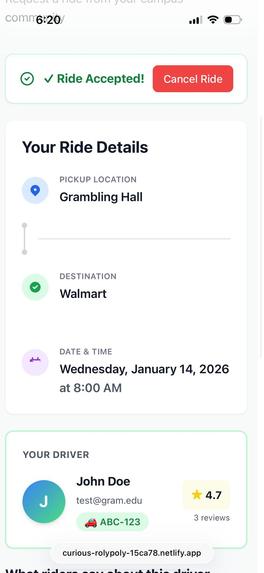
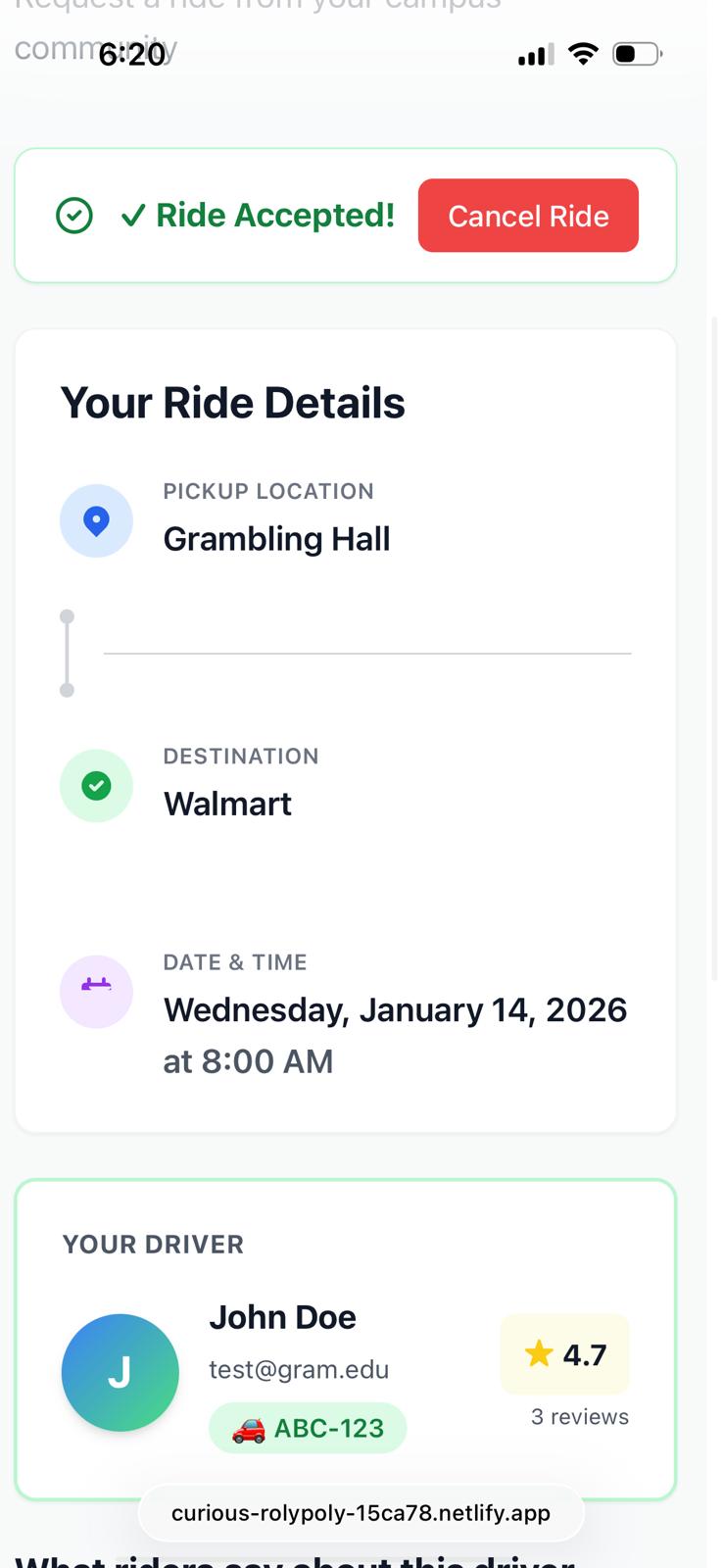
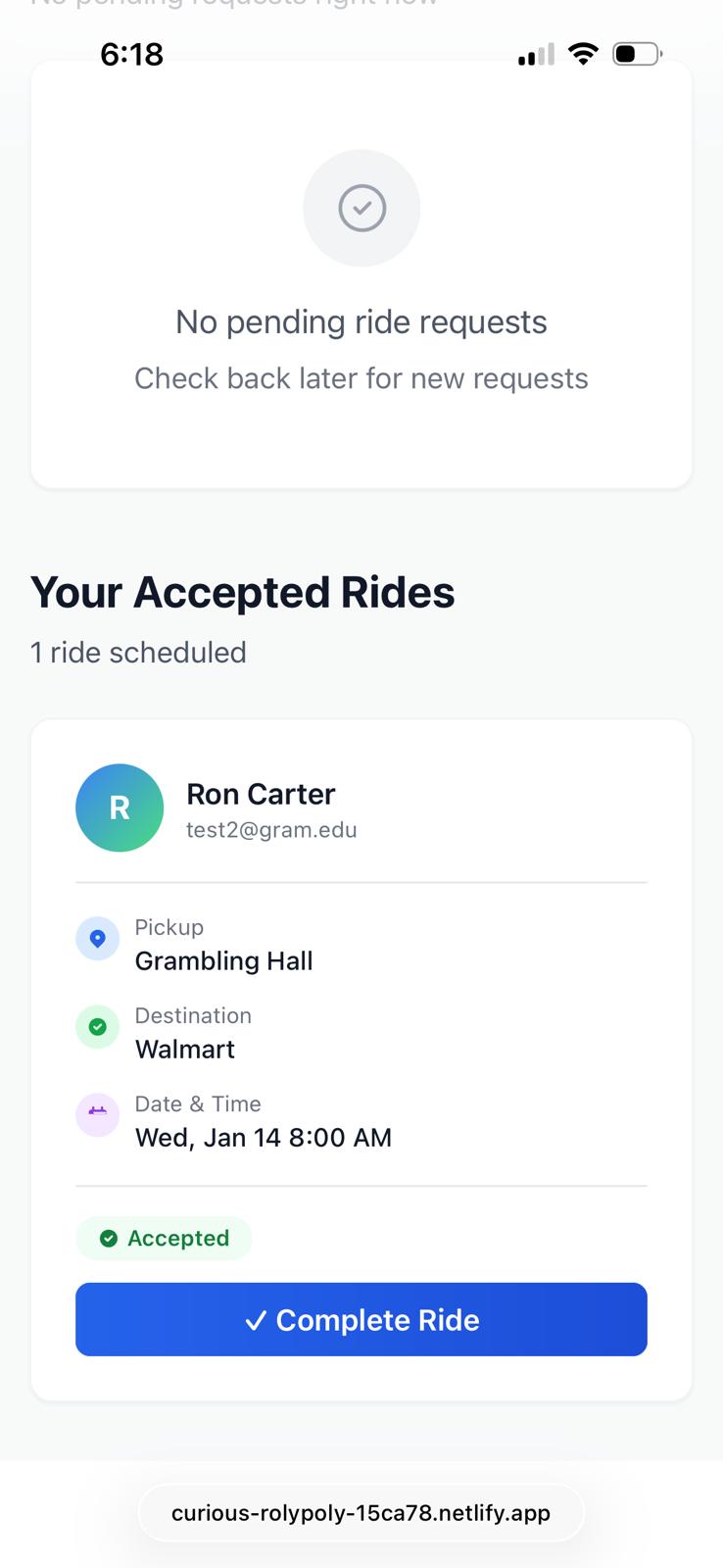
Ride accepted
-
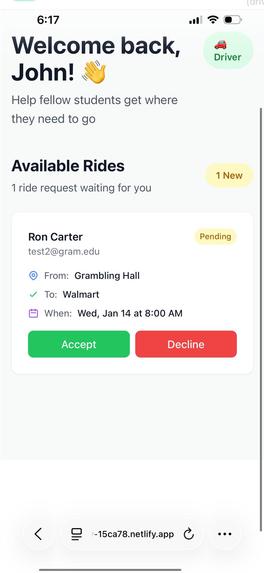
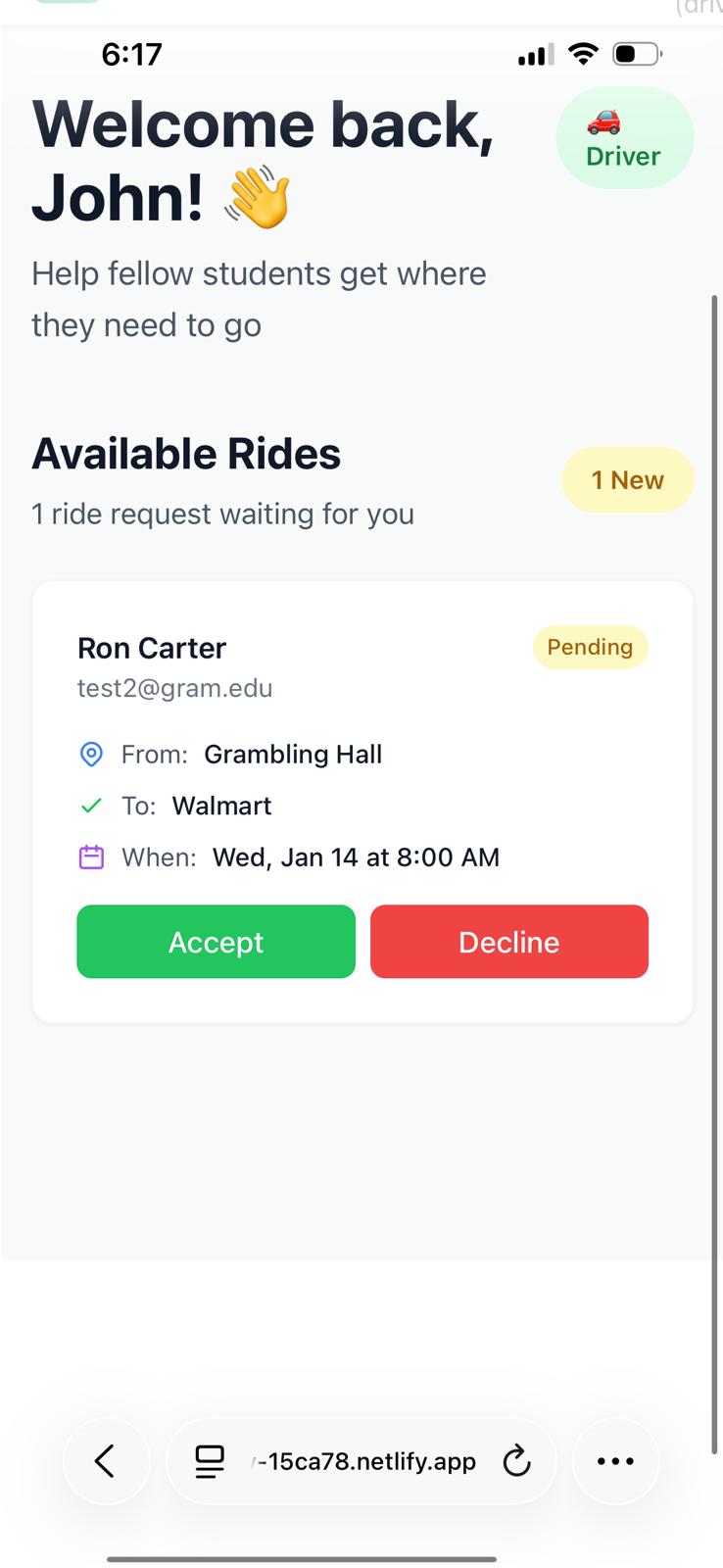
Driver dashboard
-
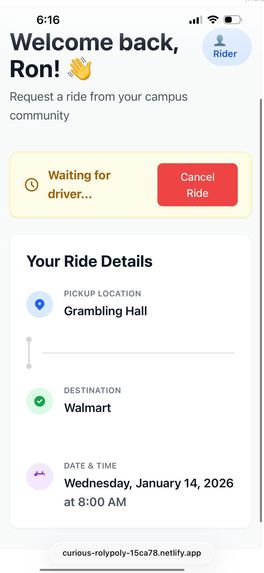
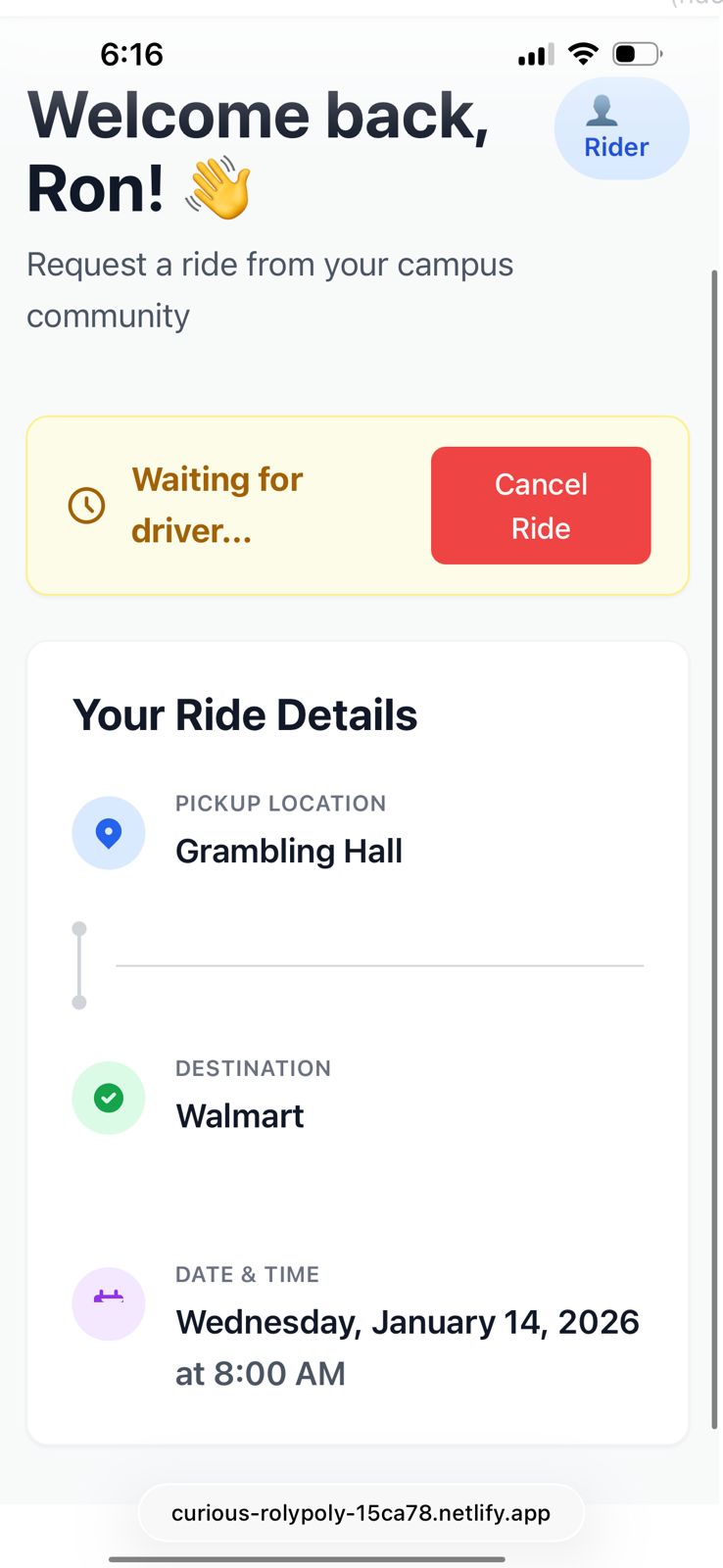
Ride status card
-
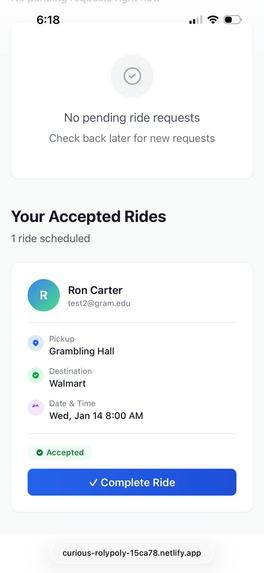
Complete ride
-
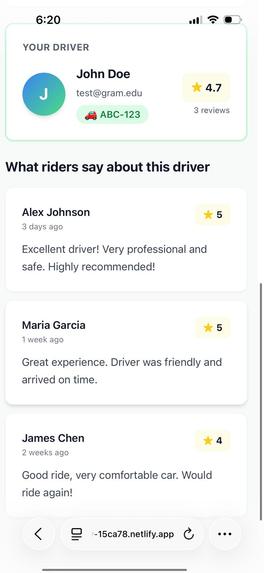
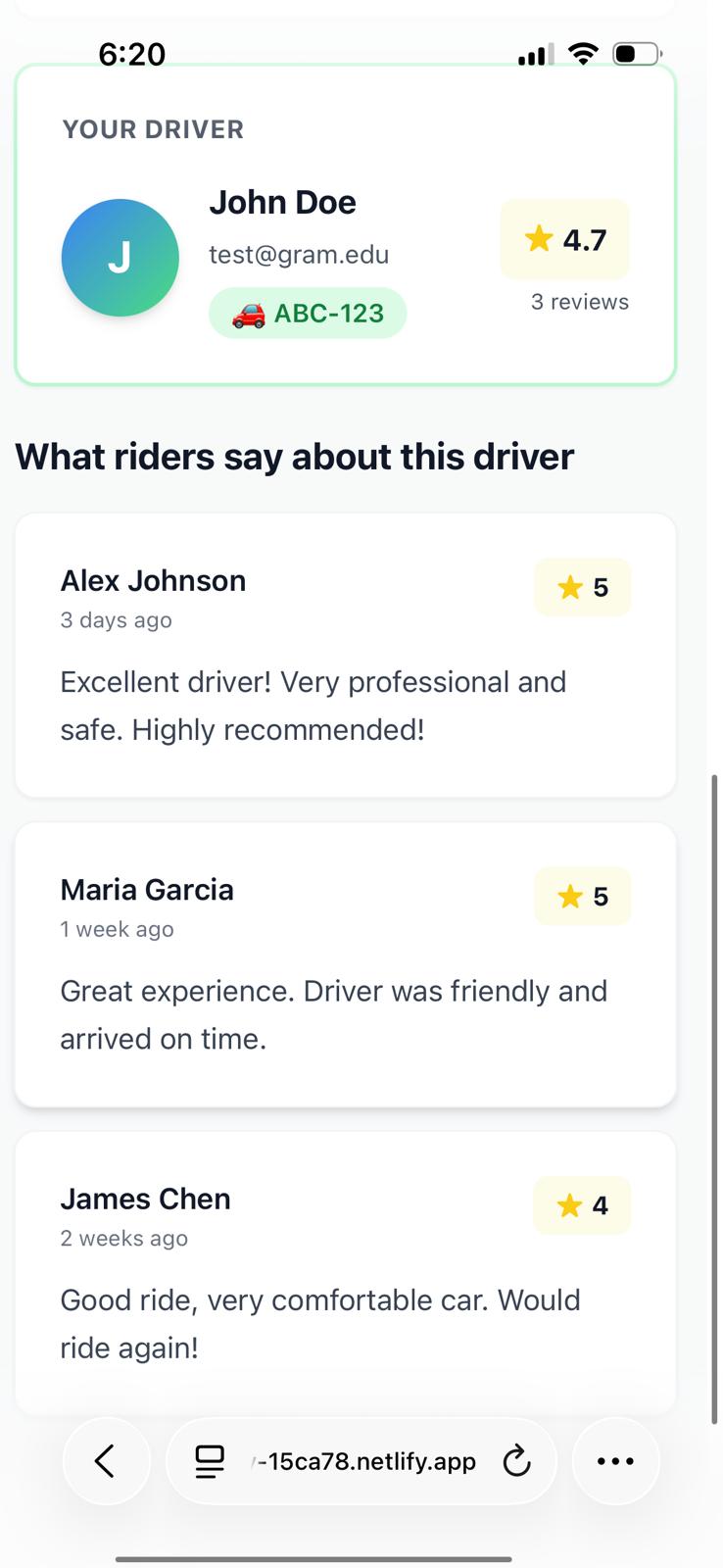
View driver info and reviews
Inspiration
Our project was inspired by a problem we see all too often on HBCU campuses: students lacking access to transportation. Rural HBCUs have few transit options, and rideshare companies like Uber/Lyft often lack reliable service (if they exist at all). Even when they do operate in these areas, they can be prohibitively expensive for students to use regularly. If you’re a student without a car, it can mean missing classes, struggling to get groceries or medical care, and feeling cut off from your community. We wanted to build a solution that served students’ needs without simply trying to “out-Uber Uber.” Instead, we decided to empower and organize around the existing strength of HBCU communities:** trust, camaraderie, and accountability**.
What it does
QuadDash is a campus first ride connector that allows members of the same HBCU community to become riders and drivers. Users of the platform can sign up with their verified .edu email address. Riders can post rides by indicating where they want to go, when, and requesting a ride. Drivers opt in to accepting or declining ride requests. By only allowing students from a curated list of HBCUs to sign up for QuadDash, and giving drivers full control over who they’ll drive for free, we keep the app centered around people instead of algorithms.
How we built it
QuadDash utilizes a FastAPI backend and a React web frontend. The backend takes care of authentication (via JWTs), .edu email validation, and ensuring all data is university specific. We created core database models with various business rules to keep the product simple and hackathon ready (i.e. only 1 active ride per driver).
Our frontend takes advantage of clean, role specific user flows. Riders only see a form to request rides and a page to view request status. Drivers only see incoming ride requests with intuitive accept/decline buttons. We decided against adding maps, payment systems, and chatting features to keep the product simple and functional within the time constraints of a hackathon. The deployed app is hosted for easy live demoing.
Challenges we ran into
The biggest challenge we faced was *correctly scoping the project *. It’s natural as builders to want to make something complex and impressive, but we learned that a simple idea executed well is much better than an overambitious hackathon demo. Another big challenge was connecting our frontend and backend contracts, deciding on proper database models, while also working under hackathon time constraints. We had to remind ourselves that everything didn’t need to be decided on Day 1. Our third challenge was finding a balance between speed and security. Authentication was a particular challenge since we didn’t want to overwhelm users with too many steps but still wanted the app to be secure. Deployment was difficult to setup.
Accomplishments that we're proud of
We are proud to have taken our concept and turned it into a real life application that has the potential to change student lives in underrepresented HBCU communities. Even with half of our team being first time hackers, we were able to deploy a fully functioning web application in just a matter of days. What we care about most, however, are the friendships and learning experiences we have gained as a team.
What we learned
We learned that constraints can often improve your product. When building full-stack applications, you need to know what you don’t want to build. We also learned about how to design systems with distinct responsibilities between frontends and backends, how to enforce human in the loop decision flows, and how to align technical design with ethical principles. Finally, we learned that technology doesn’t always have to be about flashy AI systems in order to be impactful, with QuadDash, we saw how understanding your users and their needs is the most important step you can take when building an intentional product.
What's next for colorstackwinterhack2025-QuadDash
Growth, Pitching, Continuous Integration and Delivery


Log in or sign up for Devpost to join the conversation.