Inspiration
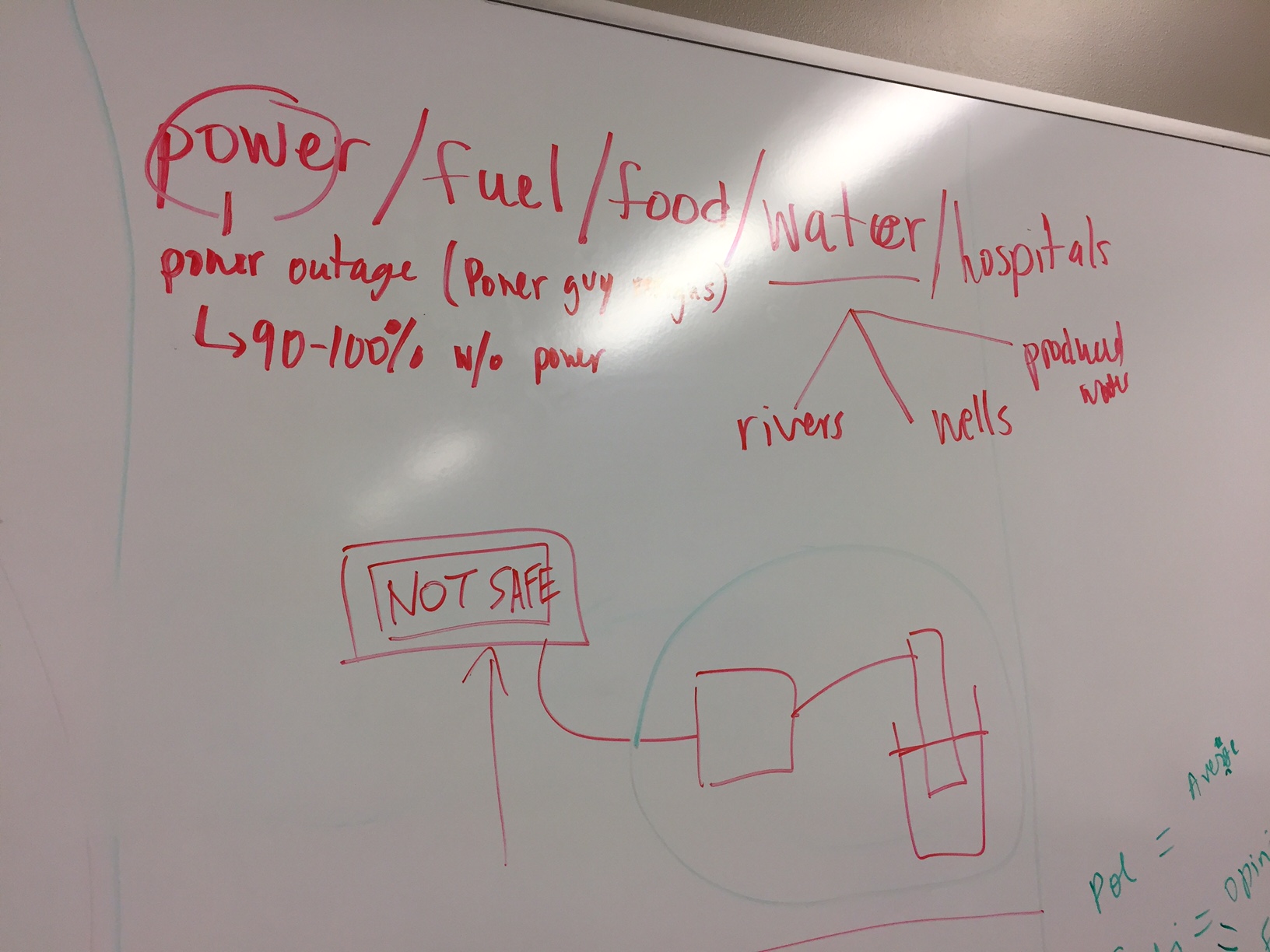
Hurricane Maria took away the energy and water infrastructure of 3 million Americans in Puerto Rico, leaving people without electricity and clean water. Two months later, there are still frequent blackouts leaving people without WiFi and telecommunications. This presents an added challenge to authorities, local leaders, and disaster relief workers who cannot rely on the internet infrastructure.
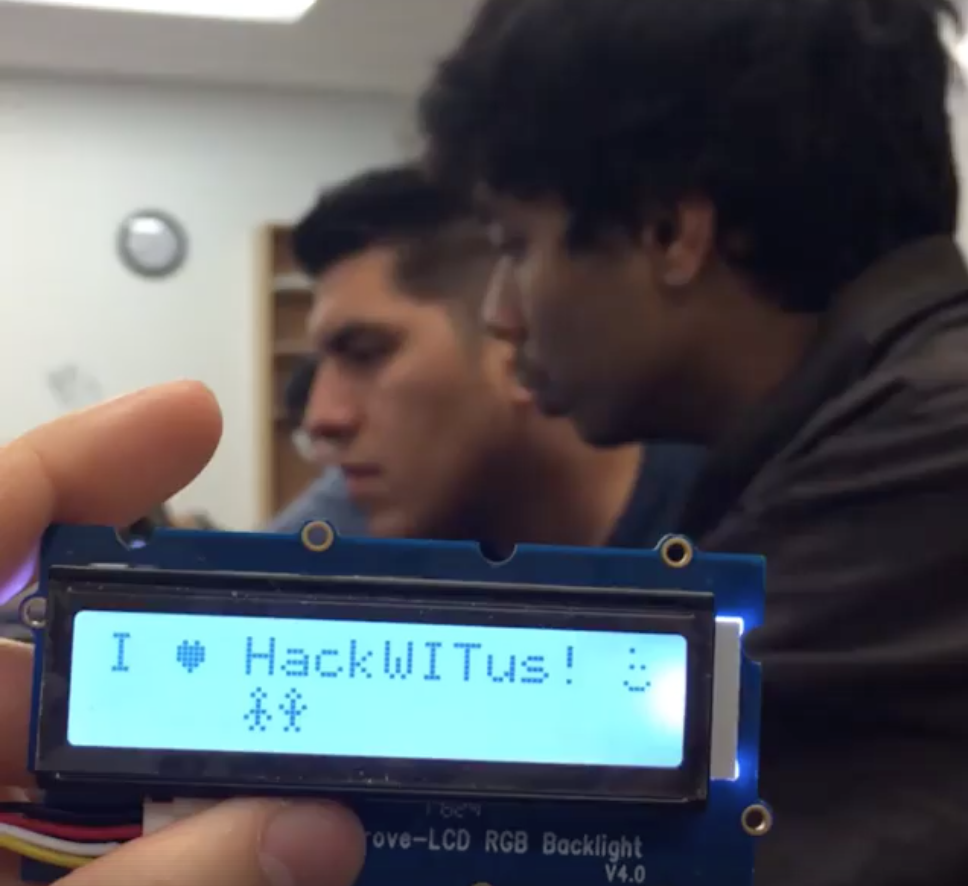
Introducing SemáforAgua (Spanish for 'water traffic light')! It is a simple color LCD display to identify if water is safe or not using a colored LCD screen with bilingual text.
What it does
The Grove LCD RGB Backlight display board shows different colors for different water quality depending on the measurements taken by the water sensors.
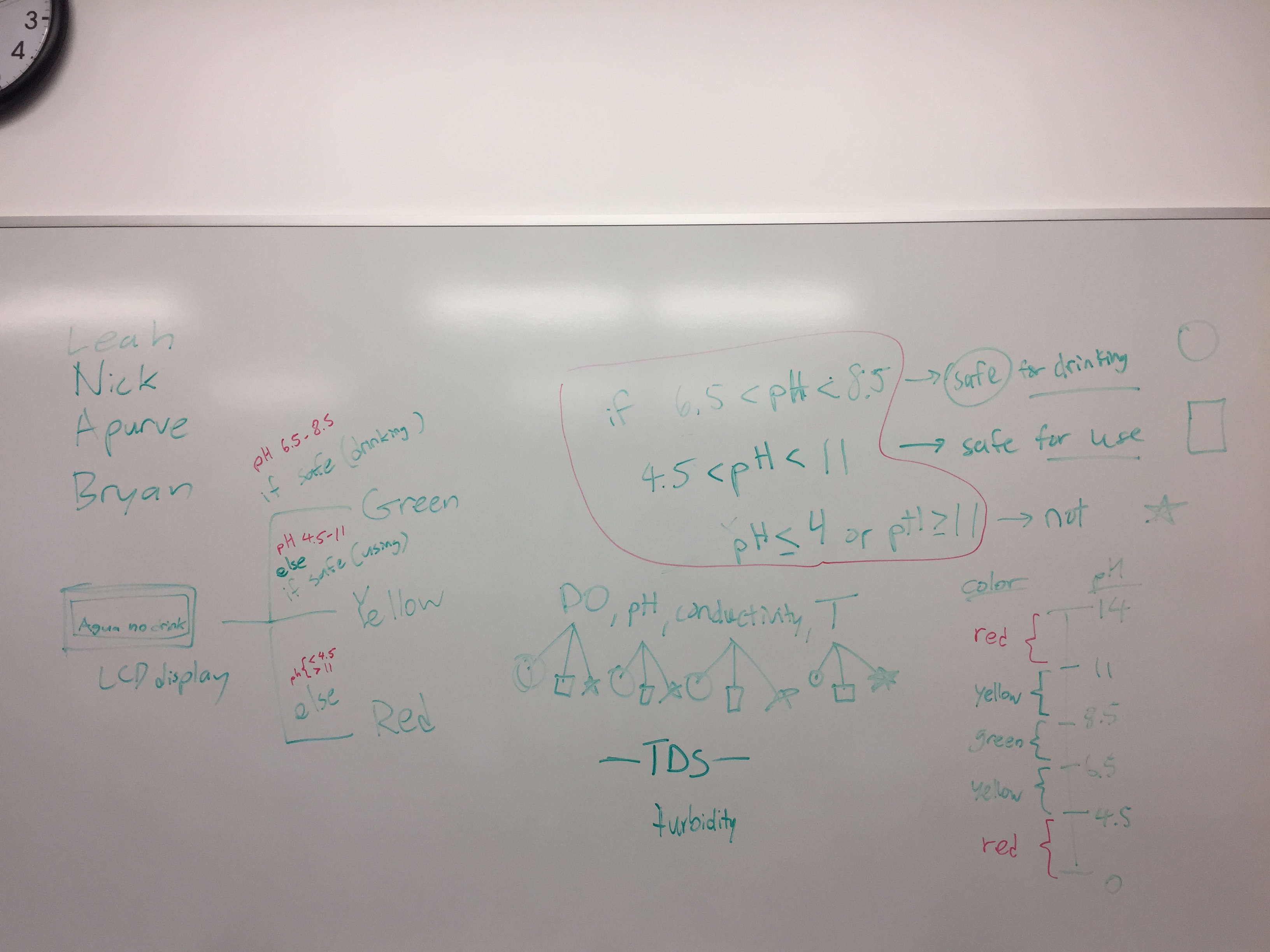
Green: Safe for drinking and using
Yellow: Safe for using, not for drinking
Red: Not safe for drinking and using
In addition, instructional text is displayed in English and Spanish, to facilitate the ease of training for disaster relief workers to teach locals how to use the water sensor and instruct others.
How I built it
We connected a water sensor to an Arduino which aggregated the data and the output was then processed by the Arduino code that would control the display color and text for the Grove LCD RGB Backlight display board.
Challenges I ran into
To determine whether water is safe or not depends not just on not exceeding a threshold, but staying within a range. For example, according to the EPA, the pH range of 6.5 to 8.5 is safe for drinking. Programming the Arduino to be able to display the right color depending on the pH was a hurdle we faced.
Accomplishments that I'm proud of
Some of our team members did not have any prior Arduino/ very little coding experience and they began to go through tutorials to get familiar with Arduino and edit some example codes found on the internet. This is a good skill to develop: research and find relevant codes and procedures to do a specific task that one is trying to do.
What I learned
We learned the basics of using an Arduino, how to equip the Arduino with a water sensor, and how to integrate a Grove LCD RGB Backlight.
What's next for Colored-LCD Water Sensor
The team is planning to bring and field test SemáforAgua to Puerto Rico on January 2nd to 14th as part of a student-led disaster relief trip. In the field, we shall be able to teach local people and disaster relief workers how to use SemáforAgua and teach others how to use it.
Log in or sign up for Devpost to join the conversation.