-
-
Simulation
-
Colorblind Data
-

Matrix data

Inspiration
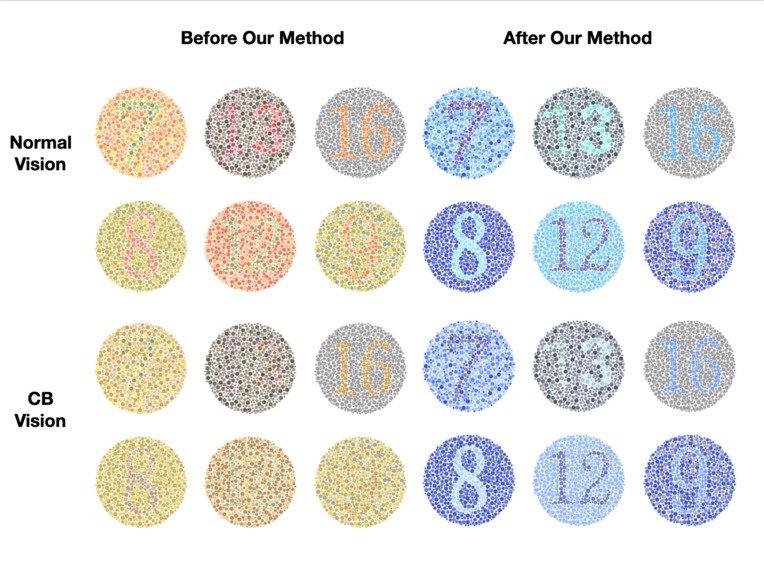
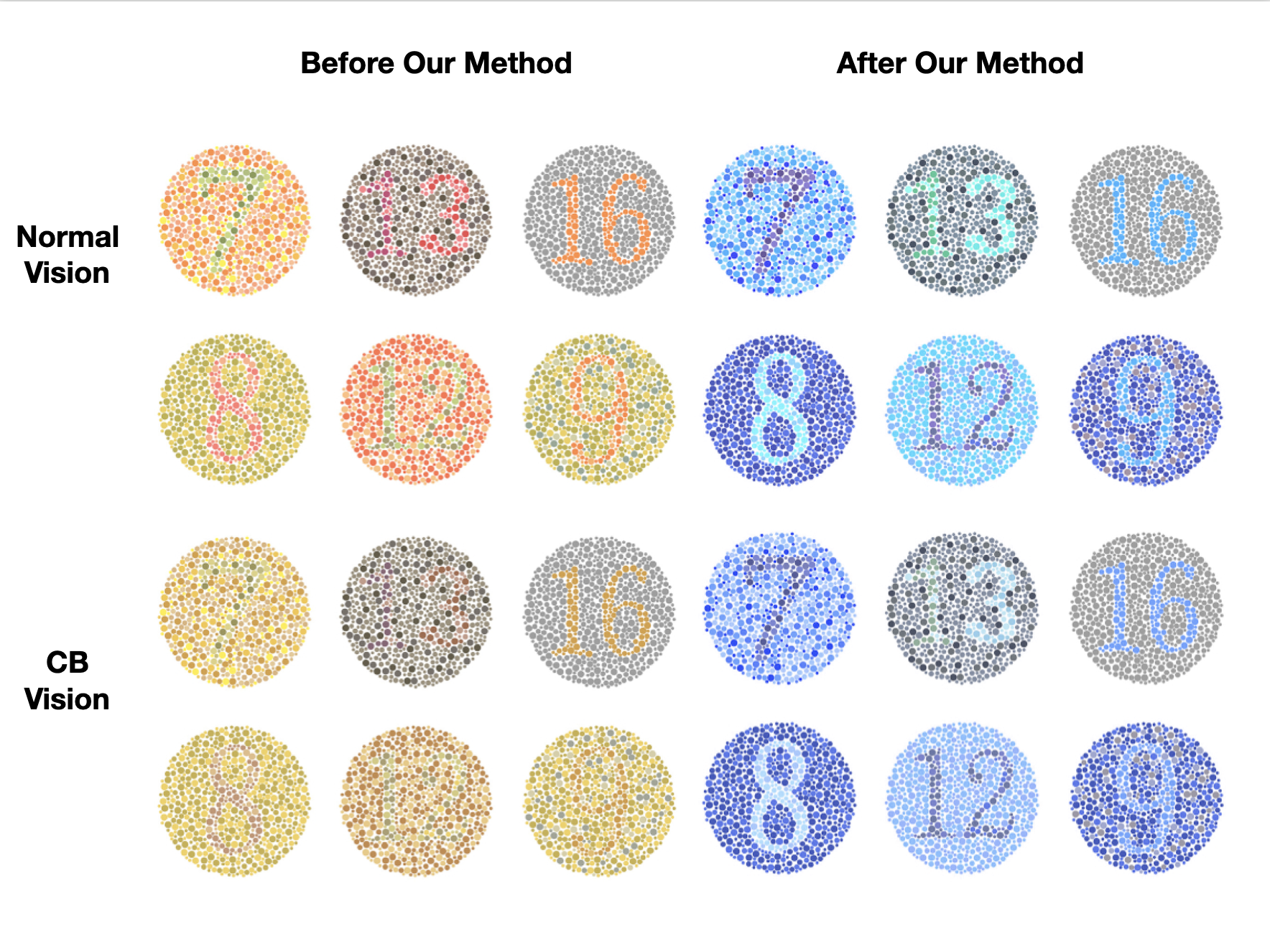
We were inspired to create this program from the difficulties that colorblind individuals face due to their limited color perception in perceiving graphics that chiefly used color for discernment. This is an issue that impacts colorblind individuals in the field of education. We aimed to create a program that would make educators aware of how their graphics could be difficult to discern for colorblind individuals and allow them to use the program to make the graphics easier to discern by shifting the hue to a color range more easily discernable for the colorblind students, furthering the goal of inclusive education for all.
What it does
The program creates a user interface and prompts the user to select a photo formatted file from their directory. The user is then prompted to choose between the three different types of colorblindness in which to convert the image. The button click then creates three new images based on the intensity of the colorblindness selected and showcases them for the user. The user is then given the option to shift the hue of the picture and then make it more inclusive to all viewers as a median point.
How we built it
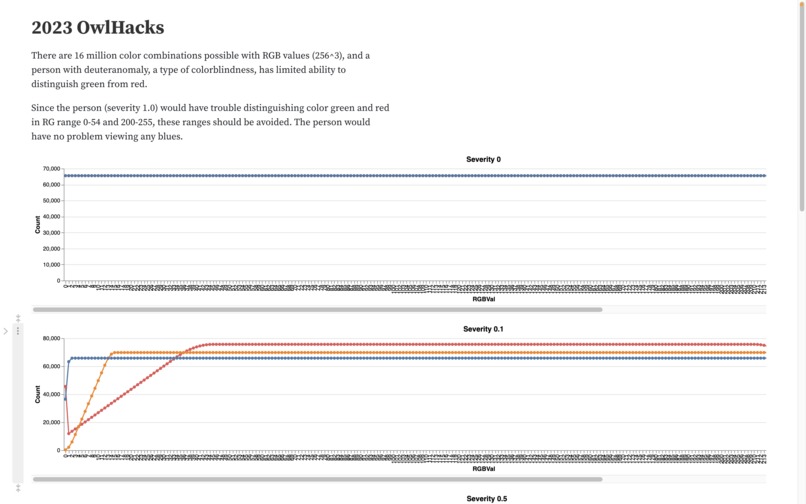
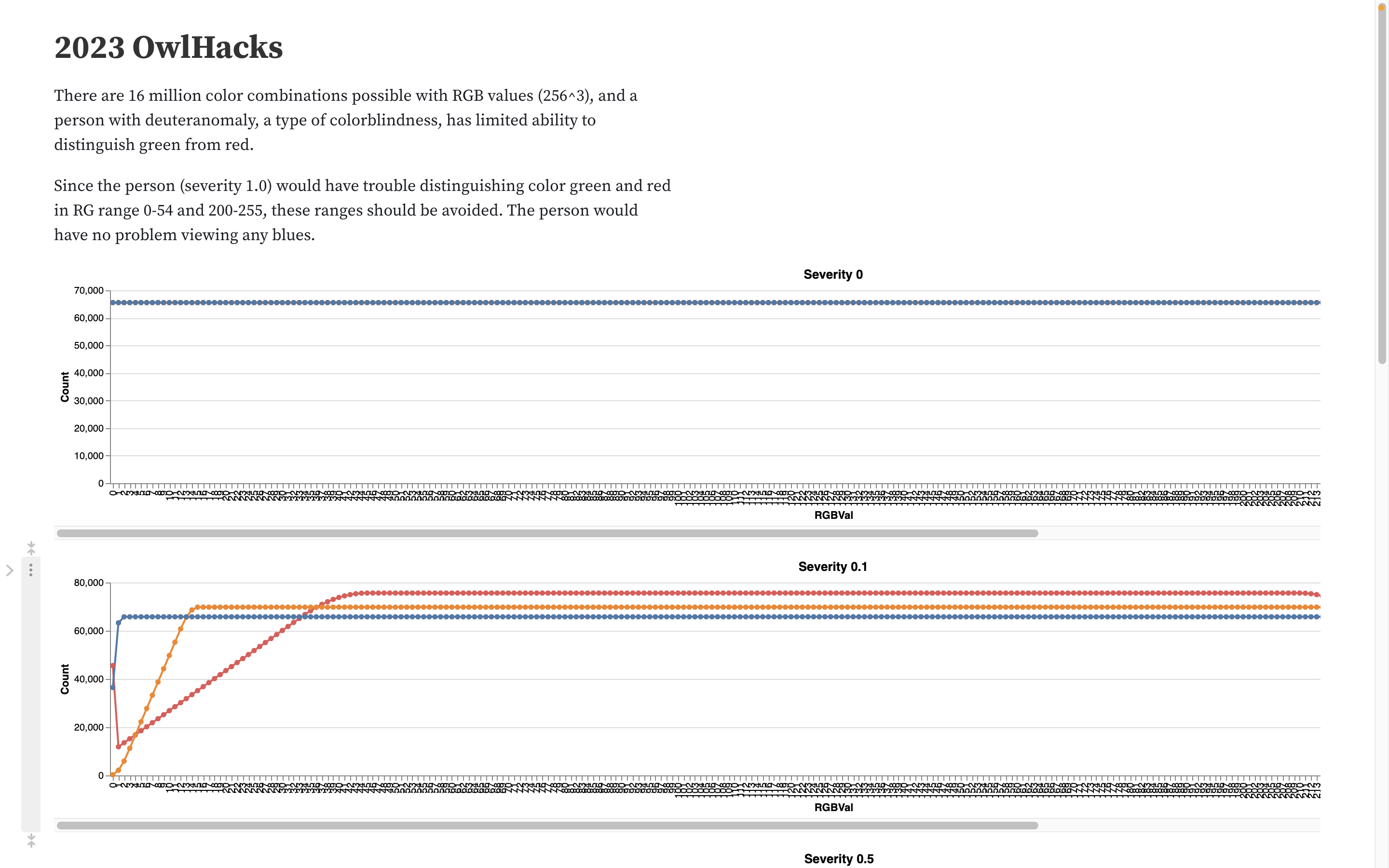
We started off by knowing that we wanted to convert images through RGB values. The team researched algorithms and values that would help us. We found a set of matrices used by Machado, Oliveira, and Fernandes (2009) to convert RGB images from a normal range of color to that which several types of colorblind vision would experience. Once we found those values, we implemented different Python libraries to help us build. We used our methods and tested on multiple files, and compared with other services in order to see if we were on the right track with implementation.
Challenges we ran into
The first challenge we really ran into was trying to find the right methods in which to convert images. The team read through lots of packages' documentation to find the best-suited functions. Another challenge we ran into was researching the algorithms for which we can use to help convert the images, both the original conversion and the hue shift. Creating and testing the user interface also took quite a bit of time to ensure correct functionality.
Accomplishments that we're proud of
Throughout the process, there was always clear and effective communication between all team members. The division of tasks towards building the project was fair and played to everyone's strengths.
What we learned
We learned many different python utilities and implementations. Research also led us to learn how color blind affects people and how the possibilities to help accommodate while being inclusive for all.
What's next for Colorblindness Image Enhancer
It's possible that this idea could be expanded towards different types of files, such as an MP4 file. Furthermore, it could be applied as a live filter extension.
Future directions
We intend to improve the UI for user-friendliness, and to expand the scope of image import and processing options.
Citations:
Gustavo M. Machado, Manuel M. Oliveira, and Leandro A. F. Fernandes "A Physiologically-based Model for Simulation of Color Vision Deficiency". IEEE Transactions on Visualization and Computer Graphics. Volume 15 (2009), Number 6, November/December 2009. pp. 1291-1298.
https://www.inf.ufrgs.br/~oliveira/pubs_files/CVD_Simulation/CVD_Simulation.html


Log in or sign up for Devpost to join the conversation.