Inspiration
Four groups, one broken system. Job seekers waste hours on ghost postings. Students pick degrees based on guesswork. Veterans have no civilian translation for their skills. Policymakers build training programs from taxonomies that are years behind real employer demand. The NLx dataset had everything needed to fix all four at once.
What it does
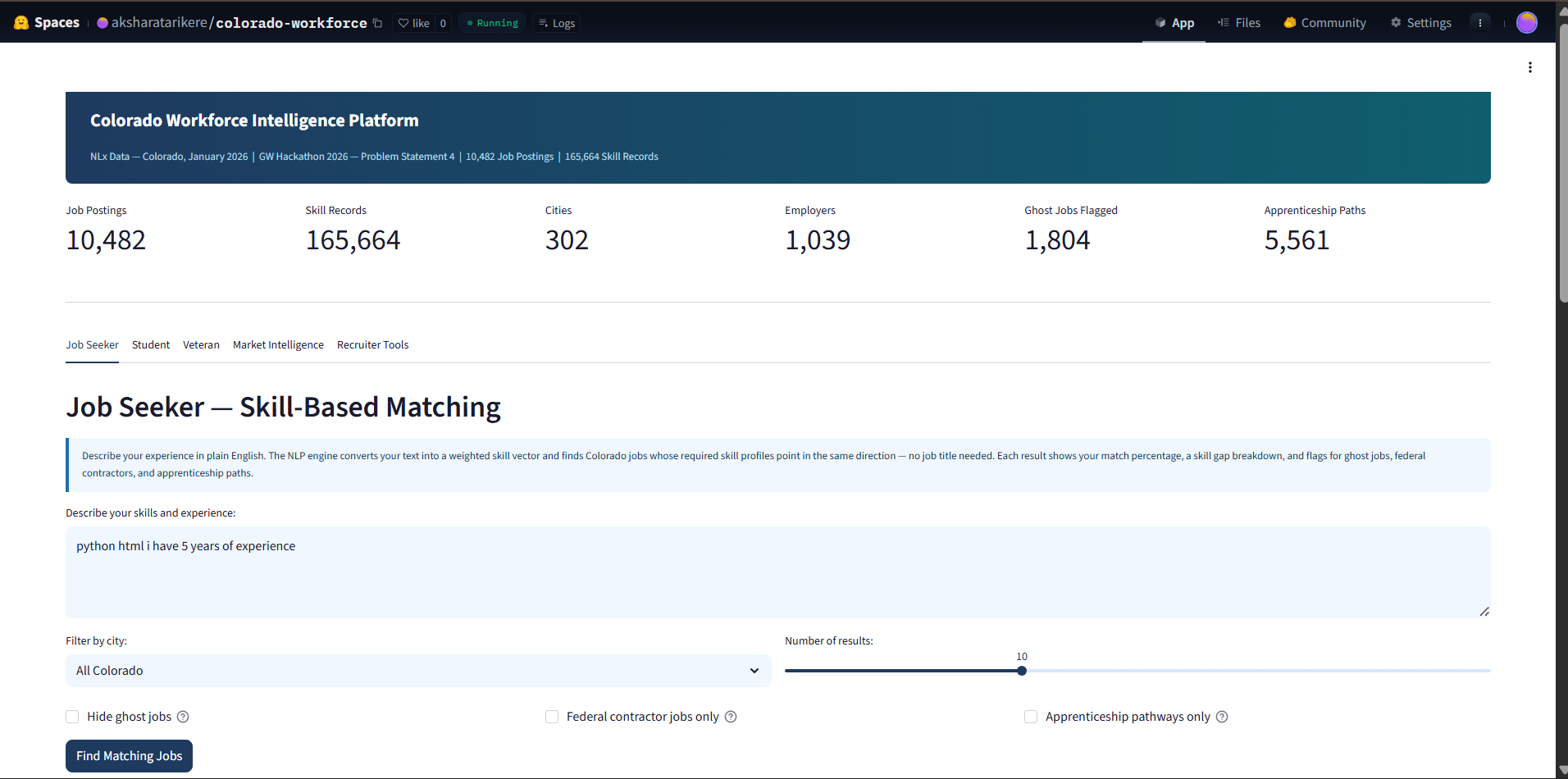
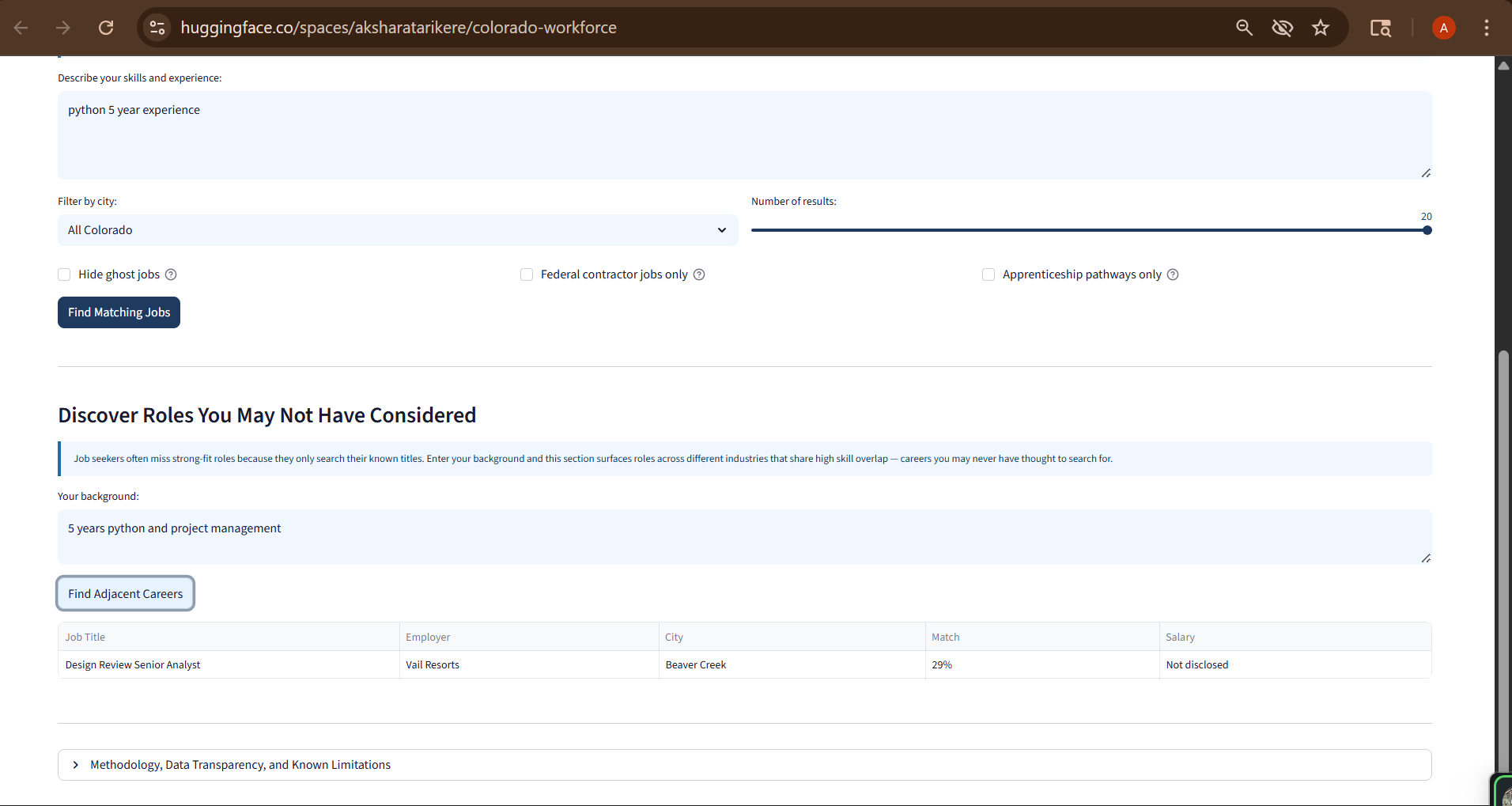
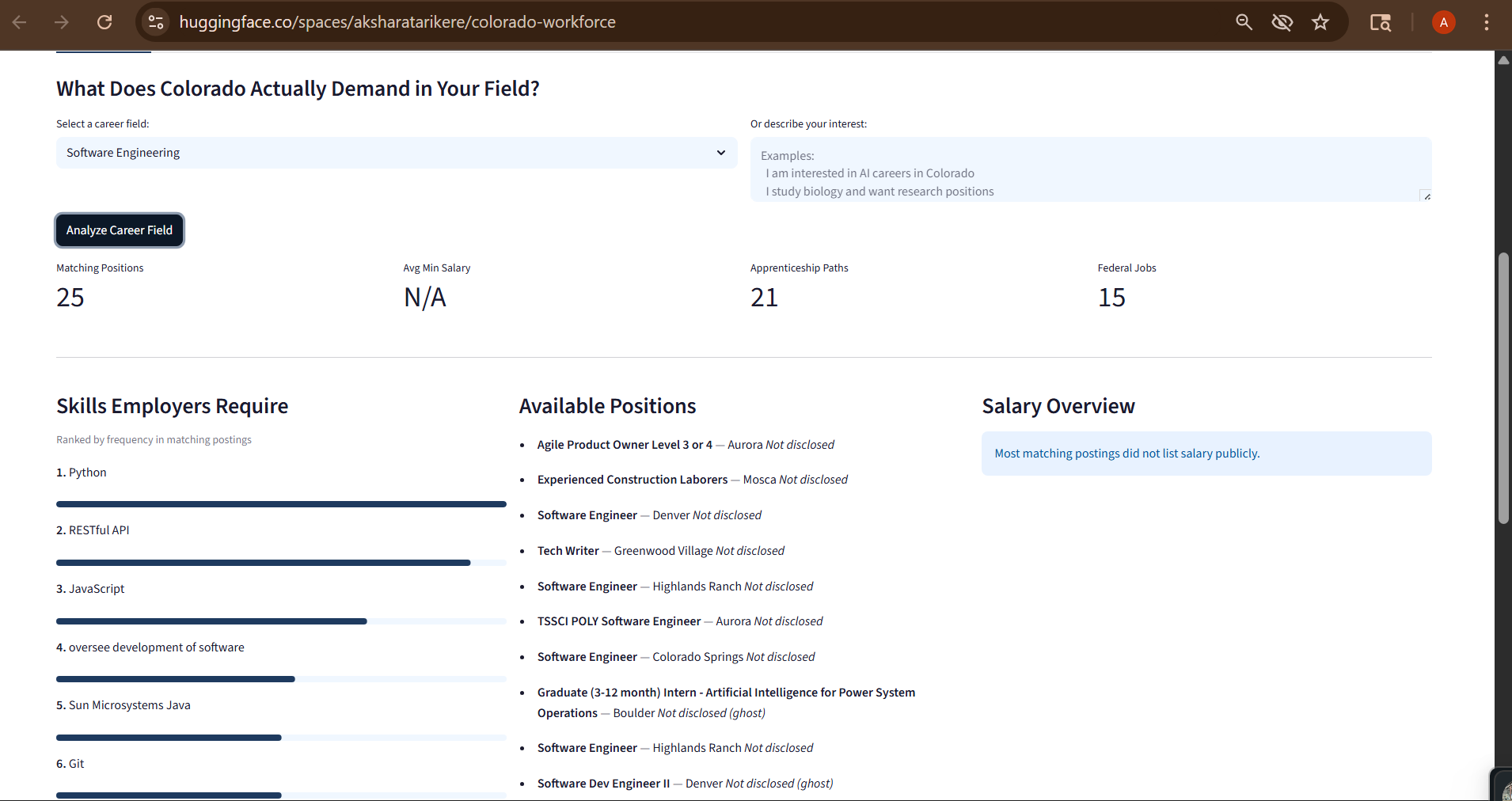
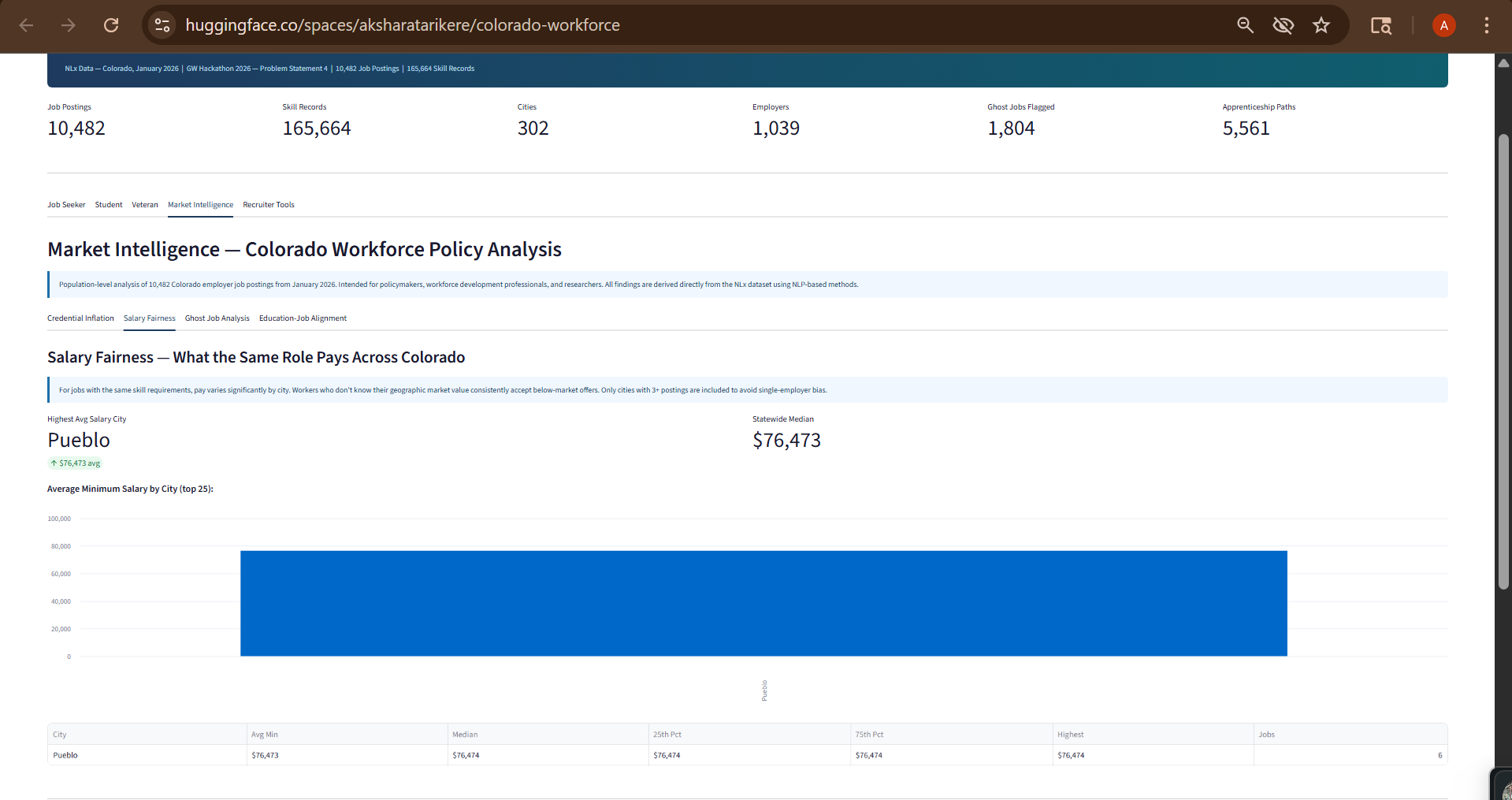
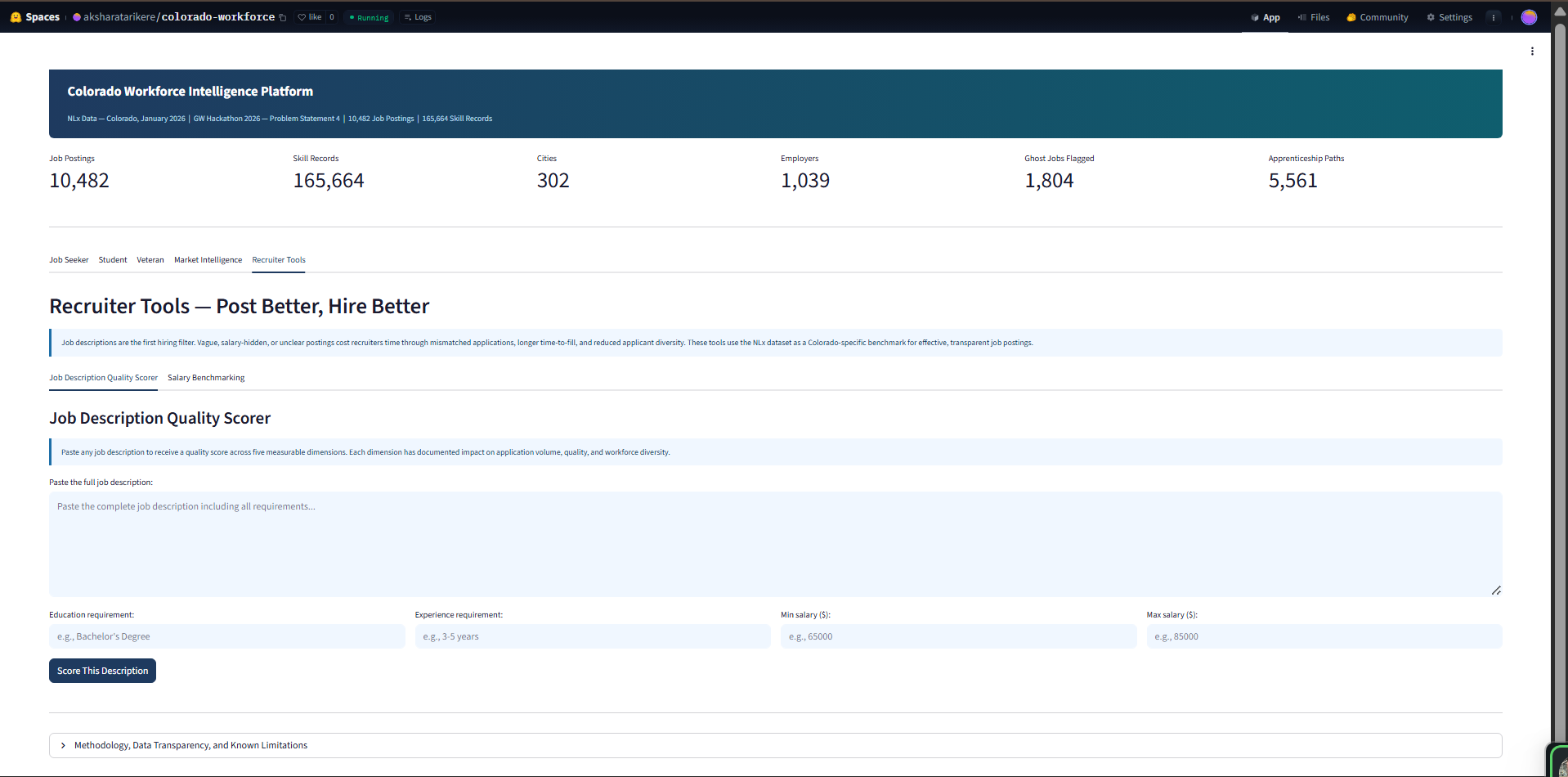
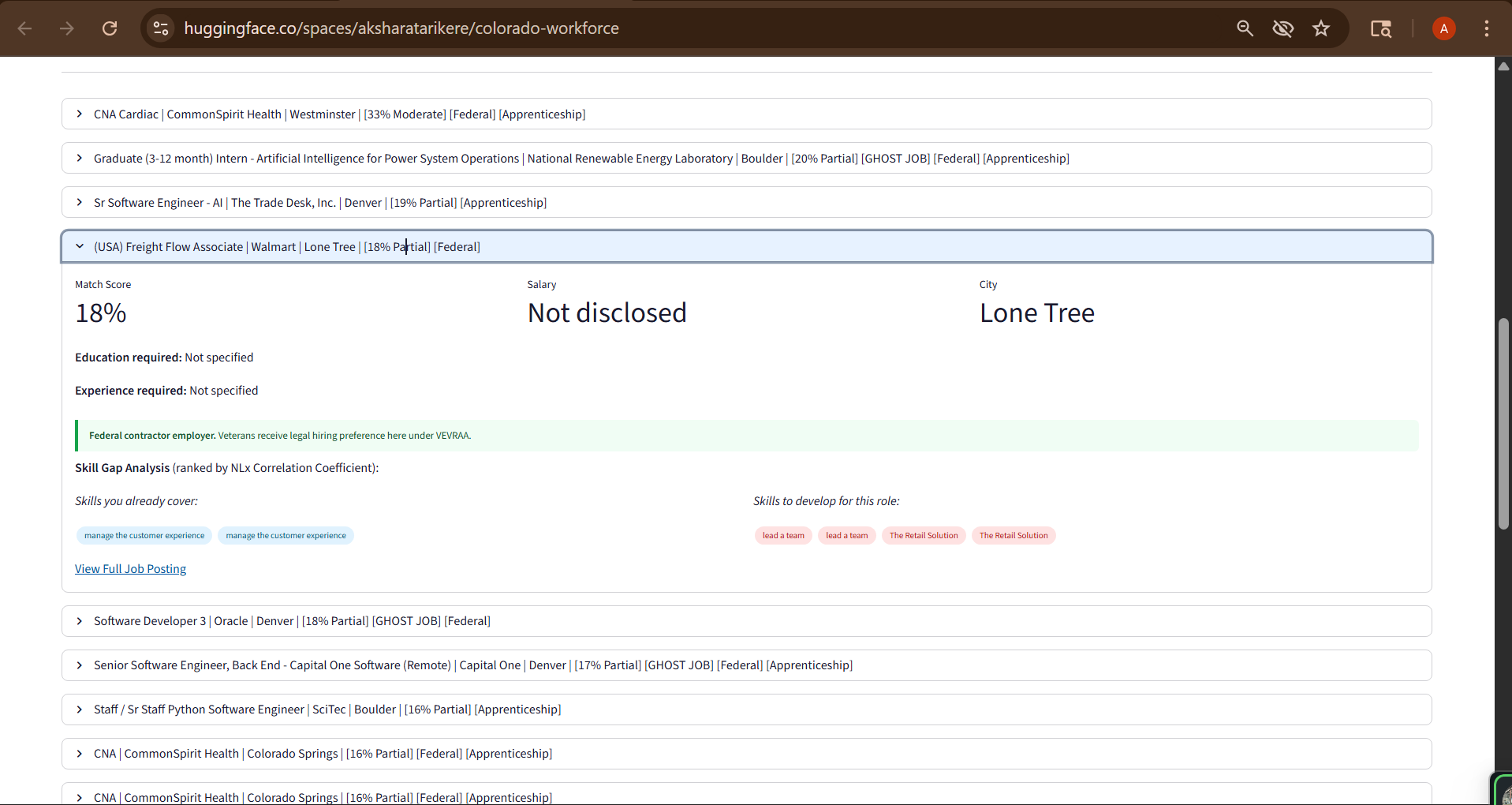
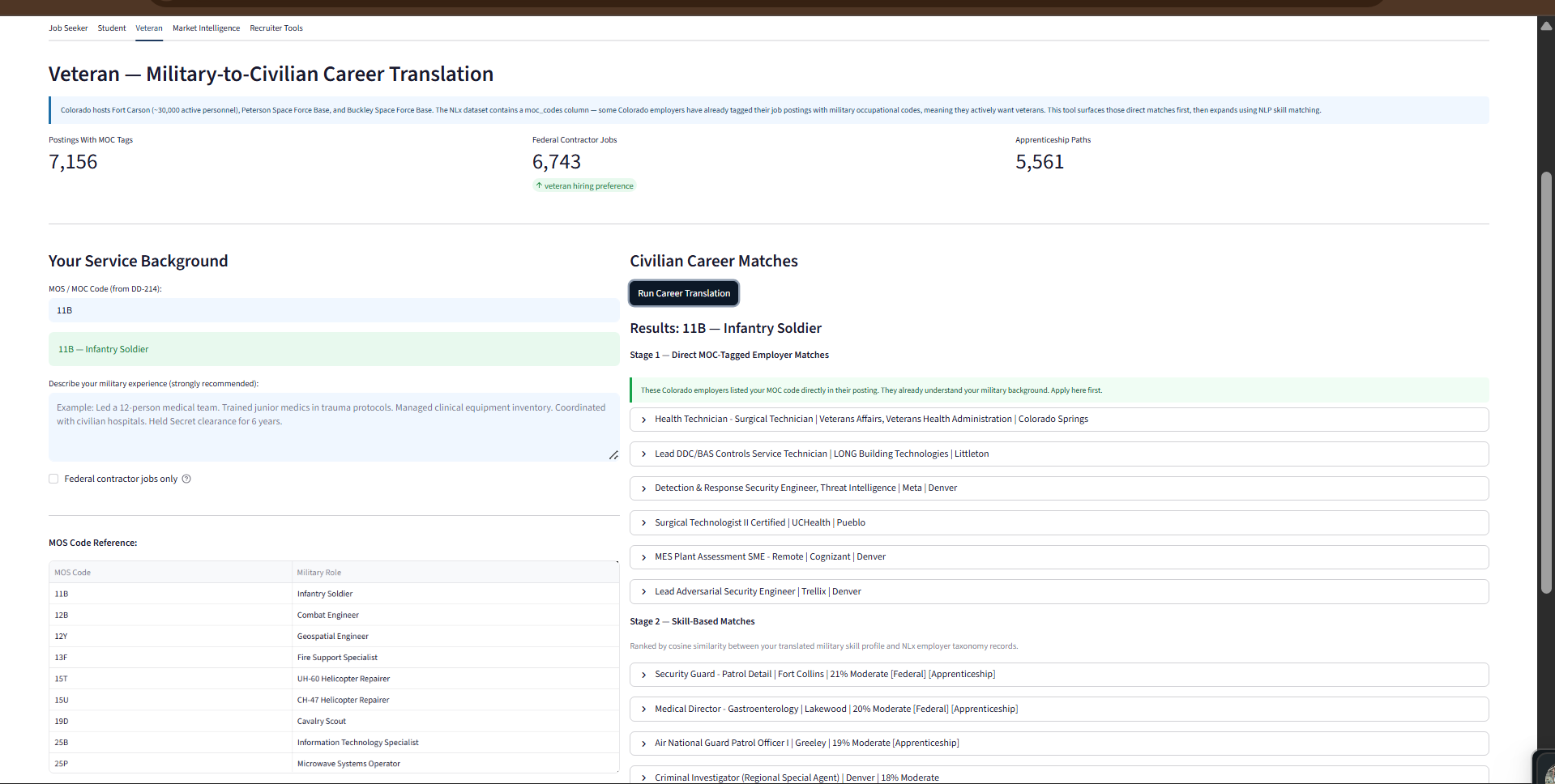
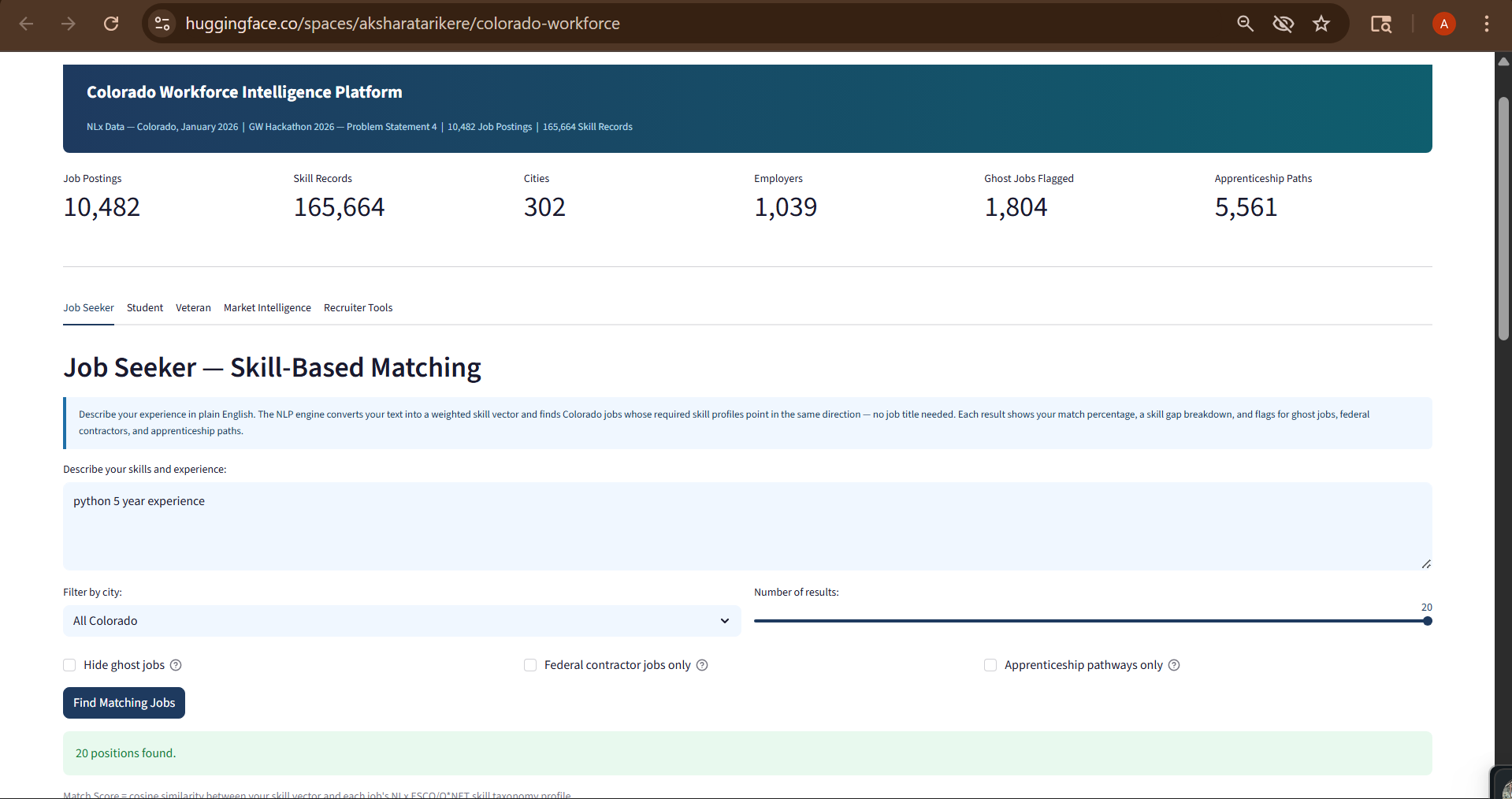
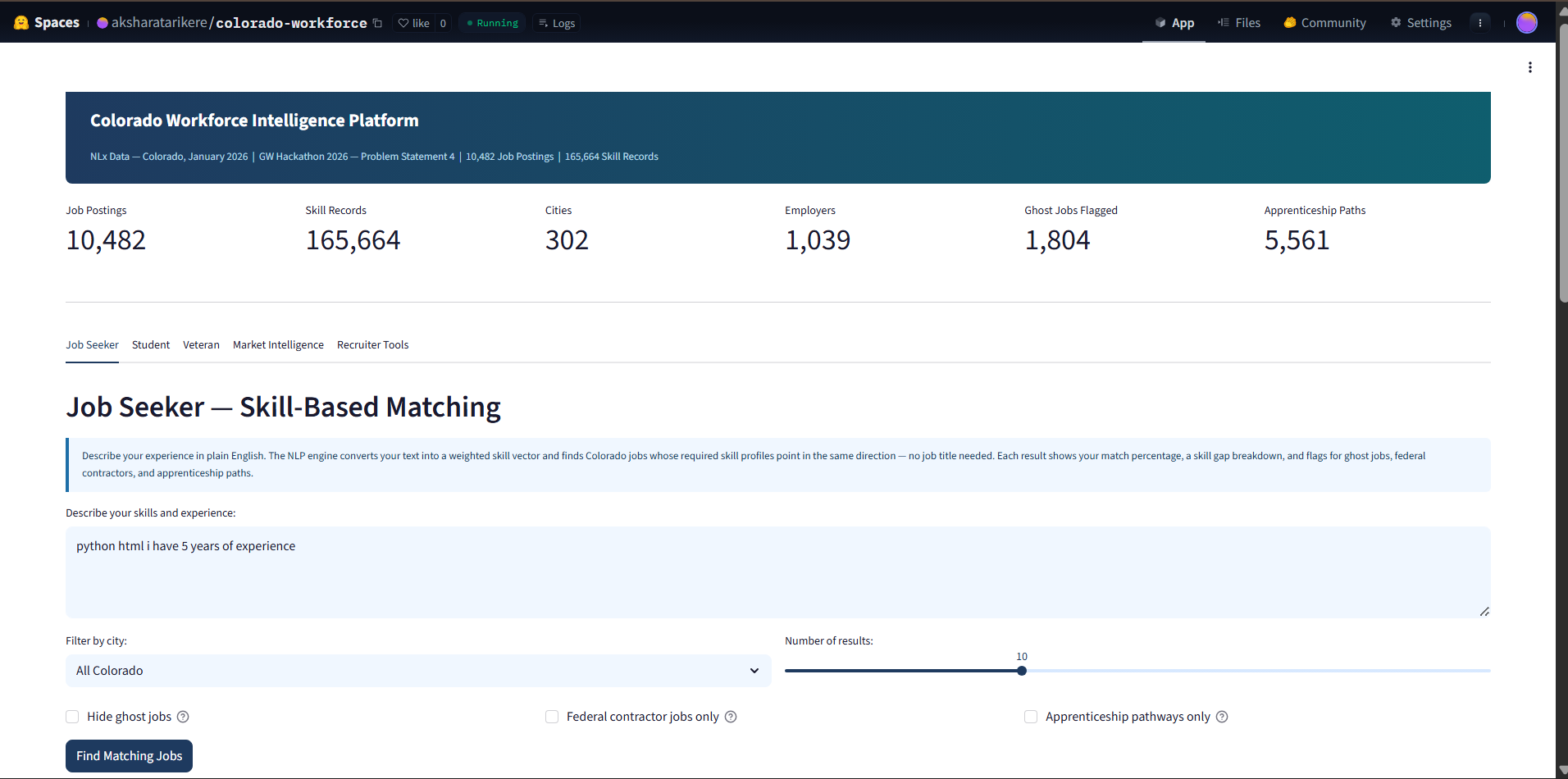
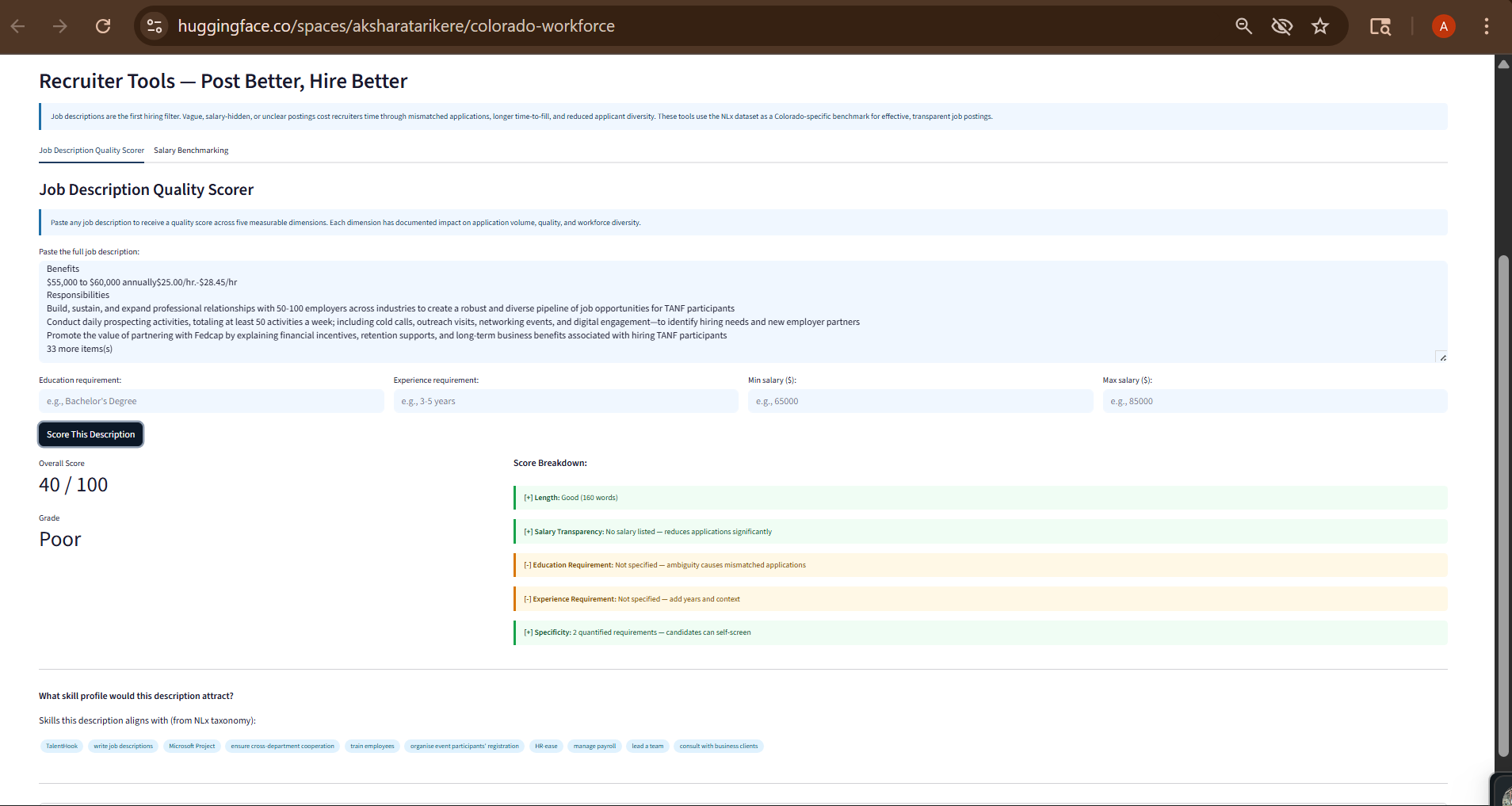
Turns 10,482 Colorado job postings and 165,664 skill records into a live workforce intelligence platform. Job seekers describe their skills in plain English and get ranked matches with ghost jobs filtered out, skill gaps ranked by employer confidence, and apprenticeship pathways surfaced. Students see what employers actually want, not what textbooks say. Veterans enter their MOS code and get a two-stage civilian career translation. Policymakers get a credential inflation scanner, salary fairness map, and ghost job language analysis. Recruiters get a job description scorer and salary benchmarking tool.
How we built it
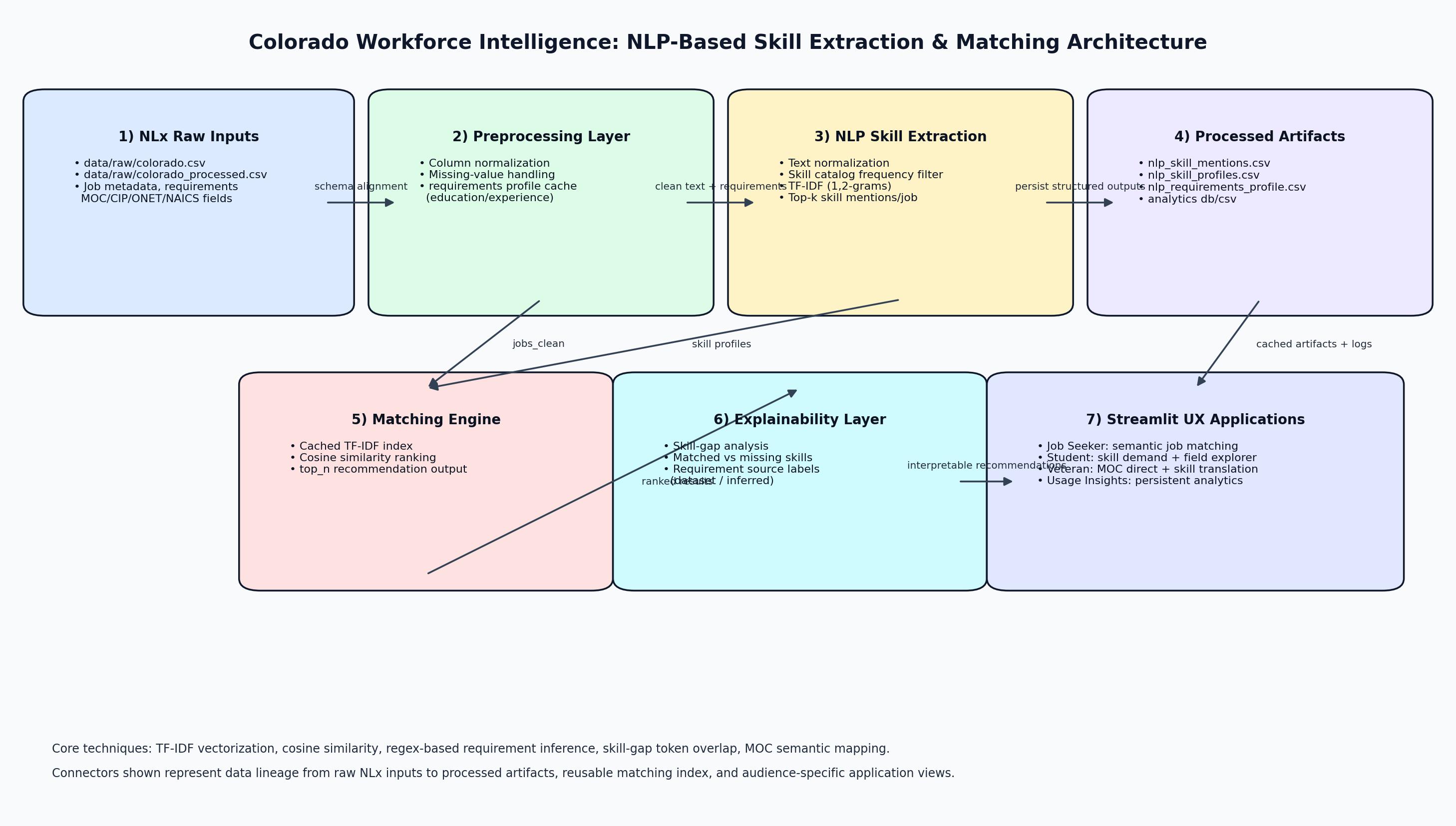
Two NLx CSV files in, nine NLP techniques out. We aggregate 165,664 skill rows into per-job documents, fit a TF-IDF matrix across 15,000 features with sublinear scaling, and match user inputs via cosine similarity. The key insight was treating the NLx Correlation Coefficient not just as a quality score but as a taxonomy novelty signal: low confidence means the skill is newer than the database itself. Built in Streamlit, modular across 12 files, containerized with Docker, deployed on Hugging Face Spaces.
Challenges we ran into
Seven production bugs, all found before submission. Pandas 2.0 silently renamed columns after value_counts(). Education string matching dropped most rows because apostrophe variants failed exact matching. An empty MOS code input matched every row in the dataset because empty string containment is always true in Python. Each fix taught us something real about the data. The hardest conceptual challenge was using the Correlation Coefficient for two opposite purposes simultaneously: high confidence for skill importance ranking, low confidence for emerging skill detection.
Accomplishments that we are proud of
We built something that would genuinely help people who rarely get purpose-built tools. The emerging skills detector surfaces real employer demand that official training databases have not caught up to yet. The credential inflation scanner puts a number on something policymakers have described qualitatively for years. And RAPIDS apprenticeship codes are visible in a job search interface for what we believe is the first time.
What we learned
The three boolean columns in the NLx dataset, ghostjob, fedcontractor, and rapids_codes, are invisible on every major job board. They contain information that changes everything about how someone should approach a posting. We also learned that the Correlation Coefficient is the most analytically underused column in the dataset. It is not just a mapping quality score. It is a real-time signal for where the labor market is outpacing the taxonomy systems that workforce policy is built on.
What's next for Colorado Workforce IQ Platform
All 50 states. Sentence-level embeddings to replace TF-IDF so that React experience matches Vue.js postings and ML matches machine learning. Full MOC dictionary coverage across Army, Navy, Air Force, and Marine codes. And a validation study comparing the skills we flagged as emerging in January 2026 against taxonomy updates published later this year, to measure whether low Correlation Coefficient actually predicts what enters the database next.


Log in or sign up for Devpost to join the conversation.