-
-
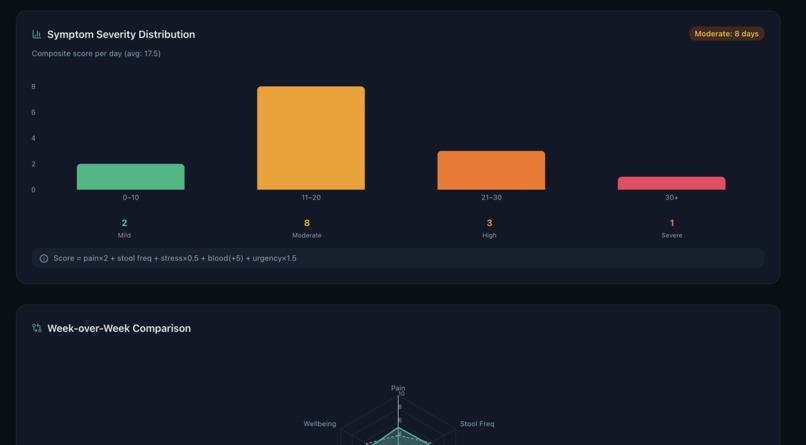
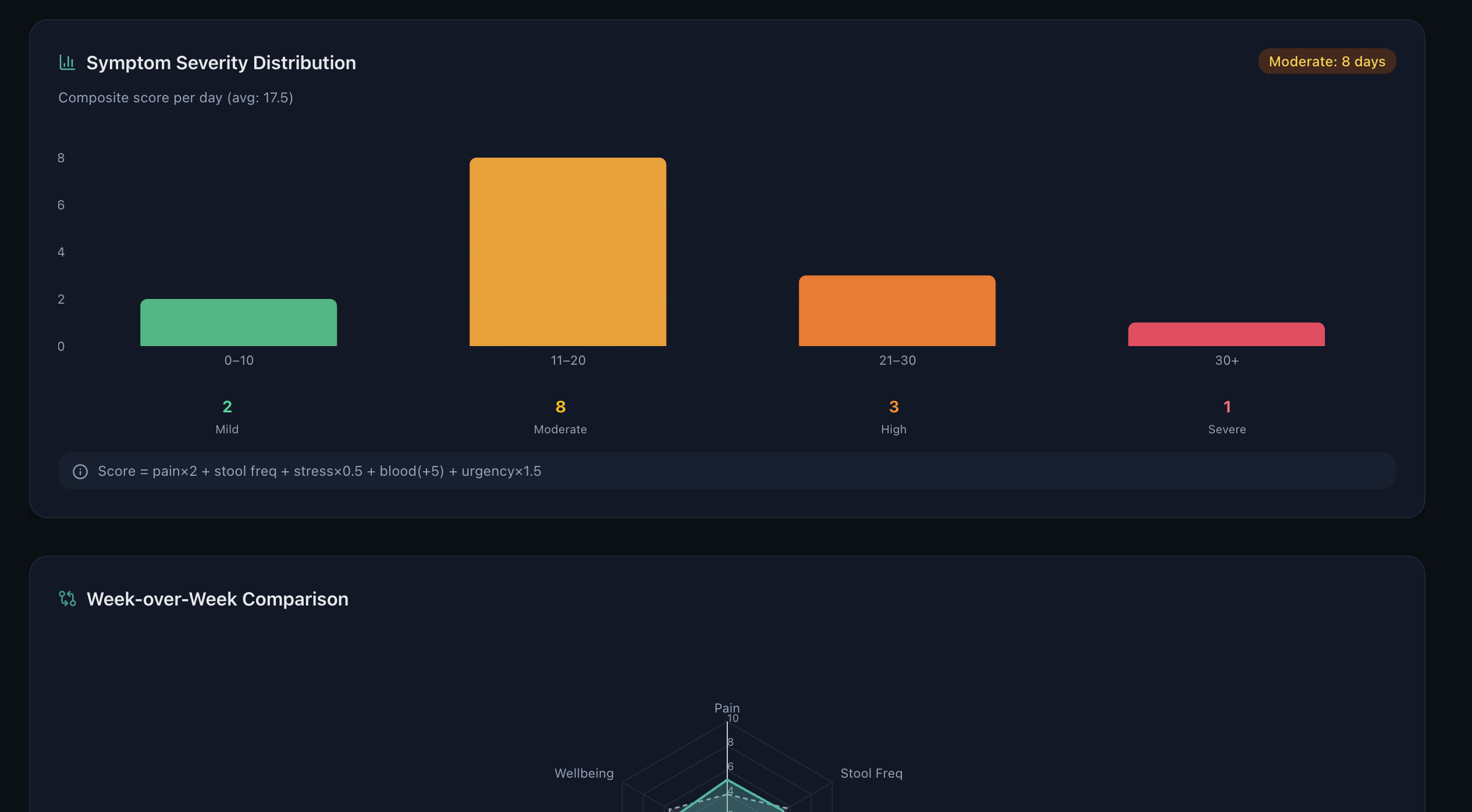
A bar chart categorizing daily symptoms into Mild, Moderate, High, or Severe brackets using a calculated composite severity index.
-
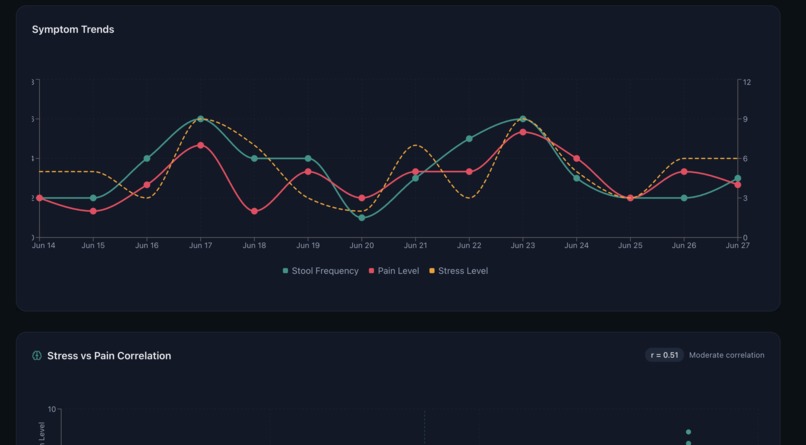
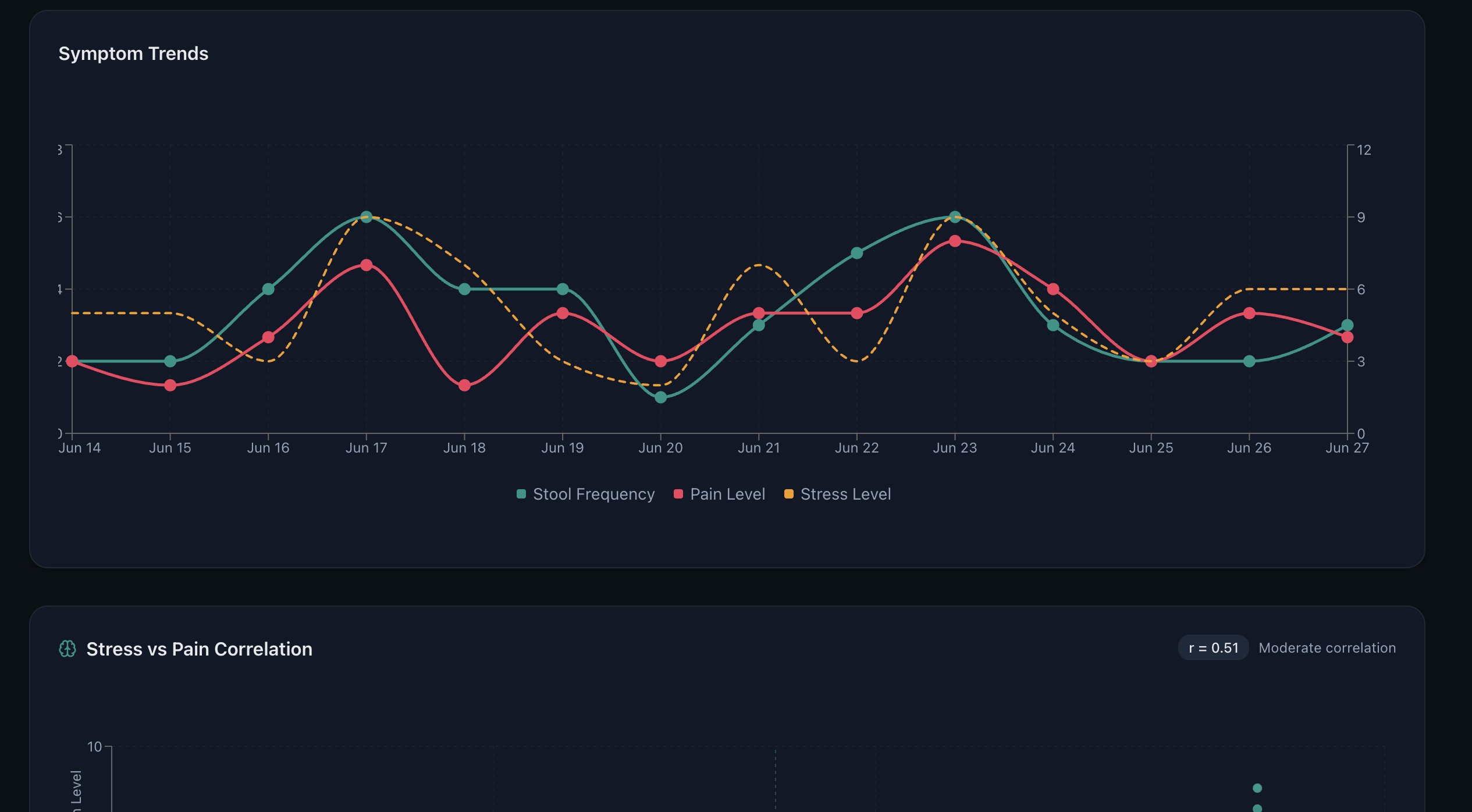
A detailed 14-day dual-axis line chart mapping stool frequency, pain, and stress levels to visually identify symptom correlations.
-
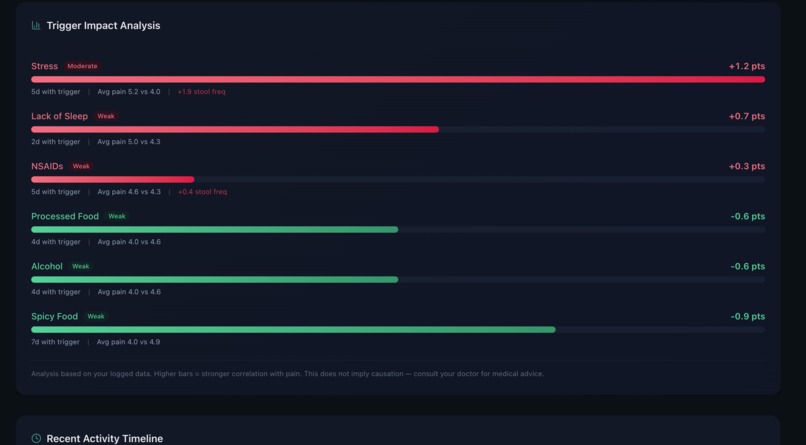
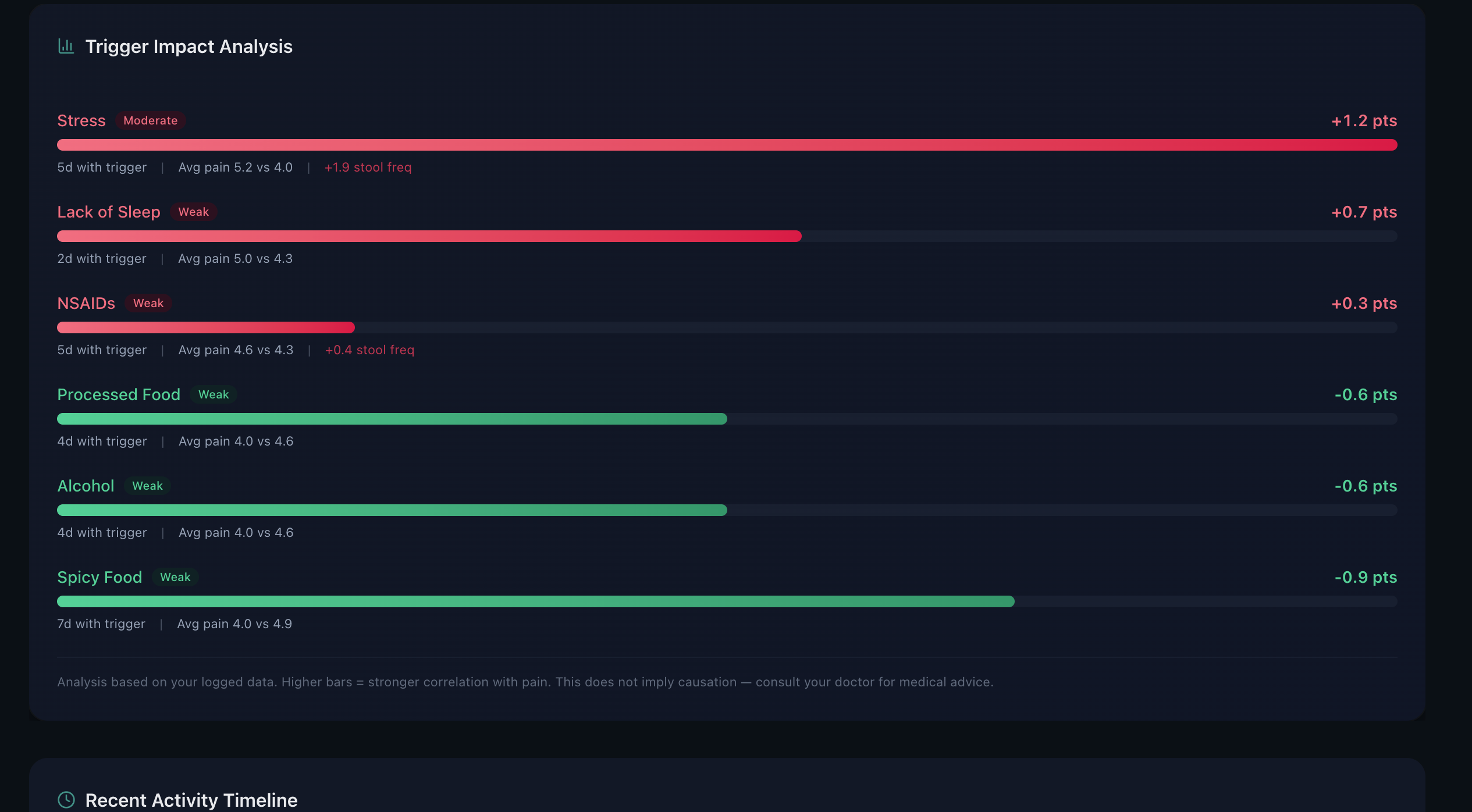
Calculates and ranks the direct impact of specific environmental, dietary, and physical triggers on the patient's daily gut pain.
-
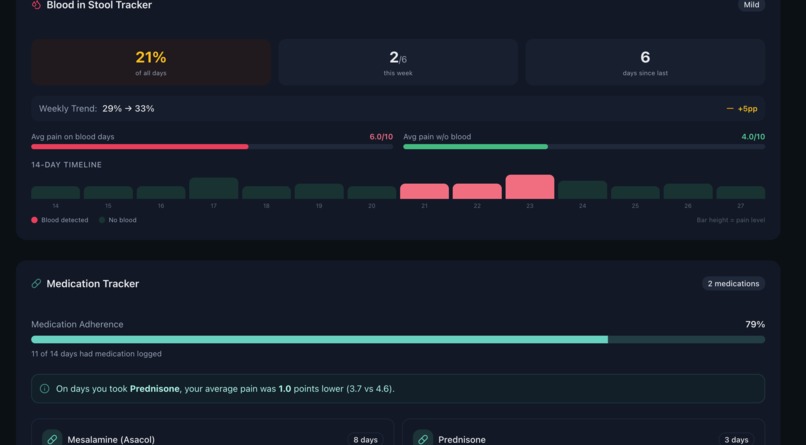
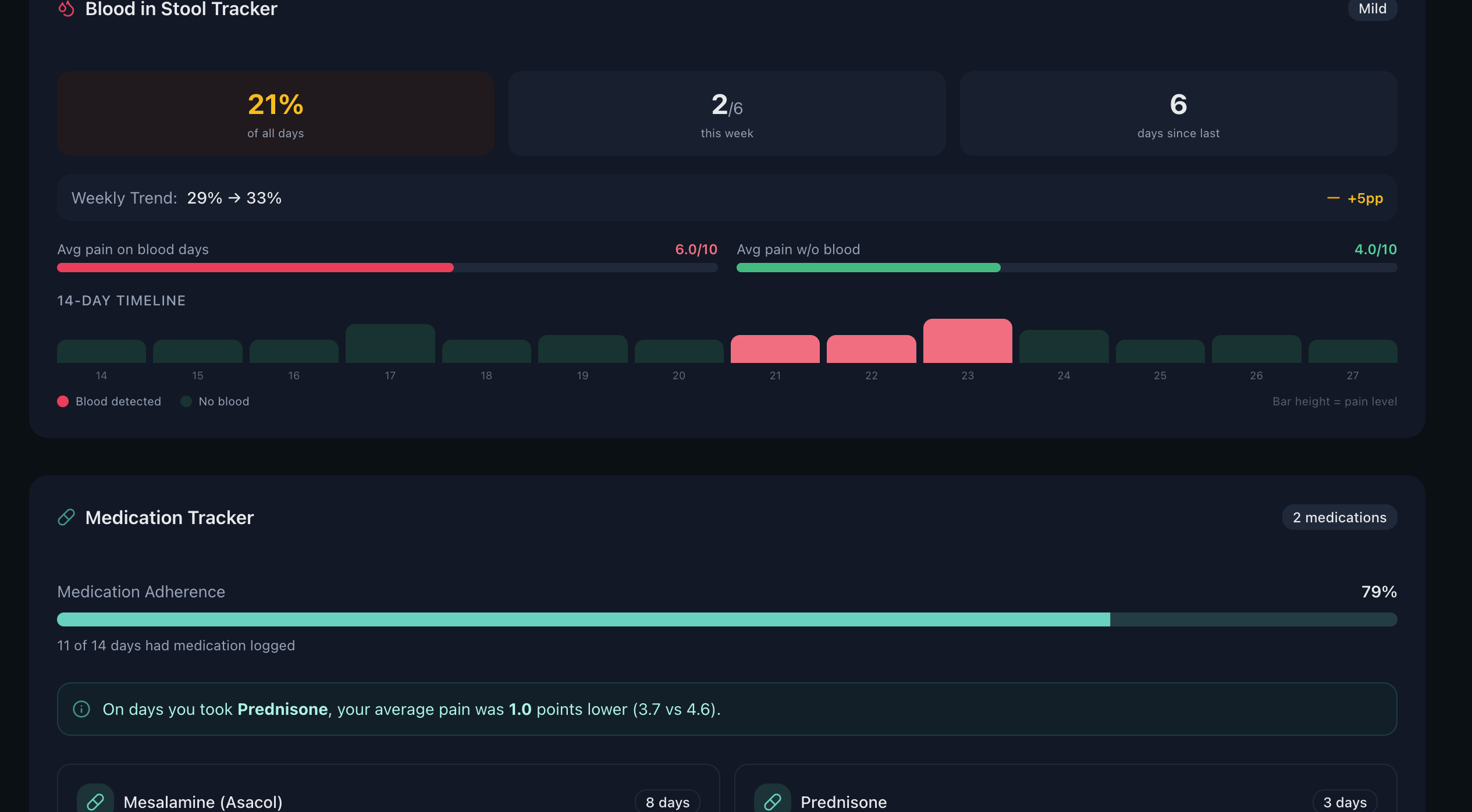
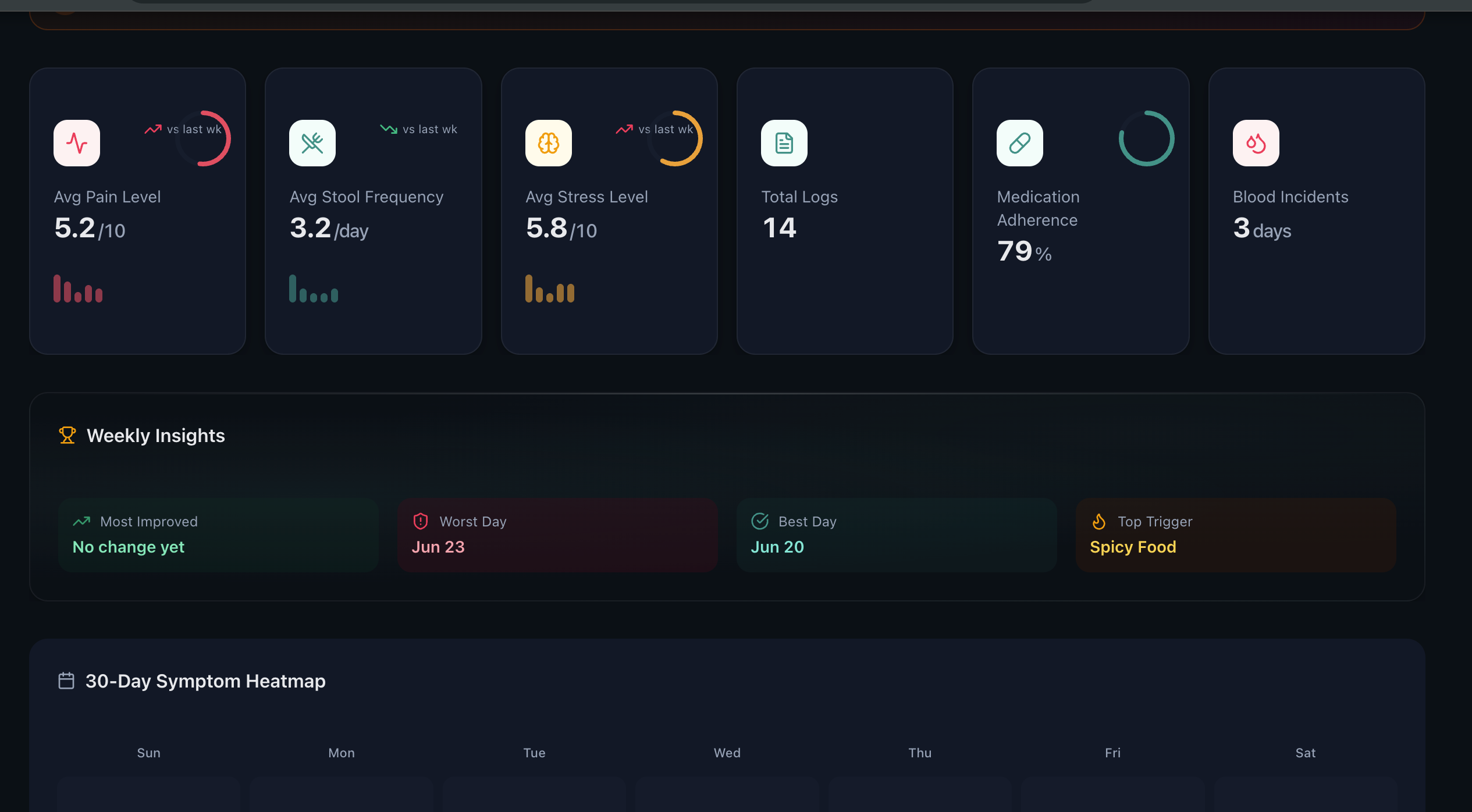
Correlates active bleeding days with elevated pain levels, alongside a progress bar tracking medication adherence and impact.
-
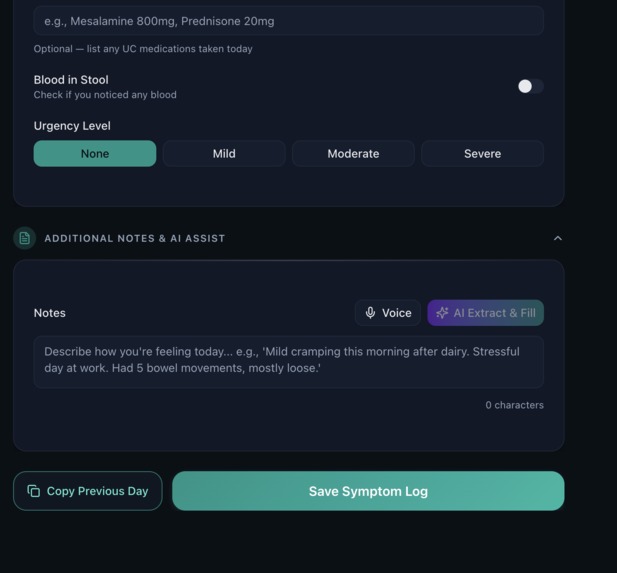
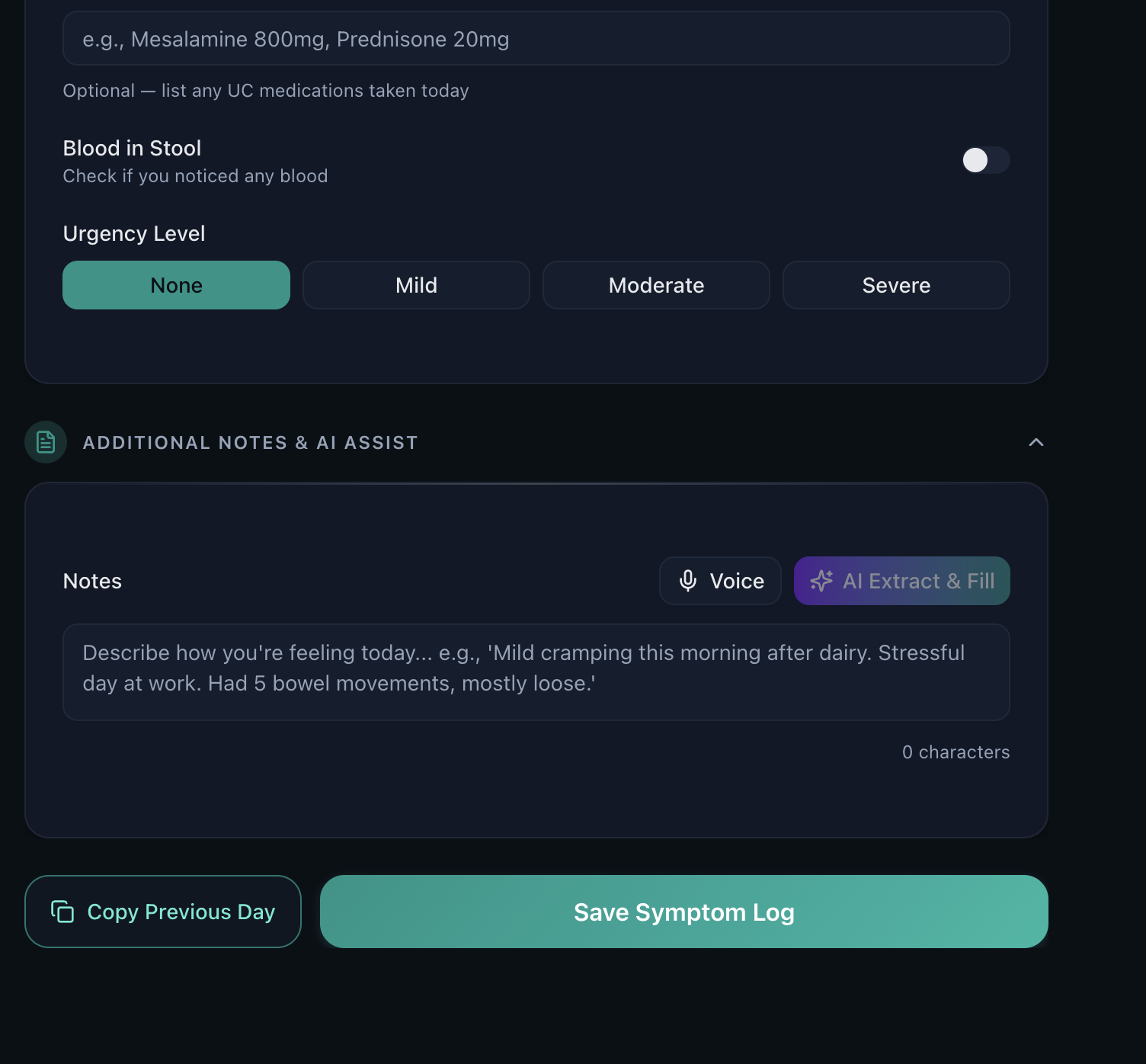
Captures medication details, blood checks, and urgency levels, offering a low-effort voice dictation panel for daily logging.
-
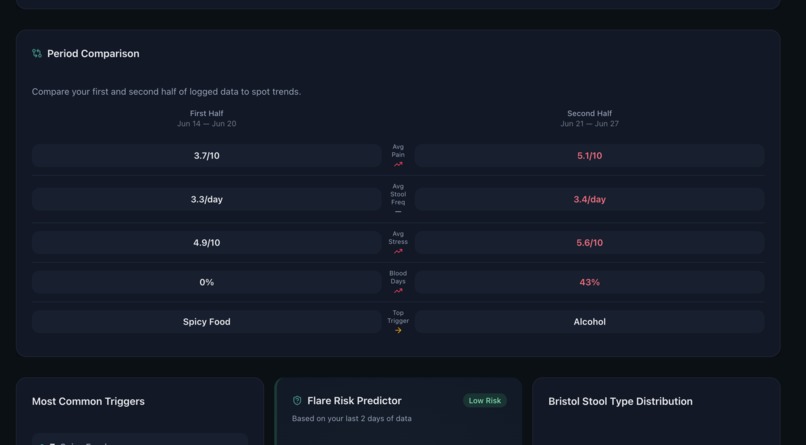
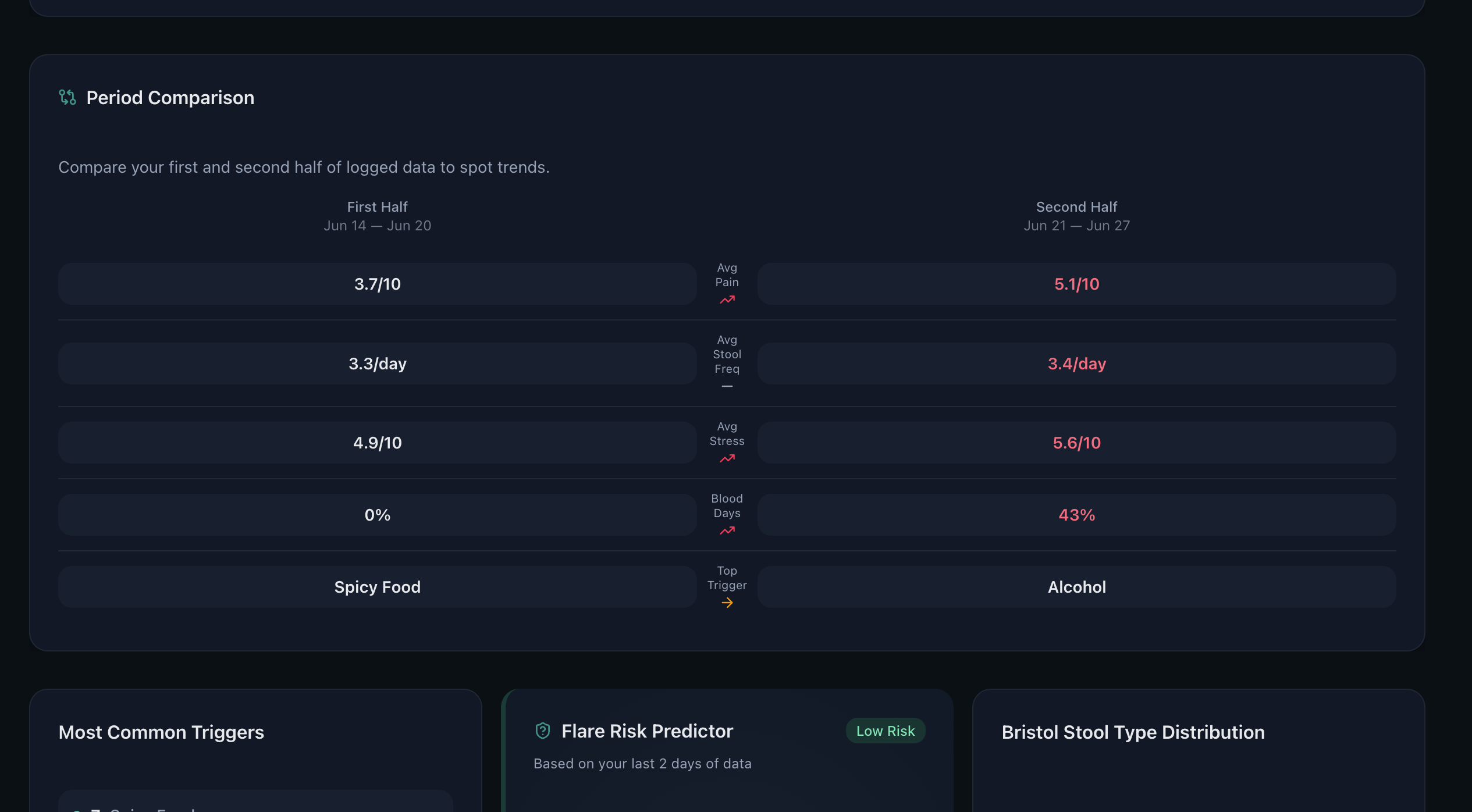
Splits the 14-day history into two 7-day halves, showing side-by-side symptom progression trends to evaluate treatment efficacy.
-
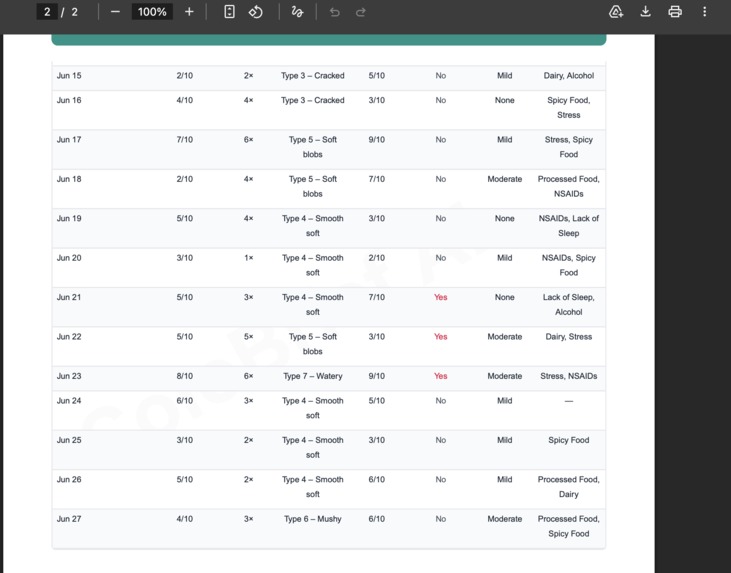
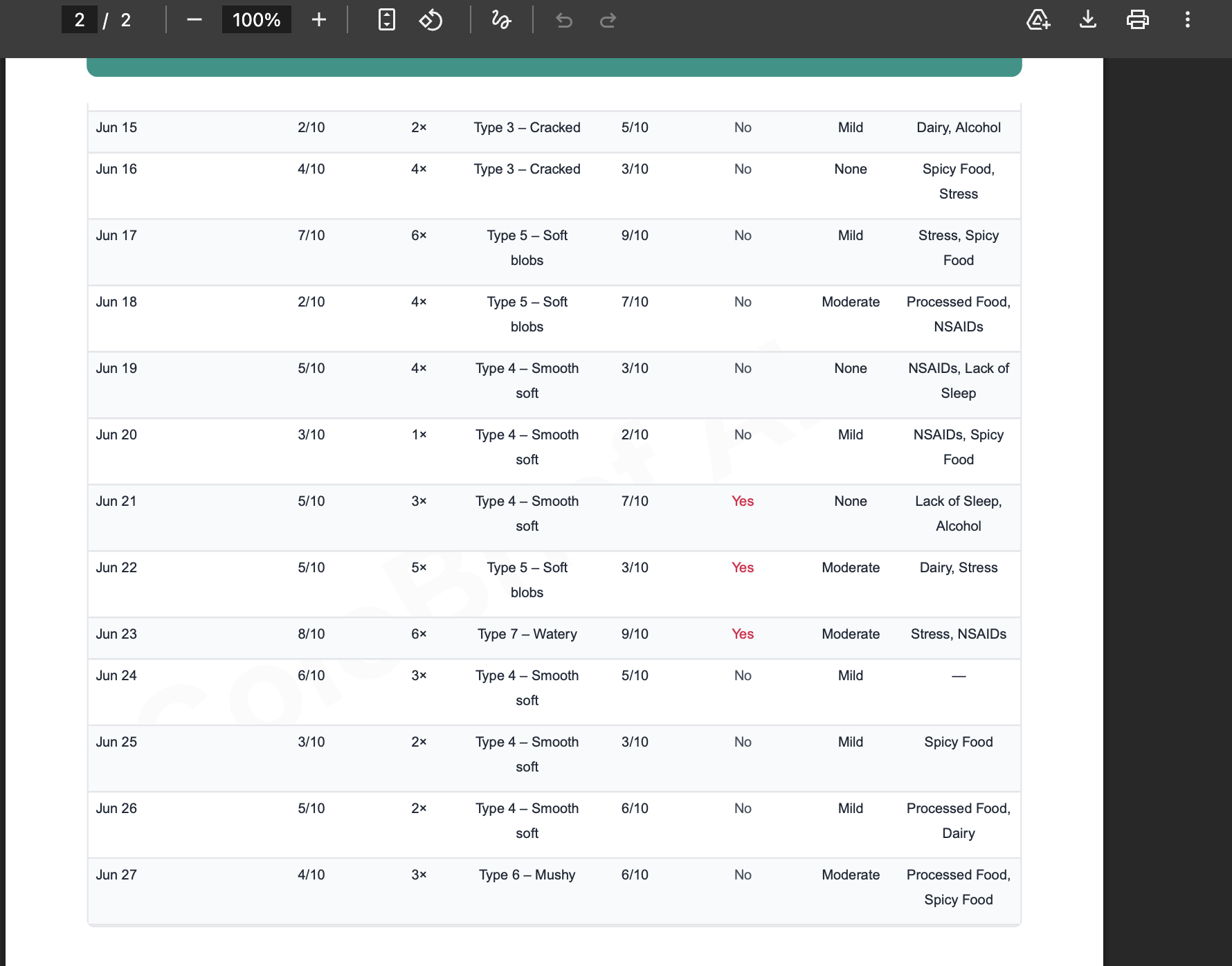
The second page of the exported clinical PDF, rendering a beautifully formatted, structured timeline table of daily symptom metrics.
-
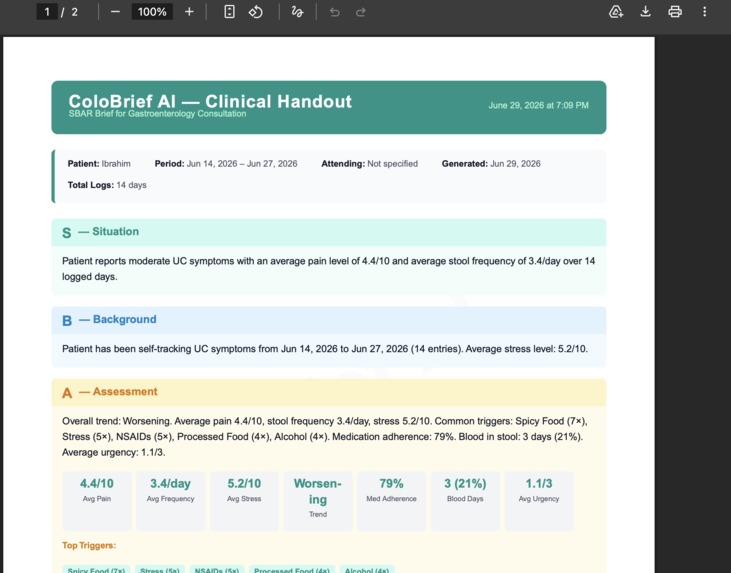
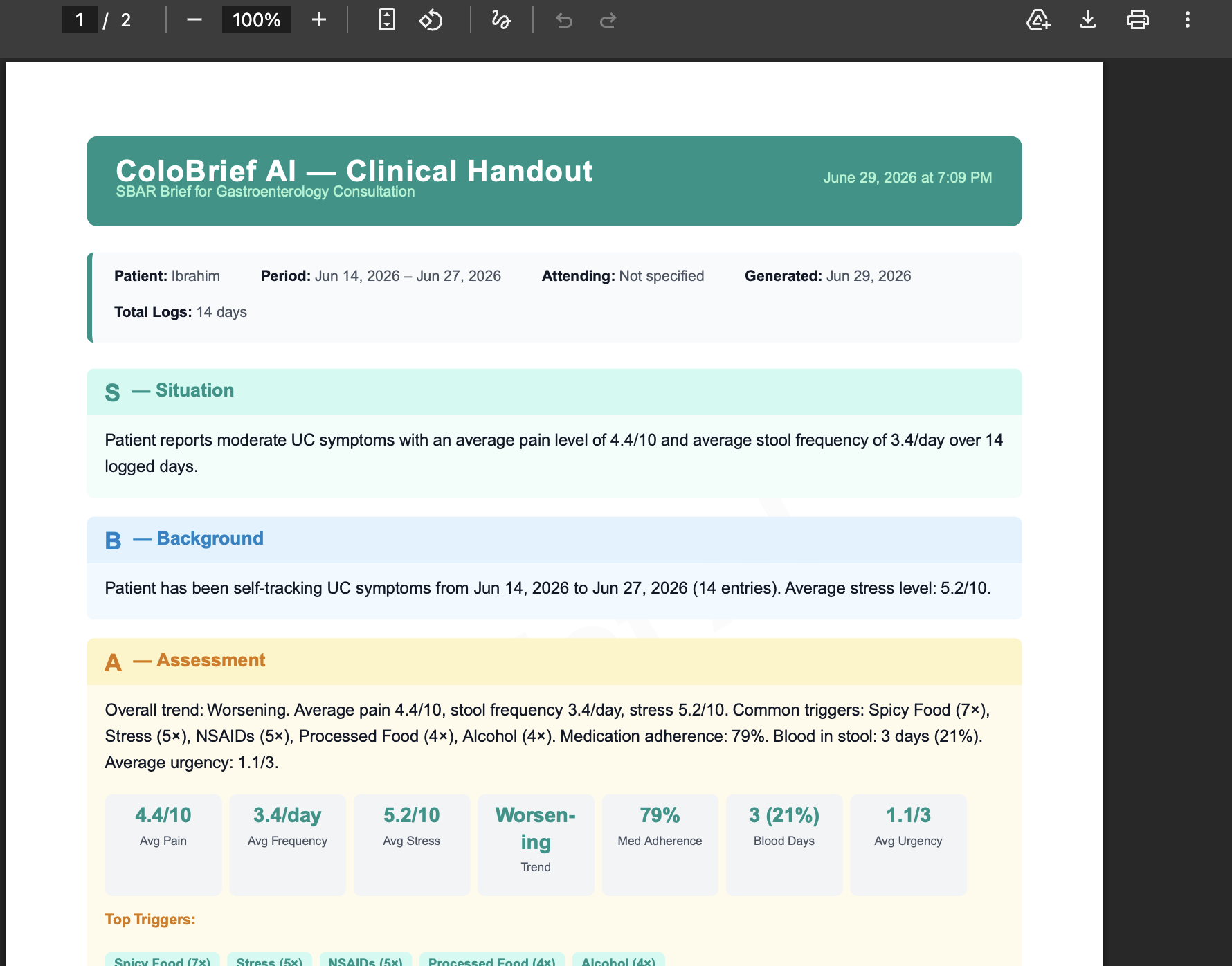
The final print-ready PDF handout, providing clinicians with a clean, highly structured SBAR clinical summary of patient wellness.
-
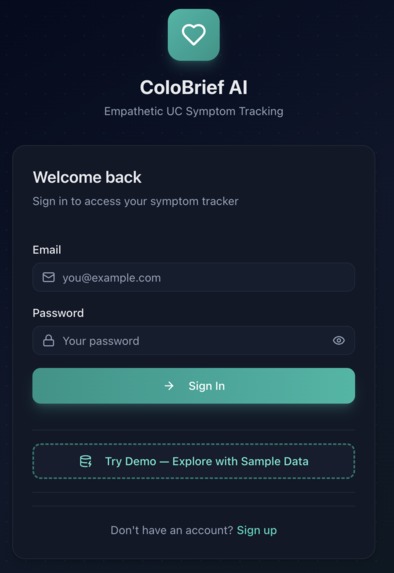
Login Page
-
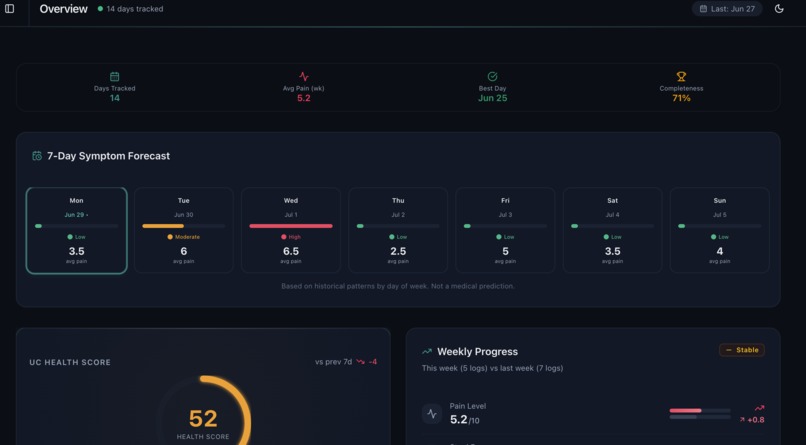
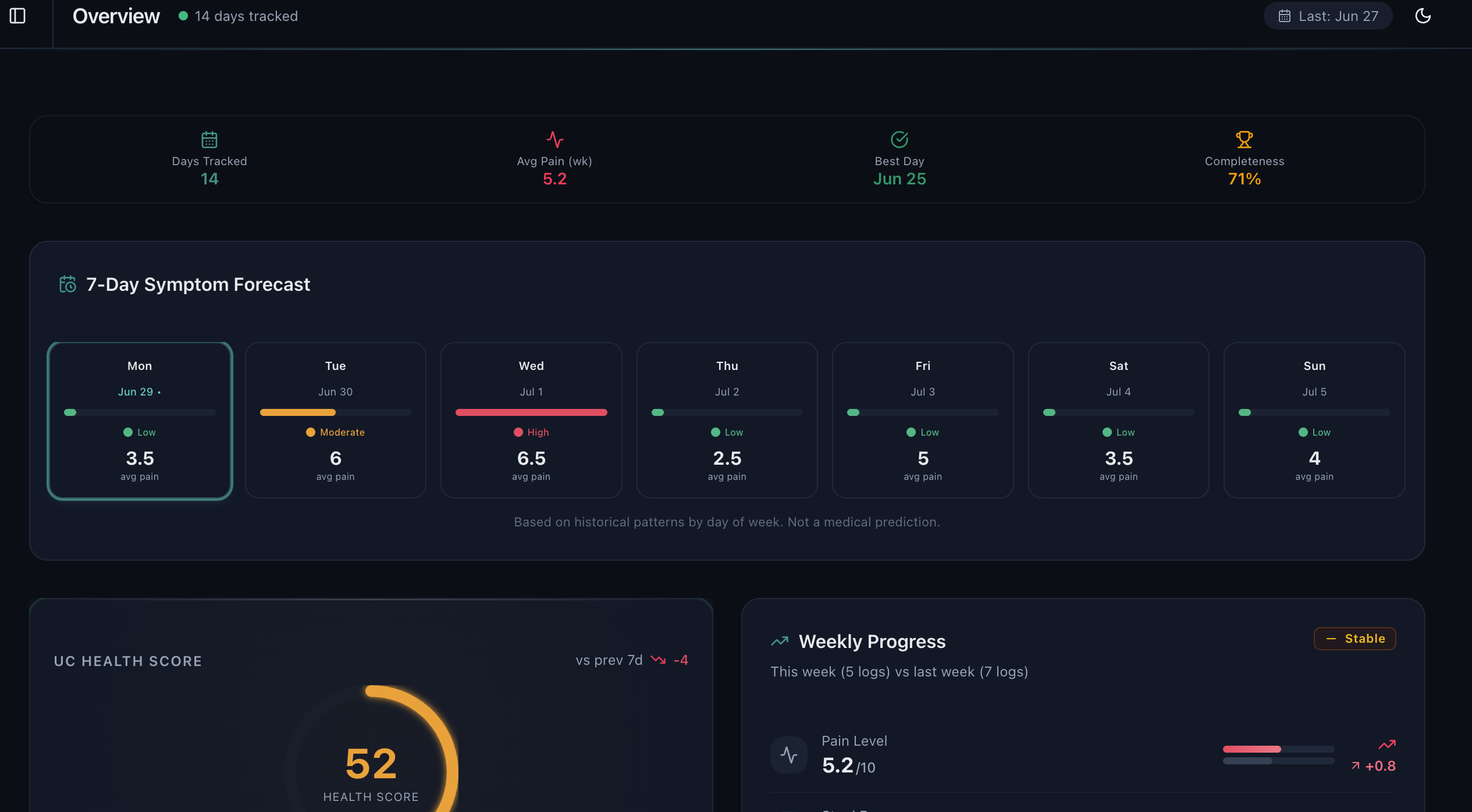
Predicts upcoming colitis pain severity (Low, Med, High) based on historical weekly patterns to help patients prepare for flares.
-
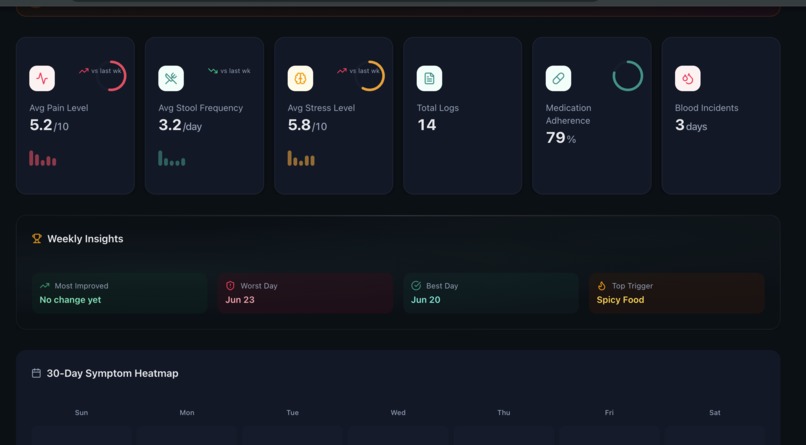
An at-a-glance KPI panel tracking average pain, stool frequency, stress, and medication compliance over a 14-day history.
-
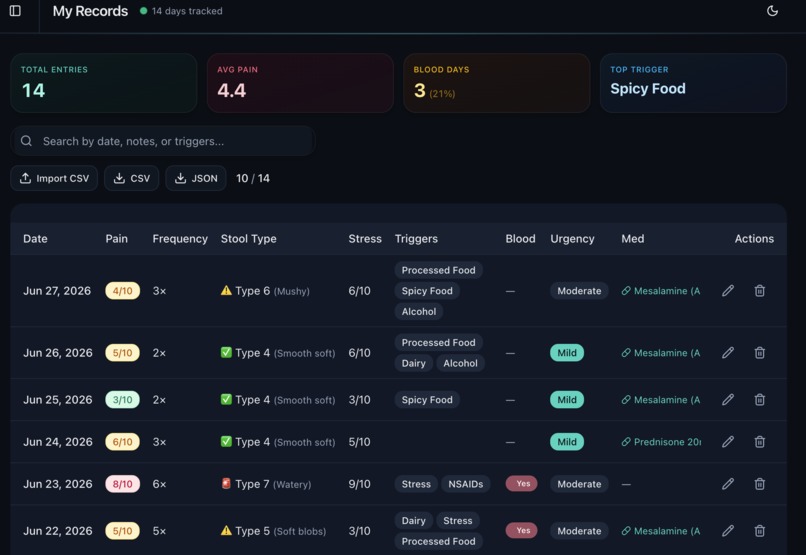
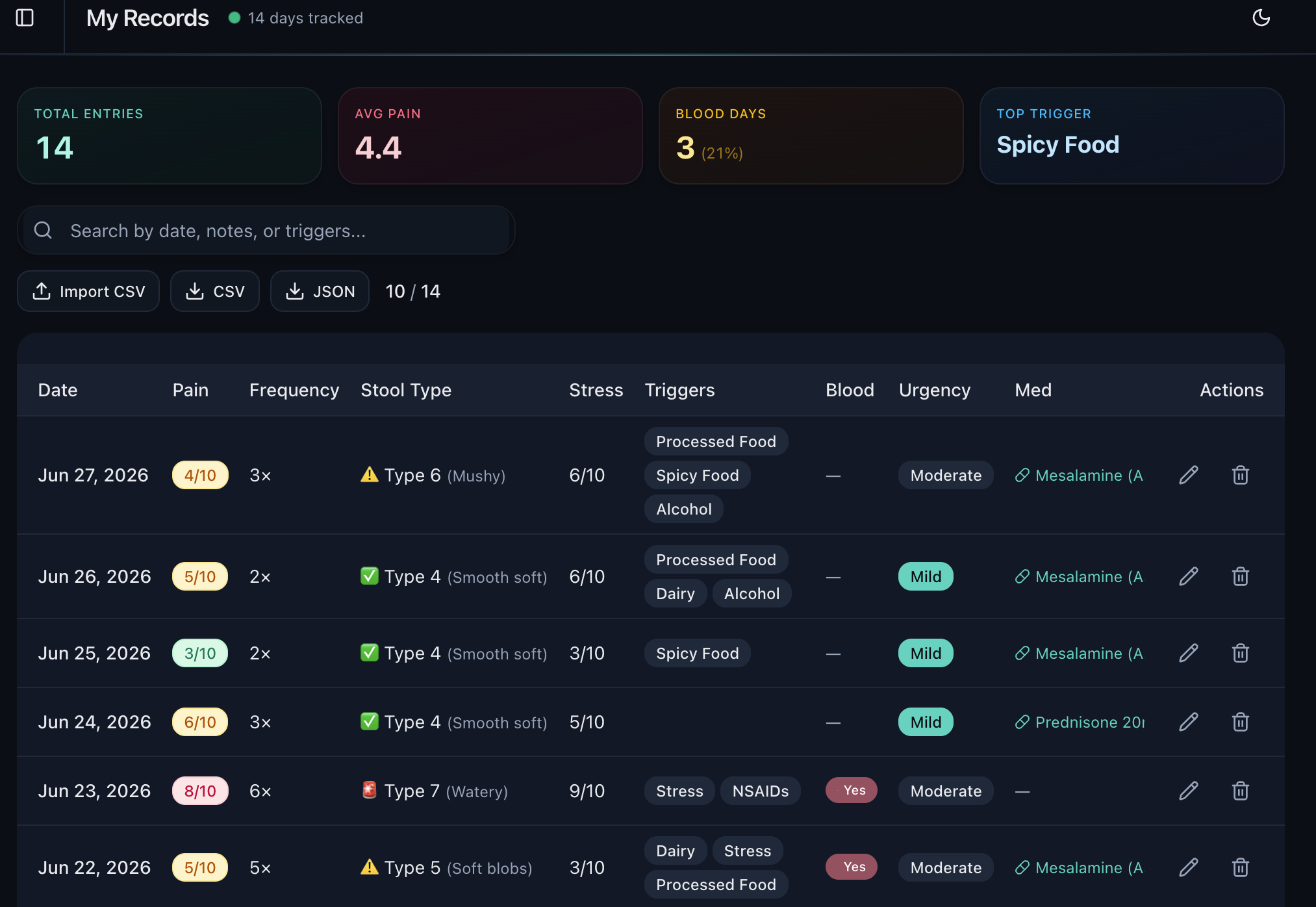
A secure patient history database with custom search, CSV/JSON export tools, and an interactive log table showing detailed trends.
-
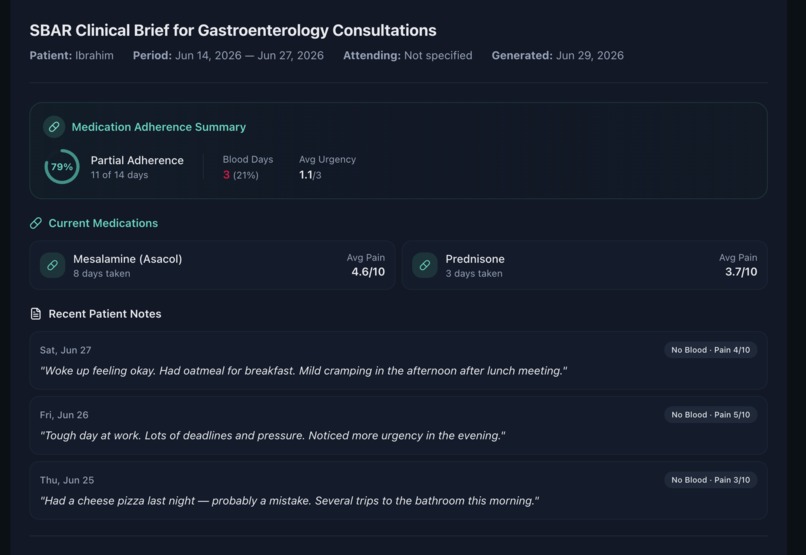
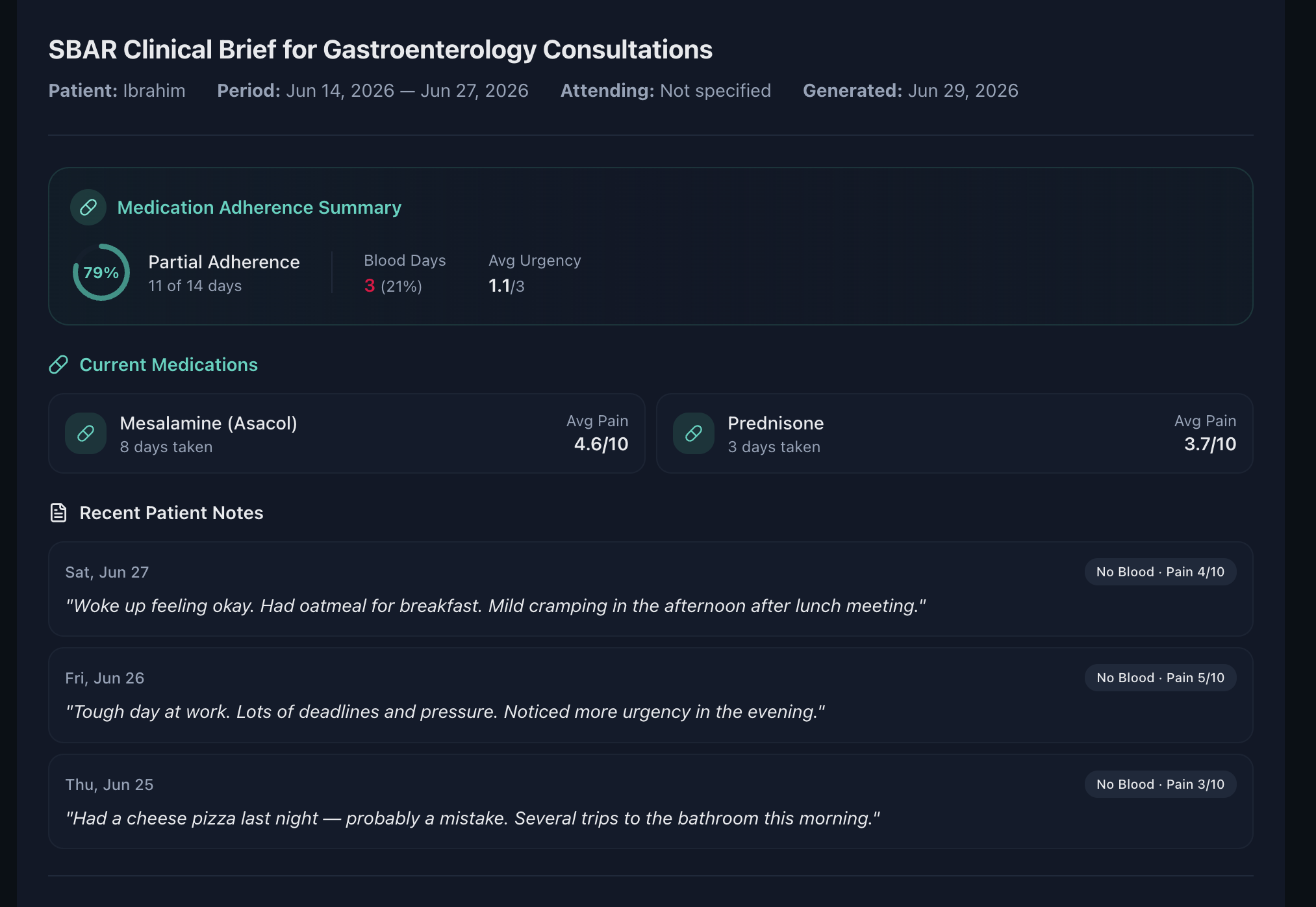
Formats 14 days of tracked colitis data into a professional medical SBAR intake layout, compiling medication logs and patient notes.
-
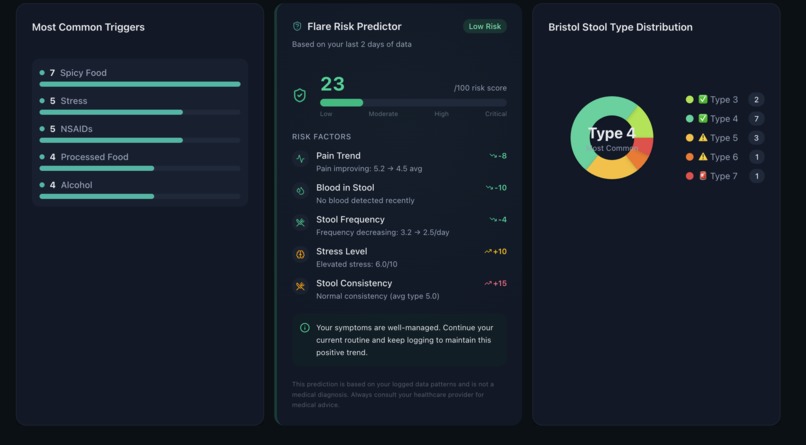
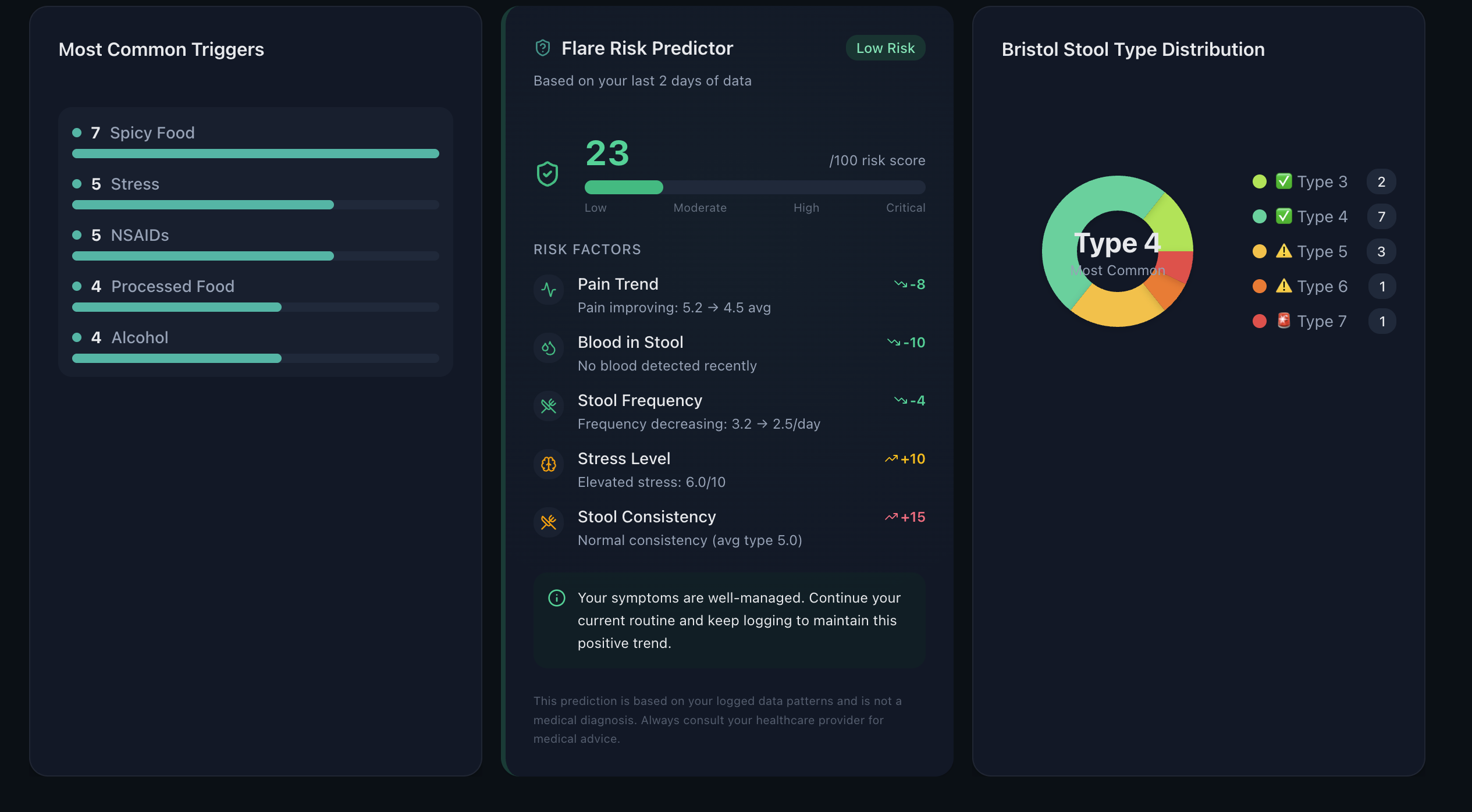
Analyzes colitis risk, displaying most common triggers, a 0-100 flare risk score, and a breakdown of stool type distribution.
-
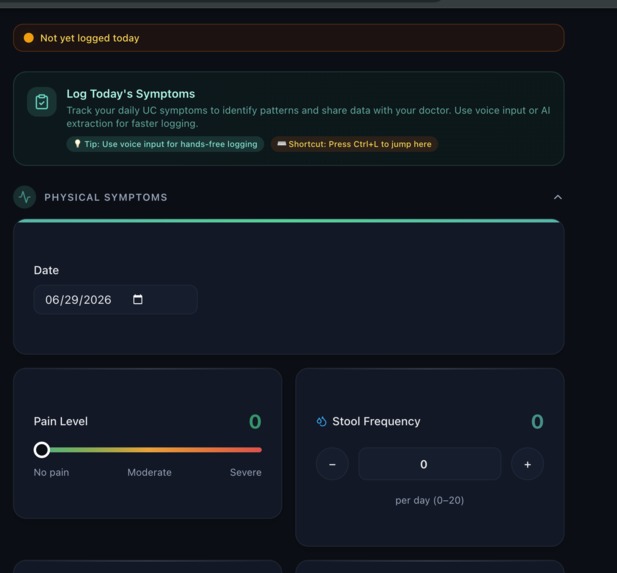
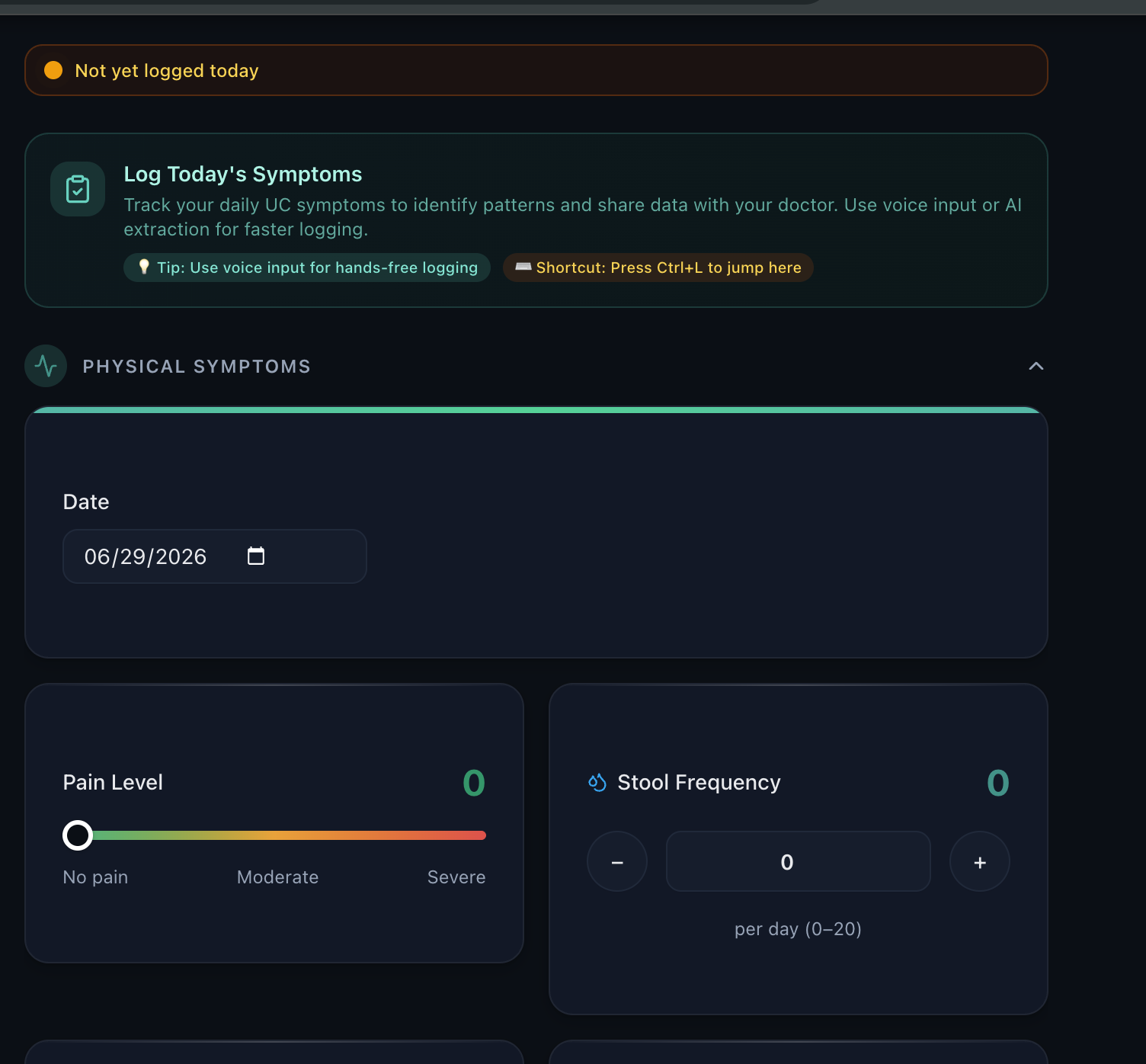
The interactive symptoms log page, allowing patients to select the date, slide pain scores, and input bowel habits with ease.
Inspiration
I have been fighting Ulcerative Colitis for almost four years now.
It started with a whole year of terrible stomach cramps. I went to so many doctors, and they just told me to drink more water and called it dehydration. I felt so lost and confused because the pain was real, but nobody believed me.
Then the bloody diarrhea started. Anything I ate would just rush straight out of my body. It was terrifying.
After a painful colonoscopy and biopsy, the doctor told me I have a lifelong disease called Ulcerative Colitis. I had never even heard of it. I was in complete shock and had no idea how to survive this.
When my symptoms finally settled, I made the stupid mistake of skipping my meds because I thought I was cured. The disease came back twice as hard, and I landed in the hospital.
It got worse. My doctor didn't know how to treat it and gave me the wrong medications. My new doctor had to put me on high-dose steroids called Deltacortril. The side effects wrecked my body. I suffered from extreme physical weakness, bone pain, and muscle loss. To make things worse, they forgot to prescribe basic Vitamin D and calcium supplements that you must take with steroids.
But my biggest issue was the monthly checkups.
Every time I sat in front of my gastroenterologist, they would ask how my month was. And I realized—I couldn't remember. When you are exhausted from flares and steroids, your brain goes foggy. I couldn't remember when the pain spiked, how many times I went to the bathroom, or what food triggered me.
This is also an invisible illness. We go out into the community, but we don't look sick. People see us and think we are perfectly fine, but inside our colons are bleeding. They call us lazy or dramatic because they don't see the pain.
This silent battle is happening to millions of people. In Europe, about 1 in every 300 to 500 people are silently fighting this, and it’s even worse in places like the UK and Denmark. We hide our pain because of embarrassment and social stigma.
I built ColoBrief AI because I got tired of forgetting my own pain. I wanted an app where you don't have to manually type or drag sliders when your body is failing you. You just speak. You voice your raw day, and the AI translates your human struggle into a clean, professional SBAR report. It is my story, but I built it so we never have to feel invisible in front of our doctors again.
What ColoBrief AI does
- 🎙️ Speak your day: Just click one button and talk naturally. No manual sliders or forms required.
- ✨ AI does the work: Our integrated ZhiPu GLM API reads your raw voice note, pulls out the clinical details, and automatically moves the sliders and toggles the blood/urgency buttons on the form on its own.
- 📱 Live Responsive Dashboard: Beautiful charts showing your pain versus stool frequency trends over time, fully responsive with horizontal swipe scrolls on mobile so they never get squished.
- 🚨 Emergency Alerts: Dynamically flags severe symptoms like blood in stool or high pain directly on your dashboard.
- 📝 SBAR Clinical Handout: Turns your chaotic month into a professional, 1-page SBAR PDF report that you can print or email directly to your doctor.
How I built it
- Framework: Next.js 16 (App Router), React, and TypeScript
- Database: Prisma ORM with SQLite
- AI Processing: ZhiPu GLM API for structured clinical JSON extraction and the browser-native Web Speech API for voice input.
Challenges we ran into
One of the biggest challenges was ensuring the AI consistently returned valid, structured JSON. Since AI responses can occasionally be inconsistent, we had to carefully engineer our prompts and implement validation to reliably extract clinical information before storing it in the database.
Another challenge was designing a responsive mobile experience. The health score circle was initially off-center, and the progress rings overlapped other UI elements on smaller screens. We solved this by using conditional rendering to hide non-essential visual components on mobile devices and wrapping charts in a horizontally scrollable container to preserve readability without compressing the layout.
We also had to design a database schema that could efficiently store symptom logs, food intake, medications, and AI-generated insights while keeping the data flexible enough for future feature expansion.
Accomplishments that we're proud of
- Building a complete full-stack tool completely solo with AI-assisted development. and own planning
- Making an intelligent voice-first tracking tool that actually works. Now, you can just speak a messy sentence, and the AI accurately sets the form elements.
- Creating a tool that could truly help other chronic patients like me handle doctor transitions without losing their history.
What we learned
- Chronic patients need automated, low-effort tools because manual tracking is impossible when you are exhausted from flares and steroids.
- We learned how critical medical compliance is, and why digital tools must gently encourage patients to stick to their treatment plans even when they feel "fine."
- Standardizing raw human narratives into objective SBAR briefs is the most effective way to help doctors make safe, accurate decisions.
What's next for ColoBrief AI
- Medication Adherence Alerts: Adding smart compliance alerts so patients don't make the mistake of skipping their meds like I did.
- Steroid Side Effect Tracking: Adding specific tracking modules for patients undergoing corticosteroid therapy to monitor joint health and vital Vitamin D/Calcium supplementation.
- EHR Integration: Connecting directly with standard hospital portals like Epic or MyChart.
Built With
- ai
- javascript
- next.js
- react
- typescript


Log in or sign up for Devpost to join the conversation.