ColoBrief AI 🩺🤖
Empathetic, voice-first clinical translation and symptom tracking for Ulcerative Colitis (UC) and IBD care.
Inspiration
Ulcerative Colitis (UC) is an invisible, silent, and deeply exhausting battle. Since my diagnosis in 2023, I have lived through the daily physical and psychological realities of this chronic autoimmune condition.
The global and European landscape of Inflammatory Bowel Disease (IBD) is staggering:
- The Global Burden: IBD affects over 4 million people worldwide.
- Prevalence Hotspots: Europe suffers from the highest pooled prevalence globally, reaching 198.6 cases per 100,000 people. In the UK, it affects approximately 0.57% of the entire population (about 1 in 175 people), and Denmark has a national prevalence of 0.523%.
- The Physical Toll: The daily symptoms are punishing. In systematic patient surveys, 79% suffer from chronic bloody diarrhea, 77% fight restorative-resistant fatigue, 69% experience abdominal cramping, and 53% live with sudden, intense bowel urgency.
- The Mental Toll: Due to the bi-directional gut-brain axis, 79% of patients report chronic anxiety and 64% experience clinical depression. During active flares, anxiety rates triple, leaving 2 in 3 patients in a constant state of emotional distress.
- The Diagnostic Delay: The average patient faces a 2.0-year diagnostic delay, with 42% waiting over a year just to understand their illness.
The Friction Gap: When you are exhausted from fatigue and cramping, dragging sliders and typing numbers into a manual tracking spreadsheet is physically impossible.
The Continuity Gap: UC is a non-linear disease. When patients travel, move, or change doctors, their electronic health records easily transfer static lab results, but the longitudinal daily symptom context is completely lost. During a brief 15-minute consultation, a new doctor has no way of seeing the patient's daily baseline. This miscommunication can lead to premature medication abandonment or over-prescribing harsh systemic corticosteroids (like Prednisone).
I am a solo developer(student). I had no venture capital or massive engineering team. I built ColoBrief AI using "AI-assisted development" to turn my personal pain into a working, full-stack application. ColoBrief AI allows patients to simply speak their day in their own words. The AI does the rest—translating raw human vulnerability into structured clinical data that doctors can immediately use to make safer, more accurate decisions.
What it does
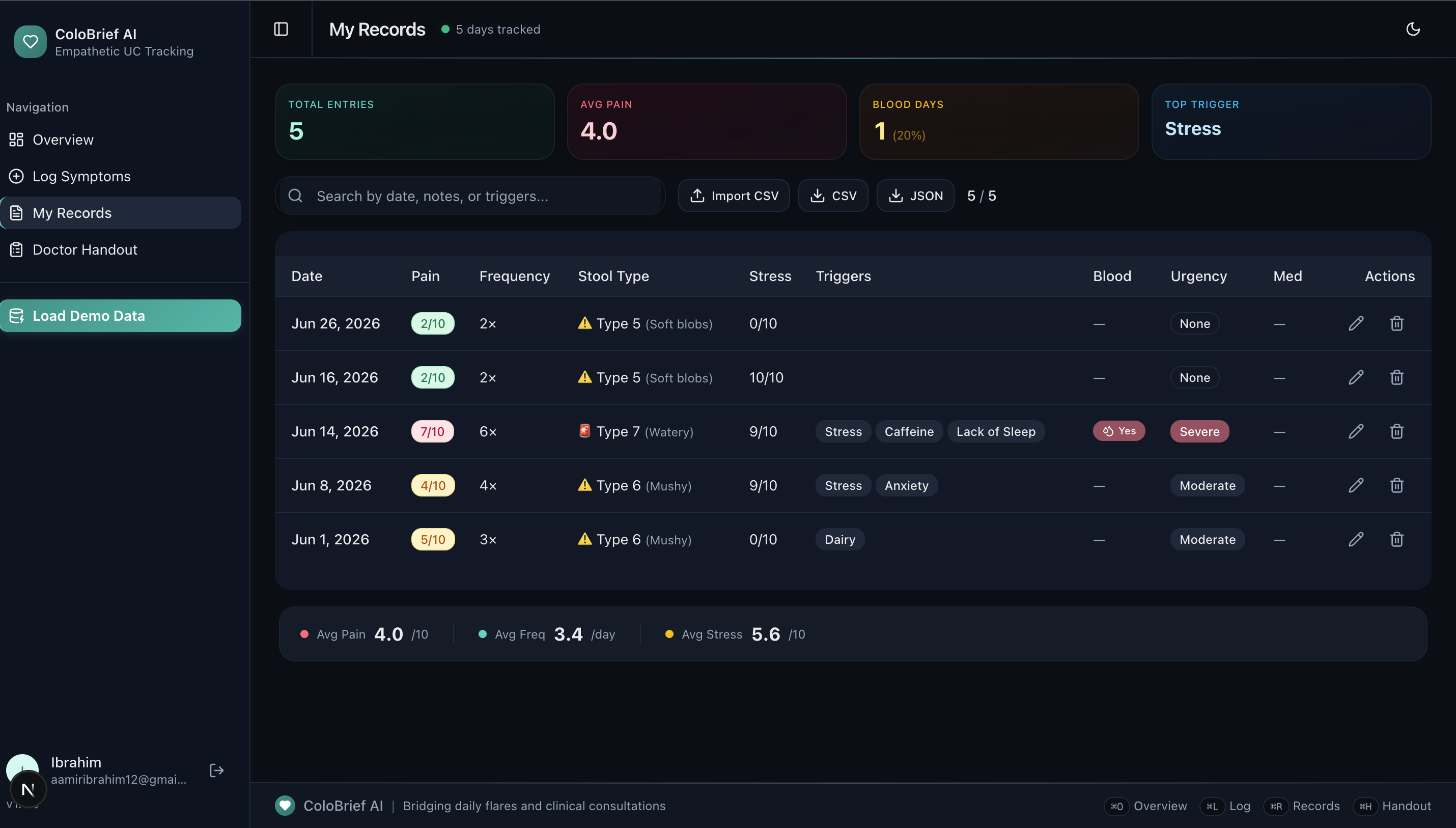
- 🎙️ Voice-First Symptom Logging: Patients click a single button and describe their day naturally (e.g., "Cramping was about a 7, went 5 times today, mostly watery, and noticed some blood..."). No manual sliders needed.
- ✨ AI-Powered Form Population: The integrated ZhiPu GLM-4.7-Flash API parses the raw text in real-time, extracts precise symptom parameters, and automatically slides the pain meters, toggles the "Blood in Stool" switch, and selects trigger tags on the form automatically.
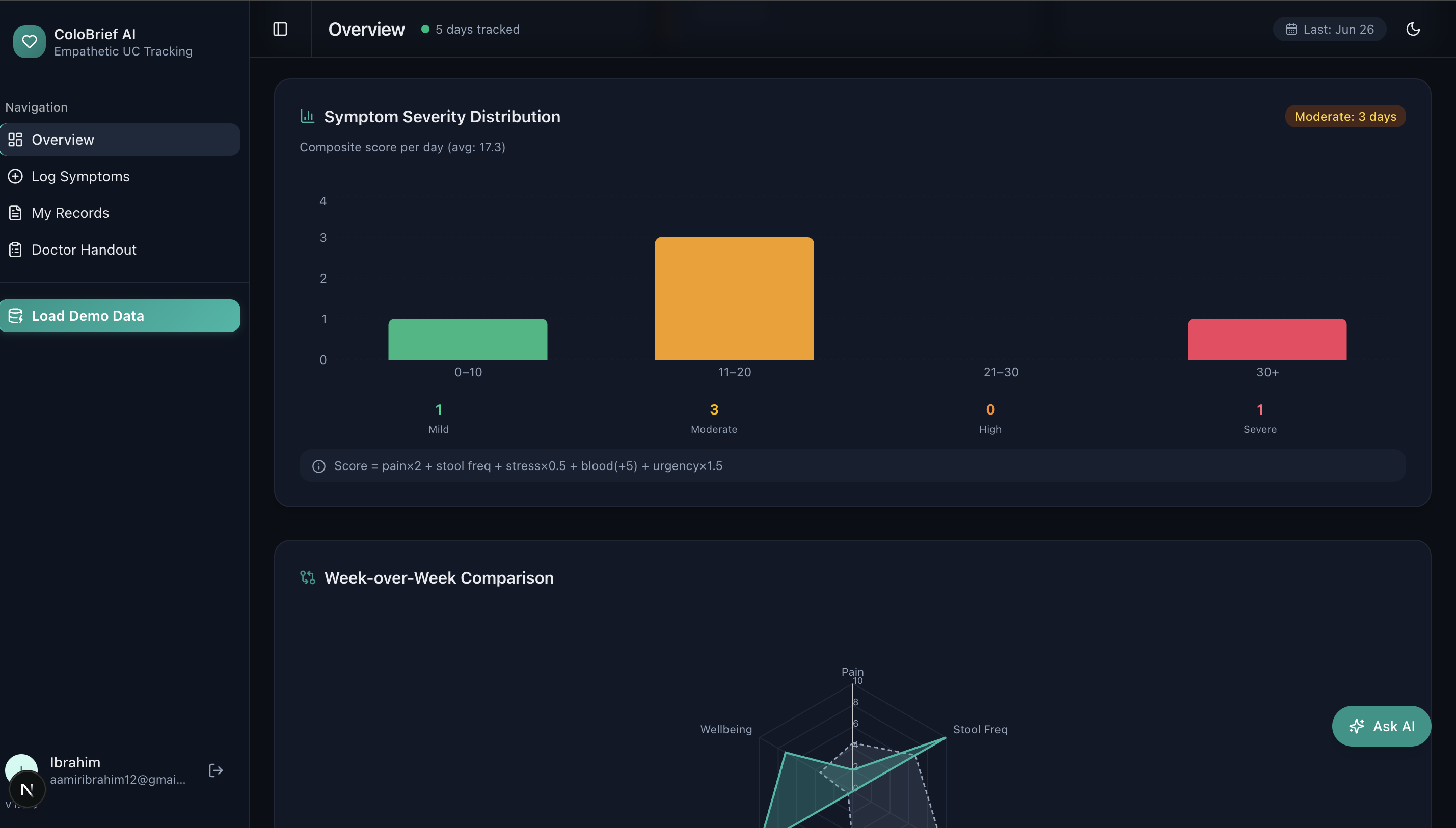
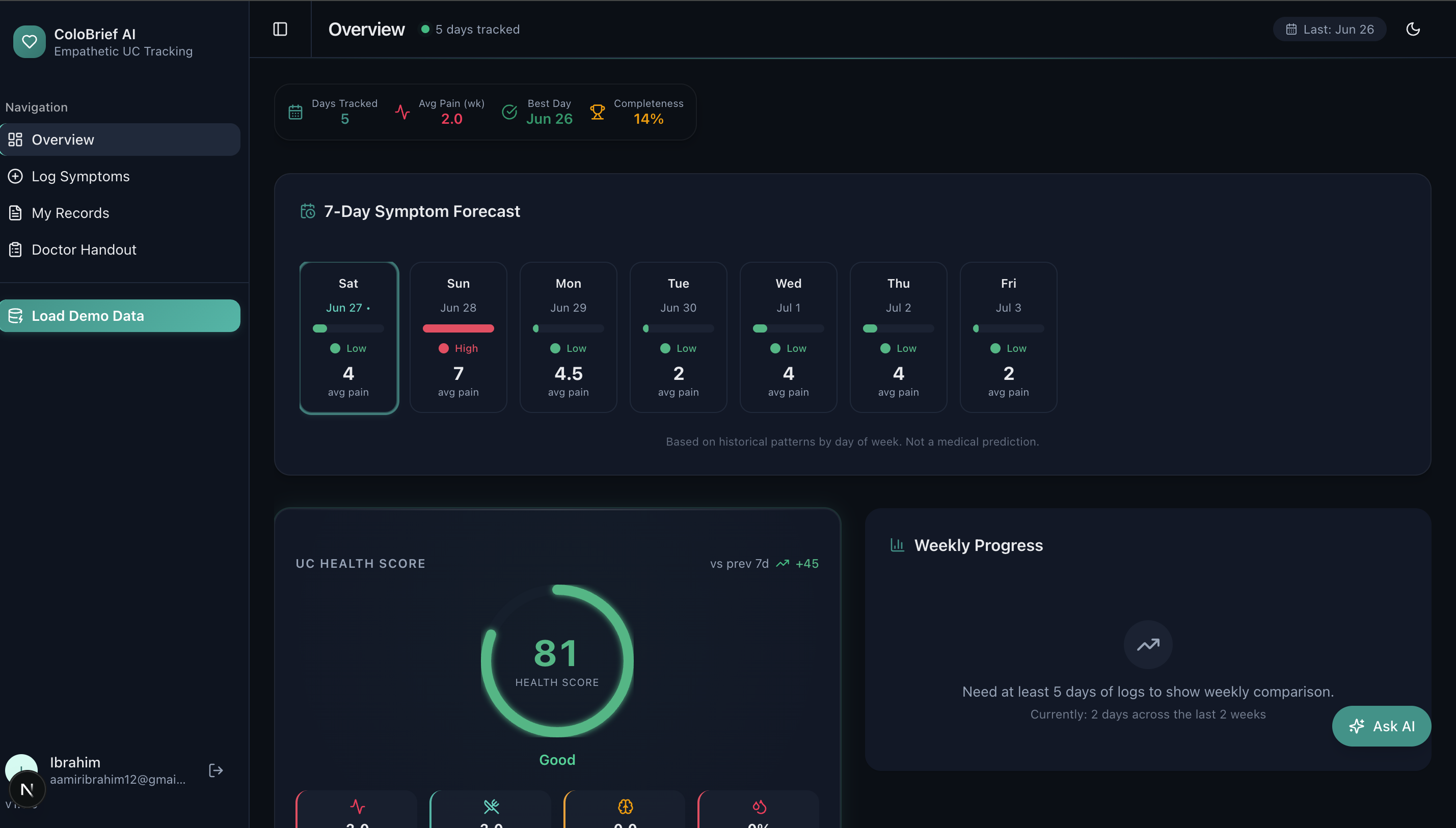
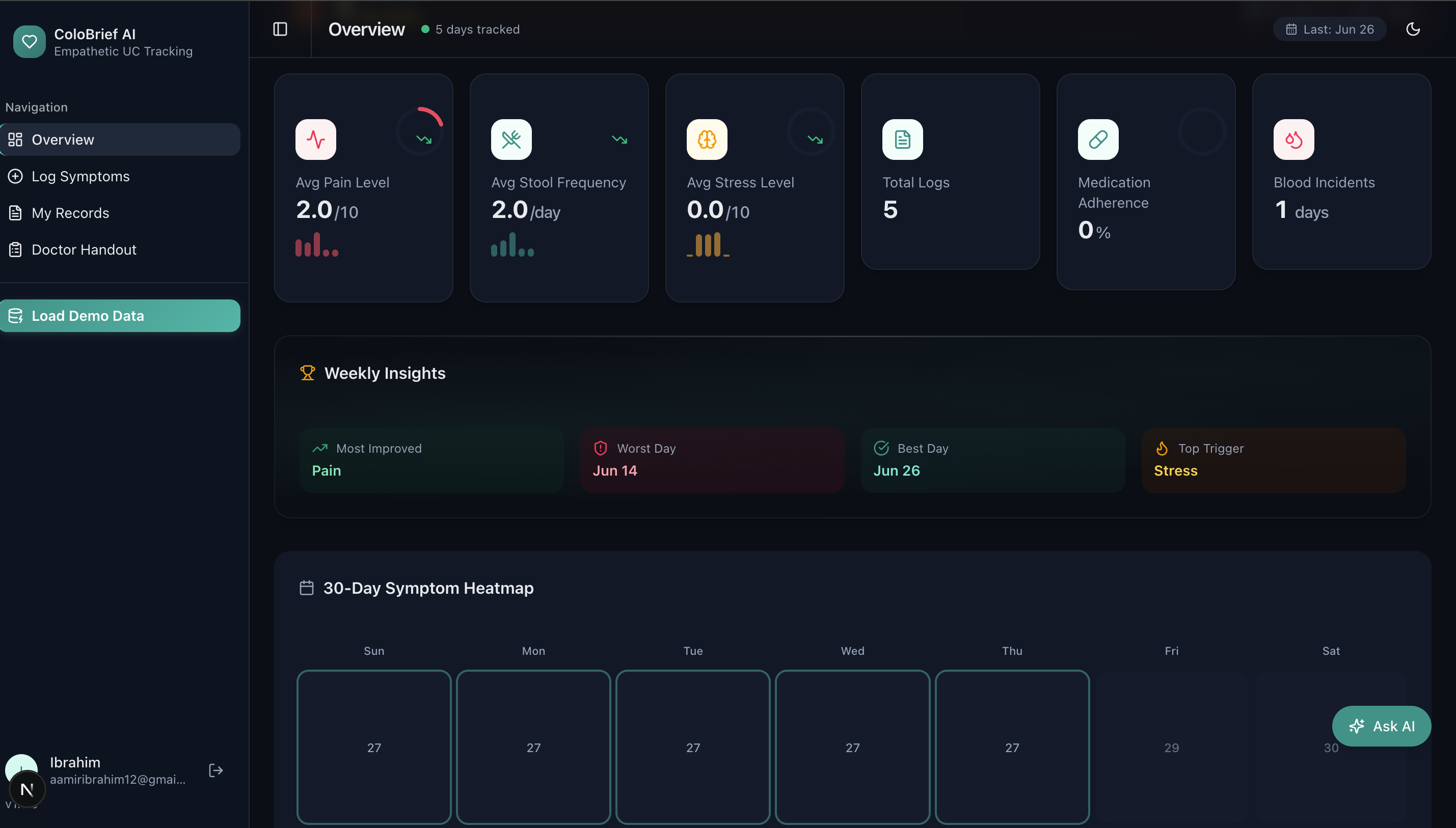
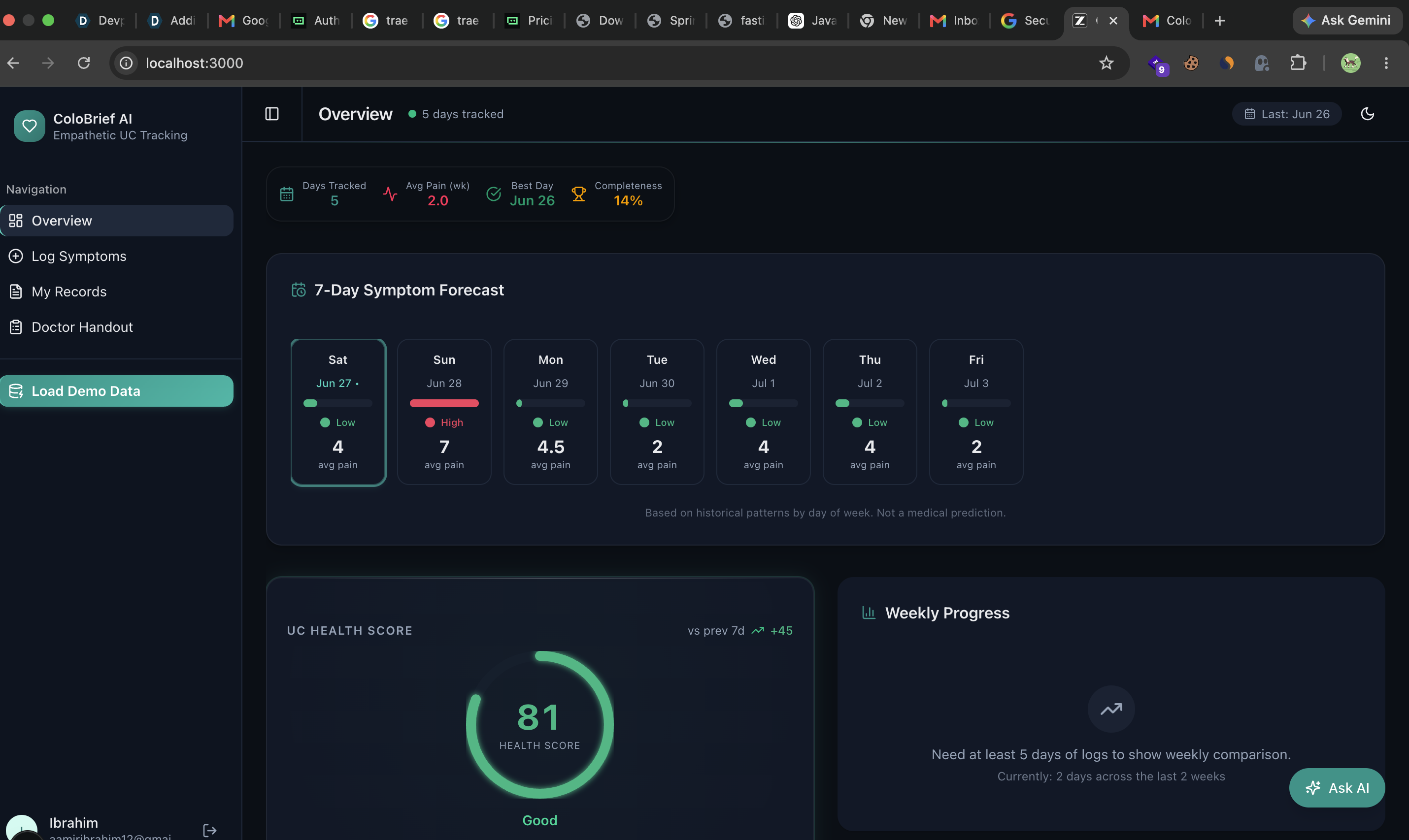
- 📱 Fully Mobile-Optimized Dashboard: A highly polished, dark-themed responsive dashboard. Includes a left-drawer menu, properly scaled metric cards with no text clipping, and responsive chart containers with horizontal mobile scrollbars so graphs are never squeezed.
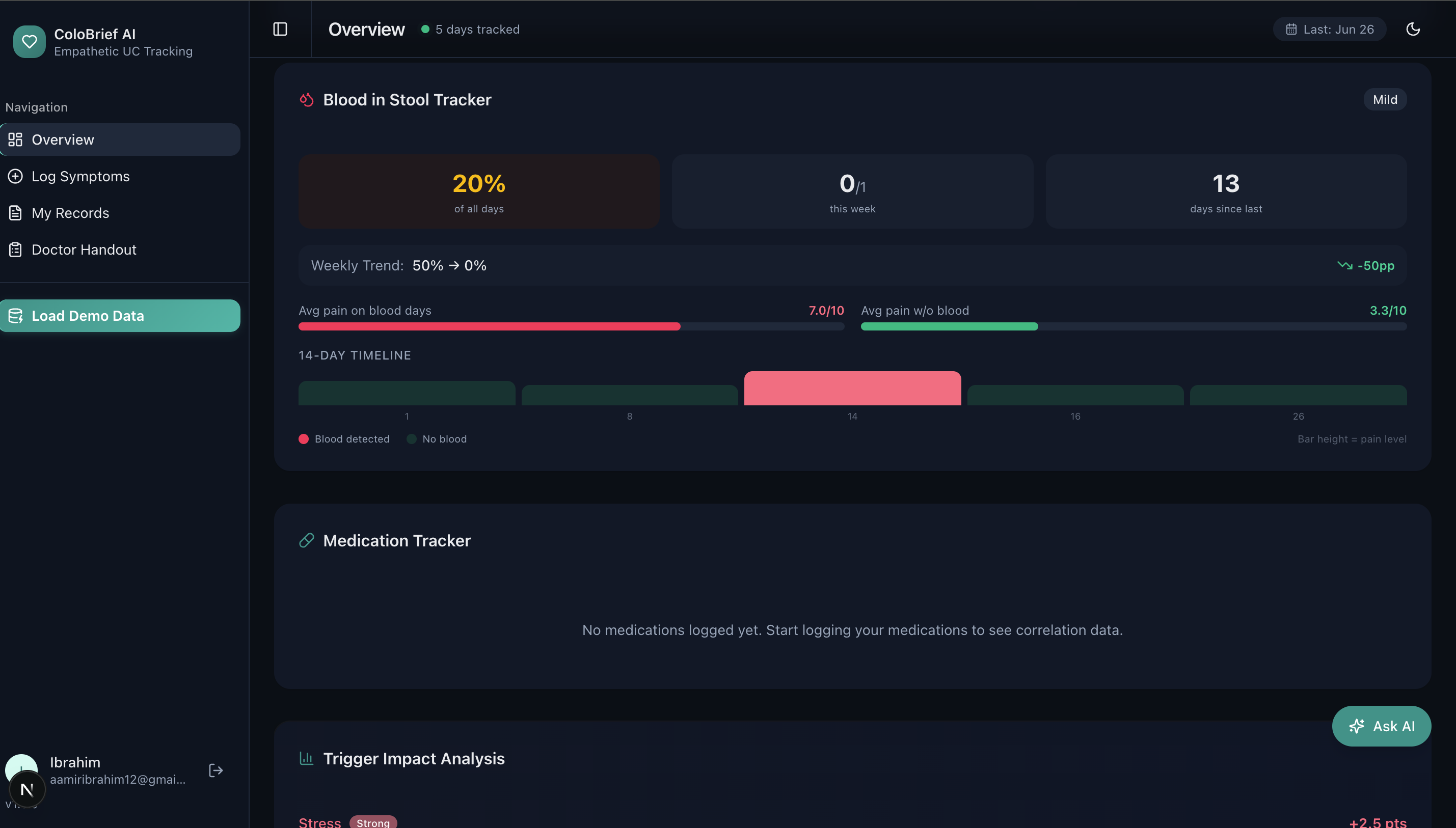
- 🚨 Emergency Symptom Alerts: Dynamically detects high-risk clinical events (like severe urgency, high fever, or blood in stool) and displays a clear warning box on the dashboard to prompt clinical care.
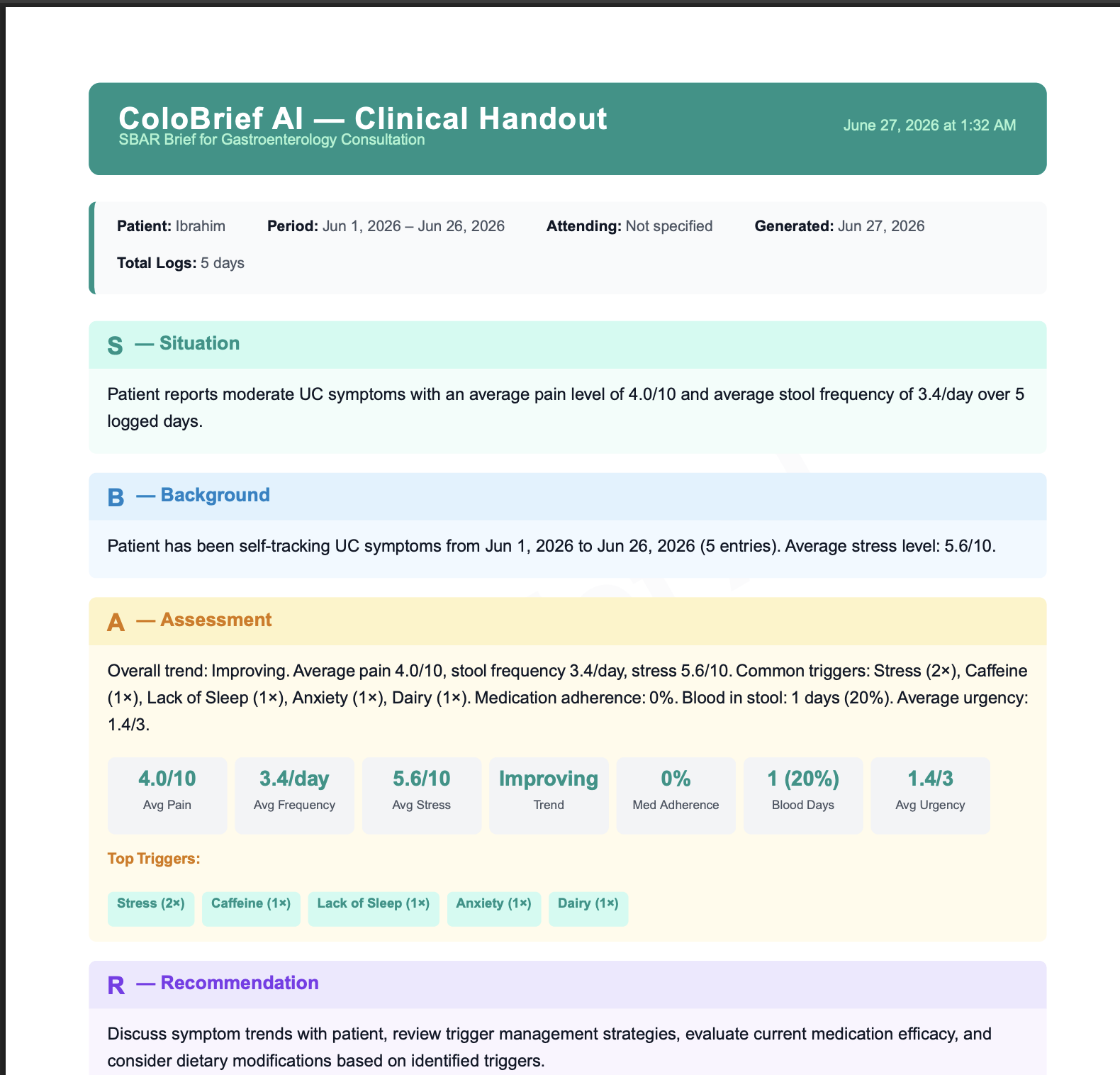
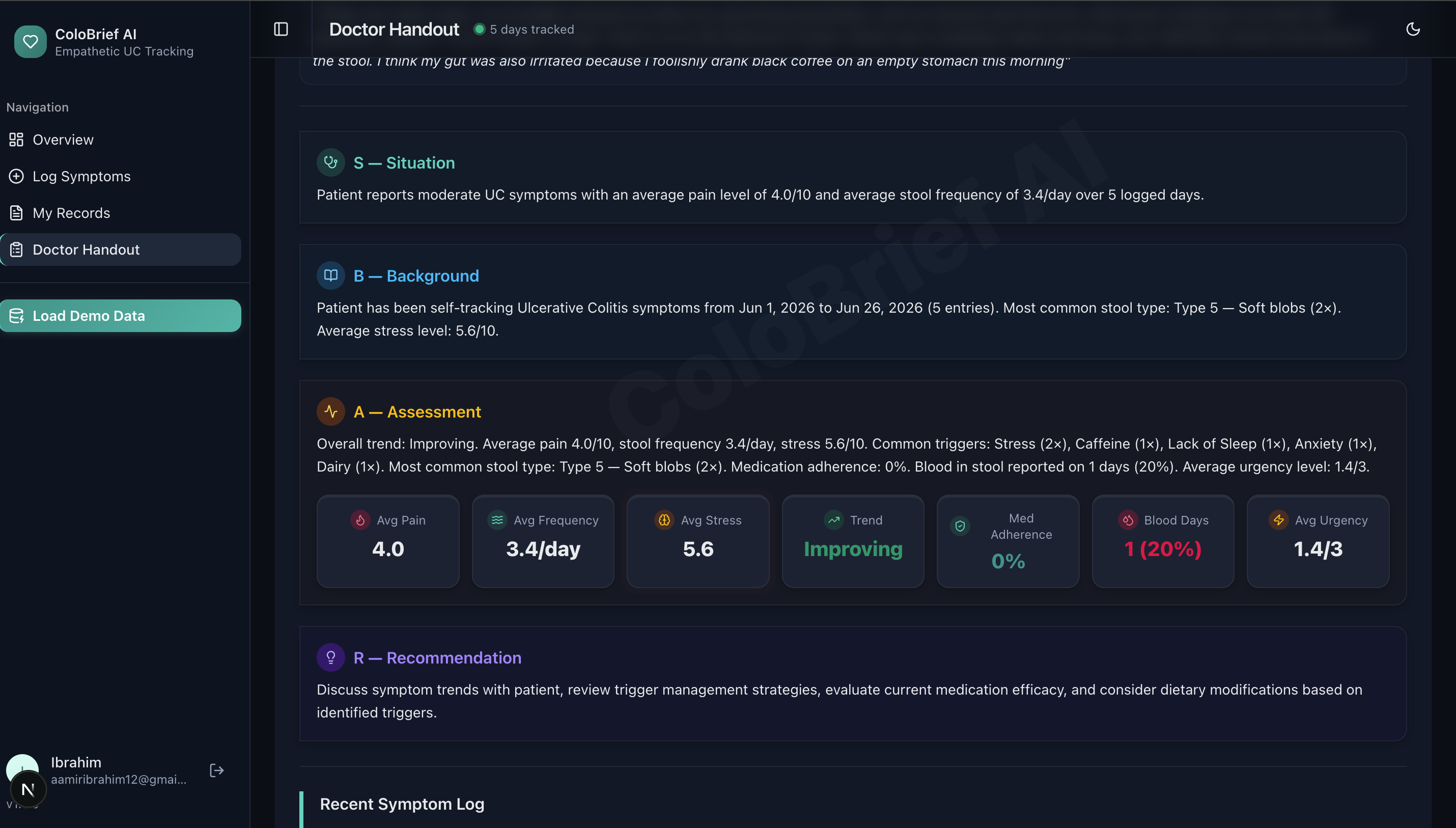
- 📝 SBAR Clinical Handout: Automatically compiles daily symptom data, notes, and medication adherence into a standardized Situation-Background-Assessment-Recommendation (SBAR) report—the universal communication template used by healthcare professionals.
- 📄 1-Click PDF Export: Clean CSS print-styling that allows patients to instantly download their medical SBAR brief as a beautifully formatted 2-page PDF document to print or email directly to their clinic.
How we built it
- Framework & Language: Next.js 16 (App Router), React, TypeScript
- Styling & UI: Tailwind CSS, Shadcn/UI, Lucide React
- Database & ORM: Turso
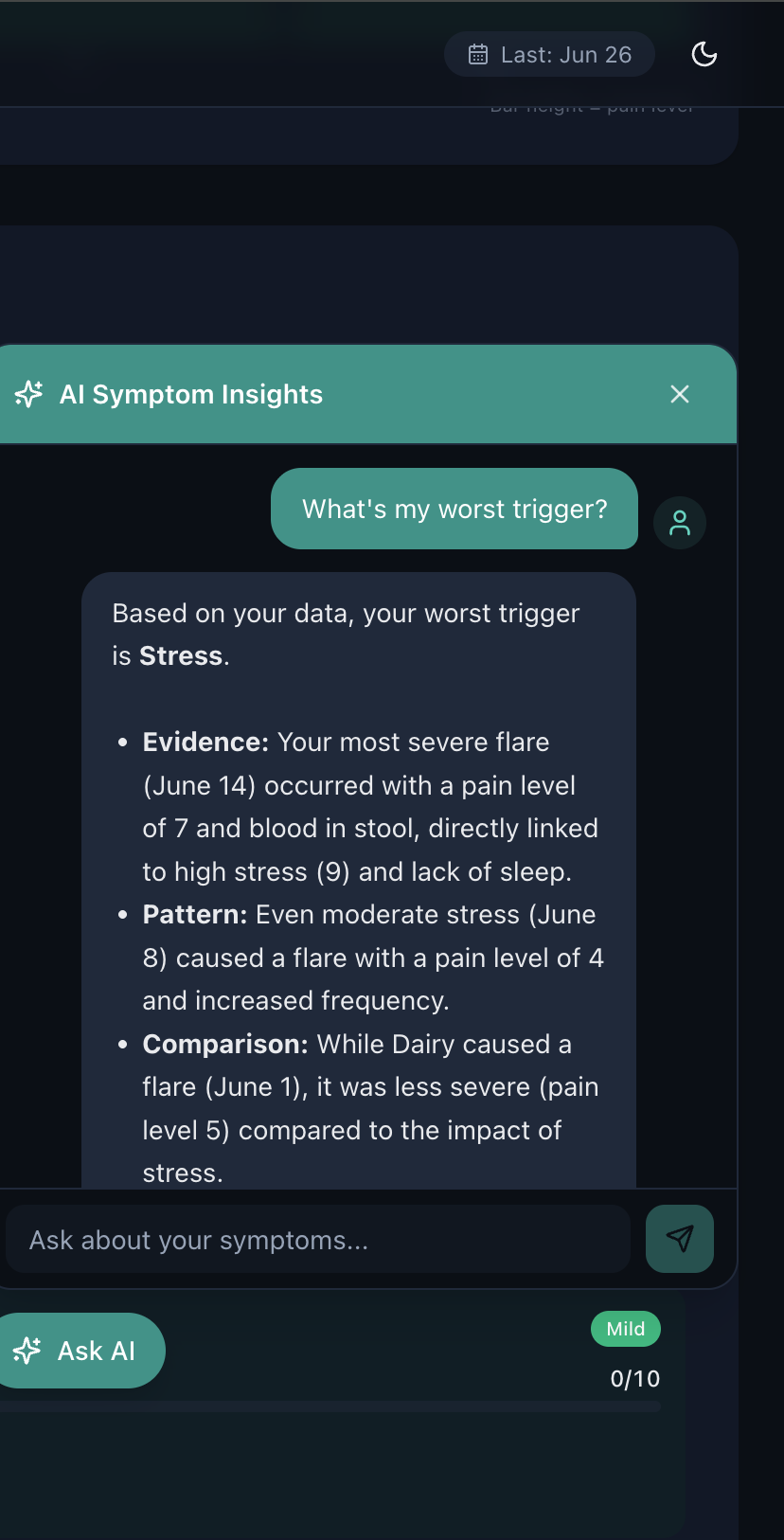
- AI Processing: ZhiPu GLM-4.7-Flash API (providing structured clinical JSON extraction and AI insights)
- Email Verification: Mailtrap (managing secure, token-based verification codes)
- Authentication: JSON Web Tokens (JWT) for secure patient sessions
Challenges we ran into
- Visual Mobile Responsive Clipping: On mobile viewports, the metric cards, circular gauges, and Recharts line graphs were heavily squished and clipped. We resolved this by building a dedicated mobile navigation
Sheet, using React conditional rendering to hide decorative rings on small screens, and implementing a horizontal-scroll outer wrapper on charts so they maintain perfect readability. - Ensuring Submit Button Accessibility: When the "AI Auto-Filled" drawer expanded from the bottom of the screen, it pushed our green "Save" button completely off the viewport. We solved this by using safe-area viewport heights (
min-h-svh) and adding a generouspb-36bottom padding to the main scroll viewport so patients can easily scroll past any floating elements. - Strict JSON Parsing: Instructing the LLM to output only valid JSON with zero conversational filler to prevent frontend JSON parsing crashes.
Accomplishments that we're proud of
- True Voice-to-Form Integration: Successfully building a system where a single spoken sentence automatically slides meters, toggles blood indicators, and checks trigger boxes on the fly.
- Standardized SBAR Generation: Turning raw, conversational patient language into a highly structured, doctor-ready SBAR report that matches the clinical templates used in real clinics.
- An Empathetic Solution: Building a fully functional, full-stack application as a solo developer that directly addresses the medical communication gaps I have experienced in my own journey.
What we learned
- Voice-First Accessibility is Key: For patients managing chronic illnesses, a voice interface is not a luxury—it is an essential accessibility requirement.
- Democratized Software Creation: AI-assisted development and "vibe coding" allow a single developer to build robust, highly interactive healthcare solutions that can genuinely improve patient care.
- Translating Patient Narratives: Standardizing daily patient struggles into structured, clinical SBAR data is a powerful way to eliminate miscommunication during brief doctor appointments.
What's next for ColoBrief AI
- Predictive Flare Warning: Training the AI engine to identify early warning signs of an incoming flare (by correlating subtle stress changes, sleep, and heart rate variability) 48 hours before physical symptoms occur.
- Secure Clinical Portals: Integrating directly with standard electronic health records (EHR) like Epic or MyChart, allowing patients to push their SBAR reports directly to their doctor's inbox.
- Wearable Device Sync: Integrating with smartwatches to capture real-time physiological data (resting heart rate, sleep cycles, and daily steps) to provide deeper correlation analytics.
Built With
- ai
- jwt
- mailtrap
- react
- shadcn
- tailwind
- turso
- typescript


Log in or sign up for Devpost to join the conversation.