-
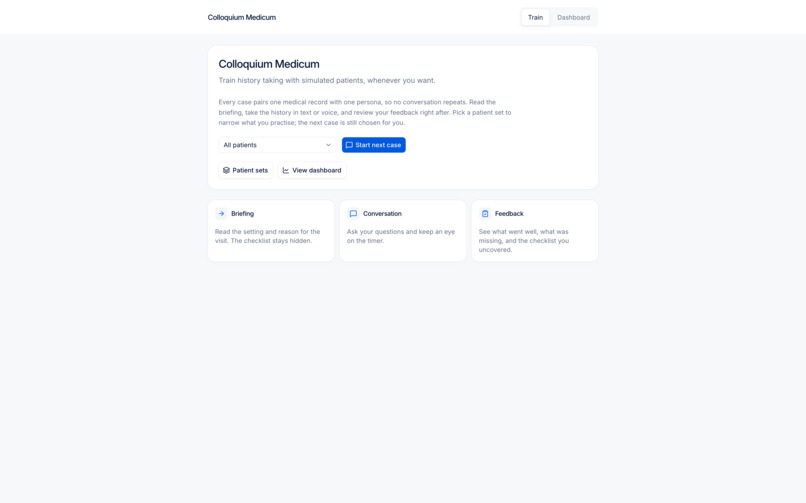
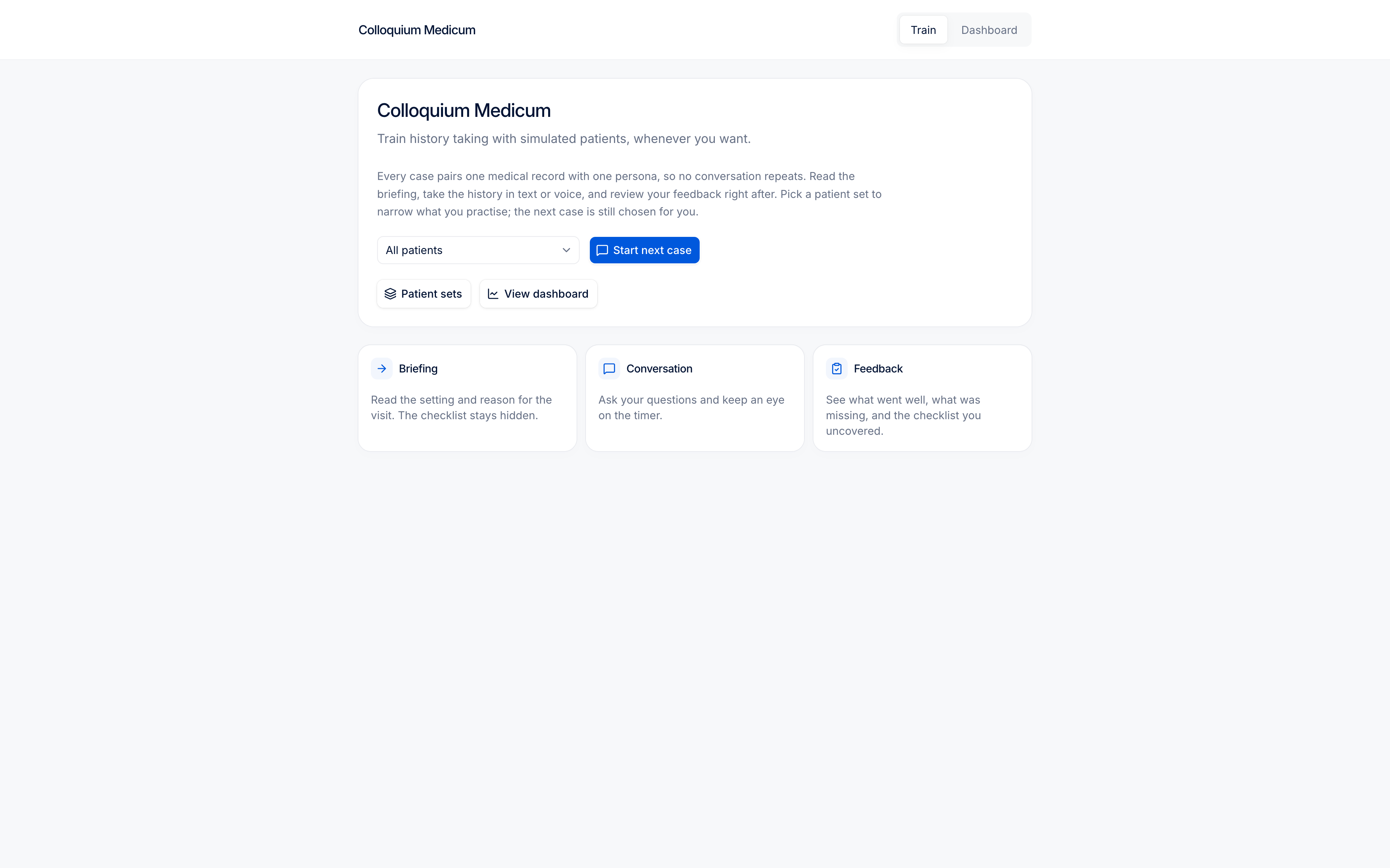
Landing page
-
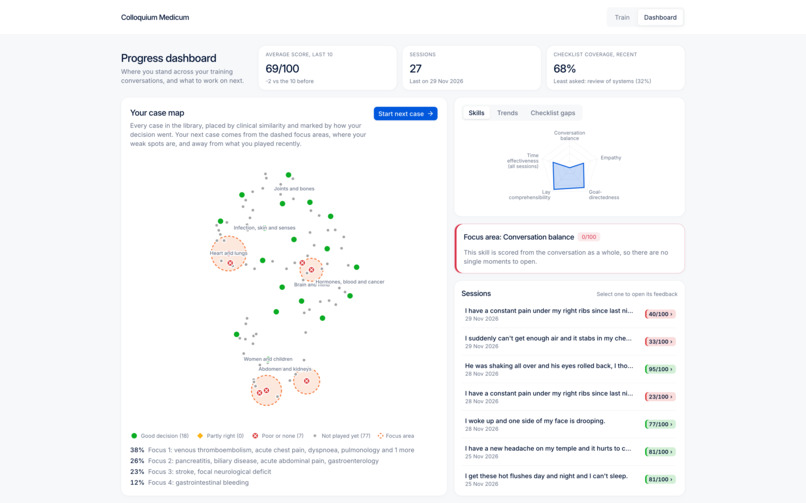
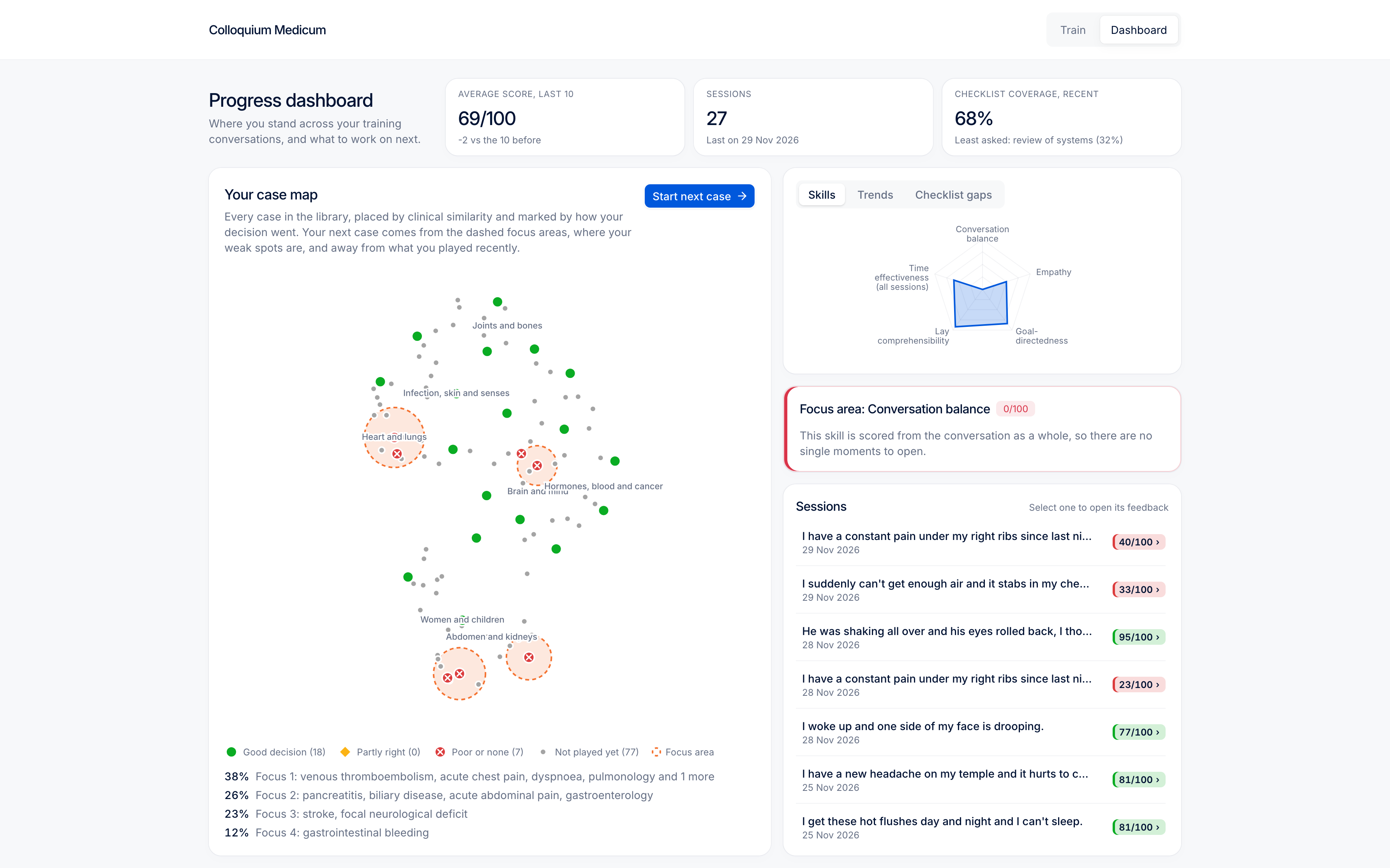
Dashboard page
Inspiration
Every medical student has to learn history taking by talking to a simulated-patient actor. There's one actor, a handful of 20-minute slots, and a waiting list. Each slot is so scarce that students arrive nervous and treat it as an exam instead of practice. What's missing is the thing that actually builds a skill: repetition on demand, at 11pm, with nobody watching. We wanted a patient that is always available for training.
What it does
Colloquium Medicum is a virtual patient you can actually talk to, in text or real-time voice, followed by feedback on how you did.
Every patient is built from two independent halves. A medical record holds the clinical truth: history, medications, allergies, a hidden diagnosis, and a checklist of findings a good interview should uncover. These come from real clinical case documents through our import pipeline, which pseudonymises identifying data on the way in (the demo library is 102 synthetic records in that same shape). A synthesized persona holds only how the patient talks: personality, mood, talkativeness, health literacy, and private worries.
Because the two are decoupled, every session draws a unique record × persona pair that never repeats. The same heart attack is a completely different encounter depending on whether it walks in as an anxious oversharer or a dry man who downplays everything and only mentions thirty years of smoking when you finally ask.
The patient reveals facts only when asked, in plain language. You can order tests during the consultation, each costing you minutes on the clock. Afterwards you get scored on empathy, goal-directedness, plain-language use, time management, checklist coverage, your diagnosis and your next steps, pinned to the exact moments where you picked up a cue or walked past one. A dashboard tracks your weak areas over time and steers the next case toward them.
How we built it
TypeScript end to end: Hono and SQLite on the backend, React on the front. The patient runs on an LLM with rules that force selective disclosure and lay language; voice mode uses the OpenAI Realtime API over WebRTC with real interruption handling. Feedback metrics are calculated with the help of decision models (here Jev from TypeSafe AI).
Case selection isn't random, we embed the cases, cluster your weak spots, and p area but unlike what you just played.
Challenges we overcame
Making the scores mean something. Our first evaluator gave near-perfect marks to it so every skill requires actual evidence, then attacked it with deliberately bad transcripts; rude, nonsense, one-message, to prove weak sessions actually score weakly.
Keeping the patient honest. The model knows the whole case and desperately wants to be helpful. Getting it to stay in character for fifteen minutes without volunteering the diagnosis or inventing symptoms took real work.
Voice turn-taking. Interruptions, mid-sentence topic changes, and transcripts together afterwards.
Built With
- ai
