-
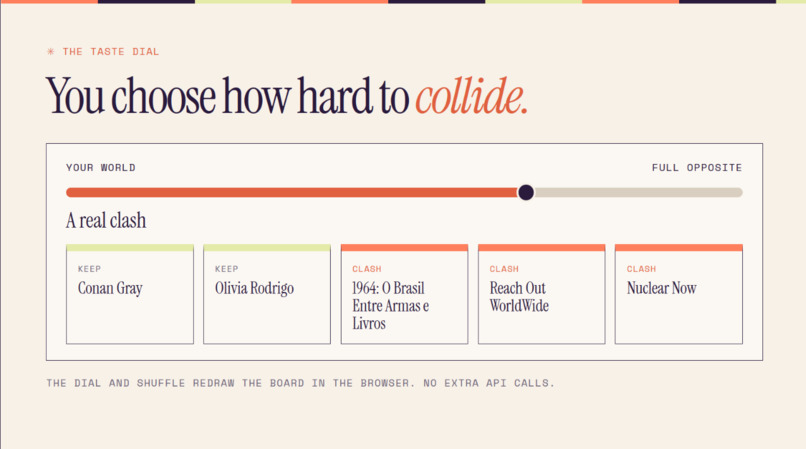
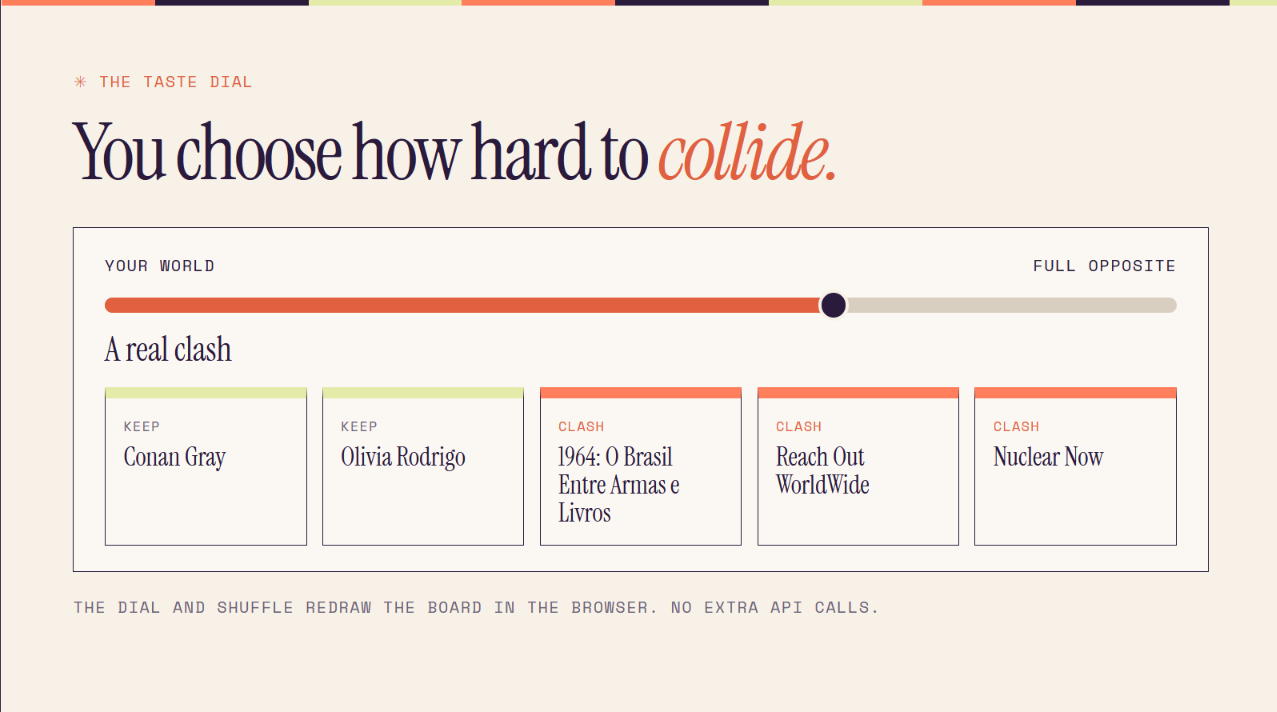
The taste dial: choose how hard to collide with your own taste.
-
Try it live: collide-gq14.onrender.com
-
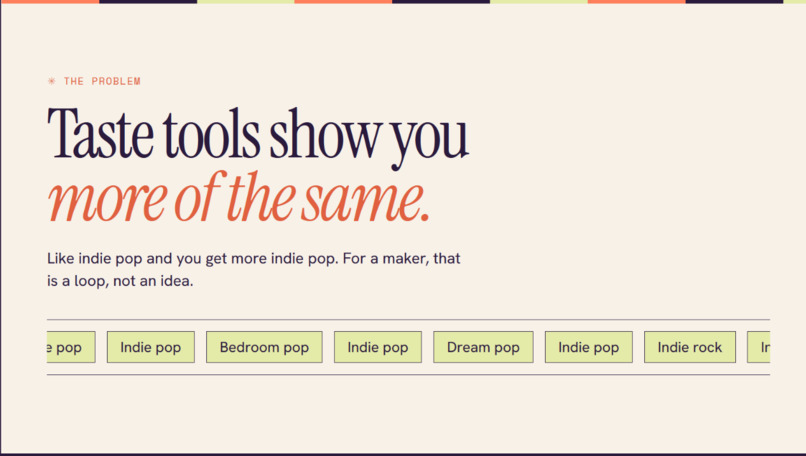
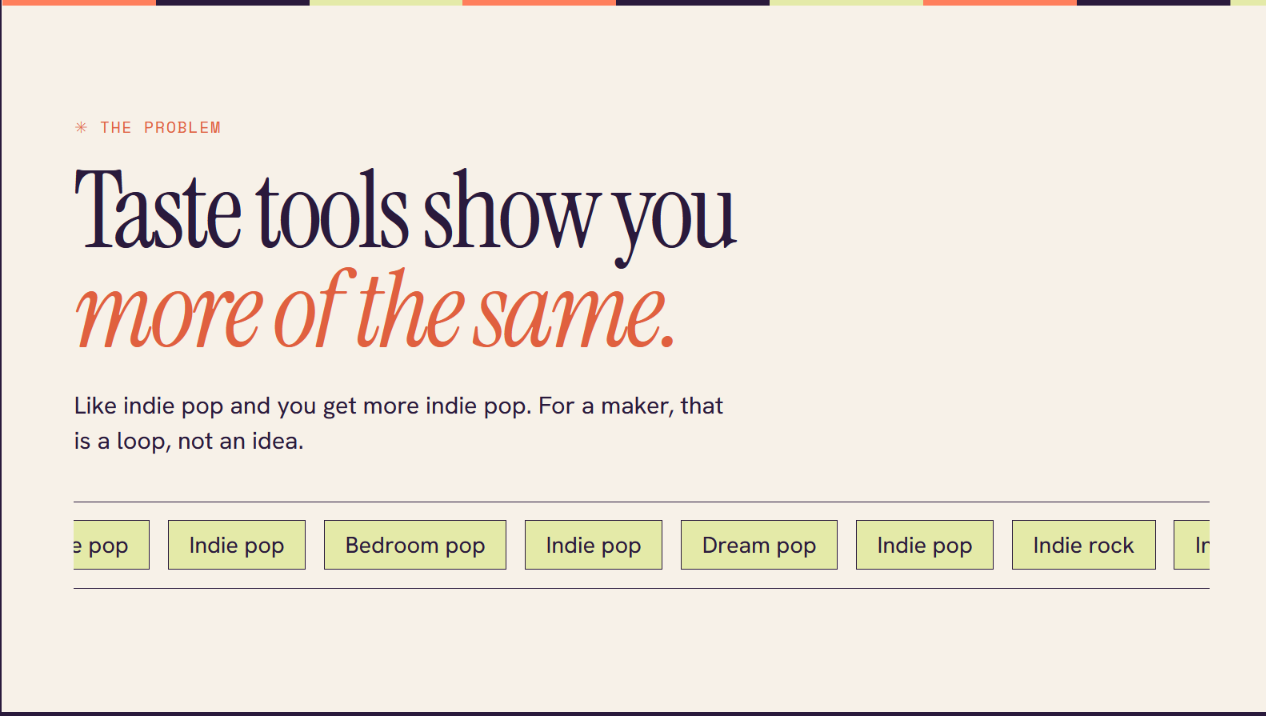
The problem: taste tools show you more of the same.
-
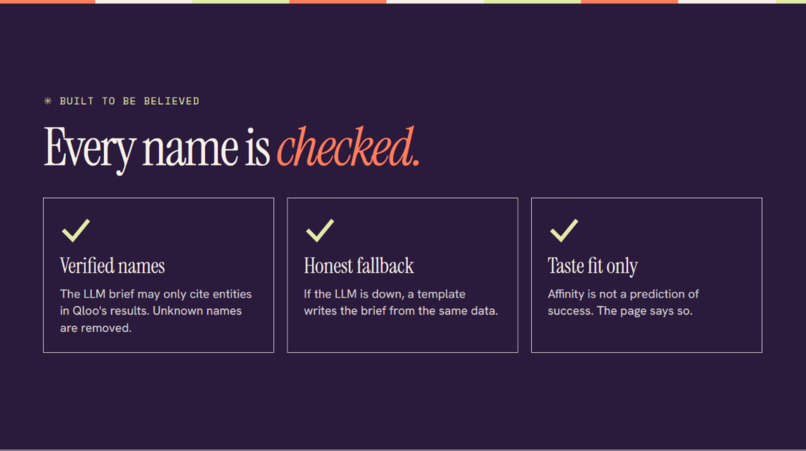
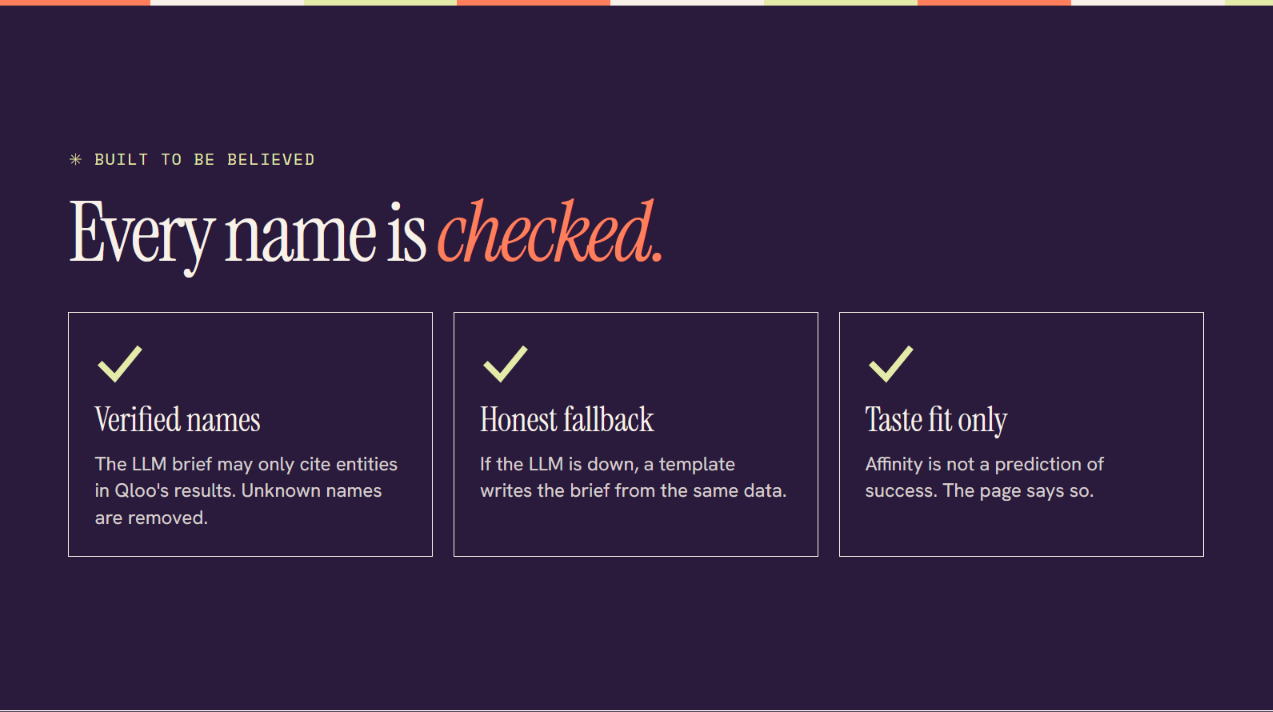
Every name in the brief is checked against Qloo's results.
-
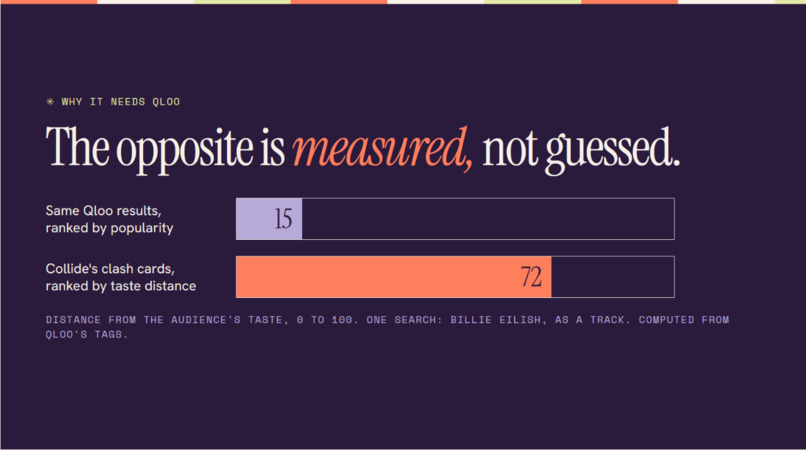
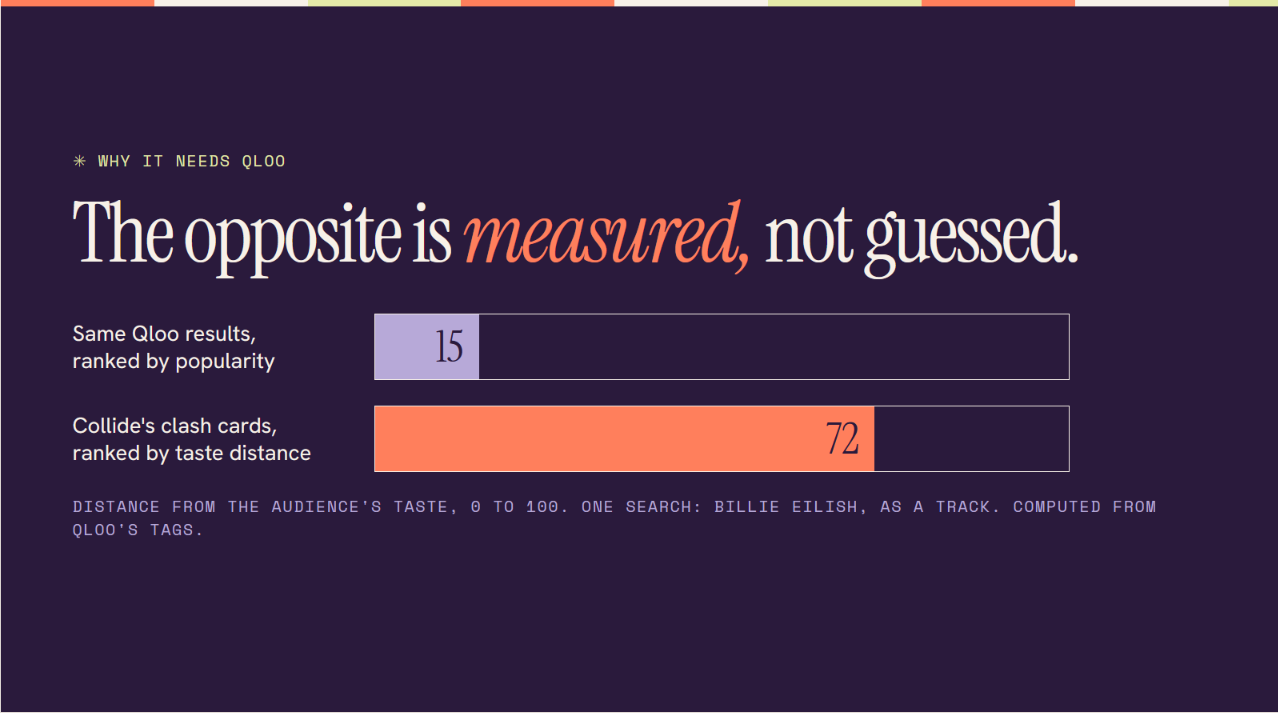
The opposite is measured from Qloo's tags: 72/100 vs 15/100 by popularity.
-
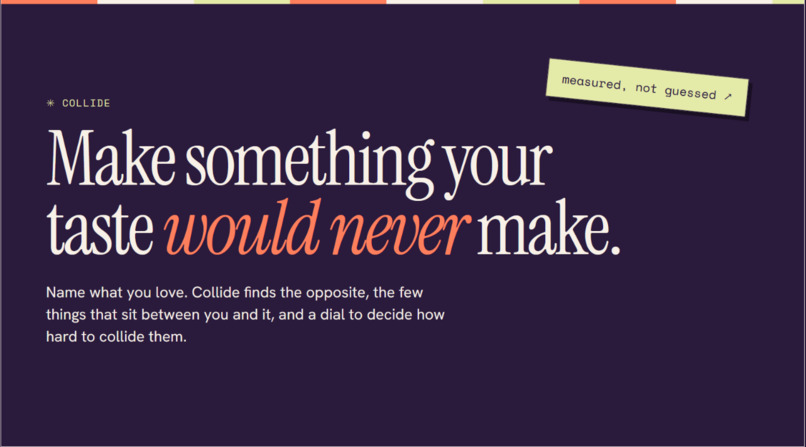
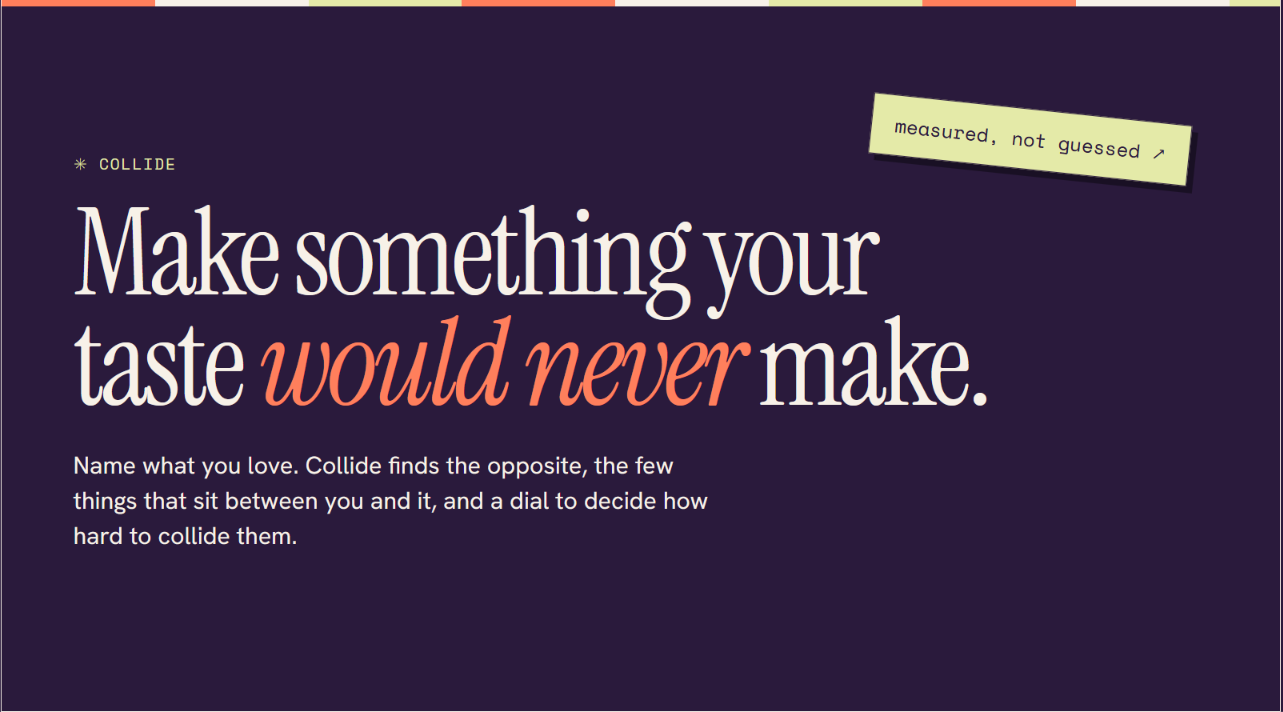
Collide: make something your taste would never make.
-
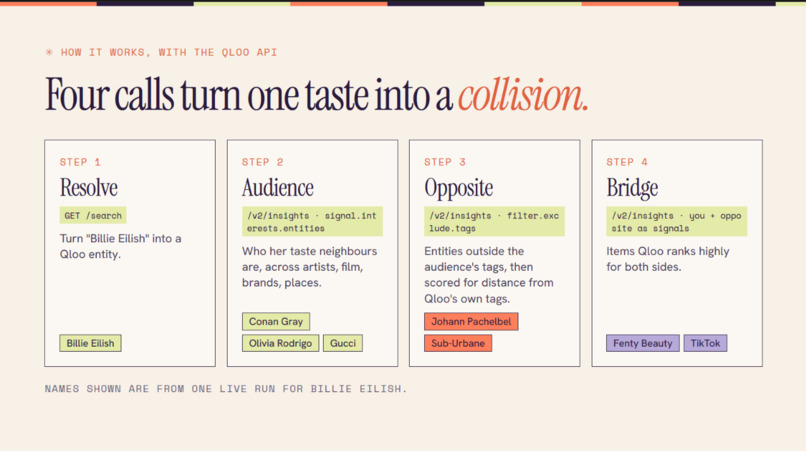
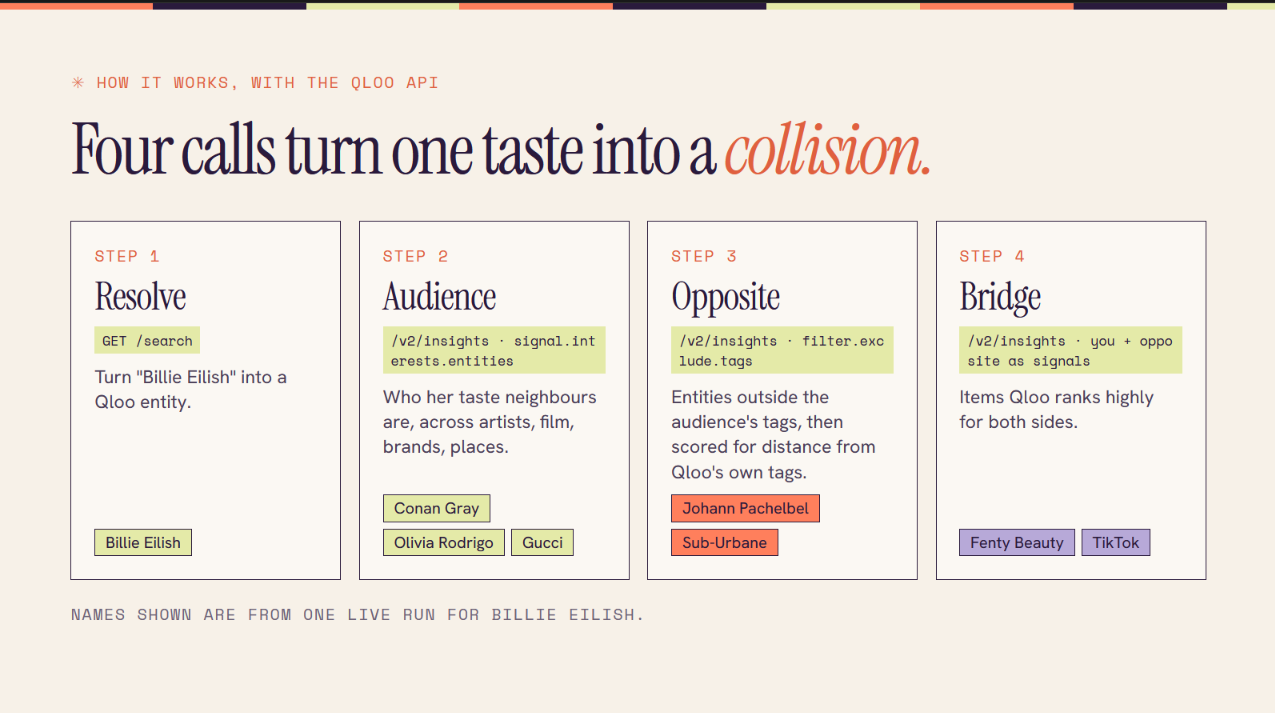
Four Qloo API calls turn one taste into a collision board.
Inspiration
Taste tools show you more of what you already like. For a creator that is a loop, not an idea. Qloo's taste graph can also say what sits far from a taste, so I built Collide to help makers collide their taste with its measurable opposite.
What it does
Enter up to three things you love and what you are making (a track, capsule collection, short film, campaign or tasting menu). Collide builds a collision board of keep, bridge and clash cards. A taste dial slides from "your world" to "full opposite" and redraws the board instantly. It adds four collision rules and a short brief, and exports to Markdown.
What makes it Qloo-powered
/searchresolves what you love to Qloo entities./v2/insightswithsignal.interests.entitiesreturns your taste neighbours across artists, film/TV, brands and places./v2/insightswithfilter.exclude.tags, plus a contrast tag found through/v2/tags, finds entities outside your taste. Collide scores each one's distance using Qloo's own tags, so the clash cards are measured, not guessed.- A third
/v2/insightscall with you plus the opposite as signals finds the bridge items.
An LLM alone cannot name real entities that sit far from, or between, two tastes.
Example run: for Billie Eilish, making a track, the collision was "Intimate × Compassionate". Clash cards included Johann Pachelbel and a Brazilian documentary. Bridges included Fenty Beauty and TikTok. In that search the clash cards sat 72/100 away from her taste, versus 15/100 for the same Qloo results ranked by popularity alone.
How I built it
Python and Flask, with a server-side Qloo client that has caching, a call budget and retries. The front end is a single page. The dial and shuffle run in the browser from one API run, so they cost no extra Qloo calls. An optional LLM writes the brief, but every entity it cites is checked against the Qloo results and unknown names are removed. If the LLM is unavailable, a template writes the brief. Tests run offline.
Challenges
- Qloo rejected
filter.exclude.tagson its own (HTTP 400). I wrote a small diagnostic, found that it needs a real signal alongside it, and rebuilt the opposite step around that. - A free reasoning model leaked its scratchpad into the brief, so I added a check that rejects unfinished drafts and falls back to the template.
- Obscure entities looked "far" only because they had few tags, so opposites now need a popularity floor and a minimum tag count.
What I learned
Run the live API early. Mock data hid every one of these problems.
What's next
Saving boards, collaborating on a board with another creator, and starting from a creator's own catalog.
Honest limits
Affinity is taste fit, not a prediction of success. The collision rules are creative rules of thumb filled in with your tags. Distance depends on Qloo's tag coverage.
Built With
- css
- flask
- gunicorn
- html
- javascript
- openrouter
- python
- qloo-api
- render
