-
-
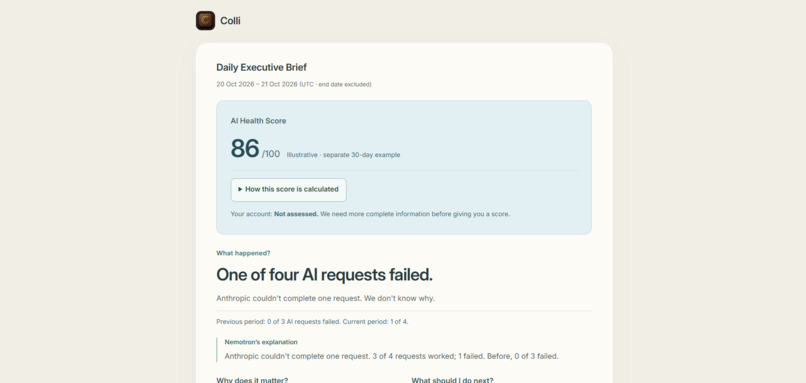
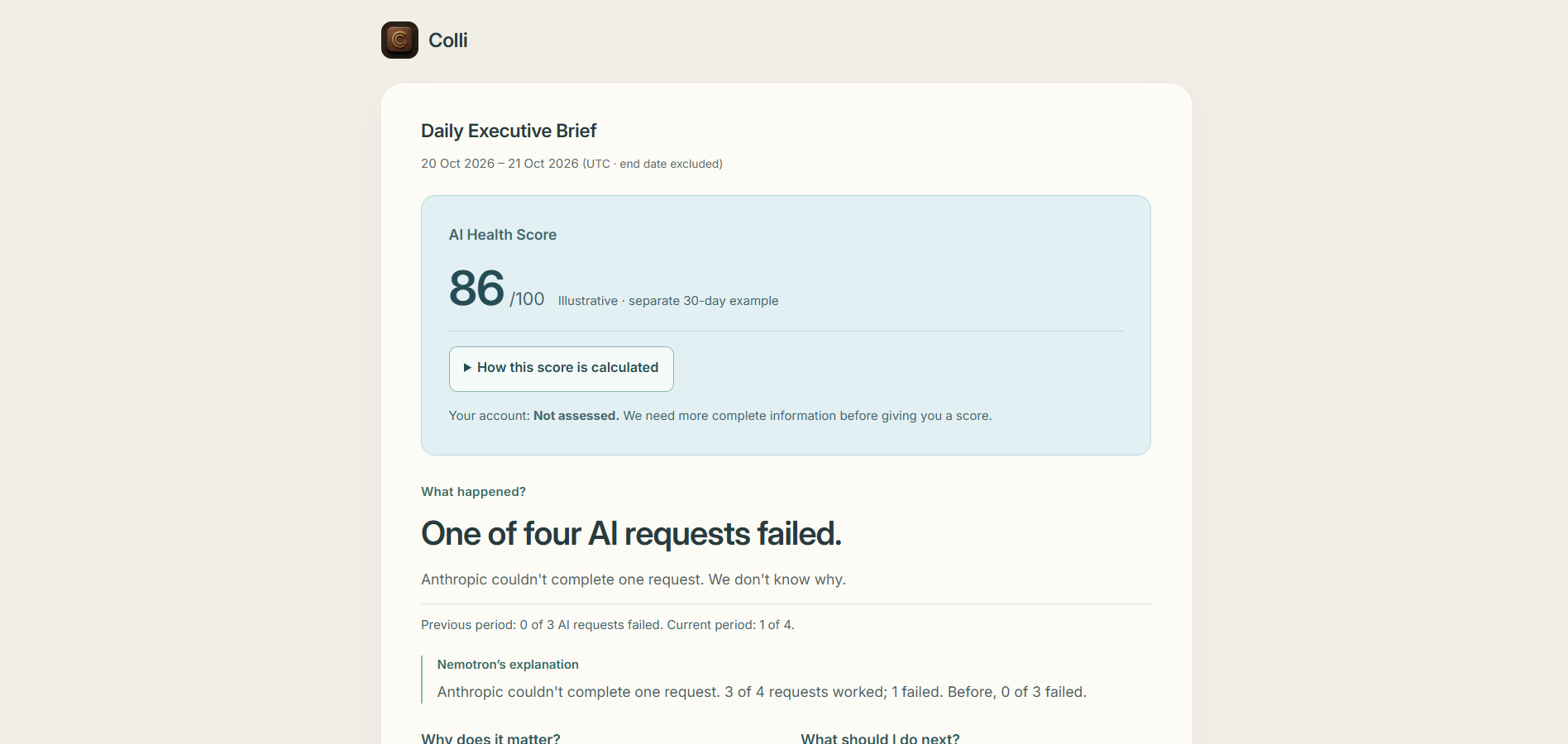
Colli's centerpiece: a 30-second executive overview with an illustrative AI Health Score of 86/100.
-
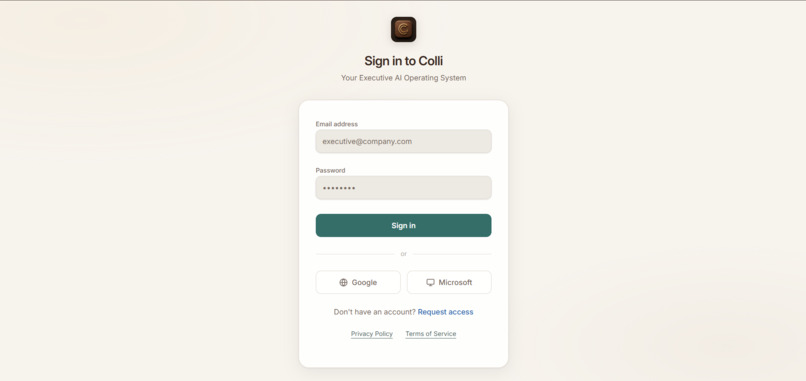
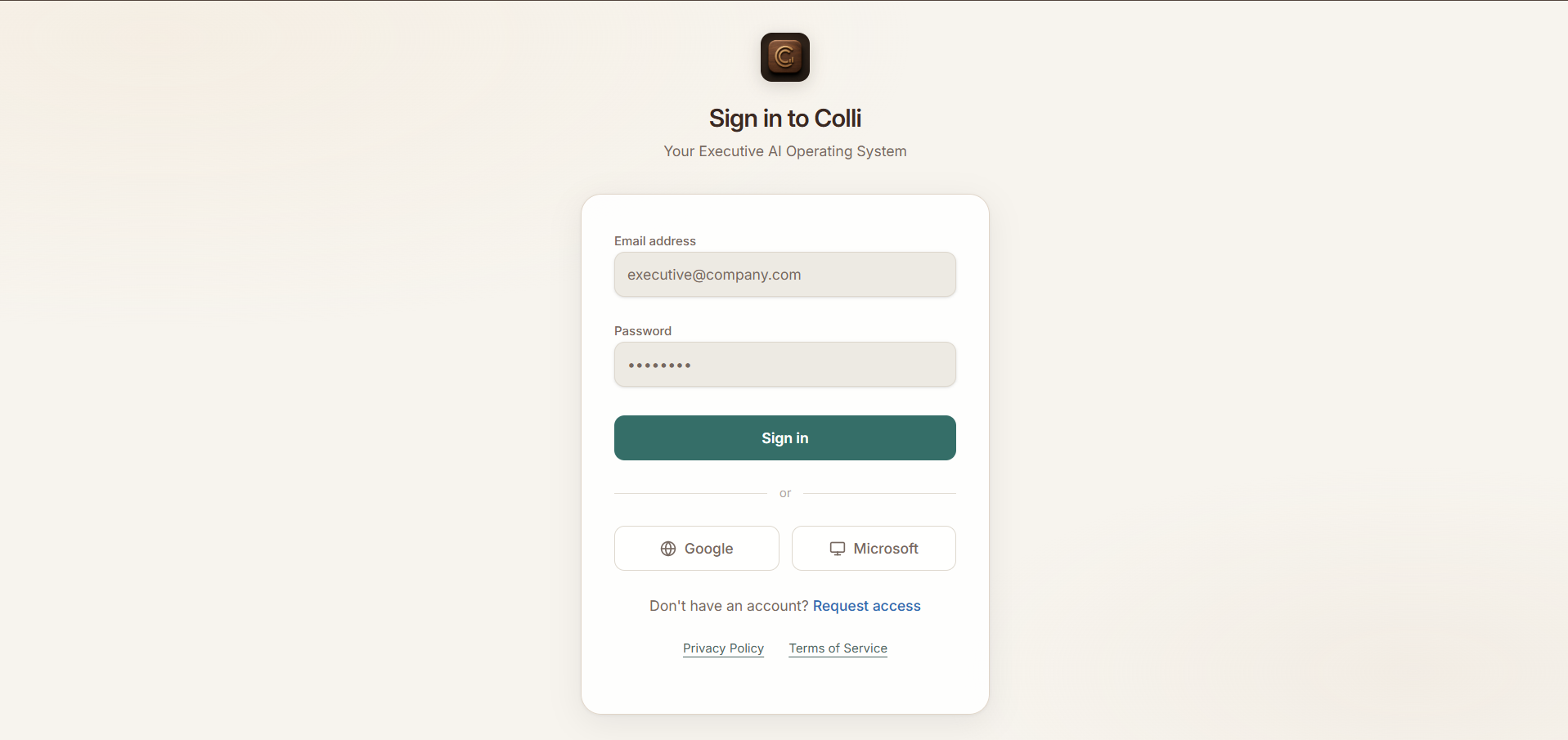
Start with a simple account setup, then select the AI providers you want to explore.
-
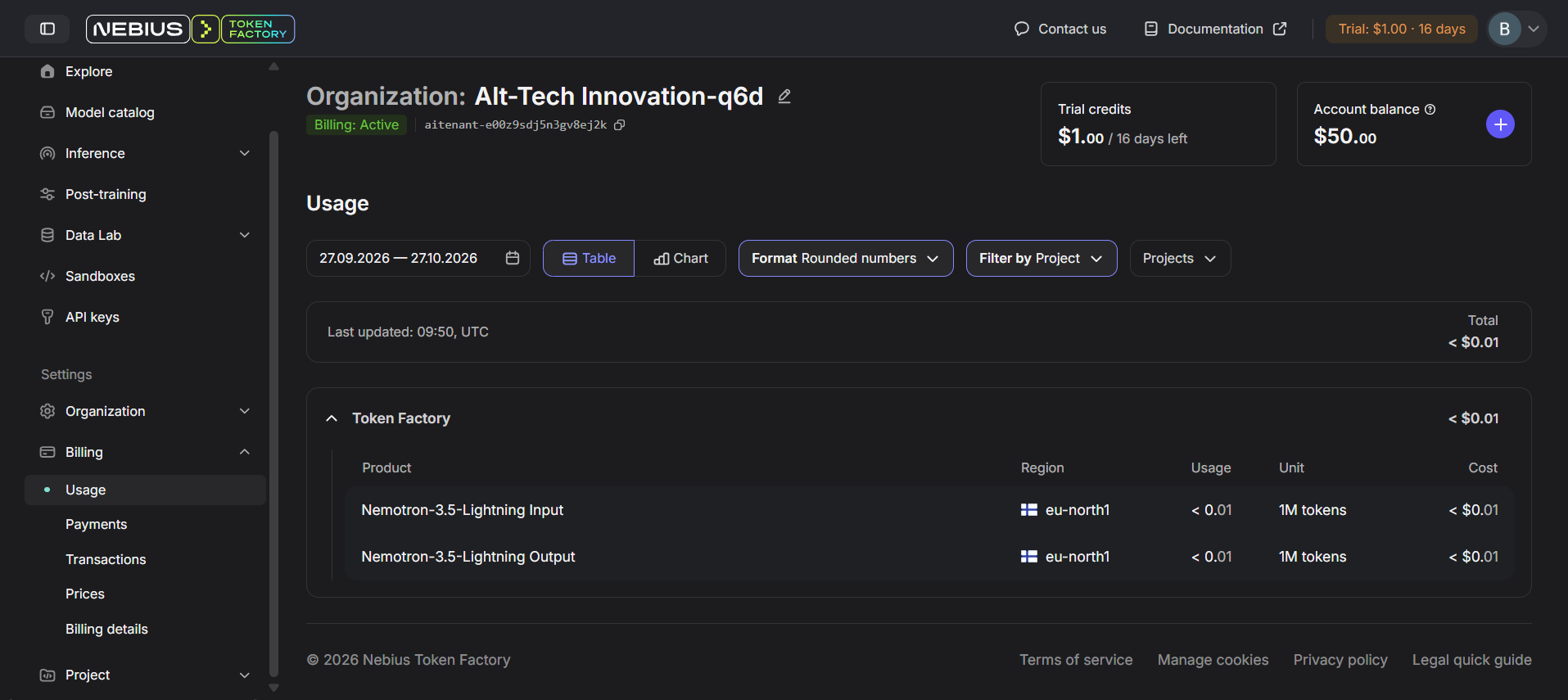
Verified NVIDIA Nemotron 3.5 Lightning input and output token consumption through Nebius Token Factory.
-
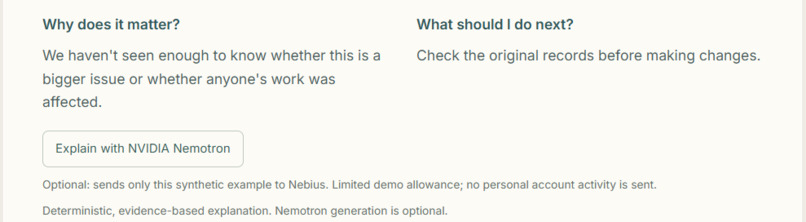
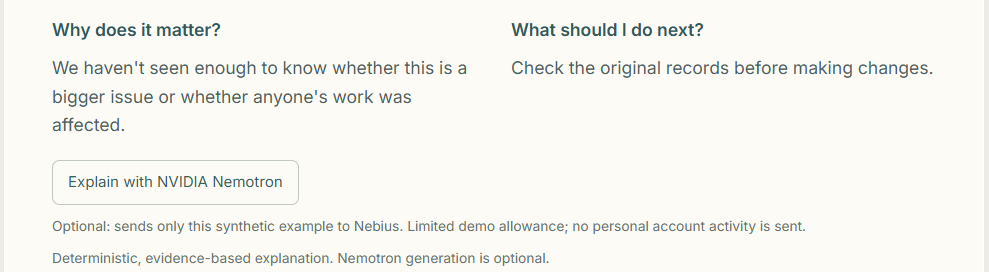
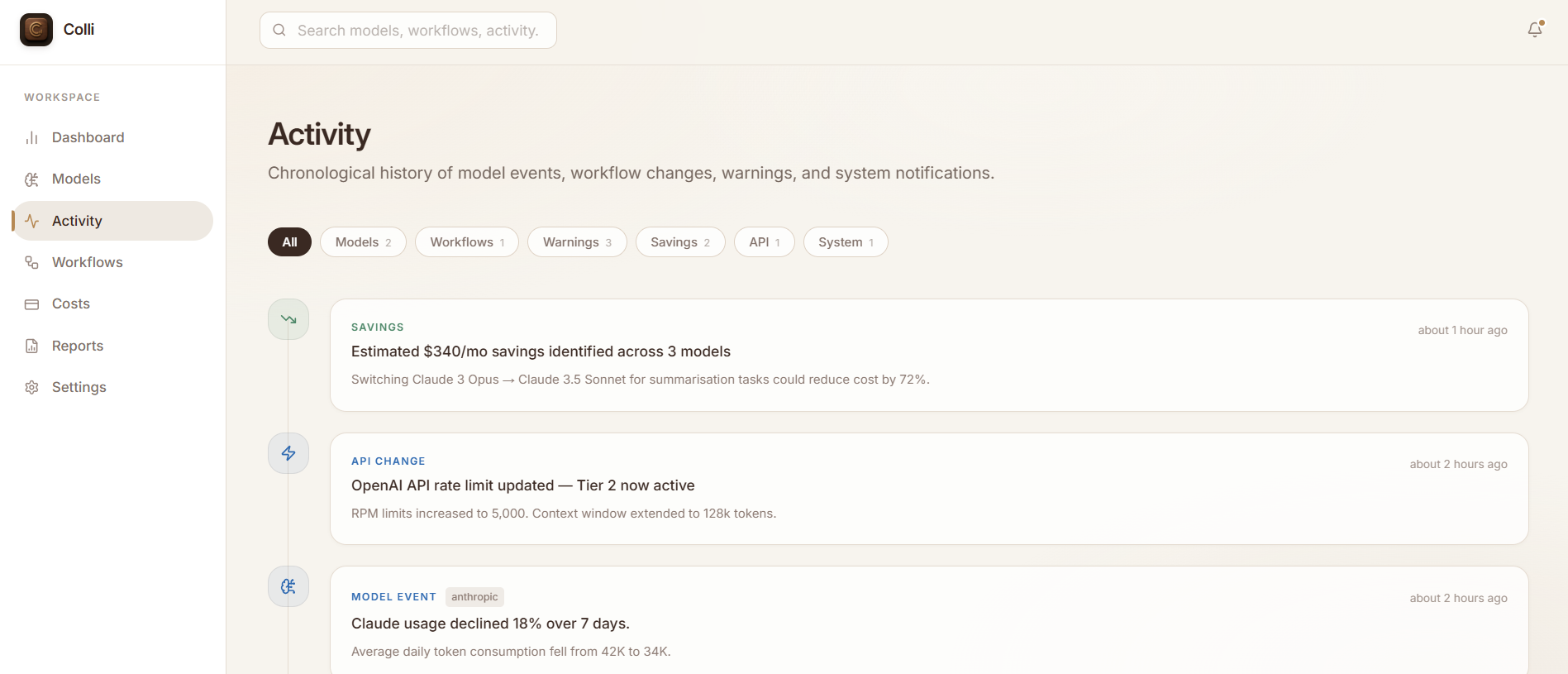
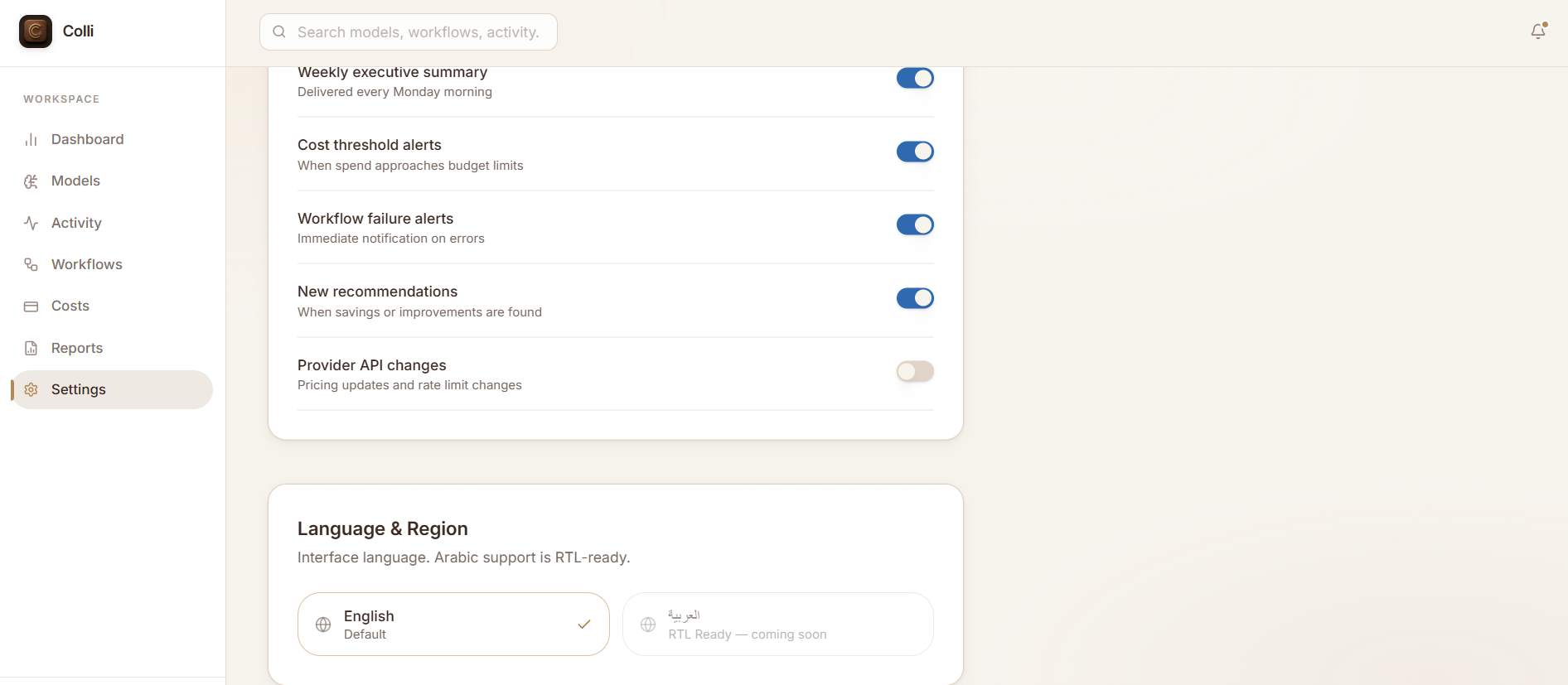
Understand what happened, why it matters, and what to consider next—without complicated technical dashboards.
-
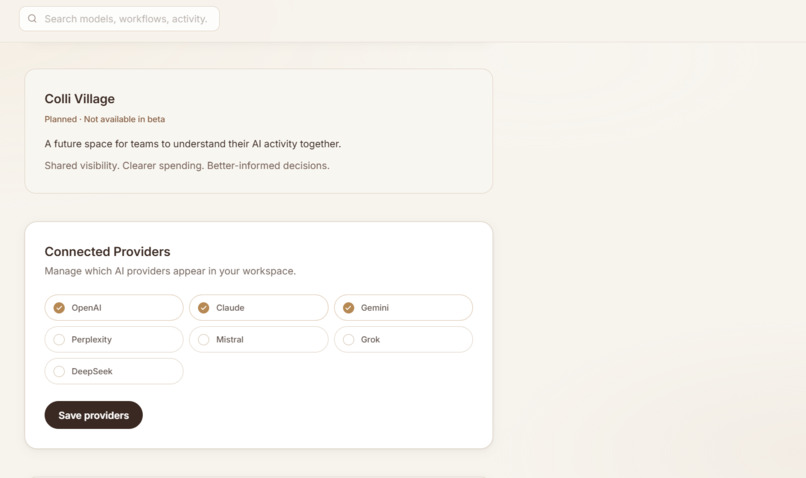
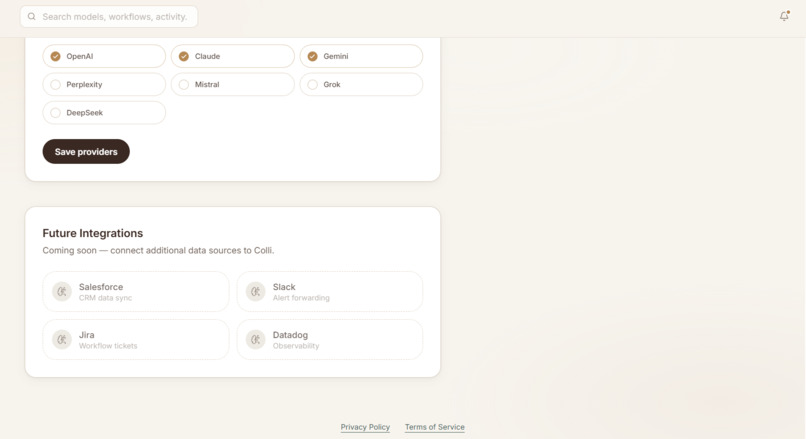
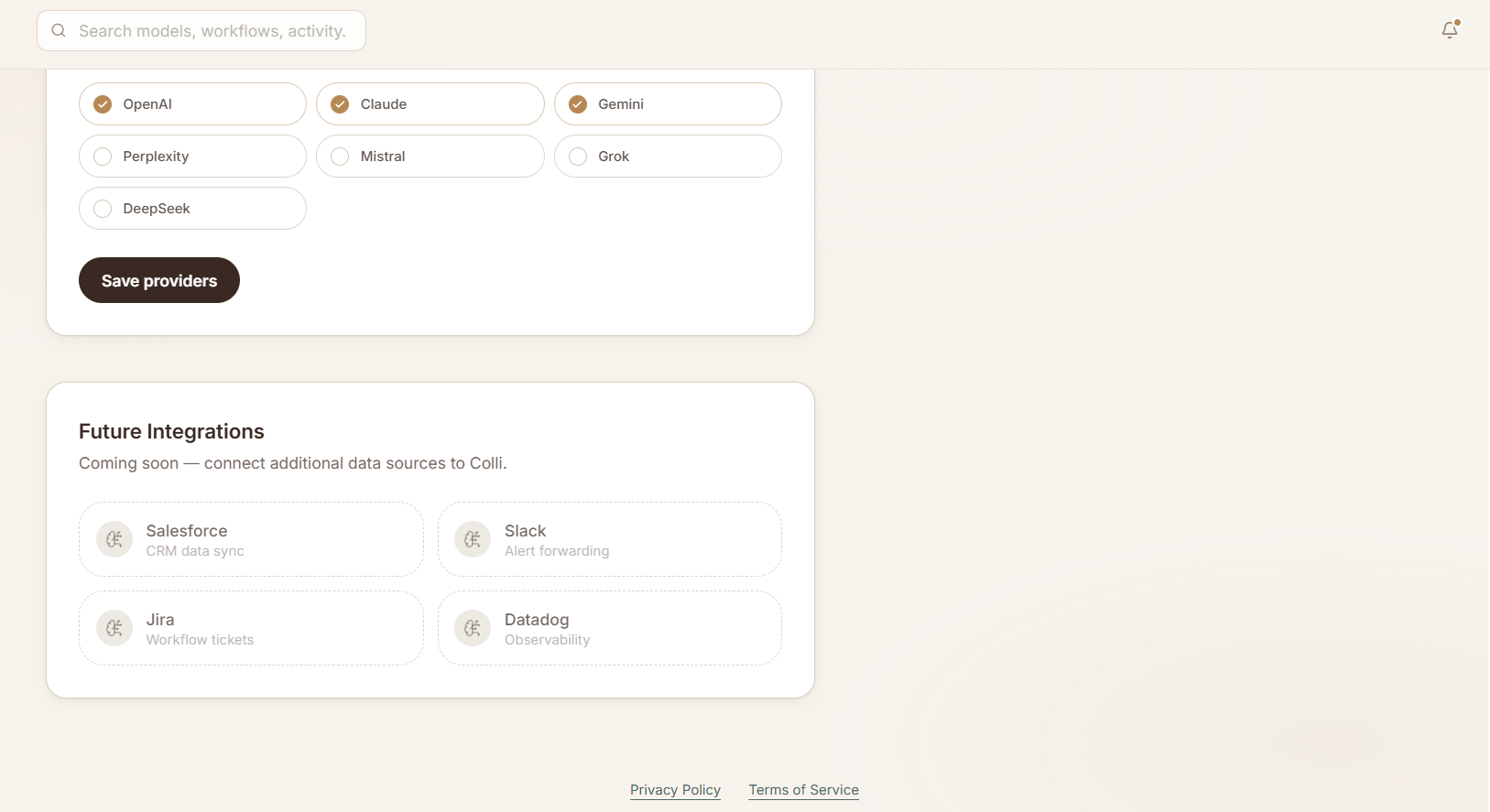
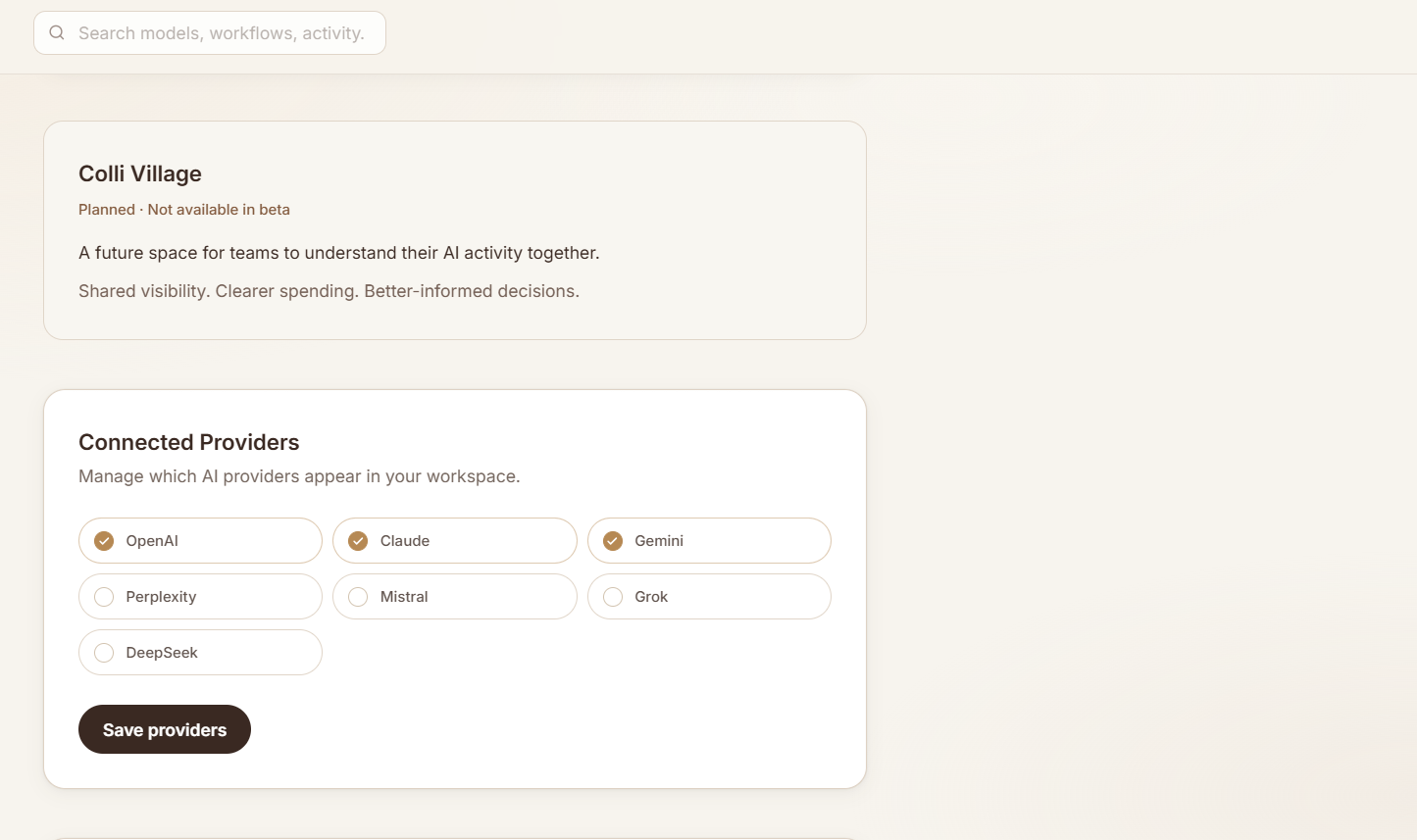
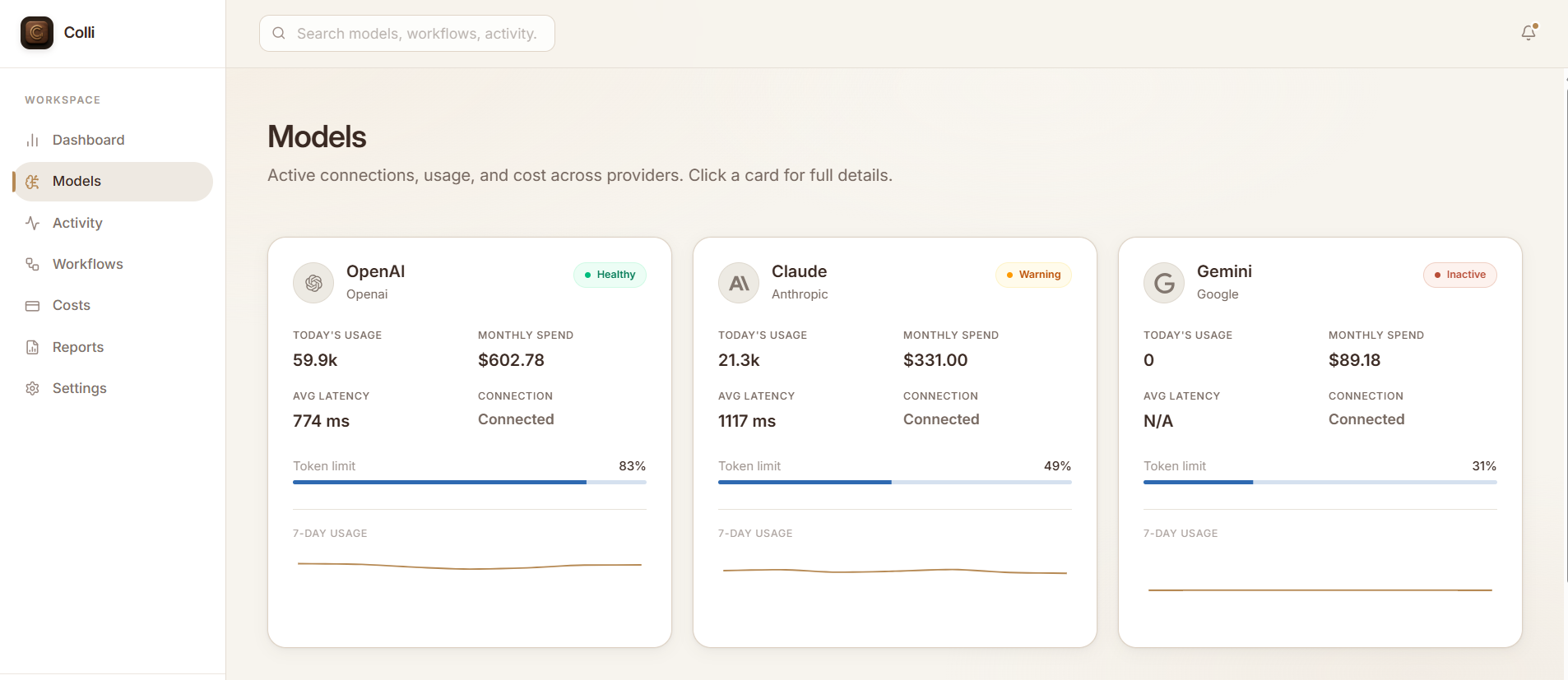
Manage your selected AI providers and explore their place within your AI ecosystem.
-
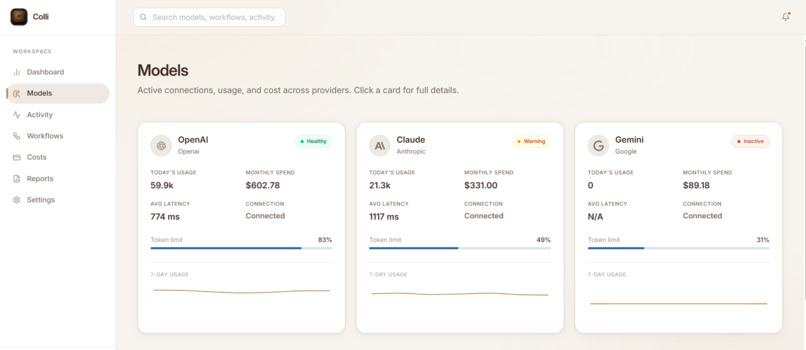
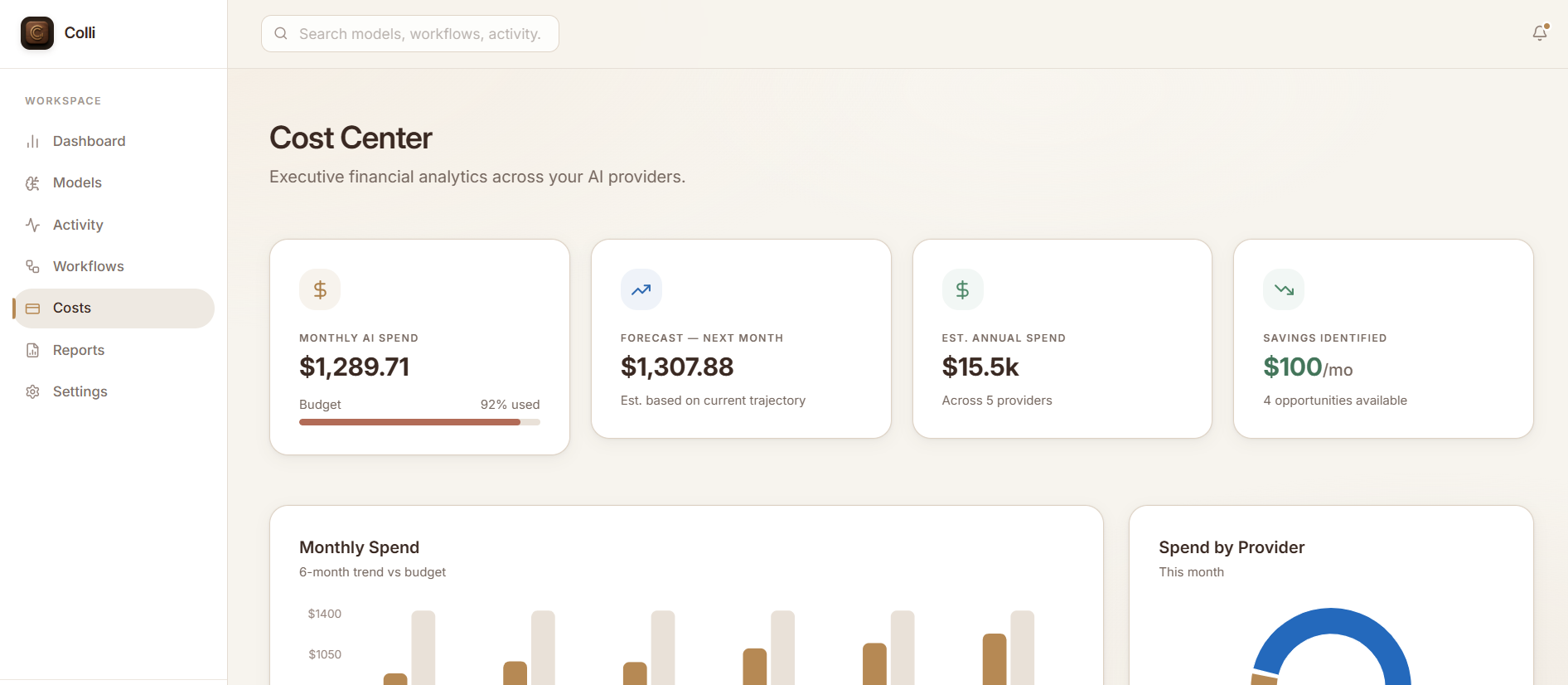
Understand what happened, why it matters, and what to consider next—without complicated technical dashboards.
-
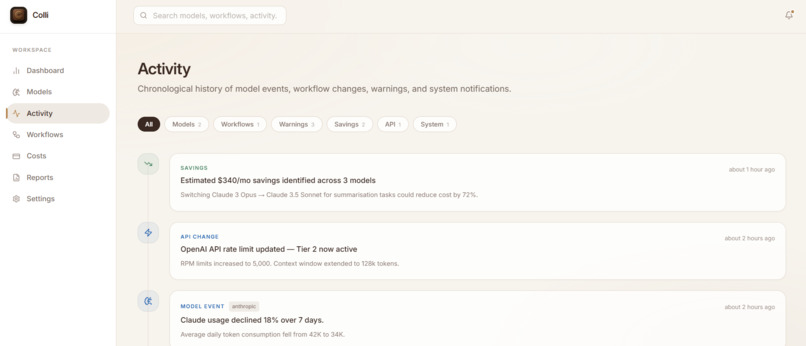
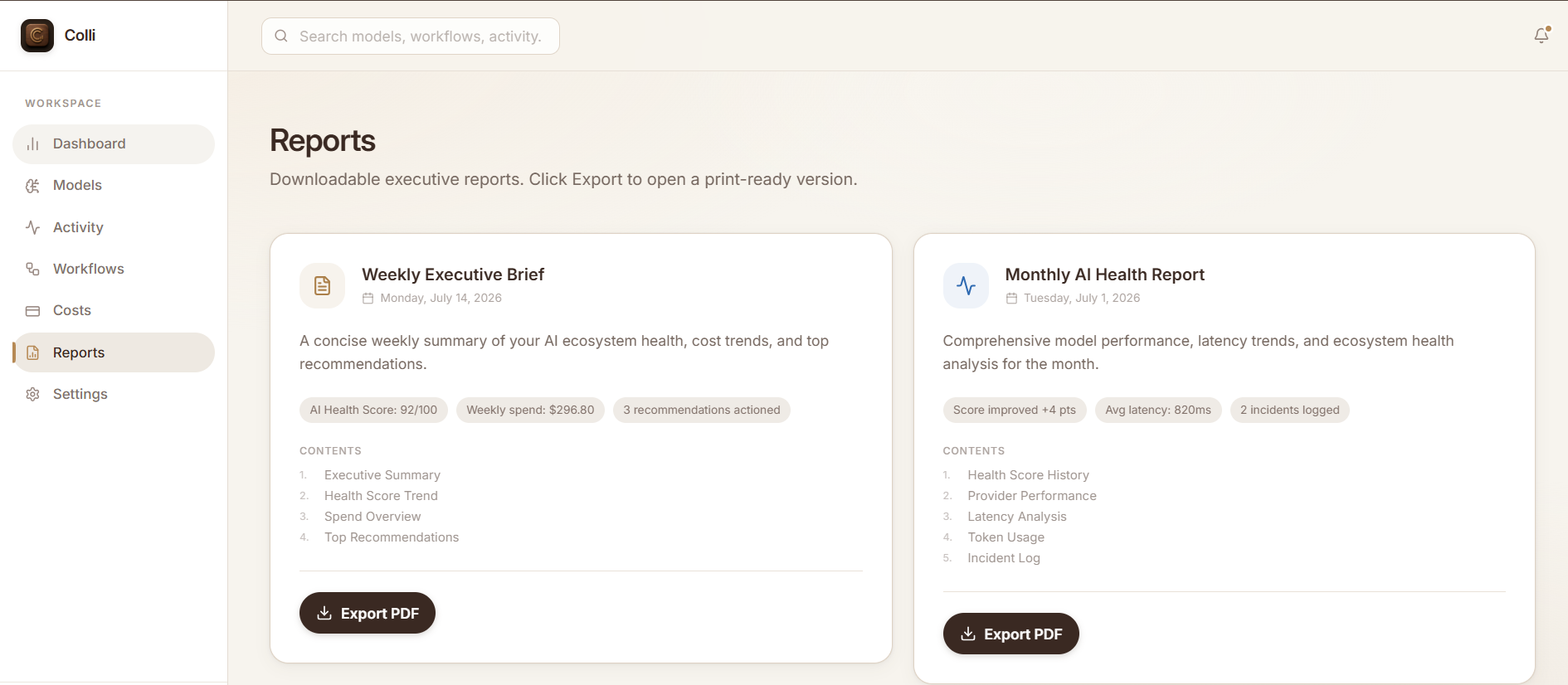
Understand what happened, why it matters, and what to consider next—without complicated technical dashboards.
-
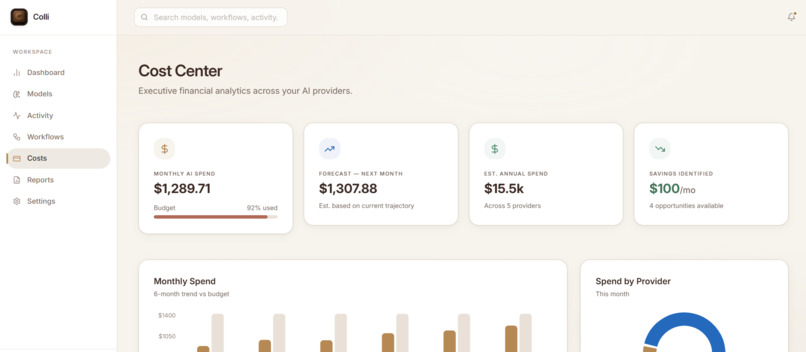
Understand what happened, why it matters, and what to consider next—without complicated technical dashboards.
-
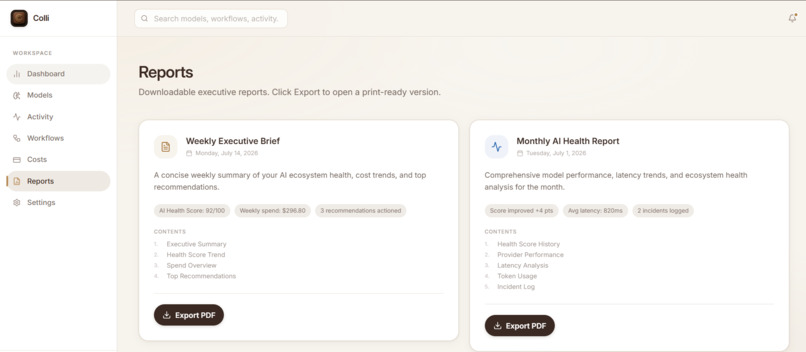
Understand what happened, why it matters, and what to consider next—without complicated technical dashboards.
-
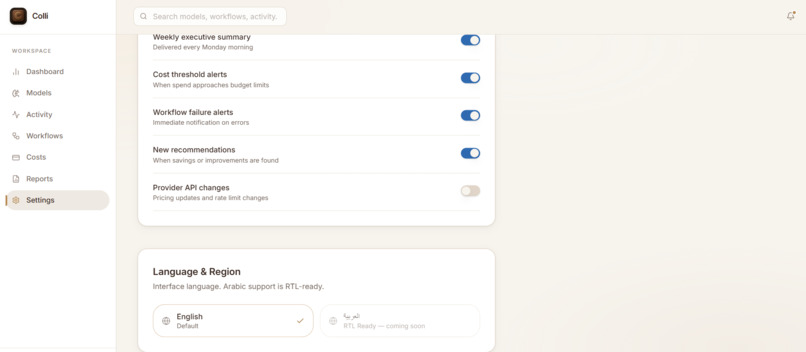
Understand what happened, why it matters, and what to consider next—without complicated technical dashboards.
-
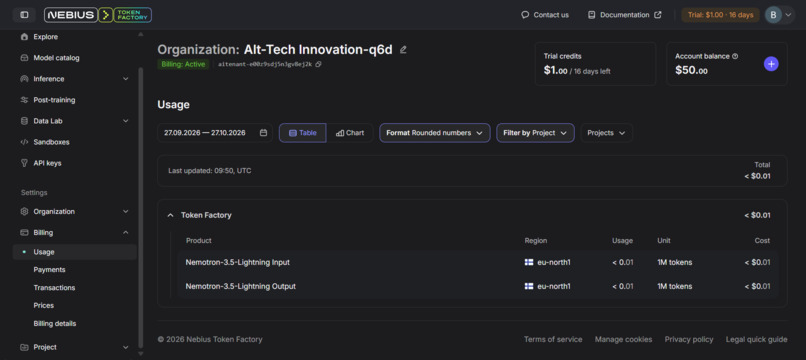
Verified NVIDIA Nemotron 3.5 Lightning input and output token consumption through Nebius Token Factory.
Inspiration
"Colli doesn't tell you which AI is best. Colli tells you whether the AI ecosystem you've built is working for you."
AI tools are becoming part of everyday work, but managing them is increasingly complicated.
Someone might use ChatGPT, Claude, Gemini, or Grok across different tasks, yet have no simple way to understand whether their collection of AI tools is actually serving them well.
Most dashboards present more numbers, graphs, and technical terminology. I wanted something different: an executive overview that anyone could understand in approximately 30 seconds.
That idea became Colli — Your AI ecosystem. Summarized.
Our guiding principle is simple:
Never make the user have a conversation to understand their data.
What it does
Colli is an AI ecosystem intelligence platform built around a Daily Executive Brief.
Instead of expecting users to interpret technical information, Colli answers three questions:
- What happened?
- Why does it matter?
- What should I do next?
Users can select their AI providers and explore a demonstration using matching operational scenarios.
Colli processes structured records into factual findings, including request failures and comparisons between reporting periods.
Its optional NVIDIA Nemotron integration helps interpret those findings in everyday language, providing context for decisions rather than simply repeating numbers.
Colli also demonstrates an AI Health Score, an illustrative 86/100 calculated across ecosystem fit, spending efficiency, reliability, and continuity.
The current beta uses synthetic operational evidence, not imported activity from personal AI accounts. The Health Score illustrates a separate, reproducible scoring methodology.
How we built it
Colli uses React, TypeScript, and Vite for the frontend, with an Express backend and PostgreSQL database hosted on Neon. The application is deployed on Render.
For AI inference, Colli uses NVIDIA Nemotron 3.5 Lightning through Nebius Token Factory.
The process separates factual computation from AI interpretation:
- Colli validates and processes operational records.
- Its deterministic engine identifies factual changes.
- When requested, the backend sends bounded findings to Nemotron through Nebius Token Factory.
- Nemotron provides an evidence-constrained interpretation.
- Colli validates the response and presents its explanation separately from the original facts.
Successful explanations are cached to avoid unnecessary inference requests. PostgreSQL-backed quotas and fallback handling provide additional safeguards.
We verified genuine Nemotron inference, including a successful HTTP 200 response with 439 input tokens, 139 output tokens, and a validated completion. Nebius's billing system also recorded model input and output usage.
Challenges we faced
One of our biggest challenges was making AI-generated explanations genuinely helpful.
Early responses were technically reasonable but vague. Statements such as "Unfinished AI attempts deserve a closer look" didn't explain enough to an ordinary user.
We refined the experience so the underlying facts remain visible while Nemotron contributes additional context. Colli also avoids inventing reasons for failures when the source records do not provide them.
Another challenge was maintaining predictable inference costs and handling incomplete model responses. This led to bounded generation, validation, caching, account limits, and deterministic fallbacks.
What we accomplished during the hackathon
Colli began as an earlier UI/API prototype before the hackathon submission period.
During the competition, we substantially developed its underlying functionality, including authenticated application flows, PostgreSQL-backed sessions and safeguards, deterministic operational analysis, the Daily Executive Brief, provider-matched demonstration scenarios, the Health Score proof of concept, and the Nebius/NVIDIA inference integration.
We also deployed a working hosted beta, verified actual Nemotron inference, completed focused regression testing, and published a reviewed open-source repository with independent Git history.
What we learned
AI is not always most useful when it generates more content.
Sometimes its value comes from helping someone understand the evidence already available and make a better decision.
Building Colli reinforced the importance of separating measured facts from AI interpretation, communicating uncertainty, and making complicated systems approachable.
What's next
Our long-term goal is to connect real AI-provider usage data so Colli can assess spending, reliability, utilization, and workflow health across an individual's or team's AI ecosystem.
We also envision expanding the Daily Executive Brief into a practical operating overview for small teams and organizations.
The hackathon beta demonstrates the foundation: a working application that turns structured AI operational evidence into understandable information, supported by NVIDIA Nemotron through Nebius.
Colli's goal isn't to give users another dashboard to study. It's to help them understand their AI ecosystem and get on with their day.
Built With
- drizzle
- factorynvidia
- nebius
- nemotron
- neon
- node.js
- pnpm
- postgresql
- render
- token
- typescript
- vite