

Inspiration
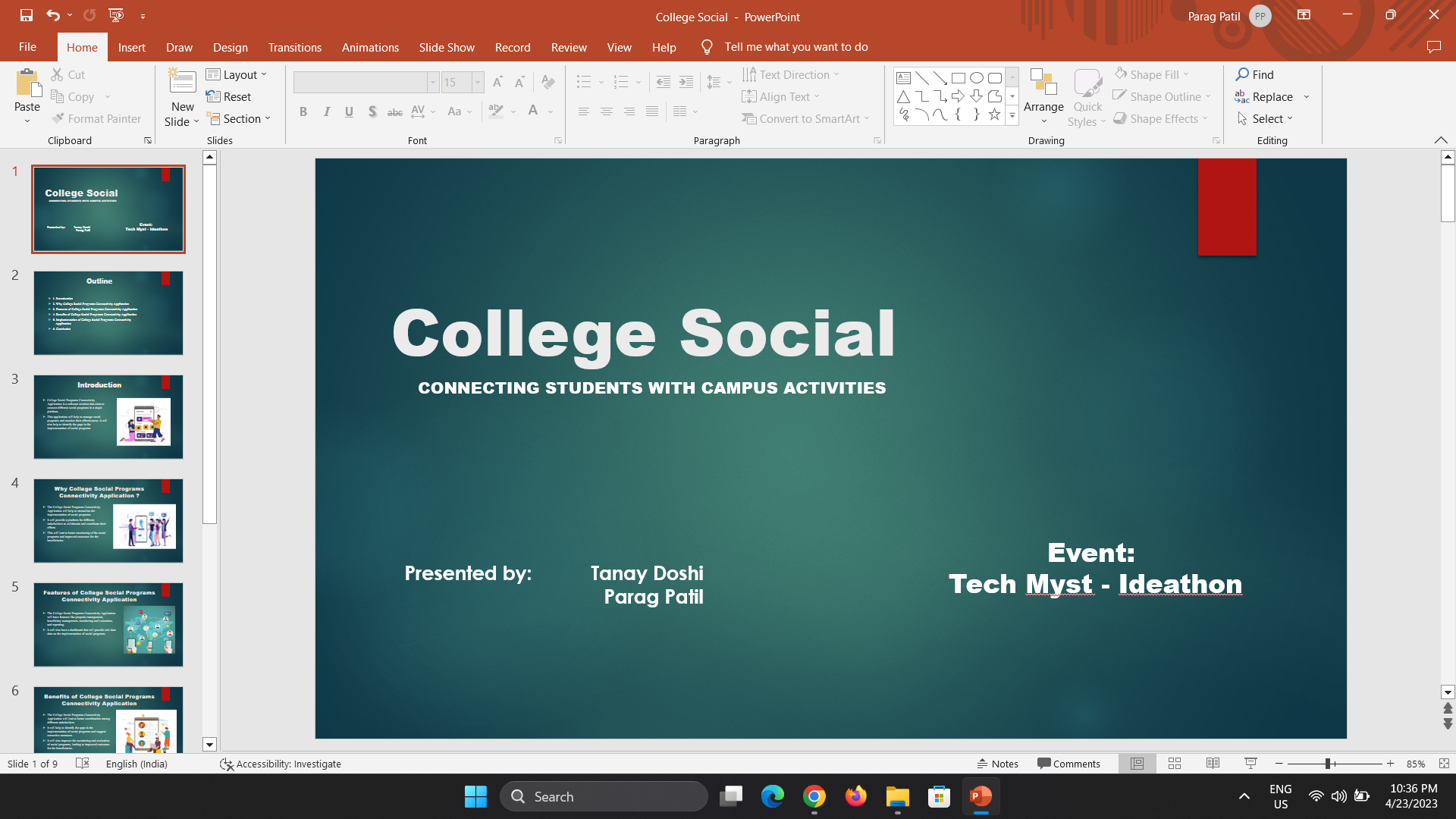
A college social application can be a great tool for students to connect with each other on campus. It could include features such as a campus map, a directory of student organizations, a calendar of campus events, a forum for discussions, and a platform for sharing photos and updates. With a college social app, students can easily stay connected with their peers, get involved in campus life, and make the most of their college experience.
What it does
A college social application is a digital platform designed to help students connect and engage with each other on campus. It can include various features such as a campus map, a directory of student organizations, a calendar of events, forums, and other tools for sharing information and staying connected. The aim of a college social app is to enhance the student experience by facilitating communication and collaboration among peers.
How we built it
Building a college social application typically involves several steps.
- First, a team of developers and designers must work together to create a user-friendly interface and design the app's features and functionality.
- Next, the app needs to be developed using coding languages such as Java, Swift, or Kotlin. The app must also be compatible with different mobile platforms such as iOS and Android.
- The app must then be tested for functionality, user experience, and security. This involves extensive quality assurance testing to ensure that the app meets the desired standards.
- Once the app is launched, it will need to be continuously maintained and updated to ensure that it remains relevant and useful for students. This may involve fixing bugs, adding new features, and improving the app's overall performance.
- Overall, building a college social application requires a combination of technical expertise, design skills, and an understanding of the needs of college students.
Challenges we ran into
- Developing a college social application can present several challenges. One of the main challenges is ensuring that the app meets the needs and preferences of a diverse group of users, including students, faculty, and staff.
- Another challenge is ensuring that the app is user-friendly and easy to navigate, with features that are intuitive and easy to use. This may require extensive user testing and feedback to refine the app's design and functionality.
- Ensuring the security of the app and protecting users' data and privacy is also a critical challenge. The app must be built with strong security protocols and undergo rigorous testing to identify and address potential vulnerabilities.
Accomplishments that we're proud of
Firstly, creating an app that meets the needs of students, faculty, and staff and enhances their college experience can be a significant accomplishment. This can include providing easy access to campus resources, facilitating communication and collaboration, and enhancing student engagement with campus life.
Another accomplishment may be achieving a high level of user adoption and engagement. If the app is widely used and embraced by the campus community, it can be a testament to the app's effectiveness and value.
What we learned
Developing a college social application can be a learning experience for the development team. Some of the key lessons that may be learned include:
- The importance of understanding the needs and preferences of the target user group, in this case, college students, faculty, and staff.
- The need to balance functionality with user experience and design. Creating an app that is easy to use, intuitive, and visually appealing is crucial for user adoption and engagement.
- The importance of data security and privacy. Protecting users' data and information is critical, and the app must be built with strong security protocols and undergo rigorous testing to identify and address potential vulnerabilities.
- The value of user testing and feedback. Regularly gathering feedback from users and making improvements based on that feedback can help ensure the app meets the needs of the campus community.
What's next for College Social
- Integrating new features and functionality to better serve the needs of the campus community. This could include additional tools for communication and collaboration, better access to campus resources, and improved personalization options.
- Expanding the app's reach to other colleges and universities. If the app is successful, there may be opportunities to license or expand the app to other campuses or even nationwide.
- Developing partnerships with other organizations or companies to provide additional value to app users. For example, the app could partner with local businesses to offer discounts or incentives to students who use the app.
- Incorporating emerging technologies such as virtual and augmented reality to enhance the user experience.
- Continuous improvement and maintenance to ensure that the app remains relevant and useful over time.


Log in or sign up for Devpost to join the conversation.