Inspiration
We obtained the inspiration to construct UNI-VERSE through being amid college applications ourselves. Many Juniors and Seniors have to go through the grueling college application process where they start by choosing which school to apply to. Applying to college this year, we can gauge which statistics and school characteristics are important for most students.
What it does
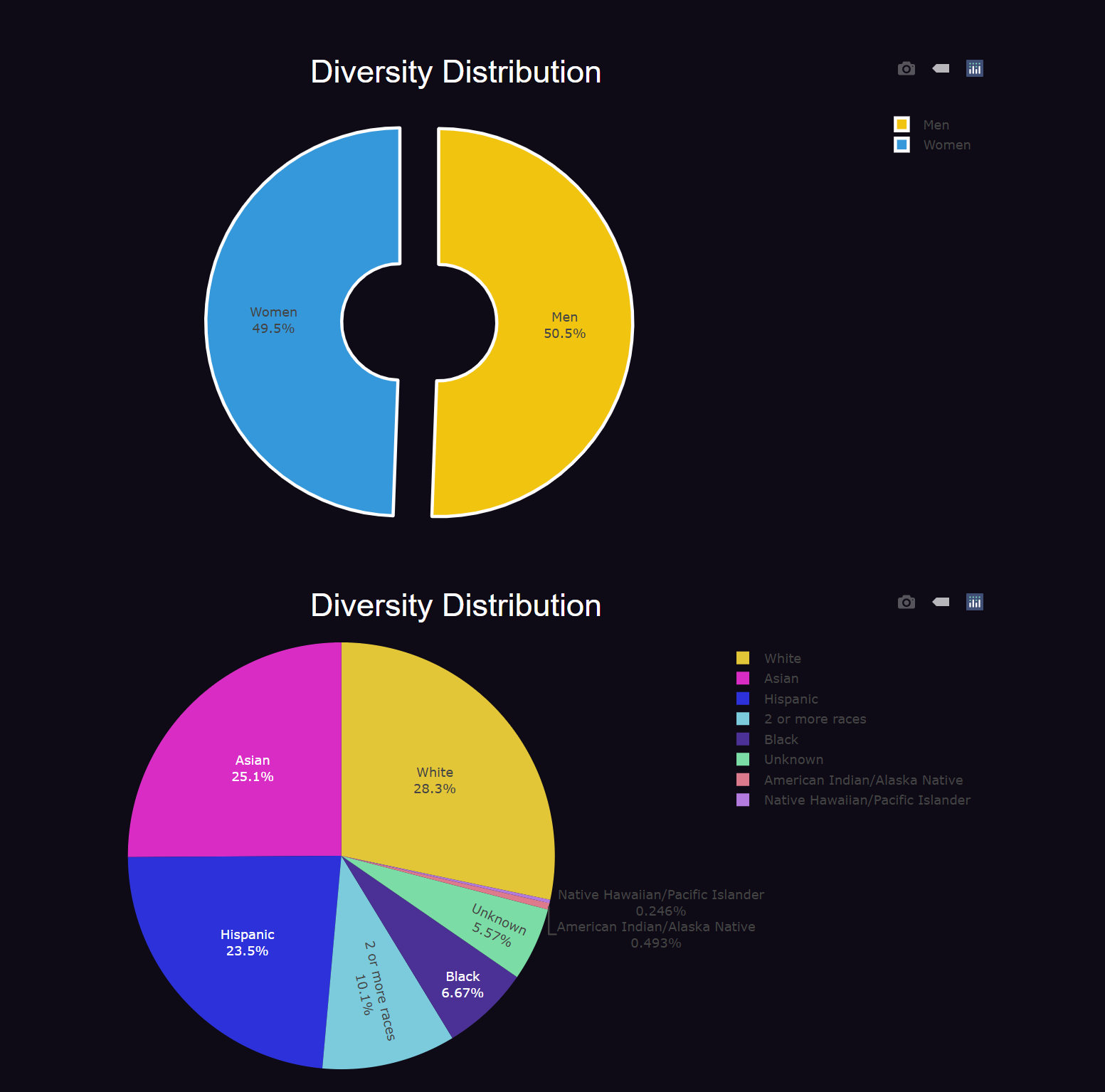
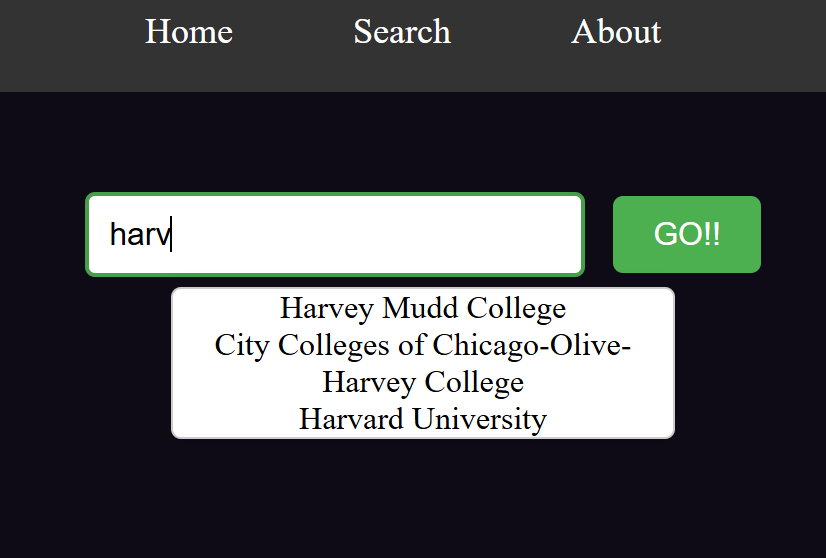
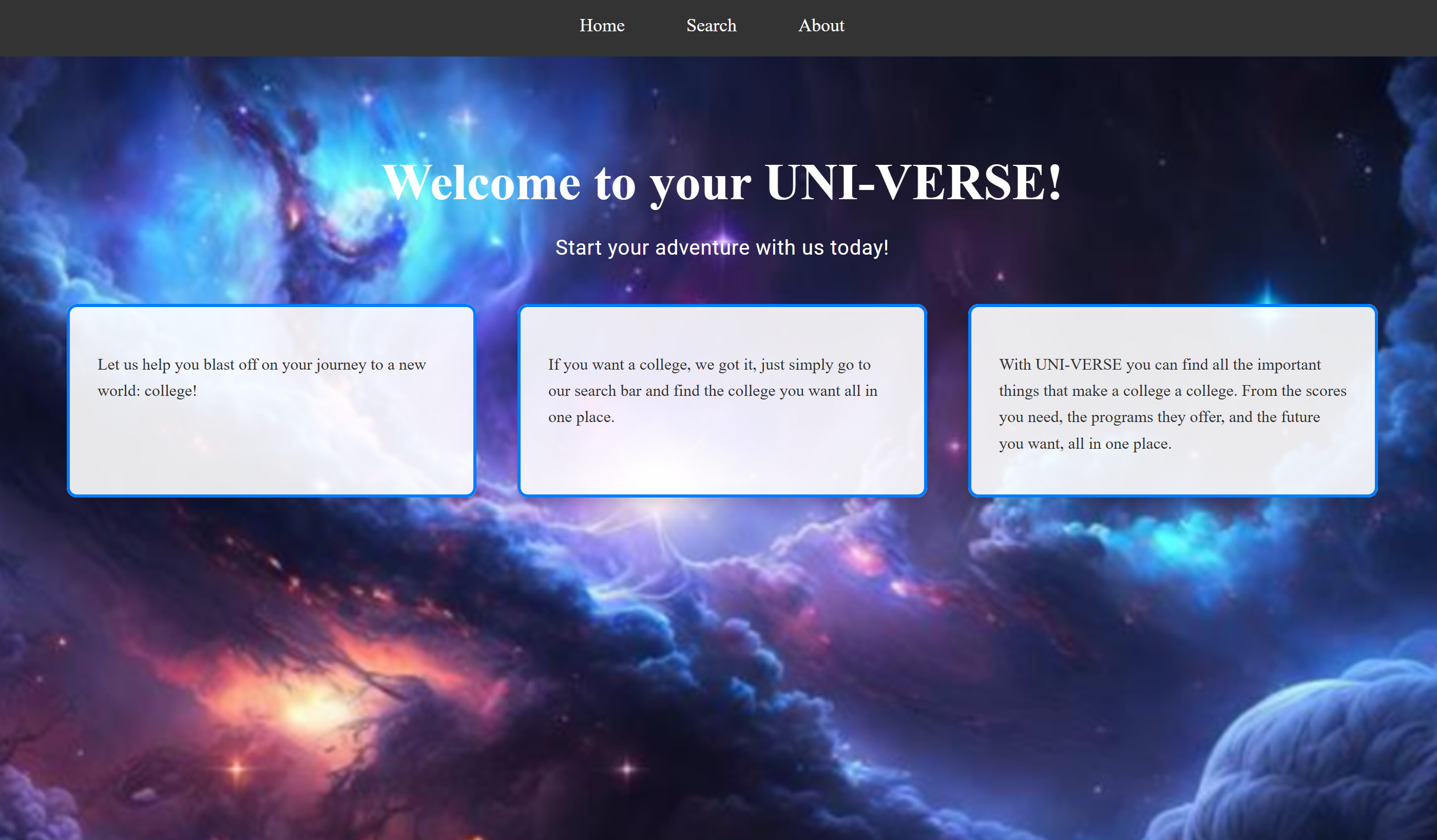
UNI-VERSE starts with the introduction of users to the app, and the functions of the app. It contains all the key information on how the app works and its main features. Next, students can switch around the pages using the navigation tabs to find the feature they want to look at. The app's main functionality is the search function, which allows students to search for information about colleges and discover crucial information related to colleges and applications. Students are then directed to the search tab where students can search for their interested schools by scrolling through the different options and looking at the key data displayed. We show students data about the demographics of the school, the scores needed to get to the school, locations, and other important information about the school.
How we built it
We built the website using a combination of a Django back end with the use of an API, as well as an HTML front end to display the functionality and information. We mainly used Python in Django and were able to use Python to take in the raw data needed and convert it into the key information for users. On the front end side, a combination of HTML, CSS, and javascript made the visual parts of the website as well as the UI. We were able to theme the website with space using CSS and used javascript to create the buttons and navigation tab needed for the website.
Challenges we ran into
We ran into a great amount of challenges during our hackathon. Firstly, we could not choose the best language to do it, as we initially started with react native. However, after realizing that we had a serious gap in knowledge, we decided to switch to using Django combined with an HTML website. However, this created even more issues as when trying to use live share on the VS code, we were unable to get the Django to run except for on one computer, resulting in all of us having to use a different HTML sandbox to run the code to build the website. Furthermore, we had serious issues with the API we were using, as it had unreliable calls and was unable to provide the correct data we needed in time, resulting in us having to manually transcribe the data to an Excel sheet and then add it to the website. We ran into numerous technical issues, as we had not worked with HTML and CSS in a long time, resulting in serious problems with our UI and styling. Lastly, we are still struggling to finish as I write this, due to an issue in combining the two HTML files with the Django Python code, causing serious issues in our attempt to finalize and complete our project.
Accomplishments that we're proud of
We are mainly proud of our ability to start from scratch halfway and be able to rewrite some of our react code into basic HTML code. We were able to also utilize an API and be able to extract some data from it and transcribe a large amount of that data into our code manually, without having to directly call the API. Similarly, we are proud of our ability to manage such a large dataset and be able to have it displayed in our app in a readable and functional way. Furthermore, we are proud of the fact that for so many of us, it was our first hackathon, and that despite all of our technical difficulties we were able to come together to create our website, and that despite the many hopeless situations and challenges we went the distance and were able to finish our work and create a website that accomplishes its purpose, no matter how simple it looks or works.
What we learned
We learned a great amount of information about how to useDjangog, api’s and html. We were able to learn how to create different plots, display them efficiently, and dynamic dropdowns that filter based on information available. We learned how to manage large data of the schools and their characteristics.
What's next for UNI-VERSE
After submission to BEVHACKS, UNI-VERSE will have more optional but useful improvements in visuals and personalization. Given the time constraint the visuals can be made more visually appealing through transitions, better fonts, etc. We could use UI frameworks and color palettes in the future for a more modern feel. After making the app look more visually appealing, we could add a feature for students to make their own accounts and input their interests allowing for schools to cater to them more, and vice-versa. After these improvements are made, we can test with students our age to gather feedback on its useability and design.


Log in or sign up for Devpost to join the conversation.