-
-
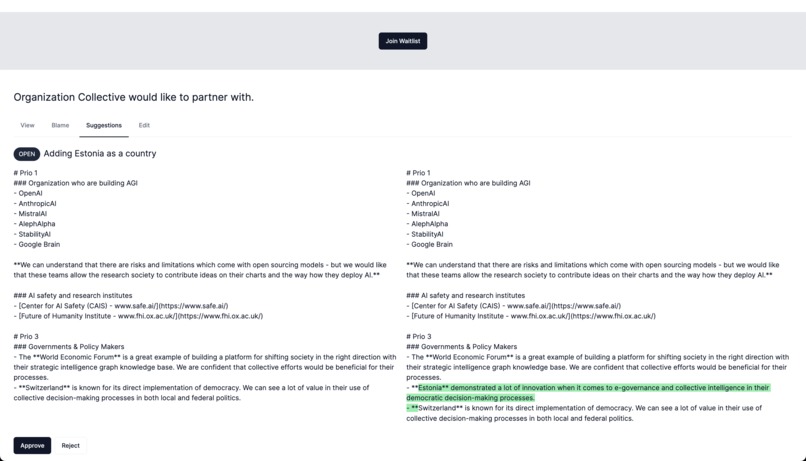
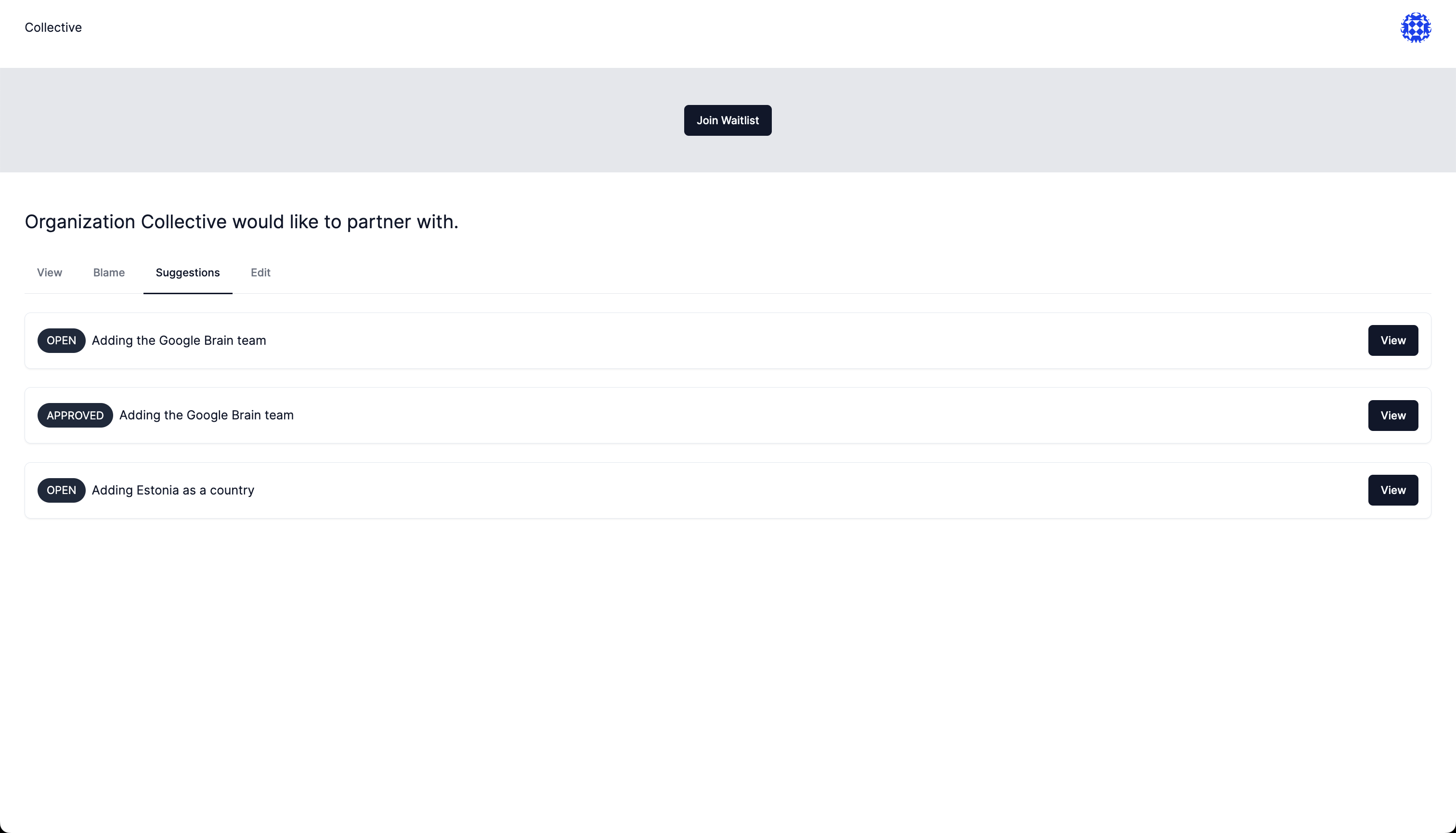
Diff view
-
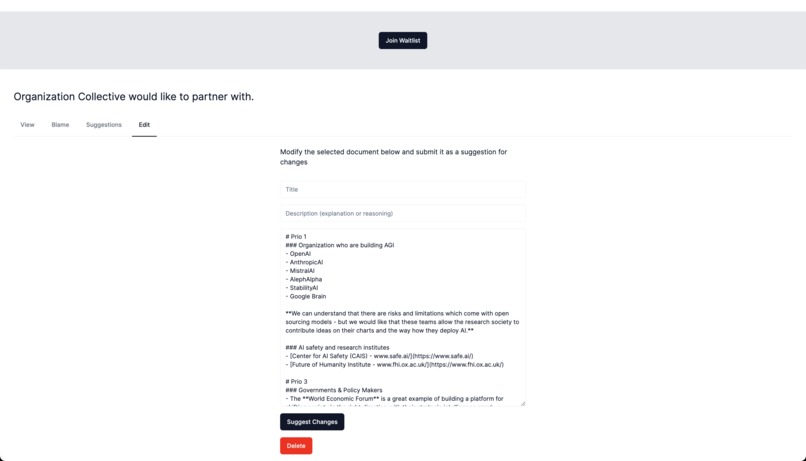
Edit view
-
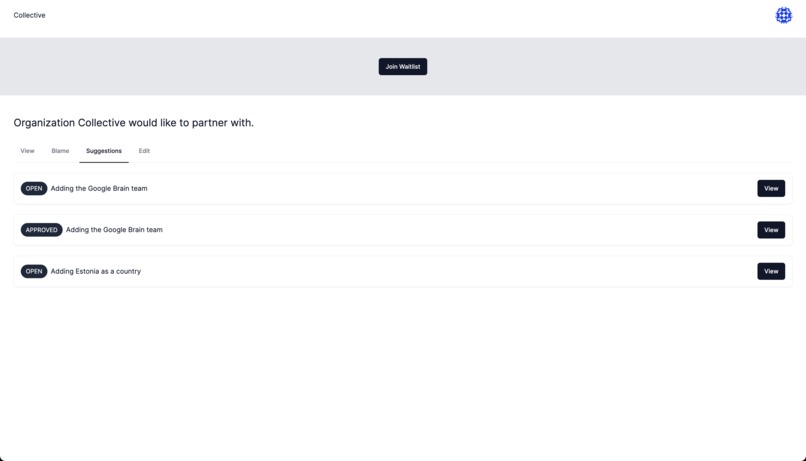
Contribution view
-
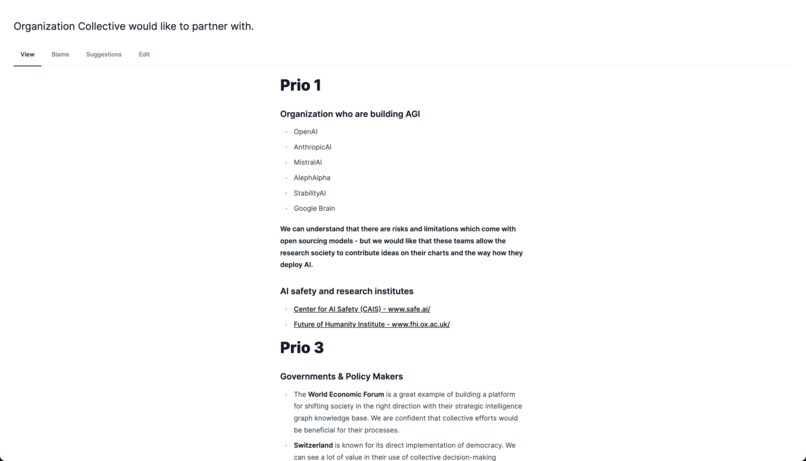
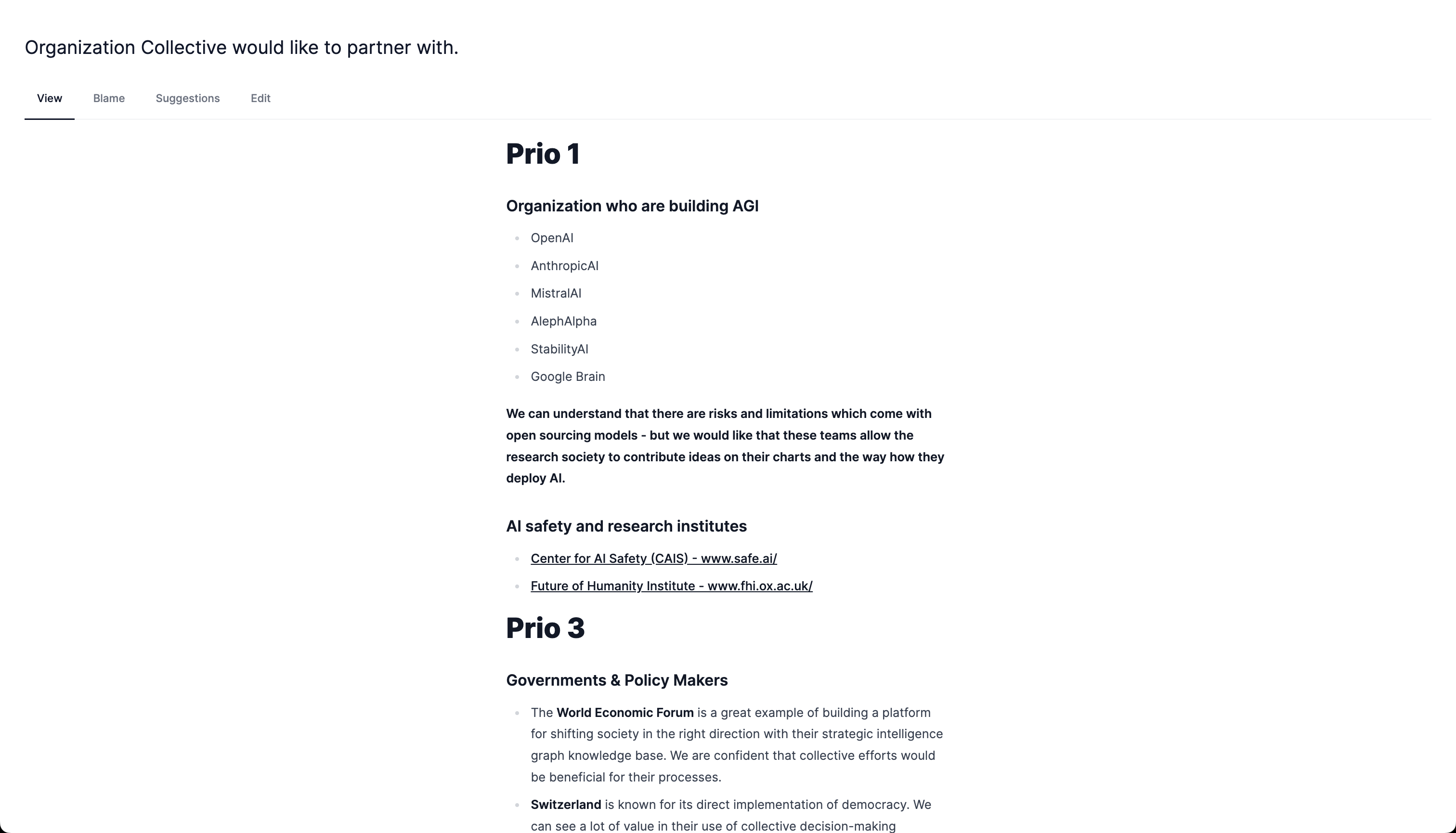
MD view
-
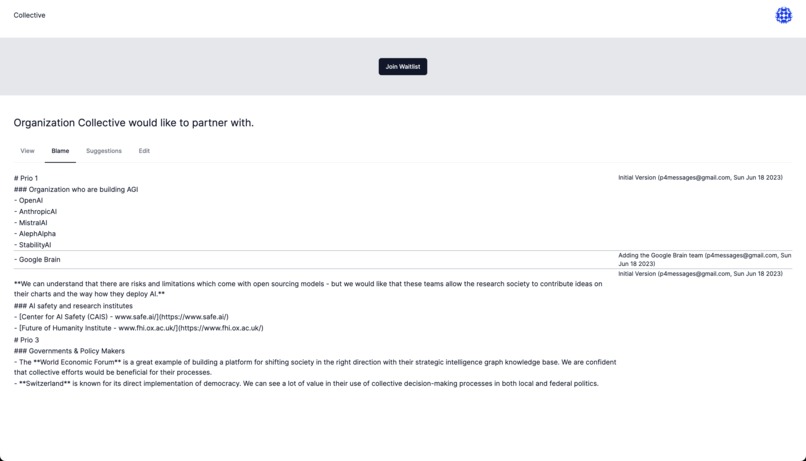
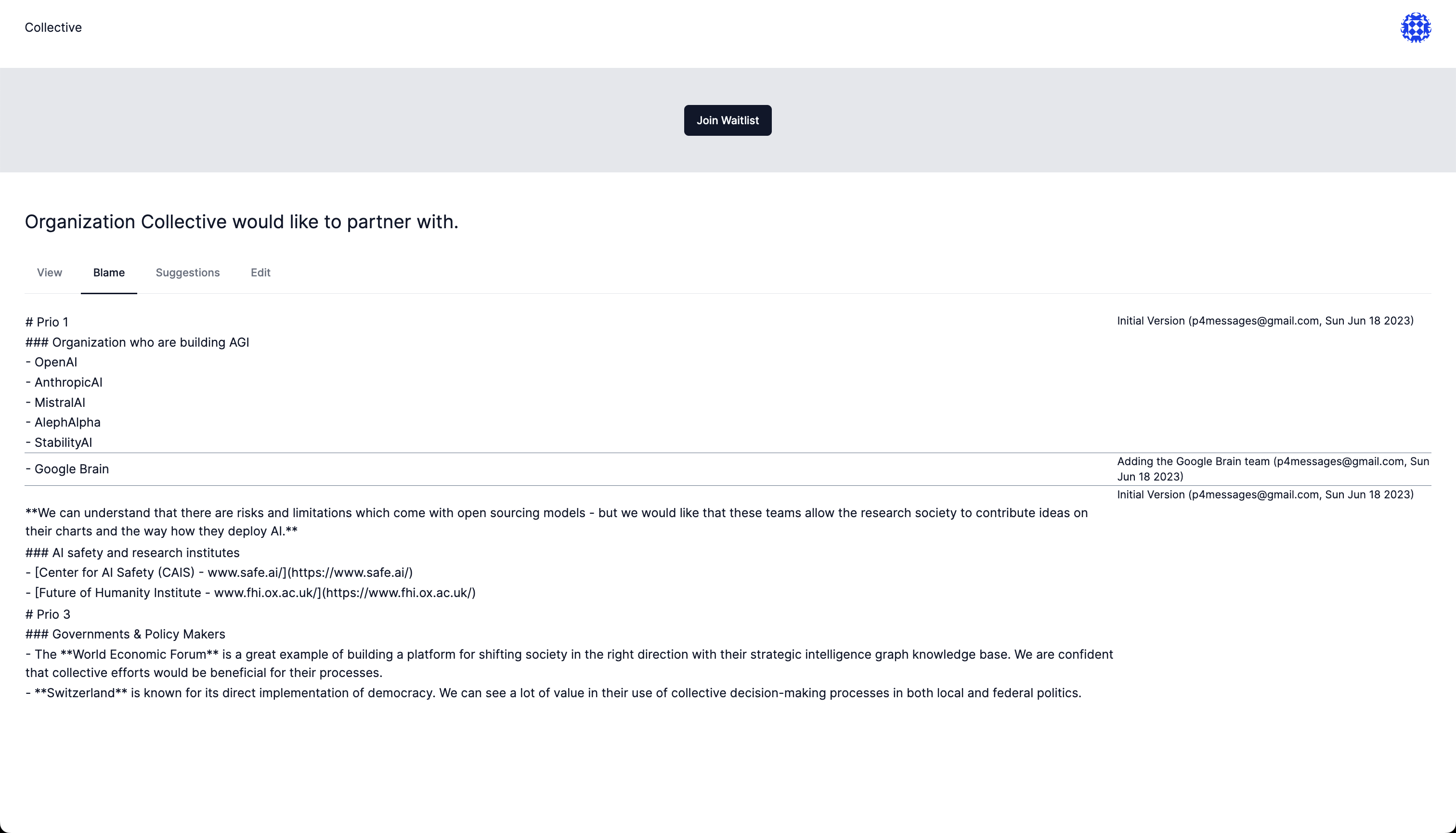
Line blame
-
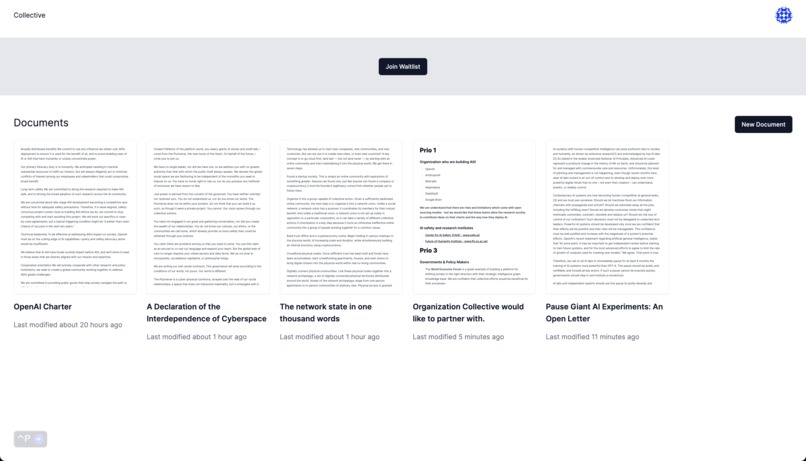
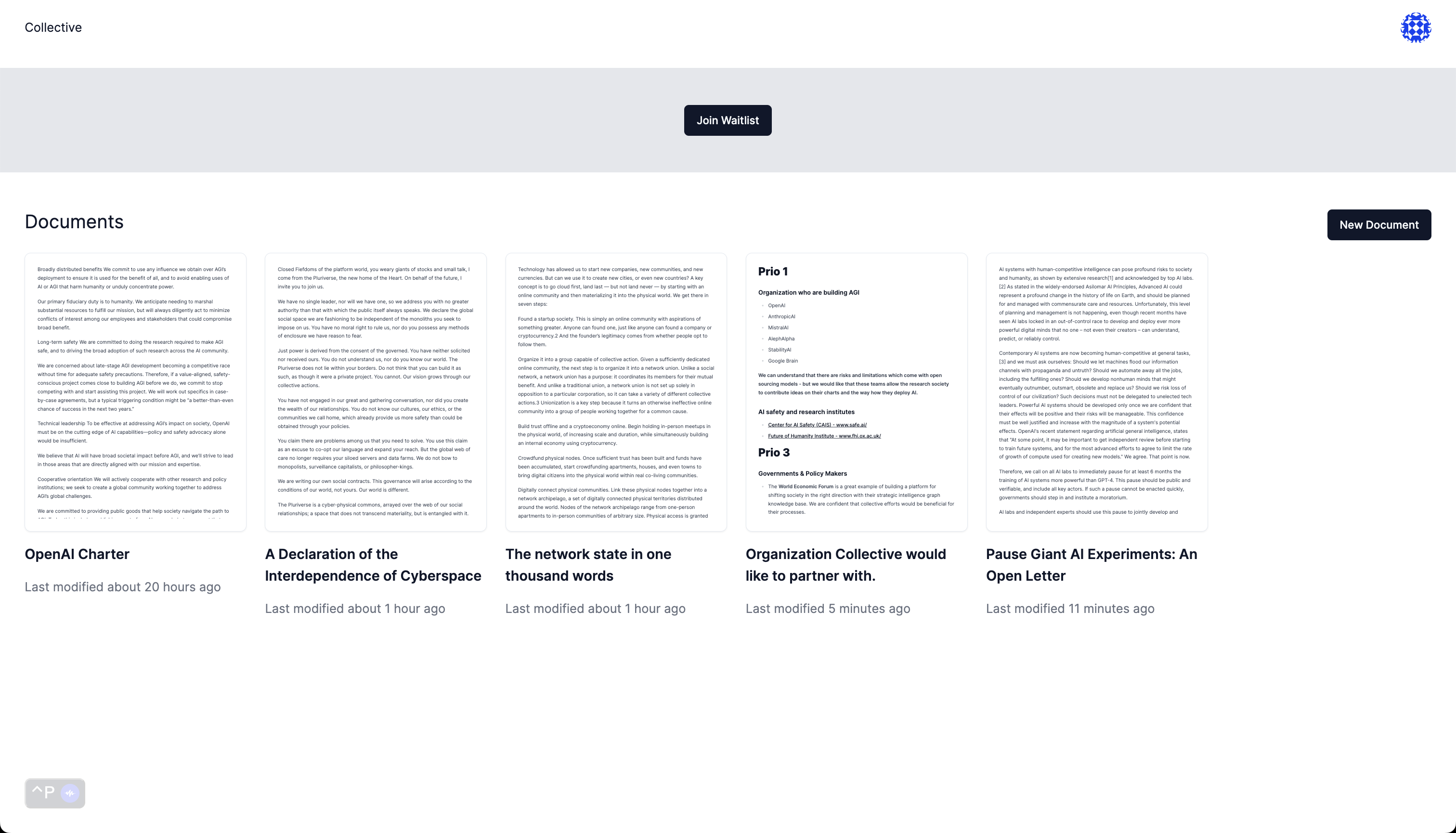
Homepage
Inspiration
I was astonished by the fact that thousands of people can collaborate on one open source project on the platform GitHub.
One of the most challenging problems society currently has is that technology is evolving faster than ever before, and law makers and policy makers are not able to act quickly enough to come up with smart mechanisms which ensure that AI is developed and deployed in a way that is beneficial for the whole of society.
I was trying out GitHub to host my Markdown files and send the link to friends to contribute their ideas to my thoughts on AI safety. But the whole process is cumbersome and not designed for simple Markdown files.
That's why I built Collective.sh - a platform for policy makers, scientists, and people who want to contribute and share opinions in a structured way, instead of just leaving comments as it currently done on platforms like Twitter and Discord..
What it does
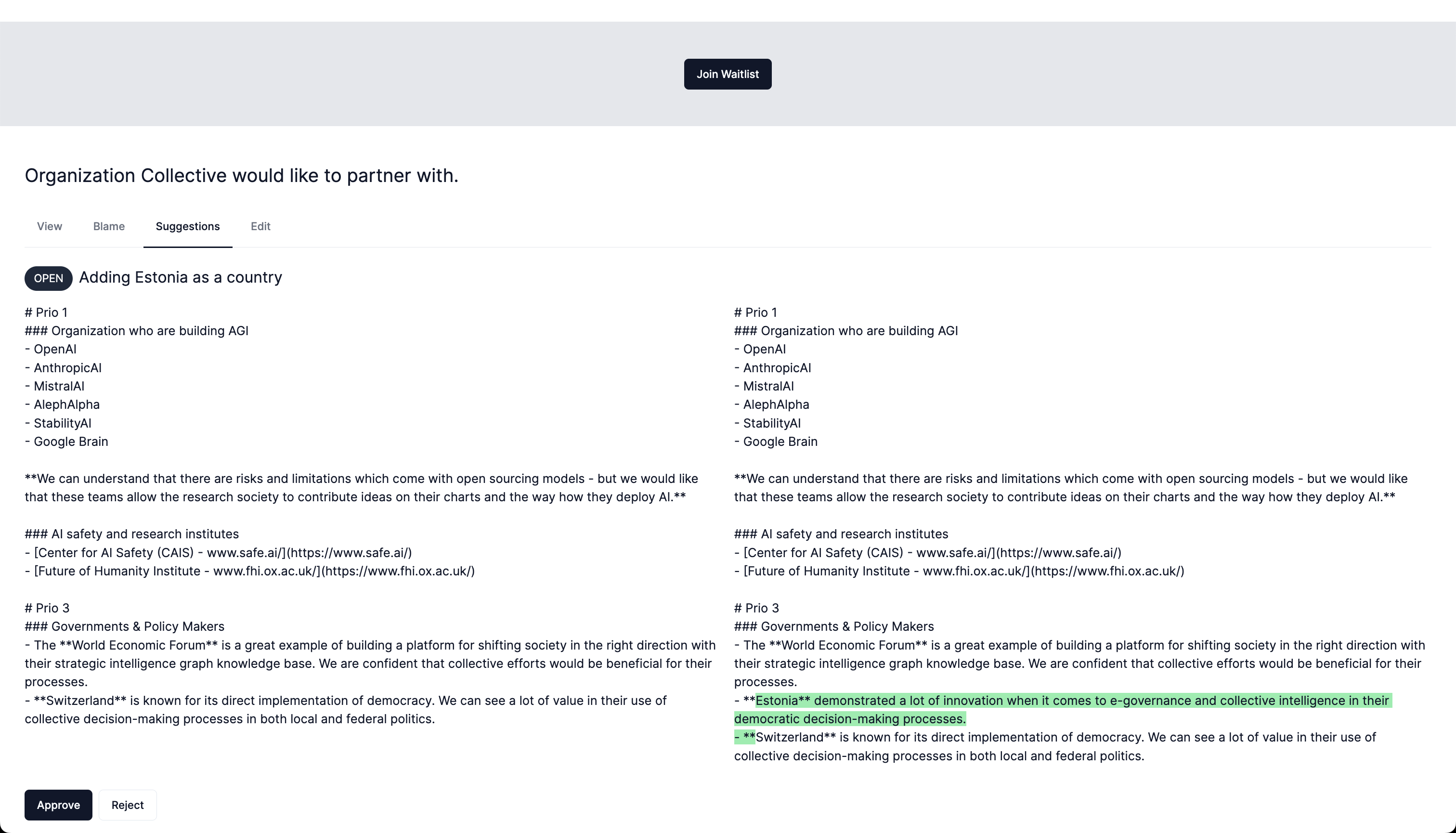
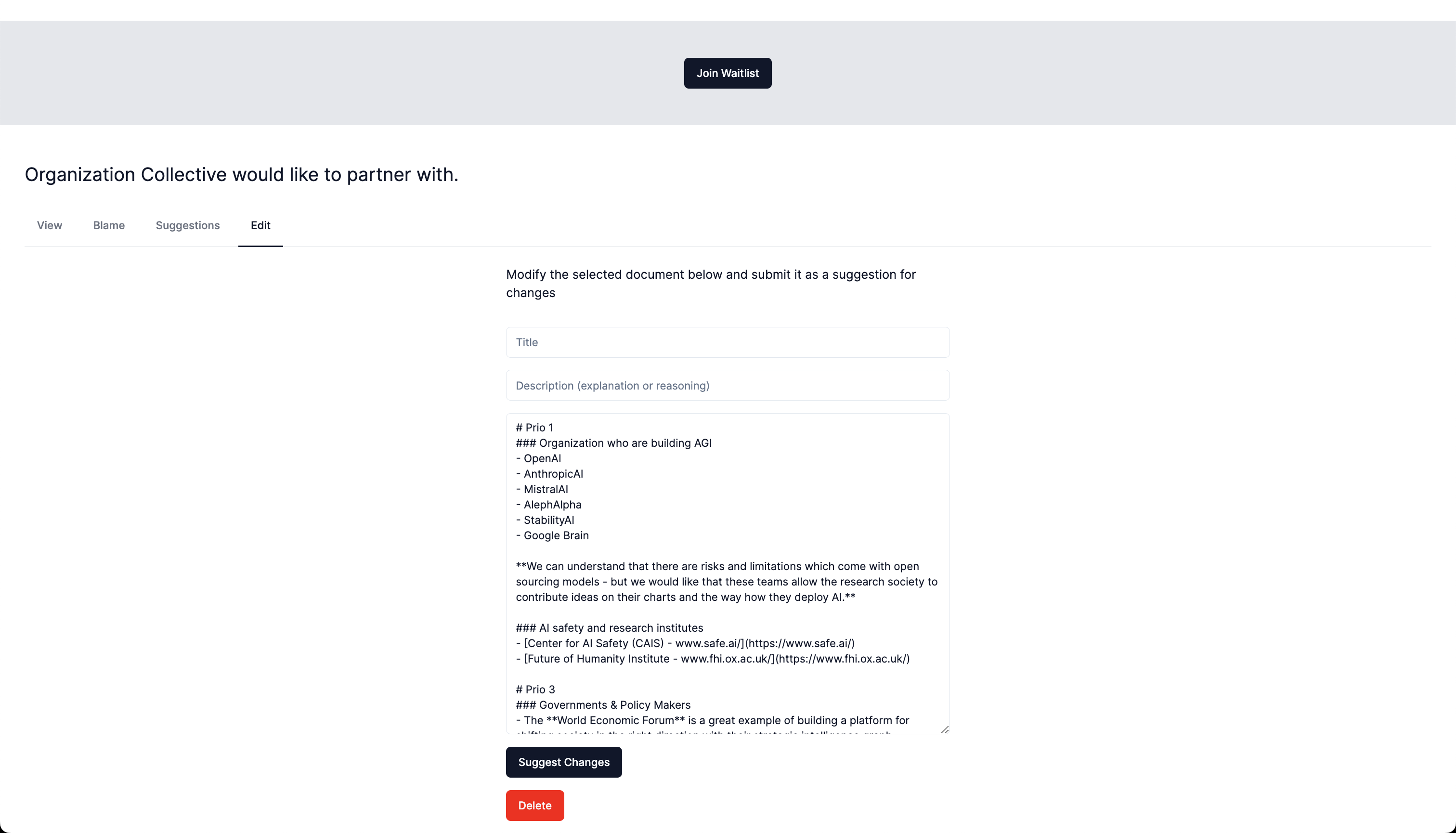
The current version allows you to create a new markdown file. After publishing it, everyone can quickly make changes to it and push these changes in an atomic commit-based way. Everyone can see all the contributions made to the document with a diff view - only the admins can merge these changes.
How we built it
React with Next.js running on Vercel, MySQL database hosted by PlanetScale, authentication using NextAuth.js, styling with Tailwind and shadcn/ui
Challenges we ran into
At first, I thought I needed to build on Git because of the many mechanisms it offers. However, I soon realized that most of these mechanisms, such as merging and diff views for Markdown, are actually JavaScript libraries. This enabled me to build a lightweight codebase instead of building on top of Git. This was great, as Git is great as an infrastructure standard, but not ideal for building a lightweight application on top of it. If I wanted to use the Git architecture as a database, a simple MySQL database turned out to be much better, especially in terms of performance.
Accomplishments that we're proud of
The general design and simplicity of the platform, the long-term value it could bring to society, are impressive.
What we learned
Thinking from first principles - what do we really need for source control? What is redundant, and what has evolved from two decades of software development? Markdown files are not essential.
I also learned a lot about market analysis. I researched the current implementations of Github and Google Docs. Google Docs is great for up to 30 people, but it doesn't scale well beyond that. Github is the other side, but it isn't designed to quickly contribute changes like Google Docs. Collective is the middle ground between these two.
What's next for Collective
Feature-wise:
- Twitter integration for early growth and to distribute discussions. Use Collective as the hub for the latest version of a document and to store all contributions in a structured view - unlike Twitter or Discord.
- Simpler implementation of different views.
- Split view for the contributors and the Markdown editor to quickly skim through.
- Comments for each pull request.
Platform-wise:
- Partner with the Centre for AI Safety, OpenAI, Anthropic, and Co. to develop the platform for those who should use them.
- Talk to law makers in the US and Europe to have verified documents which are administered by OpenAI.
Built With
- mysql
- nextjs
- vercel

Log in or sign up for Devpost to join the conversation.