CollectIt
Collect together. Track every rupee.
Inspiration
Every class, friend group, and college fest has the same story. One person ends up as the "money person," chasing everyone on WhatsApp, collecting cash, and digging through screenshots to figure out who has paid. The person in charge never really knows, and everyone else never knows where their money went. We kept seeing this happen around us, and we wanted to fix both sides of it with a single link.
What it does
CollectIt helps a group collect money without the chasing, and it's built for India, so everything is in rupees.
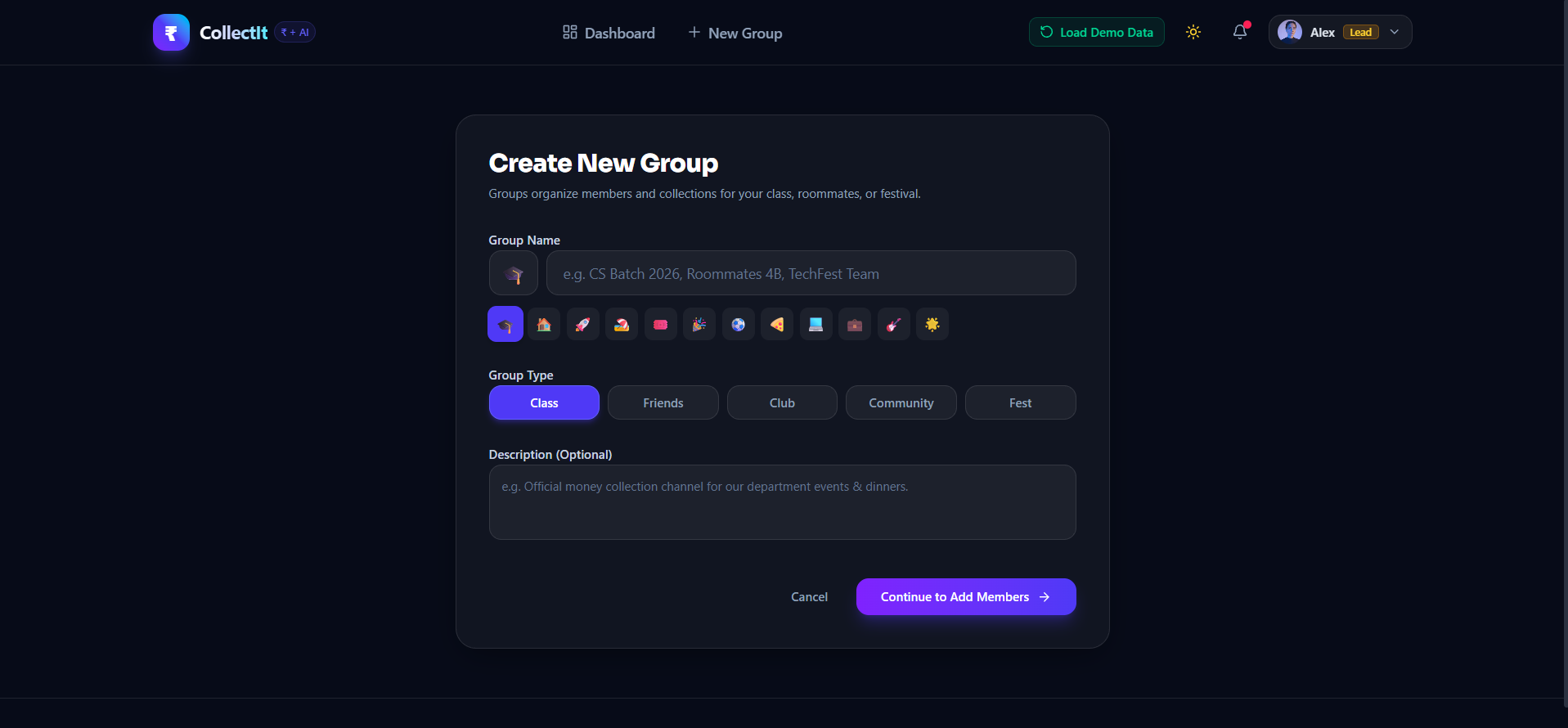
A Lead can just type something like "farewell party for 30 friends, around ₹15,000," and AI sets up the whole collection: the title, the amount per person, a theme, and a deadline. Adding people is just as quick. You can paste a list, upload a CSV or Excel file, pick from your phone contacts, let AI tidy up a messy list, or share a join link so people add themselves. That last one means a 5,000-student fest doesn't need anyone typing names in.
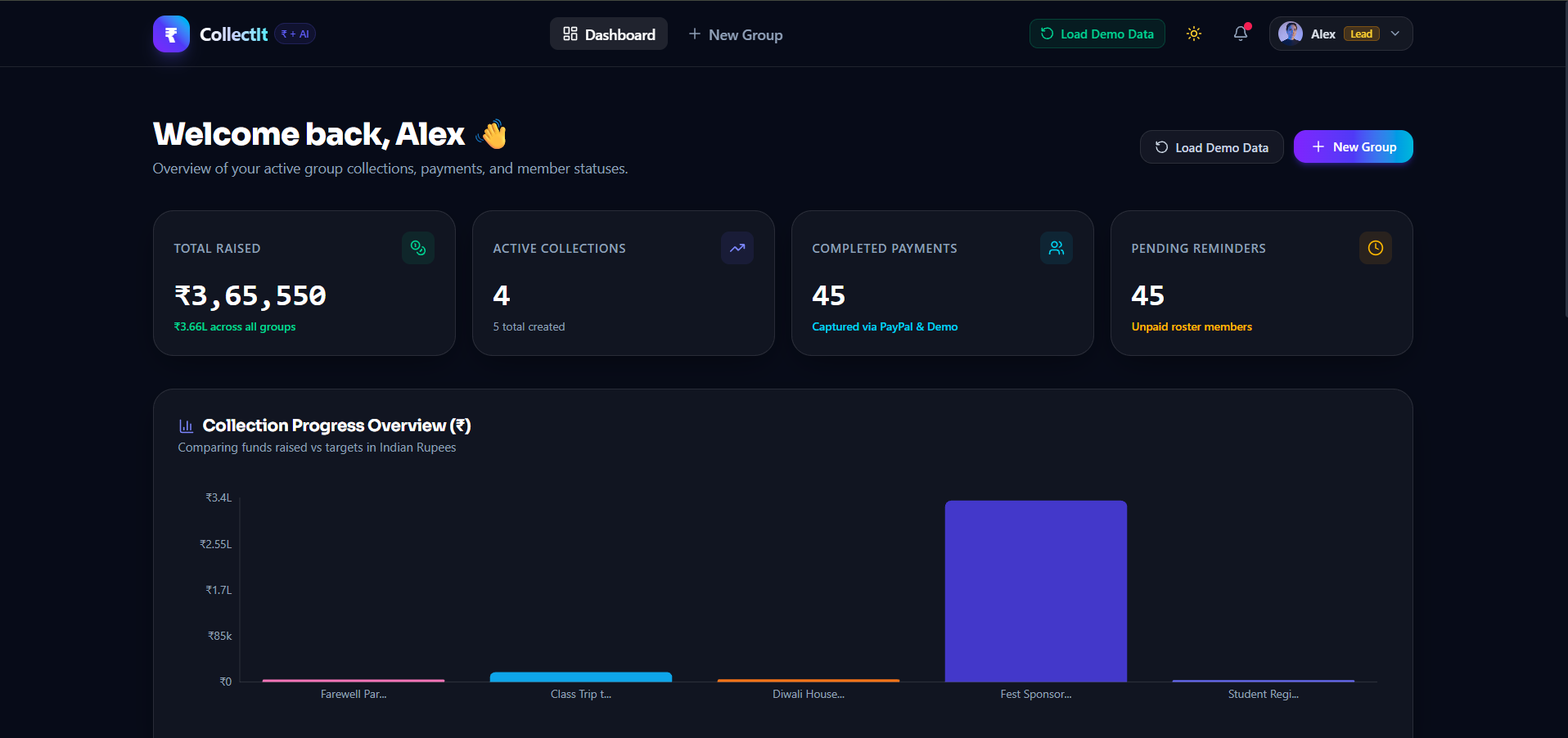
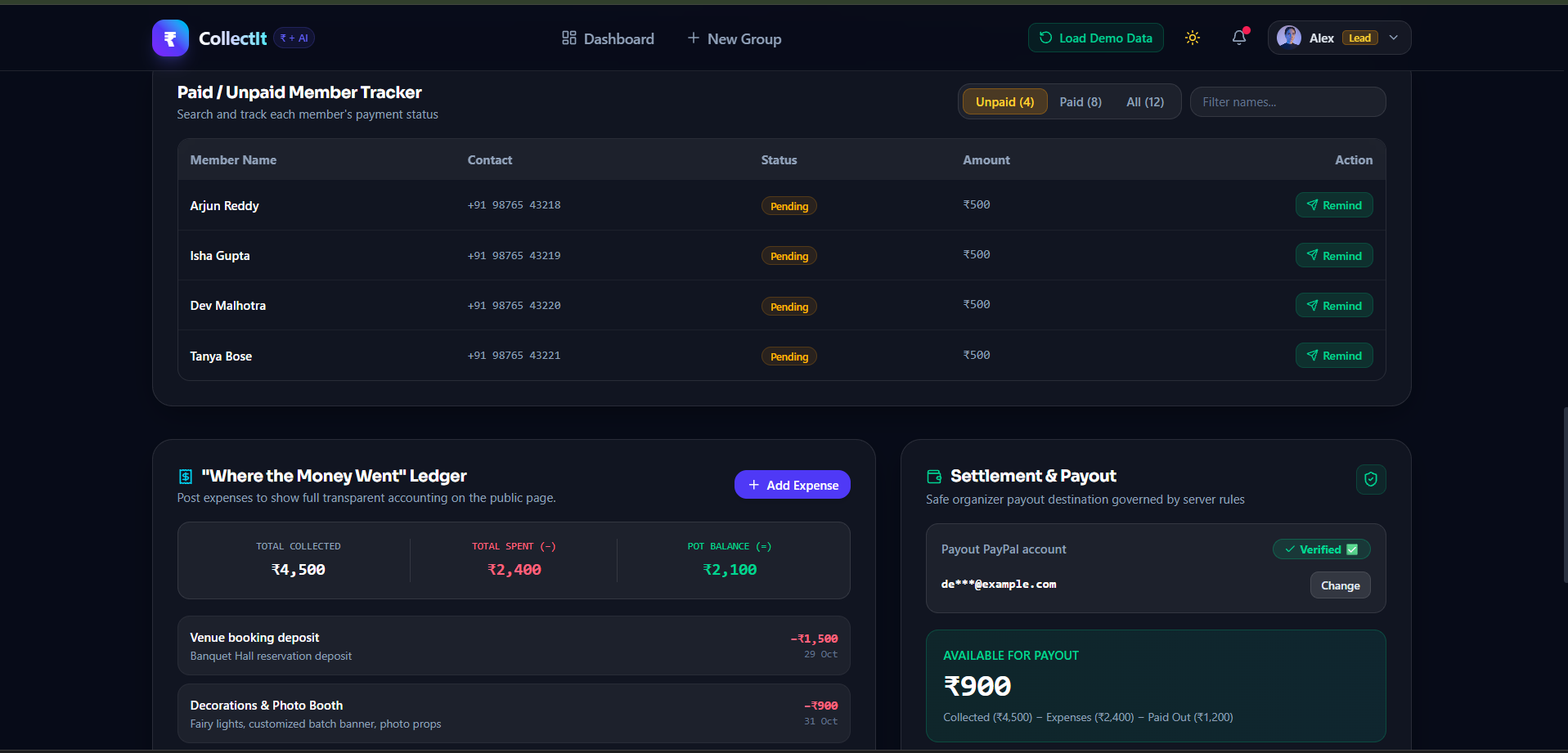
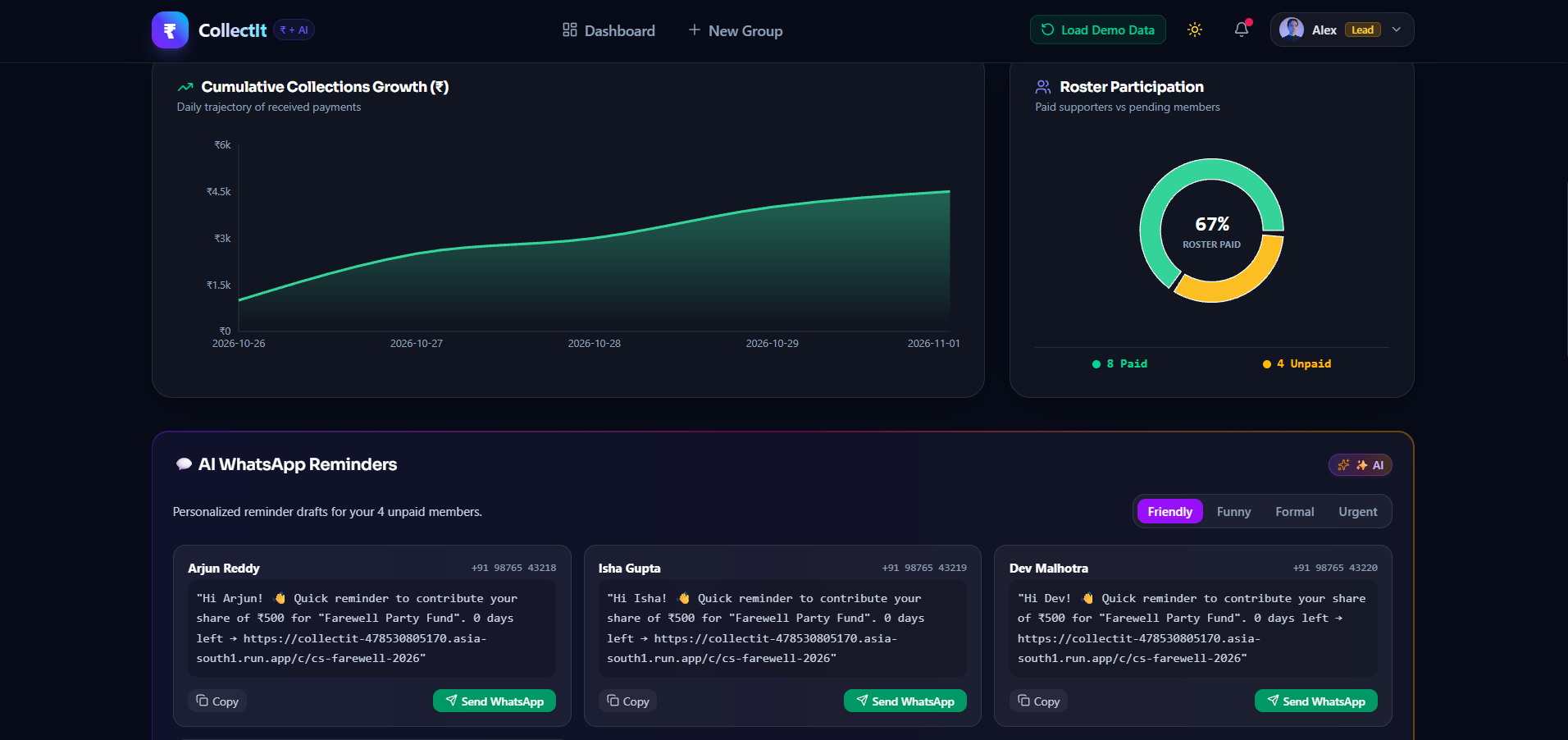
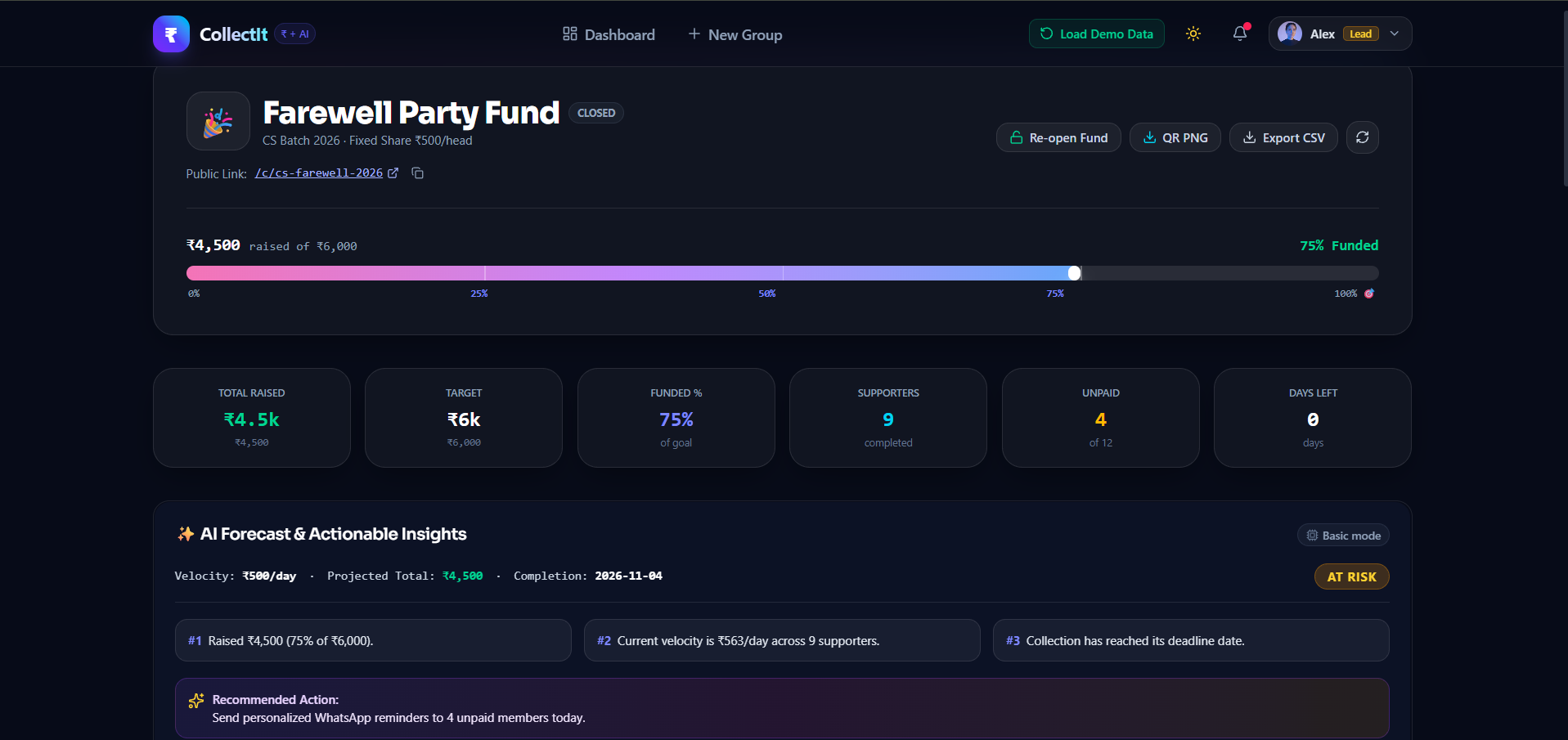
Members open one link or scan a QR code and pay through PayPal, no account needed. The Lead watches the progress bar, the paid and unpaid list, and the charts update live. AI helps along the way by writing friendly WhatsApp reminders in whatever tone you pick, forecasting whether you'll hit your goal, and explaining in plain English where the money went. Members can also ask a chat assistant questions, and it answers only from public information.
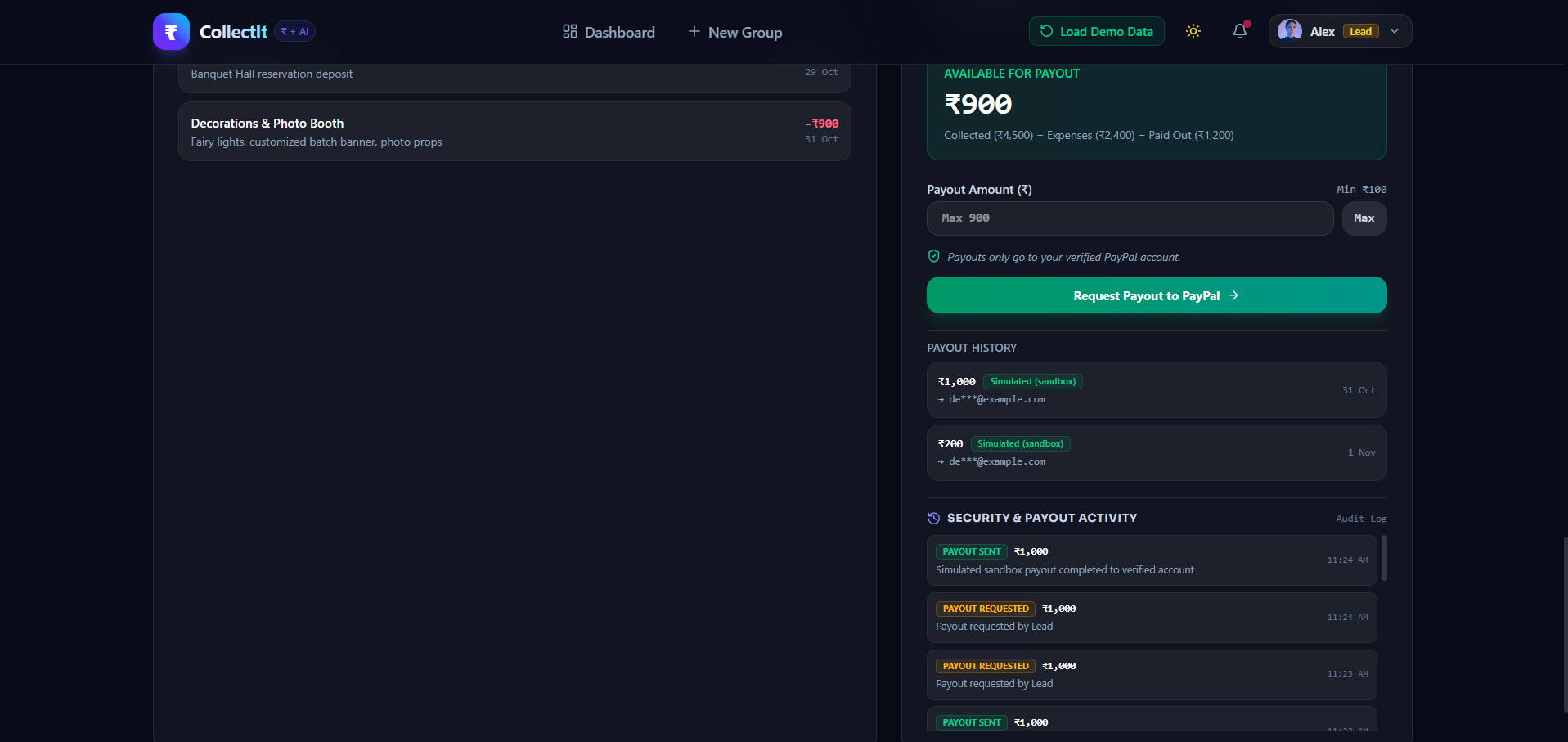
Spending is shown openly on a public ledger, and when the collection is done, the Lead settles the leftover balance to their own verified PayPal account.
How we built it
Payments run on the PayPal Orders API (sandbox). Our Node and Express server creates and captures each order, and the PayPal buttons sit on the payment page. We check the amount again when the payment is captured, so nobody can tamper with it from the browser. Everything is test money, and payouts to the Lead are simulated by default.
The AI side uses the Gemini API, called only from the server. It powers six features: the collection creator, smart reminders, forecast insights, the spending story, the "Ask the ledger" assistant, and the member list cleanup. We kept the math in code, so the forecasts are calculated by the app and the AI just explains them.
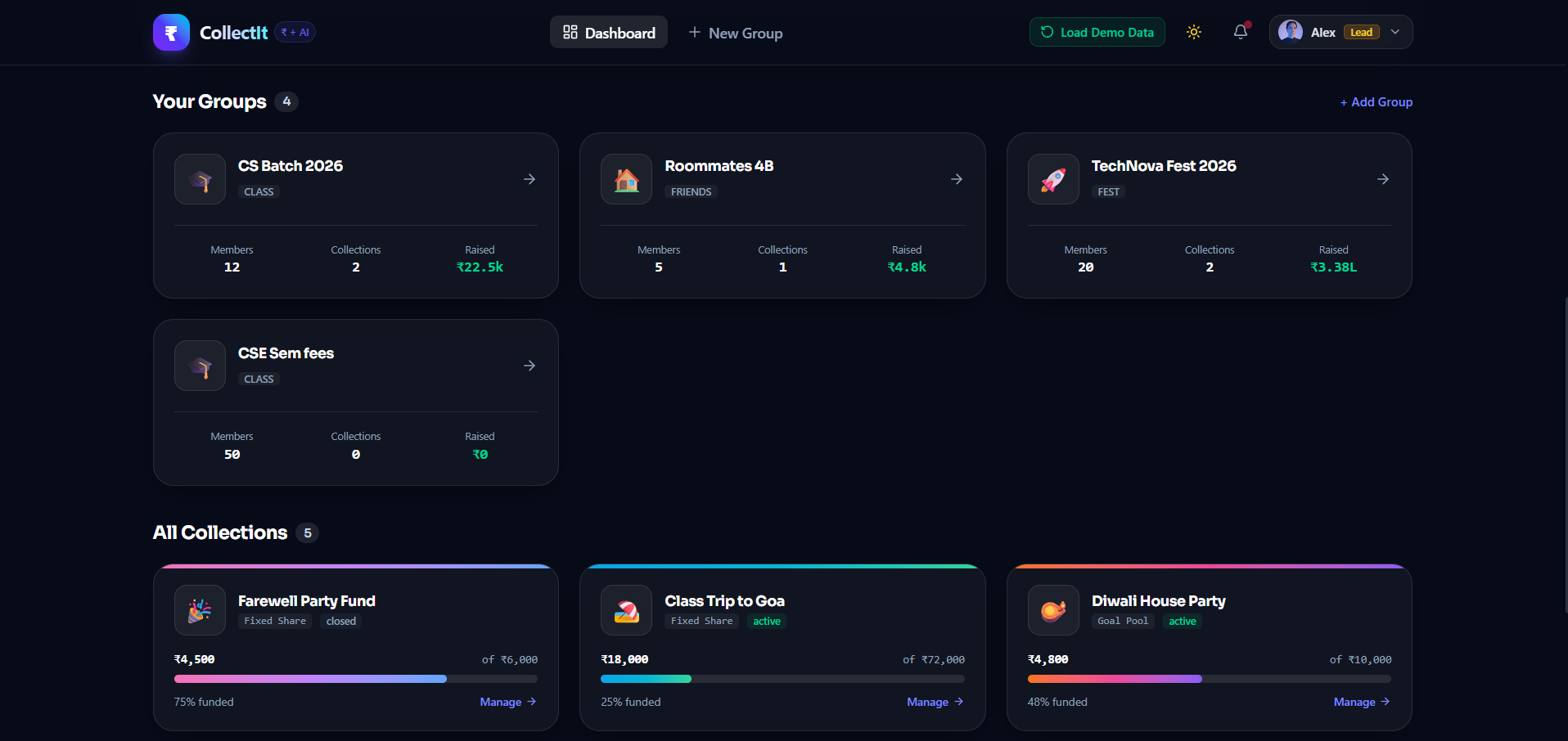
The front end is React, TypeScript, and Tailwind, with Firebase handling Google sign-in and the database. We put a lot of effort into the look, with a dark and light theme, a different color theme for each collection, and clean charts.
Every AI feature has a simple fallback, so the app never breaks mid-demo. The assistant only sees public data, and payouts are locked to the owner's verified PayPal email.
Challenges we ran into
The biggest surprise was that PayPal doesn't accept rupees from international accounts. Members still see and commit to a rupee amount, and PayPal is charged the dollar equivalent at a rate we show clearly before they pay.
The next question was how collected money should safely reach the Lead. We built a settlement flow with a verified destination email, owner-only access, a 24-hour pause after any change, and a full activity log.
Real member lists were also messier than we expected. They come as WhatsApp dumps and half-formatted spreadsheets, so we built a smart parser, AI cleanup, and duplicate detection.
Finally, we worked on keeping the AI honest. Its answers had to stay tied to real numbers, ignore prompt tricks, and never leak private details.
Accomplishments that we're proud of
We built the whole money journey in one app: set it up, collect, track, explain, and settle. We're also proud that the AI does real work in the product instead of sitting in a chat box on the side. Adding hundreds of people in one click felt great to see working, and the whole thing feels smooth on a phone straight from a QR scan.
What we learned
People pay more willingly when they can see where their money goes. AI works best when the code does the math and the model does the explaining. Handling local currency and moving money to organizers safely takes real thought, and good fallbacks matter just as much as the flashy features.
What's next for CollectIt
Next we want live payments and payouts using PayPal's marketplace setup, so each Lead's money is held and paid out separately. We also want to add UPI and other local payment methods for people paying from India, scheduled AI reminders, recurring collections like monthly rent, emailed receipts, multi-currency collections for alumni and sponsors abroad, and team roles so a co-lead or treasurer can view things without being able to pay out.
Built With
- canvas-confetti
- css3
- express.js
- firebase
- firebase-authentication
- firestore
- gemini-api
- google-ai-studio
- google-sign-in
- html5
- javascript
- node.js
- paypal-js-sdk
- paypal-orders-api
- paypal-sandbox
- qrcode
- react
- react-router
- recharts
- sheetjs
- tailwindcss
- typescript
- vite

Log in or sign up for Devpost to join the conversation.