-
-
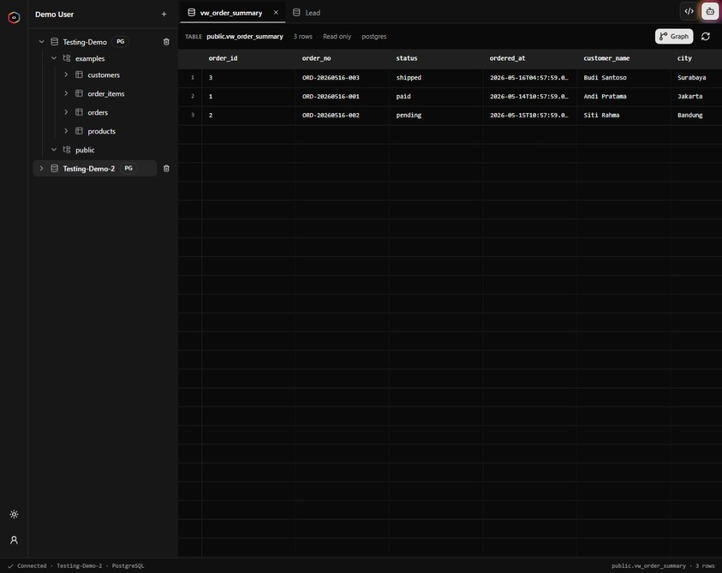
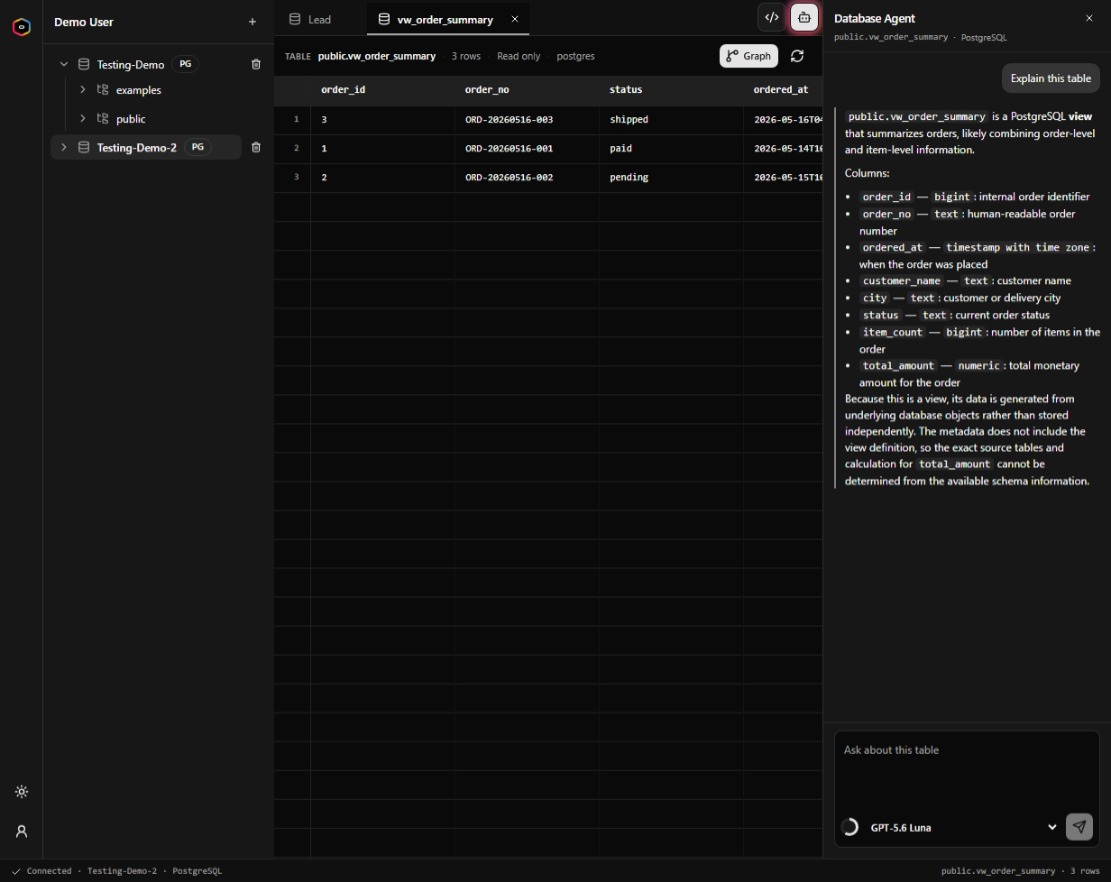
Table View
-
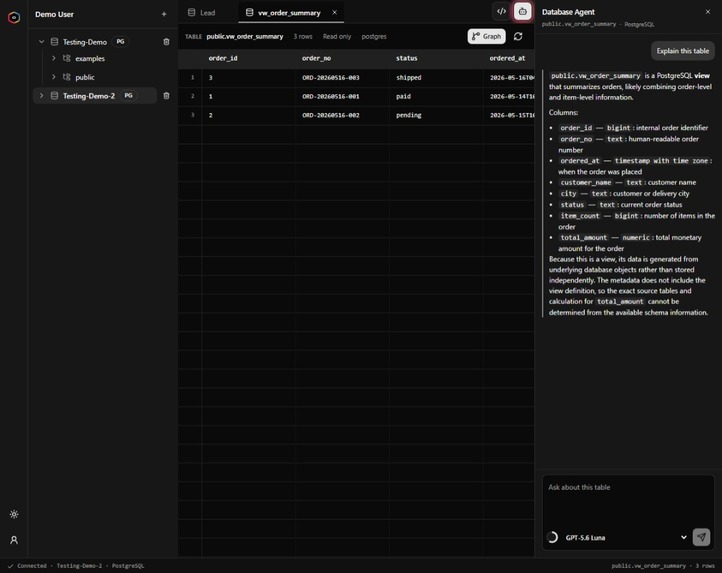
Agent Chat Preview
-
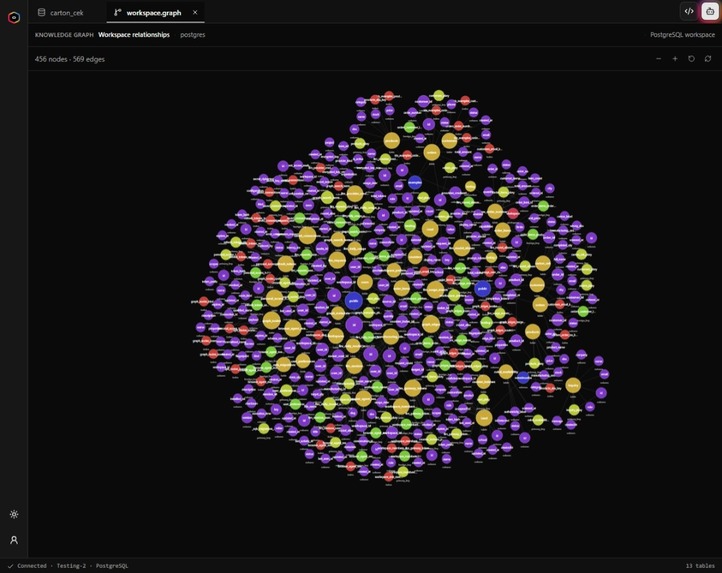
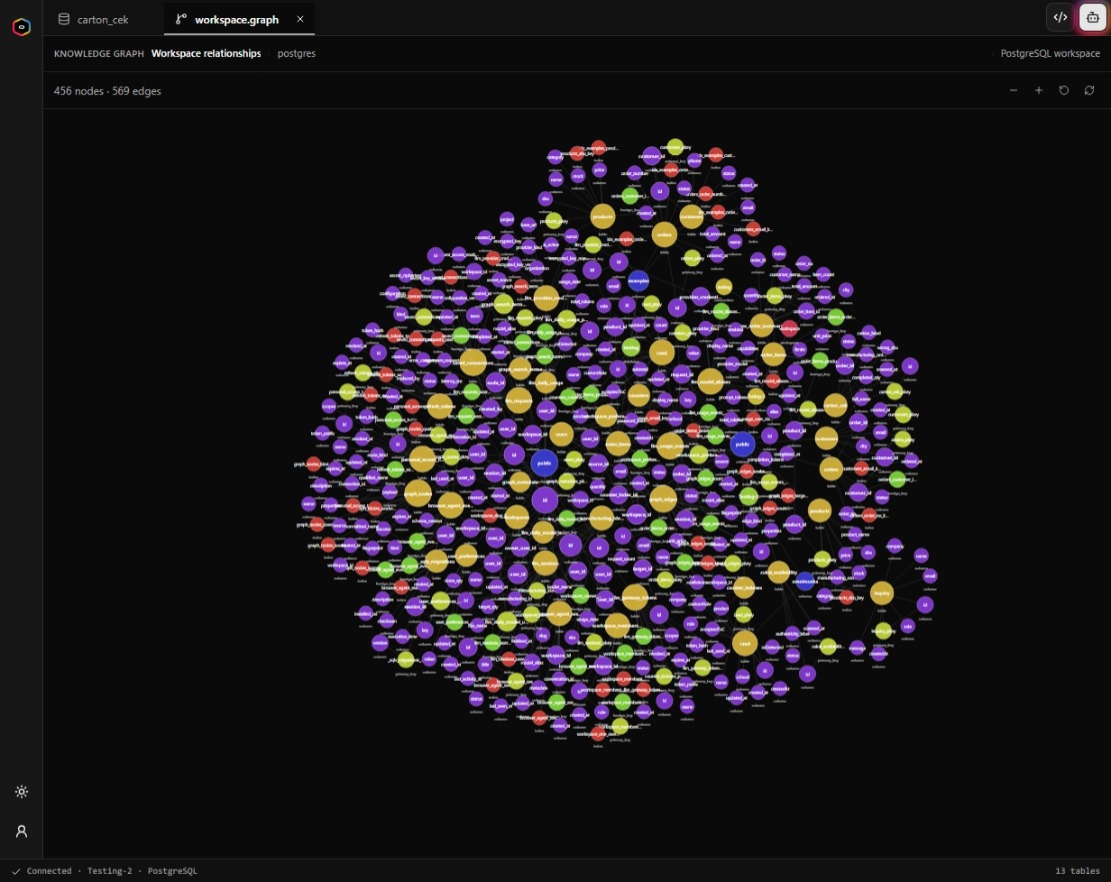
Database Graph Preview
Inspiration
Switching back and forth between connection managers, schema explorers, SQL editors, and documentation just to answer one query is exhausting. It gets worse with unfamiliar databases: you have to dig through relationships, hunt down foreign keys, draft the SQL, run it, and double-check results manually. We built Collamn to fix this. It’s a unified database workspace that combines traditional DB tools with an intelligent AI agent—giving you the best of both worlds instead of forcing you to choose one.
What it does
Collamn is a smart database workspace that lets you explore and query data without context-switching.
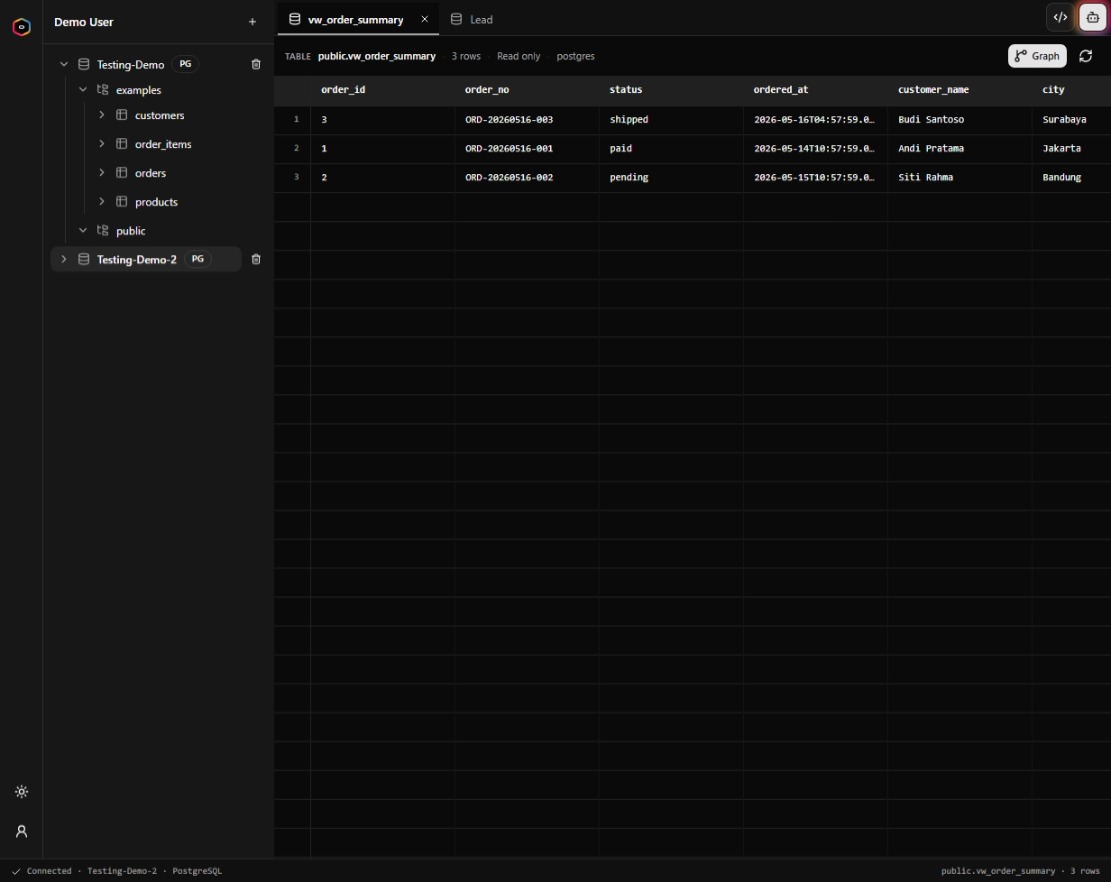
- Unified Workspace, Connect your DB, inspect schemas, view tables, and run SQL—all in one place.
- Knowledge Graph, Collamn turns your metadata into a visual graph (schemas, PKs, FKs, relationships) so both you and the AI actually understand the DB structure.
- Action-Oriented Agent, Ask
“Show me public.order table”Instead of just dumping text, the agent opens public.order tabs and shows the result directly in your UI. - Full Transparency, Every generated query and execution is 100% visible and editable. No black-box magic.
- MCP Integration, Includes an MCP server so external tools like Codex can securely query your workspace using database-specific tools and access tokens.
How we built it
Collamn is built as a modular desktop app. Key components include:
- Core Engine, Connection manager, SQL execution, table browsers, and graph visualizer.
- Context Layer, Uses graph based metadata retrieval to pass relevant connections, schemas, tables and columns to the agent make it more accurate.
- Agent Execution, Translates user intents into UI actions (e.g., opening table tabs, opening query tabs and filling the query inside the query editor).
- Development with Codex, We used Codex extensively especially when it hit the core engine to help us solve a complex problem and create code faster
Challenges we ran into
- Agent Control vs. User Agency, Getting the AI to interact with the UI without feeling intrusive. We solved this by separating the agent's reasoning from UI execution the AI only proposes actions, and controlled handlers execute them.
- Context Window Limits, Dumping an entire database schema into an LLM prompt is expensive and messy. We used lightweight graph metadata retrieval to extract only the relevant entities.
- Keeping UI State in Sync, Syncing table viewers, query editors, graph nodes, and agent states across the app was tough. Strict scope and acceptance criteria were crucial here.
Accomplishments that we're proud of
- True Hybrid Experience, Merged traditional DB tools with AI agents seamlessly.
- Interactive Agent, Built an AI that actually executes workspace actions instead of just chatting.
- Metadata Knowledge Graph, Visualizing complex database relationships effortlessly.
- Live MCP Server, Empowering external agents like Codex to work on real databases securely.
What we learned
- Agents need tools, not just prompts, An AI that gives you SQL is okay; an AI that opens the tab, pastes the code, and runs it for you is game-changing.
- Selective Context > Full Schema Dump, Feeding structured, graph based metadata better than throwing raw DDL at an LLM.
- Visibility builds trust, Engineers won't trust AI unless they can inspect every generated query and execution step.
What's next for Collamn
- Expand DB support (PostgreSQL, MySQL, SQLite, etc.).
- Advanced multi-step analytics & automated report generation.
- Richer Knowledge Graph (lineage tracking, deeper visual search).
- Enhanced MCP features (scoped tokens, audit logs, team collaboration).
- Create another product that we also built but only for the side dish like llm gateway, token management, tracing capabilities, agent runner especially i write in rust
Built With
- axum
- codemirror
- codex
- docker
- gpt-5.6
- mcp
- next.js
- openai
- postgresql
- react
- rust
- shadcn
- sqlx
- tailwind
- tokio
- typescript


Log in or sign up for Devpost to join the conversation.