-
-
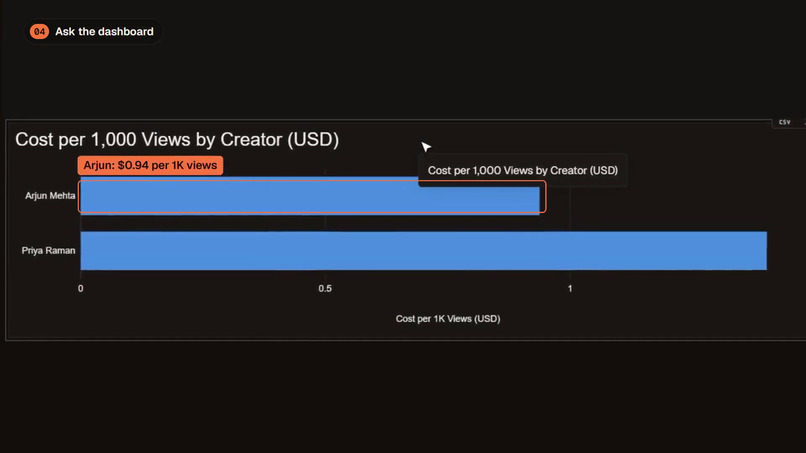
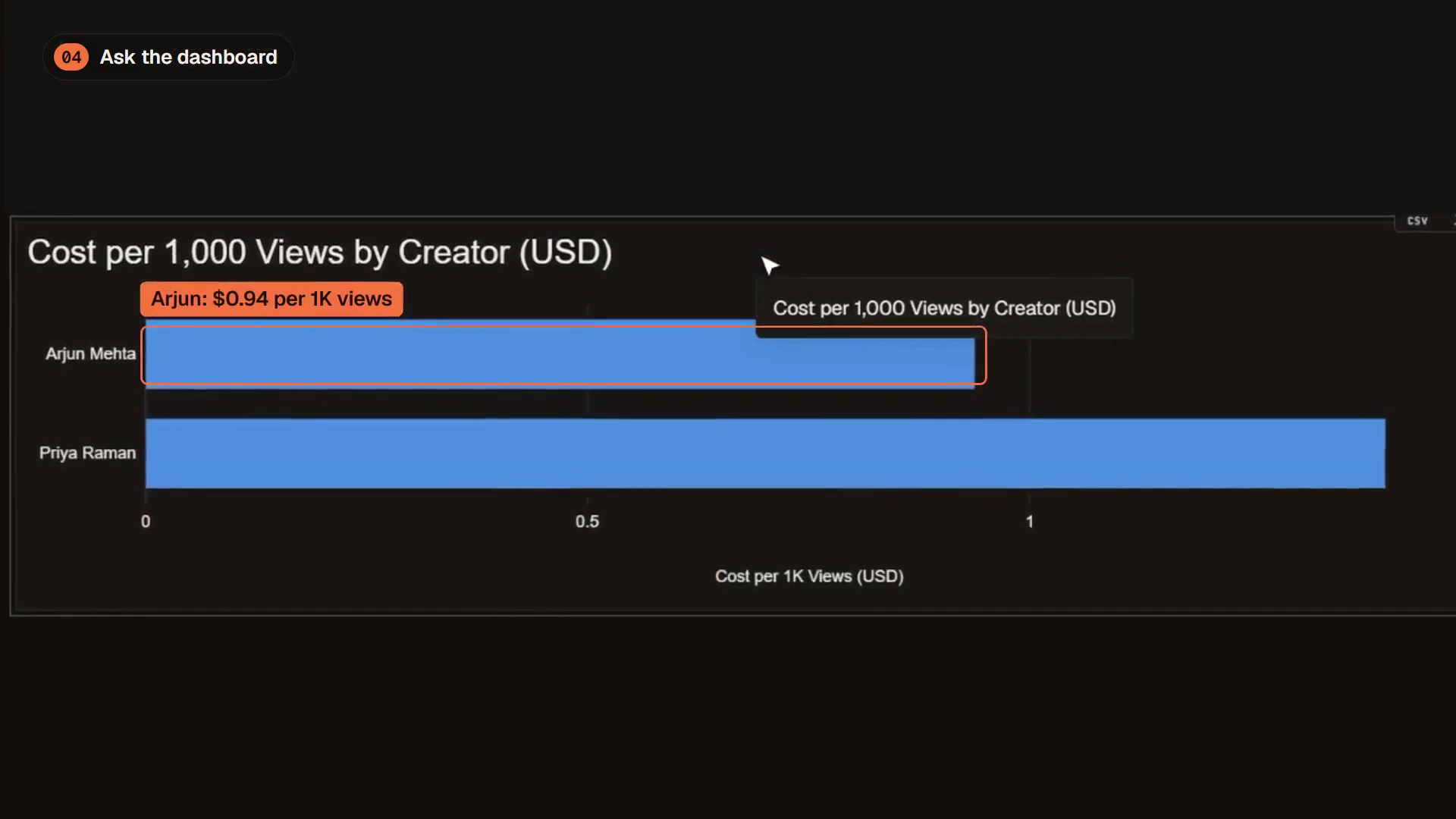
Ask the dashboard: the Claude agent inside AG Studio builds a cost-per-1,000-views chart.
-
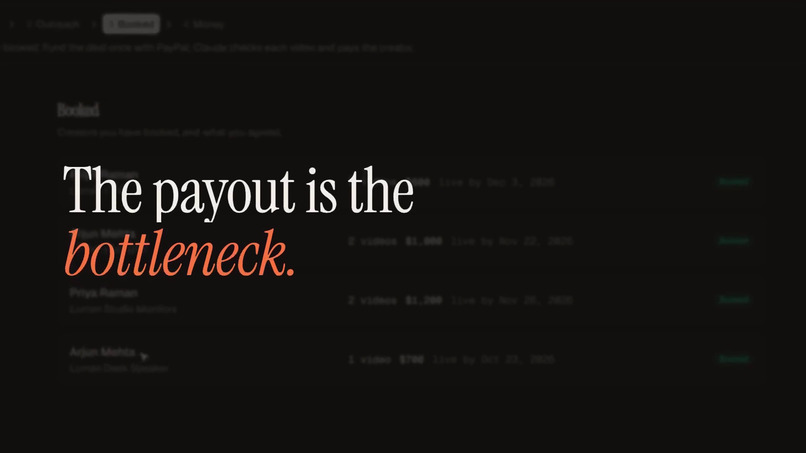
The problem: 32 of 292 founders pay creators, all by hand. The payout is the bottleneck.
-
Collabio: deals that pay themselves. Live demo, no sign-up, PayPal sandbox.
-
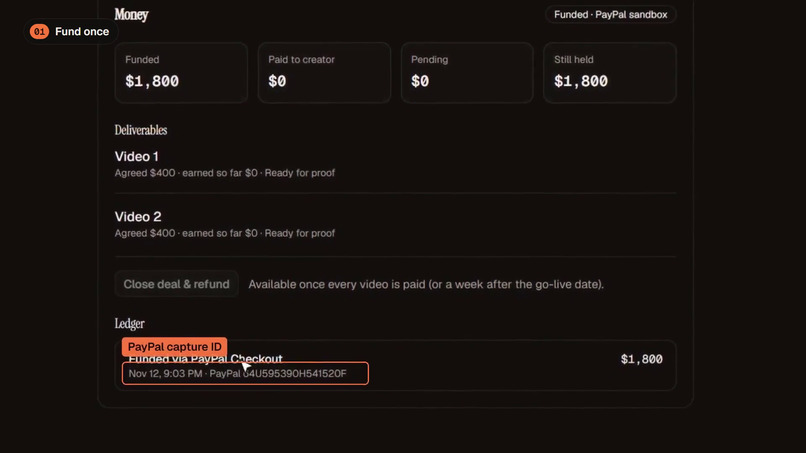
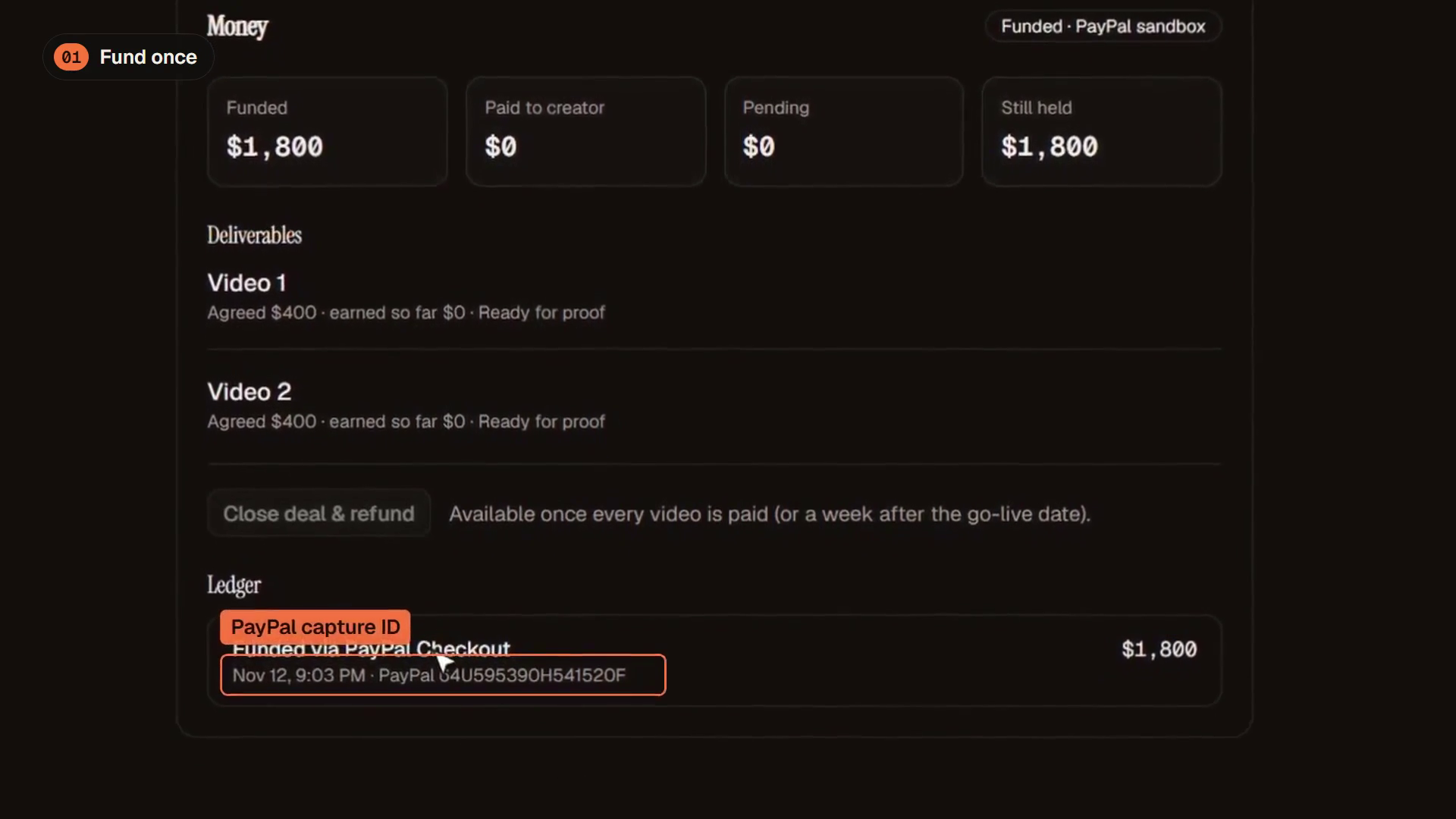
Funded via PayPal Checkout (Orders v2): $1,800 captured, PayPal capture ID in the ledger.
-
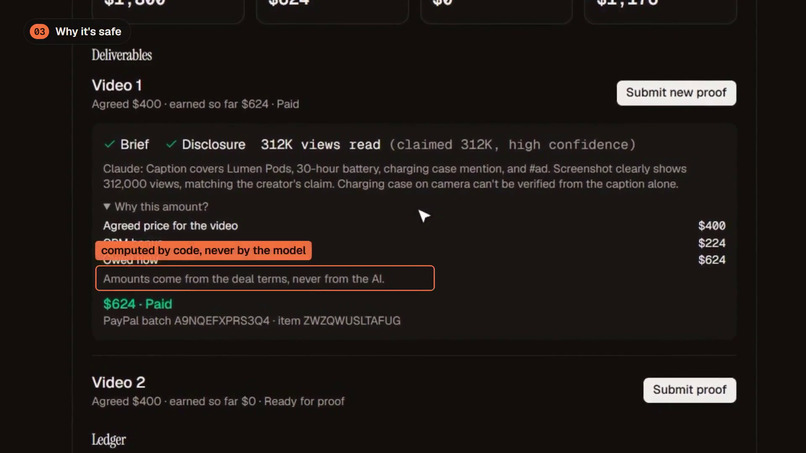
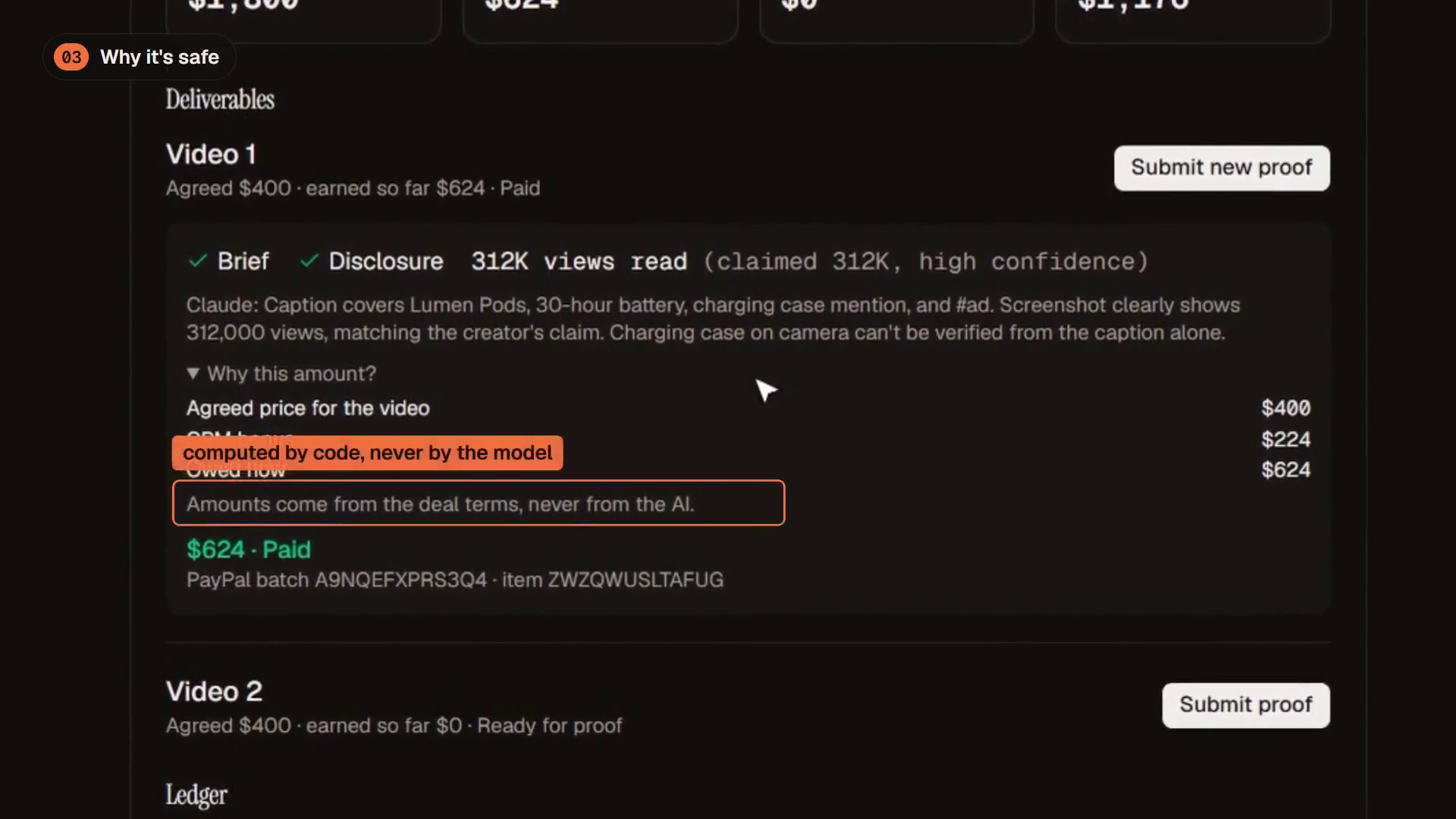
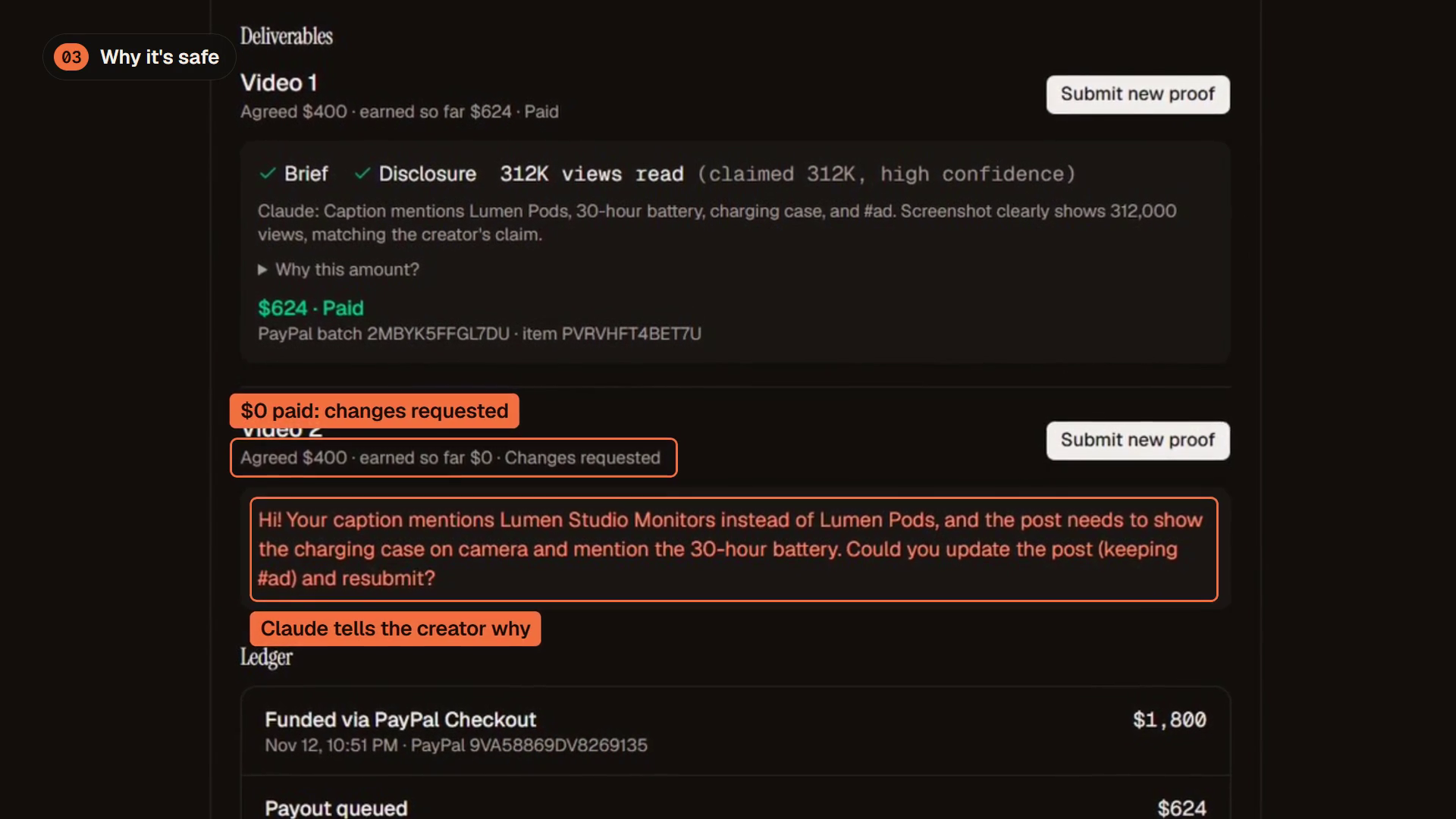
Safe by design: amounts come from the deal terms and our engine, never from the AI.
-
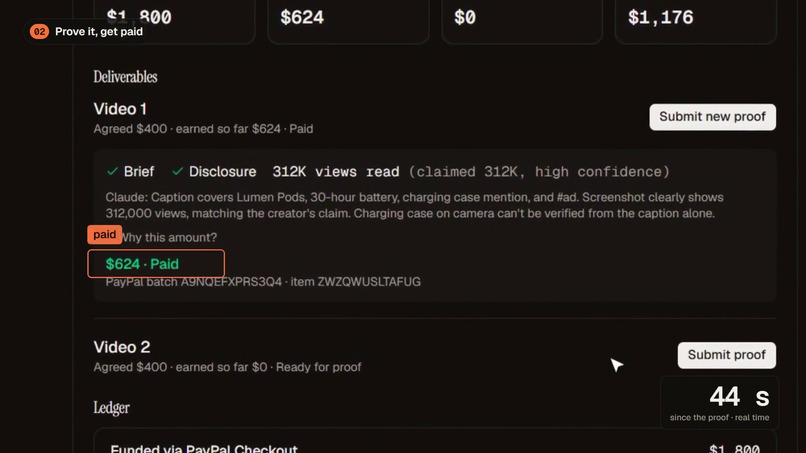
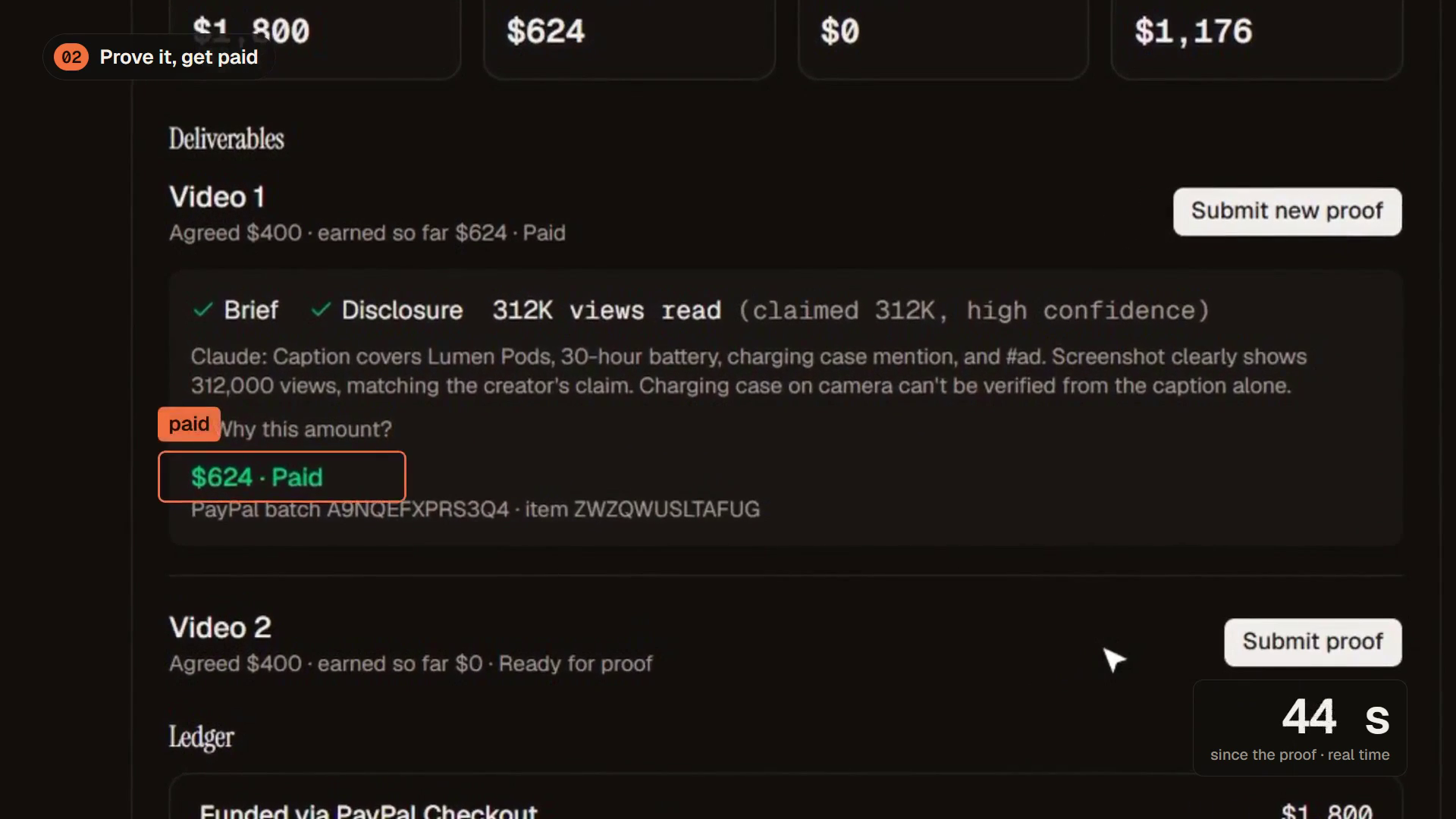
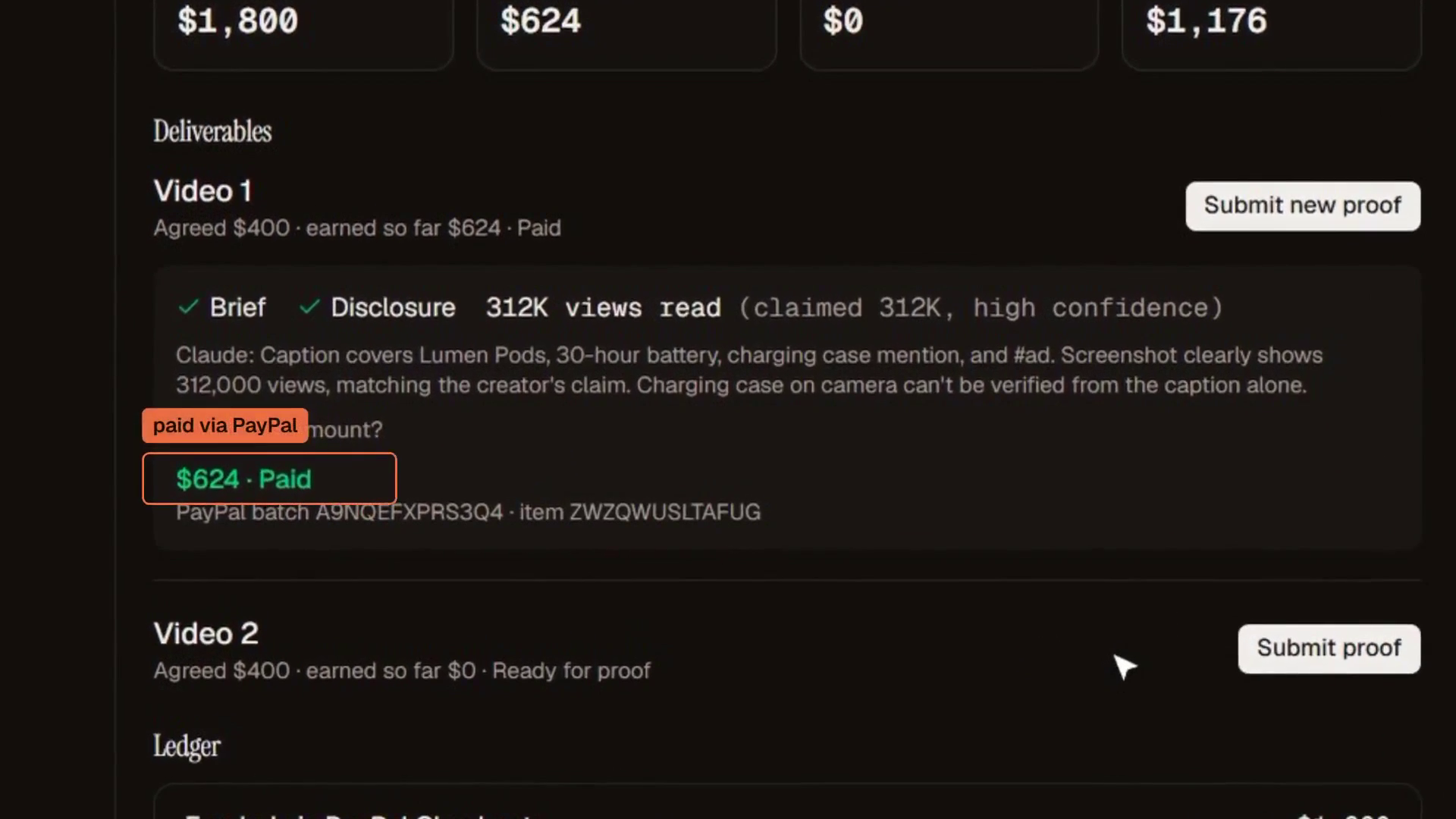
Prove it: Claude checks brief + #ad, reads 312K views off the screenshot, pays via PayPal Payouts in under a minute.
-
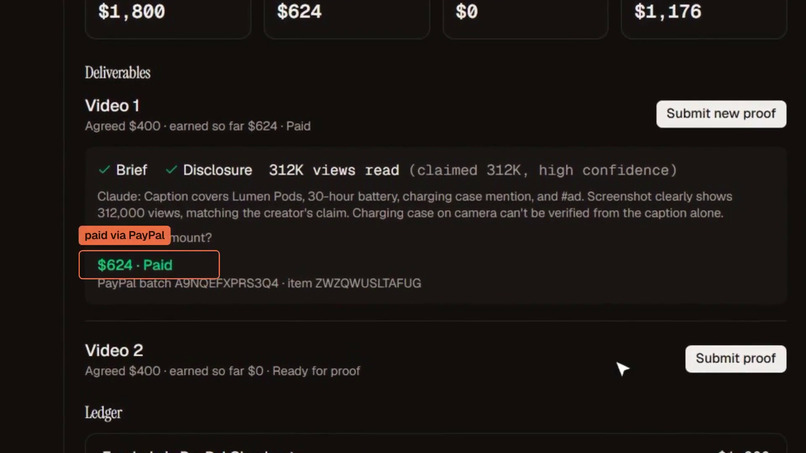
The hook: Claude verified Priya's post and paid $624 through PayPal Payouts.
-
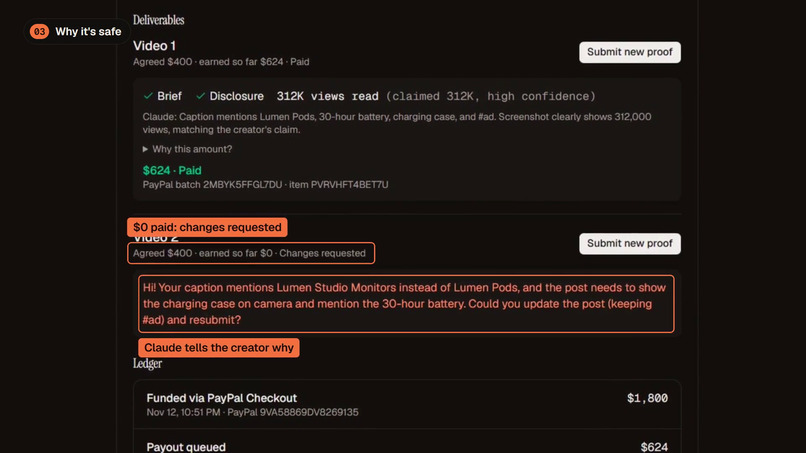
Wrong product? Claude requests changes, tells the creator why, and pays $0
-
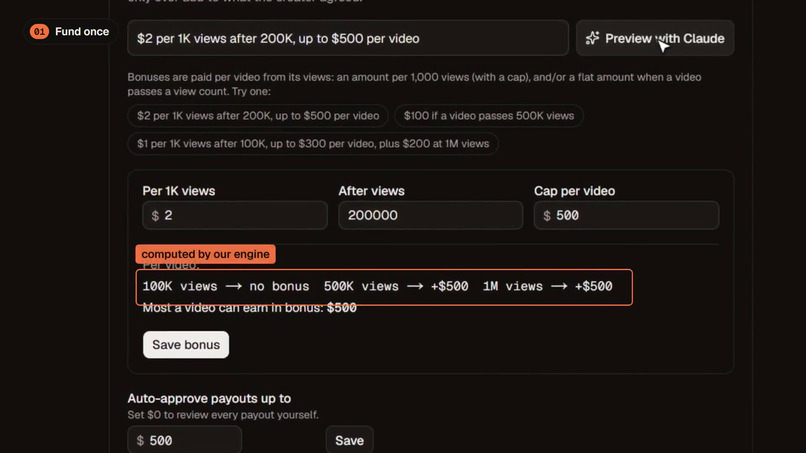
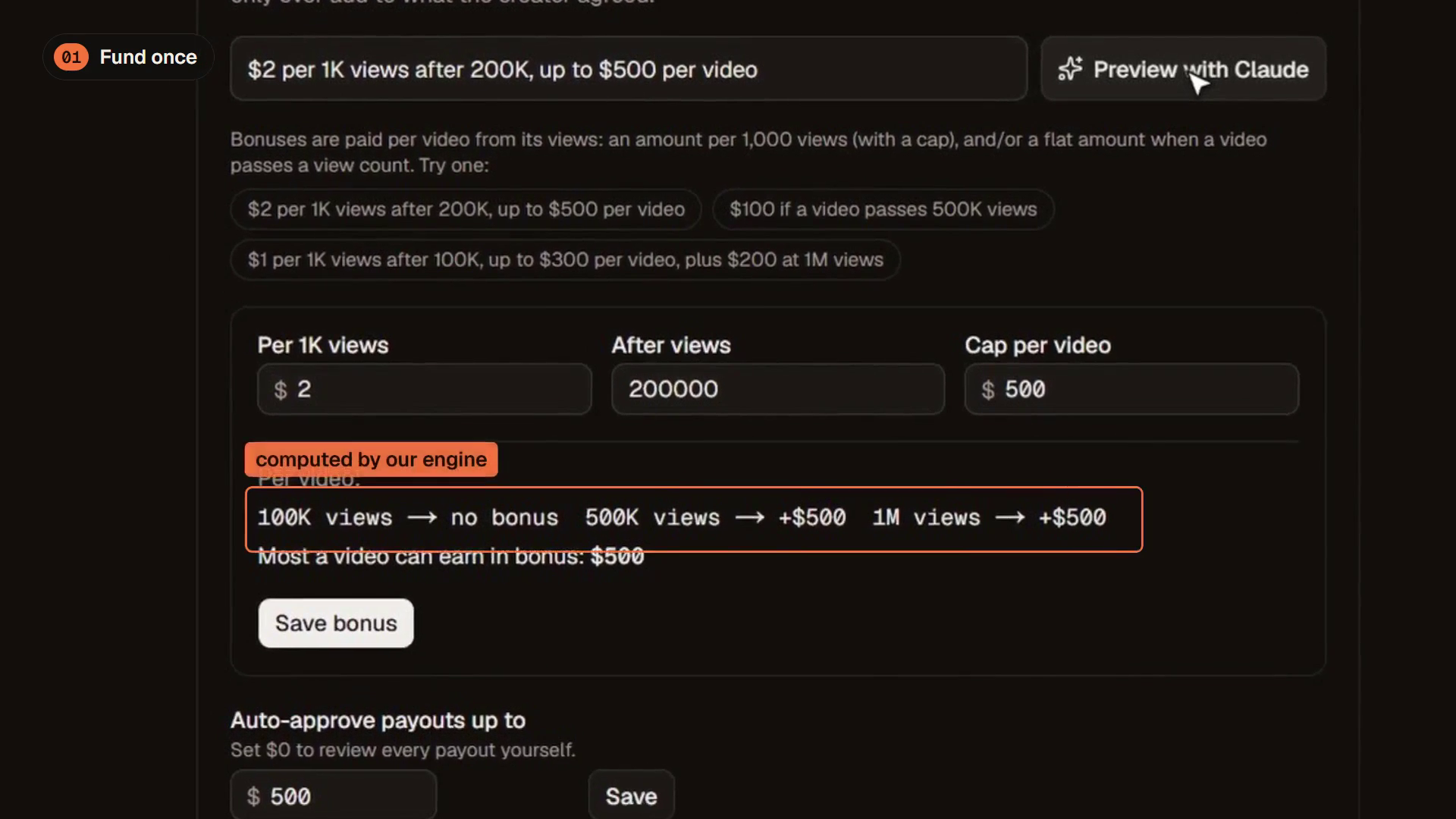
Fund once: the bonus in plain words; Claude parses it, our engine shows what each view count pays.
Inspiration
Small consumer brands now run most of their marketing through creators, and they still pay them by hand. A sponsorship deal carries view clauses, per-1,000-view bonuses with caps, and bonus tiers. Someone has to open every post, read the numbers off an analytics screenshot, work out what is owed and send the money. In our interviews with 292 founders, 32 pay creators, and every one of them does the payment step by hand. Creators chase late payments; brands overpay or underpay. The deal isn't the bottleneck. The payout is.
What it does
Collabio is a creator marketplace: a brand briefs, negotiates and books creators. This build adds the money, end to end on PayPal:
- Fund once. The brand writes the bonus the way they would say it ("$2 per 1K views after 200K, up to $500 per video"). Claude turns it into structured terms, and our engine shows exactly what 100K, 500K and 1M views would pay. The brand sets an auto-approve limit and funds the whole budget (agreed price plus the most the bonus can pay) with PayPal Checkout (Orders v2: create, approve, capture).
- Prove it. The creator submits the post link, the caption and an analytics screenshot.
- Claude settles it. A Claude agent checks the brief and the #ad disclosure and reads the view count off the screenshot with vision. A deterministic engine computes what is owed; a separate policy decides whether it may pay on its own. Within the brand's limit, the agent pays the creator through PayPal Payouts in under a minute (43 s from proof to "Paid" in our recorded demo). Above the limit, the payout waits for one click, with the evidence attached. If the post does not match the brief, Claude requests changes and tells the creator why, and nothing is paid.
- Close it. Closing the deal refunds the unspent budget through PayPal. Verified webhooks and a status worker keep every payout in sync; every movement lands in an append-only ledger with its PayPal ID.
- Ask it. An AG Studio money dashboard (AG Grid) shows funding, payouts, bonus paid, refunds and cost per 1,000 views, and a Claude agent inside AG Studio answers questions and builds new charts on request ("Which creator gives me the cheapest 1,000 views? Add a chart.").
How we built it
- Frontend: Next.js (App Router), React, TypeScript, Tailwind; AG Studio (AG Grid) for the money dashboard.
- Backend: FastAPI (Python 3.12), asyncpg, Supabase (Postgres, Auth, Storage for proof screenshots).
- PayPal (sandbox): Orders v2 create / approve (redirect) / capture, Payouts, Refunds, and webhooks with
signature verification. OAuth tokens are minted from the client credentials and refreshed automatically.
Every POST carries a
PayPal-Request-Idthat is reused on retry, so an unknown outcome is replayed, never repeated. - AI (Anthropic Claude): Claude Sonnet runs the settlement agent (vision + tool use) and the AG Studio dashboard agent (through our own adapter from AG Studio's agent framework to the Anthropic Messages API); Claude Haiku parses plain-English bonus terms into structured output.
- Hosting: Render (API, web app and a nightly cron from one Blueprint).
- Building with AI: built with Claude Code; we used the APIMatic PayPal Server SDK context plugin to check our retry and error-handling design against the SDK's documented semantics.
The guardrails (why it is safe to let an agent move money)
- The model never supplies an amount. Its only money tool takes a reason. Amounts come from a pure, table-tested engine; auto-pay is decided by a separate pure policy (brand limit, confidence, the view read within 5% of the claim, brief and disclosure checks).
- Row locks, unique batch IDs and idempotent capture mean double clicks, retries and racing runs never pay twice. Paid plus refunded can never exceed what was captured.
- Brands keep control: an auto-approve limit (set $0 to review every payout), one-click approvals with evidence, and "changes requested" instead of silent rejections.
- Honest limit: a fake screenshot under the brand's limit could still be paid. Mitigations today: Claude's confidence, the 5% claim check, the limit, human approval, and $0 = review everything. Reading views from the platforms' analytics APIs is future work.
Challenges we ran into
- Making an agent safe with money: we moved every number out of the model into code the model can only ask.
- PayPal's unknown outcomes (a POST that times out): retries replay with the same request ID, and a payout is never marked failed while PayPal might still be paying it.
- Plugging Claude into AG Studio's agent framework, which was built around a different model API: we wrote an adapter that maps its requests and tool calls onto the Anthropic Messages API.
Accomplishments that we're proud of
- A real money loop on the PayPal sandbox: fund → verify → pay → approve → refund, driven by an agent and bounded by code. Every dollar in the demo is a real PayPal sandbox transaction with its PayPal ID.
- A public demo judges can use with no sign-up and no keys.
- About 1,900 automated tests (≈1,070 backend, ≈840 frontend) plus live PayPal sandbox tests.
What we learned
Agentic commerce works when the agent decides what happened and code decides what it is worth.
What's next
Platform analytics APIs instead of screenshots, Indian payment rails for Indian creators, a platform fee, and disputes.
Built With
- ag-grid
- ag-studio
- anthropic
- apimatic
- claude
- fastapi
- nextjs
- paypal
- paypal-checkout
- paypal-orders
- paypal-payouts
- paypal-refunds
- postgresql
- python
- react
- render
- supabase
- tailwindcss
- typescript
