-
-
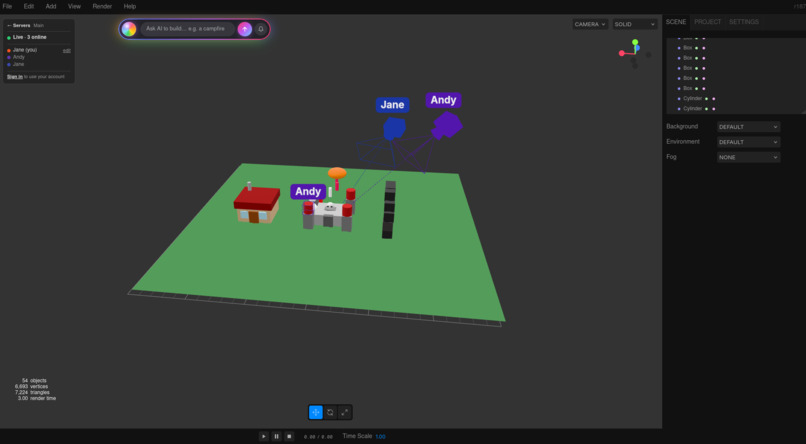
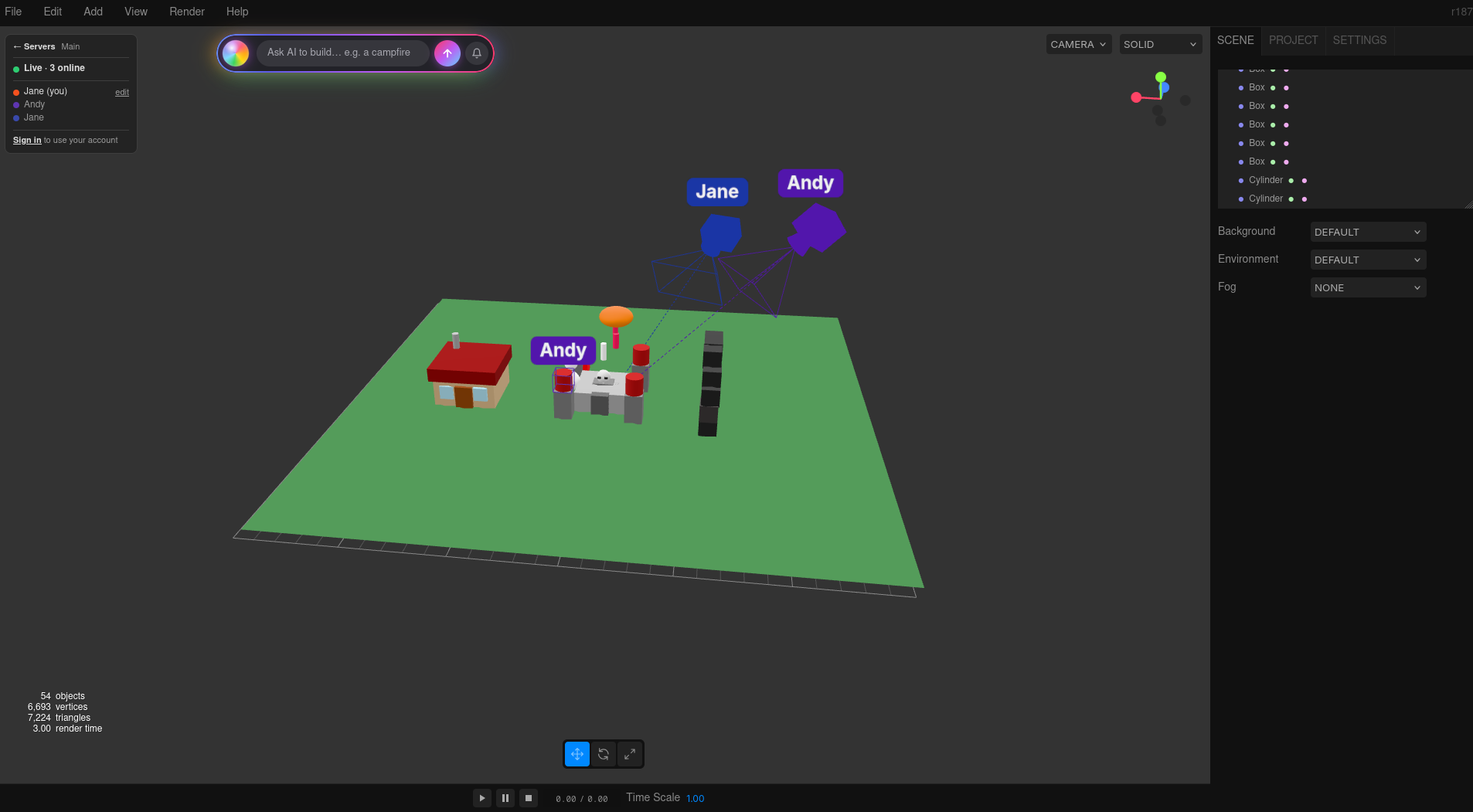
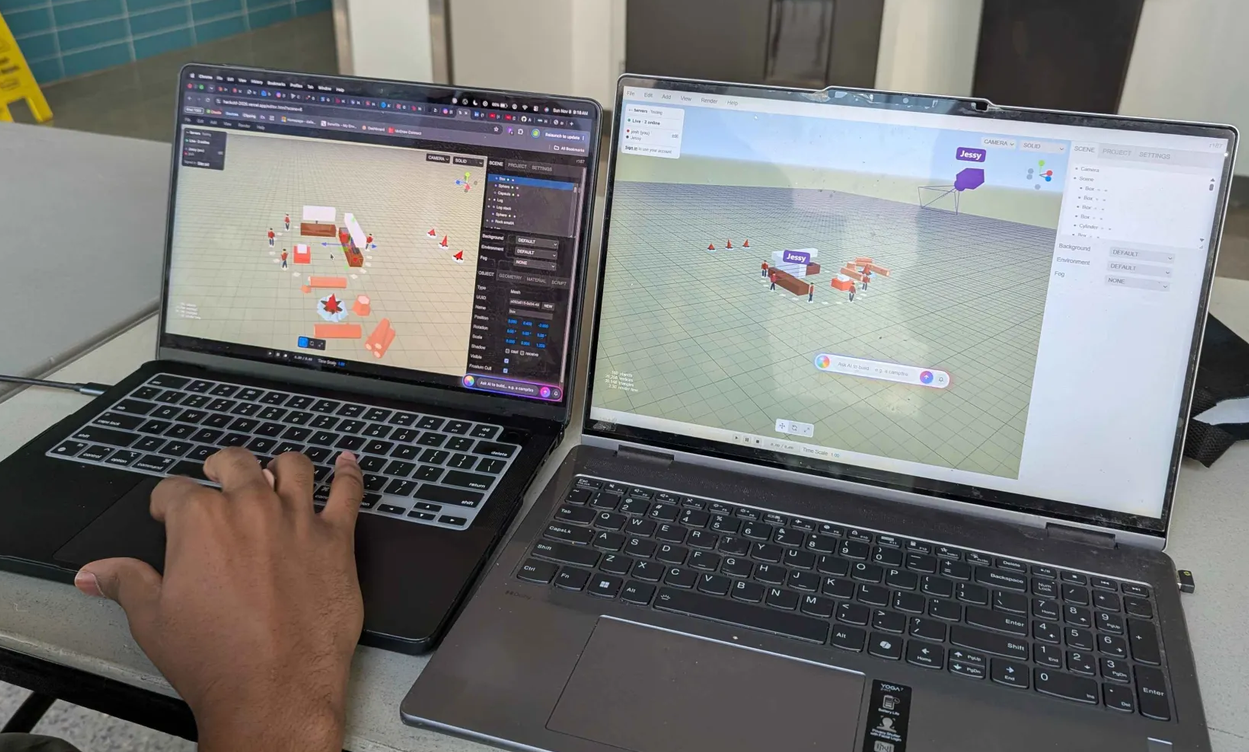
Jane and Andy collaborating on a 3D Scene. (First iteration)
-
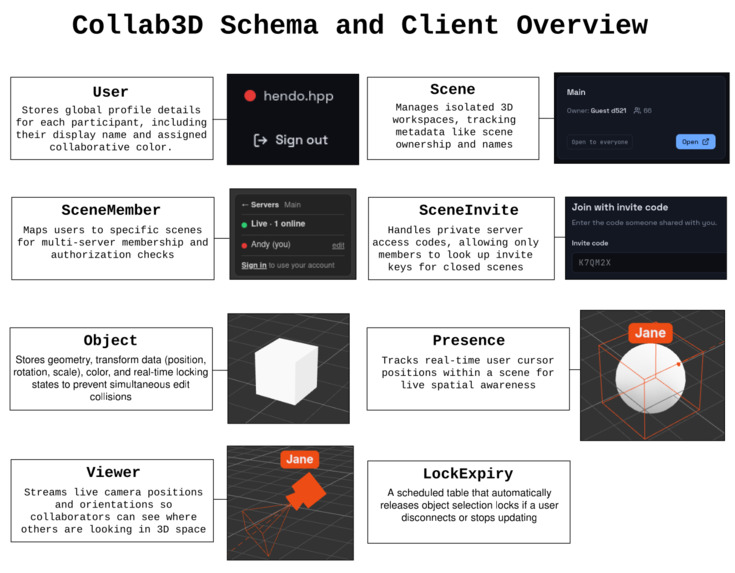
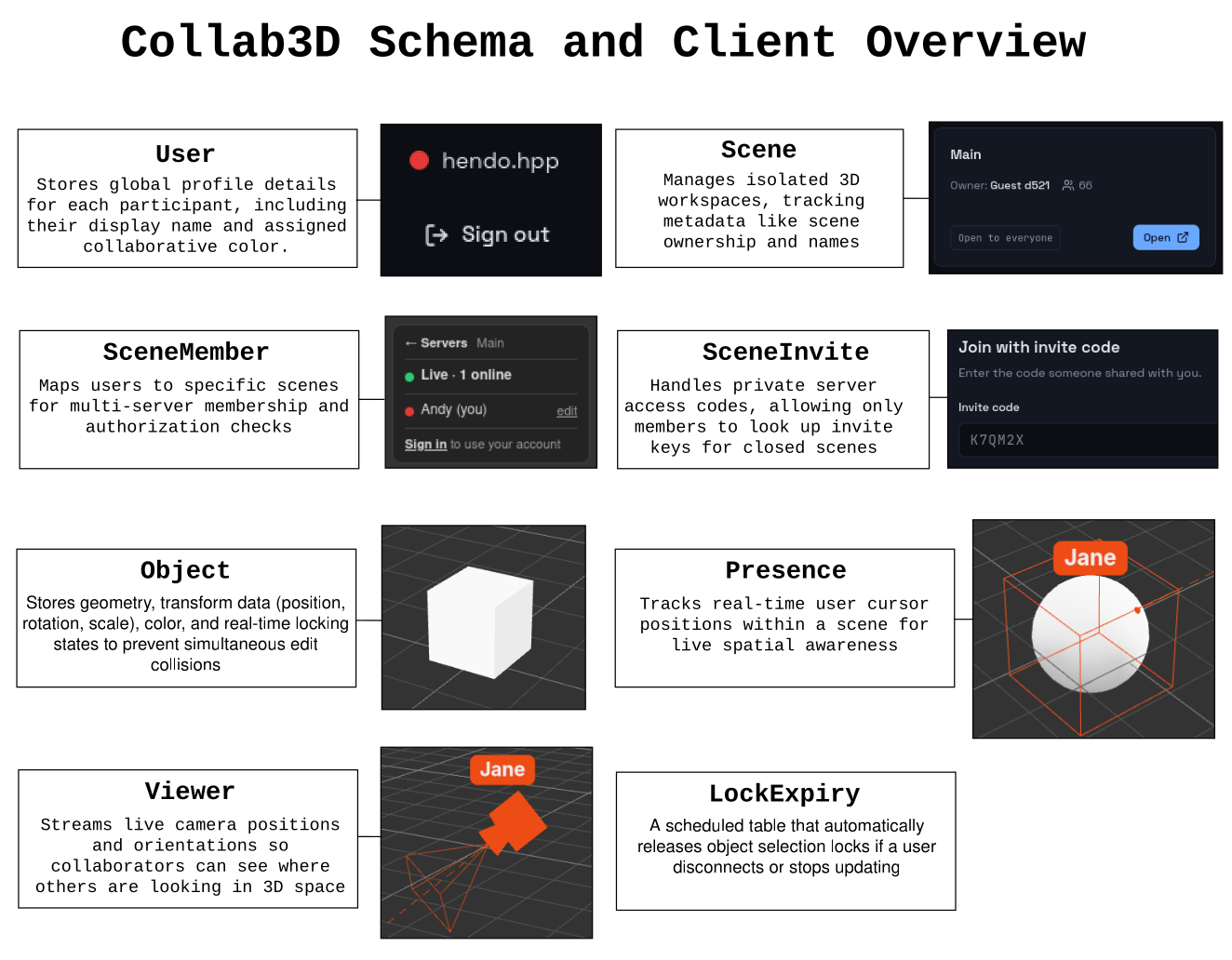
Spacetime mappings to client uses.
-
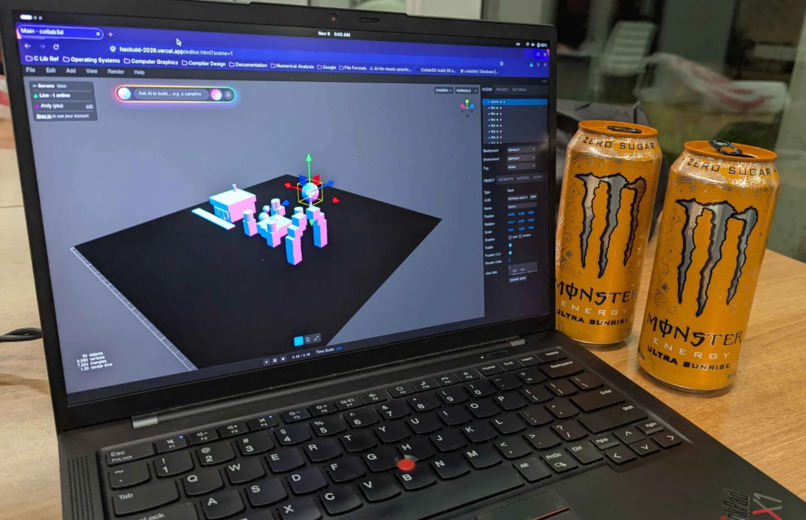
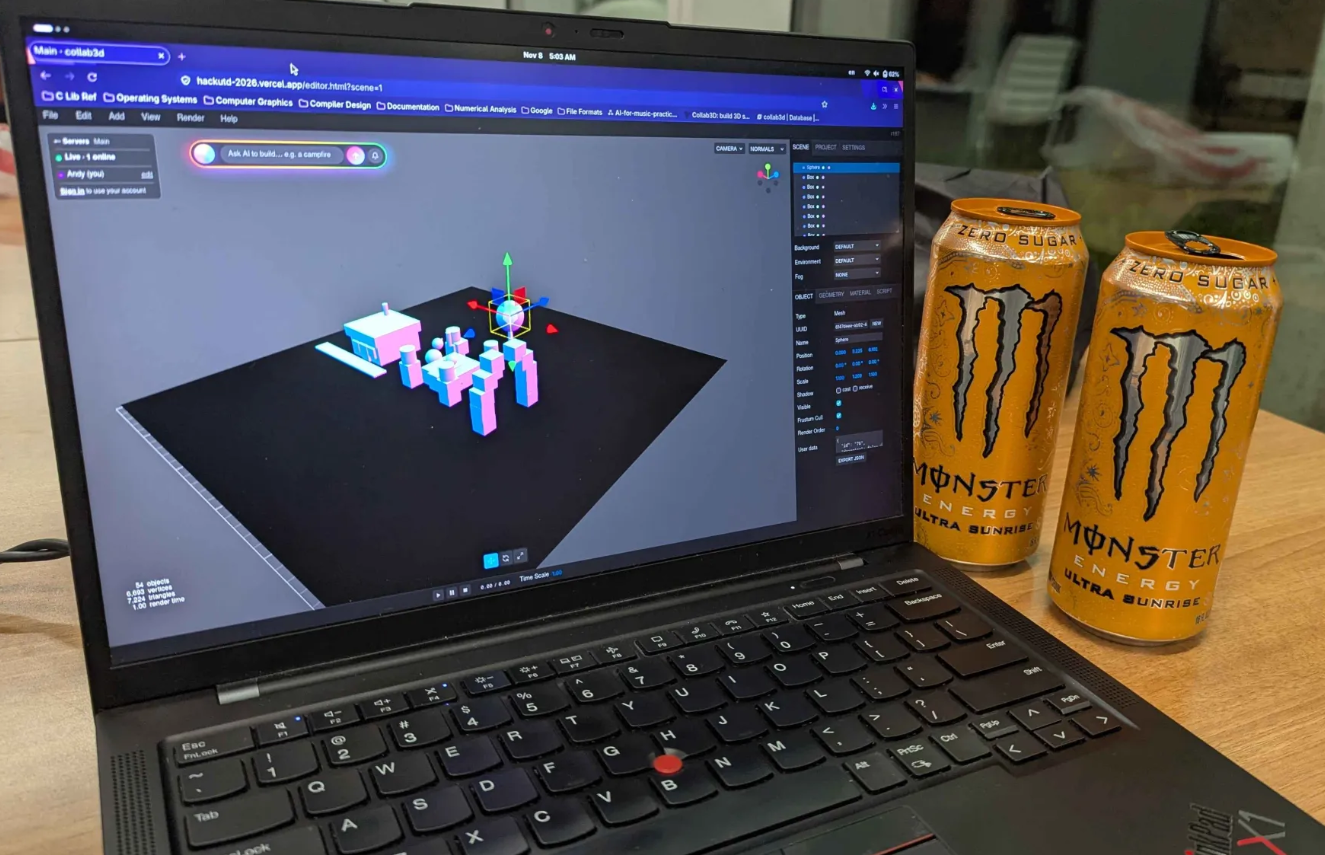
View of object normals and monster!
-
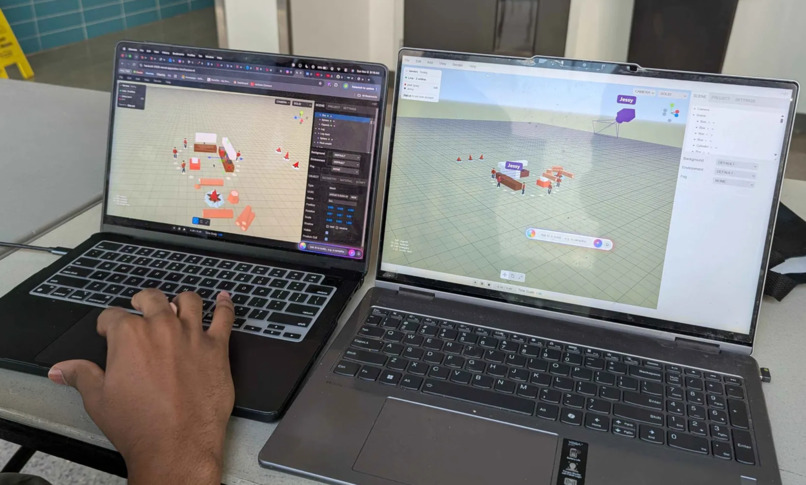
Two students building a kitchen. (Final MVP)
-
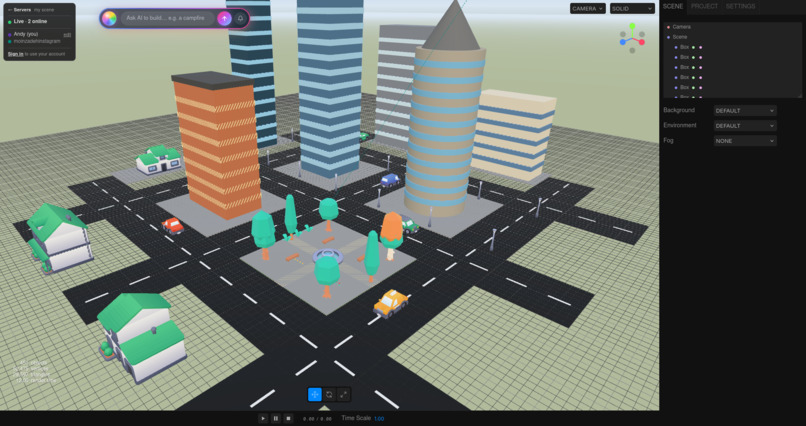
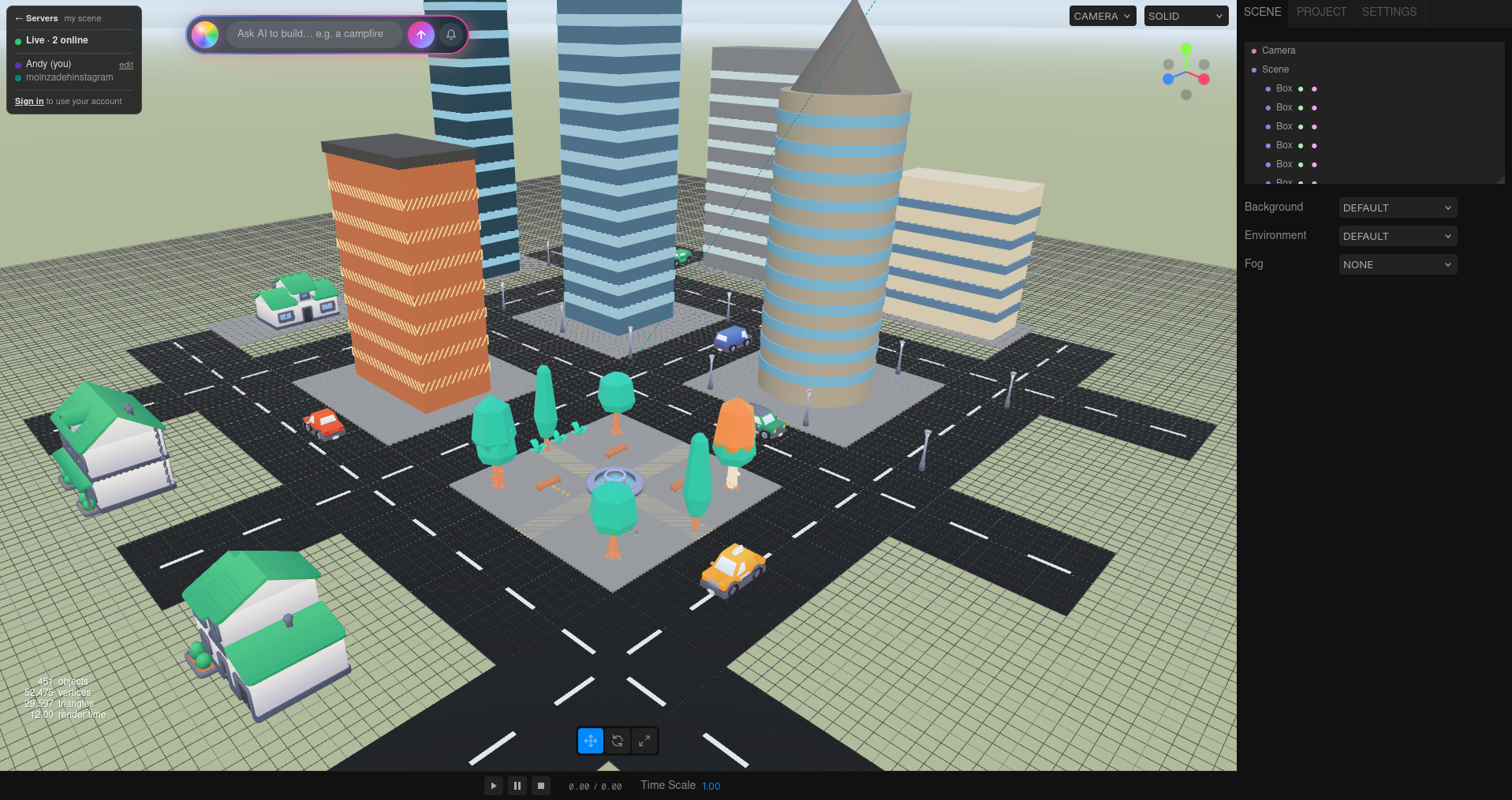
AI generated city within the 3D scene.
Inspiration
One of the team members on the Collab3D team has experience building brands on YouTube, with one channel reaching over 100 thousand subscribers and 123 million views. We were looking at how we could make animation collaborations for this YouTube channel more efficient and started discussing a tool that allows many people to work on one animation at once (not file-based version control, but true real-time synchronization).
As discussion took off, we ended up expanding from 2D animation into a real-time collaborative 3D scene-building tool tailored for animators, game developers, artists, and creators. Choosing SpacetimeDB as our backend was a game-changer. Using Rust, business logic was embedded directly into the database engine, removing the need for a standard network pipeline (Client -> API -> Server -> Database). We produced a robust MVP early in development and scaled out features seamlessly
Project
Our initial time went into scoping and architecture. We consulted directly with a SpacetimeDB representative to validate our core concepts and see where we could improve. Once our scope was locked in, we mapped out the system's core capabilities before touching any code.
Some notable features of Collab3D:
- In-Process Rust Reducers: handle authentication, scene creation and membership, and object modifications directly in the database layer, eliminating traditional API latency.
- Stateless Client-Side Animations: pushed lightweight state information (animation start time, duration, path, etc.) instead of streaming data, allowing the client side to render without strain.
- Granular Locking: concurrent edits and accidental disconnects were protected by locks, ensuring multiple editors do not try to write the same data, and if an editor loses connection, the app doesn't become deadlocked.
With our architecture planned, we leveraged agentic AI workflows and CI/CD tools to accelerate development, allowing us to rapidly iterate, test, and ship our MVP.
What we Learned
There was a wide skill range within the team, which created an incredible learning environment:
- An up-and-coming software engineer learned development environments, Git version control, JavaScript integration, and architectural decision-making.
- An agentic AI veteran taught the team how to prompt-engineer and direct AI agents to write cleaner code.
- As a team, we deepened our knowledge of Rust, the SpacetimeDB API, how database-driven state models replace traditional CRUD backends, and how reducers guarantee data consistency.
Challenges
- Because we prioritized the 3D editor first, our landing page template ended up being incompatible with our tech stack, forcing us to manually port and rewrite it to match our architecture.
- In the rush of fasthacking, a backend feature was accidentally implemented using our frontend stack. Our team caught it during review and quickly refactored it into Rust database reducers.
- Two team members unknowingly started building the exact same feature simultaneously. Quick sync-ups cleared up the overlap, allowing us to pivot and redirect focus to other key areas
Built With
- 3d-modeling
- database
- javascript
- reducers
- rust
- spacetime
- spacetimedb
- state-management
- three.js
- typescript
