Inspiration
As a remote worker who’s lived across Europe and North America, I struggled to find meaningful, community-focused housing without endless logins or generic rental sites. I wanted a platform that prioritized connection over transaction—one that let users explore the vibe of a space, not just the price tag. That’s how CoLiving Finder was born: to make global coliving discovery simple, transparent, and human.
What it does
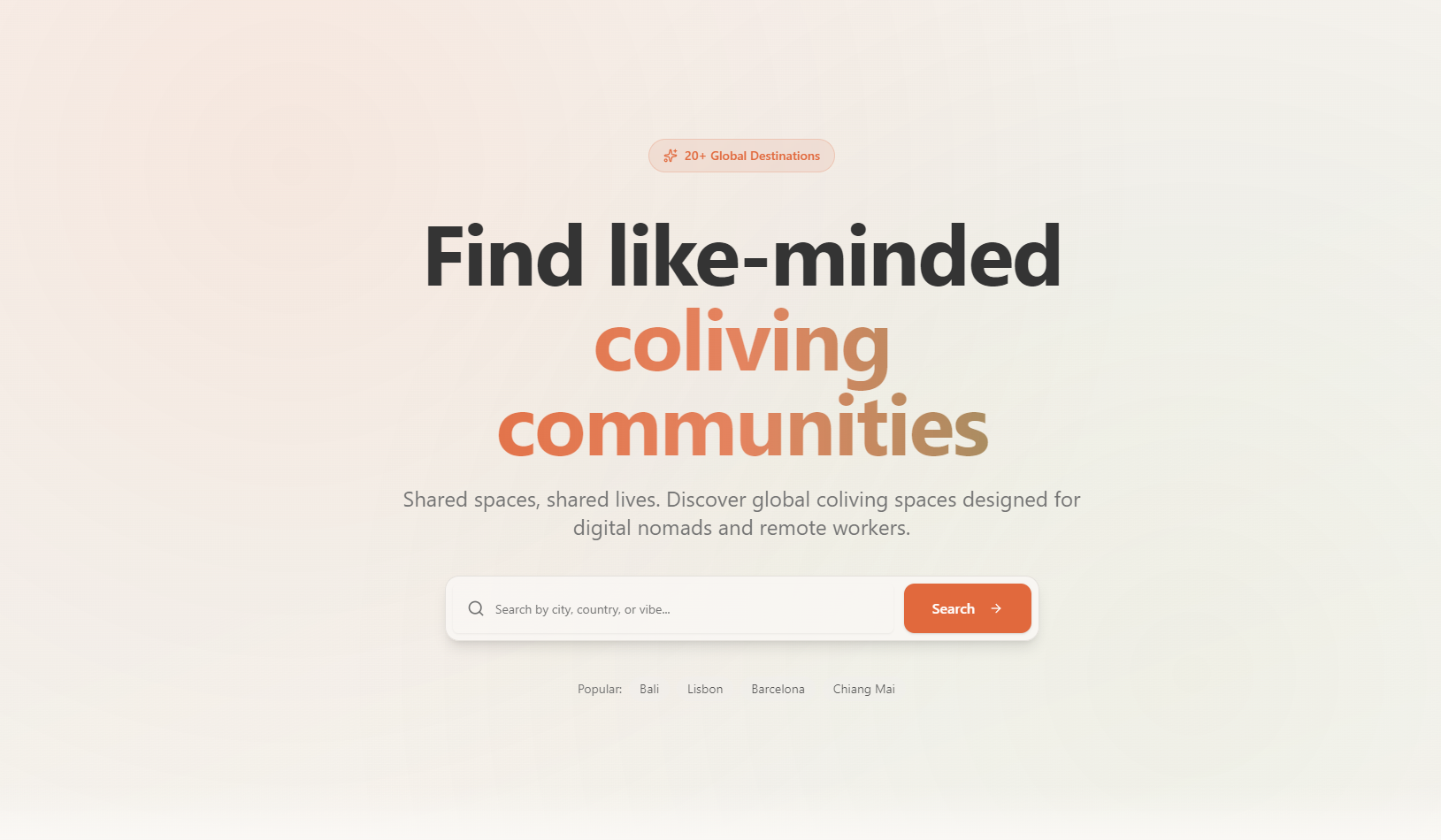
CoLiving Finder is a free, login-free platform for digital nomads and young professionals to discover, filter, and inquire about coliving spaces worldwide. Users filter by price, location, stay duration, and community vibe (creative, wellness-focused, etc.), explore detailed listing pages with reviews and community events, and submit booking inquiries directly—all without barriers.
How we built it
We started with wireframing core pages (Home, Discover, Detail, Inquiry) in Figma, focusing on intuitive filtering and seamless navigation. The front end was built with React and TailwindCSS for responsive design; the back end uses Node.js/Express to handle filter logic and form submissions, with MongoDB storing listing, review, and event data. We prioritized real-time filter refreshes (no page reloads) and clear, accessible UI for global users.
Challenges we ran into
The biggest hurdle was perfecting the filter logic—balancing AND/OR rules (e.g., multiple locations = OR, price + vibe = AND) while keeping results fast. We also struggled with making the image gallery robust (handling load failures with placeholders) and ensuring form validation was strict but user-friendly (no overly technical error messages).
Accomplishments that we're proud of
We built a fully functional platform that delivers on the "zero login barrier" promise—users can explore every feature without account creation. The filter system works flawlessly in real time, and the listing detail pages capture the human side of coliving (reviews, events) rather than just basic stats. We also made the monetization model (commission-based, free for users) transparent, building trust with both users and coliving hosts.
What we learned
We deepened our understanding of user-centric design—especially for global audiences with varying needs (e.g., price in USD/EUR, region-specific filters). We also learned to balance technical complexity (real-time filtering) with simplicity, and how to turn vague user needs ("I want a community vibe") into tangible, filterable tags. Most importantly, we learned that transparency (no hidden fees, clear commission notes) is key to building user trust.
What's next for this project
First, we’ll expand the list of coliving hubs to include more Latin American and Southeast Asian cities, reflecting the global nomad community’s priorities. We plan to add a map view for location-based discovery, and integrate a messaging feature to connect users directly with hosts. Long-term, we’ll explore partnerships with coliving providers to verify listings and reviews, and add multi-language support (starting with Spanish and Portuguese) to serve more users worldwide.

Log in or sign up for Devpost to join the conversation.