Inspiration
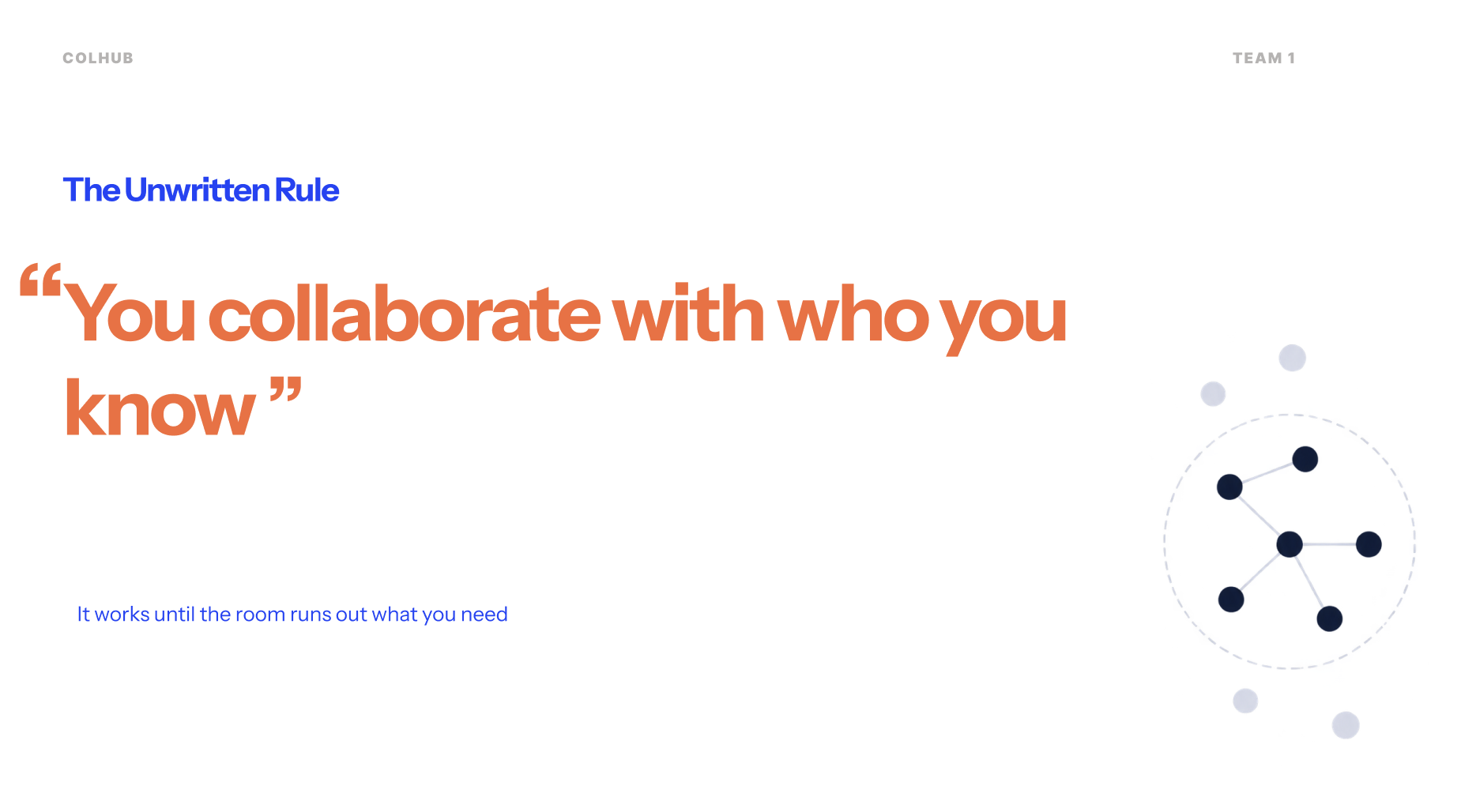
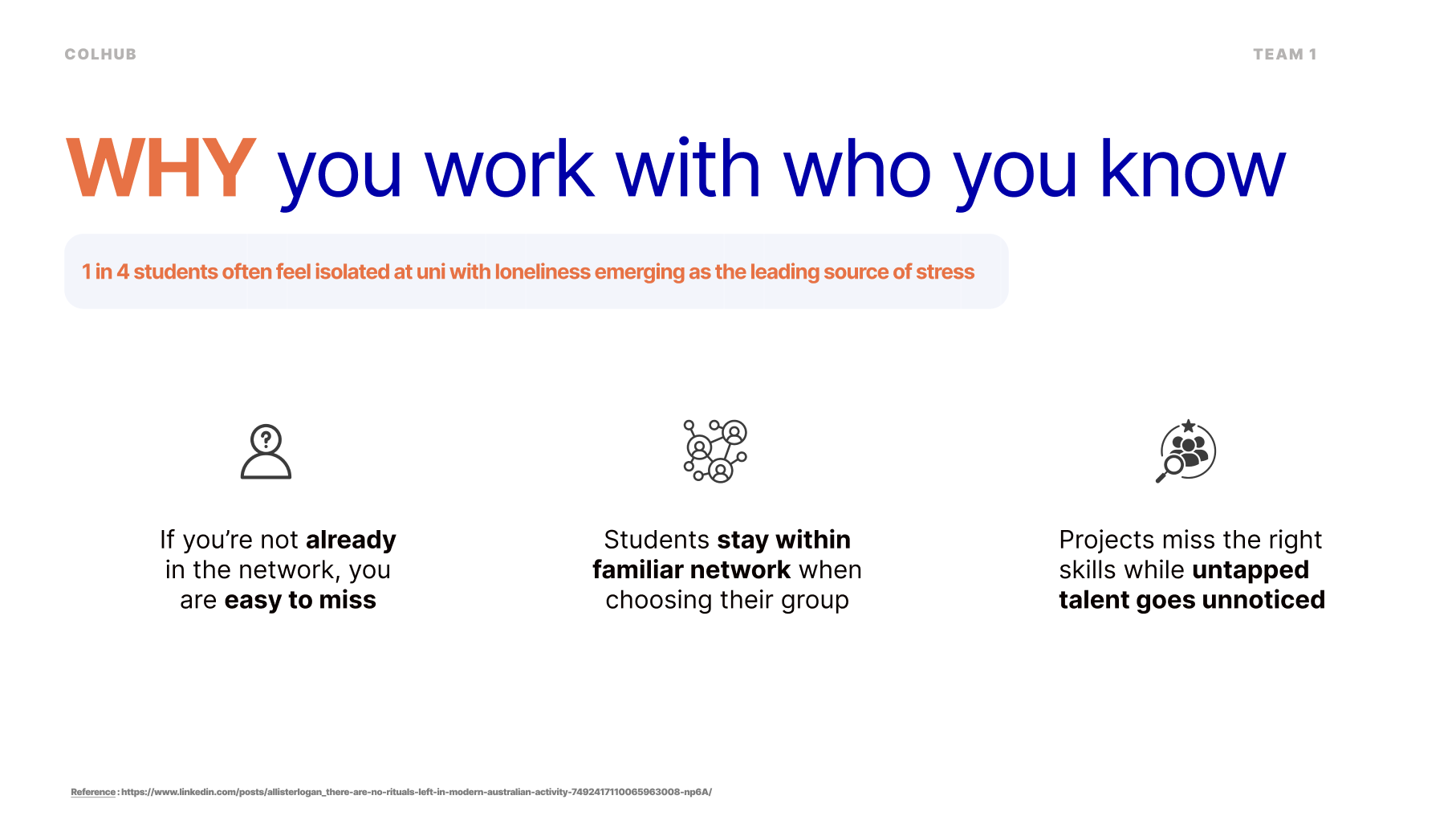
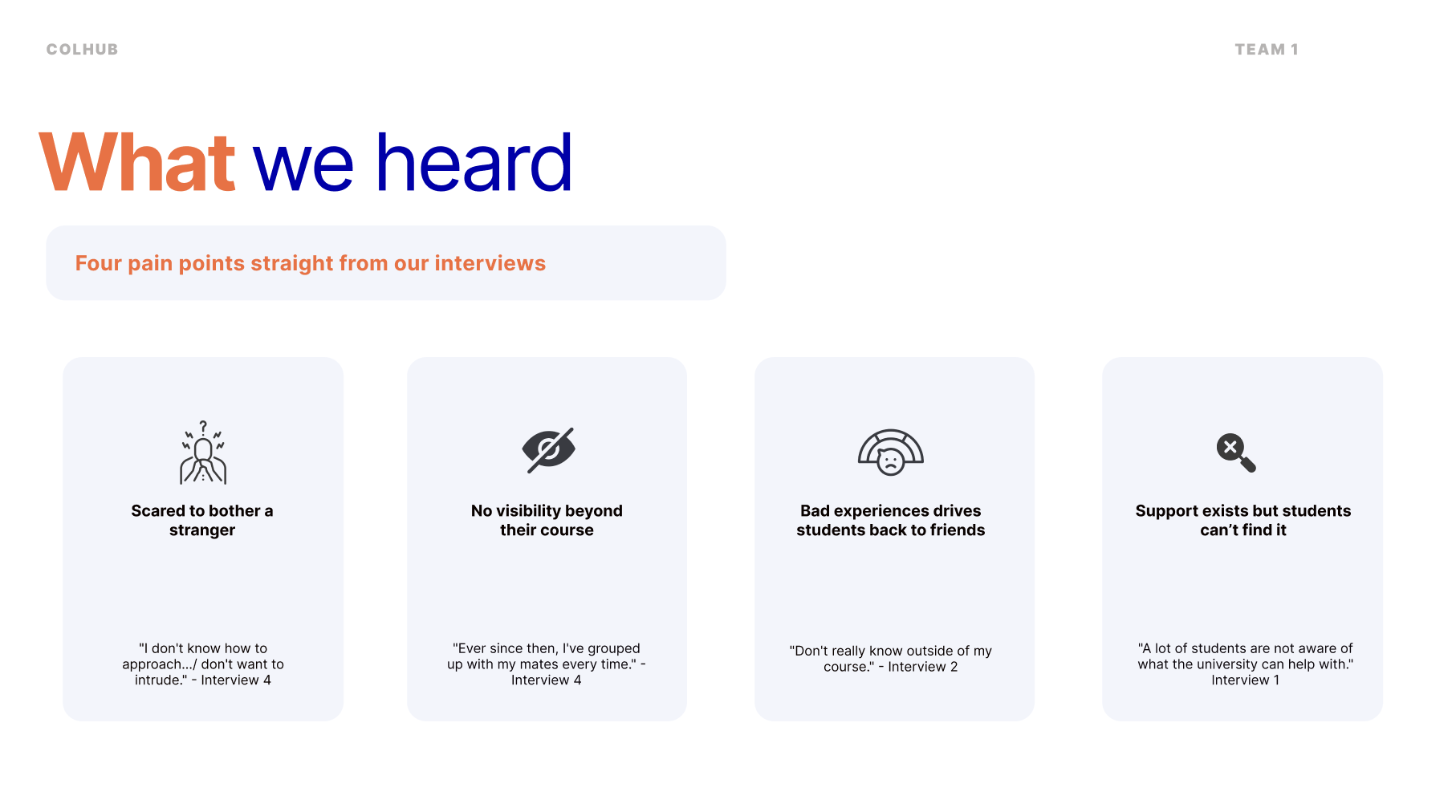
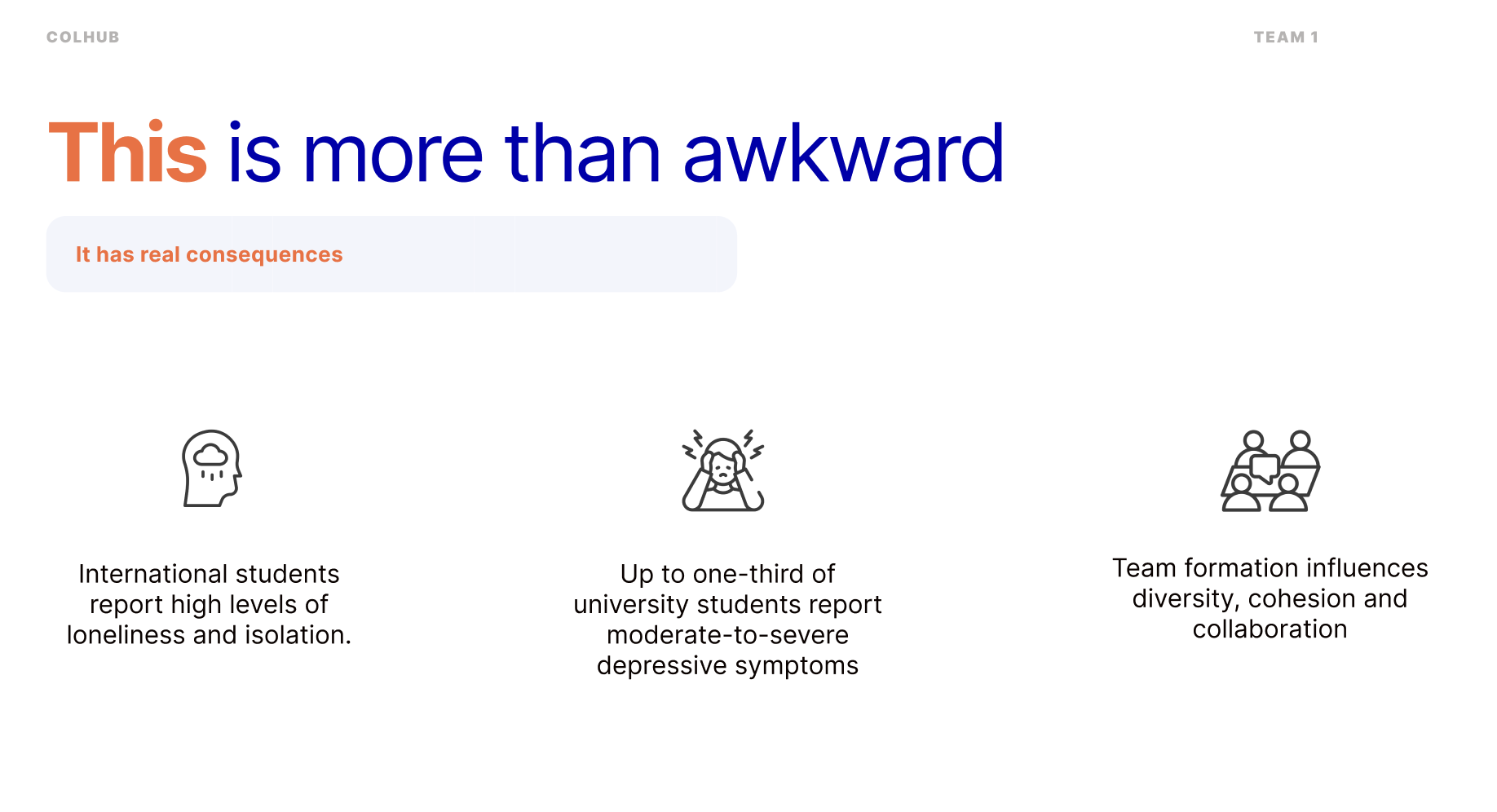
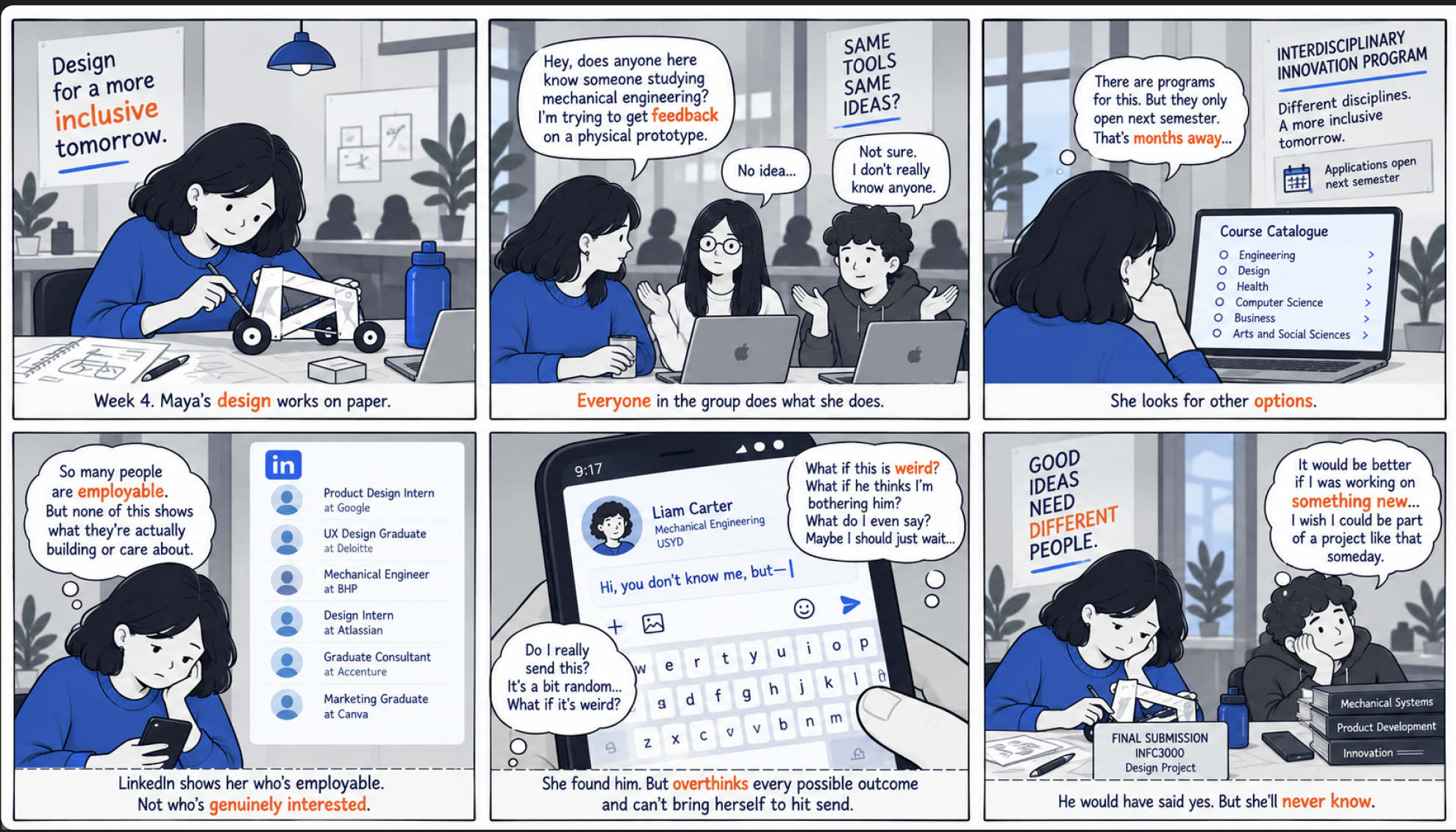
We kept coming back to the same unwritten rule at university: you collaborate with who you know, and finding anyone else is your own problem. In our interviews, students told us the same thing over and over — "I don't know how to find those people," "I don't want to intrude," "ever since then I've grouped up with my mates every time." We realized this wasn't just an inconvenience — it was a structural gap. So we built ColHub to fix it.
What it does
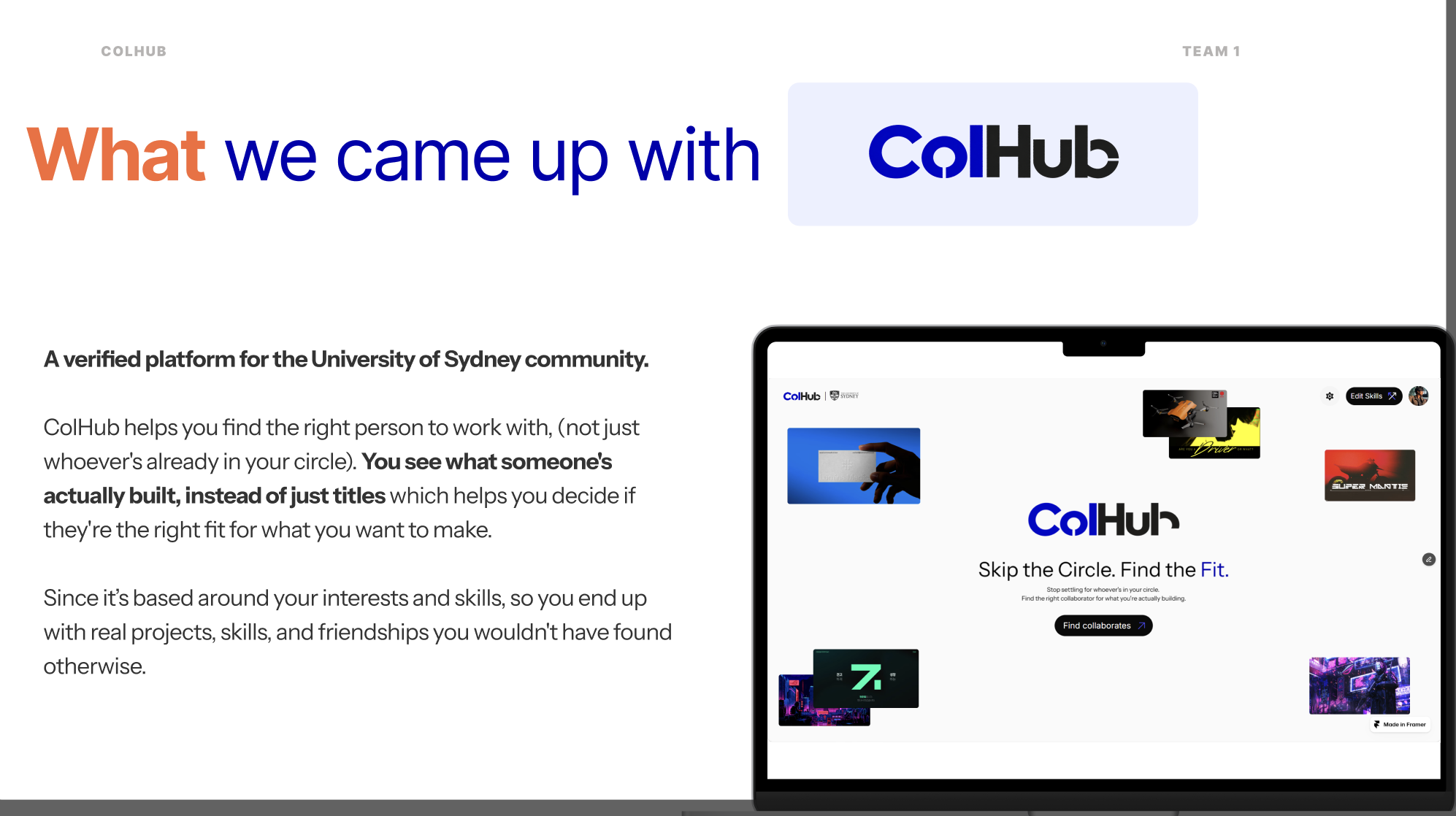
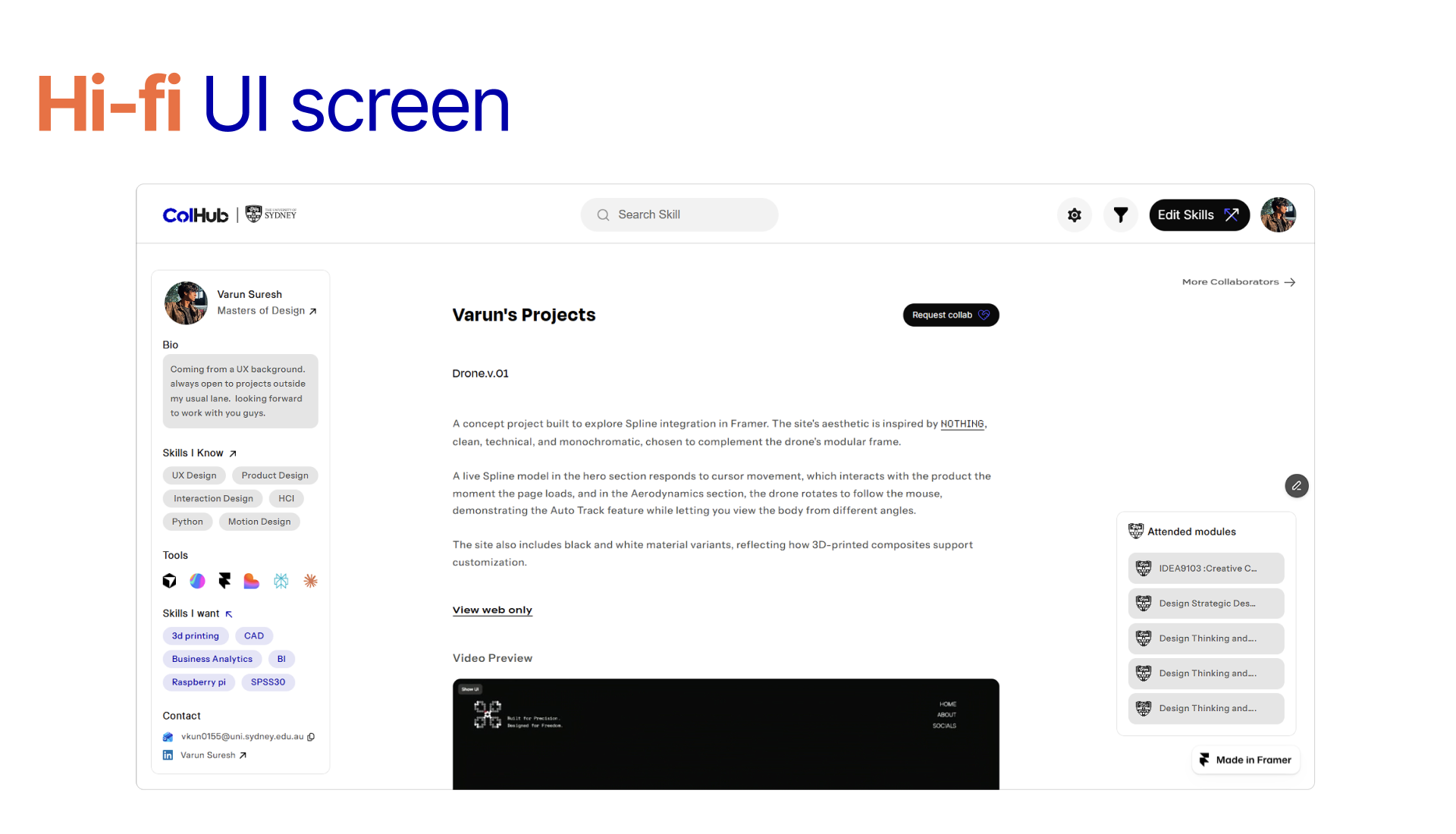
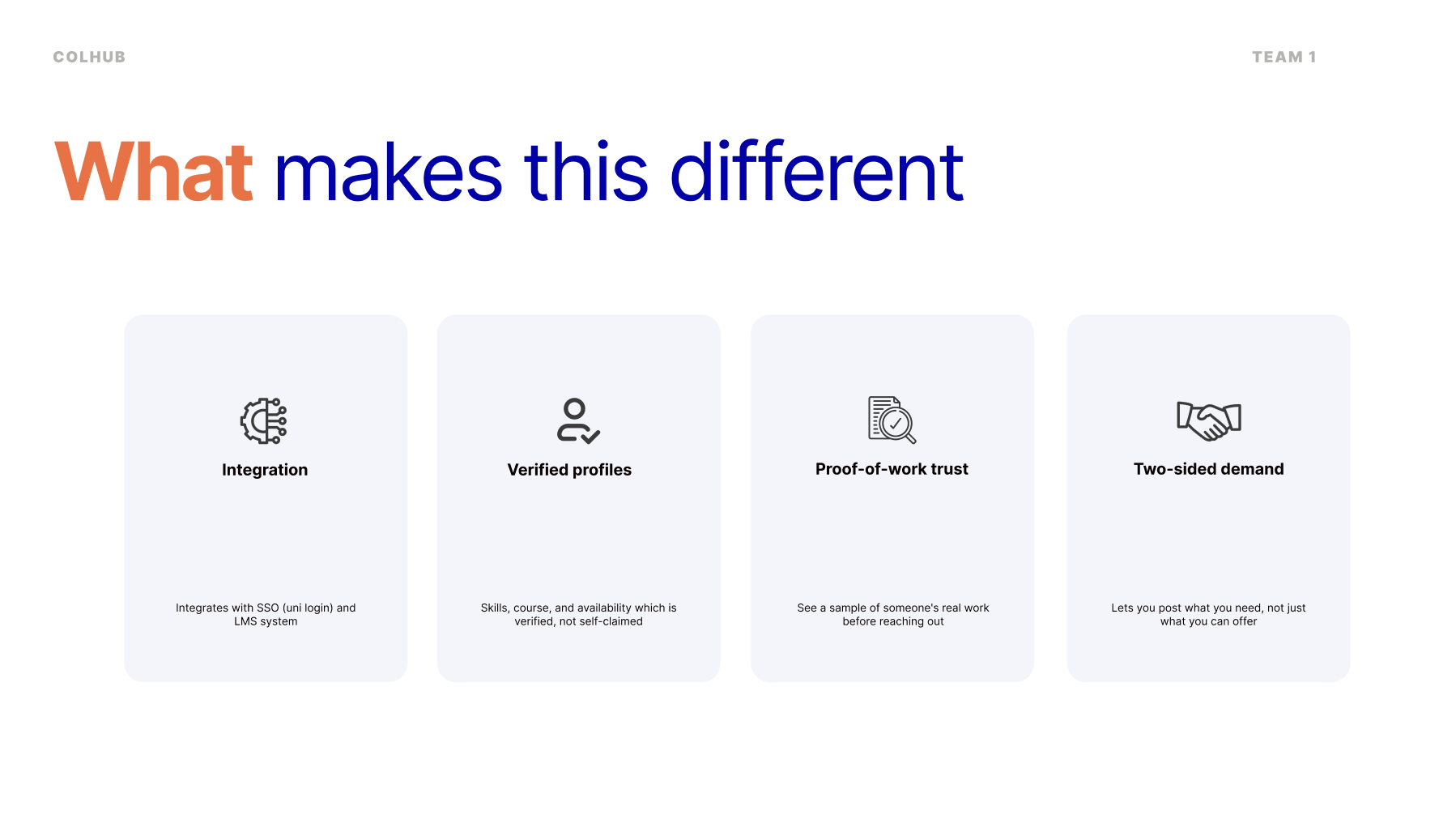
ColHub surfaces the skills and collaborators students can't currently see. It lets students search across cohorts, faculties, and years by skill — not by who they happen to already know. Verified profiles (skills, course, availability, working style) build trust before anyone has to send an awkward cold message.
How we built it
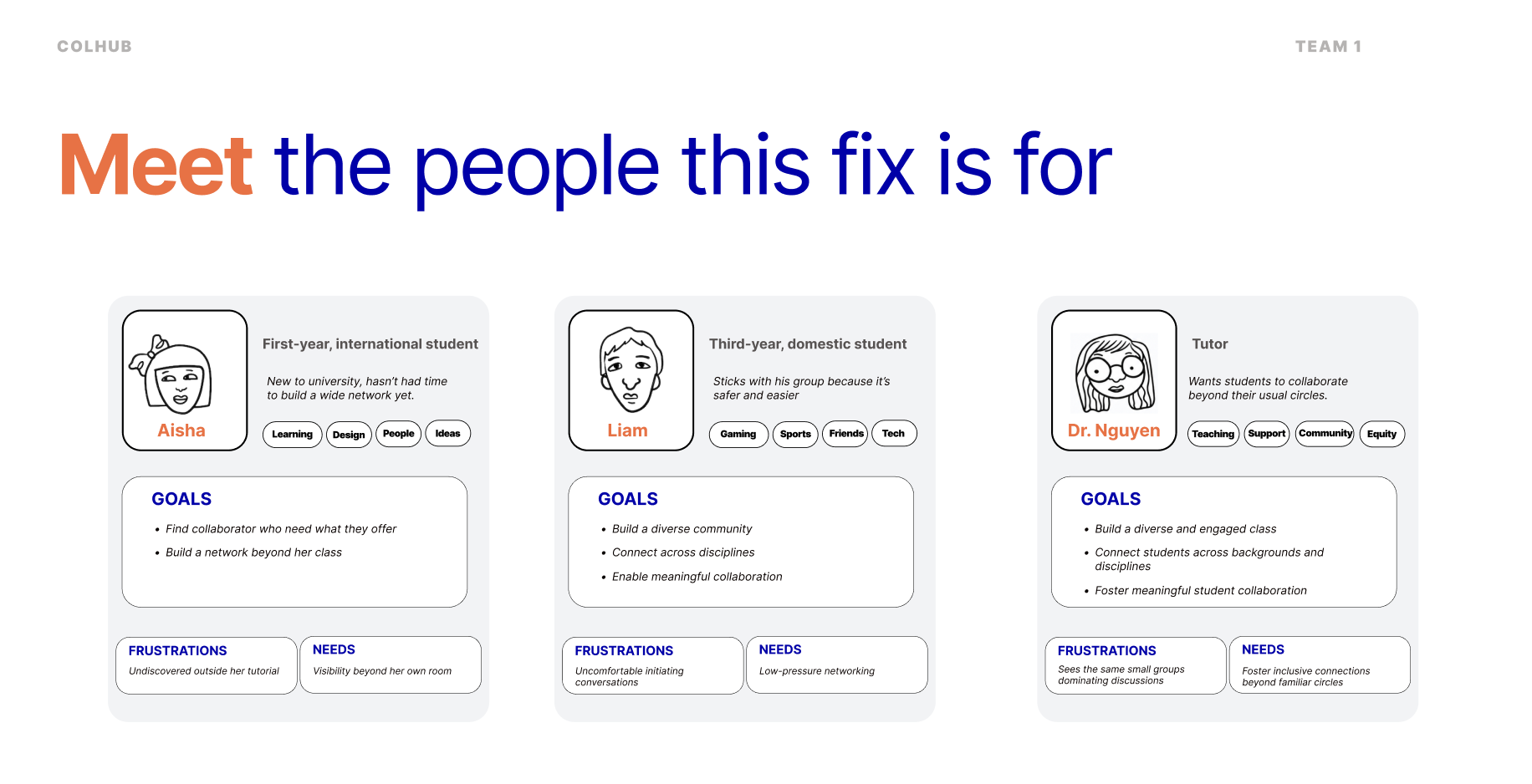
We started with primary research — four in-depth interviews with students across design, architecture, and interaction design — paired with secondary research on student loneliness, belonging, and existing university collaboration tools. From there we mapped the information architecture (onboarding, skill profiles, filtering, project uploads) and built personas representing the four groups most affected: first-years, comfort-zone returners, online students, and unit coordinators. We prototyped the core flow in and tested it with a task-based user testing script covering onboarding, finding a collaborator, and profile completion.
Challenges we ran into
The biggest challenge was avoiding the trap every existing solution falls into — building "just another directory" that assumes people will use it if it exists. Our research showed the real barrier isn't lack of a directory, it's the social risk of reaching out and the invisibility of who's even out there. We had to keep pulling ourselves back to design around why students default to who they know, not just build a browsing tool.
Accomplishments that we're proud of
We grounded every design decision in real interview quotes rather than assumptions — every feature on our board traces back to a specific pain point a real student described to us. We're proud that our solution doesn't just add another networking app to the pile, but targets the actual behavioral reason students stay in their own circle.
What we learned
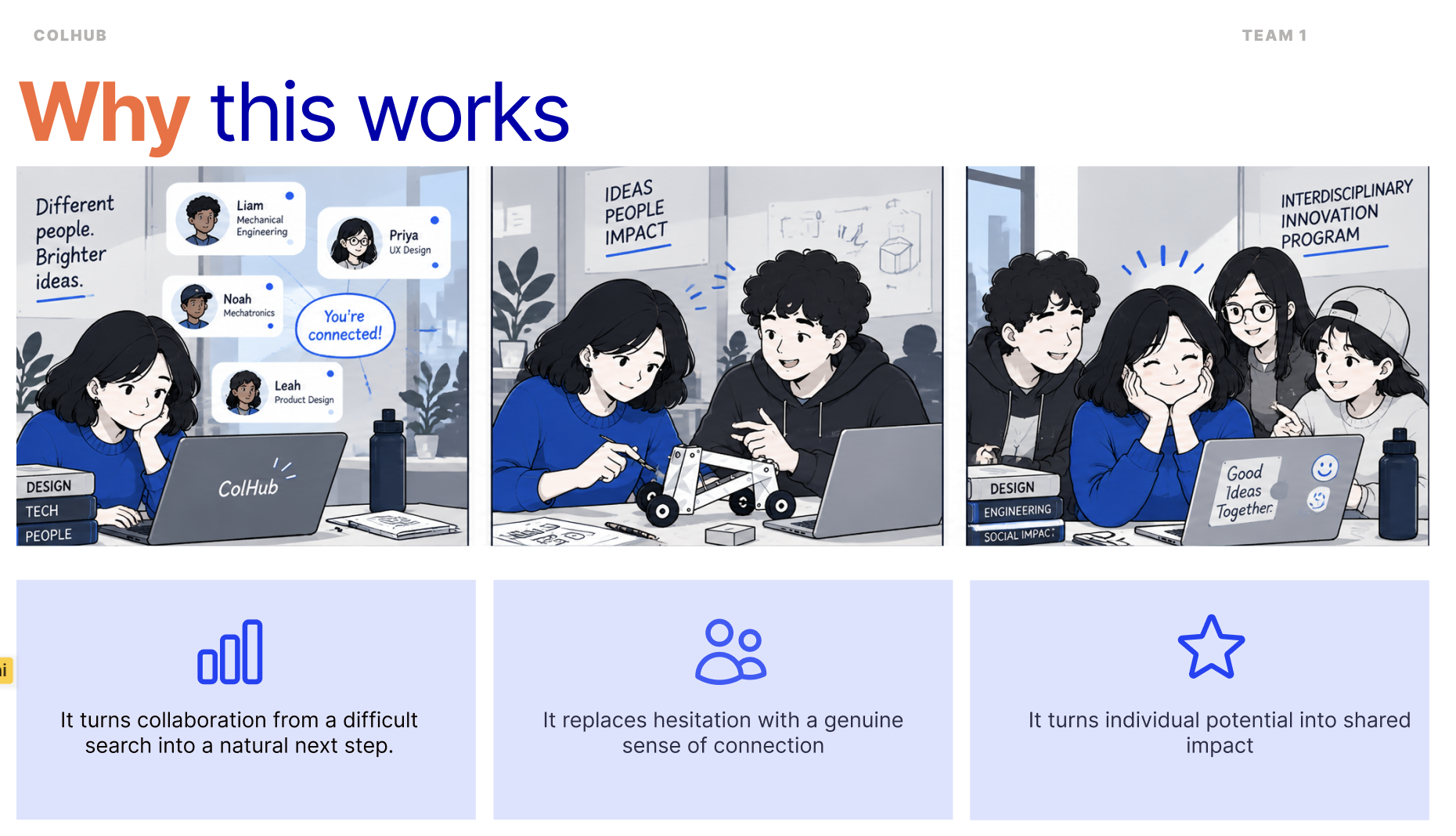
We learned that the biggest barrier to collaboration at university isn't a lack of tools — it's invisibility and social risk. Students don't need another marketplace; they need to see what already exists around them and have a low-friction way to act on it. We also learned how much research can save you from building the wrong thing — several of our early feature ideas were reshaped or dropped entirely once we heard what students actually said.
What's next for ColHub
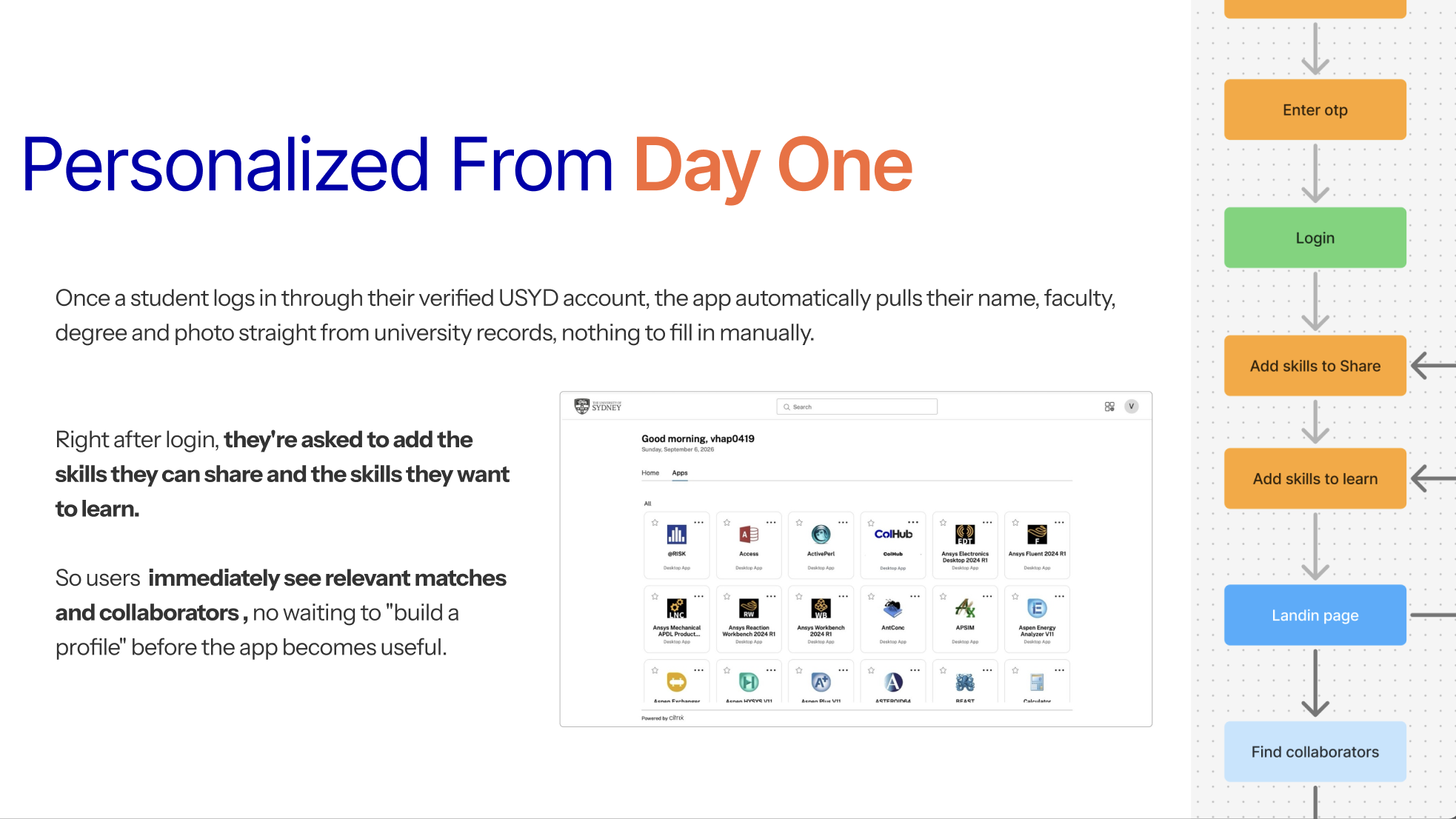
Next, we'd pilot ColHub within a single faculty to test real skill-matching data at scale, integrate directly with university SSO and LMS systems so there's no extra sign-up friction, and expand the verified-profile system with endorsements from past collaborators. Long-term, we see ColHub extending beyond Sydney Uni to other universities facing the same structural gap.
Built With
- collaboration
- figma
- framer
- univeristy-of-sydney
- university


Log in or sign up for Devpost to join the conversation.