-
-
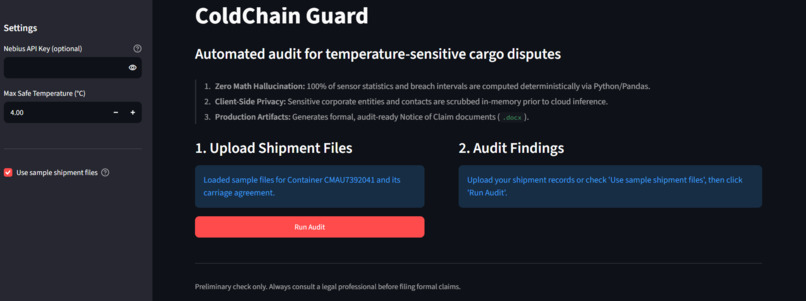
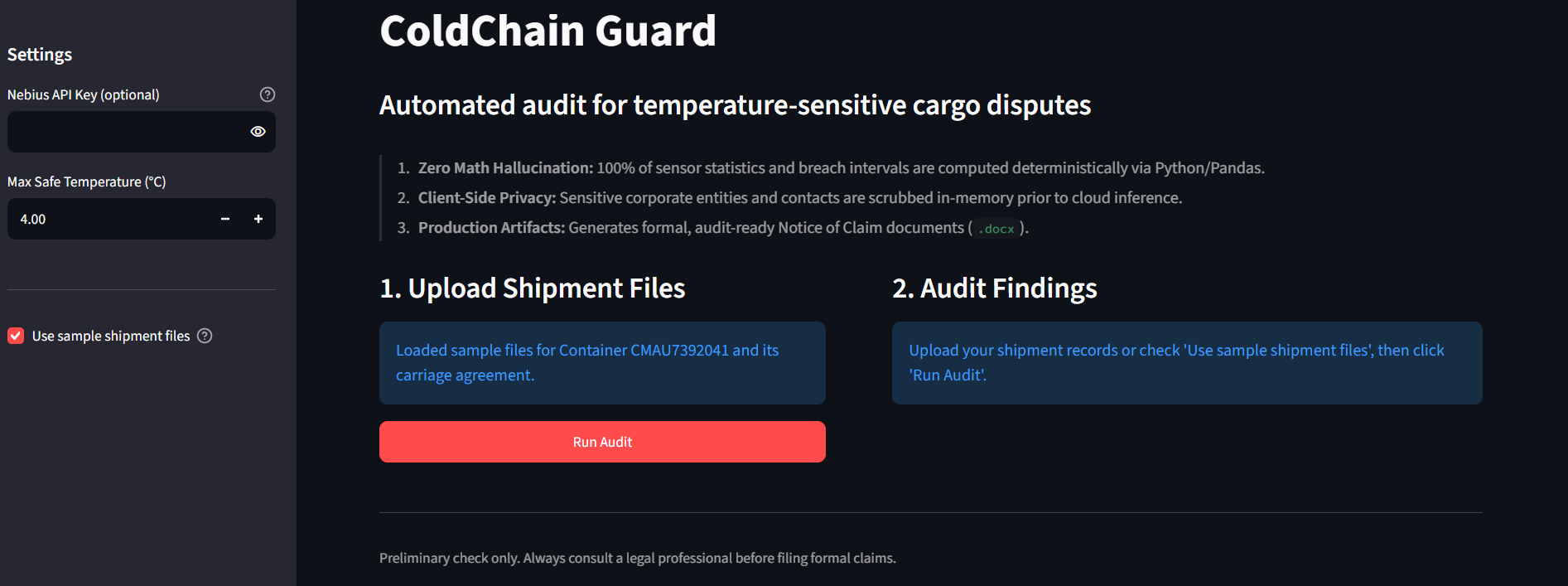
Dashboard that displays after navigating to the app
-
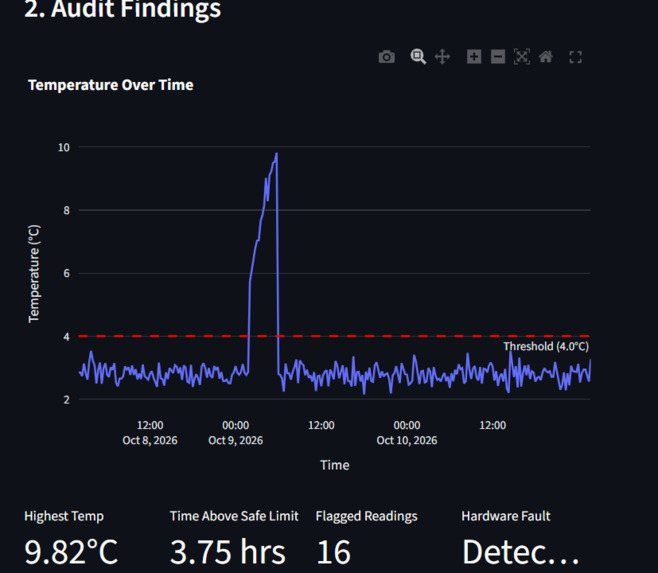
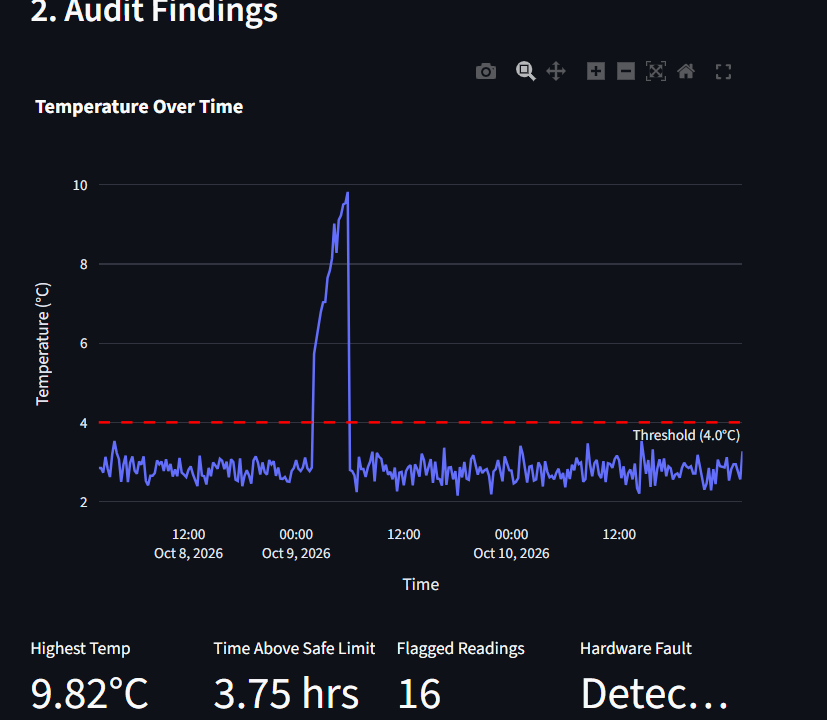
Plotly Chart displaying the temperature spike if any and the threshold to be maintained as per contract
-
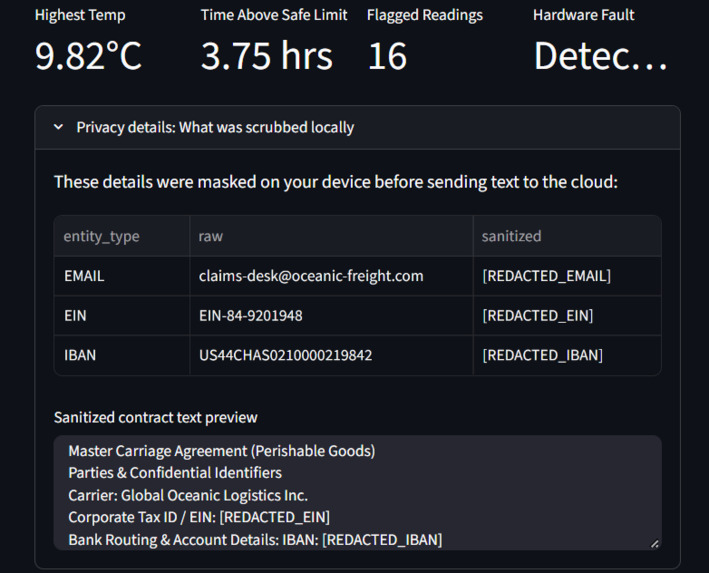
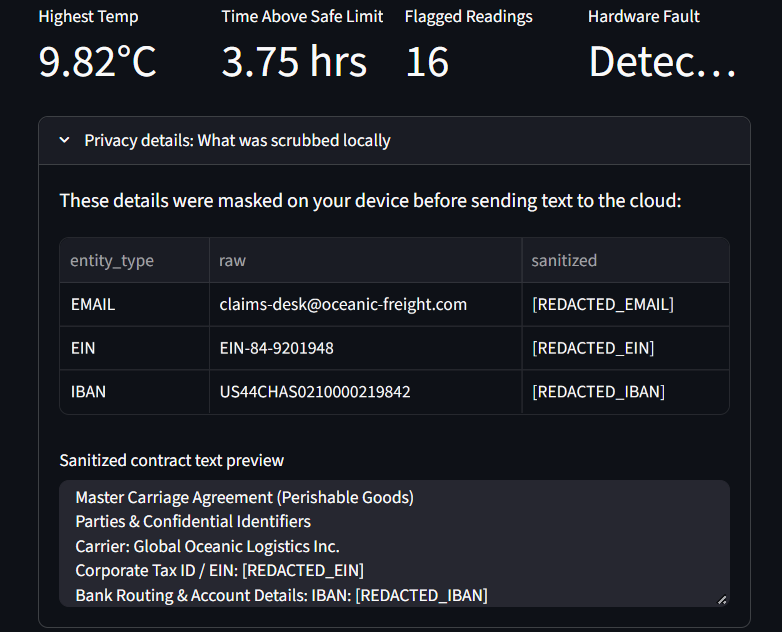
Redacted Sensitive Information
-
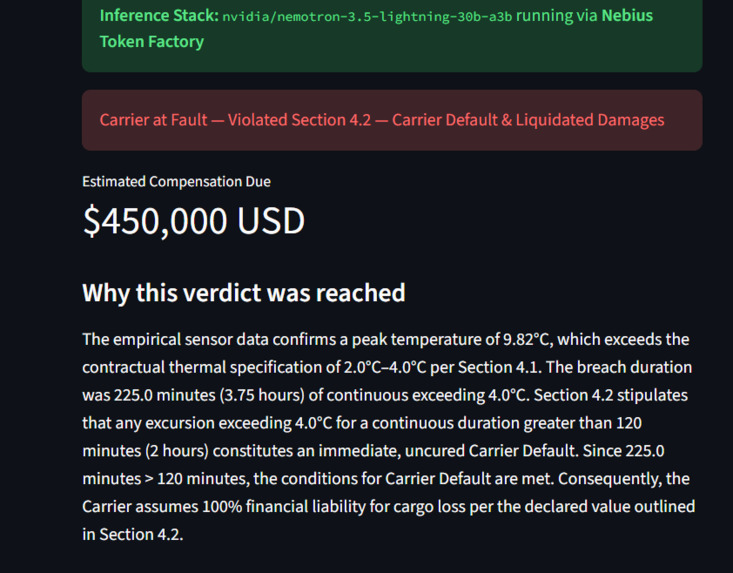
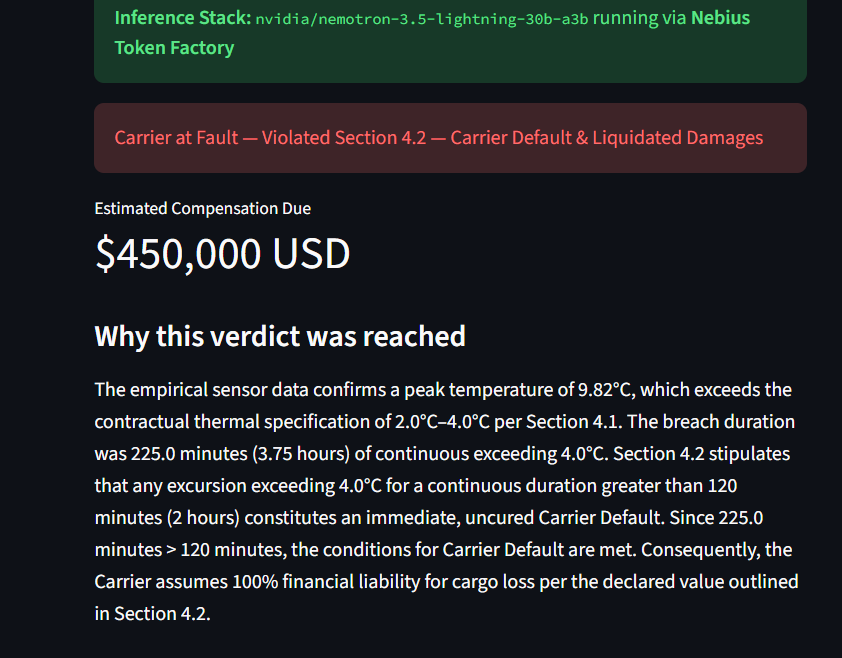
AI Verdict and explanation with claim amount
-
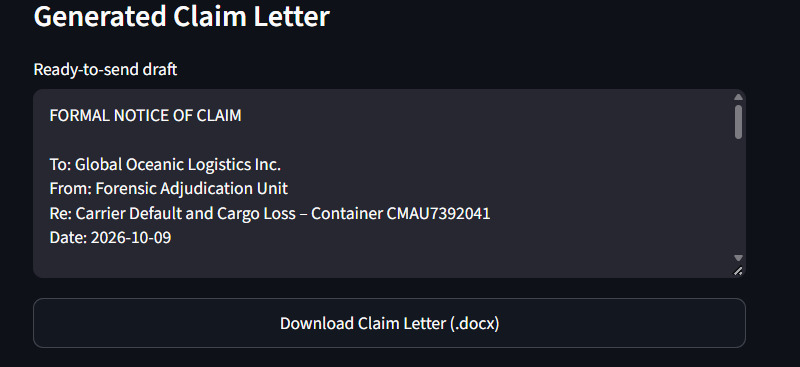
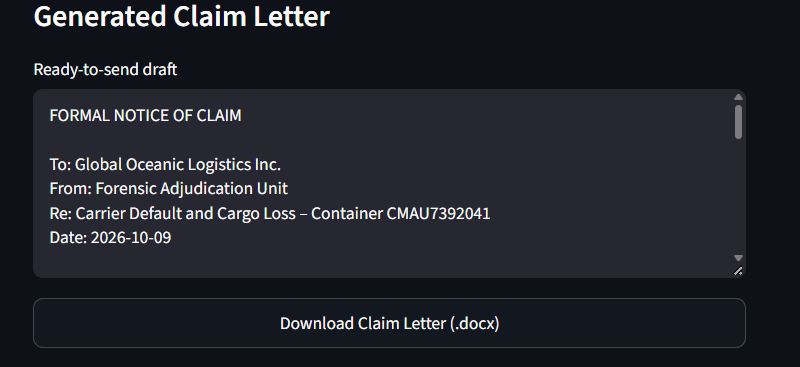
Editable Word document containing the generated claim letter
What it does
ColdChain Guard is an AI-powered shipment investigation and claim preparation tool. It analyzes temperature readings using Python to calculate shipment metrics and identify potential breaches, keeping the underlying math separate from AI interpretation. It extracts text from PDF contracts, redacts selected sensitive information before sending the sanitized text for AI-assisted contract analysis, and brings the findings together into an editable Word claim-document draft. The result is one workflow that connects data analysis, privacy-conscious document processing, AI, and report generation.
An important design choice was separating AI interpretation from deterministic calculations: Python handles the temperature metrics, while Nemotron assists with understanding contract language in the context of the shipment data.
ColdChain Guard is not intended to provide legal advice or make final legal decisions. Instead, it uses AI to help organize relevant information, surface potentially applicable contract terms, and prepare a claim-document draft for human review. The goal is to make the investigation and preparation process more organized, while keeping people responsible for reviewing the findings and deciding what to do next.
How I built it
I built ColdChain Guard using Python and Streamlit. Pandas handles temperature data processing, Plotly visualizes shipment readings, and pypdf extracts and redacts selected sensitive information from PDF contracts. I integrated NVIDIA Nemotron through Nebius Token Factory for AI-assisted contract analysis and used python-docx to generate editable Word documents.
One design choice I’m especially proud of is separating calculation from interpretation: Python handles the temperature metrics, while the AI helps interpret the findings alongside contract terms. I also designed the contract-processing workflow to redact selected sensitive information before the sanitized text is sent for AI analysis.
Accomplishments that we're proud of
I'm proud that ColdChain Guard is more than an AI chatbot, it brings together deterministic data analysis, privacy-conscious redaction, AI-powered contract review, and automated document generation in one application. I wanted the AI to add value where language understanding matters, rather than relying on it for everything. Combining these different components into one end-to-end workflow was one of my favorite parts of building this project!
What we learned
I learned that building a useful AI application is about more than connecting a model to a prompt. It also means deciding which tasks should be handled by regular code, where AI adds value, and how data should be processed before reaching a model. Separating calculations from AI interpretation and building redaction into the document workflow helped me think more carefully about reliability and privacy when designing AI-powered applications.


Log in or sign up for Devpost to join the conversation.