
CoinQuest: Financial Literacy for Teens
Inspiration
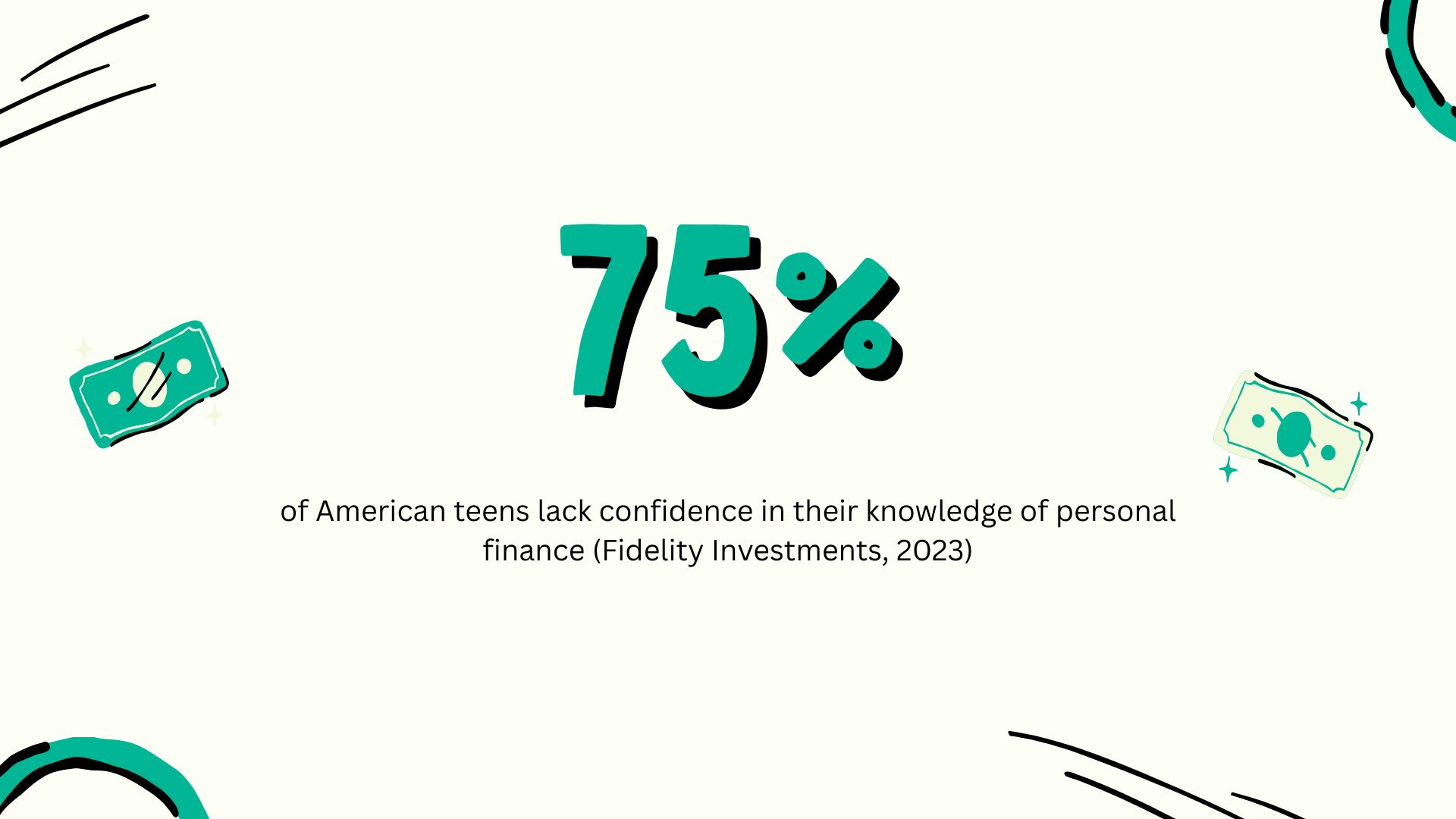
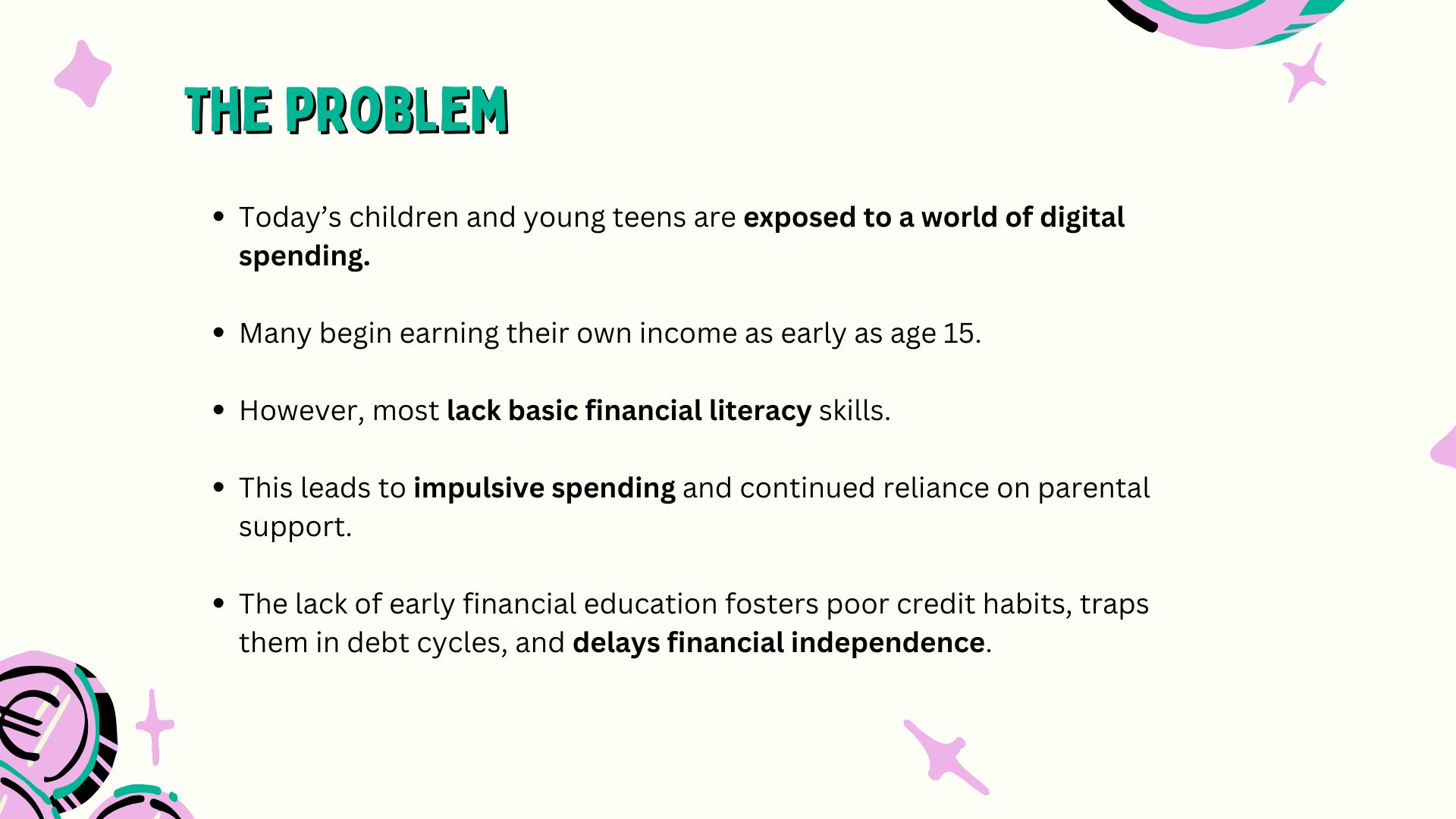
Our project was inspired by our team member Aryan's younger sister, who just got her first job. She was excited about earning money but had no idea how to manage it. We realized that despite many teens entering the workforce, financial literacy isn't taught in schools. Most young adults enter the real world with few prior knowledge about budgeting, investing, or credit. We wanted to change that through a medium that would keep teens engaged. So, we created an interactive storytelling game where teens can step into characters' shoes and make financial decisions in a safe, gamified environment that teaches real-world skills—but we ended up learning so much more!
What it does
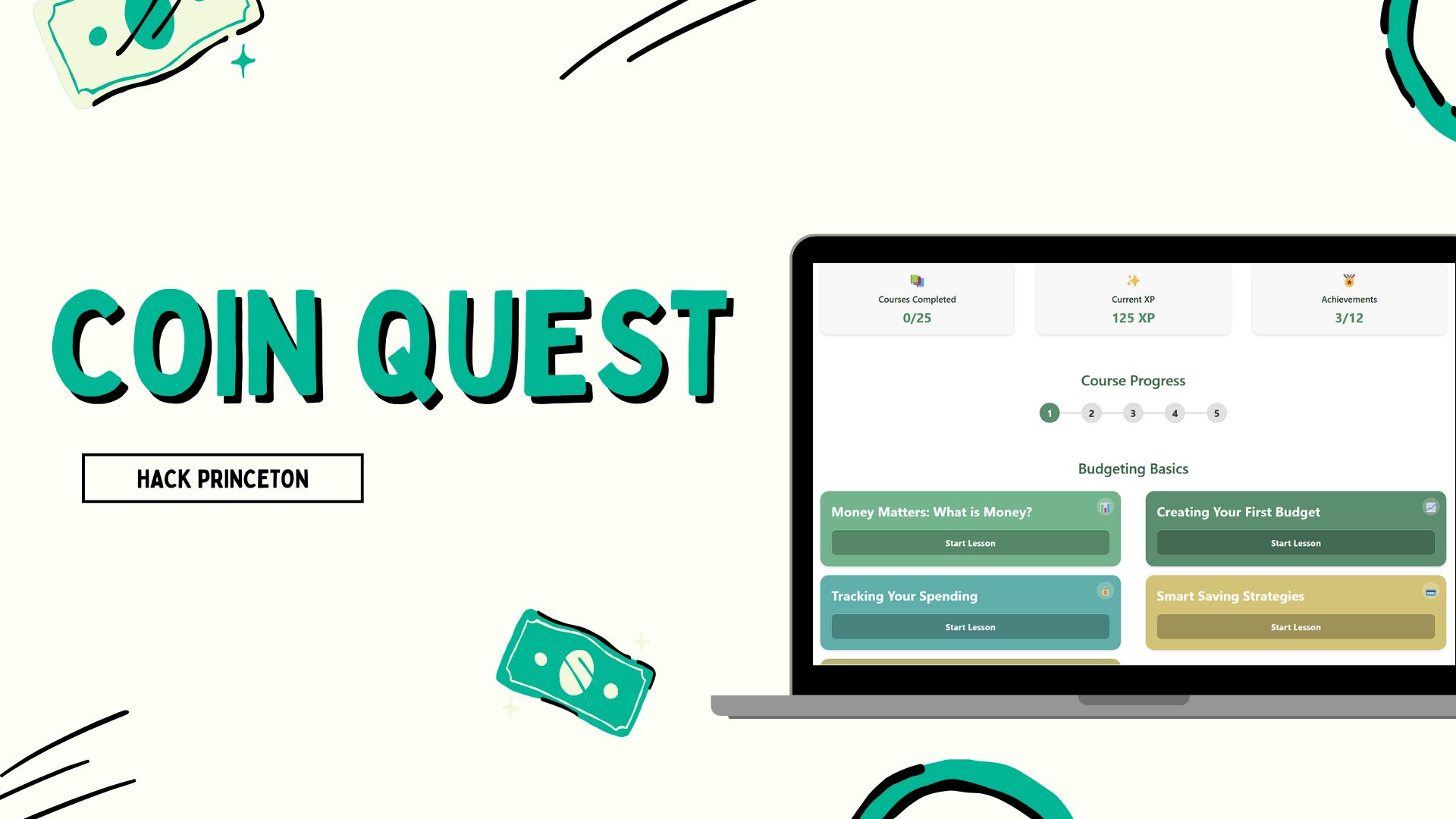
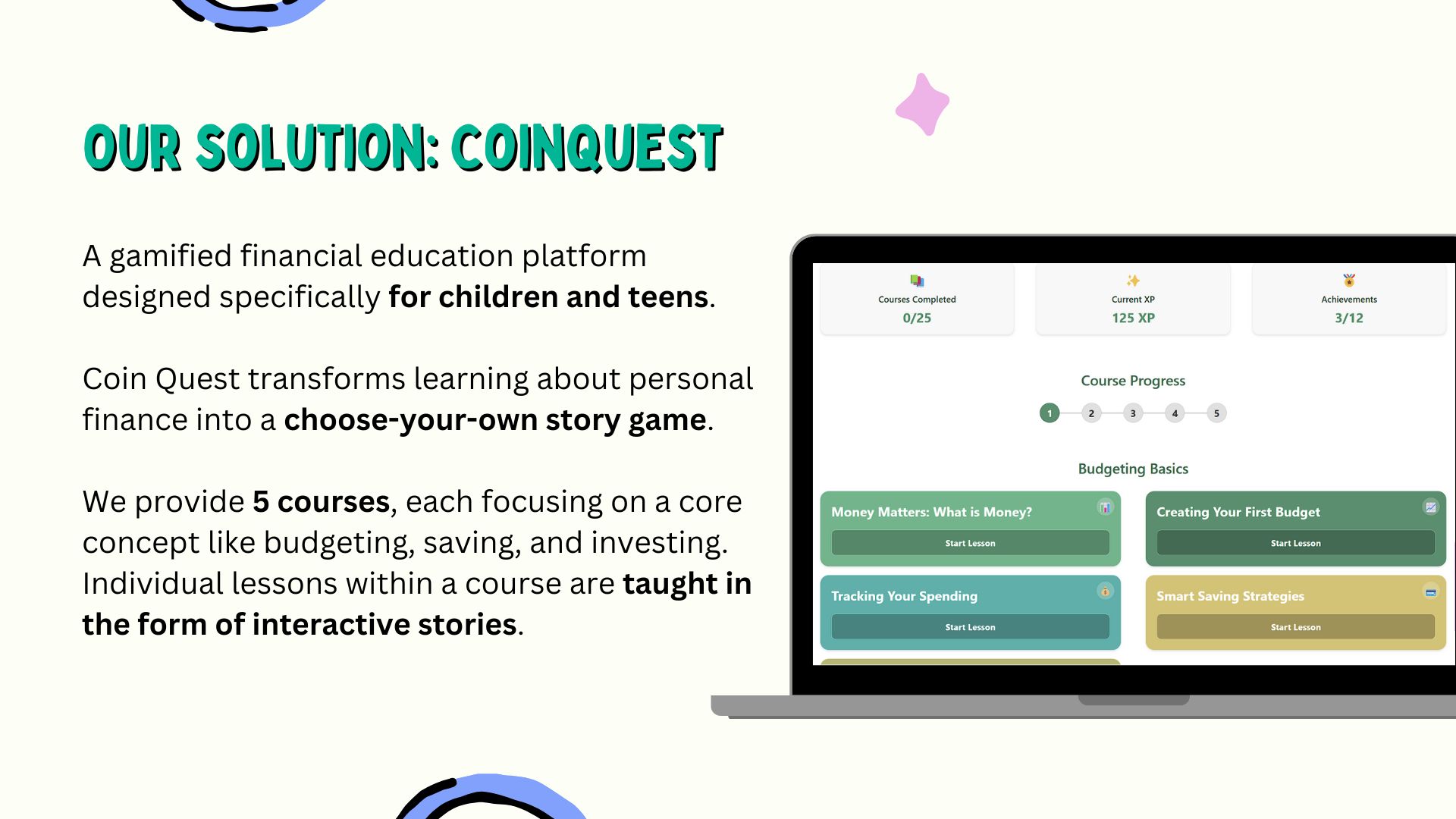
CoinQuest provides five courses covering core financial topics - budgeting, investing, saving strategies, credit management, and taxes. Each course contains 5 lessons, which are delivered through a story mode where players make choices when presented with financial scenarios.
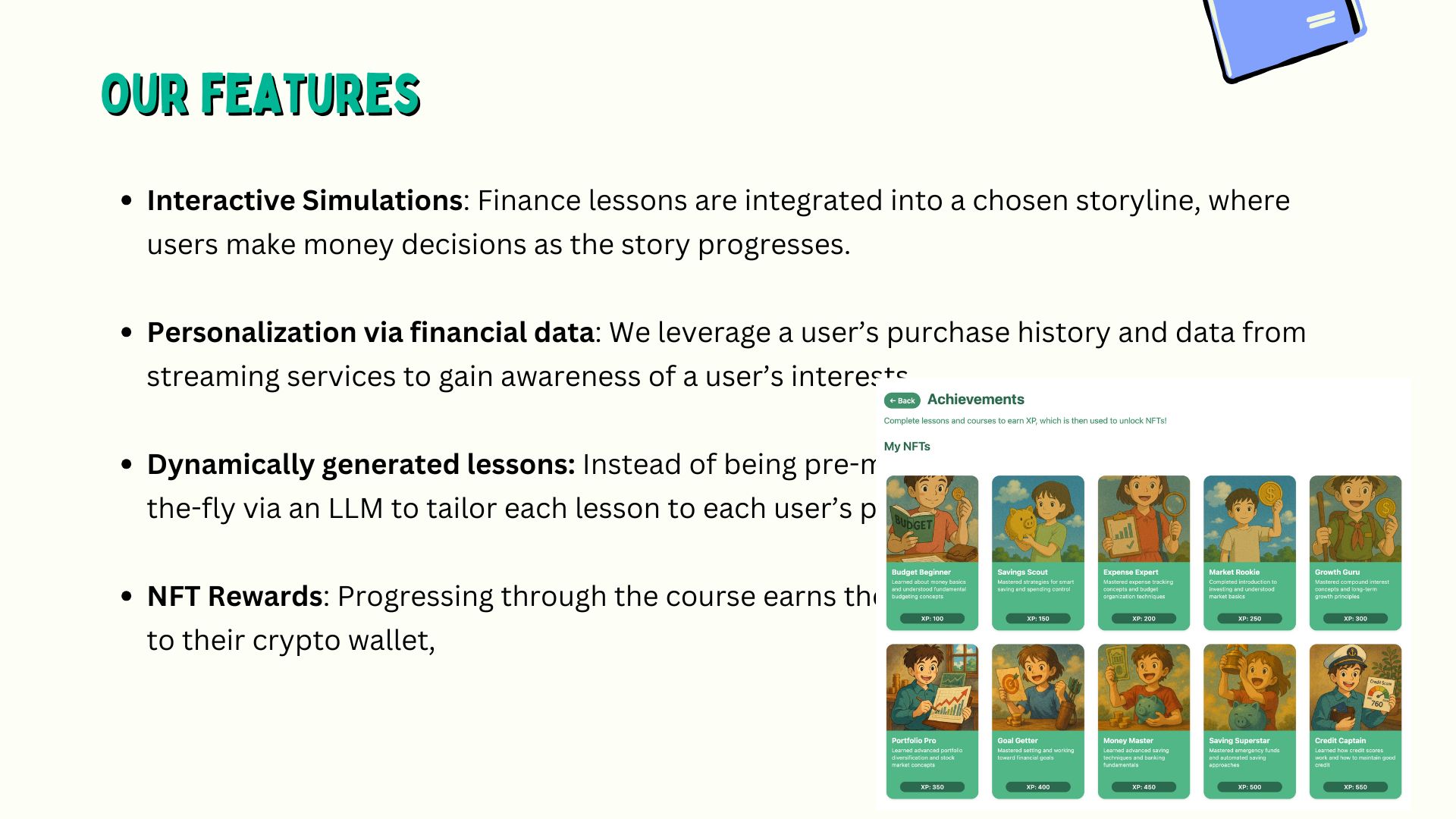
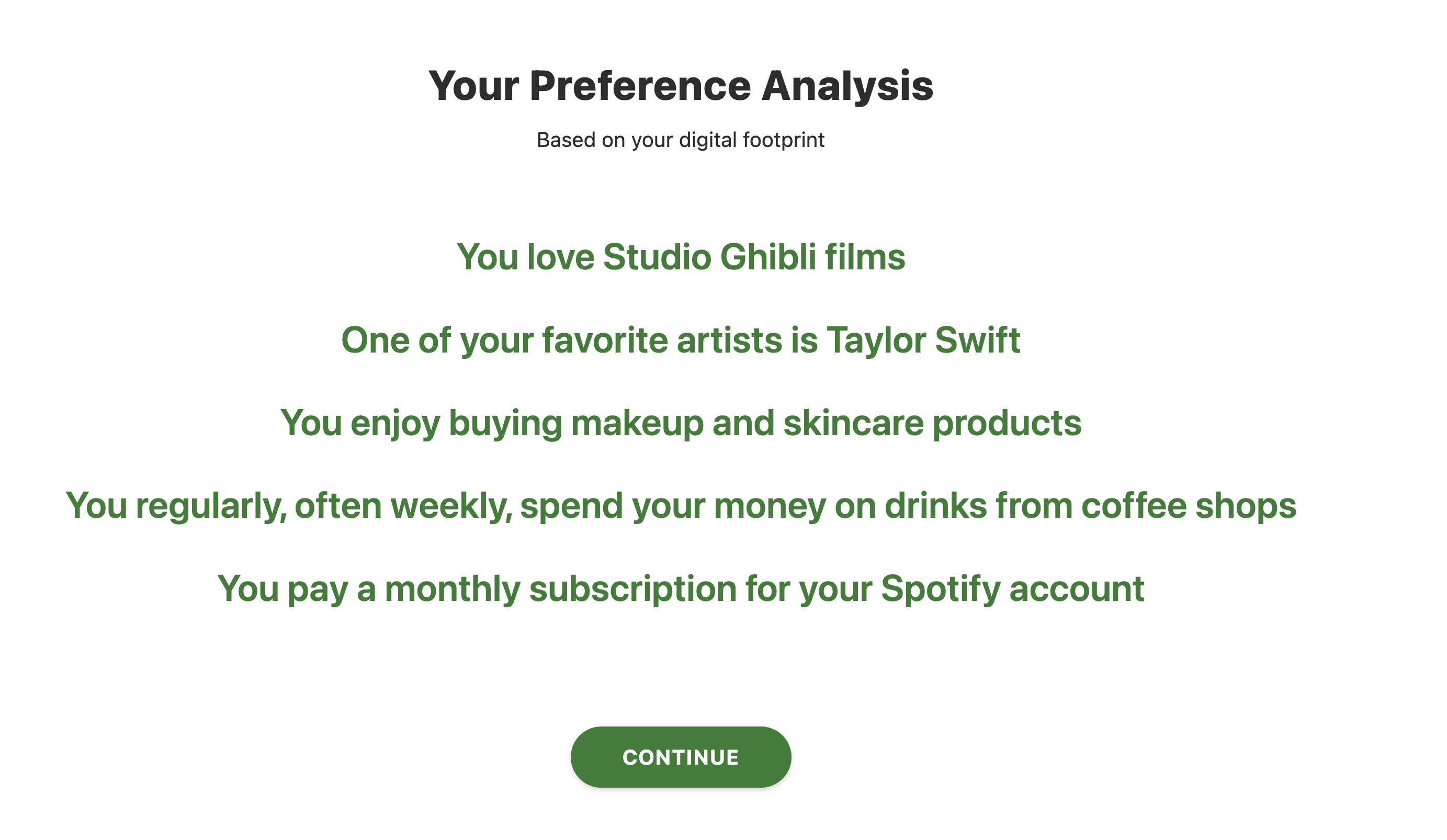
What makes CoinQuest special is that everything - from story image assets to storyline - is generated dynamically by an LLM based on the user's personal preferences and habits. We analyze transaction data, streaming service history, and online shopping accounts to do this. If someone loves buying clothes, for example, their lessons might be set in a shopping mall. If they love Star Wars films, their stories might feature similar art styles and themes, we may feature music by their favorite artists, or even have clothing and products inspired by the things that they are interested in using. This personalization keeps users engaged while teaching more serious financial concepts.
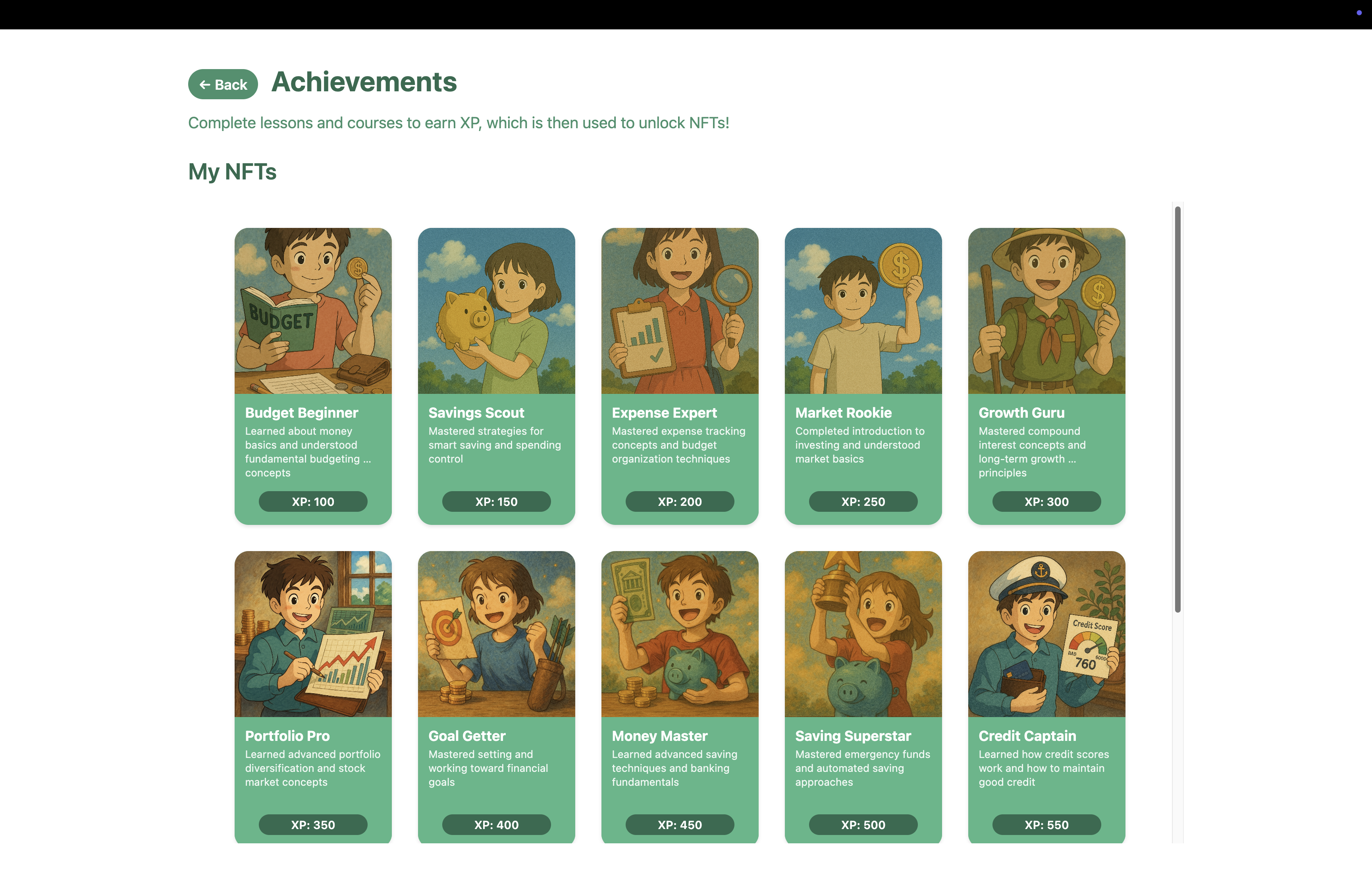
As users progress through lessons, they earn XP that unlocks achievements in the form of NFTs - digital badges that motivate users to learn more(while also being a great practical demonstration of blockchain to them)! We're really building on personalization, the biggest problem currently is that it's incredibly hard to get people to stick to novel interventions.

Behavior scientists at Stanford have created the Fogg behavior model, which essentially boils down to sustained behavior change requiring all three of Motivation, Ability and Prompt.
Motivation is driven by our dynamic, personalized narratives — users aren't just absorbing financial concepts; they're making decisions inside stories they truly care about. Imagine a budgeting lesson set in a user's favorite movie universe or featuring characters that reflect their own personality—we're emotionally hooking them, in a way no other app does.
Ability is maximized by simplifying complex topics. Instead of overwhelming users with jargon, we scaffold content through choice-driven gameplay, gradually building mastery. This ensures that every user, regardless of prior knowledge, can engage meaningfully with the content.
Prompts are subtly embedded within our progression mechanics — whether it's XP reminders nudging users to finish a story or push notifications tailored to their learning patterns. These nudges are timed to moments when motivation is already high (e.g., just after unlocking a badge or completing a quest).
The Fogg Model also cautions that if any one of these three elements is missing, behavior change is unlikely. That’s why CoinQuest isn’t just another financial literacy or edtech app— it’s a behavior design system. We use the same mechanics that social media apps use to keep users scrolling, but we repurpose them to make learning addictive, rewarding, and sticky.
We're exploring a new direction of edtech, one built to delight our users—and unleash a new level of science backed personalization!
How we built it
- Expo + TypeScript for our frontend framework, ensuring our app works seamlessly on tablets, phones, and laptops
- Express and Node.js for our backend server
- Google Auth for user authentication
- MongoDB for database storage
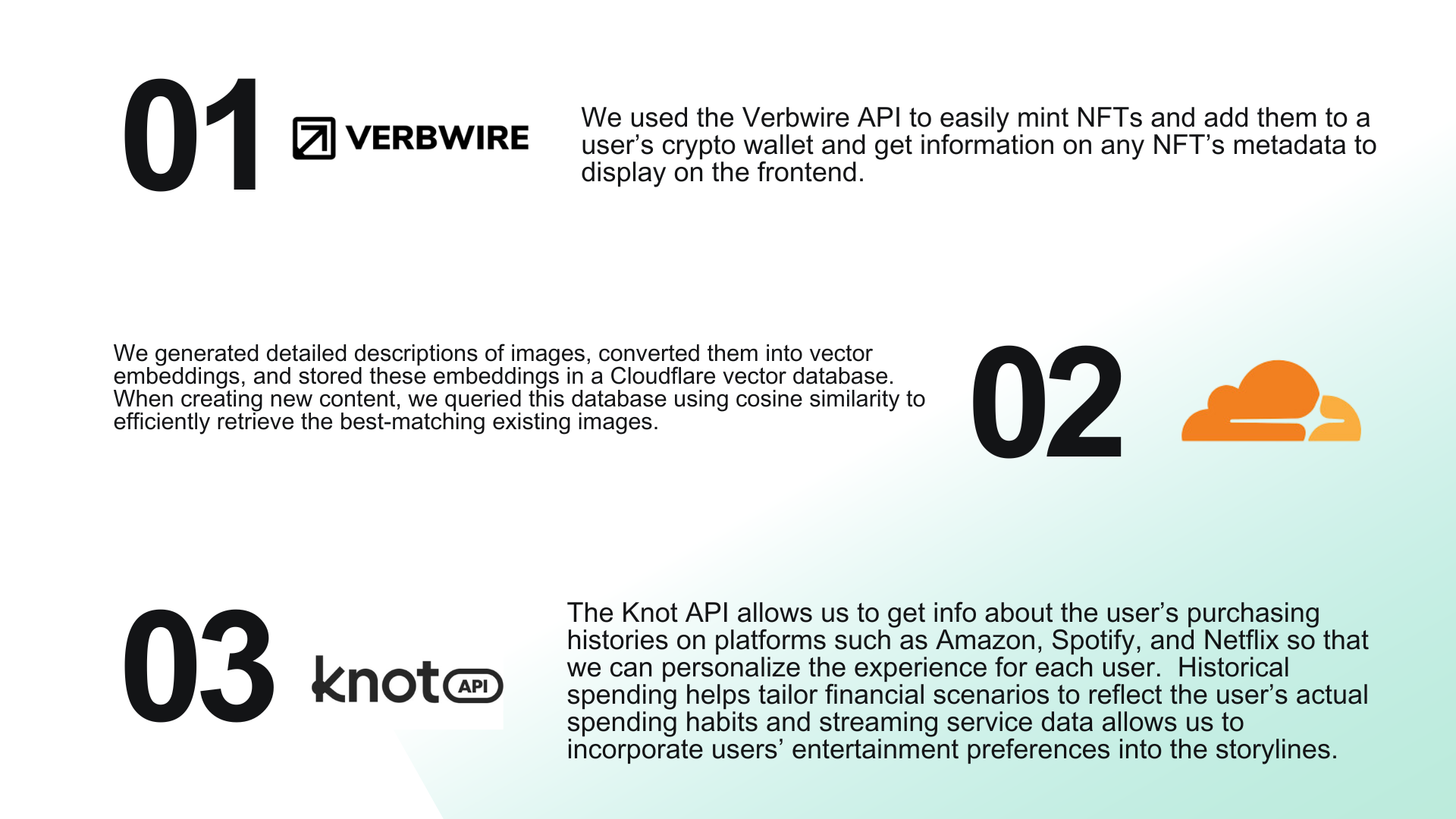
- Verbwire API for minting achievement NFTs
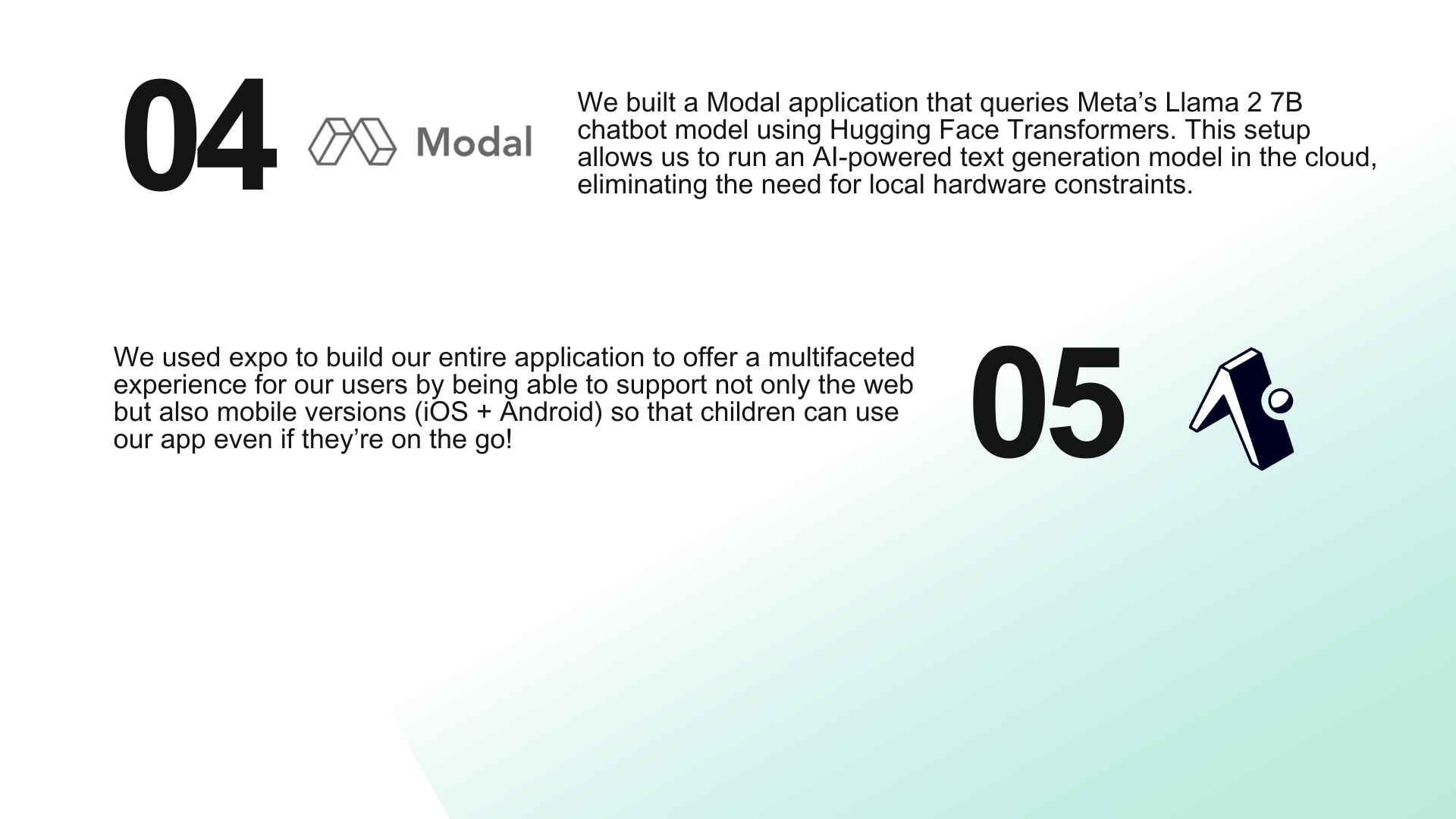
- Modal for dynamically switching between different LLMs (e.g. using GPT-4o for image generation and DeepSeek R1 for storyline creation)
- Knot API data to simulate user preferences and purchase history
- Cloudflare for a unique image RAG (Retrieval Augmented Generation) system. We dynamically stored and retrieved images from this, setting up an agentic RAG model that connected with this. W
Our image RAG model uses a multi-step process. First, we created detailed descriptions of image files, then generated vector embeddings of each image stored in a Cloudflare vector database. We used a variety of LLMs exploring deepseek via modal while concurrentlly using the Lunon program to rapidly test out LLMs that worked best. (spoiler, o1 was not it!) When generating content, we used our AI agents to fetch the highest-matched embeddings using cosine similarity to determine if one of our verified images could be implemented. If no suitable match is found, we generate a new one using Dalle as the fallback model. This was done in order to increase the speed of generation due to the high time requirements of image generation.
Challenges we ran into
Our biggest initial hurdle was integrating Auth0. After multiple failed attempts, we pivoted to Google Auth for the sake of time and a straightforward implementation.
Another issue we faced is that the storyline the LLM would generate would sometimes contain typos. We experimented with various models, however, the issue persisted. We suspect that this is in issue with postprocessing, which we aim to fix in future.
Our team had few prior experiences with blockchain technologies, so the NFT minting process with Verbwire was another major challenge. We struggled to connect to wallets and mint NFTs for specific wallets, then had to parse complex NFT metadata to display achievements correctly.
Accomplishments that we're proud of
We're proud of our dynamic story generation system that creates personalized learning experiences based on user preferences and lesson content.
Getting the NFT achievement system working is another feature we are proud of as we have never worked with Verbwire before, and the majority of our teammates have never worked with web3.
What we learned
This project involved several new technologies for our team. We had never used Verbwire before, so the NFT minting process was a completely new experience. Running a local LLM through Modal was another first for us.
While we had previous experience with React, developing with Expo for React Native was also new. We had to quickly pick up the new syntax and structure.
What's next for CoinQuest
Our immediate next step is to expand beyond the initial five topics and add more sophisticated progression systems with multi-tiered achievements. Thanks to the externsibilyt of our model—we're only providing the descriptions and everything is being generated on the fly, we can the make everything work very seamlessly.
More importantly though financial literacy is just one incredibly tiny application of our system. We chose to focus on finance for this small component, but it's truly marvelous the scale at which we can apply the principles behind our technology. From economics, and even physics, the opportunities for young learners are endless!
Built With
- cloudflare
- expo.io
- knot
- modal
- mongodb
- react-native
- verbwire


Log in or sign up for Devpost to join the conversation.