-
-

App Icon
-
-
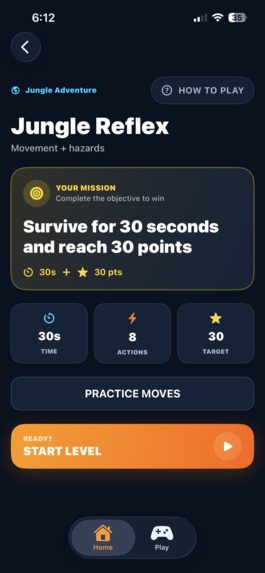
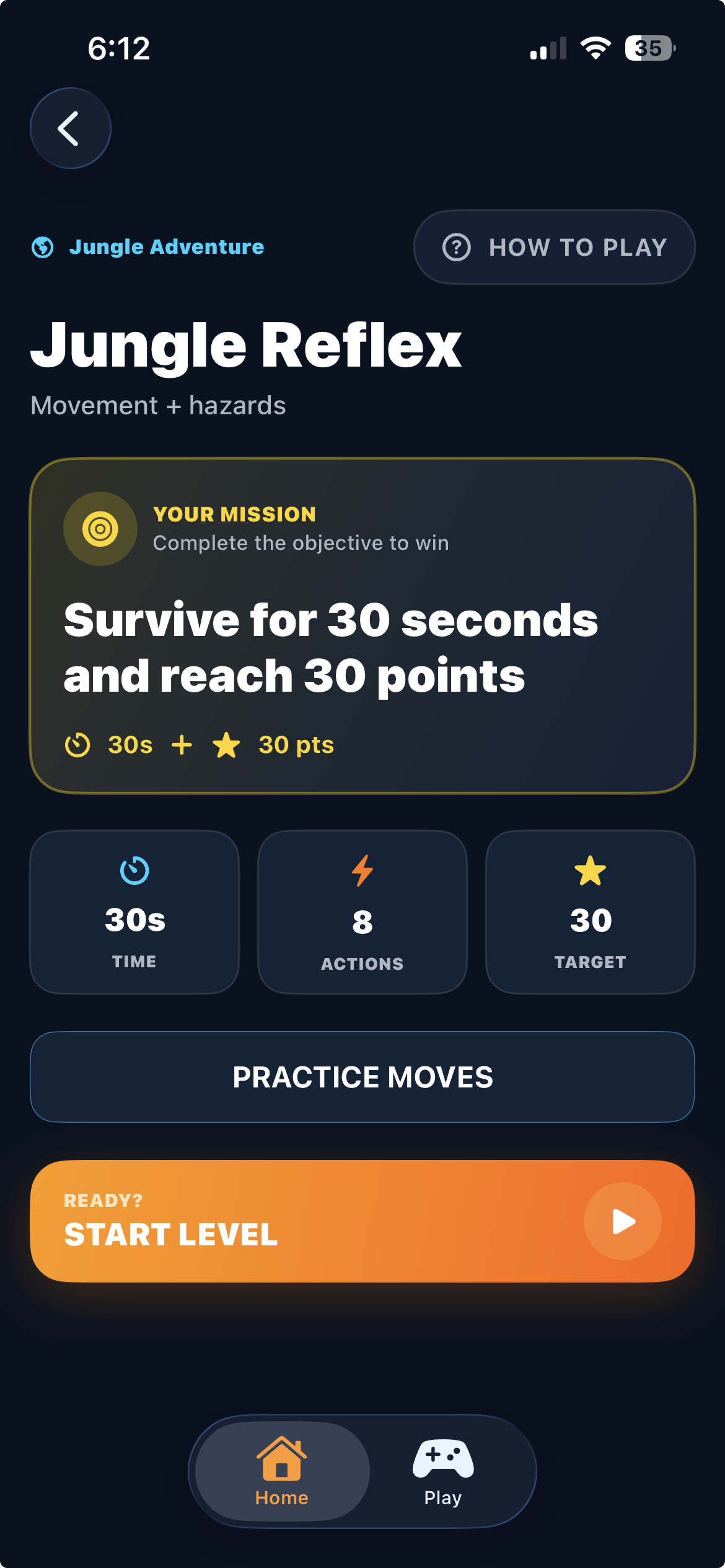
level screen
-
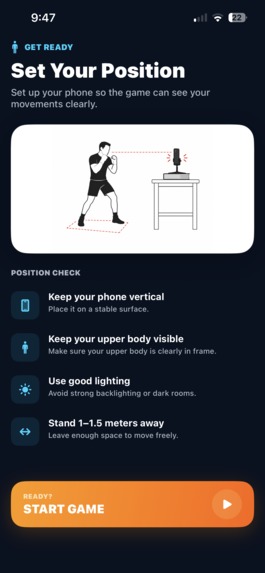
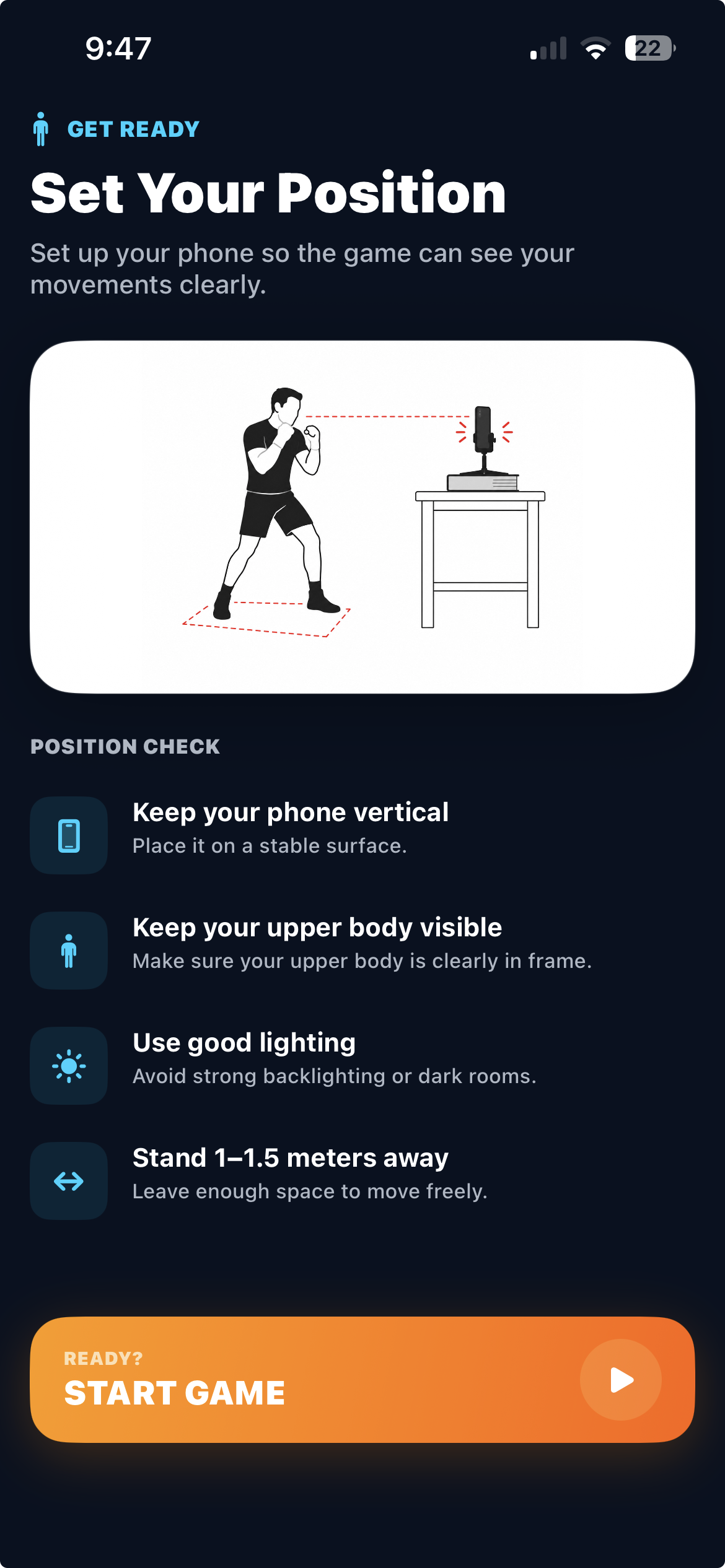
instructions screen
-

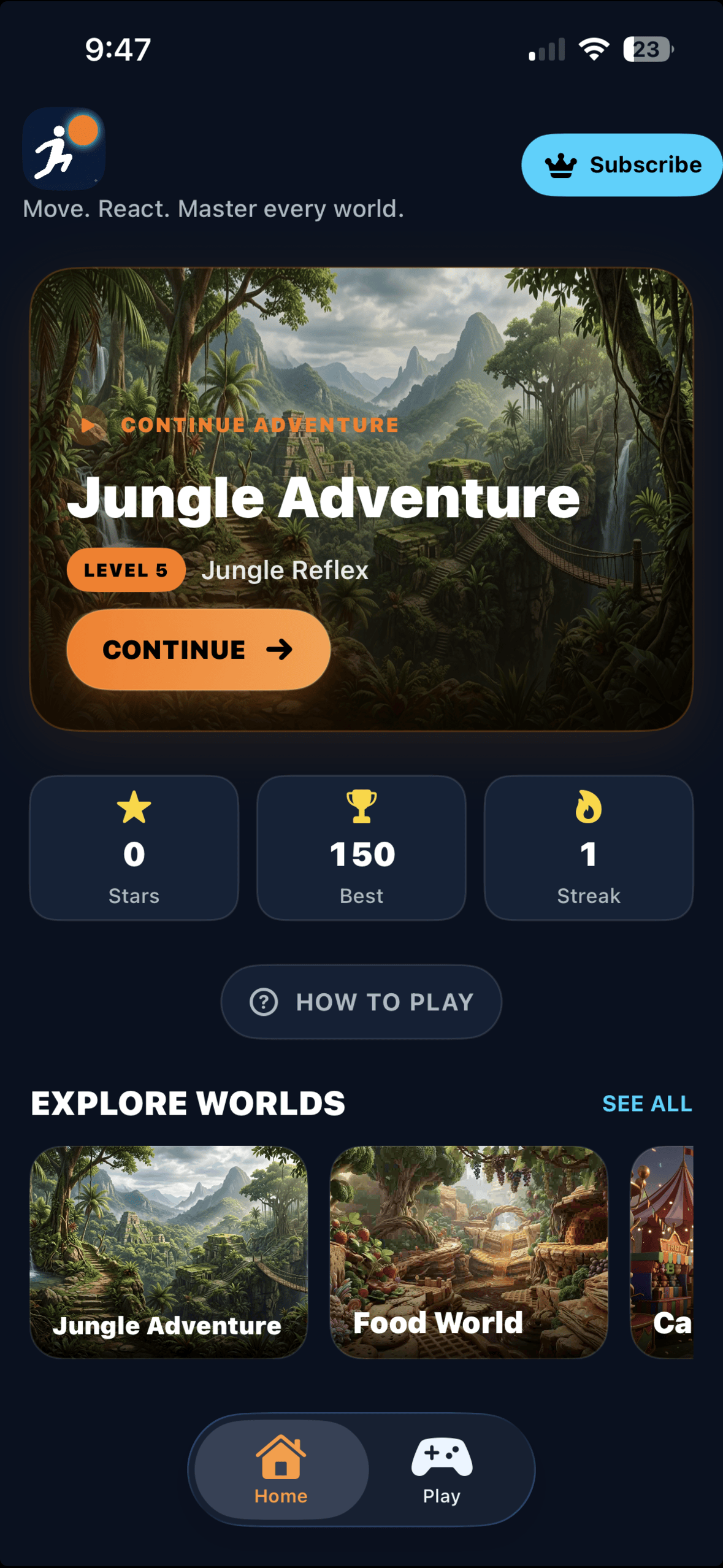
home screen

PlayVerse AR
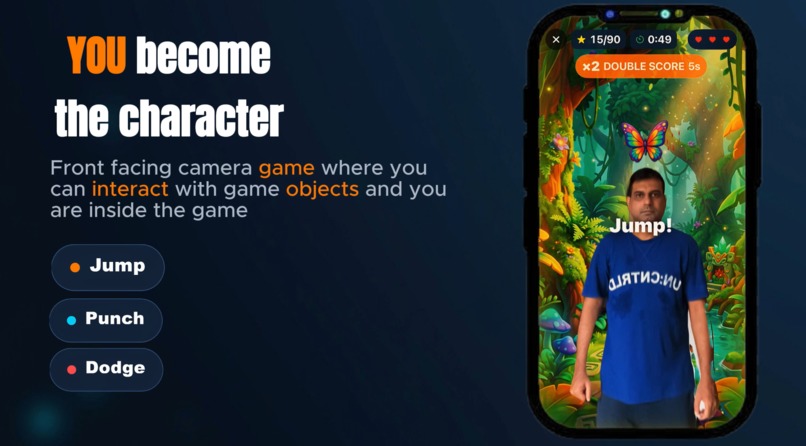
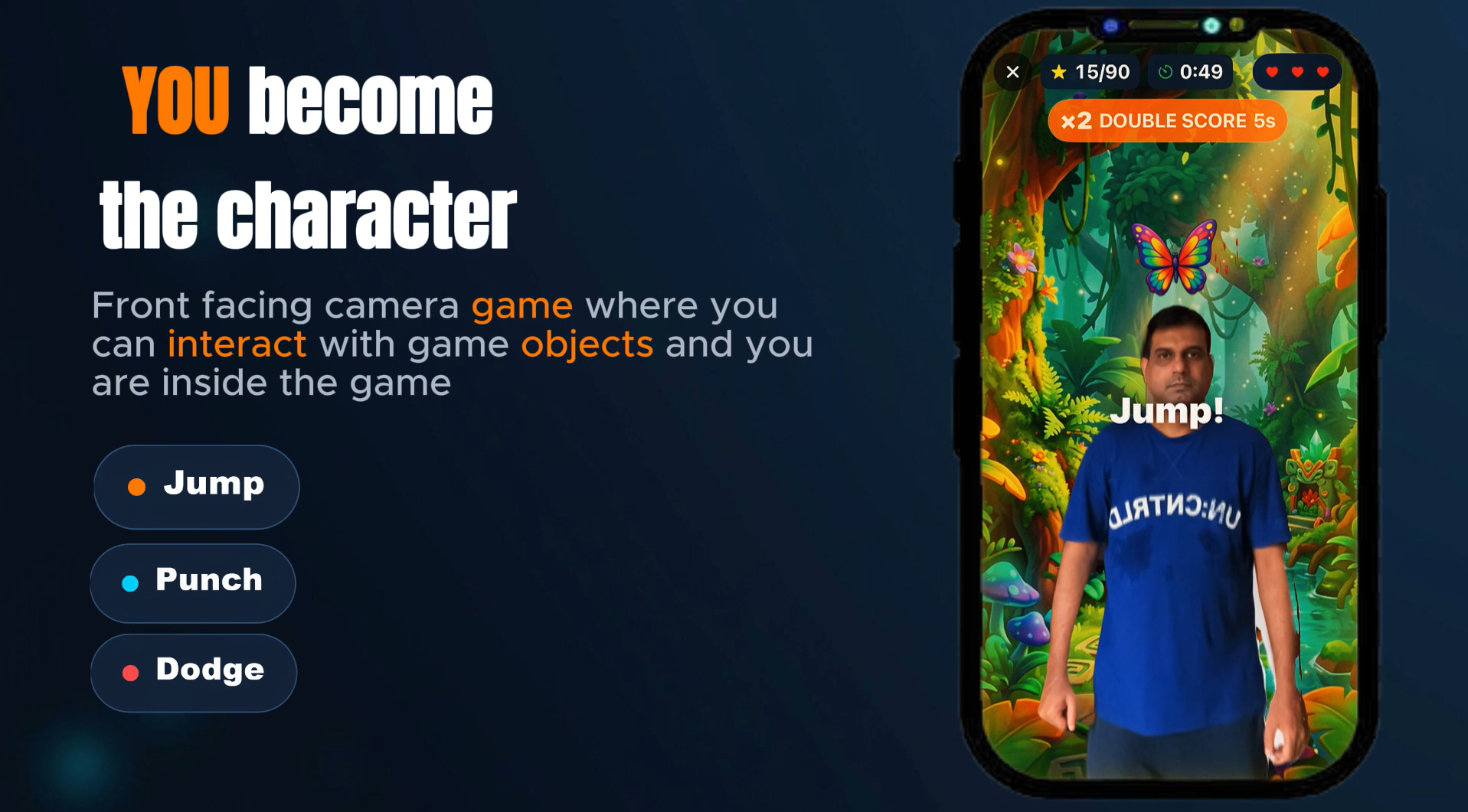
You don’t control the character. You ARE the character..
Project Story
PlayVerse AR started because of my 8-year-old daughter.
I watched her spend hours playing games on a phone while barely moving, and instead of asking how to make her exercise more, I started asking a different question:
What if the game itself required movement?
That question became the foundation of the project.
Instead of controlling a character on the screen, the player becomes the character. The phone sits on a table, the front-facing camera sees the player, and suddenly jumping, punching, and dodging become part of the gameplay itself.
I started building the project in June while working a full-time 9-to-5 job. Progress was much slower than I expected because every core mechanic came with technical challenges that sometimes took weeks to solve.
Then I received an email about the RevenueCat Shipathon.
That email became the push I needed. Instead of leaving the project unfinished, I had a goal to work toward — and thanks to RevenueCat, PlayVerse AR is now live on the App Store.
Inspiration
The inspiration goes beyond simply getting people to move.
I wanted to build a game that quietly makes players move without feeling like they're following an exercise routine. The player comes to play, and movement is simply how they interact with the game.
That idea started with my daughter, but I also wanted to create something that could appeal to adults who enjoy games but find traditional exercise difficult to stay motivated about.
The game also uses play to introduce simple concepts. Each world can have its own collection of objects, hazards, and themes. In Food World, for example, different foods become part of the gameplay itself, turning the world into more than just a visual setting.
Another motivation was creating something different from traditional AR experiences. Many AR experiences use the rear-facing camera to place digital content into the surrounding environment. I wanted players to actually see themselves inside the game, making the player a visible part of the experience.
What it does
PlayVerse AR is a front-facing AR adventure game where players place their phone on a table and become the character inside the game.
Instead of sitting still and controlling someone else, players use their own body to play.
The game is built around three core movement mechanics:
- Jump to collect objects above your head.
- Punch targets to earn points.
- Dodge hazards flying toward you.
Game objects can appear from different directions, requiring players to watch, react, move, and score.
As players progress, new challenges, themed worlds, combinations of objects, and power-ups create new ways to interact with the game.
How I built it
The game is built using Apple's native technologies for real-time AR gameplay.
Core technologies
- SwiftUI
- ARKit
- RealityKit
- Vision
- SwiftData
- Firebase
- RevenueCat
One feature I'm especially proud of isn't visible to players.
I built a Firebase-powered admin panel that allows the game to evolve without requiring App Store updates.
Through the dashboard I can:
- publish entirely new worlds,
- create new levels,
- activate or deactivate objects,
- adjust spawn positions,
- change spawn speeds,
- rebalance gameplay remotely.
This means the content can continue to grow long after the initial release.
Challenges I ran into
Building PlayVerse AR meant solving three very different interaction systems.
Jump Detection
Finding the right jump height wasn't as simple as detecting movement.
When I matched the collectible's exact 3D coordinates, the mechanic became frustrating because players needed almost perfect precision. The challenge became finding the sweet spot where jumps felt rewarding instead of punishing.
Punch Tracking
This became one of the hardest technical challenges.
Apple's front-facing camera APIs prioritize facial tracking, so accurate hand tracking for gameplay is surprisingly limited.
Originally, I matched punches across all three axes. It was technically realistic — but it wasn't enjoyable.
Eventually, I intentionally ignored the depth axis and relied primarily on X and Y movement. It sacrificed some physical accuracy but made punching feel dramatically better.
That became an important lesson throughout development: the technically correct solution isn't always the best game design solution.
Dodge Mechanics
Hazards needed to feel dangerous without feeling unfair.
At first, they continuously followed the player's head, making them almost impossible to escape. The solution was to lock onto the player's position when the object spawned, then let it continue along that trajectory.
That transformed dodging from something frustrating into a genuine reflex challenge.
Creating Assets and Shipping
Beyond programming, every world needed its own visual identity.
Designing themed environments, collectibles, hazards, progression systems, and polishing everything enough for App Store review became a huge part of finishing the project.
Accomplishments That I'm Proud Of
The biggest accomplishment is turning a personal idea into a live App Store game while balancing a full-time job.
I'm especially proud that PlayVerse AR doesn't just use AR as a visual gimmick. The front-facing camera is fundamental to the gameplay because it makes the player part of the game.
Other milestones include:
- Building three completely different body-driven gameplay mechanics.
- Creating a remote content management system through Firebase.
- Building a system where new gameplay configurations can be introduced without an app update.
- Shipping an App Store release after months of technical experimentation.
- Completing the project because the RevenueCat Shipathon gave me the motivation to push through the final stretch.
What I Learned
The biggest lesson wasn't about AR — it was about game feel.
Several times I built mechanics that were technically correct but simply weren't enjoyable.
The best decisions came from choosing player experience over perfect simulation. Ignoring depth for punch detection is a perfect example: it wasn't physically perfect, but it made the game dramatically more fun.
I also learned that building tools around the game, like the admin panel, can be just as valuable as building the gameplay itself because they allow the experience to keep evolving after launch.
What's Next for PlayVerse AR
This feels like the beginning rather than the finish.
The next stage is expanding PlayVerse AR into a much larger collection of worlds, challenges, and gameplay systems while keeping the core idea intact: the player becomes the character.
Planned Features
- Daily Challenges
- Seasonal events such as Halloween and Christmas
- New themed worlds
- More power-ups, including Slow Motion, Magnet, Destroyer, and additional abilities
- Chaser hazards that force continuous movement
- More dynamic hazard patterns
- Expanded progression and replayability
The long-term vision is to build a growing library of worlds and experiences where movement never feels like a separate task.
Your body movement is the game controller.
Built With
- arkit
- firebase
- realitykit
- revenuecat
- swiftdata
- swiftui
- vision

Log in or sign up for Devpost to join the conversation.