-
-
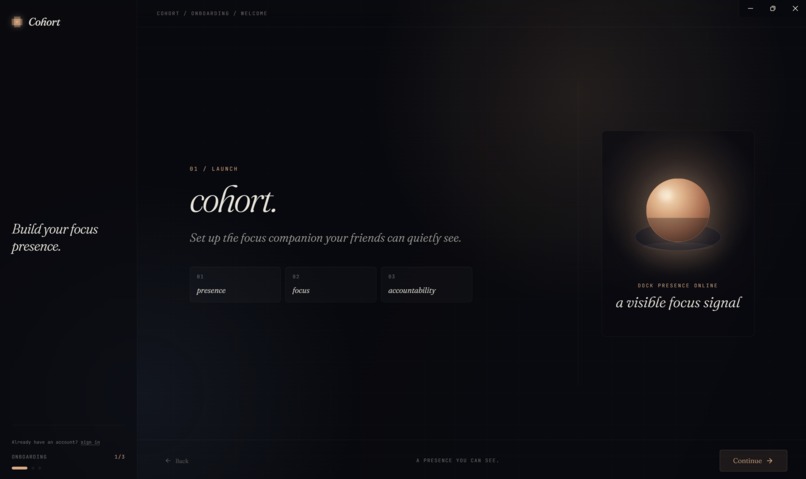
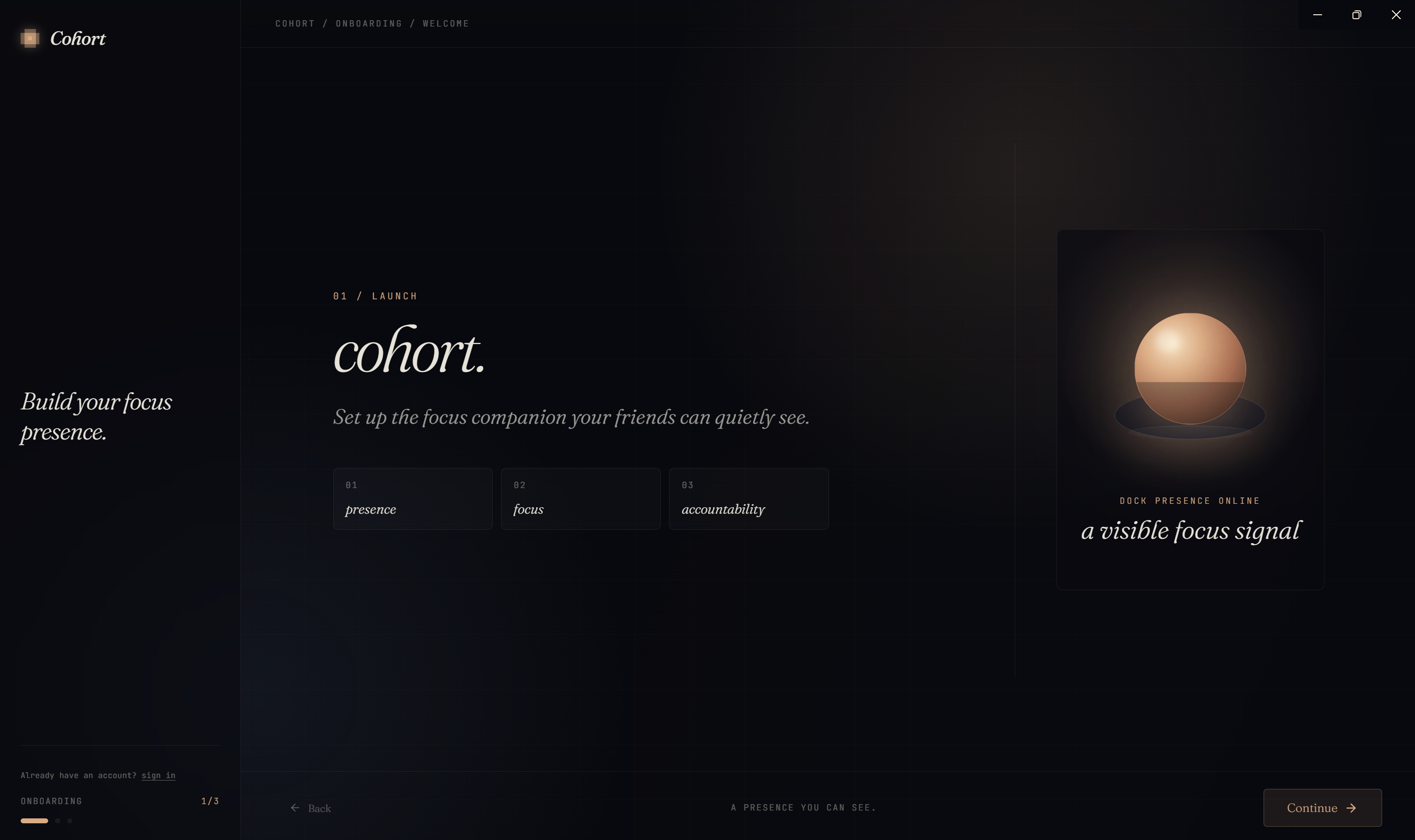
Landing Page
-
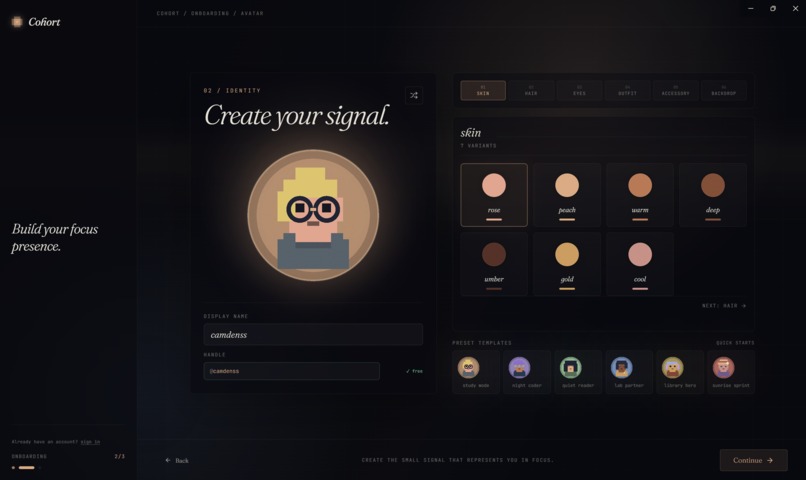
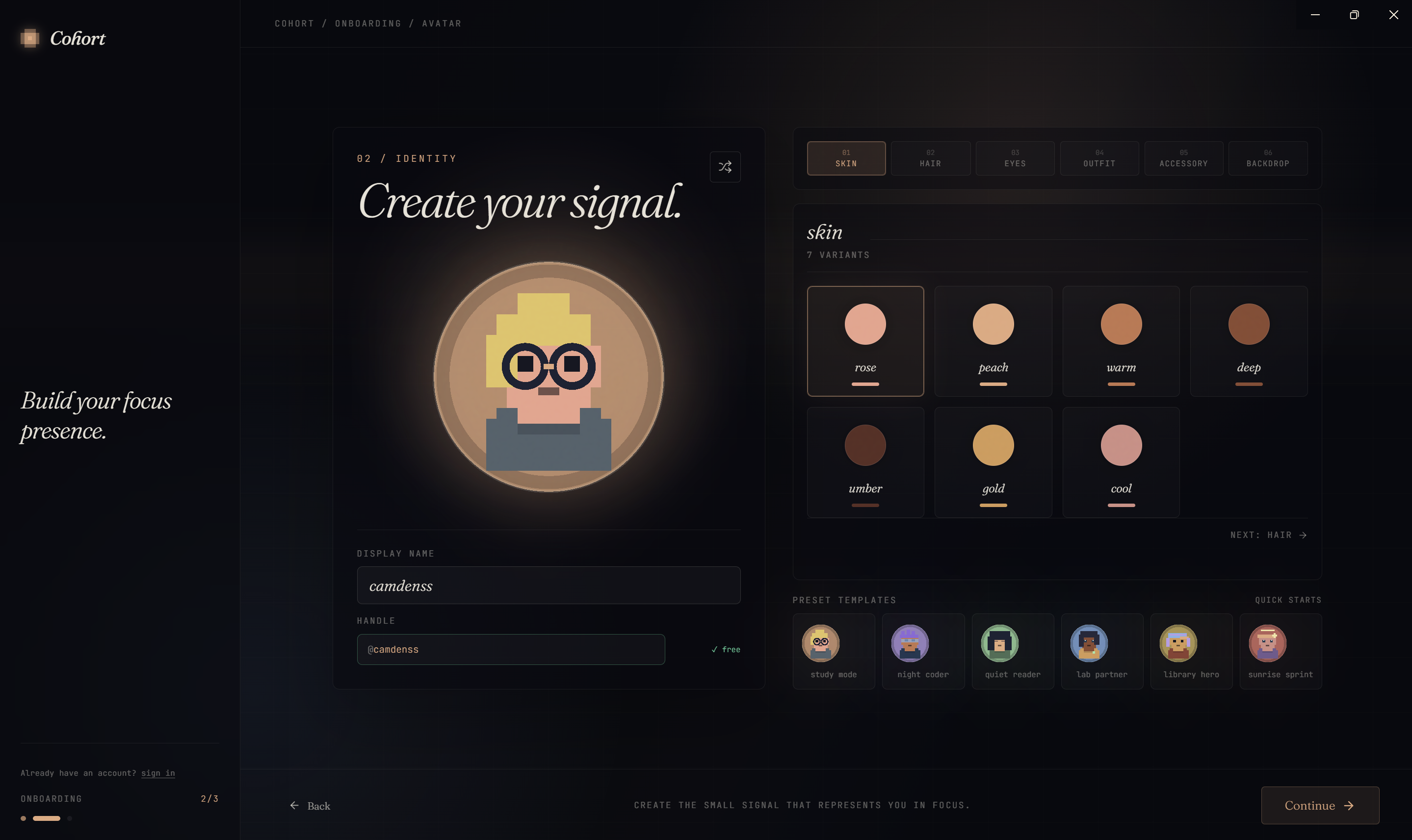
Design your custom avatar
-
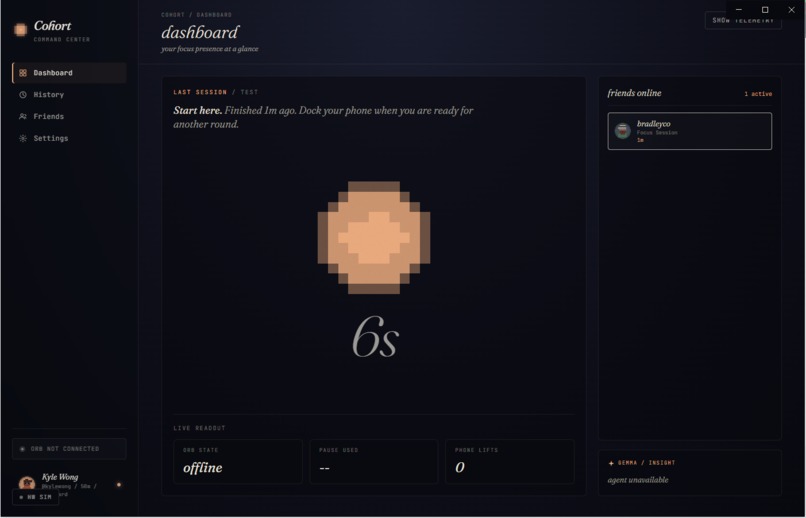
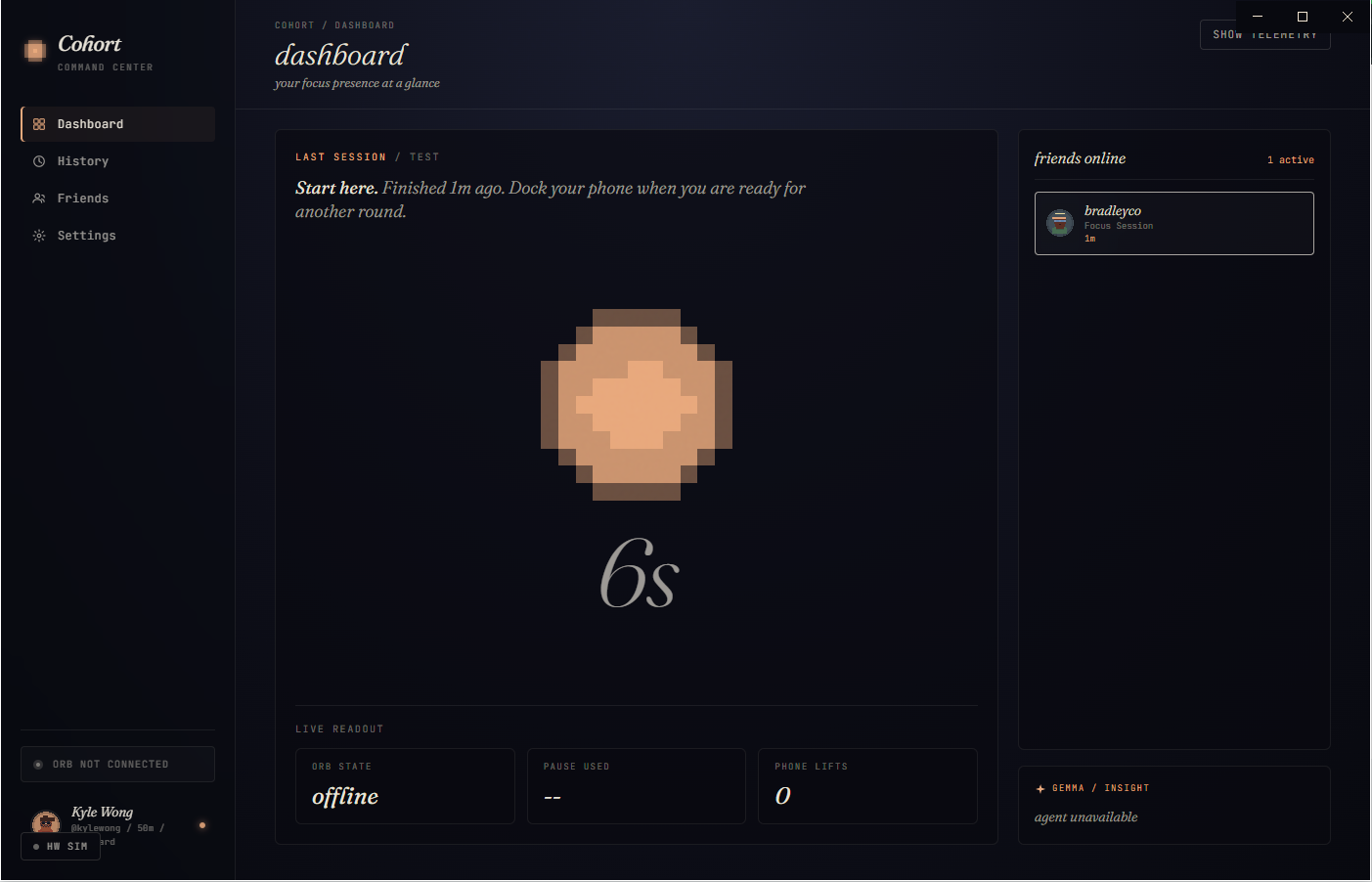
Dashboard
-
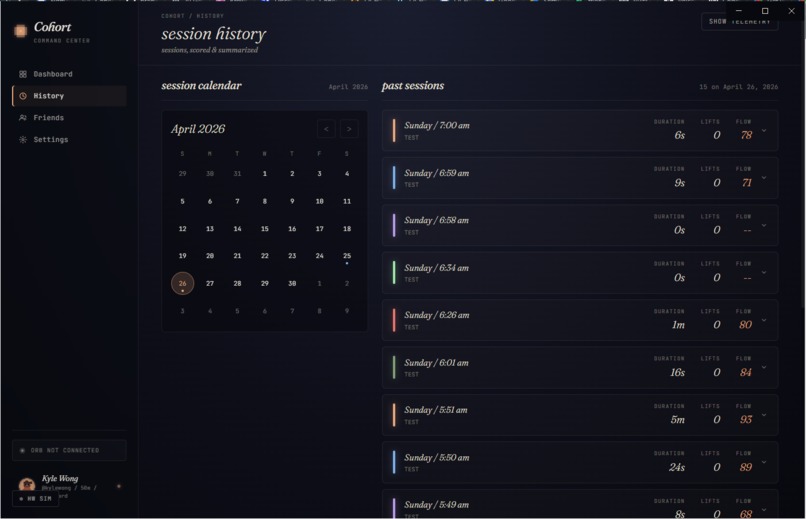
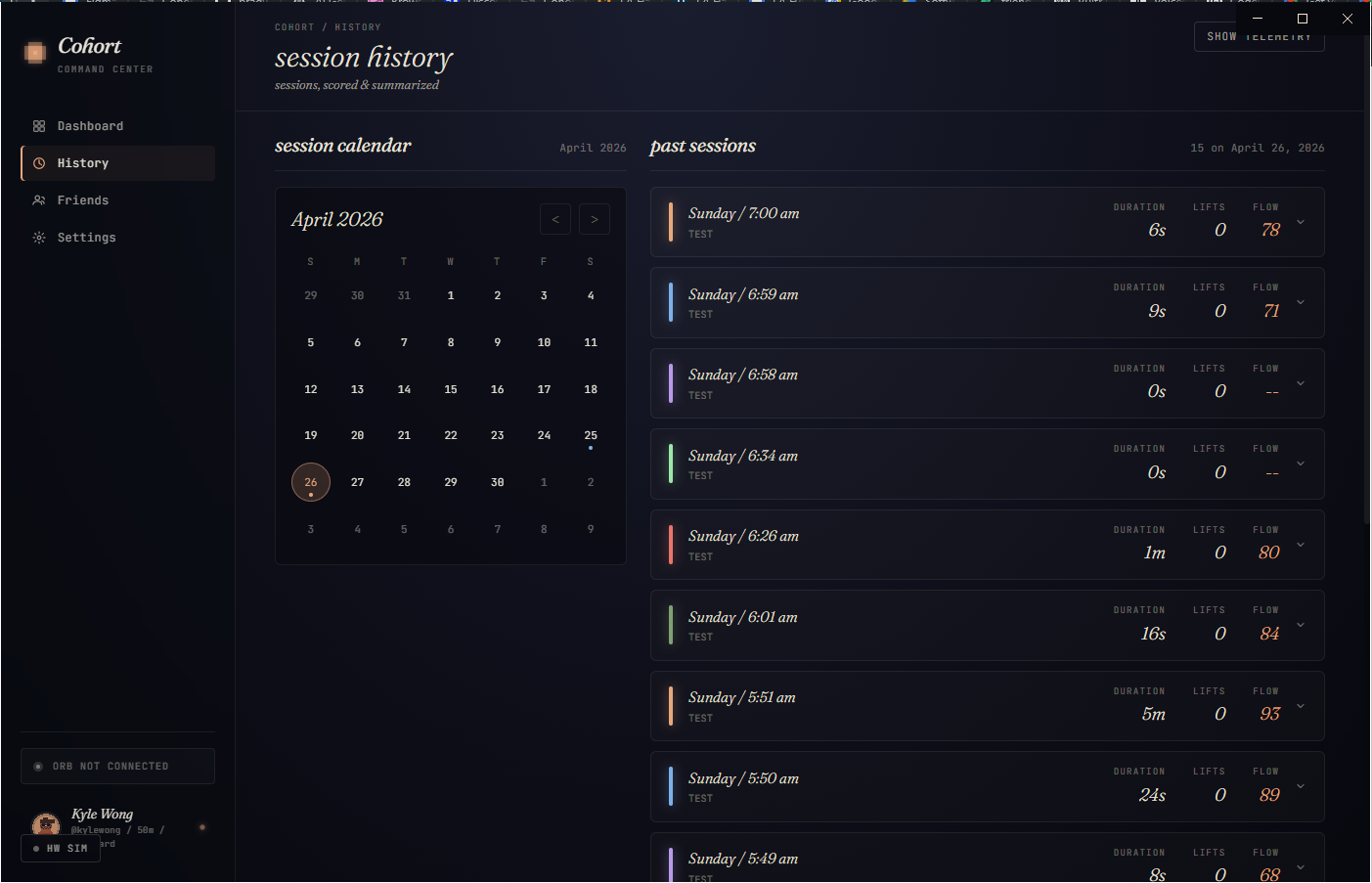
Session History
-
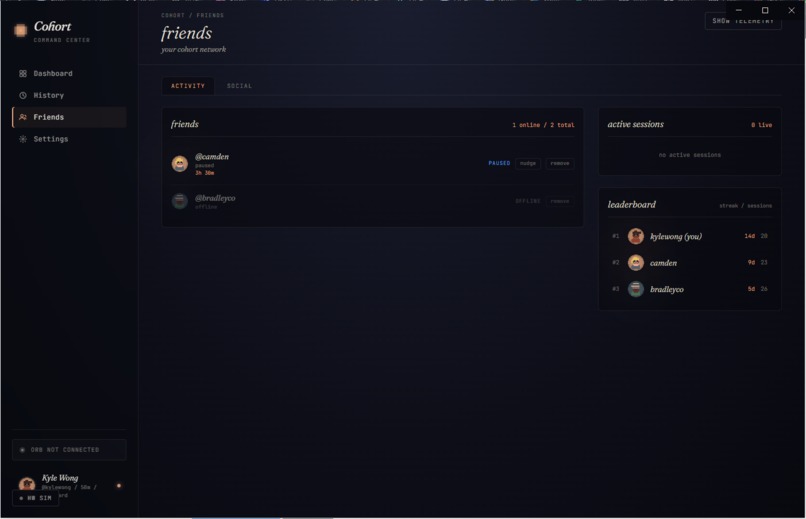
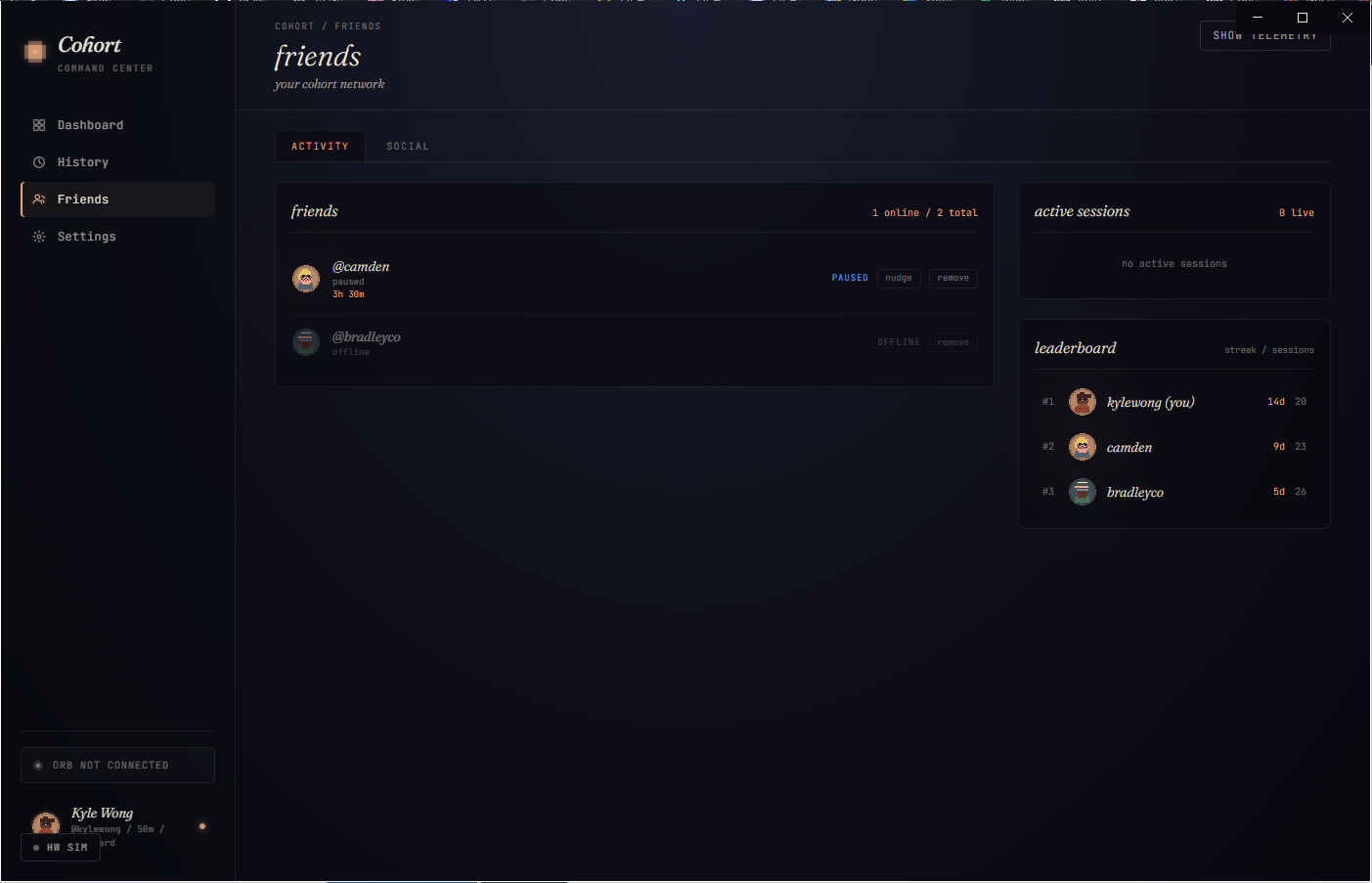
Friends tab
-
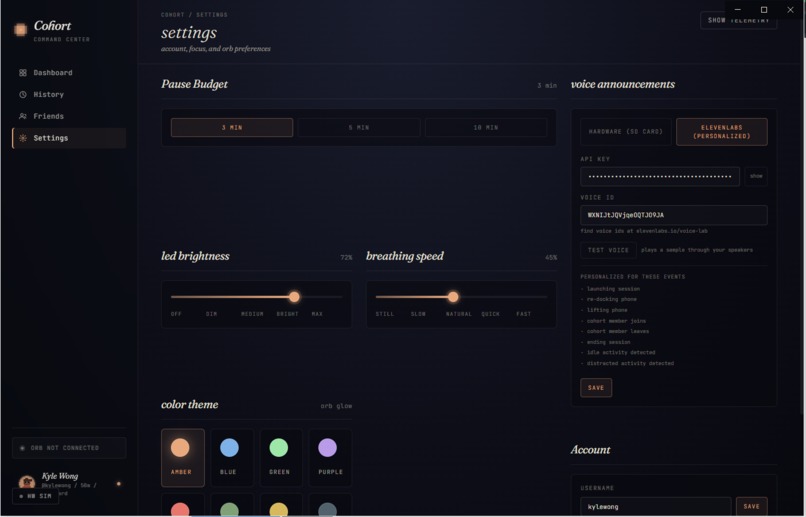
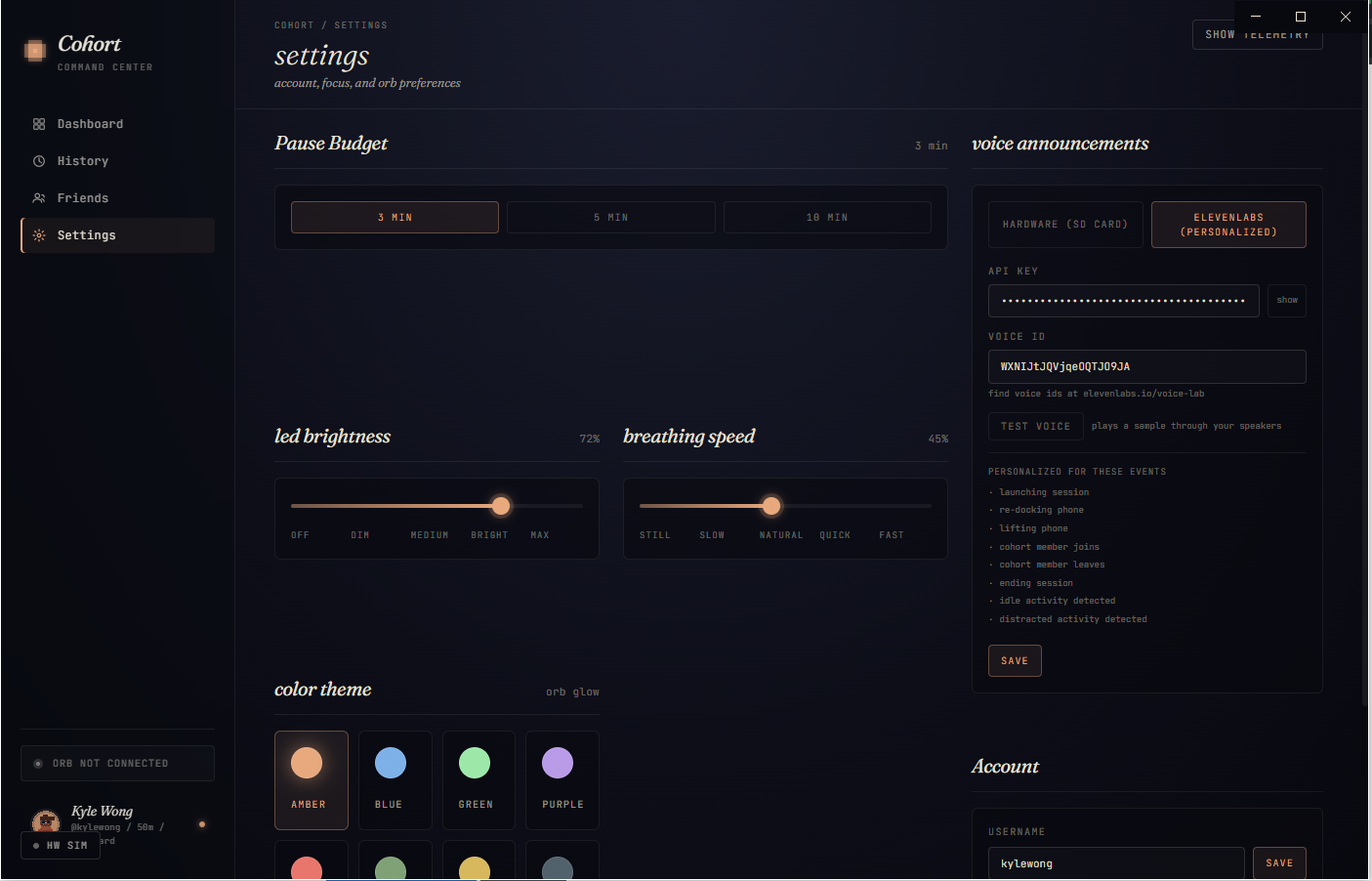
Settings Tab
-
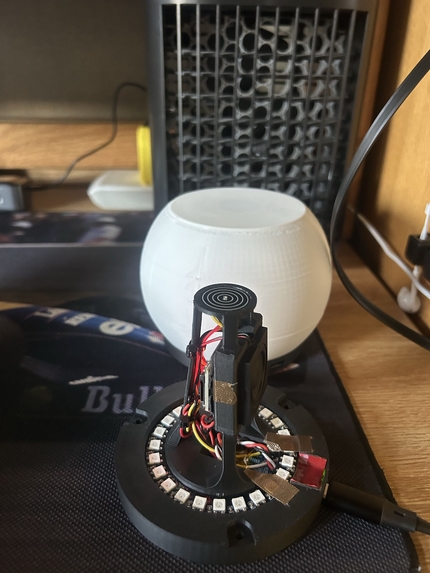
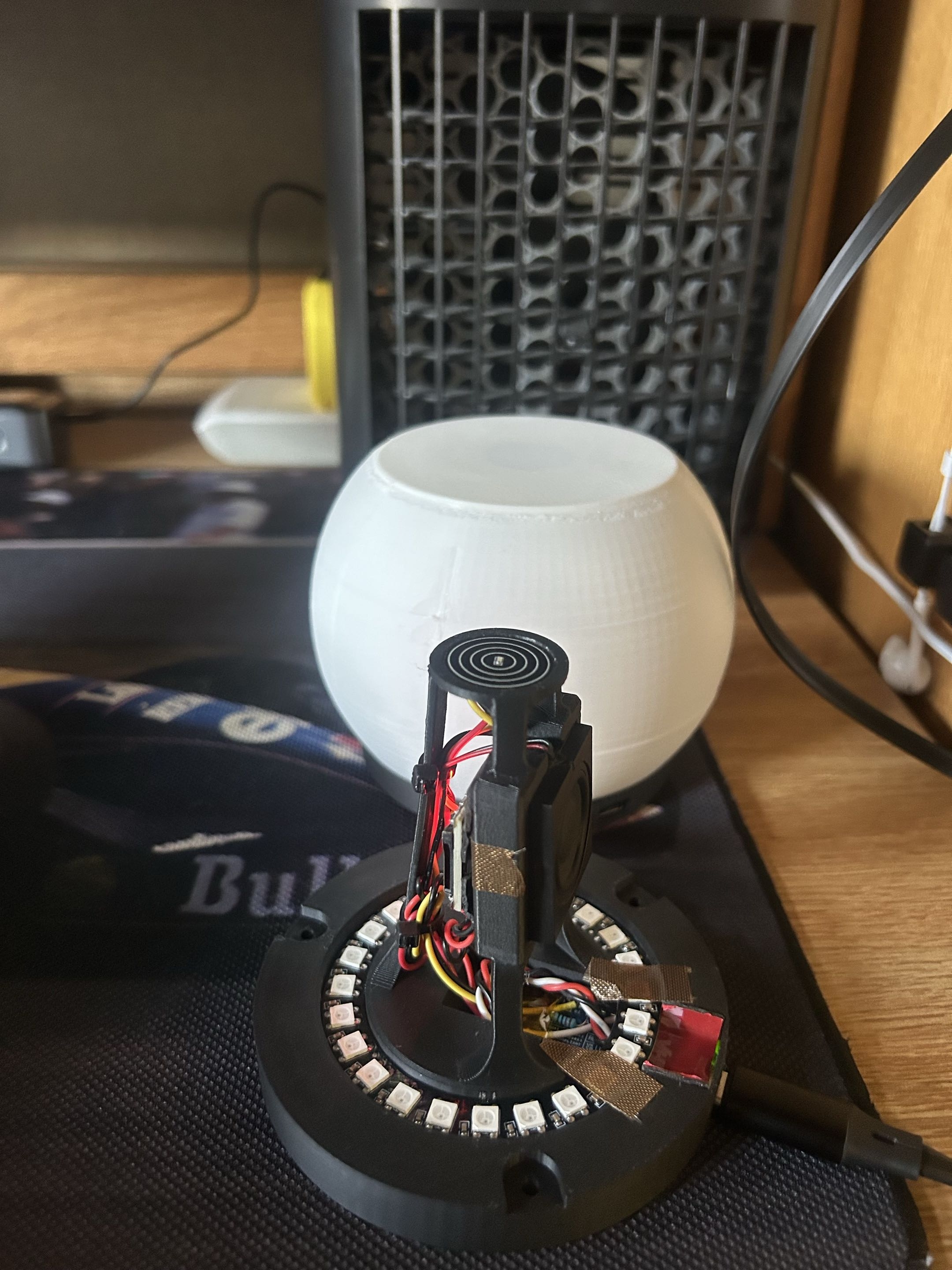
Orb inside and outside
-
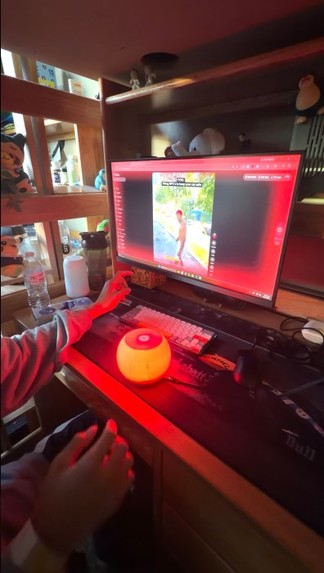
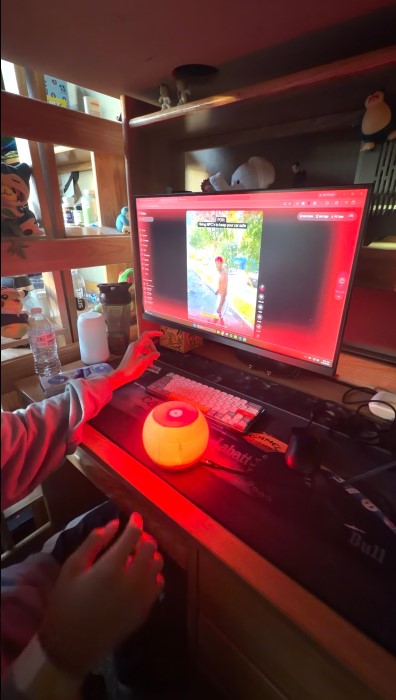
Distracted State
-
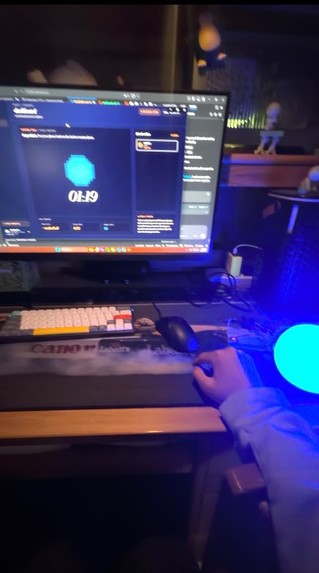
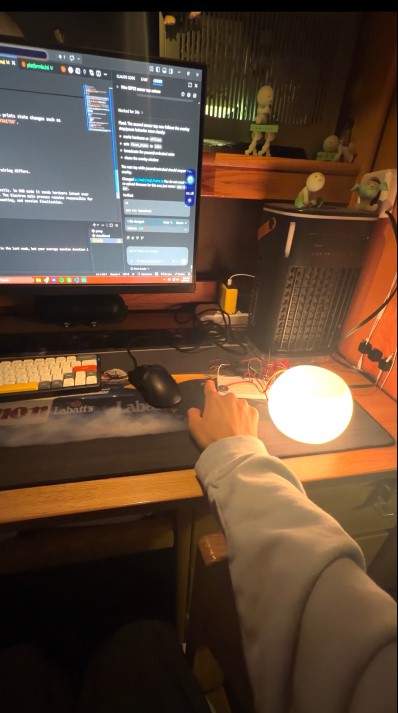
Phone Lifted State (paused time)
-
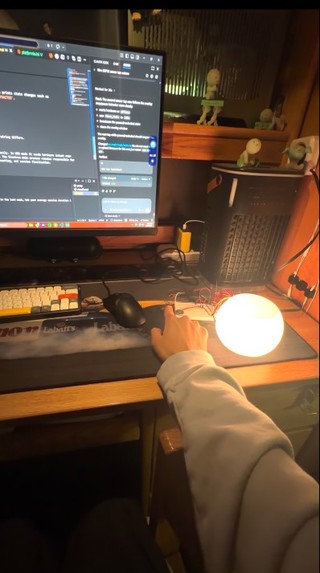
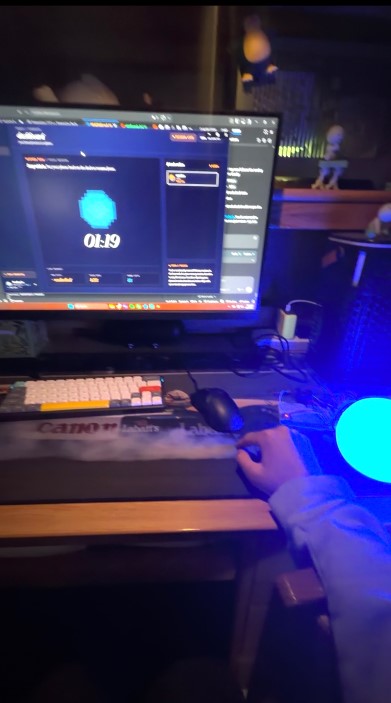
Active State
Inspiration
We kept watching each other open our phones "for one second" and lose 20 minutes when trying to lock in. Existing focus apps may block your app's usage, but in reality, they're just timers because they don't close the loop between intent and behavior. We wanted something with physical consequence: an illuminating orb that knows when your phone leaves the dock, a system that watches your screen, and a social layer that makes focus feel shared rather than solitary.
What it does
Cohort is a desktop app that starts an overlay, paired with a custom hardware orb. You dock your phone on the orb to start a session; the capacitive touch sensor detects placement and triggers everything automatically. A transparent overlay activates on your screen, while a local vision model classifies every screenshot as deep work, idle, or distracted, and a flow score is calculated in real time from your productive time, idle periods, phone lifts, and distraction count. Friends in the same cohort see each other's live session status on the app, while personalized ElevenLabs voice announcements call you out the moment you lose focus. At the end of every session, an AI agent generates a postmortem with your metrics.
How we built it
The desktop app is built with Electron, React, Tailwind, and TypeScript. The hardware orb runs on an Arduino Nano ESP32 with a WS2812B LED ring and a capacitive touch sensor, publishing state changes to HiveMQ Cloud over MQTT. A local Ollama instance runs a vision model for real-time screen classification. A Python agent using the uAgents framework handles AI insights via a ReAct loop against Gemma. User data, sessions, and social features are stored in Supabase. ElevenLabs TTS generates personalized voice cues streamed as base64 audio to the renderer. Auth flows through Supabase magic links and Google OAuth using a custom cohort:// protocol handler.
Challenges we ran into
We faced several technical challenges while integrating Vultr Cloud CPU instances with Gemma 4. Using Fetch.ai Agentverse, we built an agent powered by the Gemma model running on Vultr’s Cloud CPU infrastructure. Since it was our first time working with cloud-based CPU deployment and agent development, we encountered a steep learning curve, particularly with configuring reliable connections between the cloud environment and our Gemma instance. In addition, we experienced unexpected hardware setbacks when our ESP32 failed 18 hours into development, requiring us to quickly source and configure a replacement device.
Accomplishments that we're proud of
We thought the UI/UX of our application is pretty nice. Coming together as a team given our respective roles and strengths. Being able to incorporate all of the features that we wanted to in the given time frame and have it fully functional. We’re especially proud of creating a polished and intuitive UI/UX that made our application both visually appealing and easy to use. We also worked effectively as a team by leveraging each member’s unique strengths and responsibilities, which allowed us to stay organized and productive throughout development. In addition, we’re proud of how seamlessly we integrated our software with the hardware components of the project. By using simulations to test and validate the hardware early on, we were able to streamline development and make the integration process much smoother. Most importantly, we successfully implemented all of the core features we envisioned within the limited time frame and delivered a fully functional final product.
What we learned
Throughout the project, we learned a great deal both technically and collaboratively. We gained hands-on experience working with new technologies such as cloud computing, AI agent development, hardware integration, and real-time system communication. We also learned how to troubleshoot unexpected technical issues quickly, adapt under pressure, and find practical solutions when challenges arose. Beyond the technical side, we learned the importance of teamwork, communication, and trusting each member’s strengths to keep progress moving efficiently. Overall, this project taught us how to turn an ambitious idea into a working product within a limited time frame.
What's next for Cohort
Moving forward, we want to continue refining Cohort with a stronger focus on analytics and AI-driven features. We plan to expand user insights through deeper productivity metrics, personalized progress tracking, and smarter session analytics that help users better understand their habits and performance. On the AI side, we want to improve intelligent coaching, more personalized session summaries, adaptive recommendations, and real-time motivational feedback. By continuing to develop these areas, we see Cohort evolving into a smarter platform that helps students, teams, and professionals stay focused, accountable, and productive together.
Built With
- agentverse
- electron
- elevenlabs-api
- esp32
- gemini-api
- gemma
- mqtt-(hivemq)
- node.js
- python
- react
- supabase
- tailwind-css
- typescript
- vite
- vultr

Log in or sign up for Devpost to join the conversation.