-
-
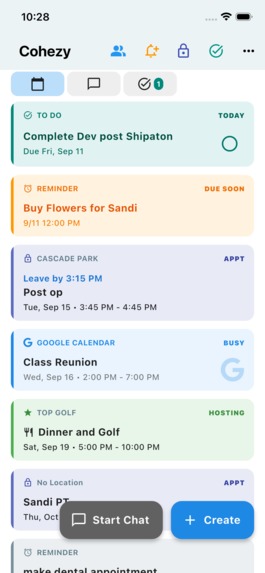
Home Page
-
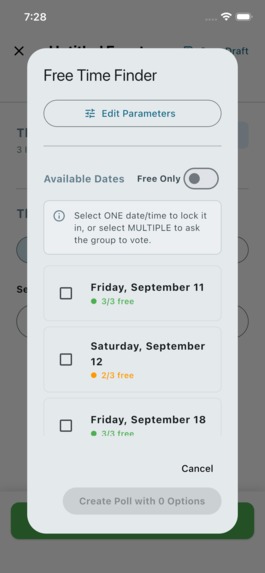
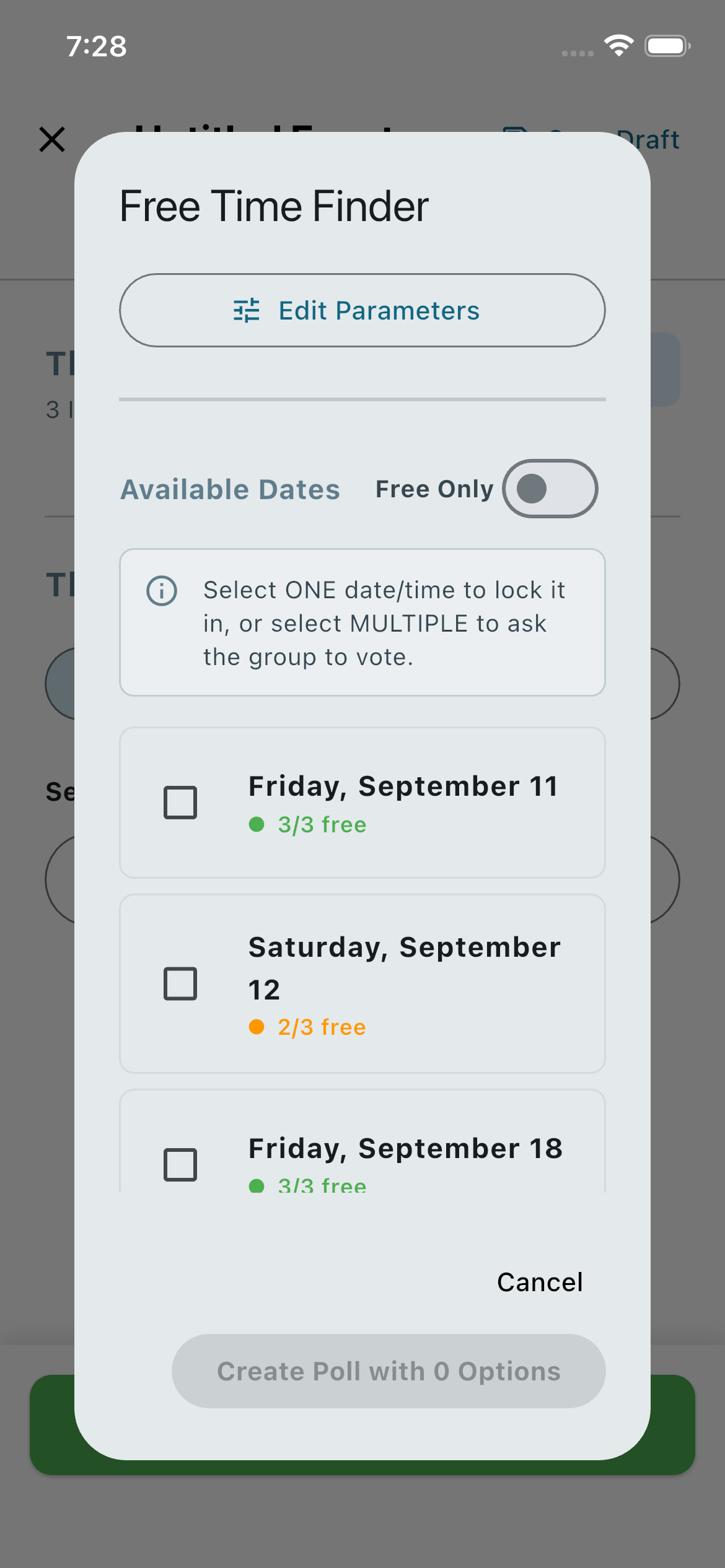
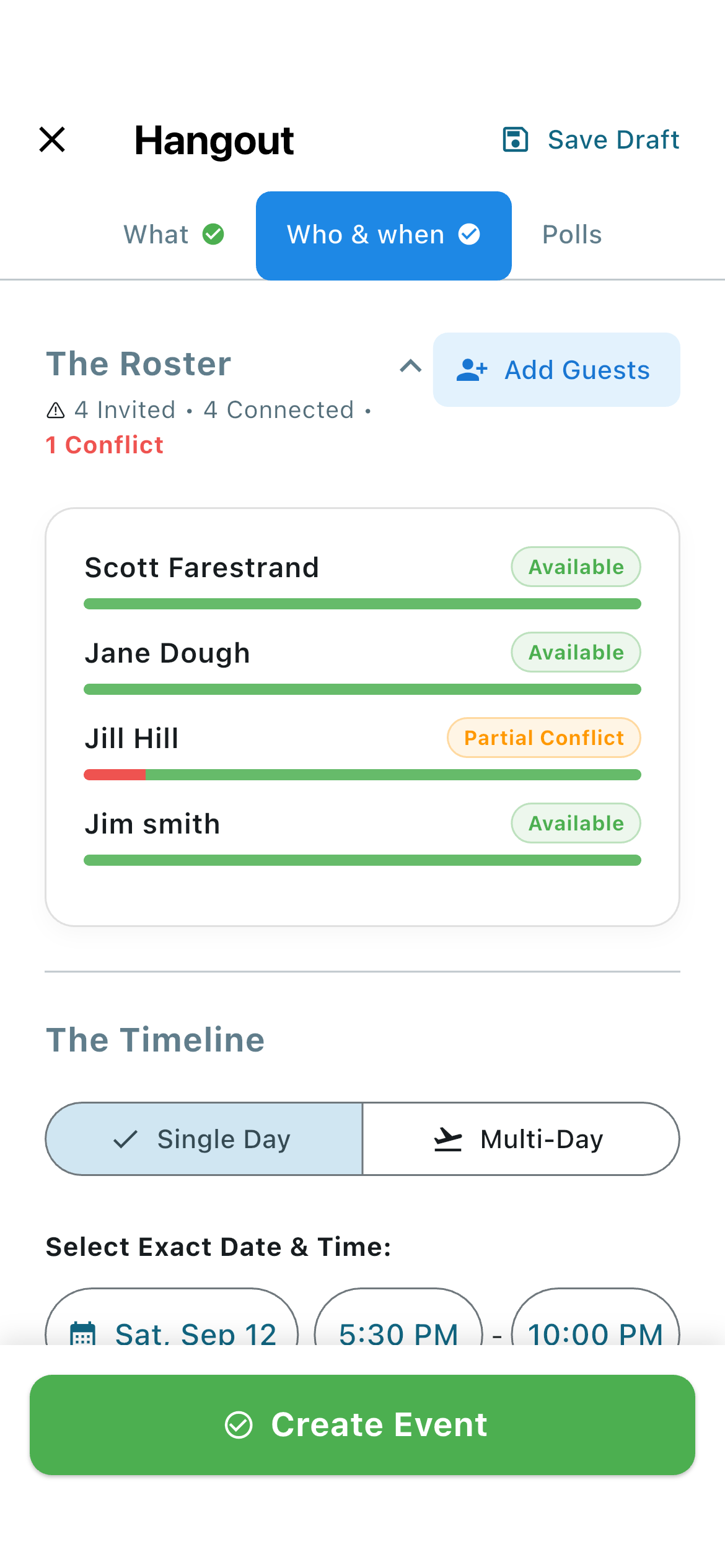
Free Time Finder
-
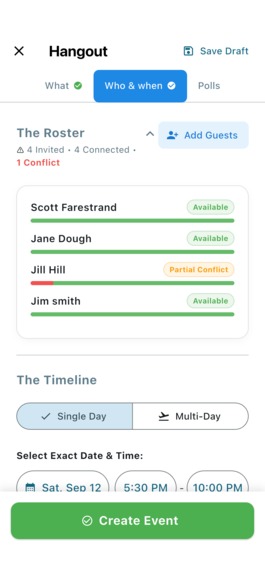
Availability
-
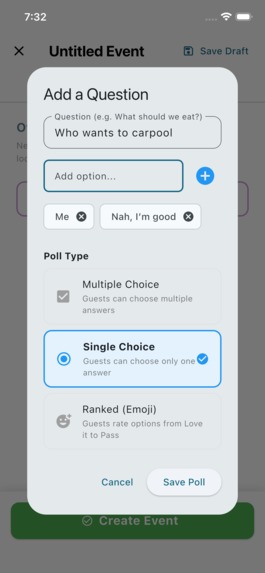
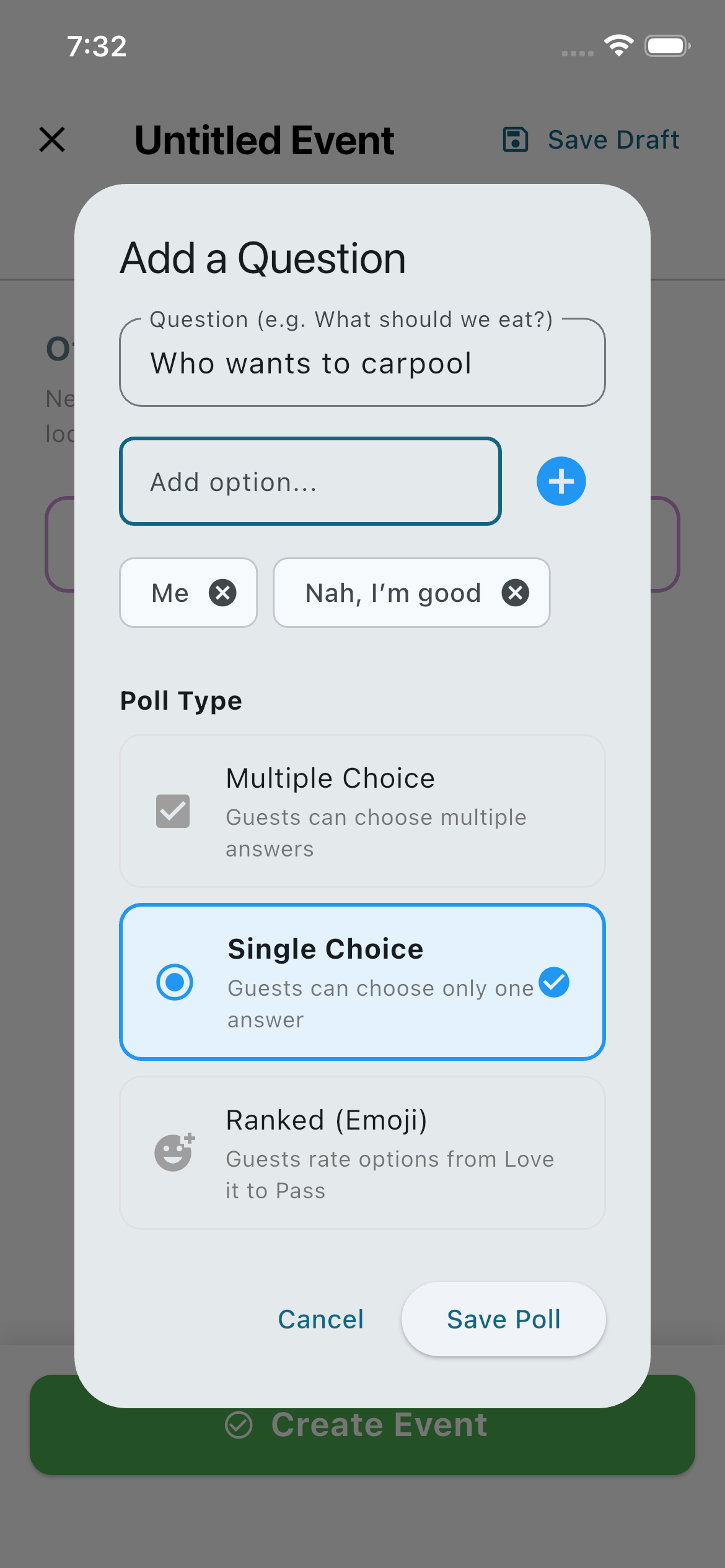
Poll Creation
-
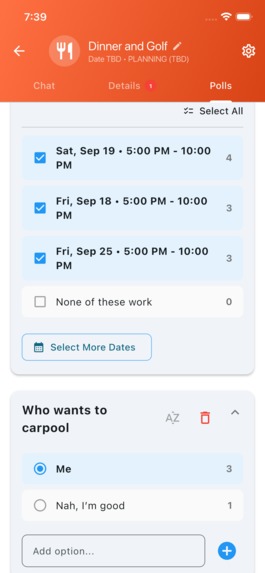
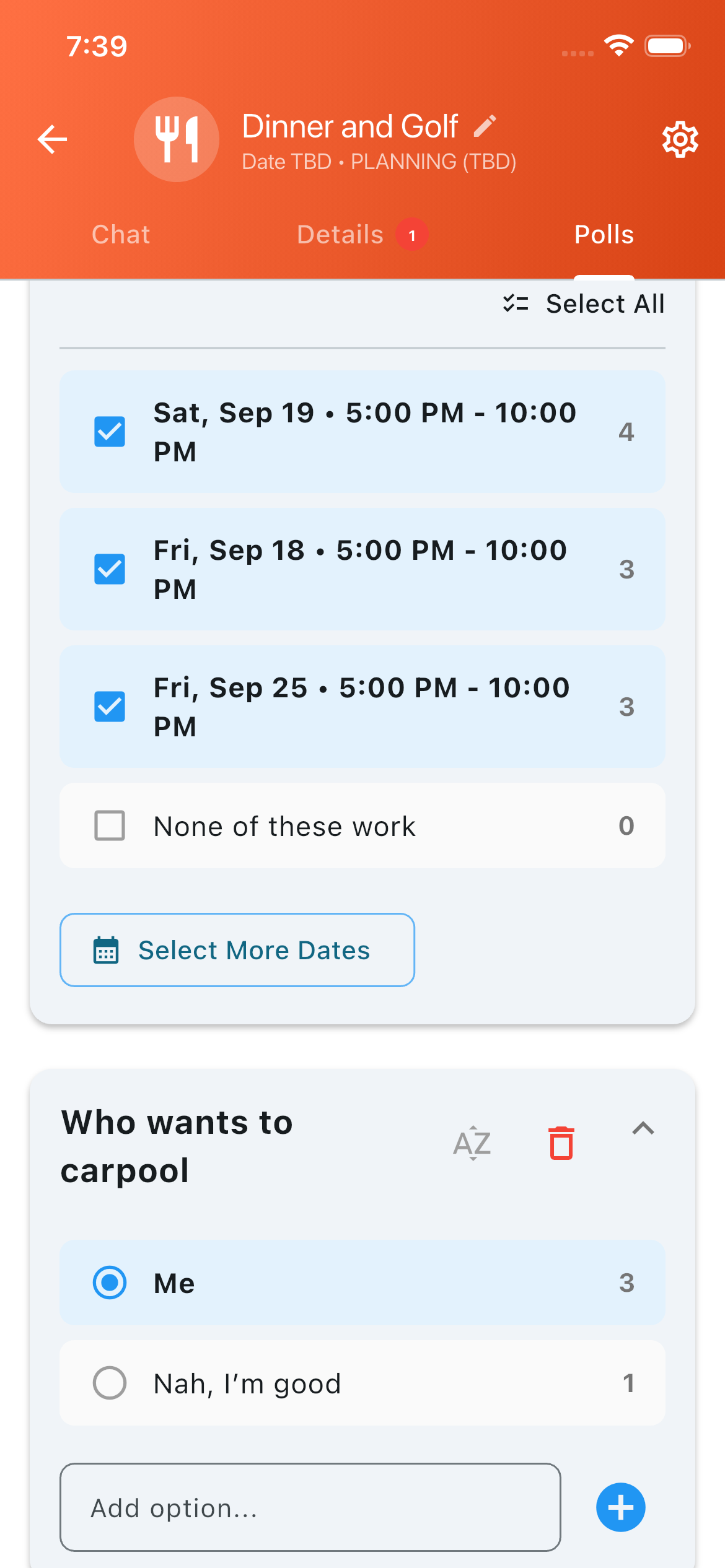
Polls Completed
-
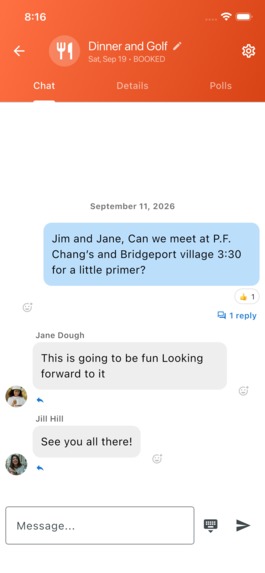
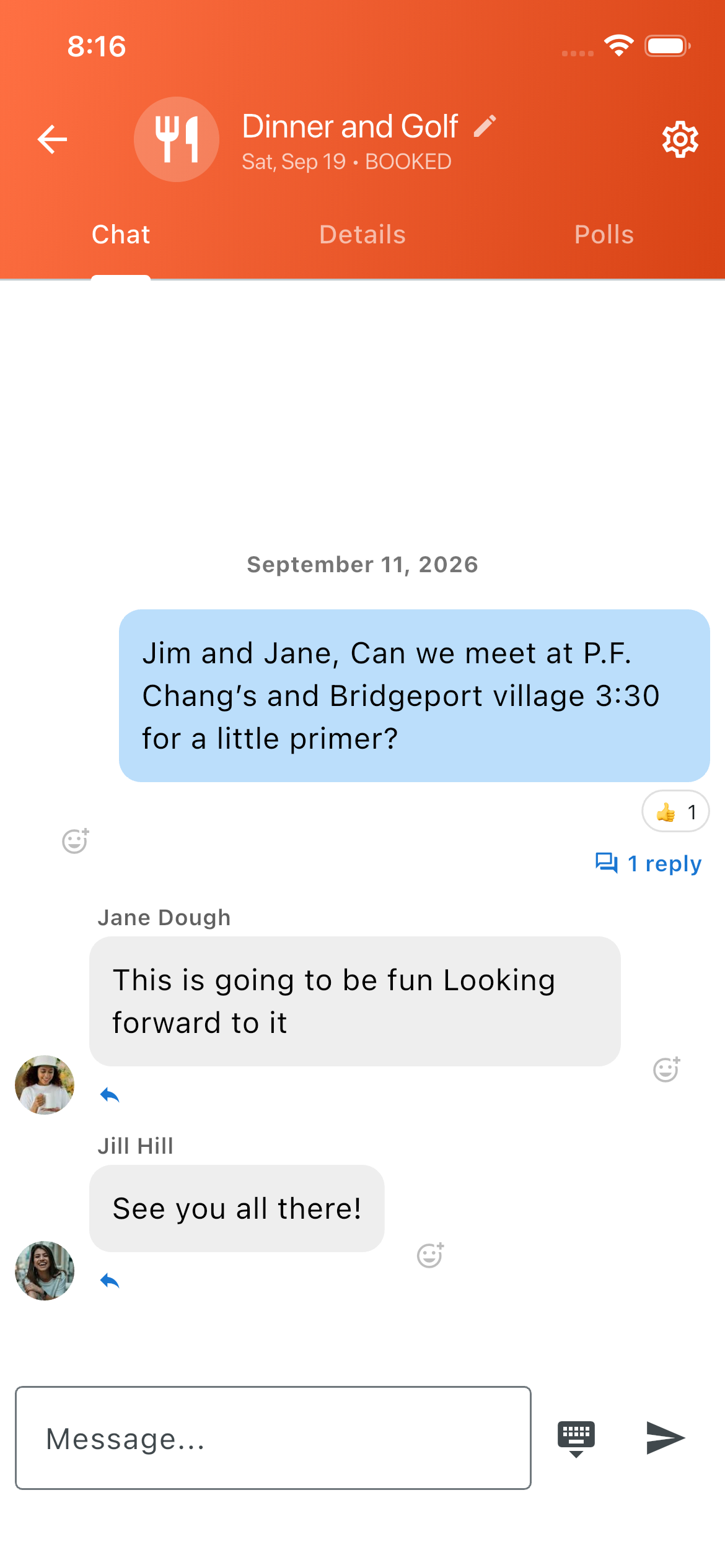
Event Chat
-
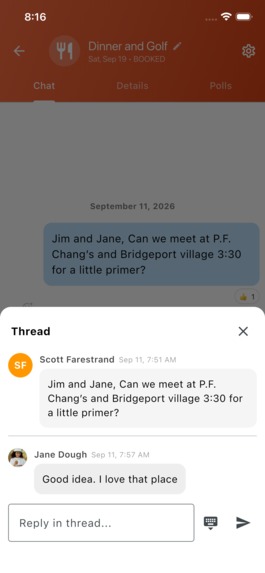
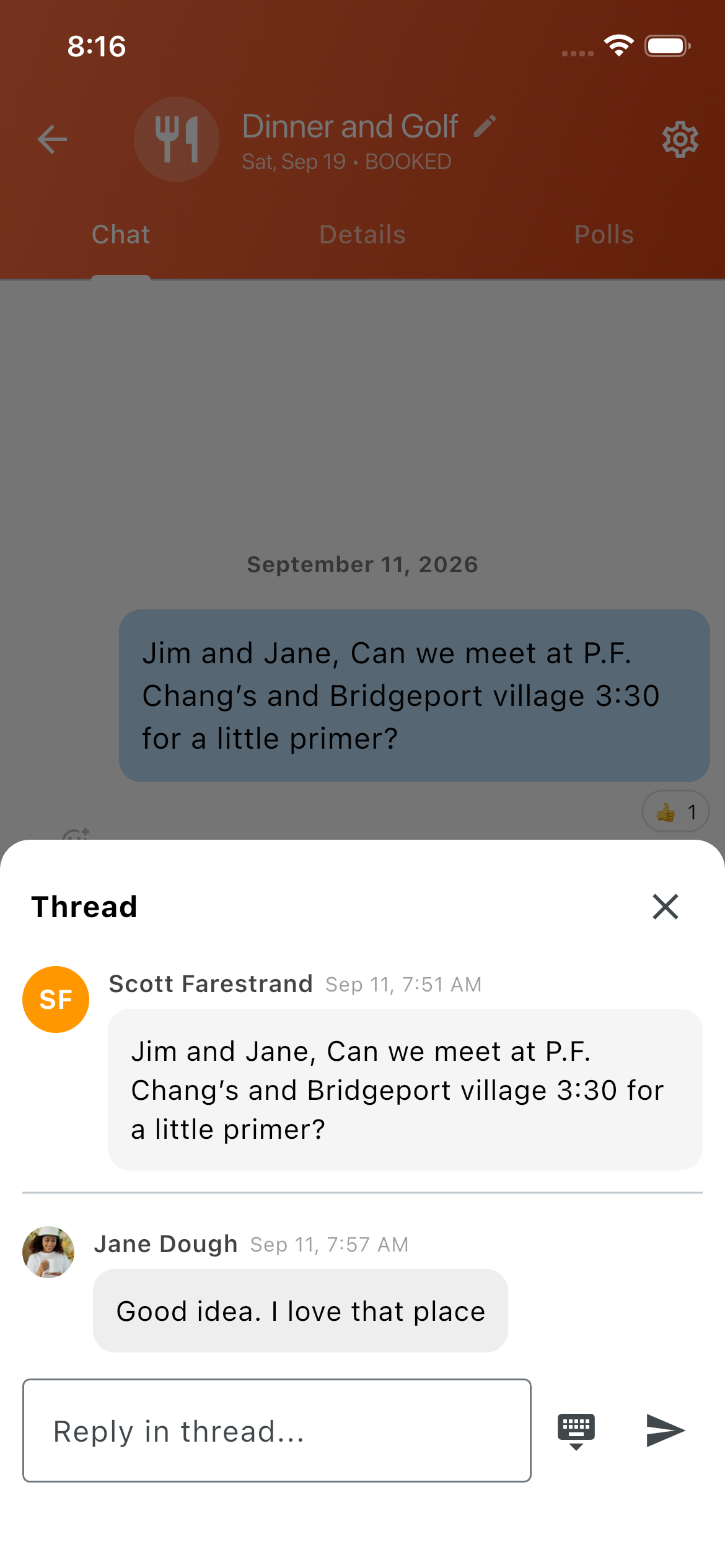
Event Chat Replies
-
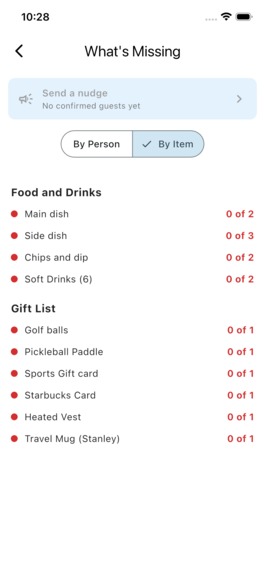
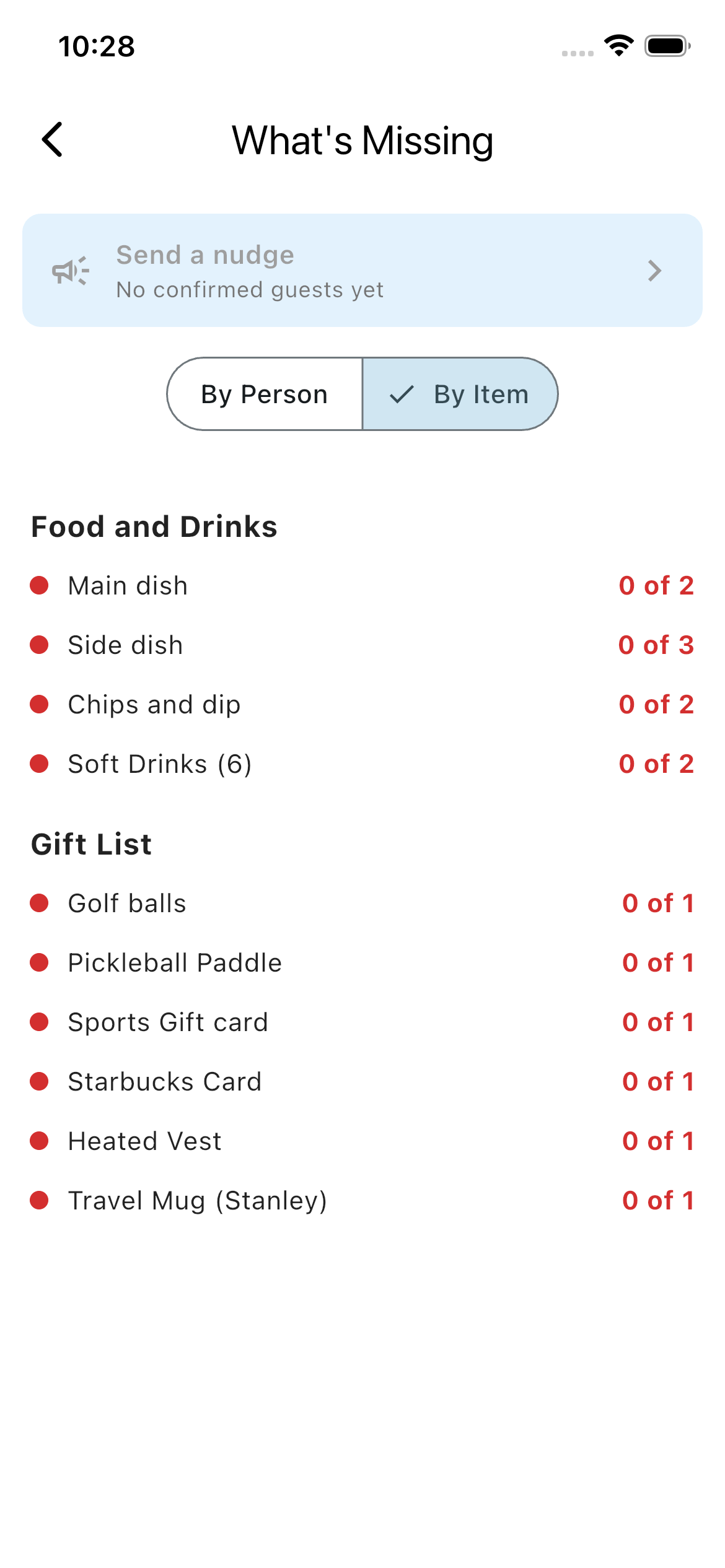
Bring List
-
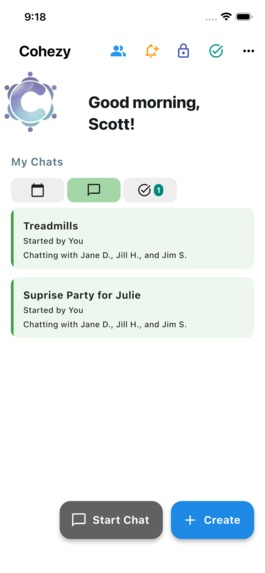
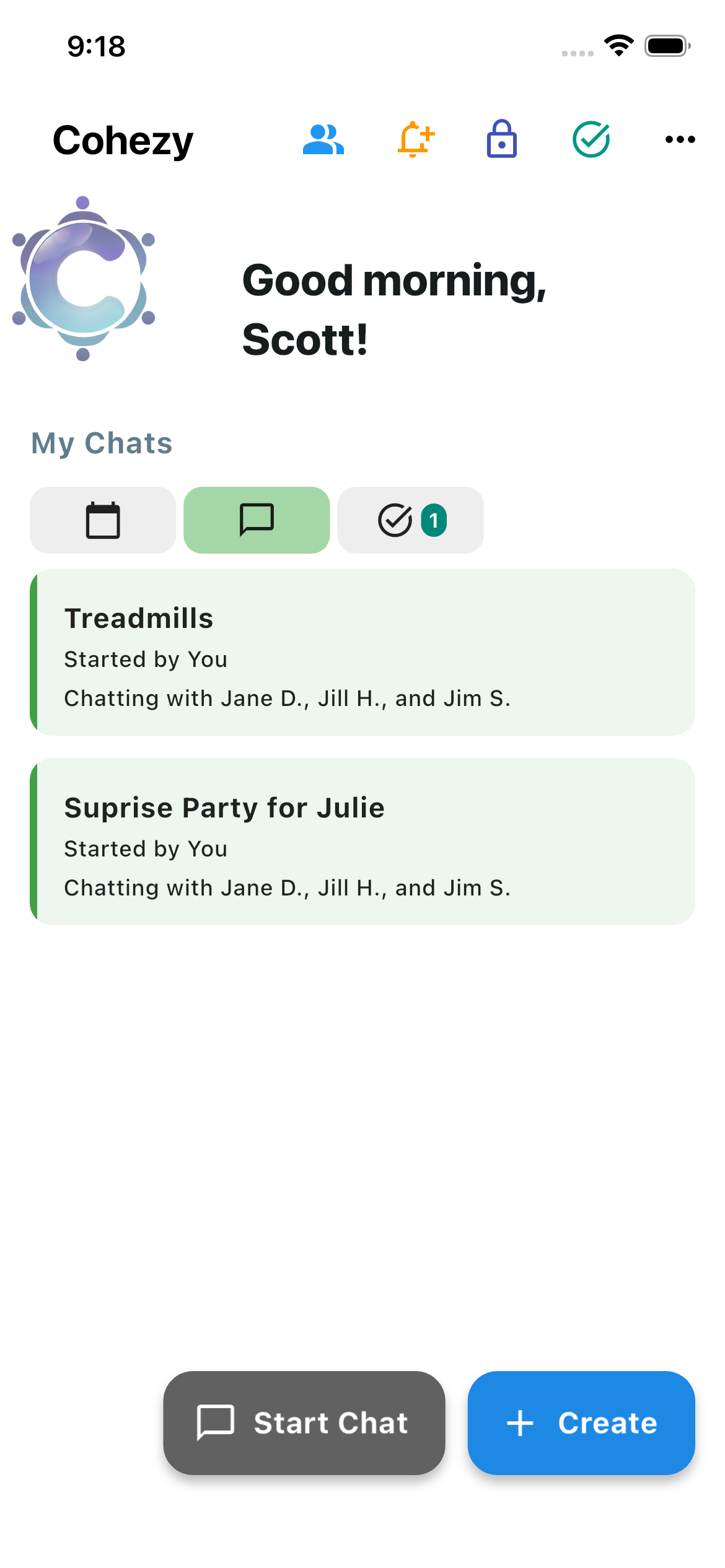
Chat List
-
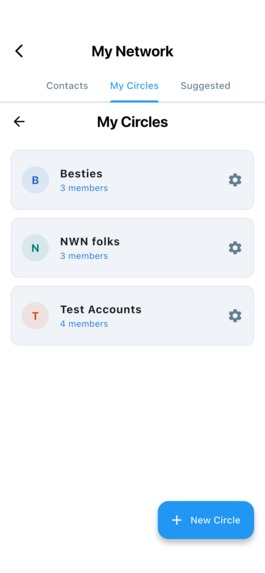
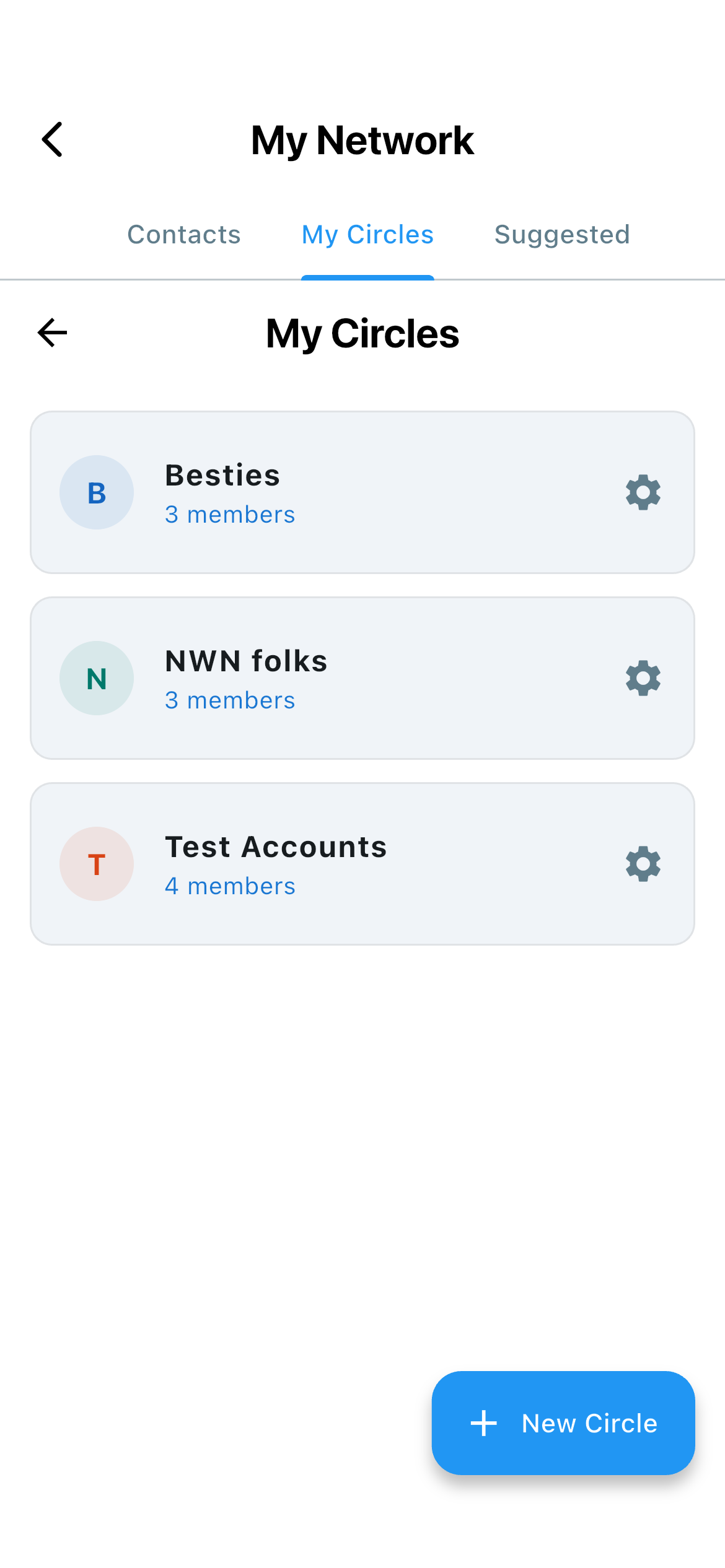
Social Circles
Inspiration
I'm a recently retired IT professional. In my career, I focused on making life easier for the people and processes I supported. After retiring, I thought it might be fun to try developing apps, and I played around with a few ideas trying to find the right one.
While visiting my daughter, an app idea found me! She told me how she and her friend group share calendars to find free time, then hash out the details over group text. Sharing calendars felt like a privacy issue to me, and group texts drive me insane. That's when Cohezy was born.
What it does
Cohezy was created to make event and hangout planning easy. Instead of sharing calendars and relying on group texts, people use polls to find the when, where, and what — then send out invites, right from the app.
Users can chat, add claimable "bring lists," and more.
Details:
Polls take the guesswork out of planning — a date poll finds a time that works for everyone, and custom polls settle the where and what (pizza or tacos? your place or the park?) without a single "reply-all" text.
Once the details are locked in, invites go out and RSVPs start rolling in — no chasing people down to ask if they're coming.
Each event gets its own throttled group chat, so conversations stay contained and organized instead of blowing up everyone's phone. A claimable "What to Bring" list lets people call dibs on chips, drinks, or folding chairs, so nothing gets forgotten and nothing gets duplicated.
And guests don't need to download the app or create an account to take part — they can vote, RSVP, chat, or claim an item straight from a link.
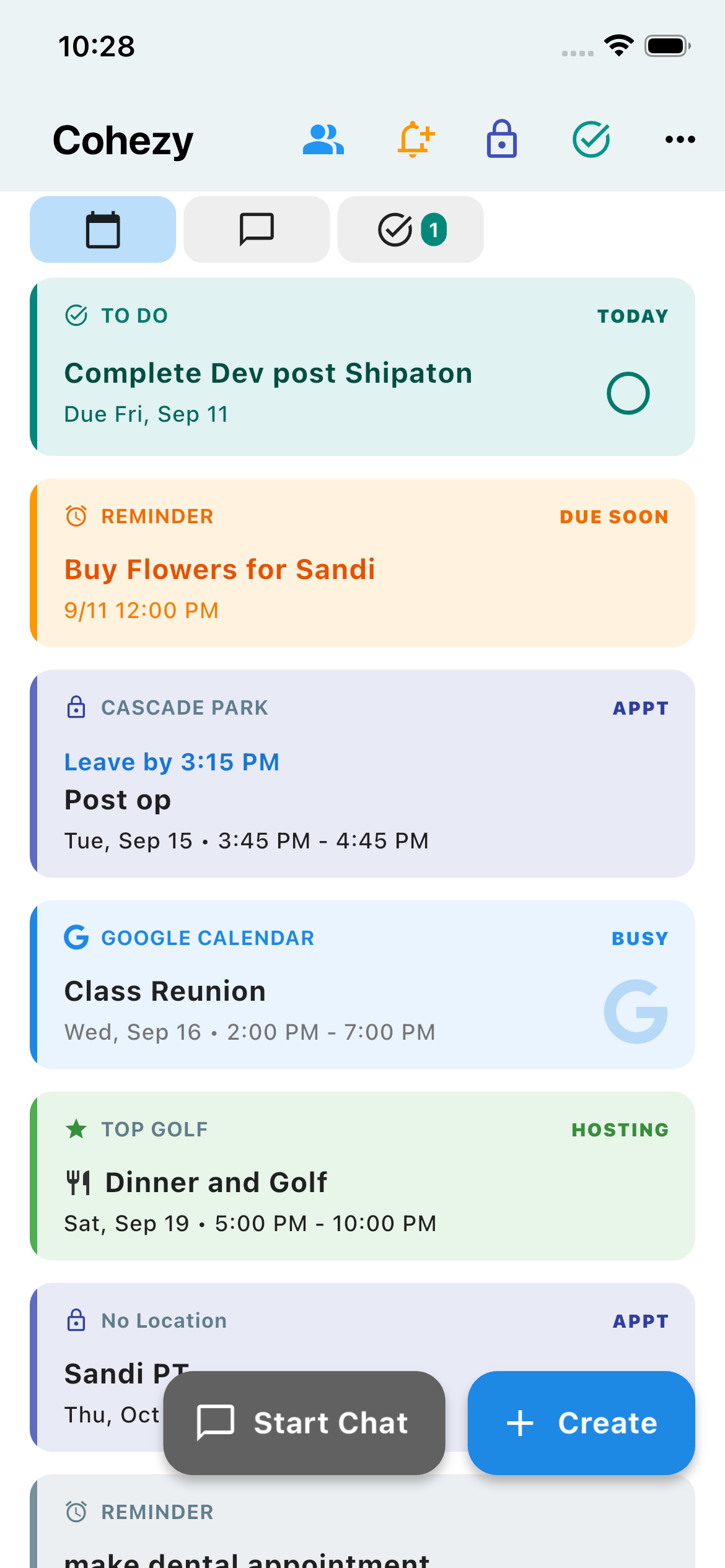
Beyond any single event, Cohezy also handles the everyday stuff — personal appointments, reminders, and now standalone to-do's that don't need a date or an event attached. Combined with event planning, that's chat, events, polls, bring lists, personal appointments, reminders, and to-do's, all under one roof. That's not an accident — it's the direct answer to app fatigue, the quiet cousin of group-text burnout. Nobody wants to download one more single-purpose app, so instead of adding to the pile, Cohezy replaces a few of them. And getting into Cohezy doesn't require an organizer's permission, either — open invite links and QR codes let anyone join a group or event directly, no gatekeeping required, so it works for looser, bigger gatherings too, not just tightly organized friend groups.
Users can chat, add claimable "bring lists," and more.
How we built it
Cohezy is built in Flutter, so one codebase runs on iOS, Android, and the web — important for a solo developer, since I don't have the bandwidth to maintain three separate apps. Firebase runs the backend: Firestore for real-time data, Firebase Auth for accounts, and Cloud Functions in Node.js for anything that needs to happen server-side, like sending nudges or processing a new join request.
The privacy piece — showing free and busy time without exposing what's actually on anyone's calendar — was one of the trickier design problems. Calendar data gets reduced to plain availability blocks before it ever reaches another user, so there's nothing to overlay or expose beyond "free" or "busy."
RevenueCat powers subscriptions across all three platforms — App Store, Google Play, and Stripe for web — under a single entitlement, so a subscriber gets the same access no matter where they signed up. AwesomeNotifications handles local reminders, kept deliberately separate from Firebase Cloud Messaging, which handles everything else — chat pushes, nudges, invite notifications — so the two systems never compete for the same job.
For the open invite work, I added Firebase App Check across the app, using Play Integrity on Android, App Attest on iOS, and reCAPTCHA Enterprise on the web, so a link that lets strangers join can't easily be abused by bots.
All of it was built solo, nights and weekends, as a retired IT professional learning Flutter from scratch.
Challenges we ran into
Some of my biggest challenges were less about code and more about getting out of my own head.
Early on, I built around a "circles first" model — people would create social circles and add friends to them before doing anything else. My daughter told me it was cool, but some of her friends simply didn't want another app on their phone. Then I watched my other daughter and her husband actually try to use it, and I saw the problem firsthand. That was my first real pivot, and it was two-fold: I dropped circles-first entirely, and I moved to a web app to cut friction even further. Nobody needed to install anything at all.
That pushback taught me the bigger lesson — I couldn't build this in a vacuum. I started posting on Reddit and reaching out to people locally, putting the app directly in their hands and asking for brutally honest feedback instead of polite reassurance. One early note stuck with me: people wanted the app to feel more fun, not just functional. That's where event themes and emoji-based tiebreaker voting on polls came from.
I ran a demo at a local pub to get feedback face to face. Watching someone try to build a simple yes-or-no poll — with only multiple choice available — was its own small lesson. I added radio-button polls the same week.
Scope creep hit hard partway through. A different Devpost contest caught my attention, and I decided to build a feature toward it. It took a lot of work and testing, and realistically pushed Cohezy's launch back by a few months. It taught me to be a lot more protective of my own roadmap.
Even now, the hardest ongoing call is knowing when to stop adding features — separating what an event-planning app actually needs to be complete from what's a genuinely nice idea that can wait.
On the technical side, a few problems stand out. Getting free/busy overlays right across different calendar providers, without ever exposing the underlying event details, took real care — it's a privacy guarantee, not just a display choice, so I couldn't cut corners on it. I also hit a subtle Apple push notification bug: including content-available on a notification that also has an alert causes iOS to silently throttle it under low-power conditions, which meant some users just weren't getting notifications and there was no error to point at. And before launch, I found real paywall bypass bugs — a few screens let free users reach Planner-tier features because the access check was missing at the entry point, not the feature itself. Catching that meant auditing every path into every gated feature, not just the obvious ones.
Accomplishments that we're proud of
A few things stand out when I think about what I'm proud of.
The first is people. When someone I've never met tells me "I'm sticking with this to the end" or "I'm going to see this through," that means more than any metric. That kind of validation from strangers is something I didn't expect and don't take for granted.
The second is how the app actually feels to use. People don't ask me "how do I do this?" — they ask "can you add...?" That's a real signal. Confusion sounds like questions about the interface; engagement sounds like requests for more.
Throttled notifications turned out to be one of the simplest ideas with the biggest payoff — one notification, then quiet, instead of a phone that won't stop buzzing. It's a small design choice that directly answers the group-text fatigue this whole project started from.
I'm also proud of how I handled feedback — both the loud kind and the quiet kind. I listened when people told me something directly, asked for clarity when I needed it, and learned that silence isn't always disinterest. Sometimes it just means someone didn't want to hurt my feelings. Learning to read that, and act on it anyway, was its own kind of feedback loop.
And frictionless invites — being able to bring someone into an event or a chat without asking them to download an app or create an account — still feels like one of the best decisions in the whole product. It removes the exact switching cost that makes group coordination so hard to fix in the first place.
I'm proud of Cohezy's smart memory, too. It remembers the names of events, locations, personal appointments, and polls you've created before, so recreating something similar is fast instead of starting from scratch every time.
And I'm proud of related tasks — this one comes from my own life. I'm a cancer survivor, and I went through a stretch of recurring, irregular radiation appointments where I had to take certain pills a specific number of hours beforehand. I built that need directly into personal appointments: attach a task to an appointment once, and every time you recreate a similar one, Cohezy schedules that task the correct number of hours ahead automatically. It started as something I needed for myself, but it works just as well for board meetings, team meetings, or anyone else with a recurring appointment that needs prep work done on a schedule.
What we learned
A few things I learned along the way, some of which reshaped how I think about building products at all.
Designing in a bubble is hard. I love design thinking — mapping out user journeys, weighing trade-offs, thinking through edge cases — but it only works so well when you're the only person in the room. Working alone means catching your own blind spots is much harder, because there's no one across the table to push back in real time.
AI turned out to be a genuinely essential tool, not just a convenience. I used Gemini and Claude throughout — running the same idea past both, comparing how they reasoned about it, using the disagreement between them as a signal worth digging into. I could not have coded all of this on my own, and having two different perspectives to bounce ideas off of came close to filling the "second person in the room" gap that working solo leaves behind.
I also learned to watch for scope creep in places I didn't expect. Building out full reminders support across both iOS and Android was, in hindsight, completely unnecessary at the time — effort that didn't need to be spent yet, on something that wasn't the thing actually blocking launch.
Some lessons I've carried since the very beginning. App fatigue is a term I first heard from my daughter — she has friends who simply don't want another app, full stop, even a web version, because that still feels like one more thing. That's been in my head from day one, and it's exactly why Cohezy now has real to-do support — reminders with or without a date, not tied to any specific event. Between that and everything else, Cohezy is already a place where someone can chat, create events, manage personal appointments and reminders, and connect a calendar to find real free time with a group, all without leaving one app.
And maybe the biggest lesson: when someone tells you your idea isn't really needed, it's worth asking yourself honestly whether you disagree because you actually see something they don't, or just because it's your idea and it's hard to hear. Then watch what people actually do, not just what they say — sometimes their behavior ends up validating the idea their words argued against.
What's next for Cohezy
What's next for Cohezy keeps building on the same idea — one app that replaces several, rather than one more thing to install.
The first thing on deck is letting people create a to-do or reminder directly from a line in chat. Someone mentions "don't forget to grab ice" mid-conversation, and turning that into a tracked reminder shouldn't require leaving the chat to do it.
Next is expense splitting — a lightweight way to settle up after an event without a separate app for it, since money is often the last loose thread once the plans, the chat, and the bring list are already handled in one place.
And for people who want a little structure around building habits, I'm looking at repeating reminders — a to-do that comes back on its own schedule, without turning Cohezy into a full habit-tracking app with streaks and badges. Just the coordination piece, not the motivation layer.

Log in or sign up for Devpost to join the conversation.