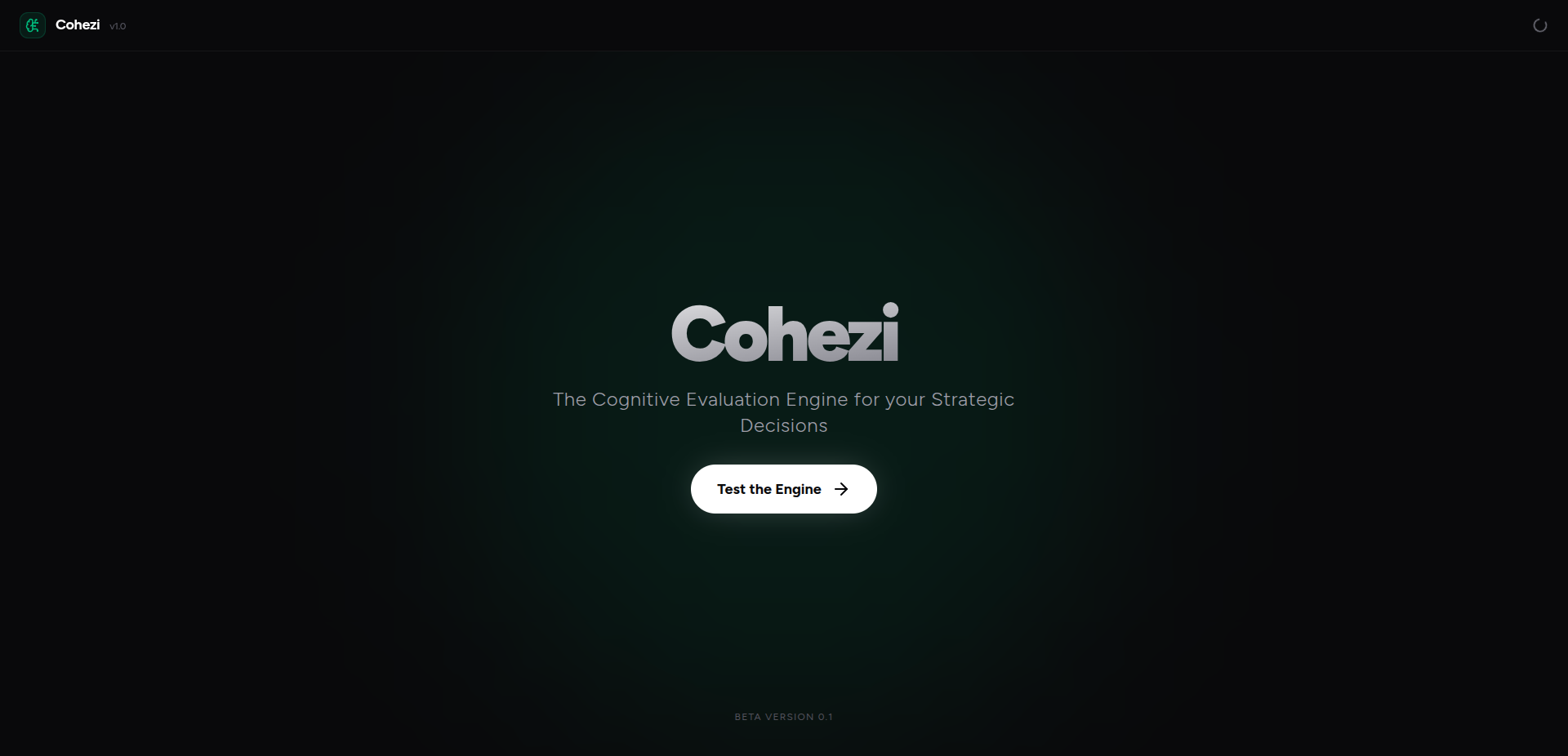
The Story of Cohezi
💡 What Inspired Me?
In a world flooded with generic AI chatbots that simply "answer questions," I felt a critical gap. We have tools that write for us and code for us, but we lack tools that help us think.
I was inspired by the concept of a "Red Team" in cybersecurity or a council of advisors for a CEO—a group dedicated to finding flaws, challenging assumptions, and stress-testing ideas before they go live. I wanted to democratize this high-level cognitive audit.
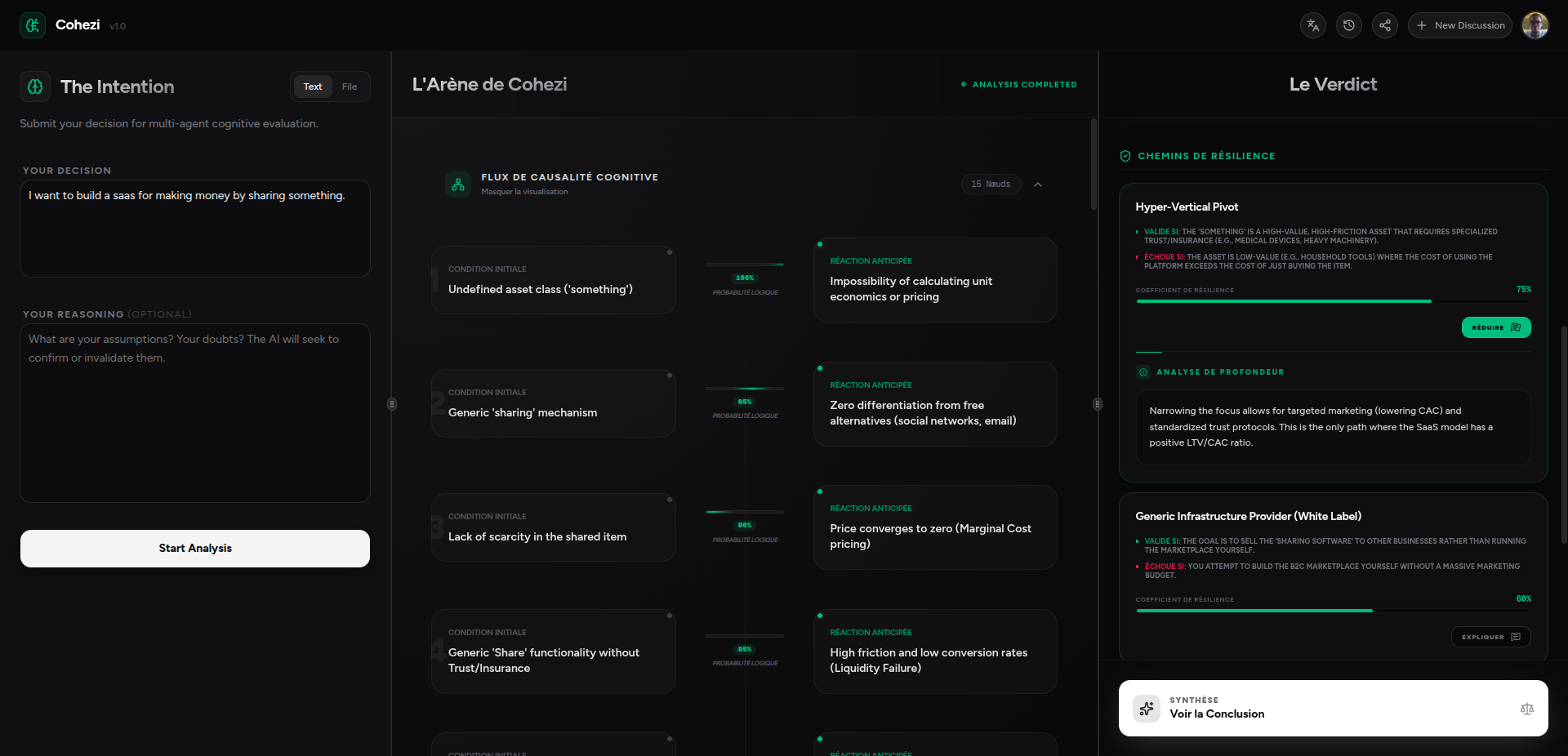
Cohezi was born from a simple question: What if, instead of a compliant assistant, you had a team of specialized agents designed to dissect your decisions and expose your blind spots? I wanted to visualize the actual structure of reasoning, turning abstract thoughts into a concrete, interactive map of cause and effect.
🧠 What Me Learned
Building Cohezi was a masterclass in modern AI orchestration and advanced UI patterns.
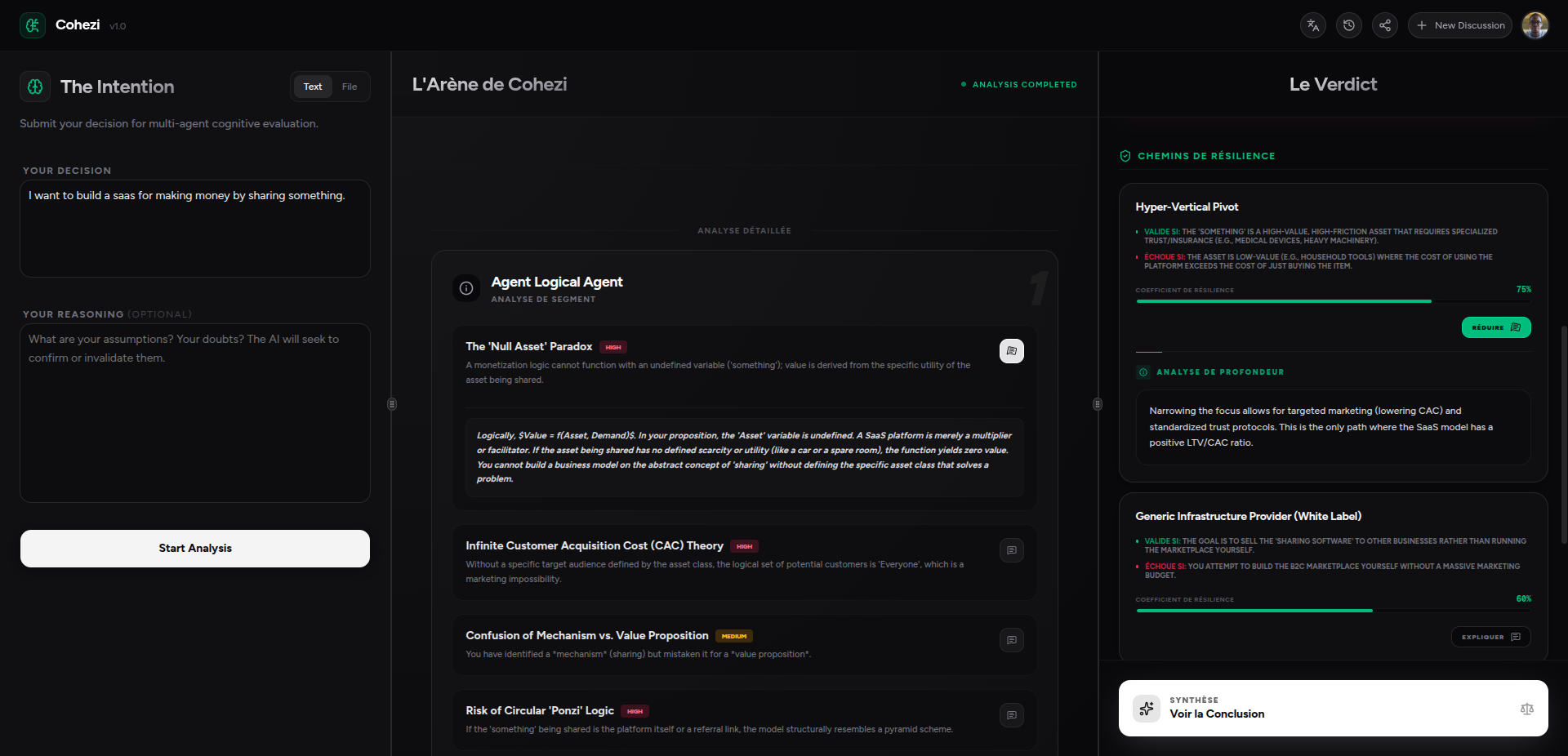
- The Power of Specialization: I learned that a single AI prompt is rarely enough for complex analysis. By breaking the "brain" into specialized agents (Logical, Causal, Risk, Skeptic, Stress-Test), the quality of insight improved dramatically.
- State Management is Art: Managing the asynchronous flow of five different AI agents reporting back in real-time, while syncing visuals in a three-panel layout, taught me the true value of robust state management and optimistic UI updates.
- Visualizing the Invisible: I discovered that the biggest challenge in decision-making isn't just the data, but the visualization of consequences. Learning to map "Ripple Effects" (second and third-order consequences) visually was a breakthrough in making the AI's output truly useful.
🛠️ How I Built My Project
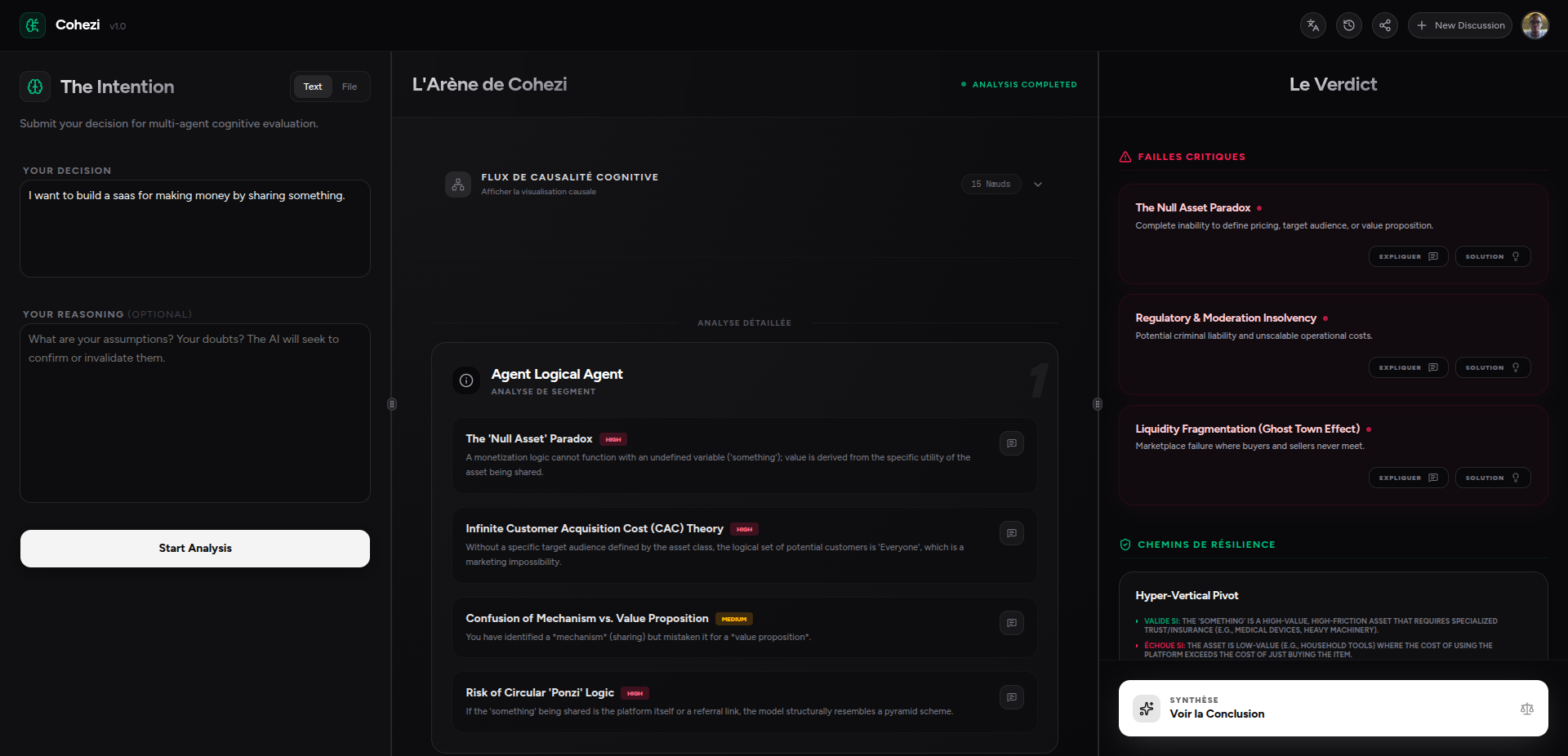
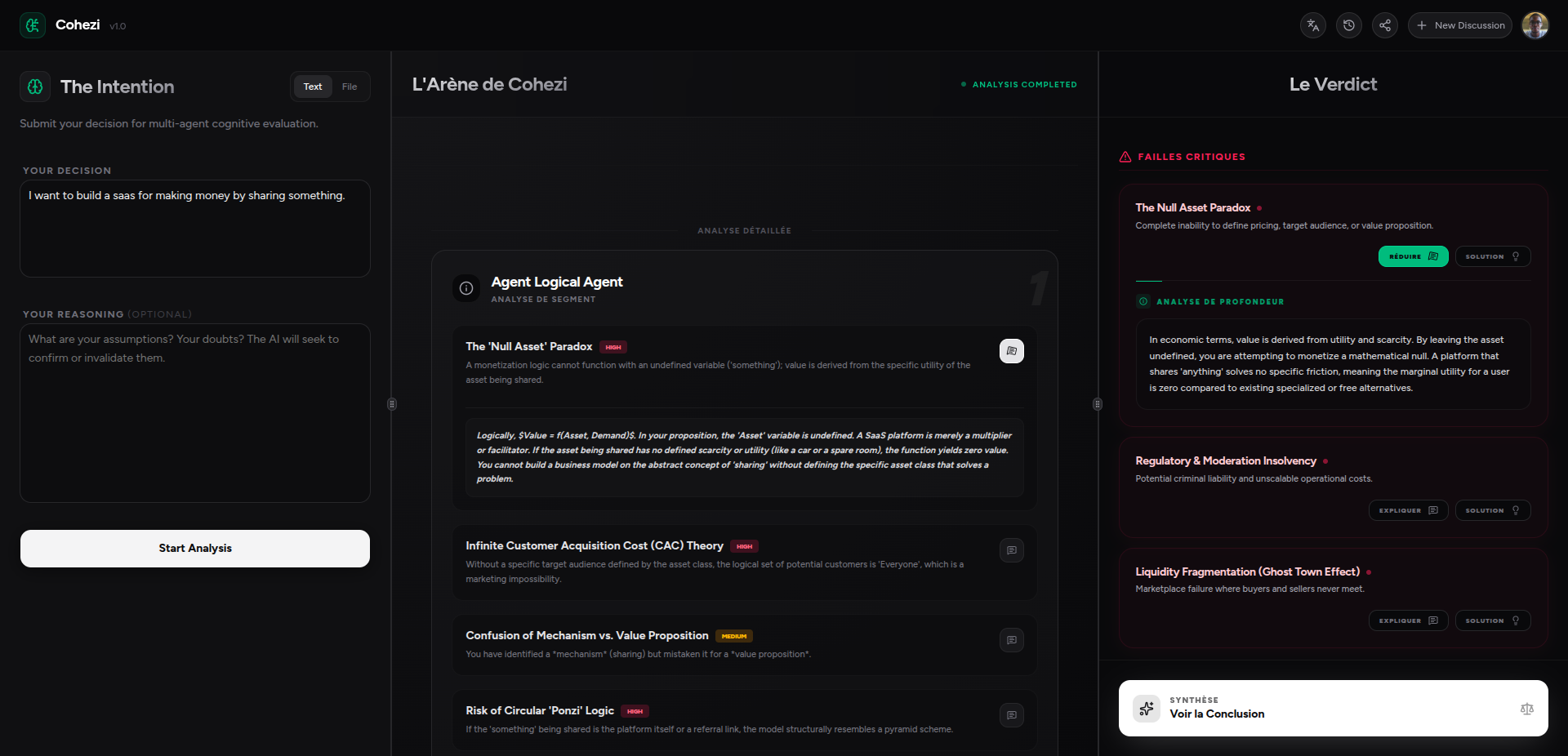
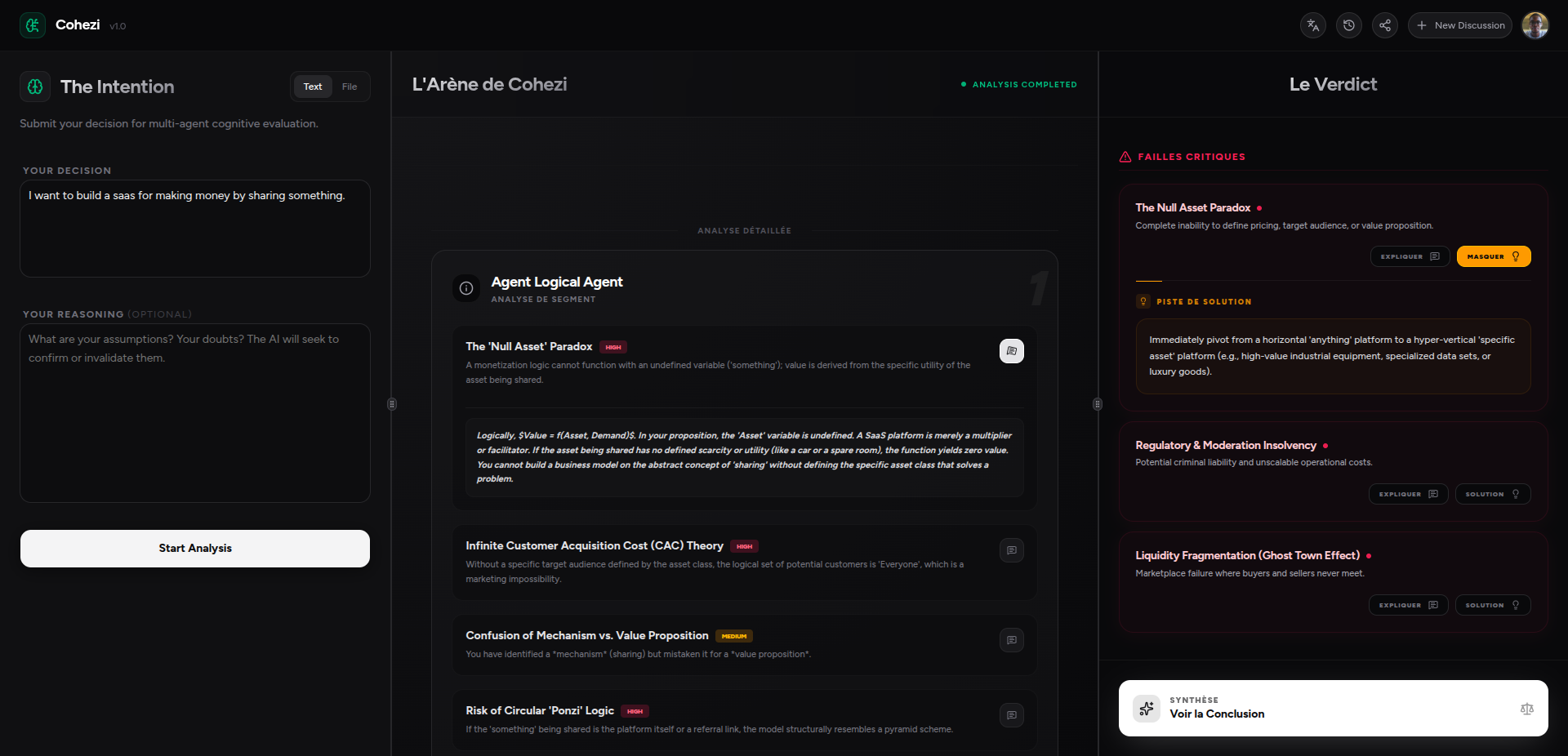
Cohezi is built on a "Cognitive Triptych" architecture, dividing the screen (and the code) into three distinct stages of thought: Intention, Arena, and Verdict.
The Tech Stack
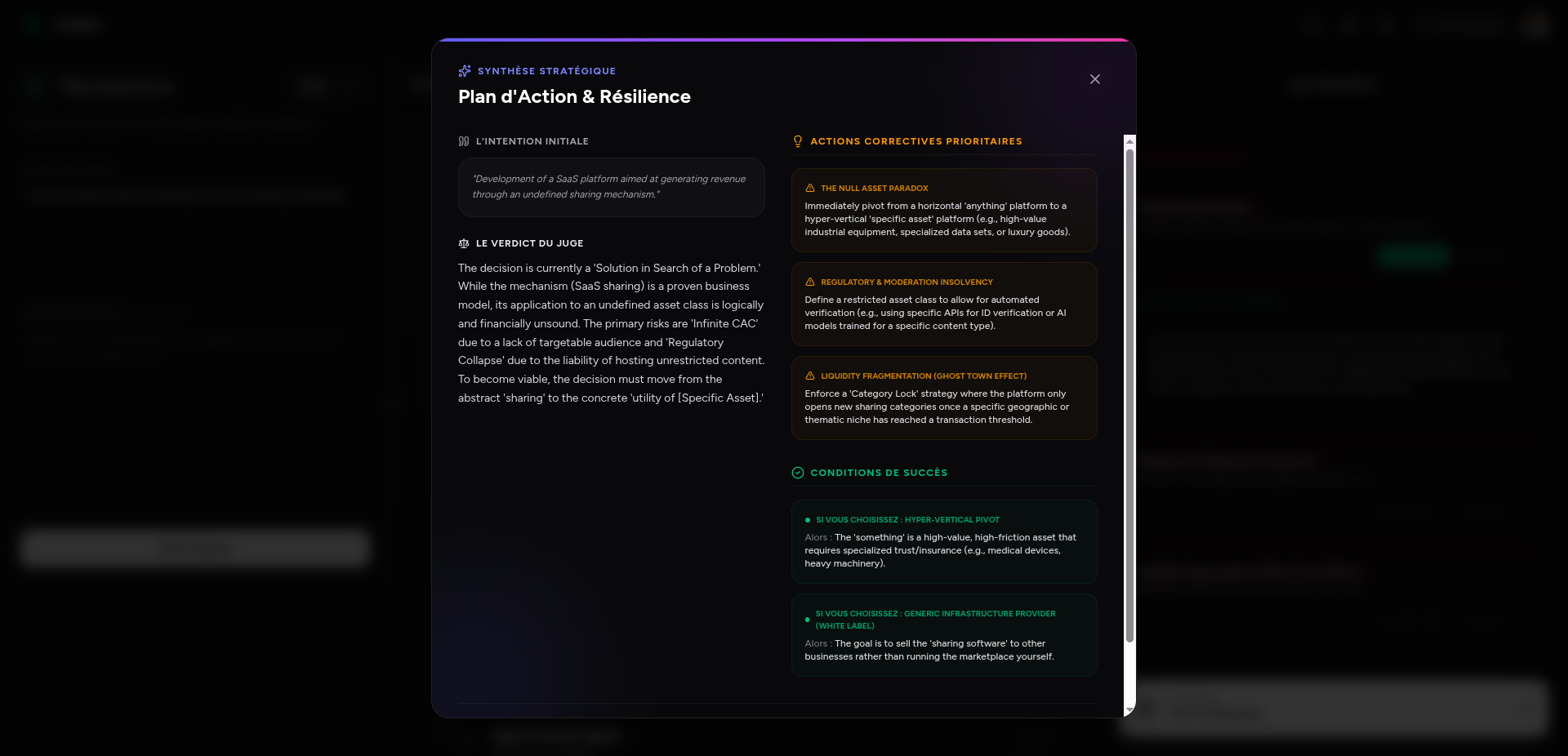
- Core Brain: A hybrid engine using Gemini 3 Pro Preview for deep reasoning and agent orchestration, and Gemini 3 Flash Preview for final synthesis. This combination ensures maximum analytical depth while maintaining responsiveness. It establishes cognitive heterogeneity, preventing the monotony of a single model's reasoning patterns.
- Frontend: Built with Next.js 16 (Turbopack) and React 19. I used Tailwind CSS 3.4 for rapid styling and Framer Motion to create the "Glassmorphism" aesthetic that gives the app its premium, futuristic feel.
- UI Structure: I implemented
react-resizable-panelsto give users control over their workspace, allowing them to expand the "Arena" (analysis details) or the "Verdict" (final summary) as needed. - Data & Auth: Firebase handles the backend complexity. Firestore stores user decisions and the detailed JSON reports from agents, while Firebase Auth manages secure, personalized access.
The Agentic Workflow
The backend isn't just a simple API; it's an orchestrator. When a user submits a decision:
- The Orchestrator: Analyzes the intent and assigns specific missions.
- The Arena (Parallel Execution): The Logical, Causal, and Risk agents run in parallel to map the baseline reality.
- The Stress-Test (Recursive Execution): The Skeptic and Stress-Test agents take the initial findings and attempt to "break" them, simulating worst-case scenarios and cognitive biases.
🏔️ Challenges I Faced
- Orchestrating Chaos: The biggest technical hurdle was managing the
Promise.alllogic for multiple agents. Ensuring that the "Skeptic" agent waited for the "Logical" agent's data—while keeping the UI responsive—required a sophisticated asynchronous architecture in the API route handlers. - The "Yes-Man" Problem: Early versions of the agents were too polite. They would agree with the user's decision even if it was flawed. I had to rigorously tune the system prompts to force the agents to be critical, contrarian, and unforgiving in their analysis (The "Skeptic Agent" persona).
- Information Overload: With five agents returning detailed reports, the screen quickly became unreadable. Designing the collapsible "Arena" interface—where users can dive deep into specific agents or stay high-level—was a crucial UX challenge I solved using Shadcn UI's accordion primitives and careful visual hierarchy.
Built With
- firebase
- gemini
- next.js
- shadcn
- tailwind
- typescript

Log in or sign up for Devpost to join the conversation.