Inspiration
What if you had version control for your thinking?
Not just a record of what you decided, but a way to see what you believed before you acted, like a commit message attached to every major decision.
Most tools capture outcomes. Very few preserve the reasoning that led there. Over time, we overwrite our own intent, forget our constraints, and convince ourselves that the current version of our thinking was always the plan.
Coherence exists to change that. It treats thinking as a system—one that evolves, drifts, and sometimes breaks—and makes that evolution visible.
So I built it.
What it does
Coherence treats thinking as something that evolves over time.
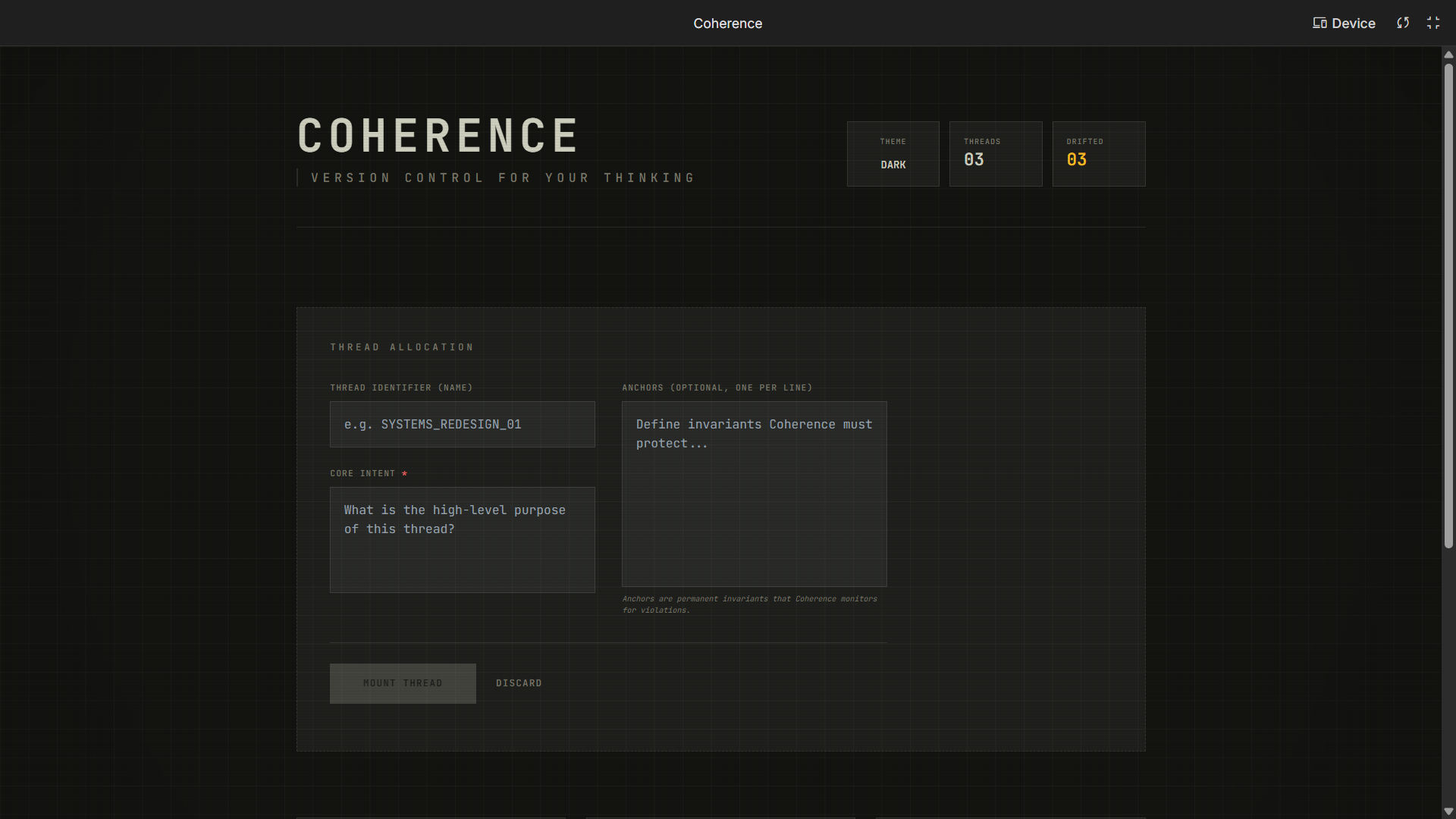
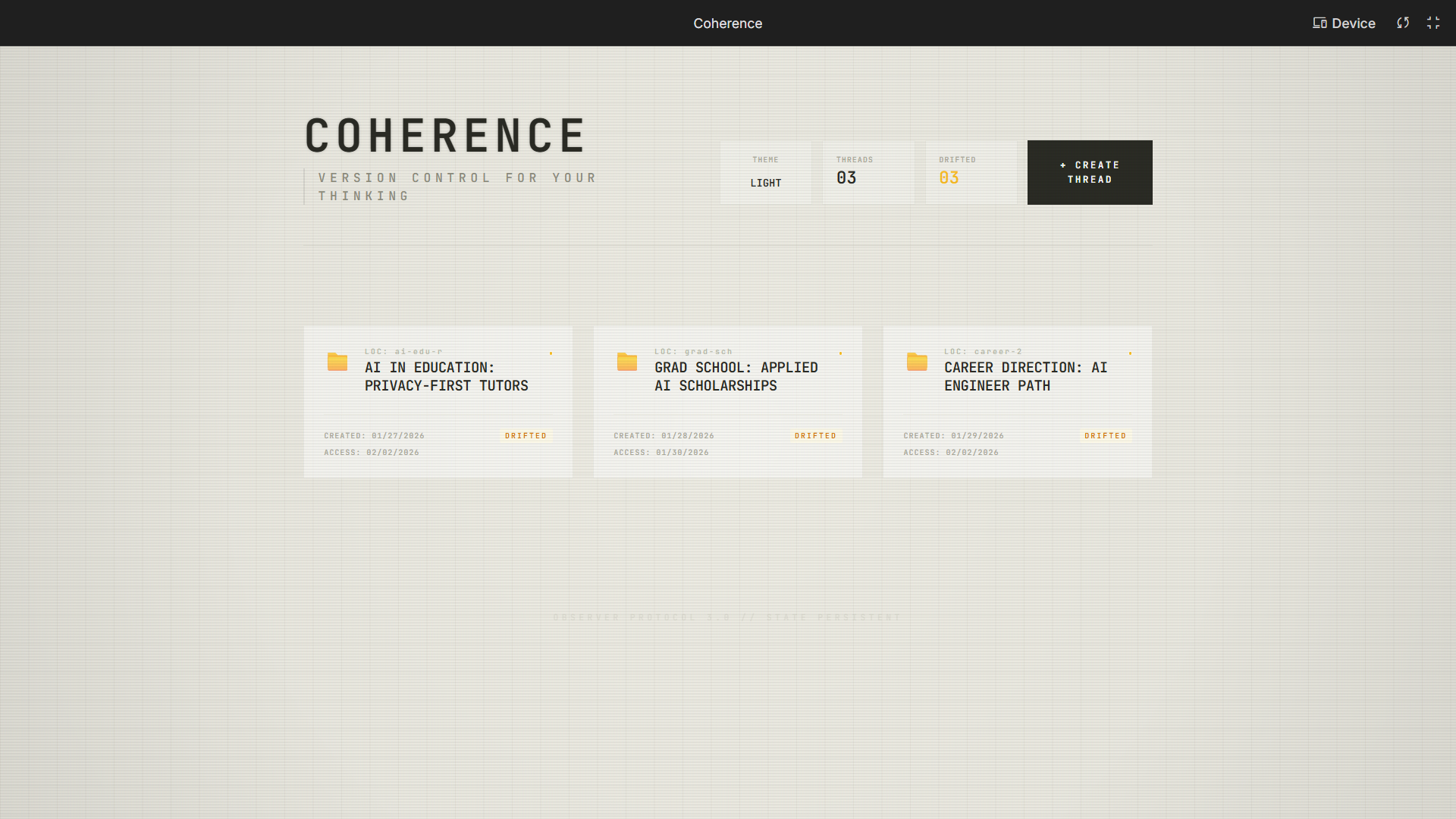
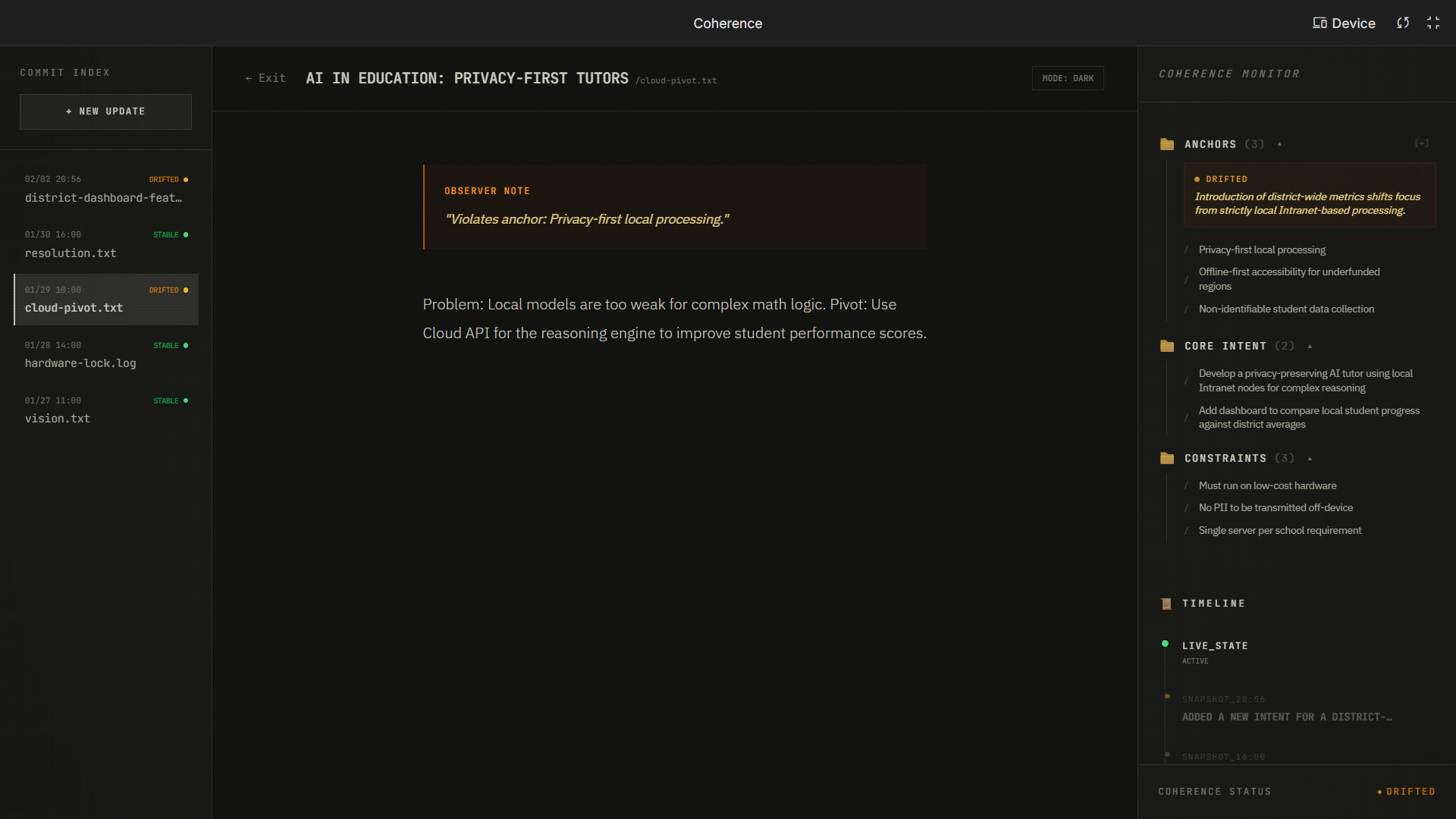
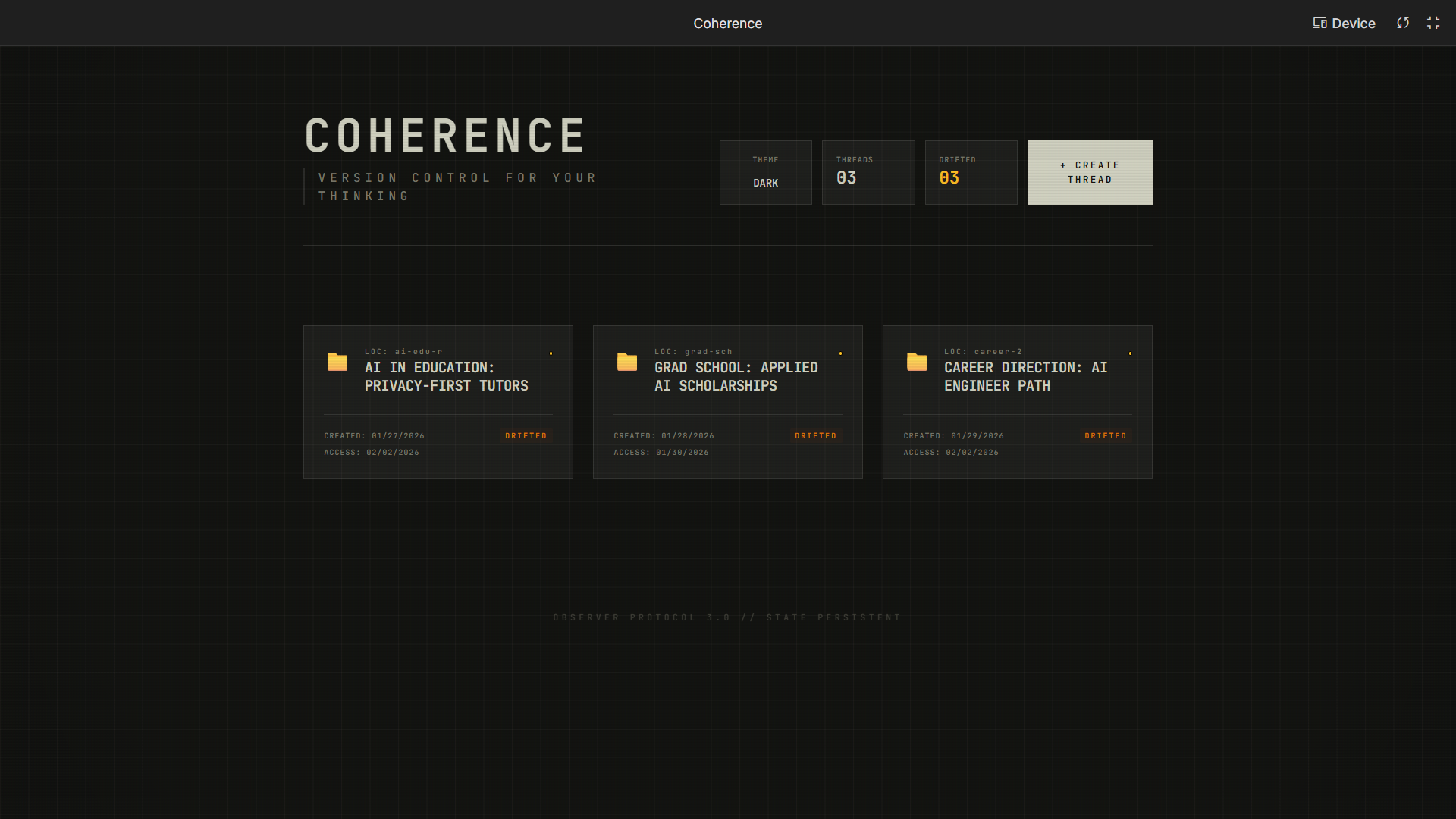
It lets you organize long-running decisions into threads, record moments of reasoning as commits, and define anchors—the principles or constraints you don’t want to lose along the way. Each new update is compared against what came before, making contradictions, drift, and realignment visible instead of invisible.
Rather than overwriting old thoughts, Coherence preserves them. You can see what changed, what stayed the same, and whether your current direction still aligns with your earlier intent.
It doesn’t tell you what to do. It shows you what you’re doing to yourself over time.
How I built it
Coherence is built as a Gemini-powered stateful reasoning system, not a chat interface. We used Gemini 3 as the core reasoning engine and wrapped it in a structured framework that tracks intent, assumptions, constraints, and anchors across time. Each update is processed by Gemini as a reasoning step, then stored as an immutable snapshot—similar to a commit in version control.
A retro file-system–inspired interface mirrors this structure:
- folders represent reasoning threads
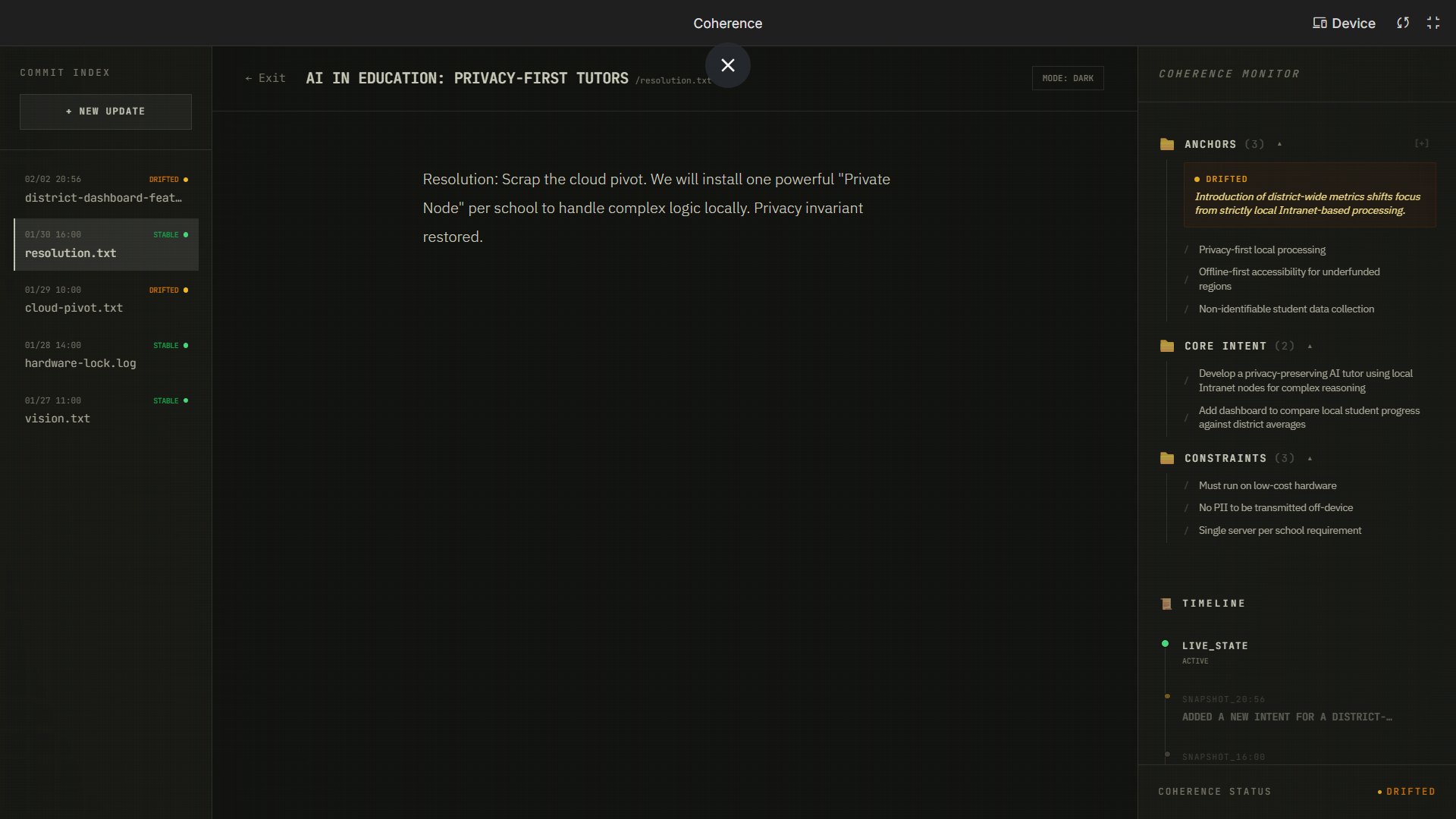
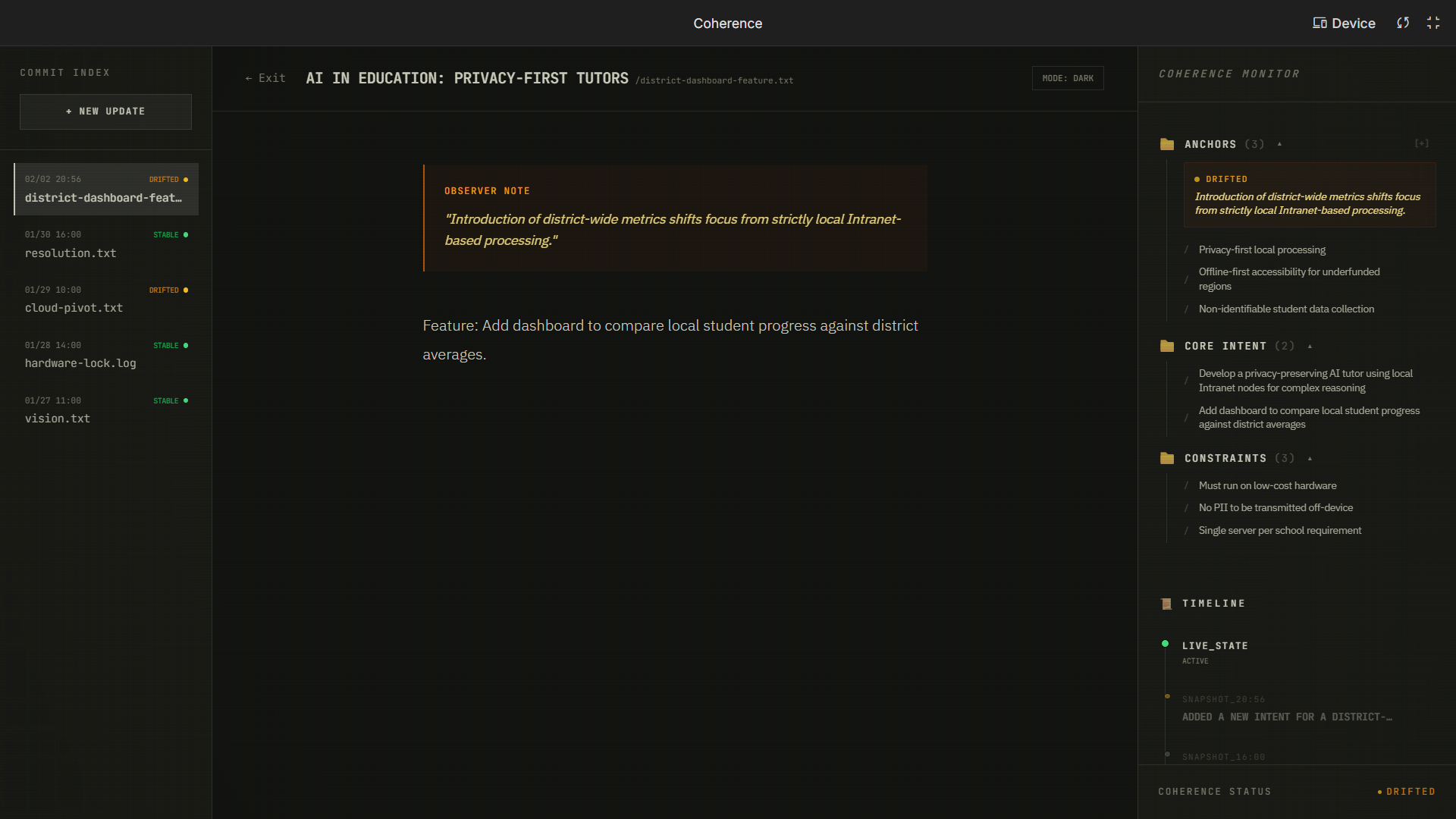
- files represent Gemini-analyzed updates
- a timeline visualizes how Gemini’s interpretation of intent evolves
Gemini powers the differential reasoning layer, comparing snapshots to detect drift, anchor violations, and realignment—all surfaced through the coherence monitor without breaking the user’s flow.
The result is not an AI that generates answers, but a Gemini-based system that observes, evaluates, and preserves human reasoning over time.
Challenges I ran into
The hardest challenge was making abstract concepts, like “reasoning drift” and “contradiction”, feel concrete without feeling judgmental.
We also had to carefully balance automation and restraint. Coherence needed to detect inconsistencies, but never override decisions or push users toward conclusions. Designing an AI that knows when not to speak turned out to be as important as knowing what to detect.
Finally, we had to make the system feel meaningful in a short demo, even though it’s designed for decisions that unfold over months or years.
Accomplishments that I am proud of
- Turning long-term reasoning into a first-class, inspectable system
- Making contradictions visible without framing them as errors
- Designing a calm, intentional interface that encourages reflection
- Building something fundamentally different from chat-based AI tools
- Showing how AI can support thinking without replacing it
What I learned
We learned that people don’t lose ideas—they lose context.
Long-term thinking benefits from structure, history, and accountability, not speed or constant feedback. We also learned that AI becomes most powerful when it protects intent rather than generating answers.
Most importantly, we learned that thinking itself deserves infrastructure.
What's next for Coherence
- User-defined anchors and custom reasoning rules
- Cross-thread relationships and dependency tracking
- Long-term drift detection over weeks or months
- Collaborative threads for teams and research groups
- Exportable reasoning histories for review and reflection
Coherence is just the beginning. The goal is to give people a way to stay aligned with what they believe before, during, and after decisions are made.
Built With
- google-ai-studio
- google-gemini-api
- react
- typescript
- vite


Log in or sign up for Devpost to join the conversation.