-
-
CogNivo
-
-
-
-
-
-
-
-
-
-
-
Cog Nivo
Inspiration
Cog Nivo started with someone very dear to me, who is one of the people living with dementia.
It's the hardest thing to see someone you love losing their memories, their routines, their words and the skills they once had. It has brought home to me how dementia is not just a disease that affects the person diagnosed – it changes the lives of whole families. It can be very tricky to deal with medication, meals, appointments, self care, safety and wellbeing, without a basic system to bring order to the chaos.
I wanted to create something that could help my grandmother with day-to-day tasks and assist my family in delivering more comprehensive, organised care.
While I was thinking about how people with dementia experience the world, I discovered that all families face these challenges. And that's especially true in resource-constrained communities or in communities where digital infrastructure, language, internet, and specialists are scarce.
In 2021, around 57 million people globally had dementia, according to the World Health Organization.
This gave rise to one question:
What if we could combine the benefits of cognitive engagement, meaningful familiar memories, everyday care, safety, and caregiver support and meet in one affordable, easy-to-use platform?
That question became Cog Nivo.
How it works
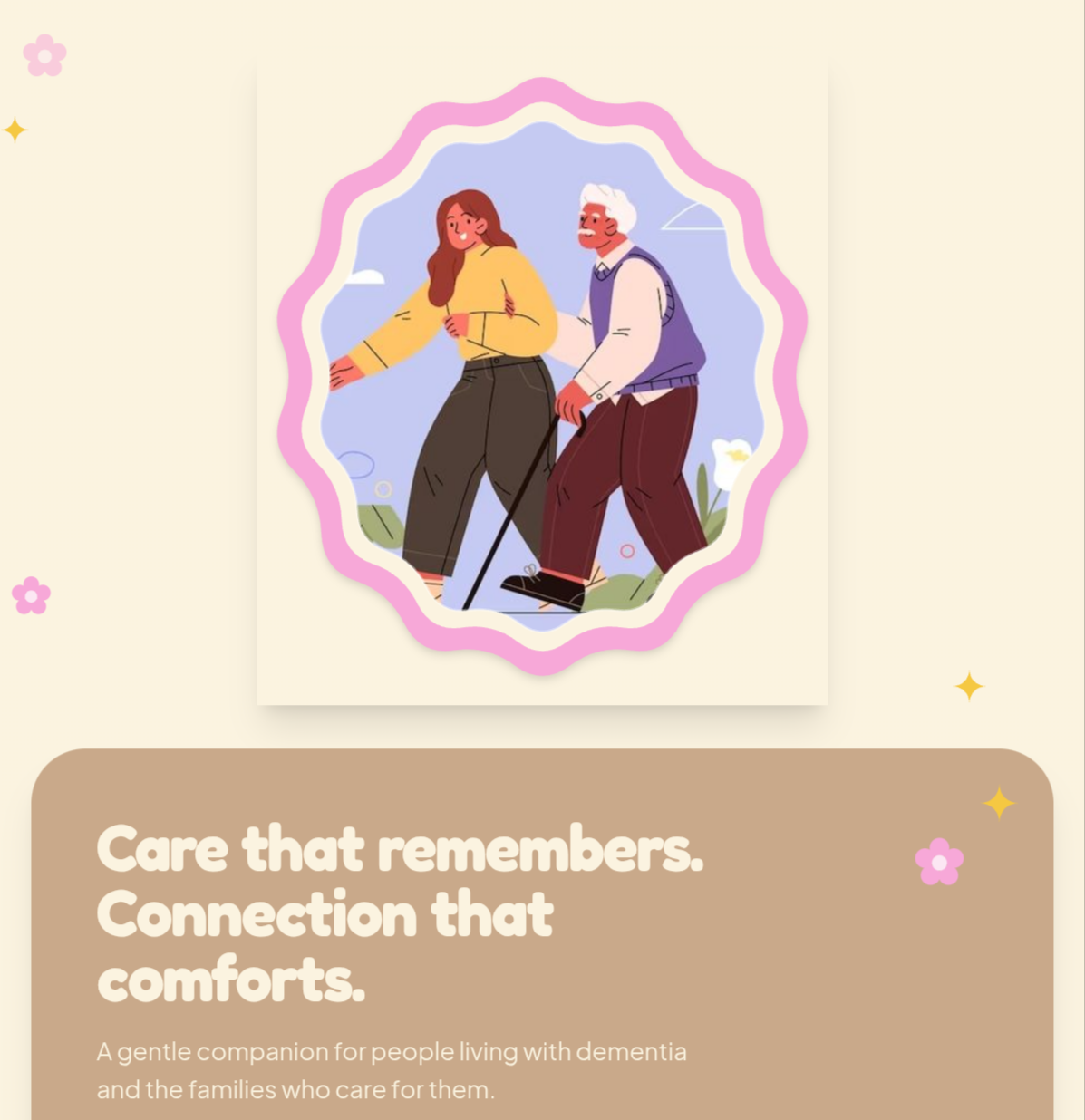
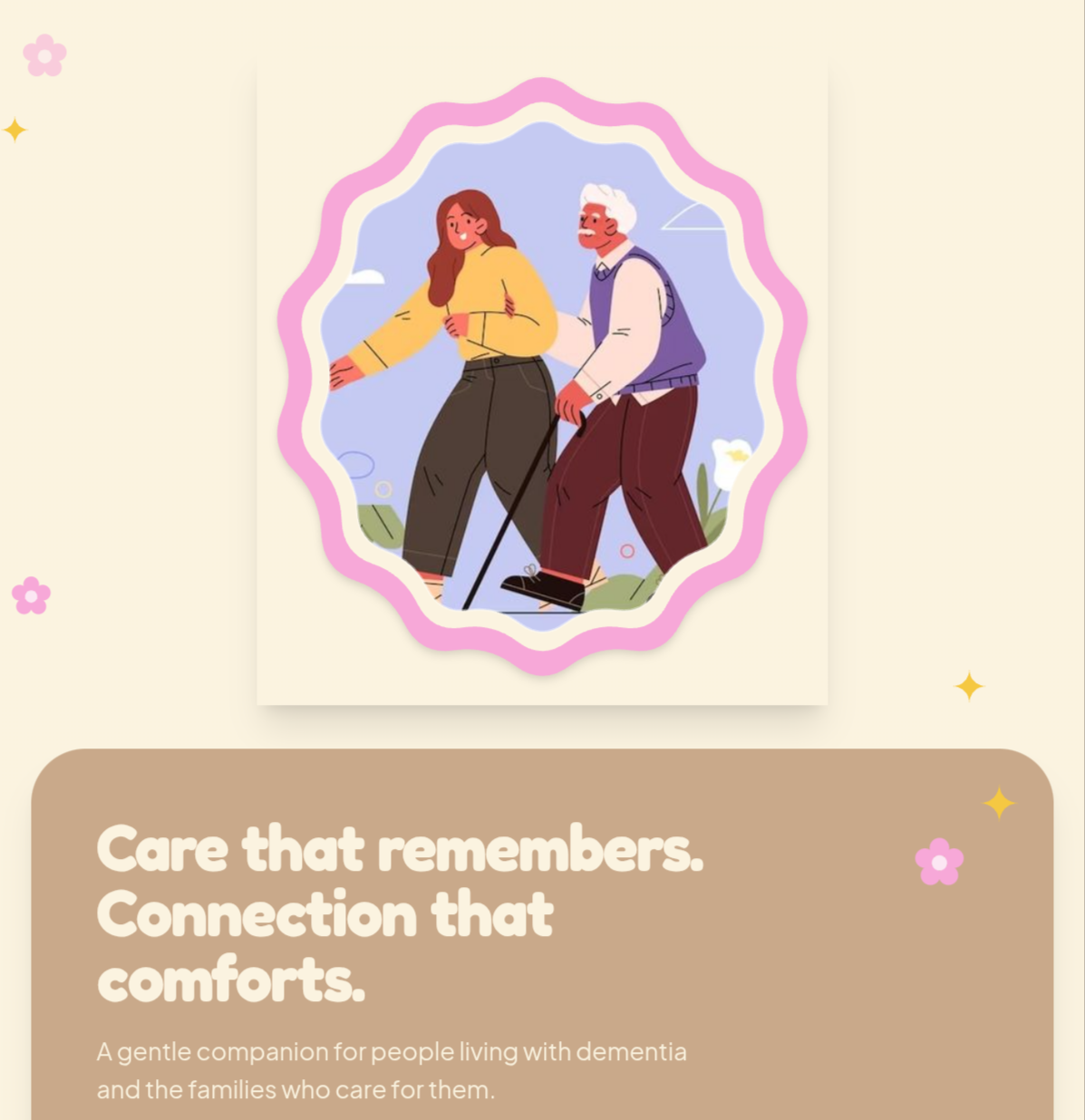
Cog Nivo Cog Nivo is a dementia-support web app that aims to empower people with dementia and make day-to-day caregiving easier. It combines patient-centred tools and activities with caregiver-centred tools and activities in a single place, prioritising accessibility, personalisation, privacy, multilingual support and the ability to work offline.
There are two main modes of using the application:
- Patient Mode
A plain, organized setting arranged to provide a warm and welcoming environment for social engagement.
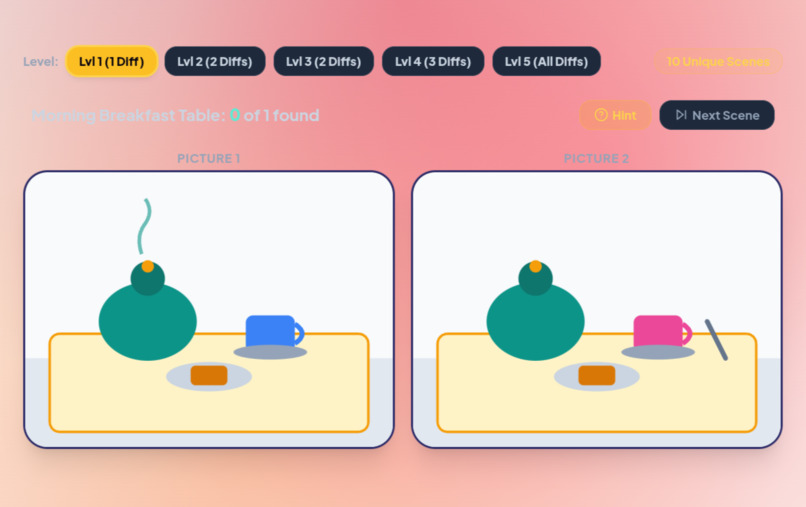
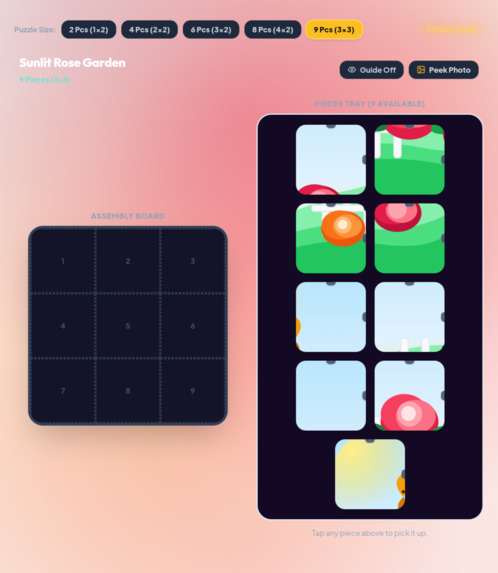
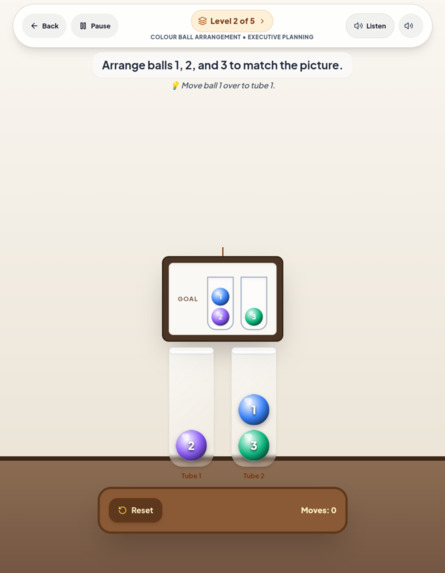
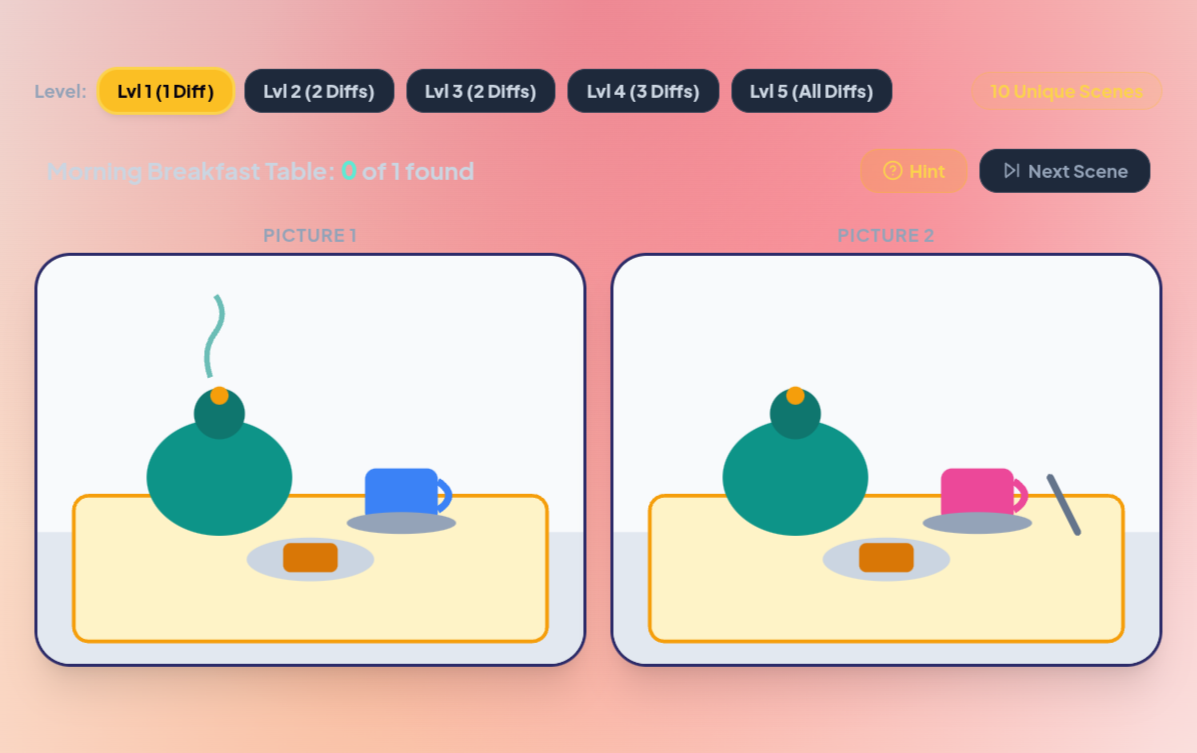
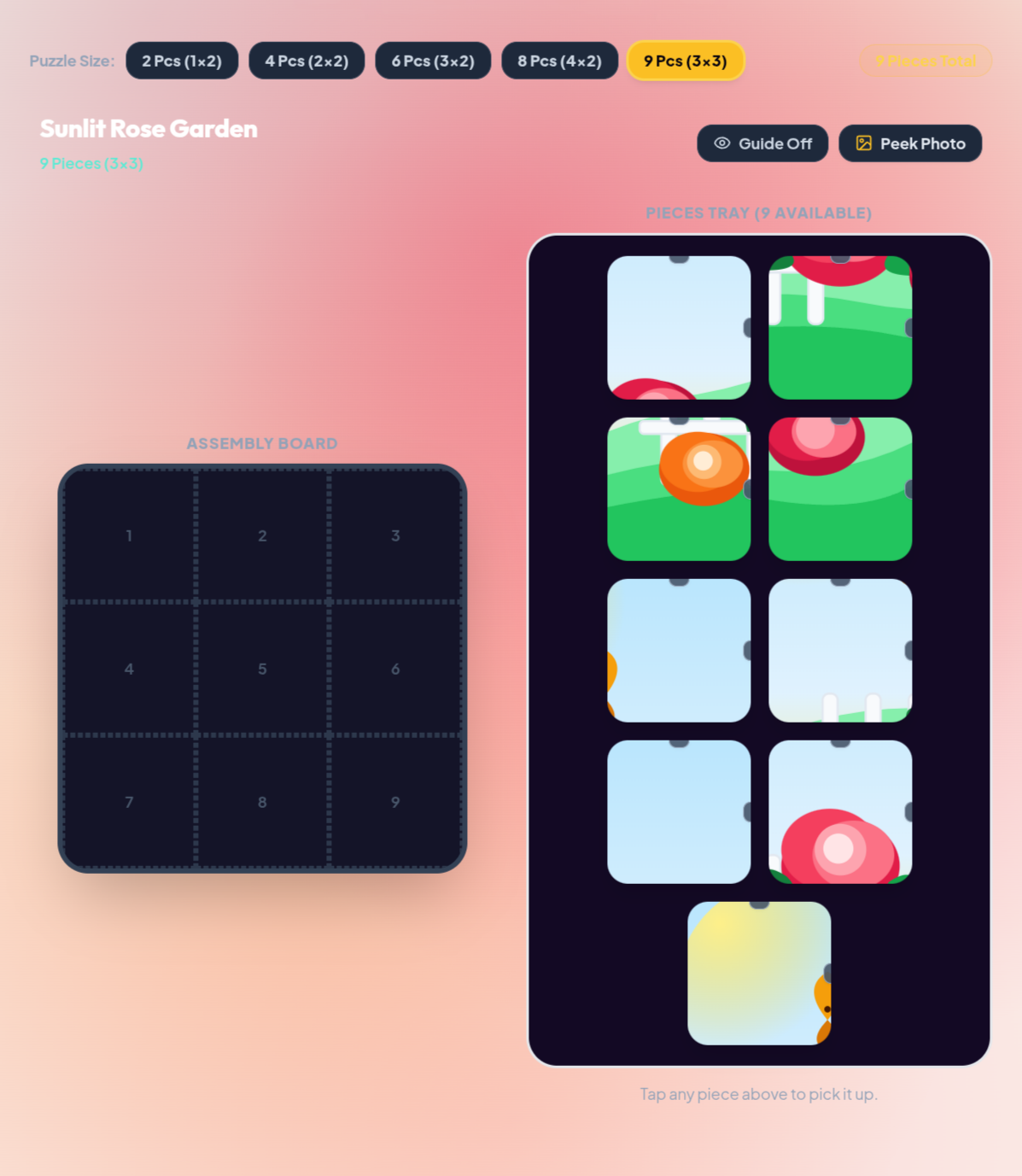
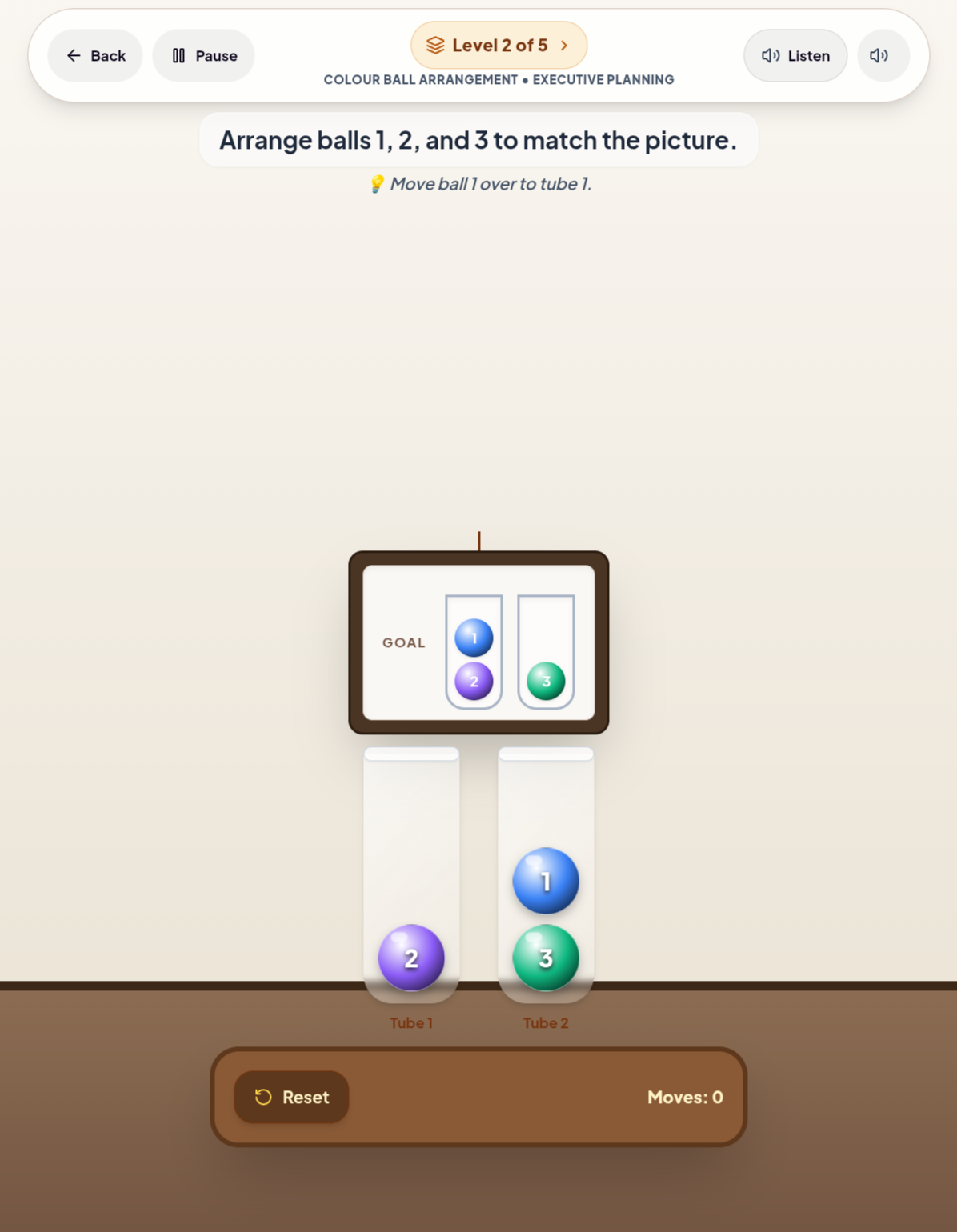
- Cognitive games: Specifically designed activities which enhance memory, attention, visual recognition and deductive reasoning. Games can be personalised to the participant's skills.
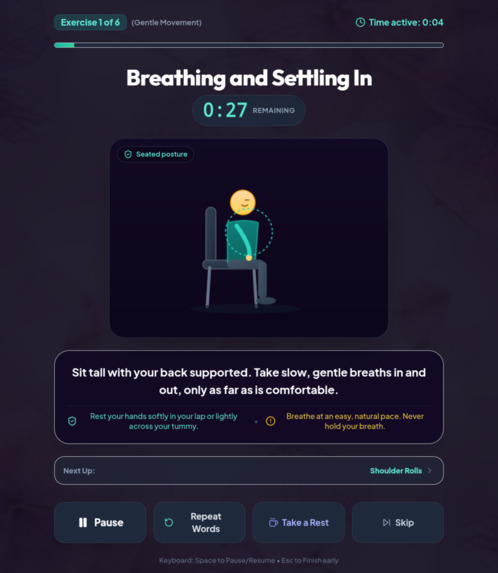
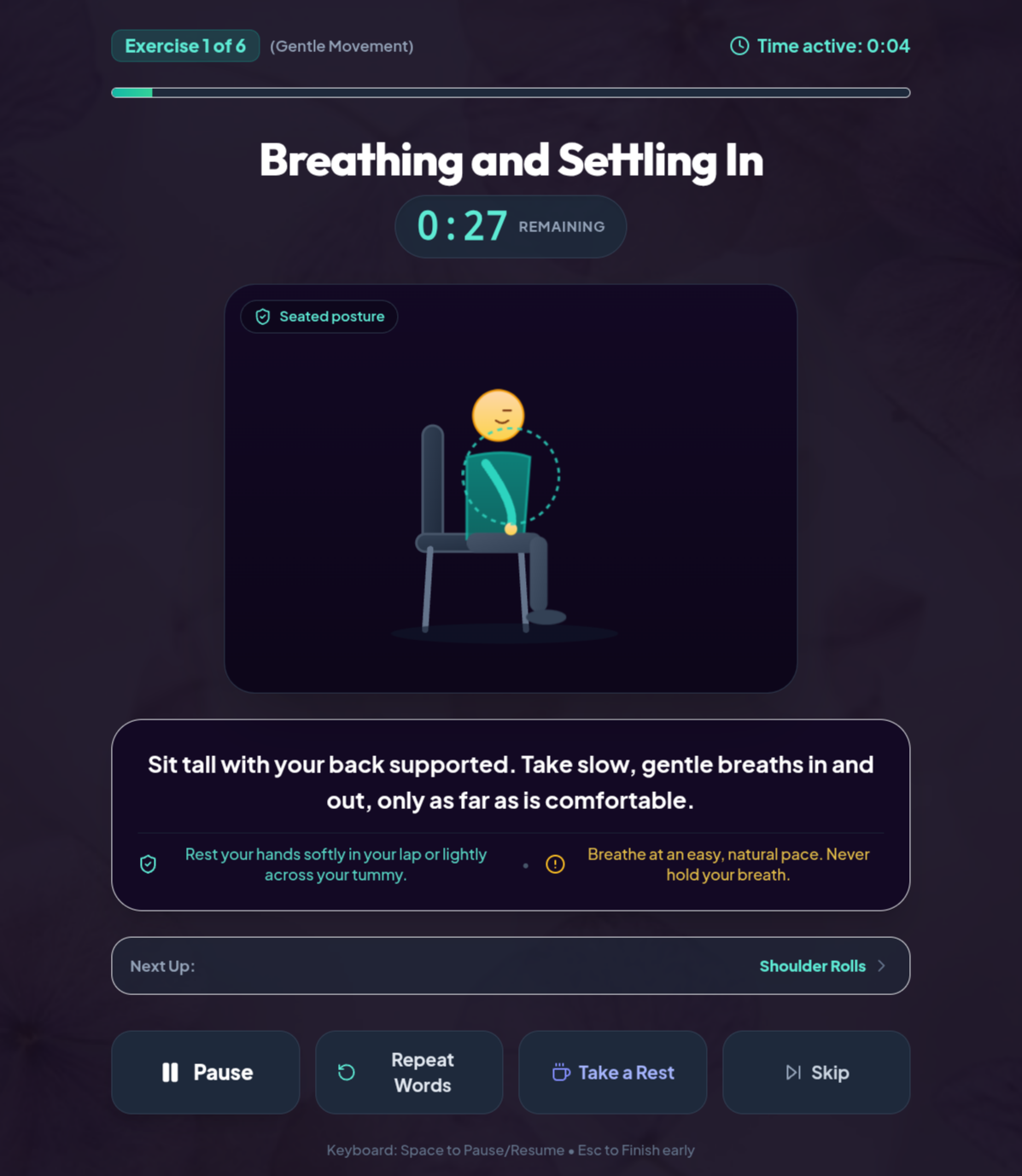
- Move and Breathe: Animated seated exercises, with a variety of lengths and a comfortable pace.
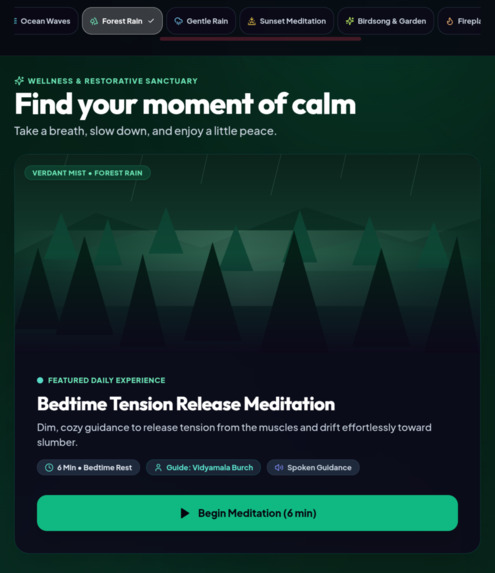
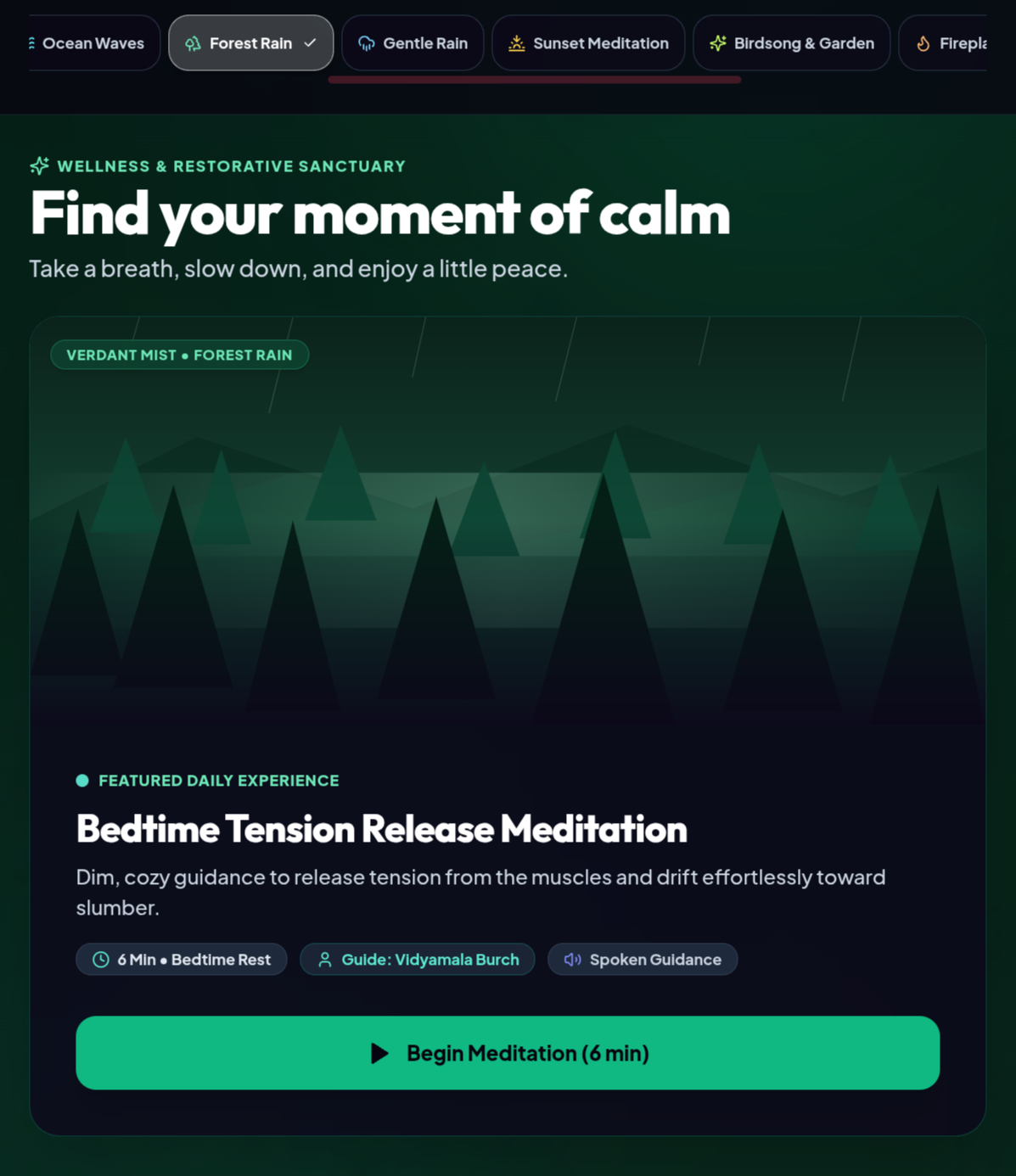
- A relaxation space that includes meditation, mindfulness, ASMR sounds and other ambient sensory experiences.
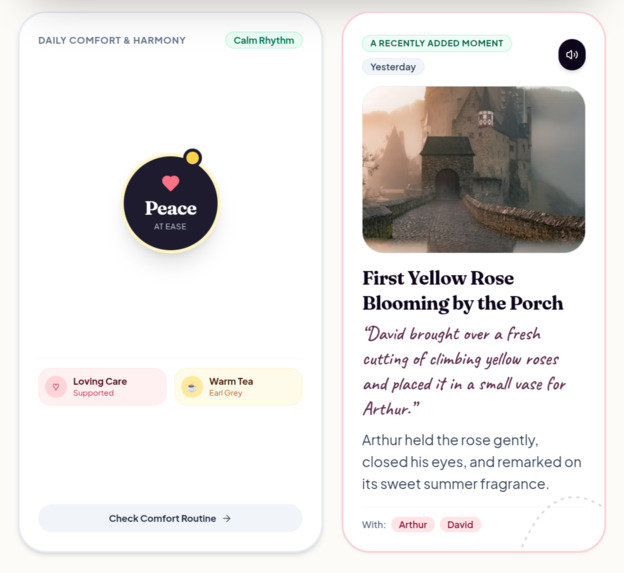
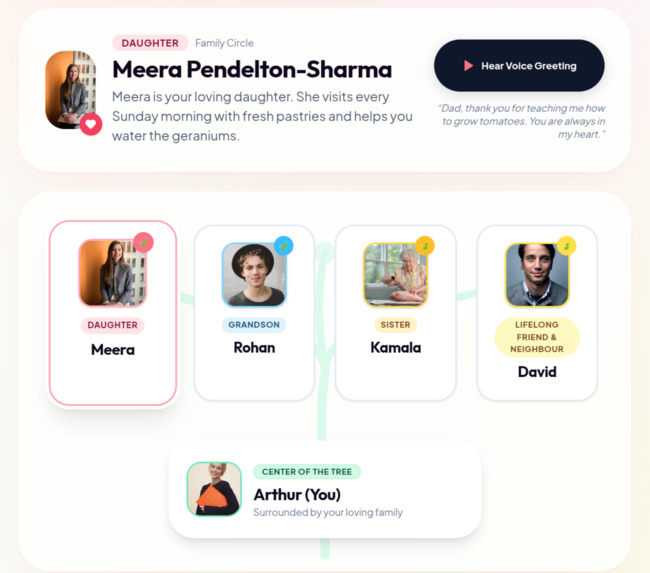
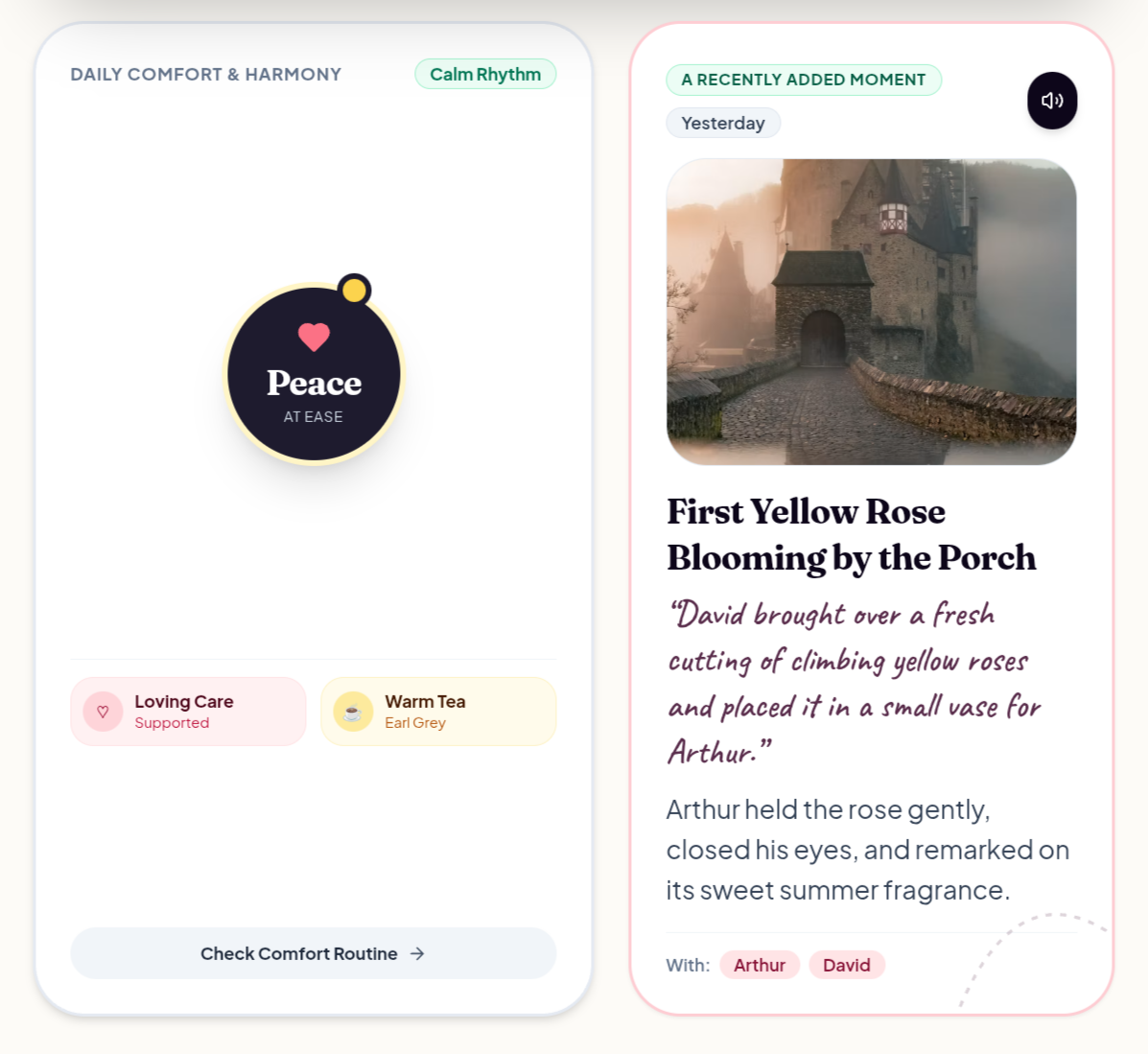
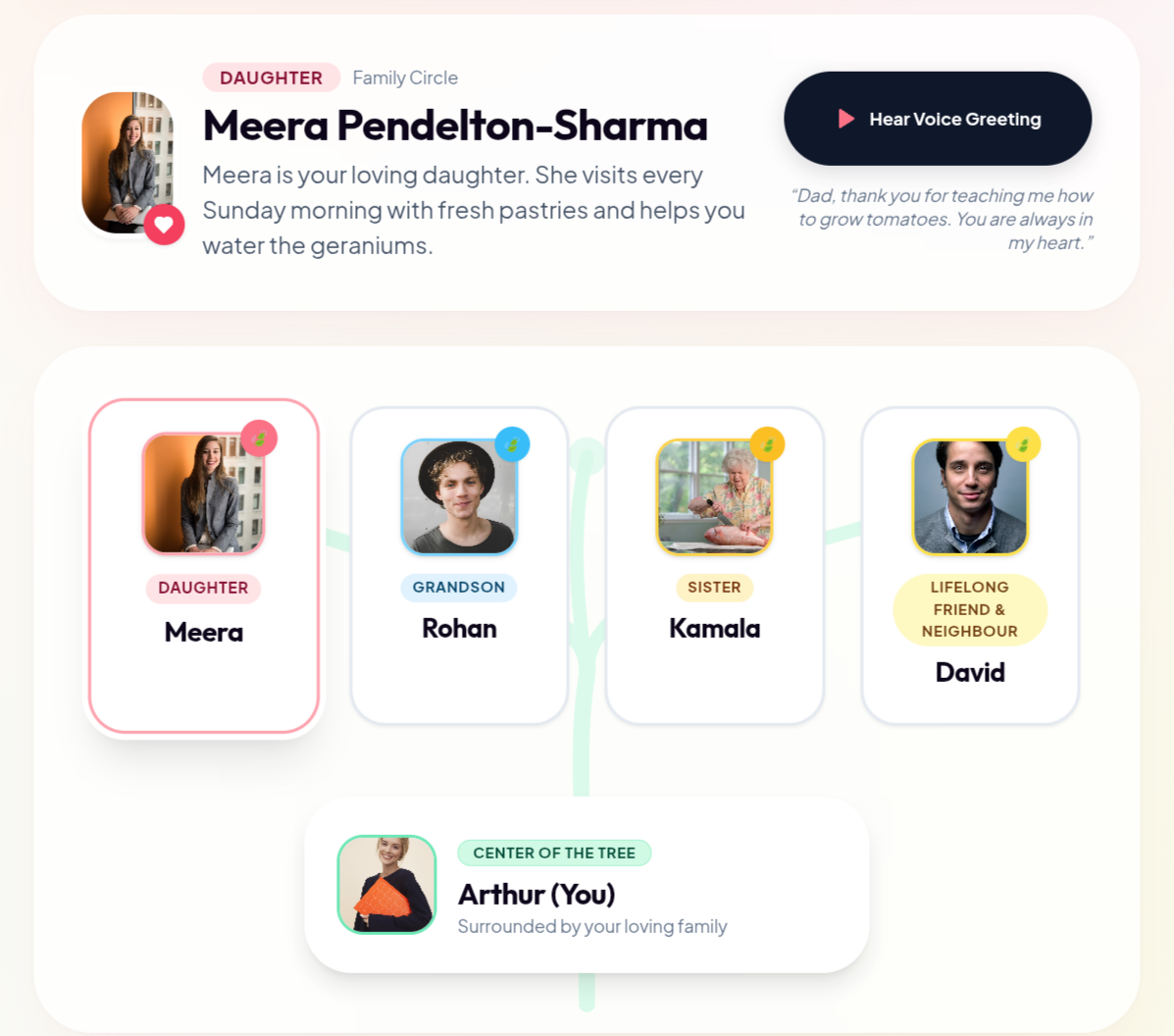
- My Circle: a customised space to house the family trees, familiar faces, memorable photos, local places of interest, music, timelines and special memories. It fosters a sense of familiarity, familiarity, reminiscence and emotion.
- Voice Assistance: Access an alternative method of navigating the application and executing commands where supported.
- Caregiver Mode
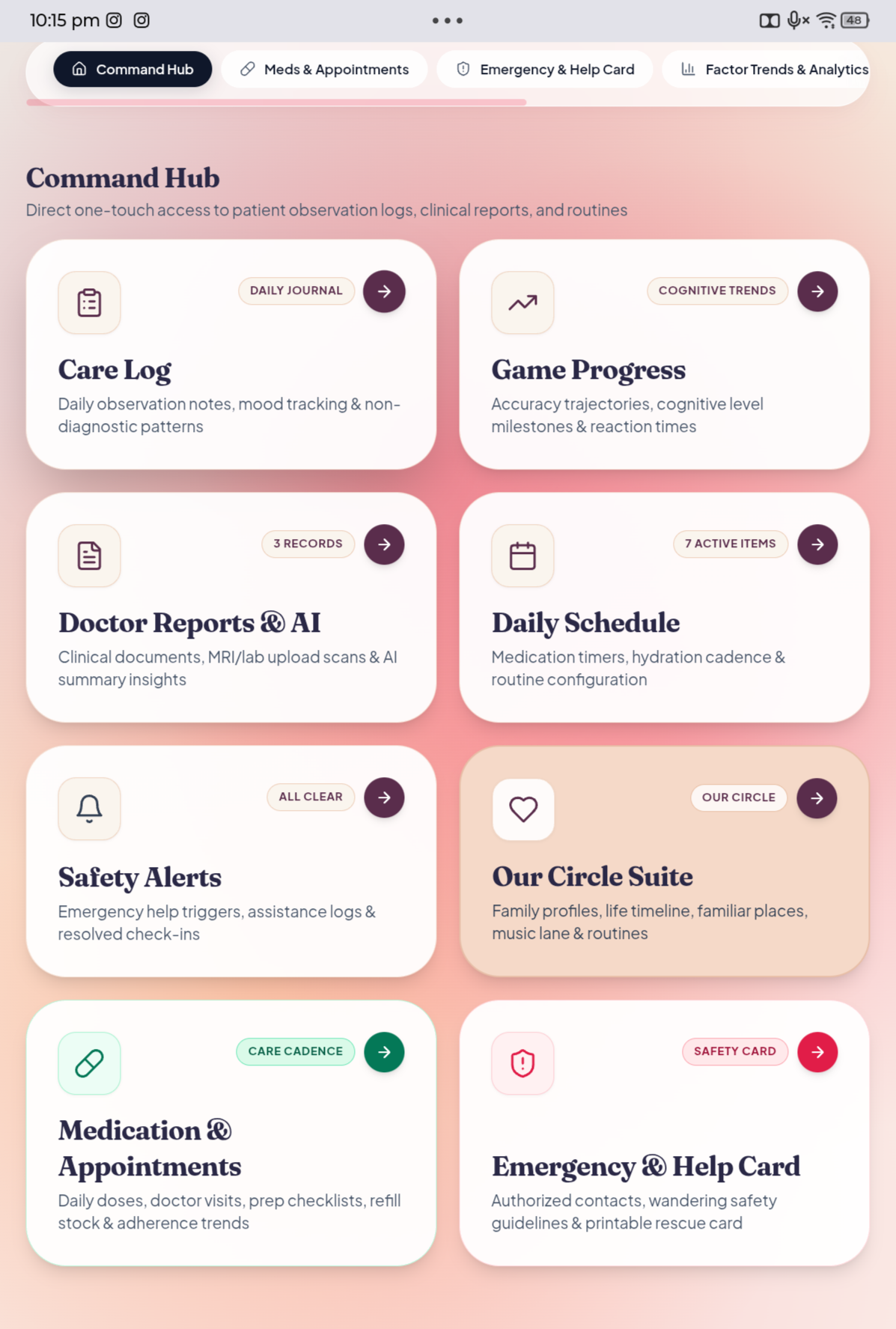
A confidential, dedicated area that supports carers to create a plan of care, access and reflect on activities and record information.
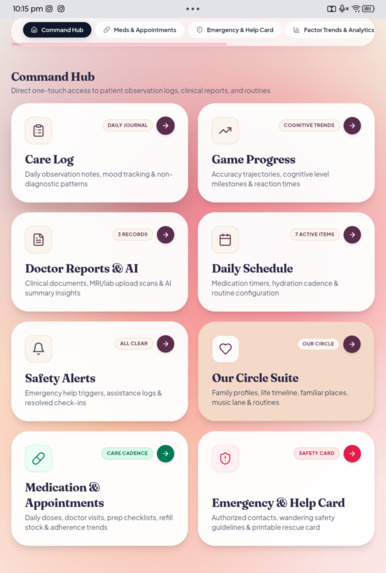
- Maintains a daily log of meals, hydration, hygiene, sleep, health, and behaviour. Allows everything to be kept in one place instead of relying on notes and memory.
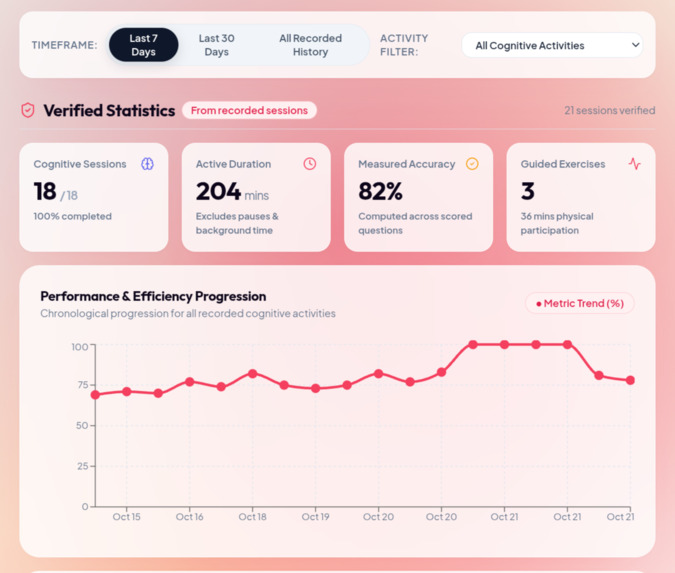
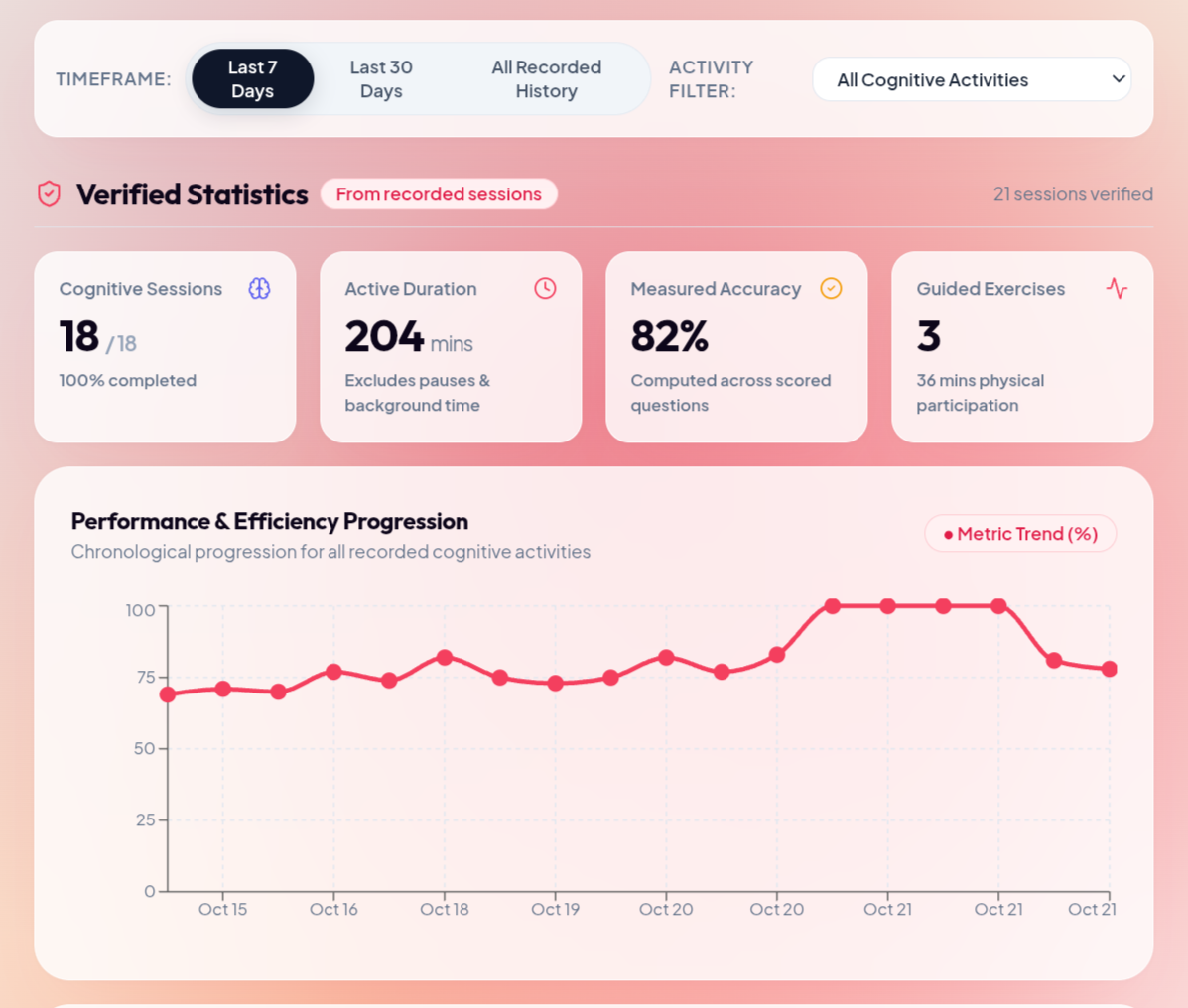
- Displays your cognitive-game interactions as well as changes in your recall memory, visual acuity, frequency of routine activities, sleep, food, mood and activity levels. This overview is valuable to caregiver is supporting medical appointments – it is not a replacement for seeing a doctor.
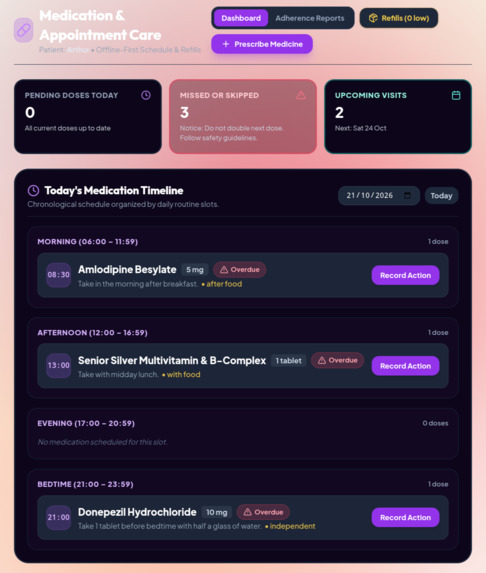
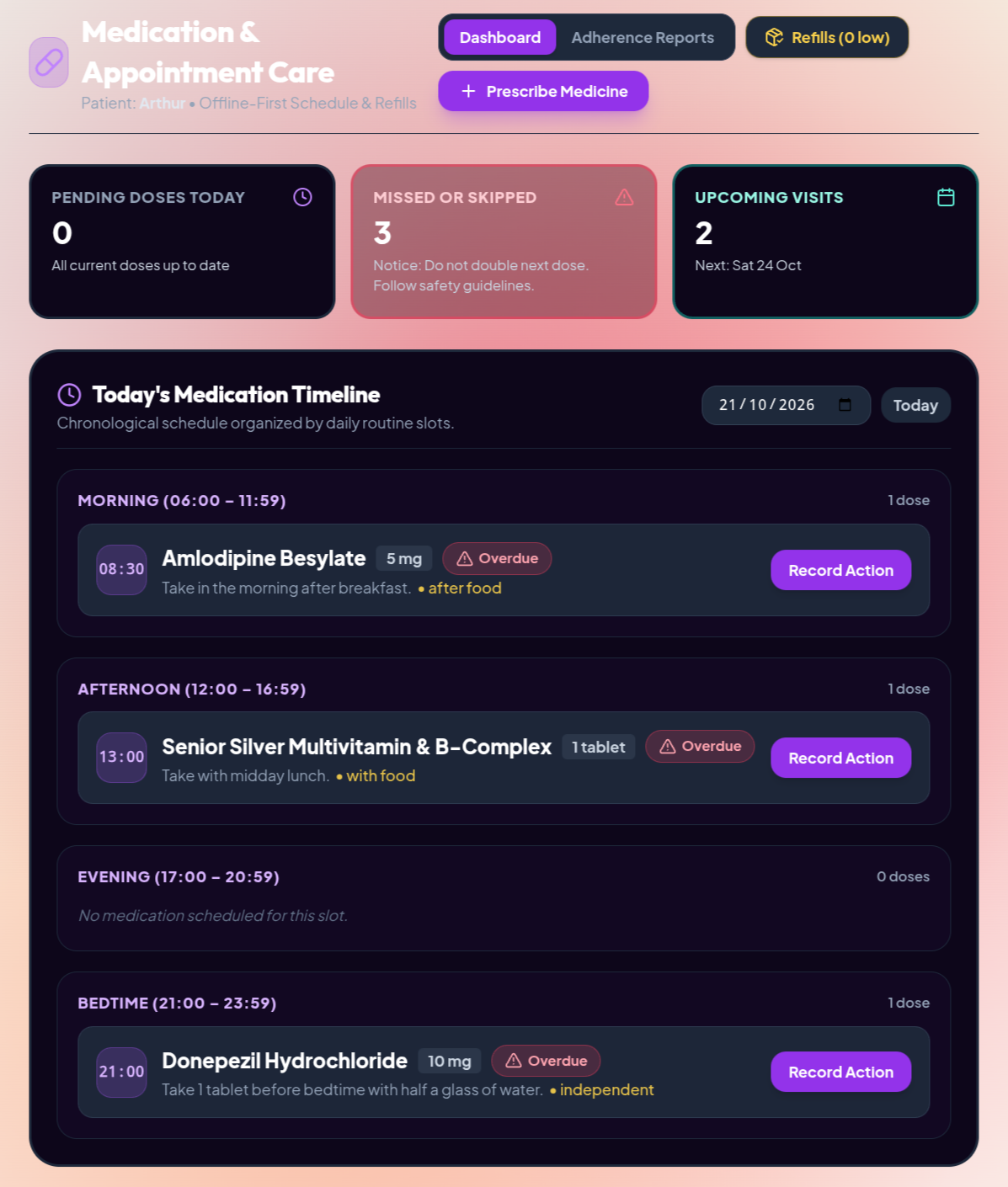
- Used to plan medication and monitor dose confirmations, plan appointments and keep reminder notes.
- Ensures fast emergency aid, having can caretaker contacts and an free emergency Help Card with the occupant's allergies, address, medications, health problems, and directions about how to assist.
- Printable Care Reports: Converts care records and activity observations into neatly arranged summaries that can be taken along to the doctor.
- An upcoming feature that will annotate and process your reports, transforming complicated medical terminology into plain language and summarizing critical information.
The intention is to help make routine care easier and less complicated without the equipment becoming just another source of confusion.
How we built it
A responsive web app is currently under development for Cog Nivo. A new frontend architecture will be used.
Our technology stack:
React 18: Building reusable and interactive user interfaces. TypeScript 5: Improving code structure and reliability. Tailwind CSS 3: Creating responsive, consistent, and accessible designs. Framer Motion 11: Adding smooth and purposeful animations. Dexie.js and IndexedDB: Managing locally stored application data. Web Speech API: Supporting voice-assisted interactions where available. Web Audio API and Howler.js: Powering audio experiences and calming sound features. Recharts: Presenting caregiver observations and activity trends through visual charts. Vite 6 and Vite PWA Plugin: Supporting development and progressive web app functionality. Service Workers: Supporting offline access to cached application resources. Netlify: Hosting and deployment.
Our key design decision was to adopt an offline-first architecture. We wanted to ensure that cognitive work and information about care that is stored locally would be available when there was no internet. Some functionality, such as AI processing of reports and family synchronisation, need internet.
Another area of interest was designing a dementia friendly interface through the use of big and easy to read fonts, intuitive navigation, easy instructions, large clickable areas and eliminating visual clutter.
Difficulties we faced
Managing the cognitive load of user was one of the greatest challenge. What seems intuitive or a "sledge hammer" to one person may be a grind to another.
Making cognitive games was a real challenge. You could not only make the games look attractive, you also had to ensure correct gameplay, clear instructions, a logical level progression, and never make the interaction frustrating.
Another challenge was integrating all these different systems without over complicating the application. Cognitive activities, relaxation exercises, family memories, care records, medication schedules, emergencies and reports all have their own individual requirements.
Our team had also to consider how to handle offline storage, data synchronization, and caregiver notification, as well as how to ensure reliable alerting and protect medical data privacy.
Some of the more advanced features require some additional infrastructure. IndexedDB stores locally, but sharing updates among multiple caregivers requires a secure backend and internet connection. Or a reminder on the browser may have device and OS limitations that need testing rather than assuming functionality.
Another challenge was having enough innovation whilst ensuring safety. Cog Nivo should enable the carers, to help them to organise their observations, not doing it for them and providing medical diagnoses.
Our top achievements
We are most proud that the first idea of Cog Nivo was based on a personal family situation not on a generic technical problem.
We are excited to combine patient-centered and caregiver-centered tools into one platform rather than keep them separate as individual apps.
Here are some of the things we are most proud of:
- Developing a specific Patient Mode and Caregiver Mode.
- Developing cognitive activities with adjustable difficulty.
- Developing guided exercise and relaxation sessions for the aging population.
- Introducing Our Circle to add familiar faces, photos, music and memories to the experience.
- Developing an organised method of recording of daily care and recording of activities.
- Designing medication, appointment, and emergency-support workflows.
- Prioritize offline access and accessibilty from the outset.
- Establishing the basis for printable care reports and subsequent AI support for medical knowledge.
The best part is that it has begun because of a personal obsession about grandma - and it may help thousands of other families.
What we learned
Based on the approach we learned at Cog Nivo, creating a successful health care app is about much more than code.
We got to grips with React, TypeScript, local databases, progressive web application technology, APIs, speech interfaces, sound systems and data visualisation.
We were also introduced to digital healthcare resources to understand their use, accessibility, privacy concerns, offline use and limitations.
The key takeaway from the design sprints. Most importantly, we learned to design for the user.
Rather than just asking whether a feature worked, we began to ask:
- Can an older adult understand and use it comfortably?
- Could the design cause confusion or frustration?
- Can a caregiver find important information quickly?
- Will essential information remain accessible without internet connectivity This changed how we approached both design and development. We realised that in dementia care, simplicity is not a lack of functionality; it is one of the most important features. What's next for CogNivo We see CogNivo as a foundation that can grow into a more comprehensive, connected dementia-support ecosystem. Our future development plans include:
- Personalised and Multilingual Experiences Expanding language support, including Malayalam, and making activities more personalised according to individual preferences, abilities, and care routines.
- AI-Assisted Medical Understanding Integrating Google's Gemini API to help caregivers understand complex medical reports, extract important information, and prepare questions for healthcare professionals, with appropriate privacy safeguards and medical disclaimers.
- Verified Healthcare Specialist Network Developing a way for families to discover verified nearby professionals, including neurologists, psychologists, and geriatricians. With appropriate consent, relevant care records could be shared securely to support consultations.
- Radar-Based Night and Wellbeing Monitoring Exploring a 60 GHz millimetre-wave radar system that could connect to CogNivo and monitor night-time movement, sleep-related patterns, breathing-related patterns, restlessness, bed exits, and potential falls. Configurable alerts could help caregivers respond to possible safety concerns. This will require hardware prototyping, validation, and careful testing before being used for real-world care. CogNivo is personal to us. It started with a wish to help one grandmother, and our hope is that it can eventually help many more families. Because every person deserves dignity, familiarity, connection, and compassionate care , even when memories begin to fade.
Built With
- accessibility
- assistive-technology
- caregiver-support
- cognitive-games
- dementia-care
- dexie.js
- framer-motion
- health-monitoring
- healthcare-technology
- howler.js
- indexeddb
- javascript
- offline-first-architecture
- progressive-web-app-(pwa)
- react
- react-router
- recharts
- service-workers
- tailwind-css
- typescript
- vite
- web-audio-api
- web-speech-api
