-
-
creation
-
evidence library
-
demo
-
sample example
-
sample
-
about
-
source
-
network
-
dashboard
Inspiration
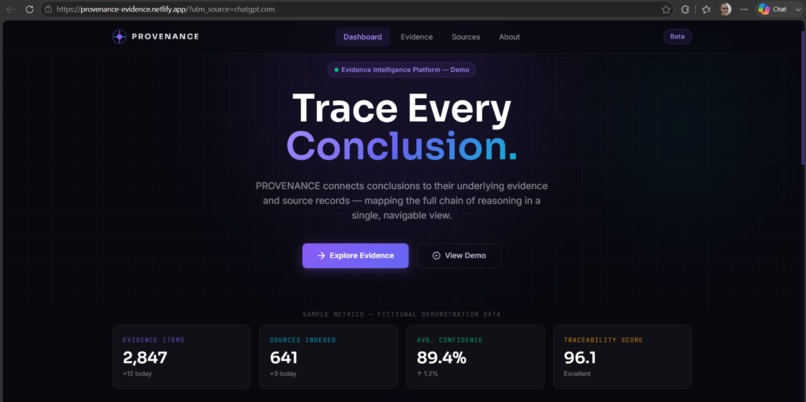
AI can generate remarkably convincing answers, but convincing does not always mean reliable. We were inspired by a simple question: Can an AI conclusion be trusted if we cannot trace and challenge the evidence behind it?
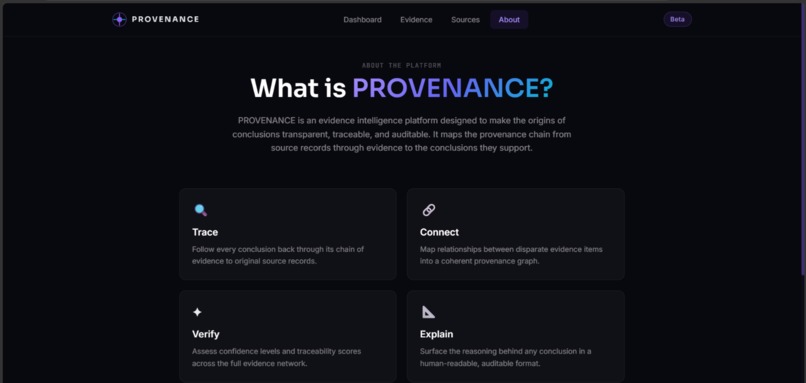
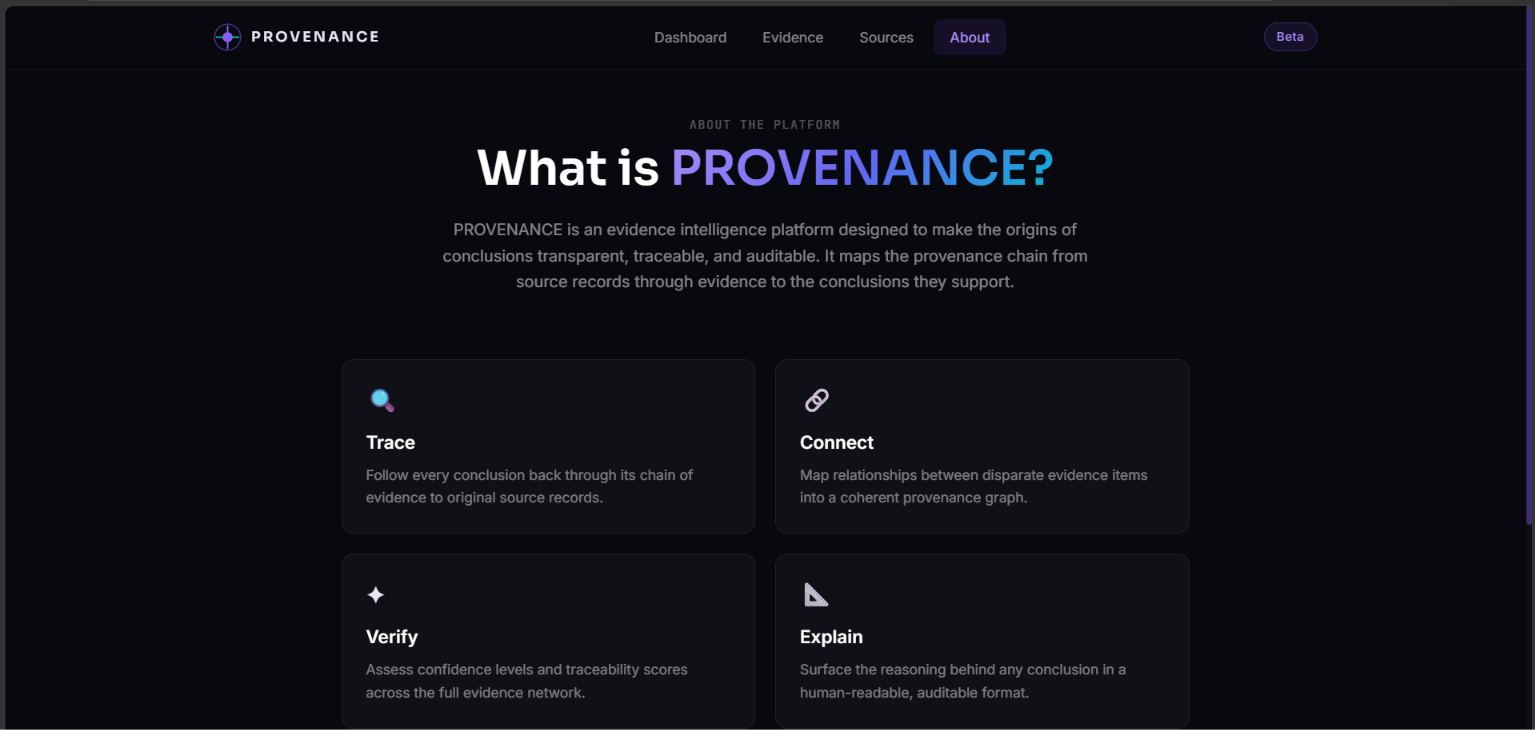
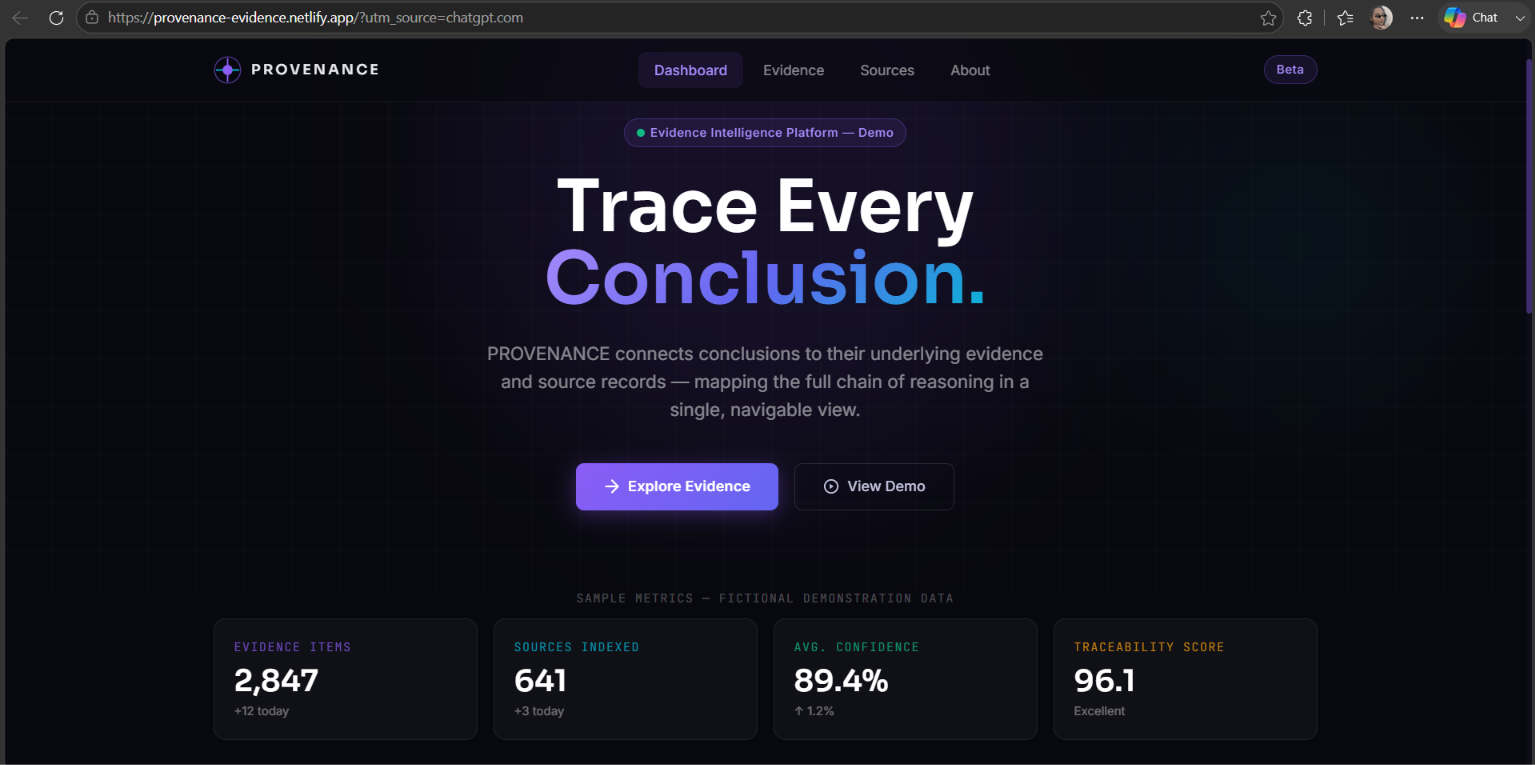
This led us to build PROVENANCE — an evidence-first approach where conclusions are connected to their sources and actively tested for reliability.
What it does
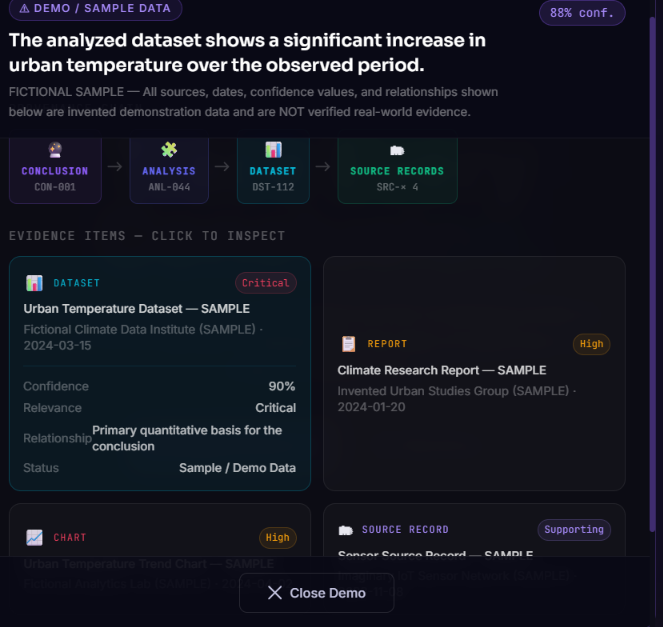
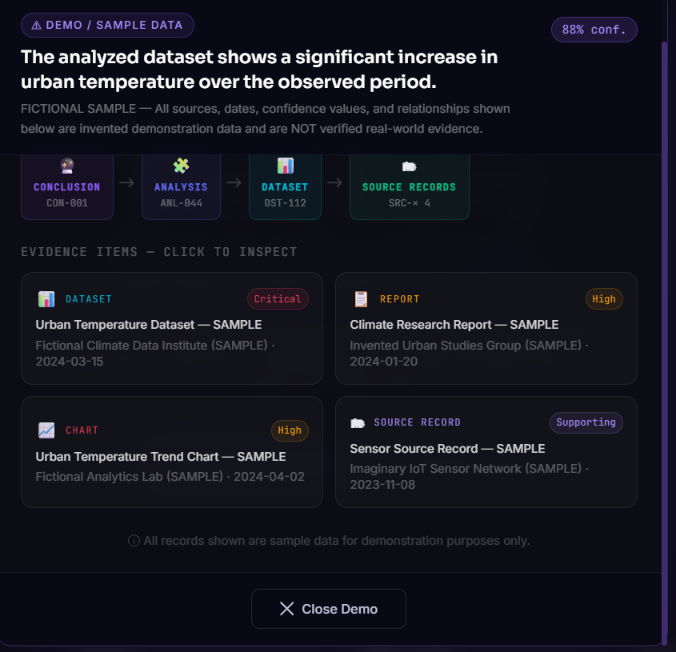
PROVENANCE creates an evidence chain:
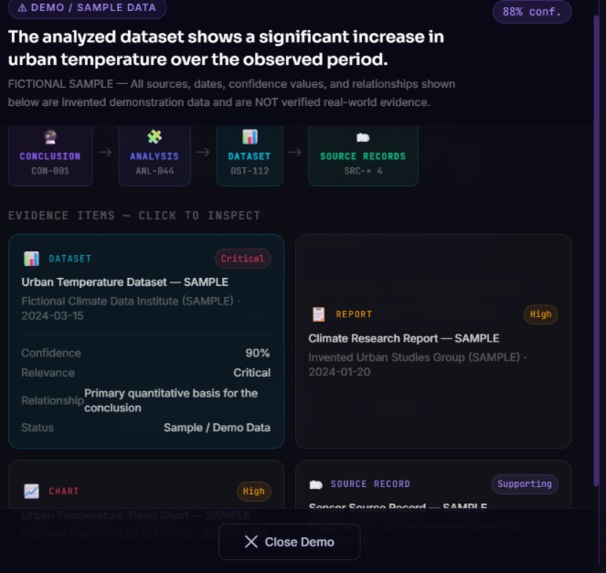
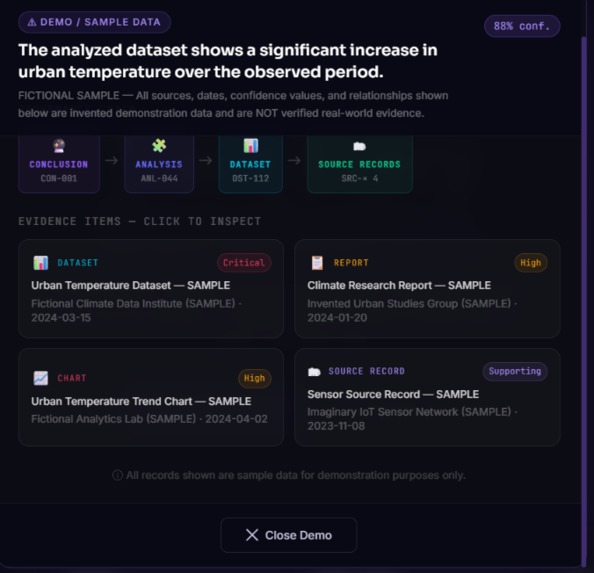
SOURCE → EVIDENCE → CLAIM → CONCLUSION
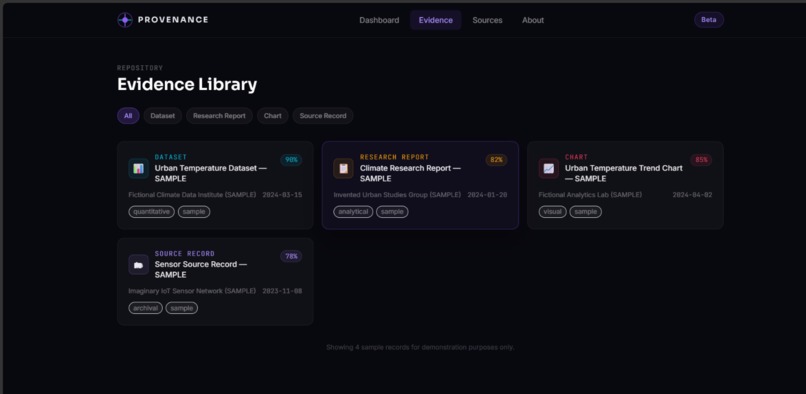
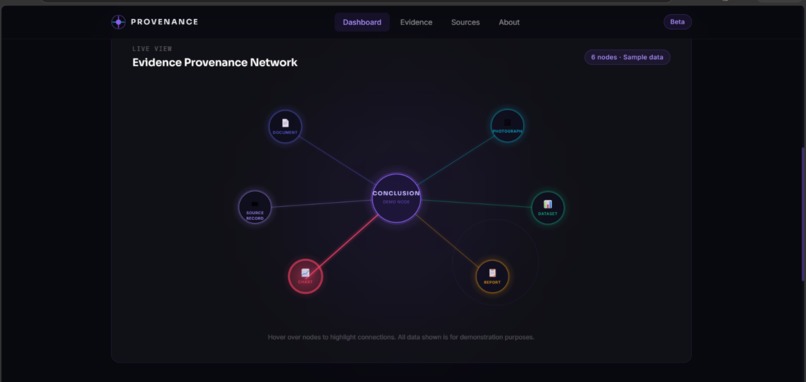
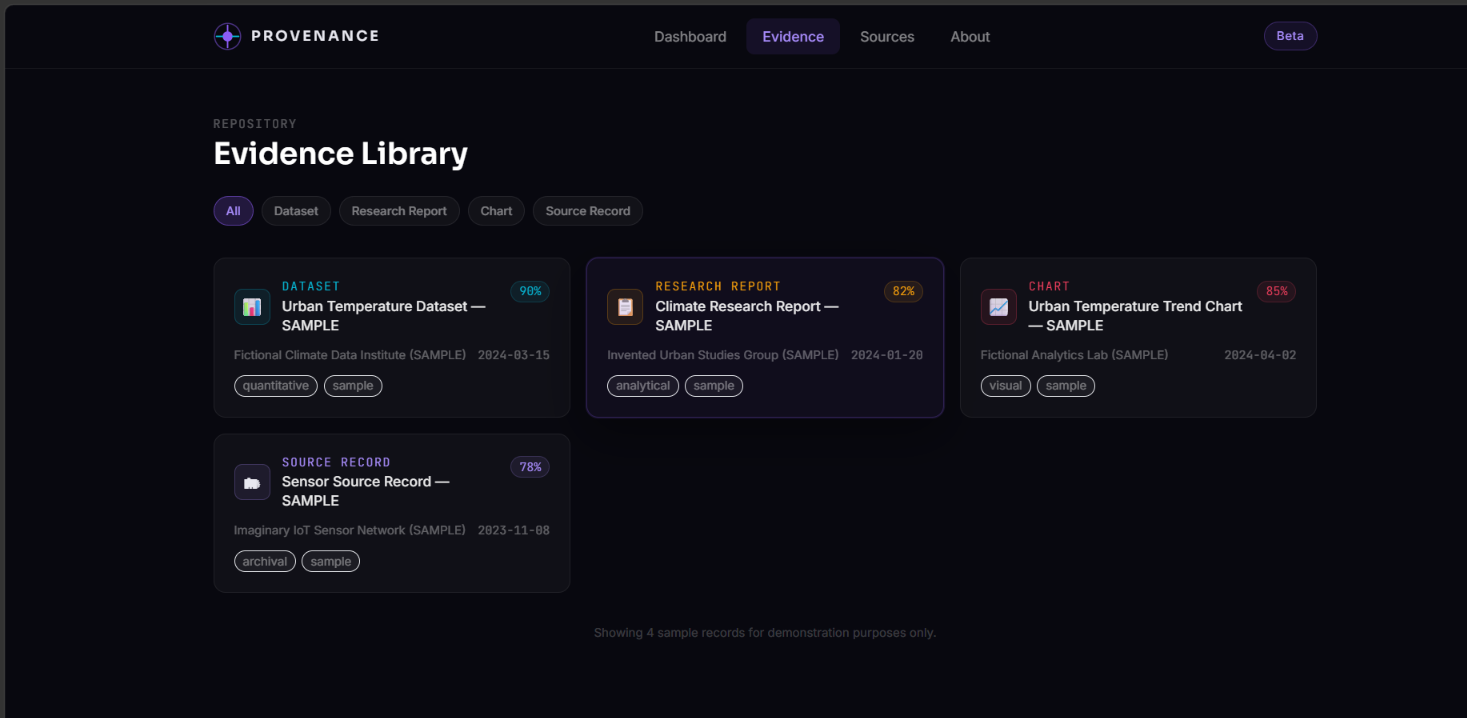
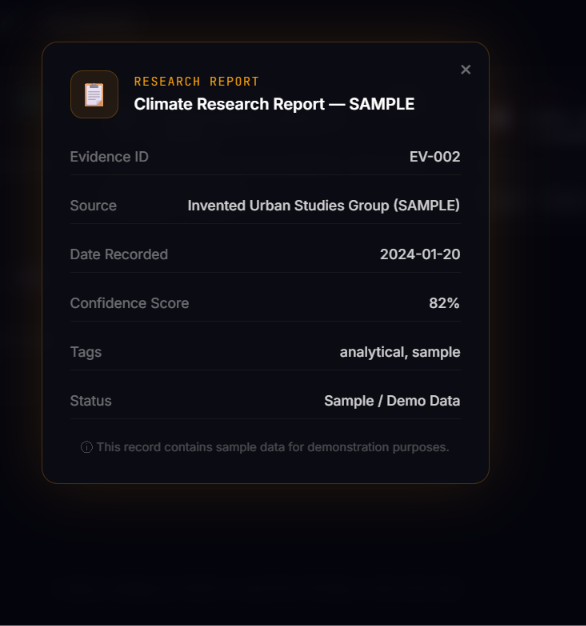
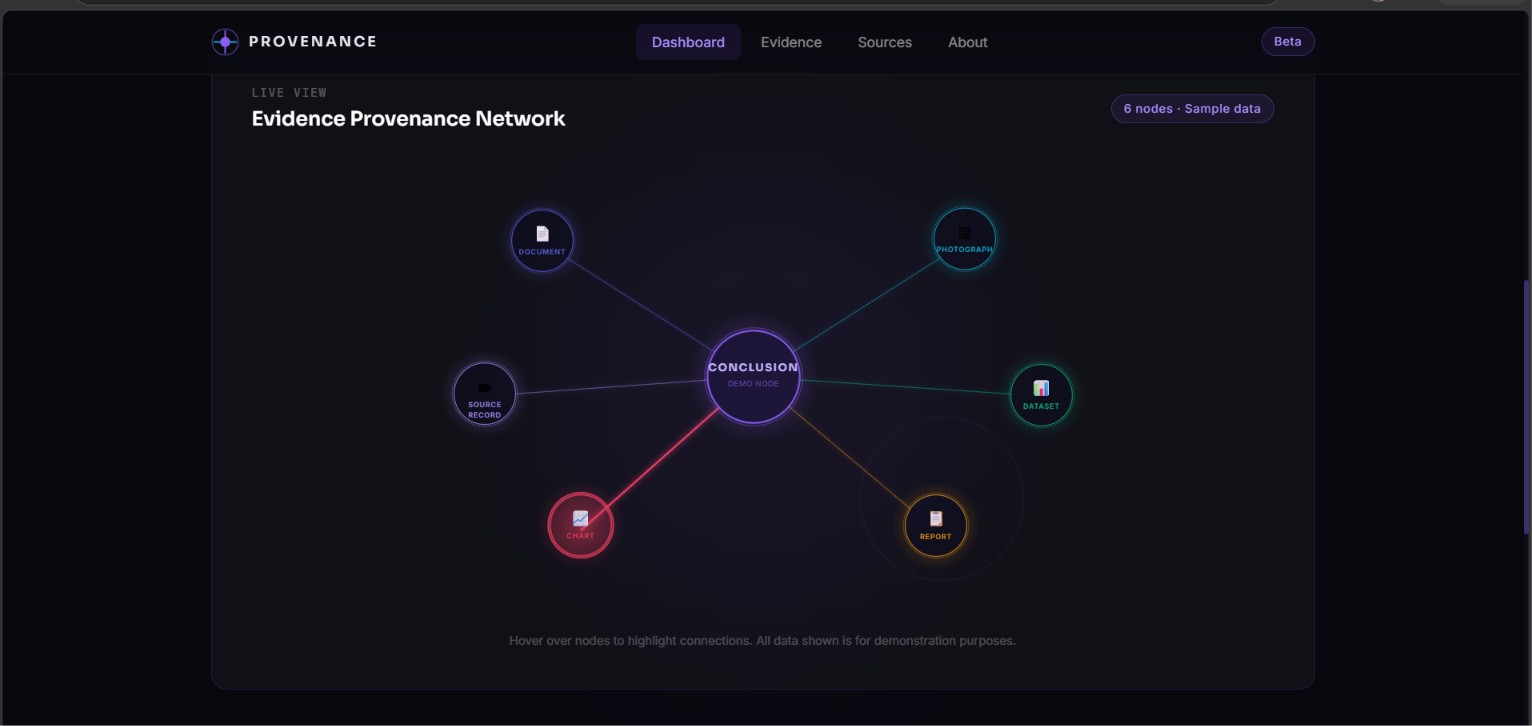
It organizes supporting information into a visual evidence network and identifies VERIFIED relationships, CONTRADICTIONS, and potentially OUTDATED sources.
Its key feature is conclusion stress testing — examining how a conclusion changes when supporting evidence is modified, removed, or challenged.
How we built it
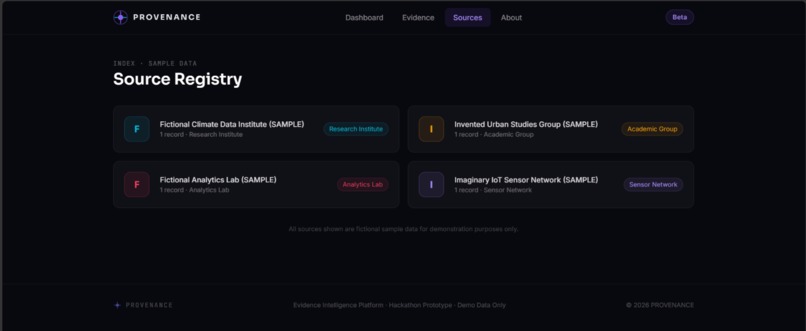
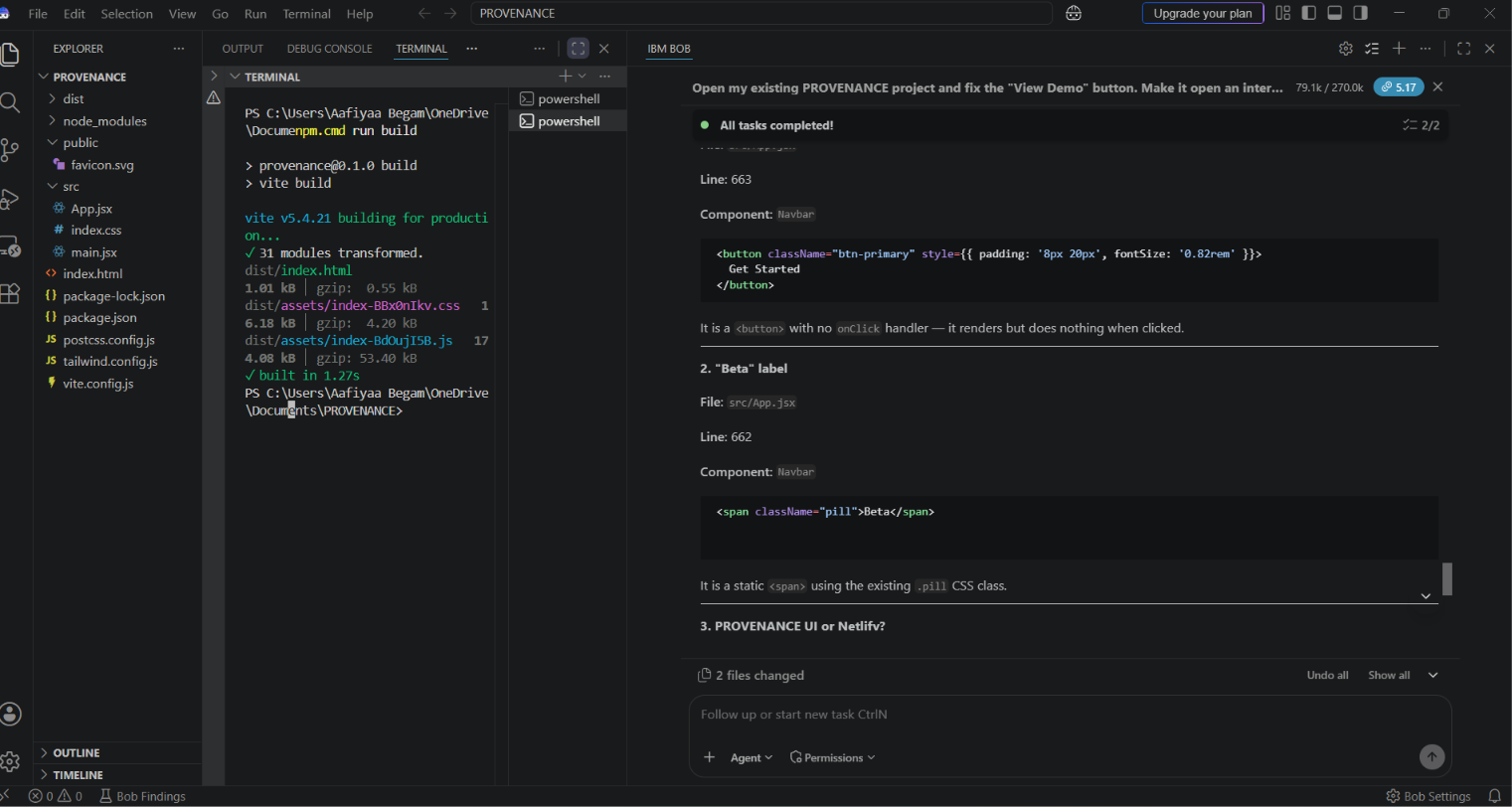
We designed PROVENANCE as a modular AI pipeline that processes sources, extracts relevant evidence and claims, maps relationships between them, and evaluates how those relationships contribute to a conclusion.
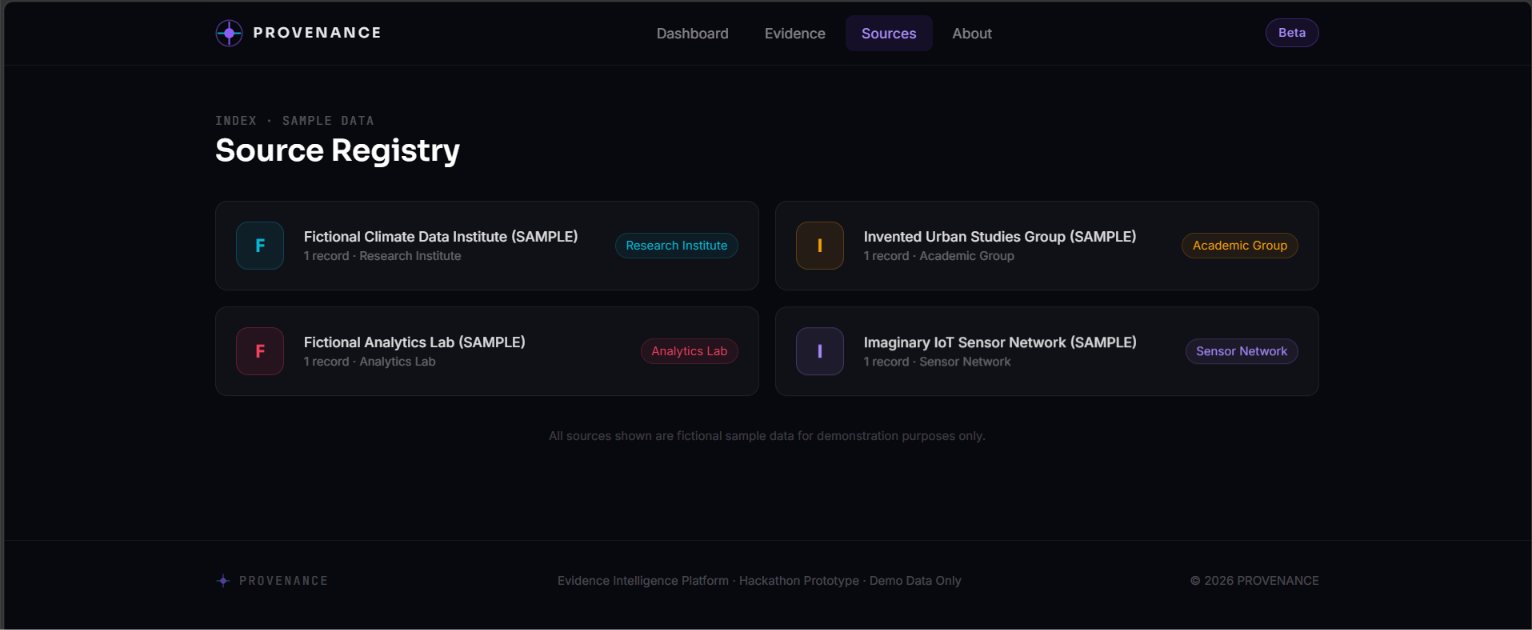
The results are represented as an interactive evidence graph, allowing users to move from a conclusion back through its claims and evidence to the original sources.
The system combines AI-based information extraction, relationship analysis, source evaluation, and a visual graph interface.
Challenges we ran into
One of our biggest challenges was avoiding the assumption that every piece of retrieved information is equally trustworthy.
We had to think carefully about how to represent conflicting evidence, distinguish supporting information from actual proof, and determine which evidence a conclusion depends on.
Another challenge was designing the system so that a complex reasoning process remained understandable at a glance rather than becoming another overwhelming AI dashboard.
Accomplishments that we're proud of
We are proud of turning an abstract idea — “trust the evidence, not just the answer” — into a visual and testable AI workflow.
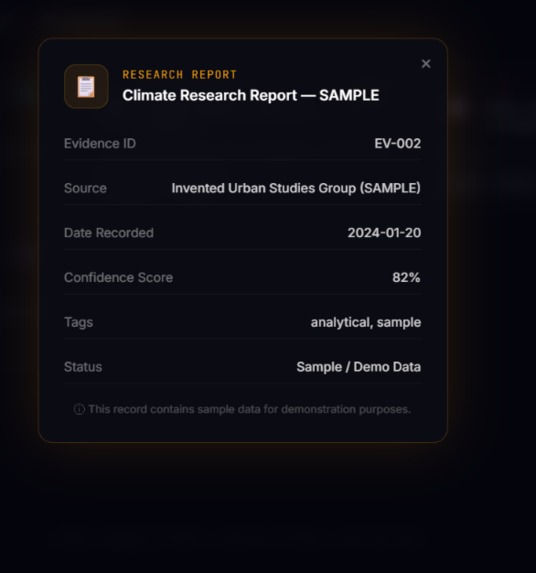
The evidence graph makes relationships between sources, claims, and conclusions easier to inspect, while the stress-testing concept adds an additional layer of scrutiny beyond ordinary answer generation.
Most importantly, PROVENANCE focuses on accountability rather than confidence.
What we learned
We learned that building trustworthy AI is not only about improving the model.
It is also about designing systems that make uncertainty, evidence, dependencies, and contradictions visible.
We also learned that a strong AI product should not simply provide more information. It should help users understand which information actually matters and how changes in that information affect the final result.
What's next for PROVENANCE
We want to evolve PROVENANCE into a broader AI evidence intelligence platform.
Future versions could support continuous source monitoring, stronger temporal reasoning, richer multimodal evidence such as images and documents, confidence and dependency scoring, and automated alerts when important conclusions are affected by new or conflicting evidence.
Our long-term vision is simple:
AI shouldn't just tell us what to believe. It should show us why — and prove that the reasoning can survive scrutiny.
Built With
- agentic-ai
- ai
- ai-reliability
- ai-safety
- ai-transparency
- artificial-intelligence
- auditable-ai
- automated-reasoning
- data-provenance
- decision-intelligence
- evidence-verification
- explainable-ai
- fact-verification
- generative-ai
- graph-ai
- information-retrieval
- knowledge-graph
- llm
- machine-learning
- natural-language-processing
- rag
- research-ai
- responsible-ai
- source-verification
- trustworthy-ai


Log in or sign up for Devpost to join the conversation.