Inspiration
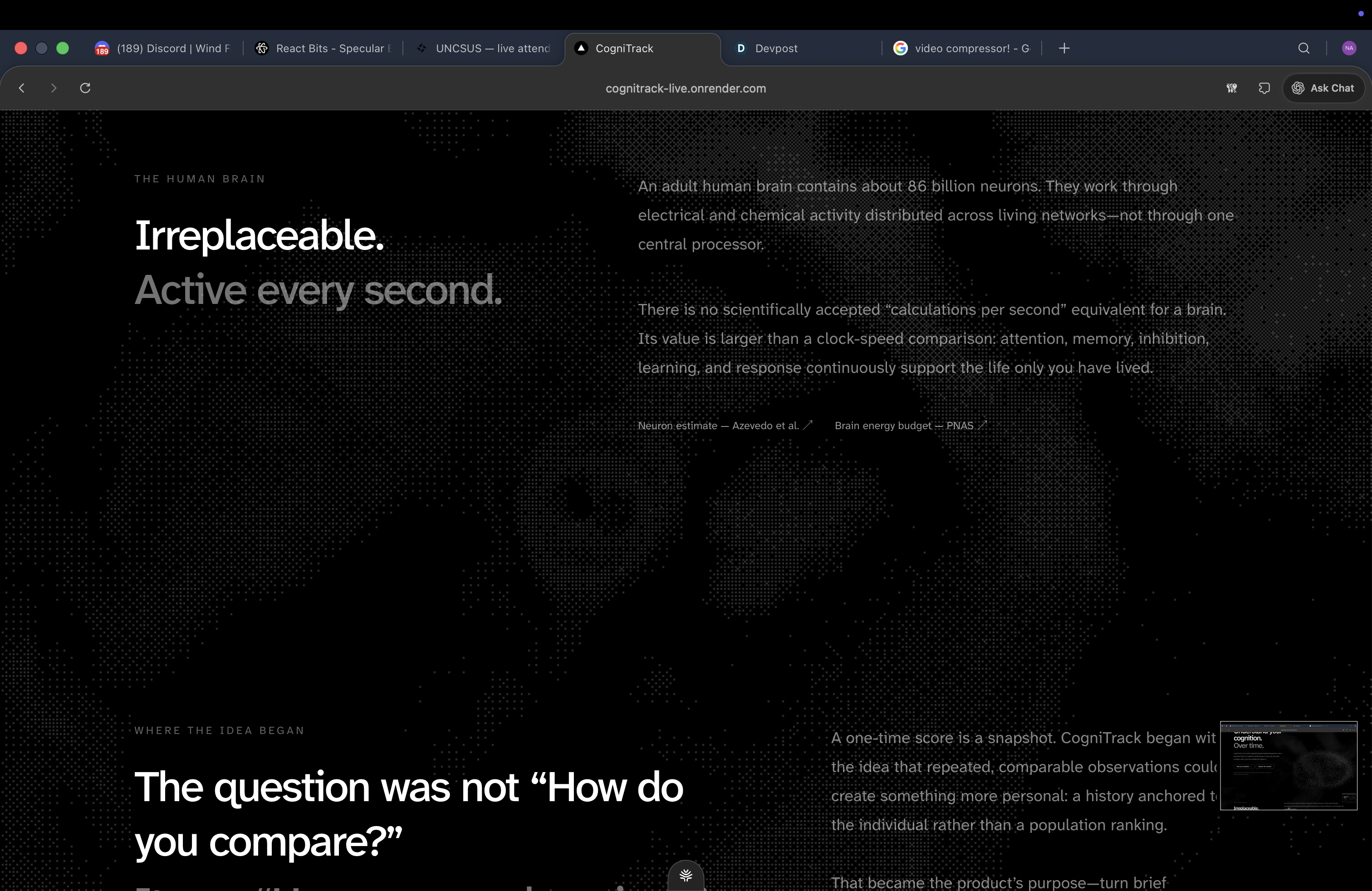
All of this started when I was looking at my grandparents interact with the world, I had always thought, how do we know how different they are from normal adults. But, there was nothing I could've done to see how much weaker my grandparents' brain was compared to my dad's or even mine. Then I wondered, "What about the people that have cognitive decline due to diseases, PTSD, and other brain conditions, how to doctors check for that?". I built CogniTrack to make cognitive tracking feel more personal, continuous, and understandable, not clinical grade(yet) to diagnose patients or replace doctors.
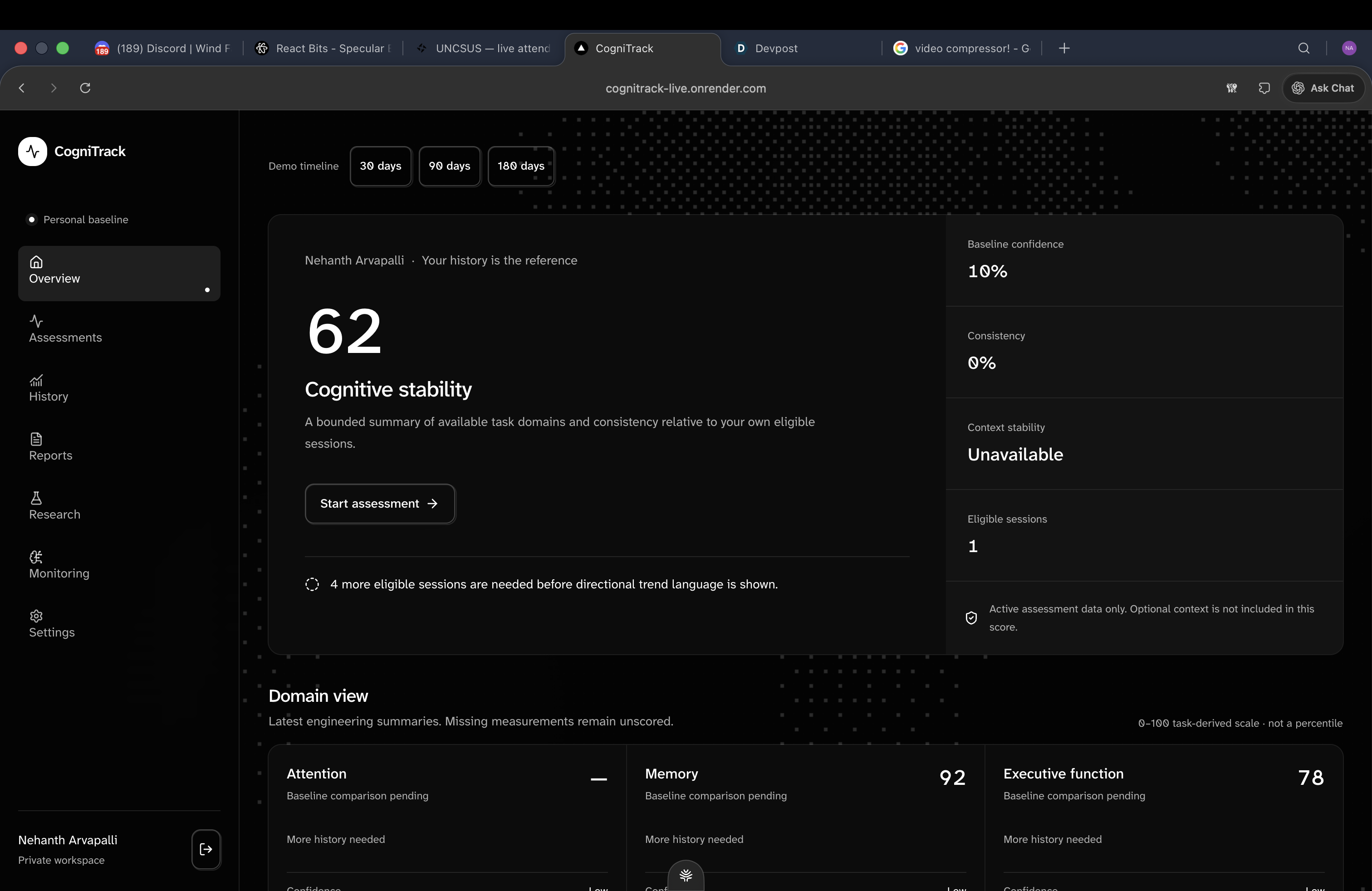
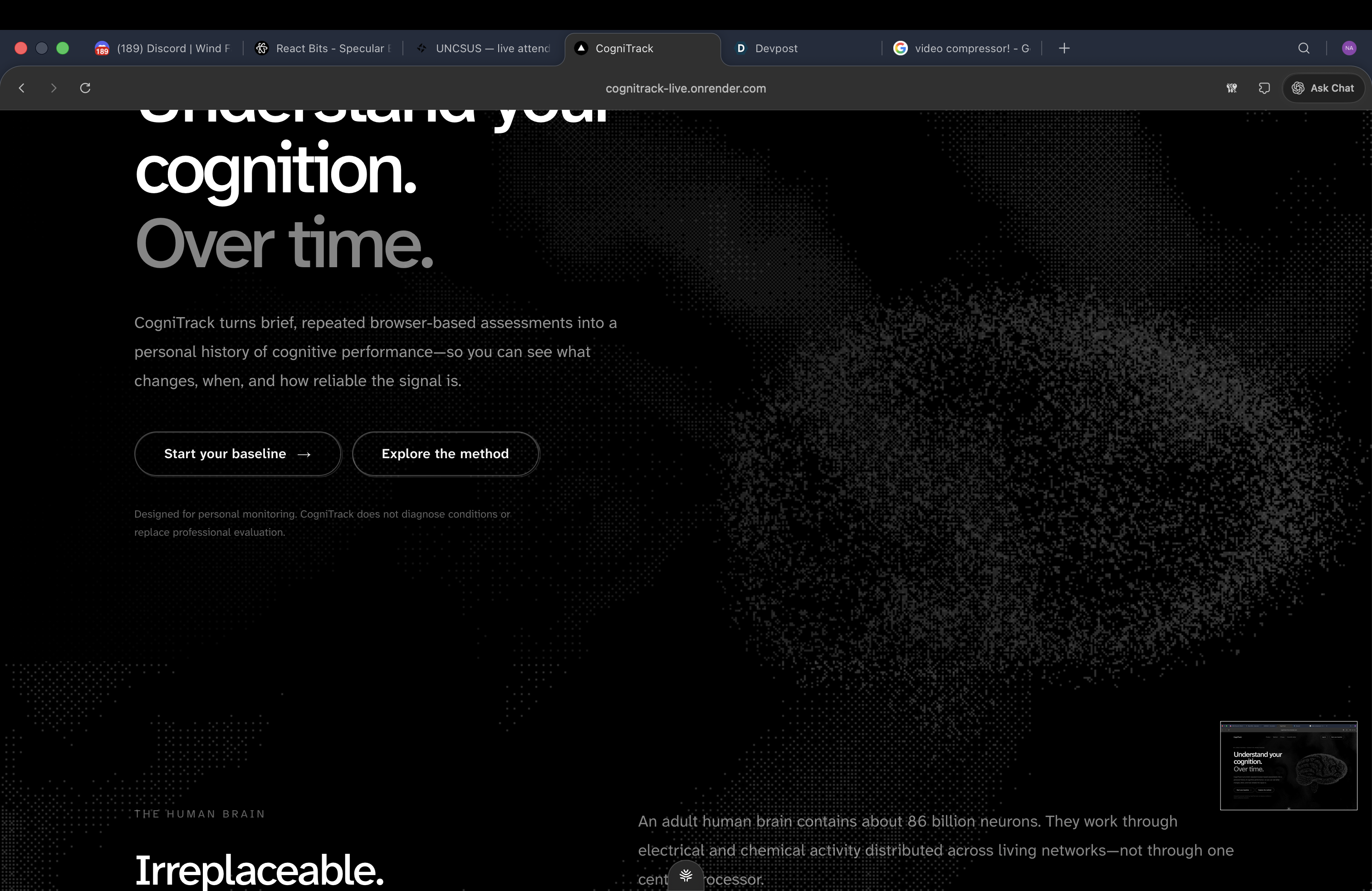
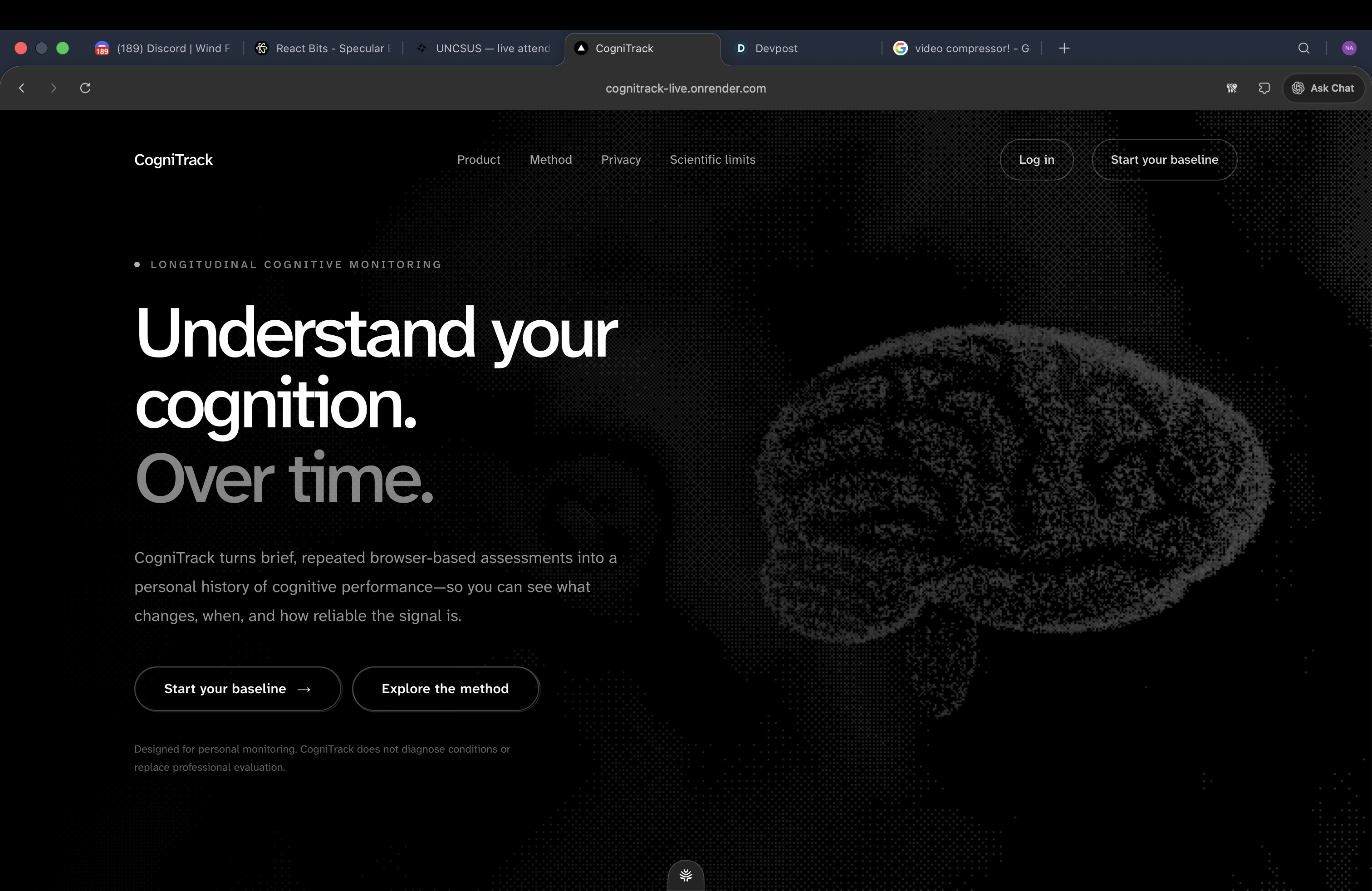
CogniTrack helps users measure areas such as memory, attention, processing speed, executive function, and working memory through short cognitive assessments. Over time, it builds a personal baseline and uses AI to analyze the analytics to help users understand how their brain performance is changing.
CogniTrack is not intende`d to diagnose medical conditions or replace a healthcare professional. It is a measurement platform designed to help people become more aware of their brain/behavioral patterns and communicate those patterns clearly.
What it does
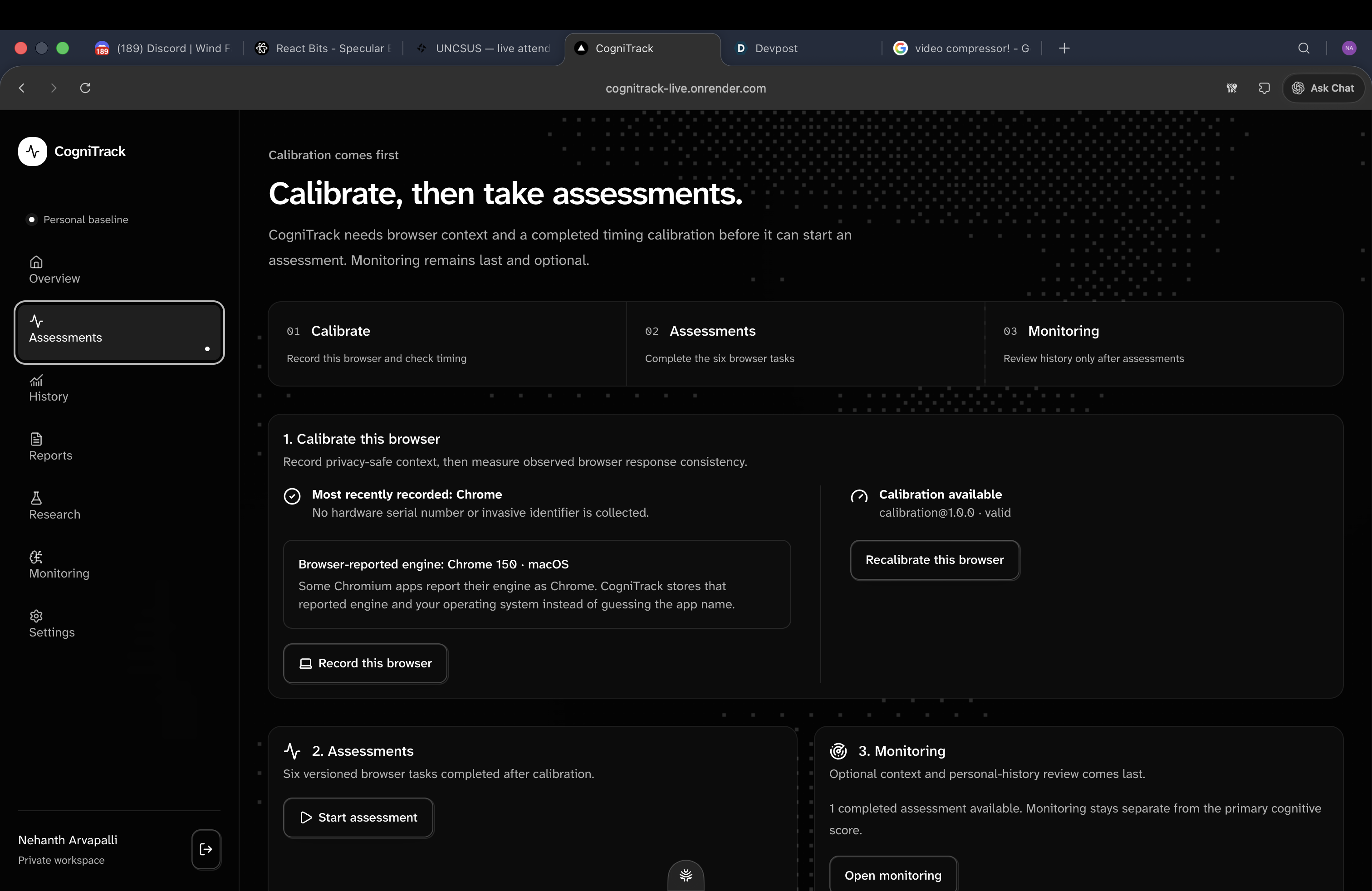
Users complete a structured set of cognitive tasks ,designed to take roughly only ten minutes per day.CogniTrack records performance metrics such as accuracy, response timing, consistency, false starts, and task completion quality.
The app then:
- Builds a personalized cognitive baseline across repeated sessions.
- Tracks performance across multiple cognitive domains.
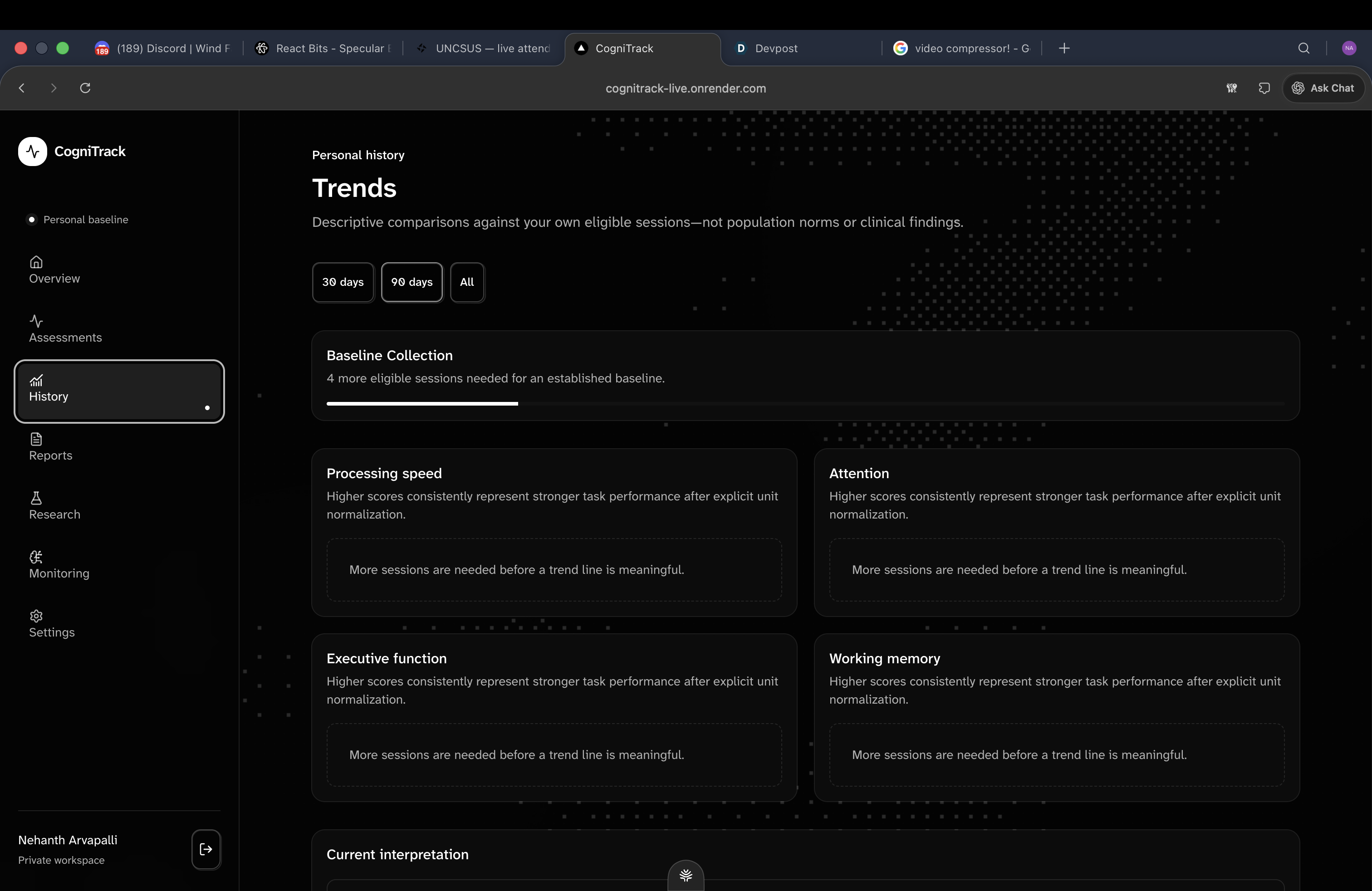
- Visualizes shortterm and long term trends.
- Detects unusual changes while accounting for noisy or low quality sessions.
- Generates clear, non diagnostic insights.
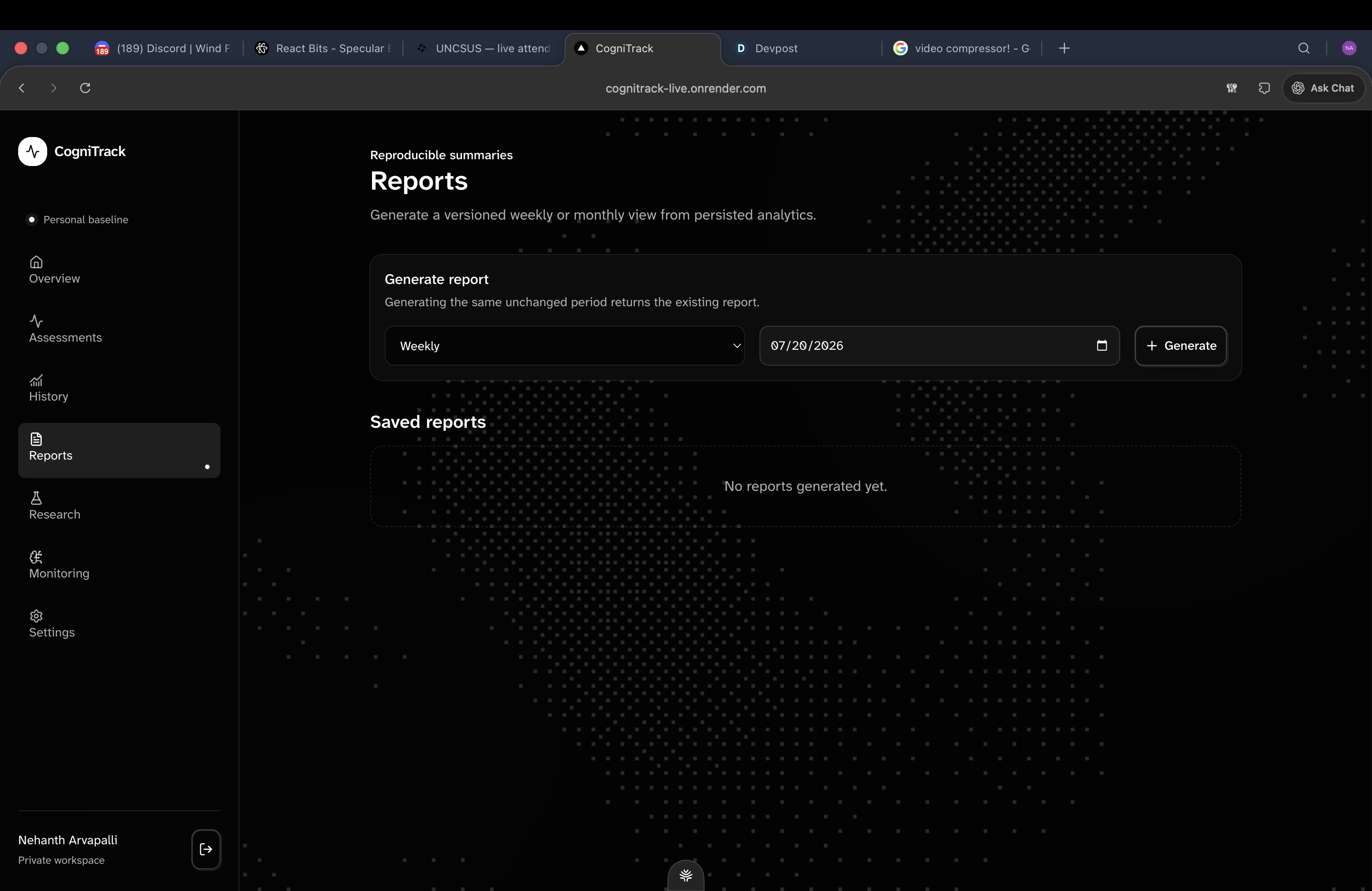
- Creates weekly and monthly progress reports.
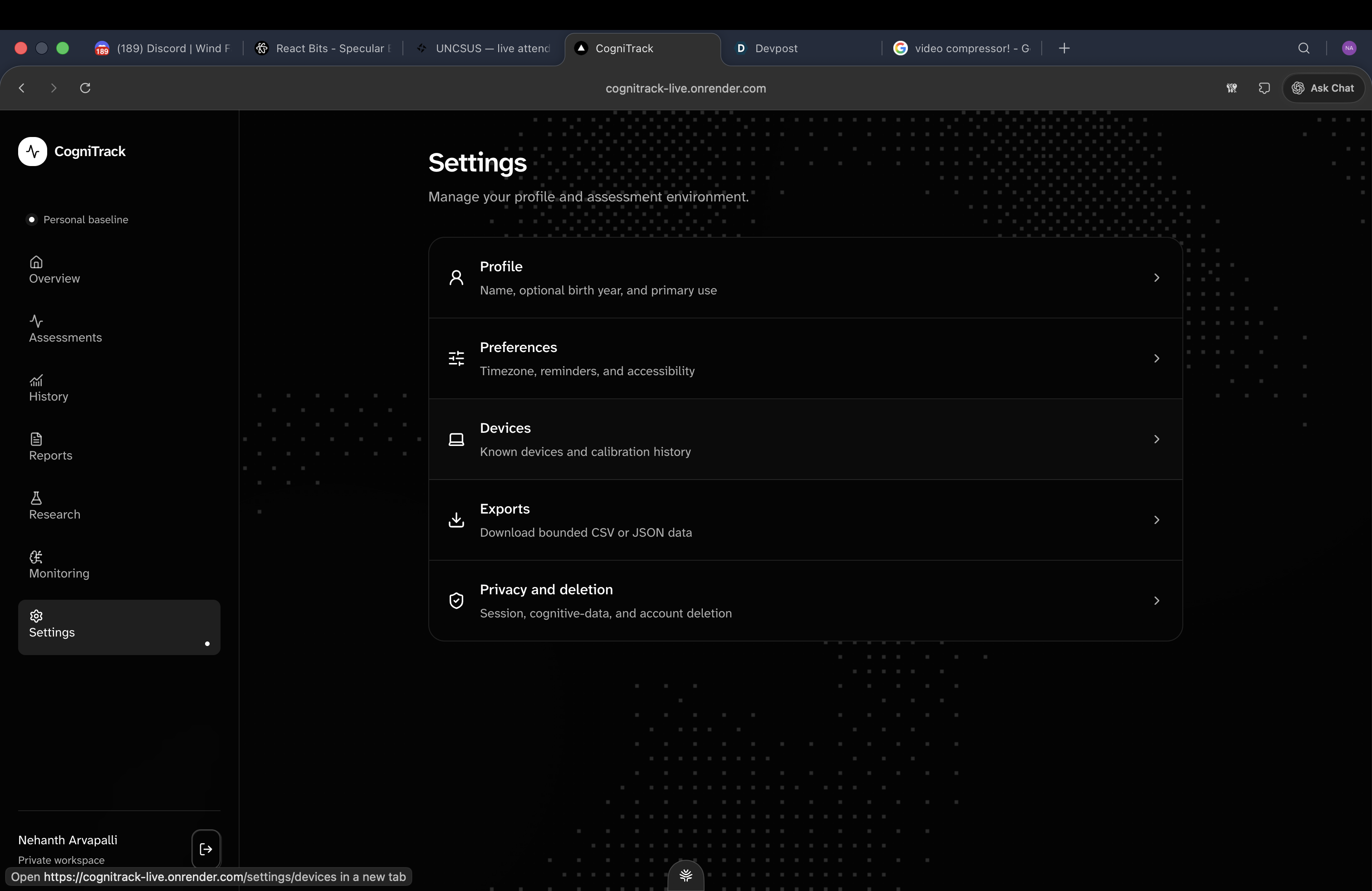
- Allows users to export their own data.
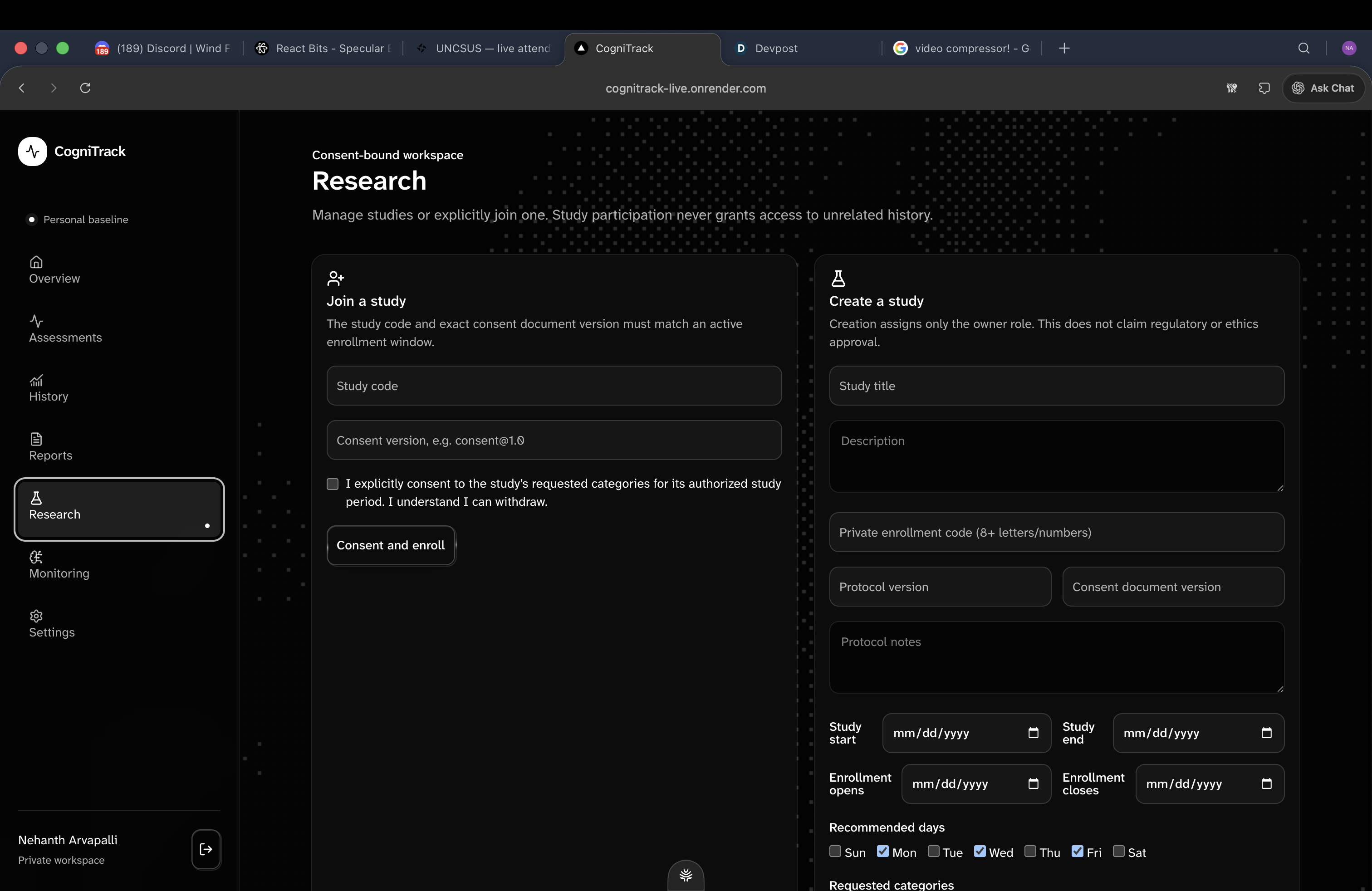
- Supports research workspaces with controlled participant access. Instead of reducing cognitive health to one score, CogniTrack shows how different parts of a user’s brain changes over time.
How we built it
CogniTrack was built as a fullstack web application using Next.js, React, TypeScript, Python, FastAPI, PostgreSQL, Supabase, and more...
The assessment engine uses browser-based timing and deterministic task logic. It handles countdowns, practice rounds, randomized trials, timeouts, false starts, duplicate inputs, interruptions, and abandoned sessions.
After each session, a versioned analytics pipeline processes the assessment data and calculates domain-level results for-
- Processing speed
- Attention
- Executive function
- Working memory
- Memory performance
The system gradually moves users through a personalized baseline lifecycle. Sessions with poor data quality or extreme outliers can be excluded so that one interrupted assessment does not distort the user’s long-term trends. I also built many of the systems needed to make CogniTrack feel like a real product, including authentication, secure data access, reporting, exports, account deletion, research tools, accessibility features, and several production-focused safeguards.
OpenAI tools helped me move much faster during development. I used AI to think through architecture decisions, debug issues, improve security, and make the platform more reliable overall.
Challenges I faced One of my biggest challenges was making the assessments both simple and reliable. In cognitive testing, small things matter, switching tabs, losing focus, refreshing the page, or pressing a key too early can all affect the quality of the data. I had to design around how people actually use software, not how I expected them to.
Another challenge was building personalized baselines responsibly. I didn’t want to get to conclusions too early, so I created a system that becomes more accurate as users complete more sessions.
Privacy was also a massive priority. Because data can be sensitive, I focused mainly on privacy, user control, secure access, and avoiding diagnostic claims.
What I learned
I learned that building a cognitive health platform is about much more than creating brain games. Timing systems, data quality, security, accessibility, and trust all things just as much.
Most importantly, I learned that privacy and scientific responsibility aren’t limitations they’re needed features.
What’s next for CogniTrack
Next, I want to expand the assessment library, improve the analytics models, and work with researchers and healthcare professionals to help validate the platform.
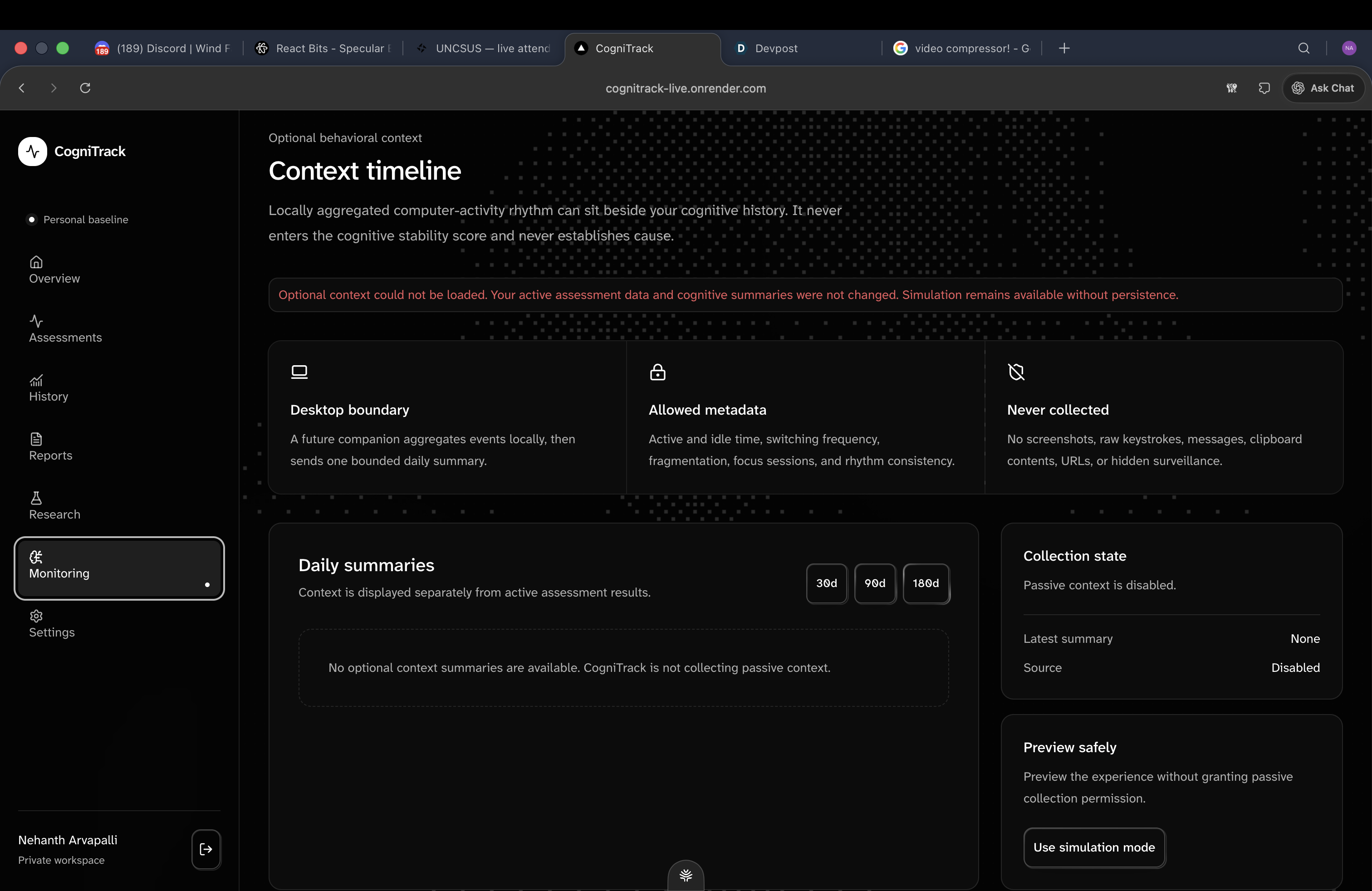
I’m also exploring an optional desktop companion that would measure only privacy, storing behavioral patterns, such as active time and app switch frequency, without collecting screenshots, messages, keystrokes, or ANY other private content.
My long term goal is simple- to help people better understand how their cognitive performance changes over time.
Built With
- ai
- codex
- css
- fastapi
- ml
- next.js
- openai
- postgresql
- python
- react
- restapi
- supabase
- tailwind
- typescript
- vercel
- vitest
- zod


Log in or sign up for Devpost to join the conversation.