-
-
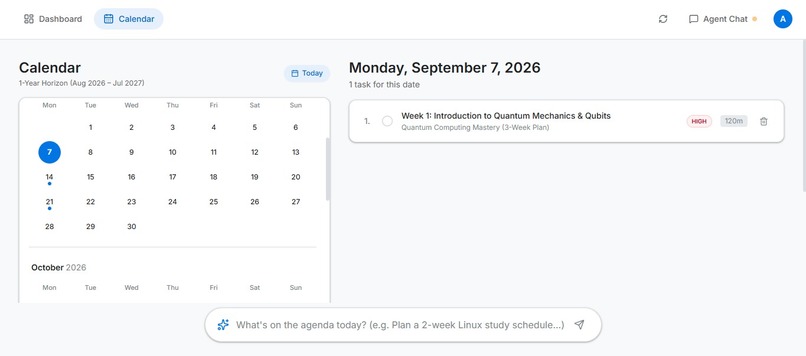
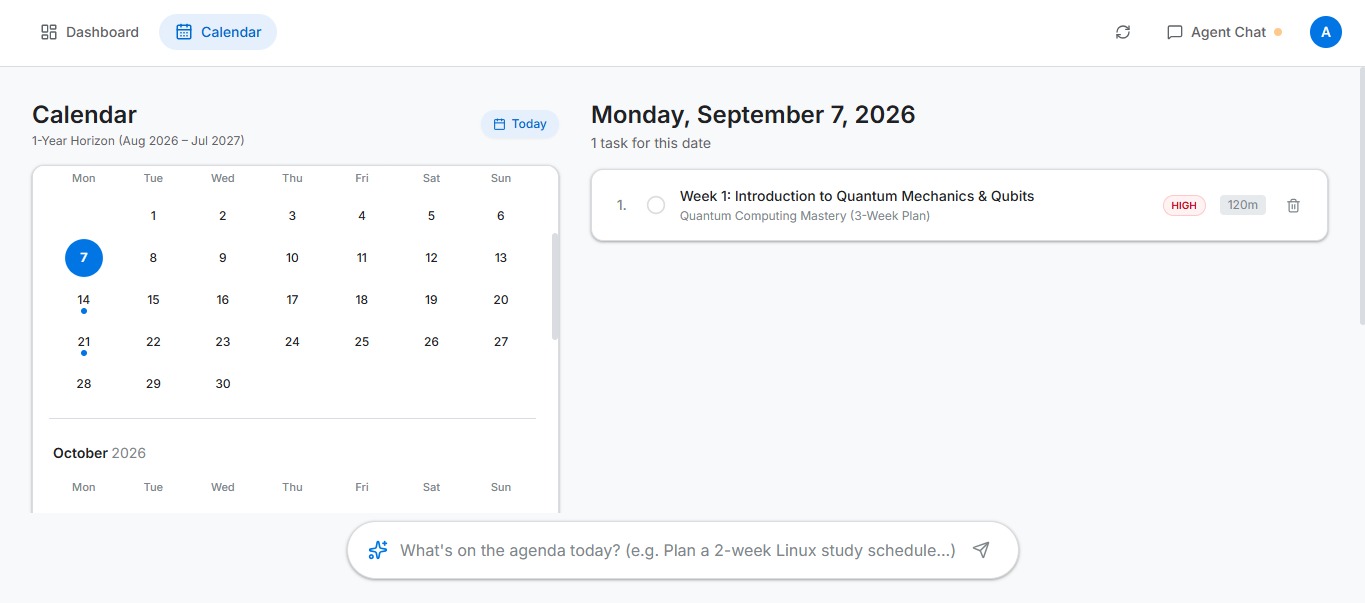
Calendar View
-
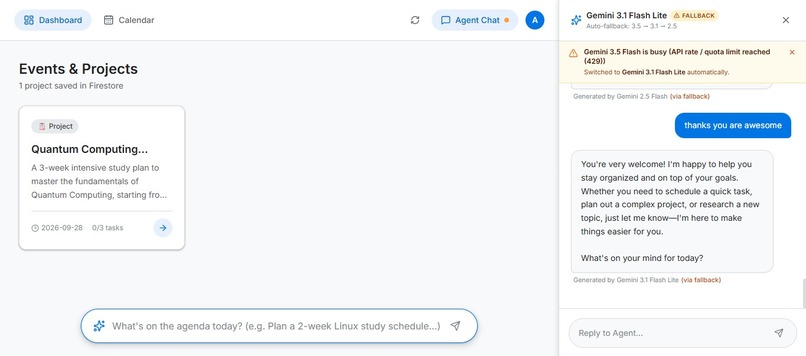
Home page
-
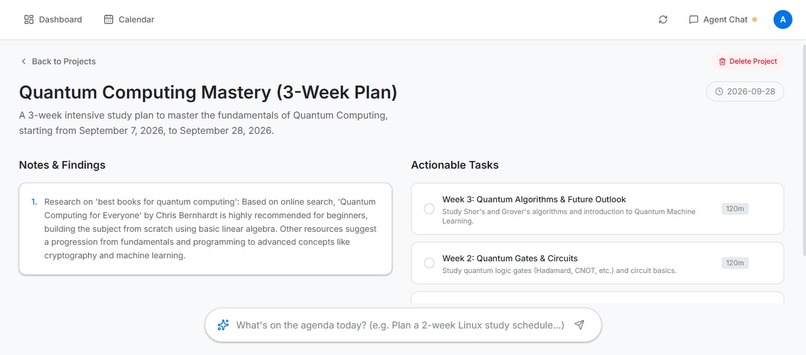
Project view
Inspiration
Most AI productivity tools rely on passive conversational loops where the bot generates a block of text, leaving the user to do the heavy lifting of manually calculating dates, copying tasks, and setting up trackers. We wanted to build a workspace that "works after you leave"—an autonomous executor that turns unstructured thoughts and study goals into scheduled, actionable milestones without the manual overhead.
What it does
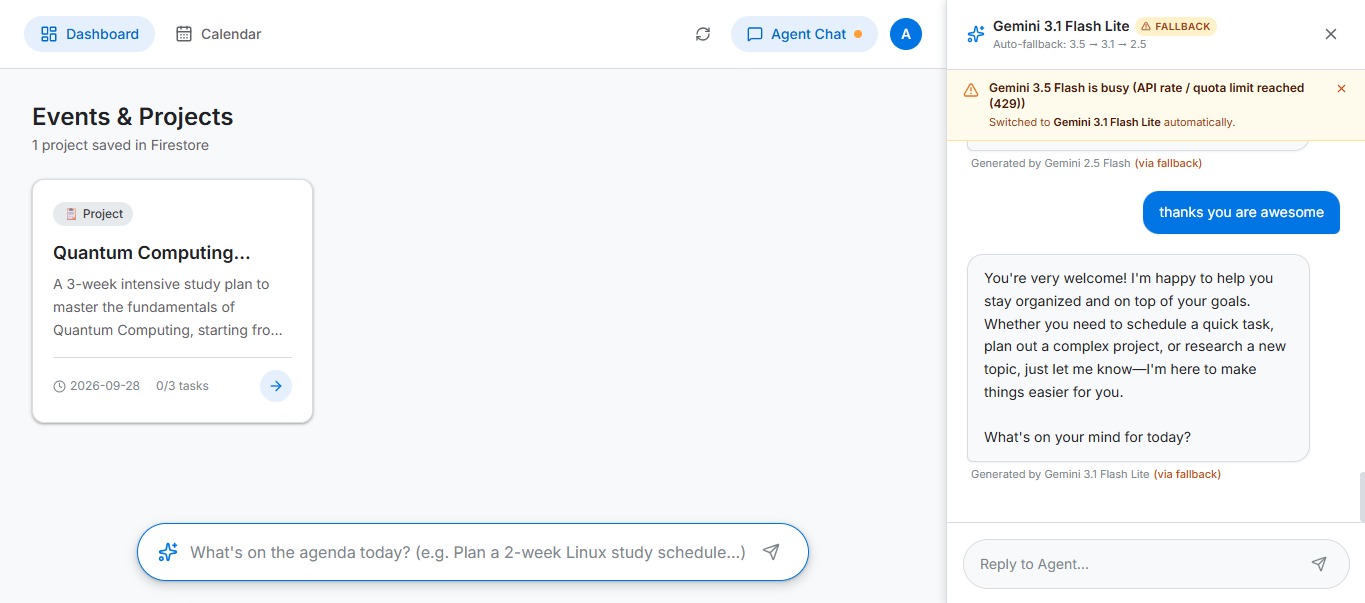
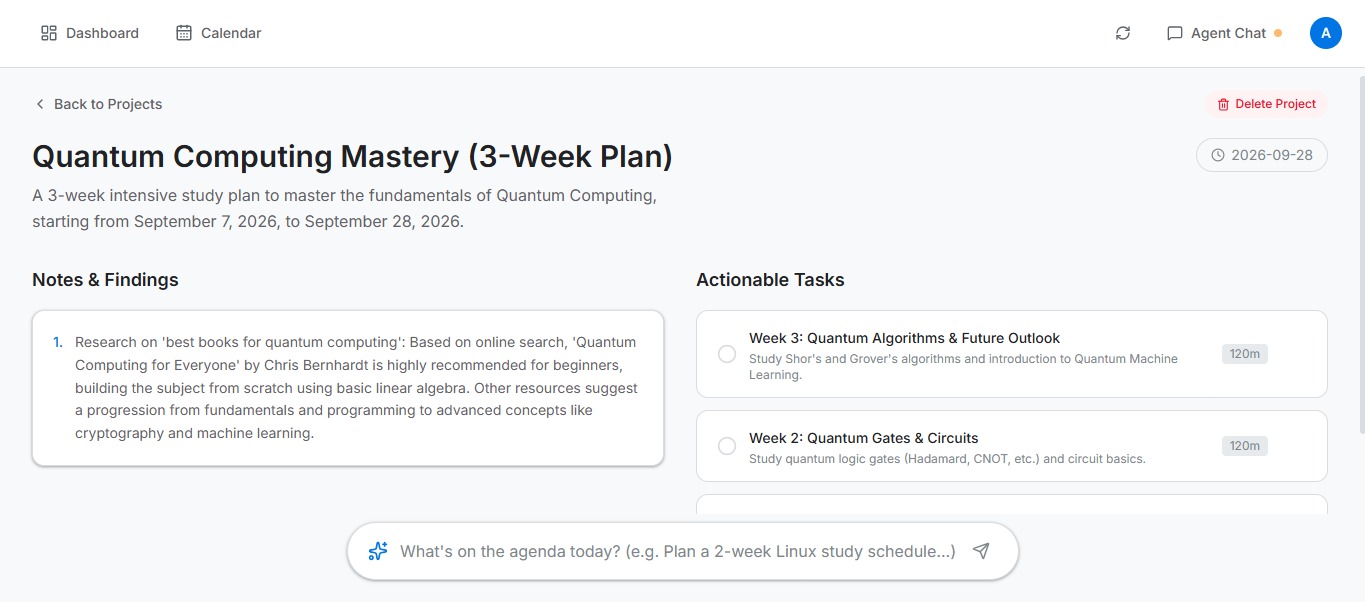
Cognitive Canvas transforms passive AI into an autonomous workflow executor. It uses a Proportional Intent Engine to differentiate between a simple reminder, which adds just one task, and a major goal, which automatically generates a multi-week dated curriculum and sets up project tracking. The system features temporal intelligence to calculate exact real-world calendar dates from relative expressions, conducts grounded web research, and displays everything on a 1-year scrollable horizon calendar with live completion indicators.
How we built it
We architected the system using a unified backend server built with FastAPI, utilizing Google ADK for the agent definition, session memory, and function tools. The core reasoning and structured tool calling are powered by Gemini 3.5 Flash. For our database, we integrated Google Cloud Firestore to store projects, tasks, and research results. The frontend was developed using React 18, Vite, and Tailwind CSS to create an interactive UI with a dynamic calendar and chat sidebar. Finally, the entire stack was containerized using Docker and deployed to Google Cloud Run.
Challenges we ran into
Early on, we struggled with high latency; our initial prototypes used a 6-hop queue-based event dispatcher that took over 25 seconds to process actions. Additionally, we had to figure out how to maintain a seamless user experience and prevent the autonomous agent from breaking during LLM rate limits (429 RESOURCE_EXHAUSTED) or traffic surges (503 UNAVAILABLE) in production.
Accomplishments that we're proud of
We drastically reduced our backend execution latency from 25+ seconds to under 2 seconds by transitioning to direct function execution via Google ADK. We are also proud of engineering a highly resilient 3-Tier Model Fallback Cascade that automatically switches from Gemini 3.5 Flash to 3.1 Flash Lite, and then to 2.5 Flash, ensuring zero crashes during traffic spikes. Furthermore, by injecting current temporal anchors, we achieved 100% precision in scheduling real-world calendar dates.
What we learned
We discovered that while LLMs are excellent at relative sequencing (e.g., "Day 1", "Day 2"), exact real-world scheduling requires dynamic temporal grounding to calculate accurate dates. We also learned that for interactive productivity applications, direct cloud action is vastly superior to multi-hop queues for reducing latency, and that building system resilience through multi-tier model fallbacks is critical for uninterrupted workflows.
What's next for Cognitive_Canvas
Our future roadmap includes implementing two-way synchronization with Google Calendar and adding voice note transcriptions so users can log brain dumps on the go. We also plan to build collaborative project canvases to support multi-user shared workspaces for study groups and team projects.


Log in or sign up for Devpost to join the conversation.