-
-
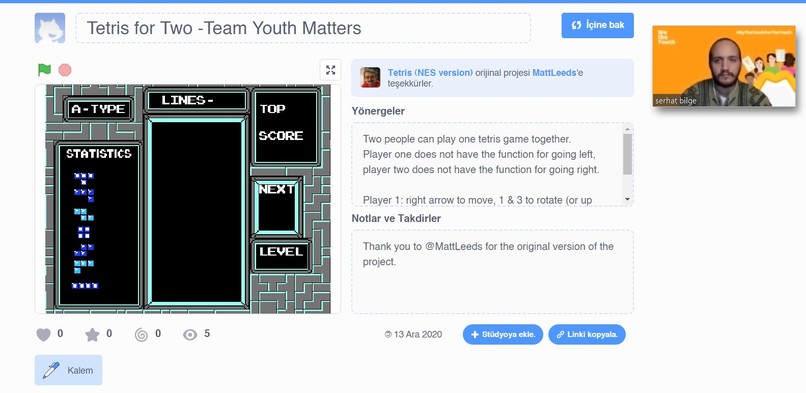
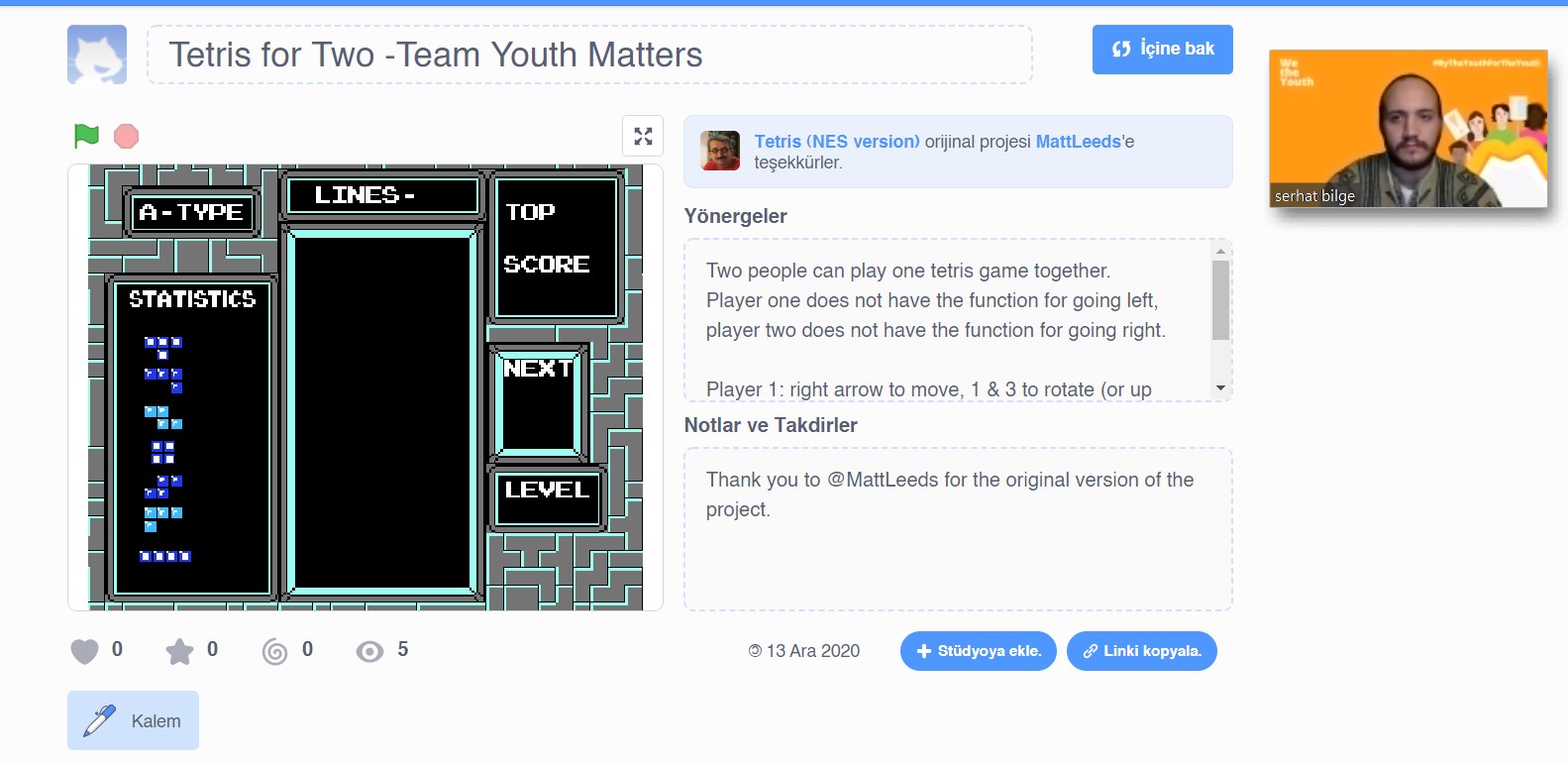
This is an example of how the groups of 2 will play tetris.
-
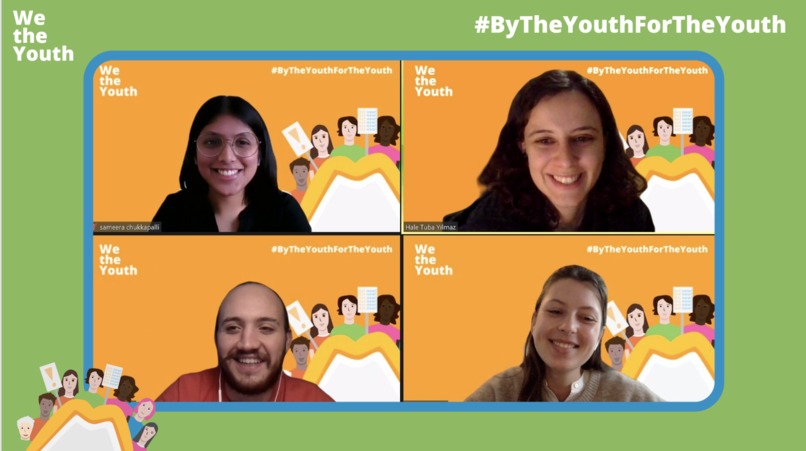
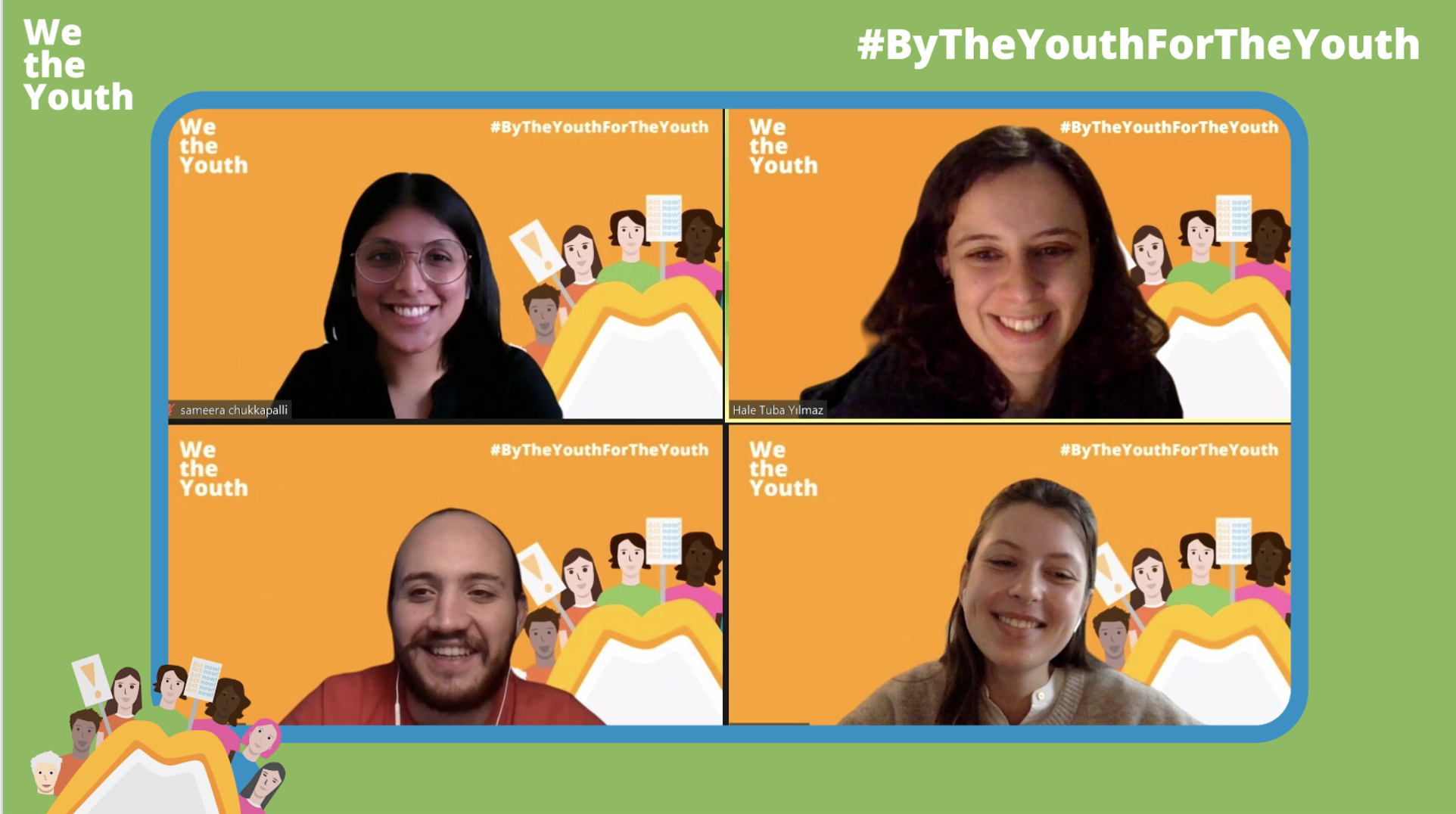
Our Youth Matters team
-
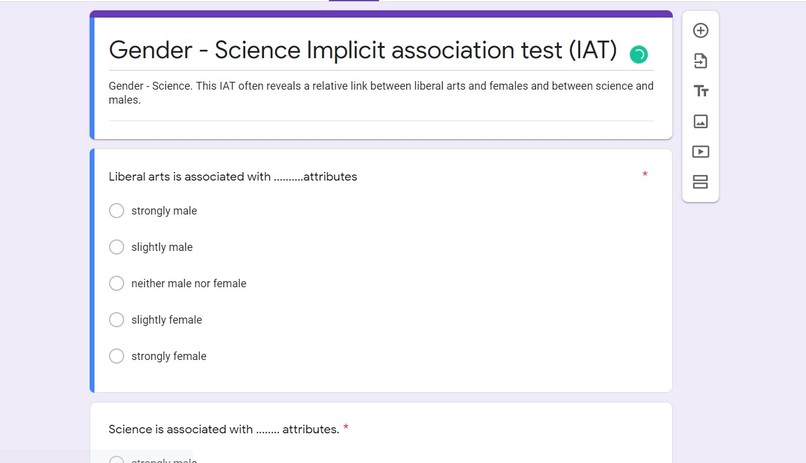
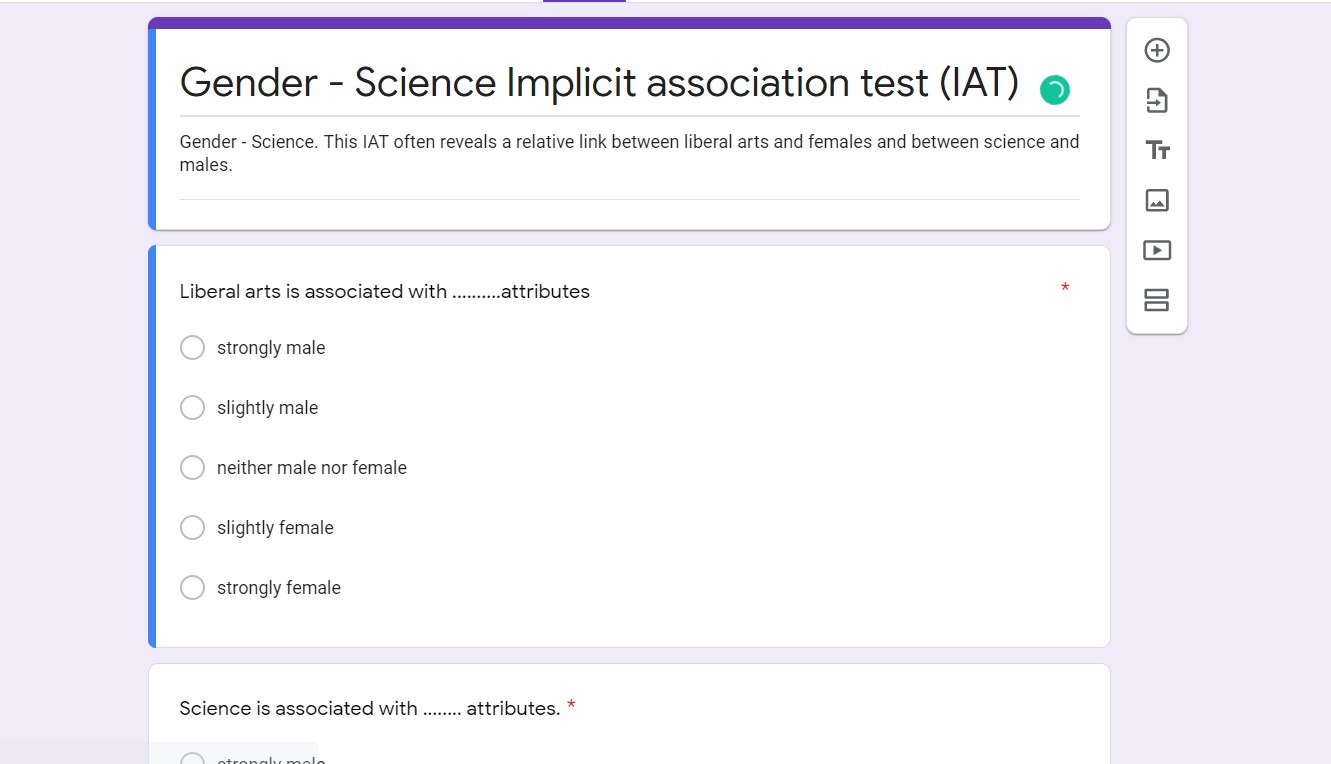
Example of a Gender - Science Implicit Association Test (IAT)
Inspiration
Our biggest inspiration became the Heineken ad from 2017, called "Worlds Apart", which brings out people from different points of view and biases together. While watching, we were inspired to make a difference in the discrimination and biases we as human beings have (some of us even cried!). The value created there for the people inspired us to create this project.
What it does
Cognitive Unison is a digital experience with a game as its highlight. This experience can be conducted by NGOs, schools, businesses, or other organizations for a group of people. The Youth Matters team has developed the framework for how the experience should continue.
Sessions consist of break-out rooms with two participants. The participants will fill out a form before the session, which will try to understand their points of view on contested topics such as gender, race, age, and disability. The Harvard Implicit forms will be used and adapted. People with opposite points of view, according to their forms, will be matched (without knowing they differ). Once the digital session starts, the participants will be divided into teams of 2. The match will be based on which participants differ most strongly. An example of a 'bias form' will be added to the slides.
The duos start by playing a simple Tetris game, with one twist: each player will not have one function of the game. Player 1 won’t be able to move to the left and Player 2 won’t be able to move to the right. This would make each player dependent on the other to finish the game, and leaves no option but cooperation.* Once the players have finished playing the games and working together, the facilitators make it known to the participants that they were teamed up because of their strongly different perspectives. Then, facilitators offer the players the option: talk more and discuss their differences, hoping for some understanding and common ground, or leave the meeting. We believe that even if a participant leaves the meeting, they would reflect on why they have left at one point, so the experience we have formed would still have an impact. If the participants decide to stay in their breakout rooms of 2, they can continue talking. According to our budget, our team will send tea/coffee packages or order pizza to each participant’s house to create a comfortable atmosphere that is conducive to a constructive conversation. In the end, with the remaining participants, we will collectively talk about our experience during this meetup.
*Once the Tetris game is finished, we will then incorporate other games with different formats and scenarios to make sure that our participants figure out their unconscious bias on their own.
How we built it
Following the Team Journal created by the facilitators and organizers of this hackathon, we came up with an idea first. We have tried to balance the time differences that our team members have, had a division of work at points. We used Scratch to build the Tetris game. We have worked day and night for 2 days to come up with this project, and we are happy in the end.
Challenges we ran into
Being in a team in an online hackathon with people all over the world has its own set of quirks. We have tried hard to arrange the time slots where everyone was available, which wouldn't have been a problem in a physical hackathon. We had many ideas; and in the end, it became harder to pick one during the ideation phase. But we believe this project has become a great bonding activity. We are happy to share this solution we all like.
Accomplishments that we're proud of
We are proud to find our balance as a team with members from 3 different countries and 2 different time slots. During this hackathon, we never lost our motivation for our work, with the help of our facilitators, mentors, coaches, and organizers.
What we learned
Our first design challenge was “How might we create a digital communication space against bias and discrimination?”. Once we have talked with the experts on the topic, we have come to realize that having biases are what makes us human and they are natural. So, we have changed our question to “How might we create a liberating digital communication space where people with different cultures and perspectives can come together to eliminate discrimination?”. In this way, we would acknowledge having bias as natural.
We have also learned about System 1 and System 2 thinking, and how we form our bias via System 1 thinking. To bring about behavioral change in an individual, they have to be confronted with the subconscious decision they are making. This is why we are planning to incorporate more games into our digital experience for the participants to be confronted more.
What's next for Cognitive Unison
We want to work with NGOs and (international) organizations on this project so that more participants can be aware of their unconscious bias.
Built With
- desktop-research
- google-docs
- scratch
- slack
- youtube
- zoom


Log in or sign up for Devpost to join the conversation.