-
-
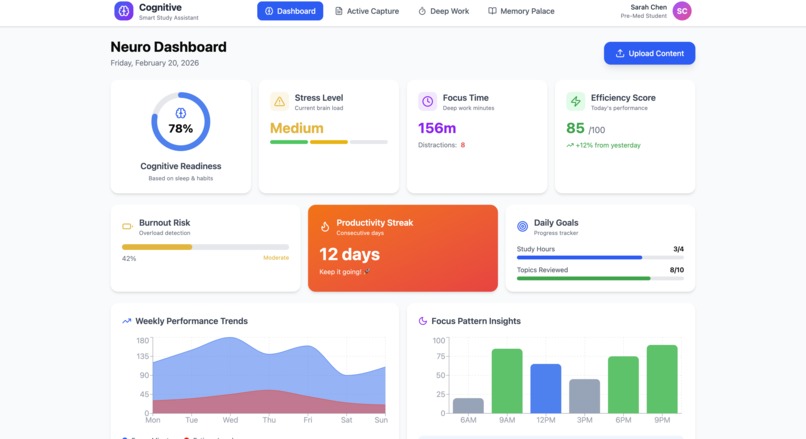
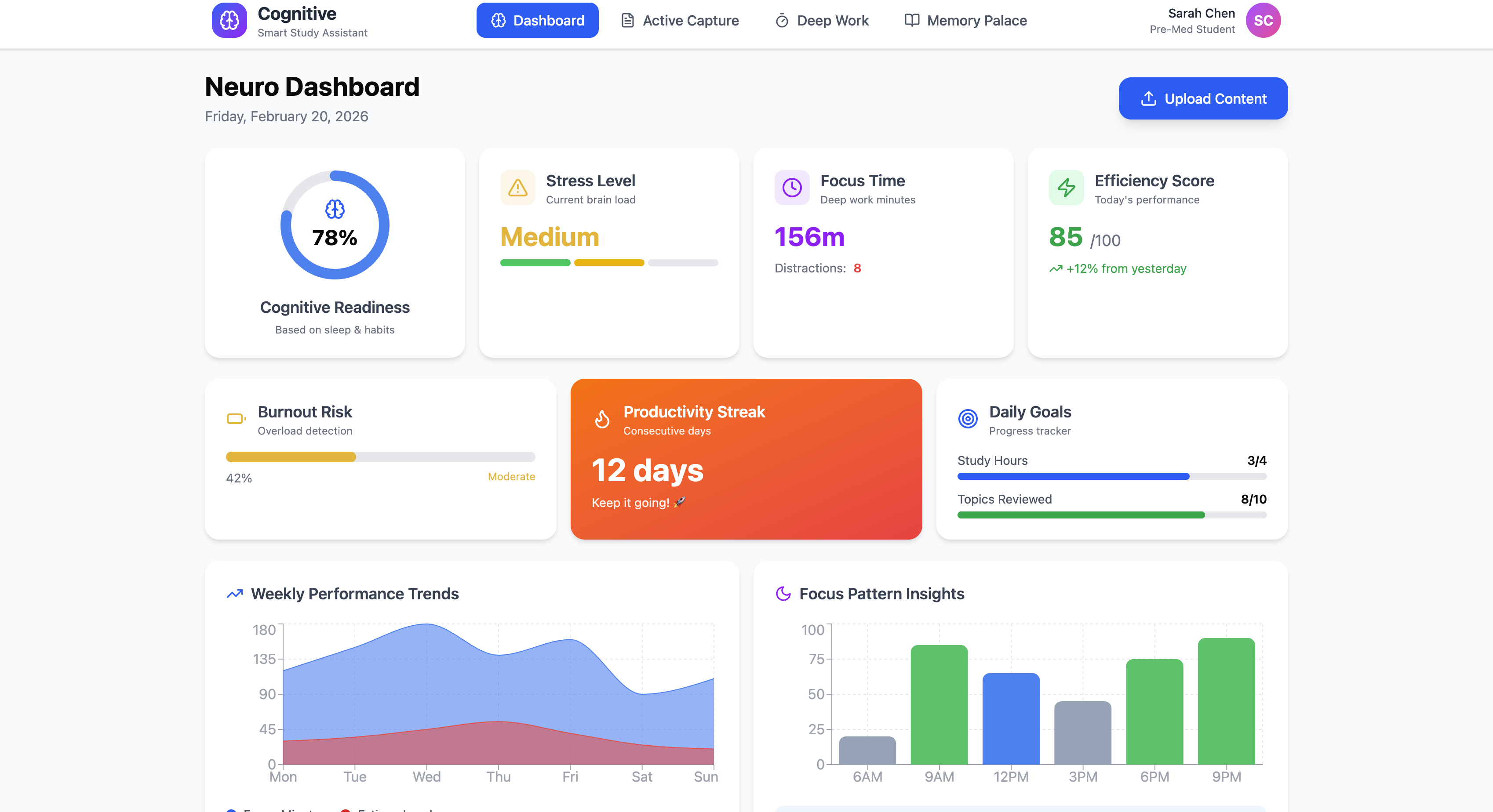
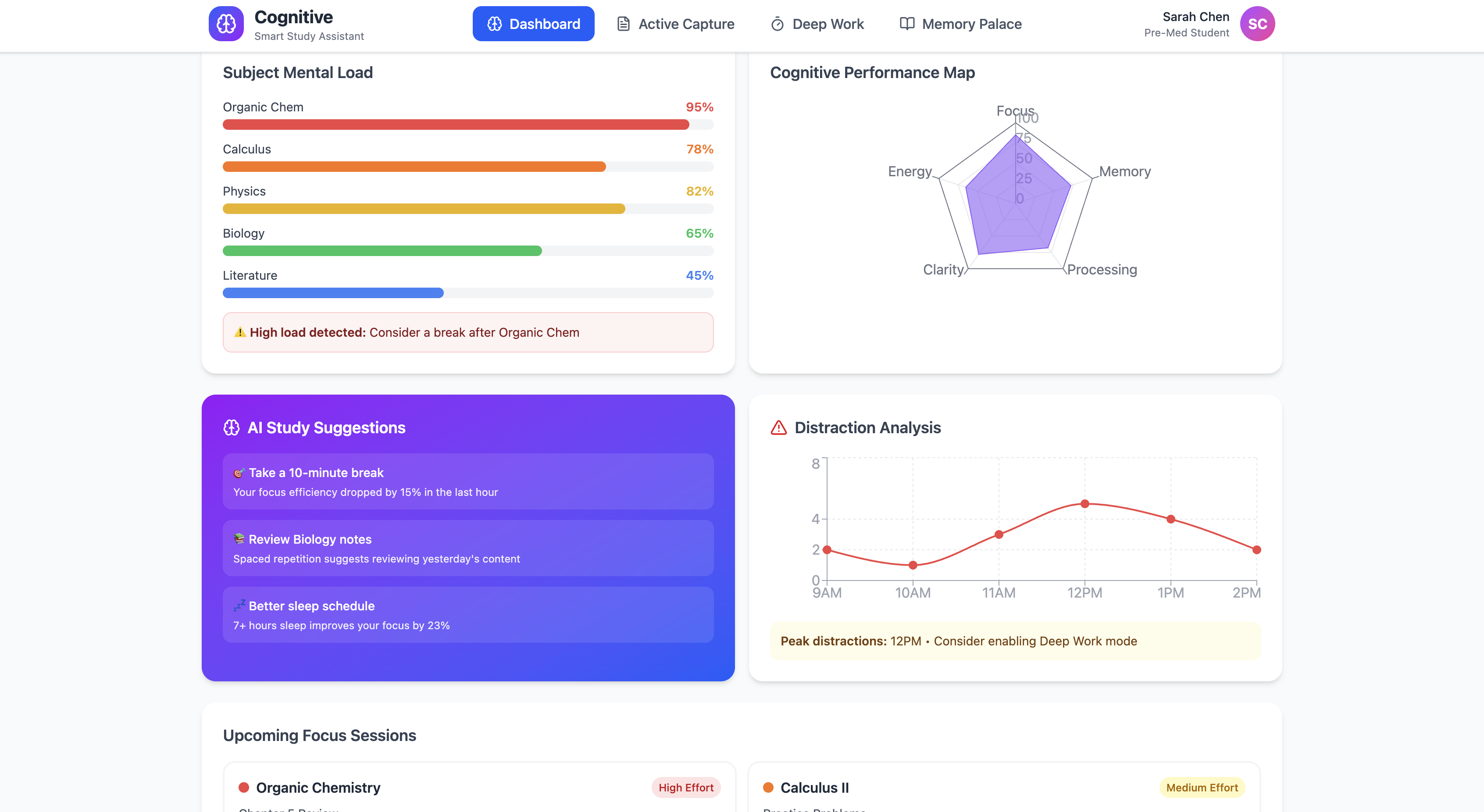
This dashboard gives a real-time view of a student’s cognitive performance and productivity.
-
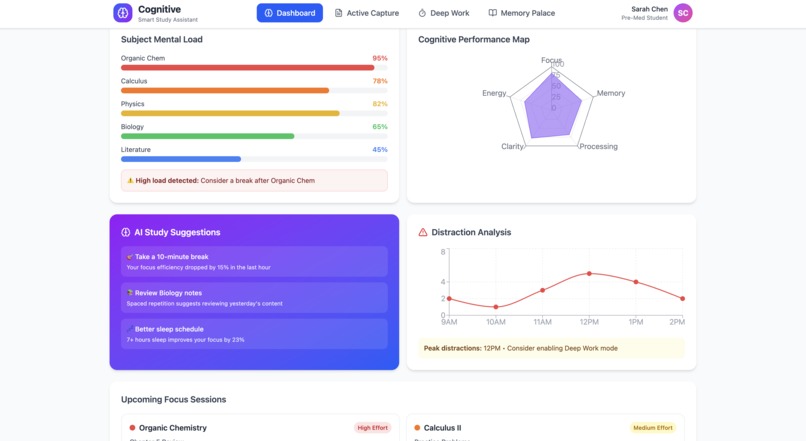
This panel shows cognitive load across subjects, helping students identify overload and mental fatigue.
-
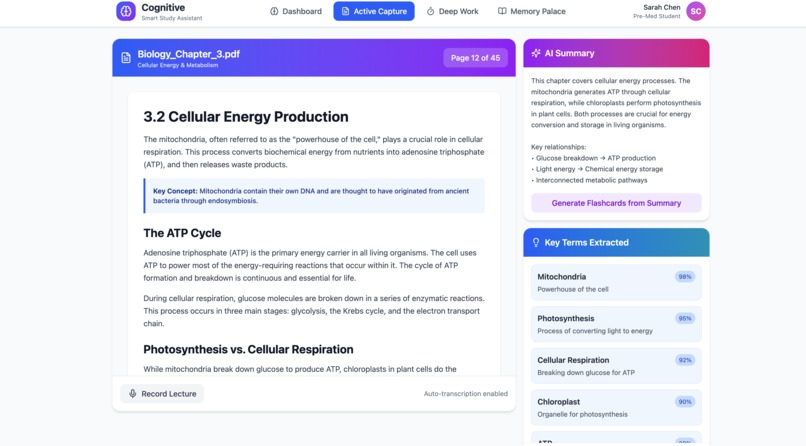
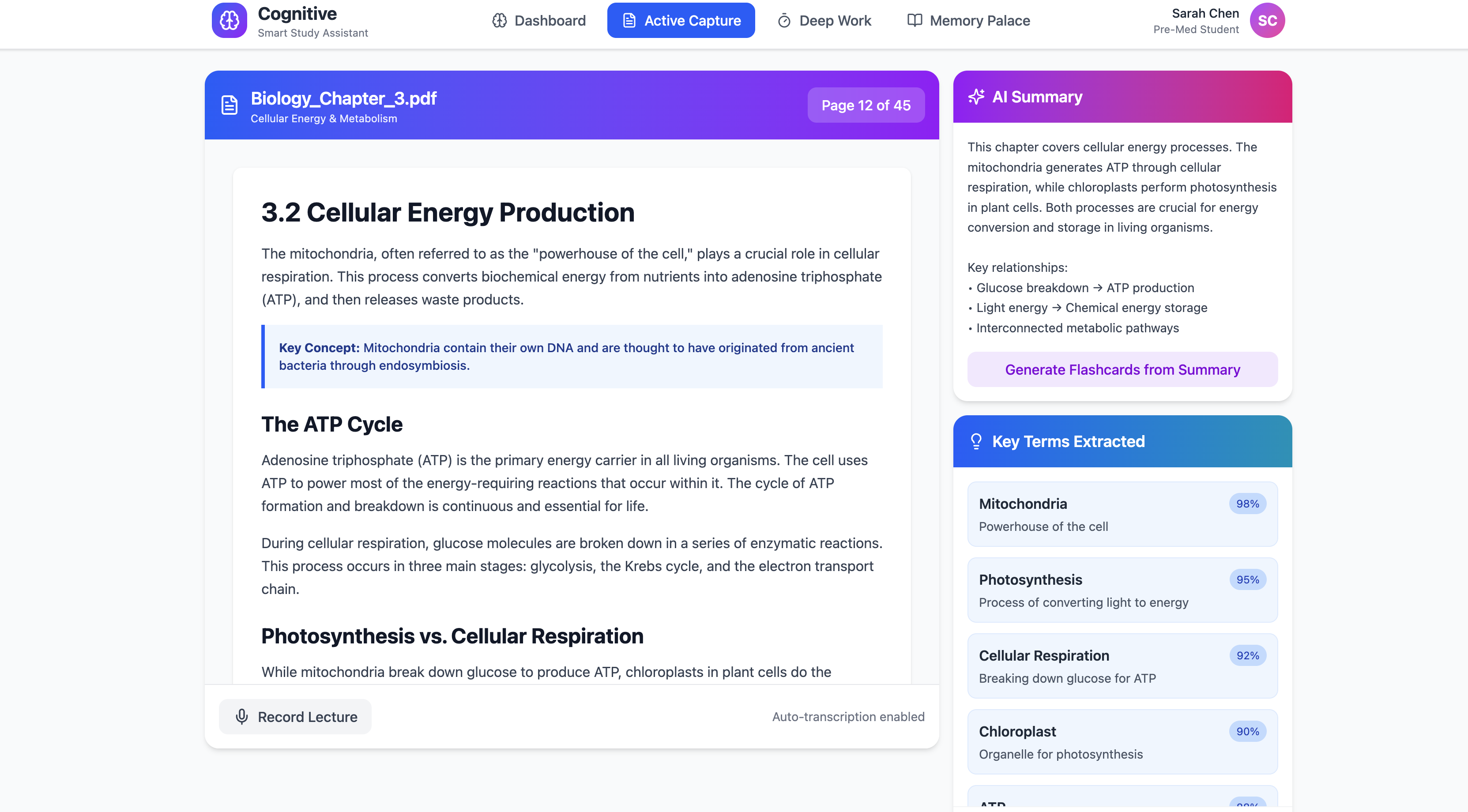
This interface converts complex textbook content into concise summaries and key concepts.
-
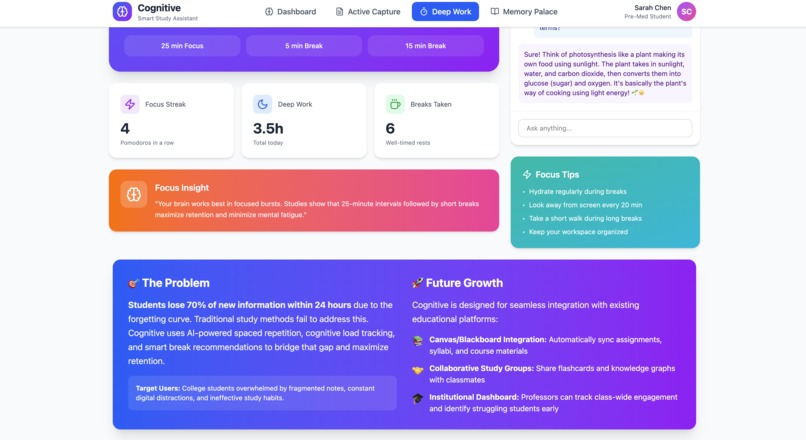
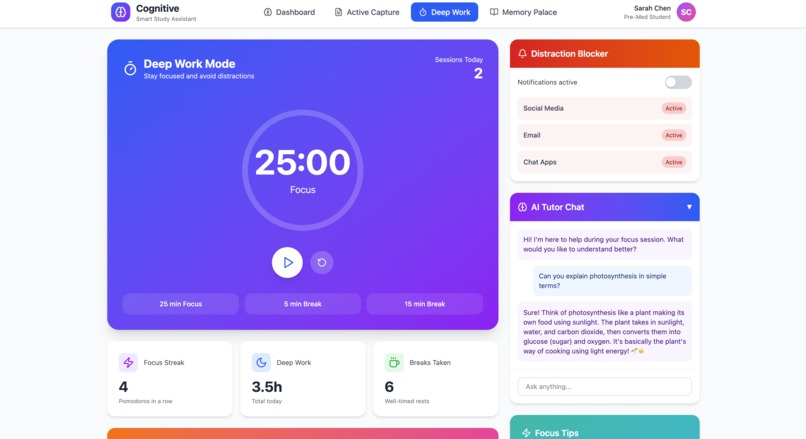
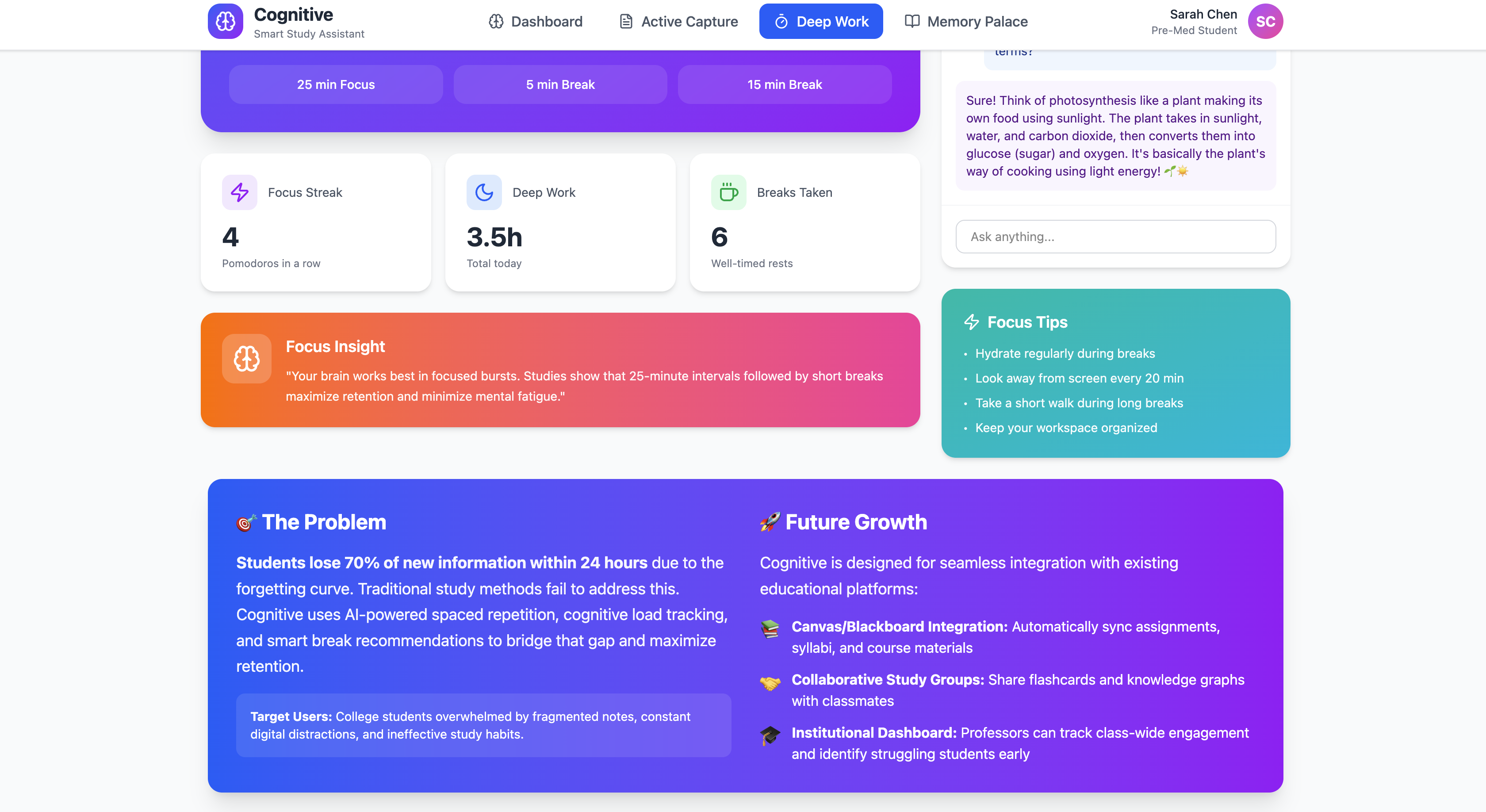
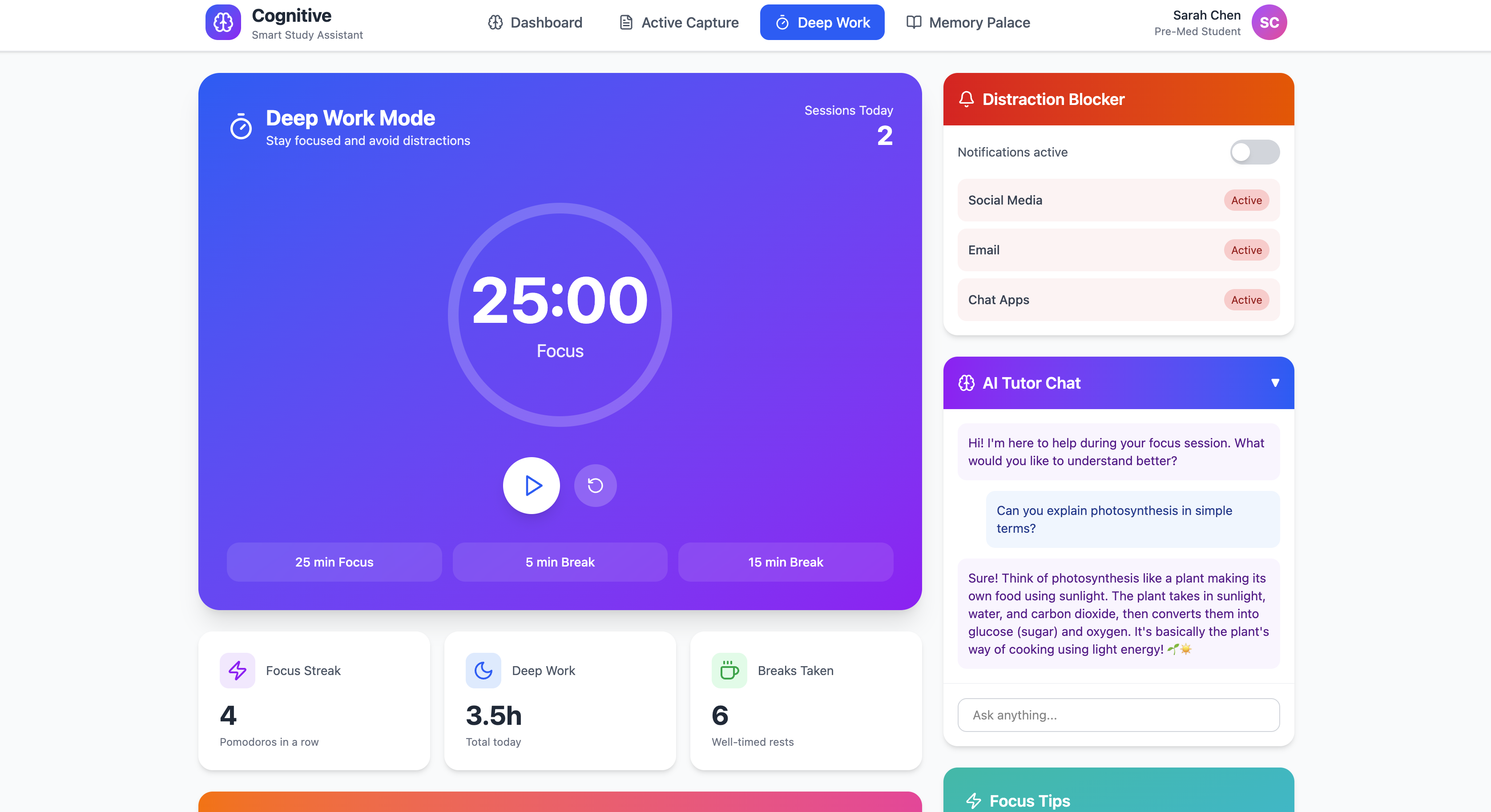
Deep Work Mode creates a distraction-free environment for focused study sessions.
-
This section provides science-backed focus tips and explains effective study strategies.
-
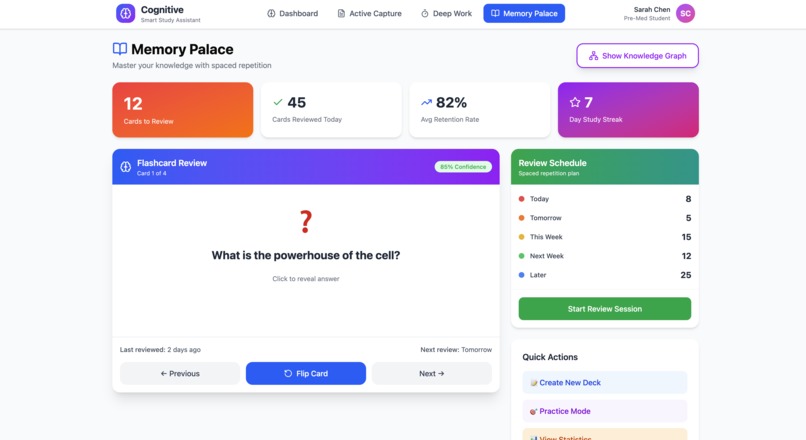
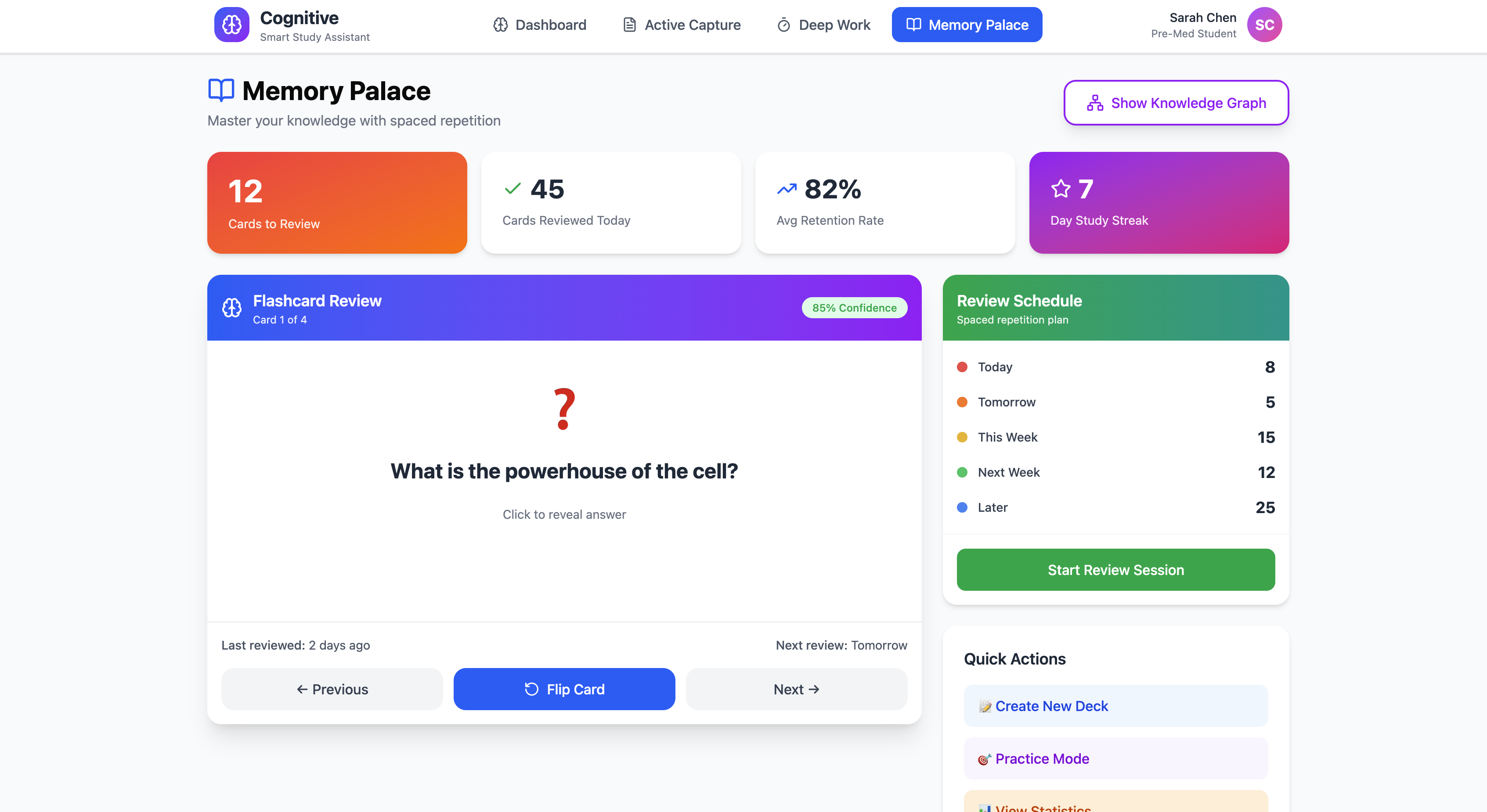
This module strengthens long-term memory using spaced repetition and active recall.
-
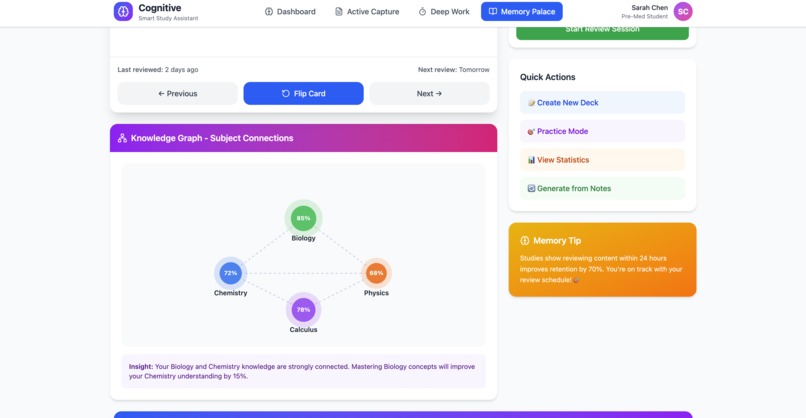
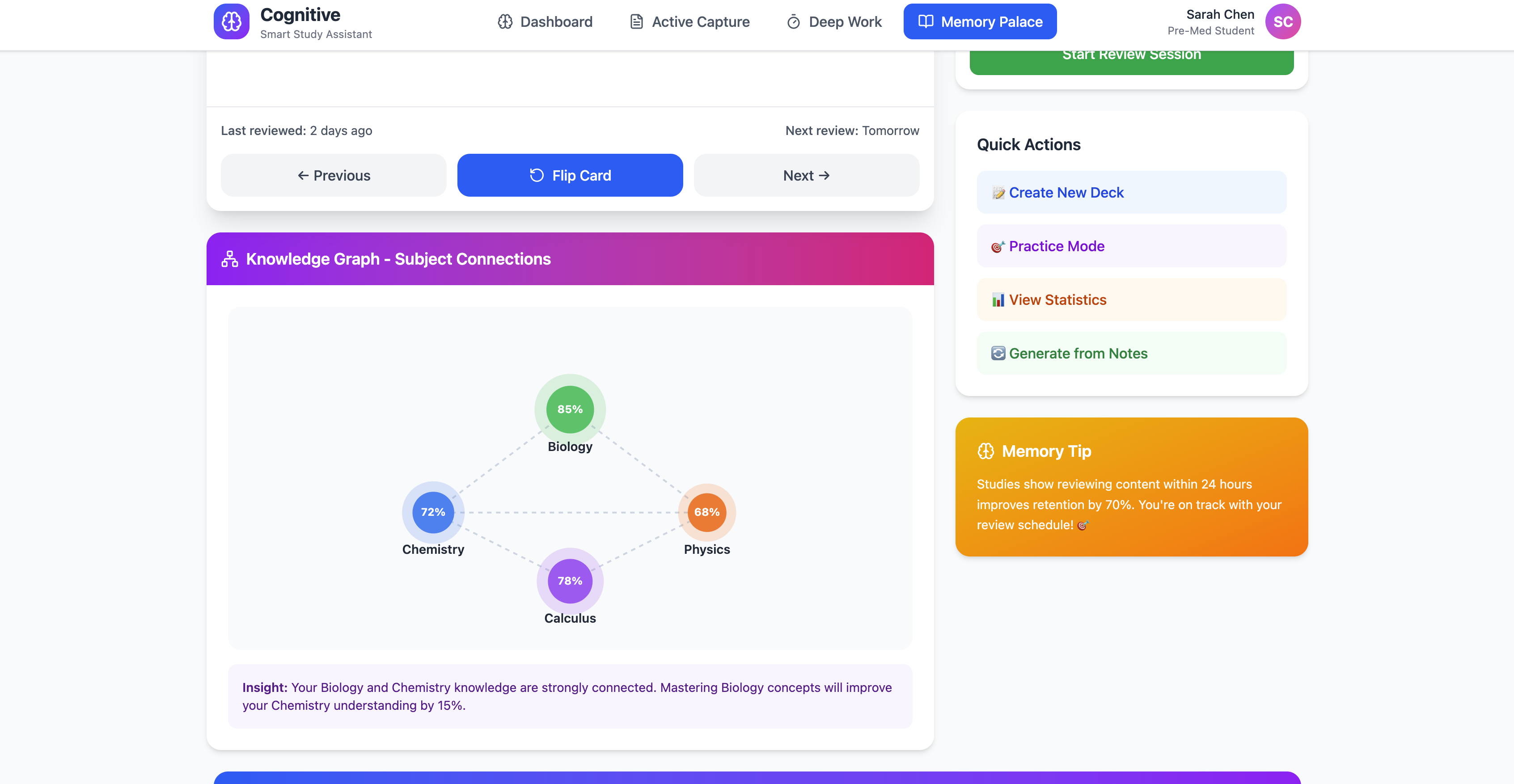
This visualization shows connections between subjects to strengthen conceptual understanding.
Cognitive Load Dashboard for StudentsInspirationStudents process large amounts of information daily while managing deadlines, exams, and digital distractions. This constant demand leads to cognitive overload, reduced learning efficiency, and burnout. Cognitive science research shows that when mental load exceeds working memory capacity, comprehension and retention drop sharply. Despite this, students lack tools to monitor or regulate their mental workload. This project was created to help students understand, manage, and optimize their mental energy rather than simply track study time.What It DoesThe Cognitive Load Dashboard measures, visualizes, and manages a student’s mental workload. Instead of only tracking hours studied, it evaluates: mental strain, attention stability, workload intensity, and recovery effectiveness.Core CapabilitiesCognitive Load Scoring: Calculates workload using task complexity, study duration, multitasking behavior, stress input, and sleep/recovery time.Mental Load Visualization: Displays current load state, overload peaks, and recovery trends.Burnout Risk Prediction: Detects patterns such as prolonged high load, insufficient recovery, and declining focus stability.Adaptive Study Guidance: Provides break timing recommendations, workload redistribution suggestions, and optimal focus session durations.How We Built ItSystem ArchitectureUser Input Layer: Captures stress ratings, task difficulty, and energy levels.Behavior Tracking Layer: Monitors study session duration, break frequency, and screen switching patterns.Processing Engine: Transforms behavioral inputs into a cognitive load index using the following formula:$$Cognitive\ Load\ Index = (Task\ Complexity \times Time\ Spent) + Multitasking\ Penalty + Stress\ Factor - Recovery\ Score$$Insight Engine: Generates recommendations using rule-based logic.Visualization Layer: Displays trends using interactive charts.Why This MattersHuman working memory has limited capacity. When cognitive load exceeds capacity, learning efficiency decreases, mistakes increase, and mental fatigue accelerates. Maintaining an optimal cognitive load improves learning effectiveness and long-term retention.Challenges We Ran IntoMeasuring an invisible problem: Mental fatigue cannot be directly measured, so proxy indicators were developed using behavioral patterns.Avoiding information overload: A dashboard about overload can itself cause overload. The interface was simplified to emphasize actionable insights.Individual variability: Students have different cognitive tolerances. The scoring model was designed to adapt over time.Producing meaningful recommendations: Generic advice has little value. Recommendations were designed to reflect real cognitive patterns.Accomplishments That We're Proud OfBuilt a cognitive workload scoring framework that converts cognitive science principles into a usable tool. We designed a clean and intuitive interface that delivers actionable insights instead of passive data, emphasizing wellness alongside productivity.What We LearnedTime management is not the same as energy management. Overworking reduces retention and performance. Data is valuable only when it drives behavior change. Simplicity improves usability and adoption. Recovery is essential for sustained productivity.Real-World ImpactThis system can help students prevent burnout, improve learning efficiency, and build sustainable study habits. It identifies unhealthy workload patterns and can support academic counselors, schools monitoring student stress, and remote learning environments.What's NextIntelligence and Personalization: Predictive cognitive load modeling and adaptive workload balancing.Platform Expansion: Mobile tracking application and wearable-based stress monitoring.Ecosystem Integration: Assignment synchronization with Google Classroom and collaboration insights via Microsoft Teams.Behavioral Motivation: Recovery habit tracking, focus streak monitoring, and healthy workload scoring.Project VisionThe long-term goal is to shift student productivity from overwork and burnout cycles toward sustainable learning, cognitive balance, and mental resilience.
Built With
- cognitive-load
- data-visualization
- design
- edtech
- figma
- human-centered
- interactive-prototyping
- mental-wellness
- student-productivity
- ui/ux-design

Log in or sign up for Devpost to join the conversation.