-
-
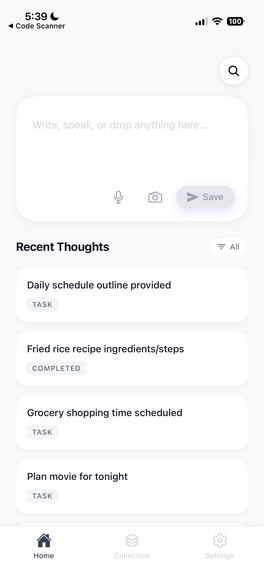
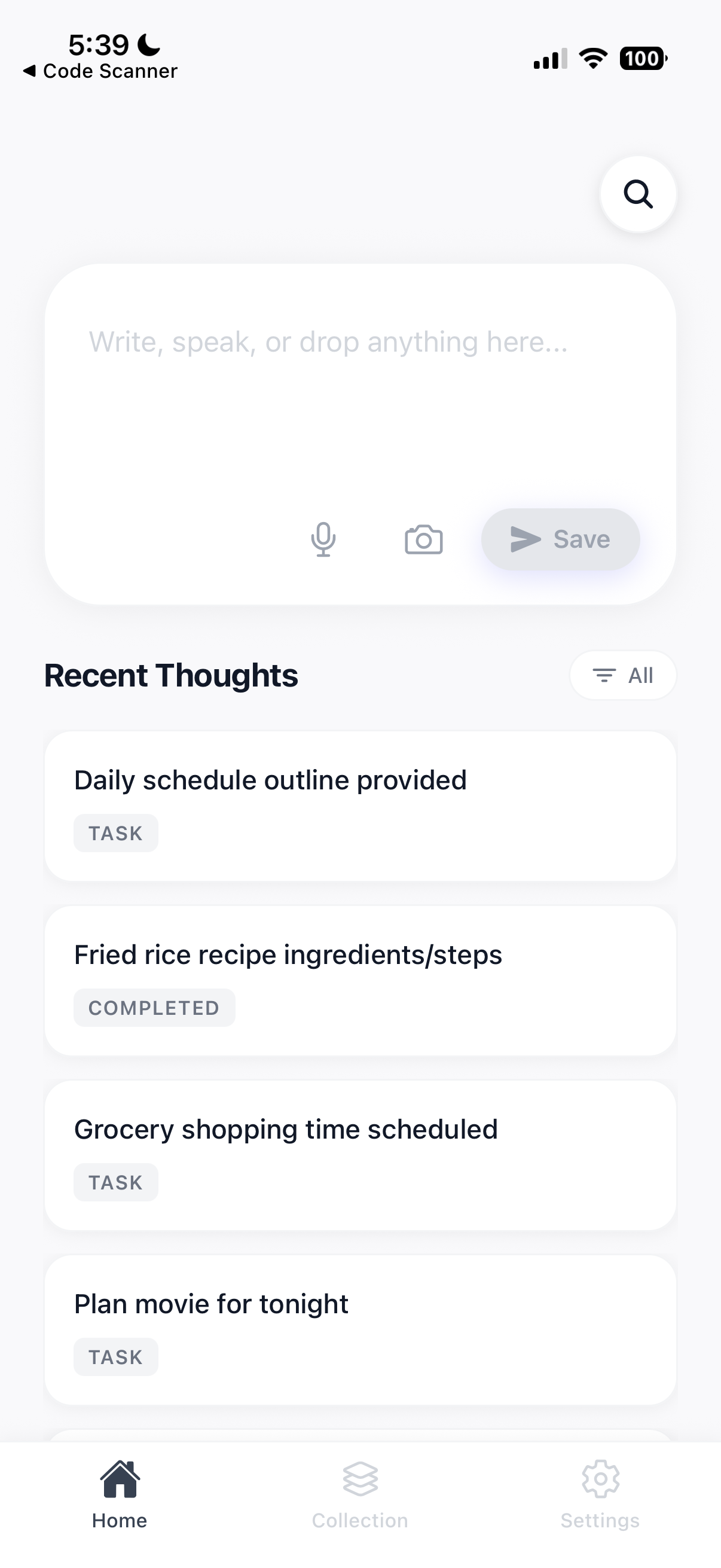
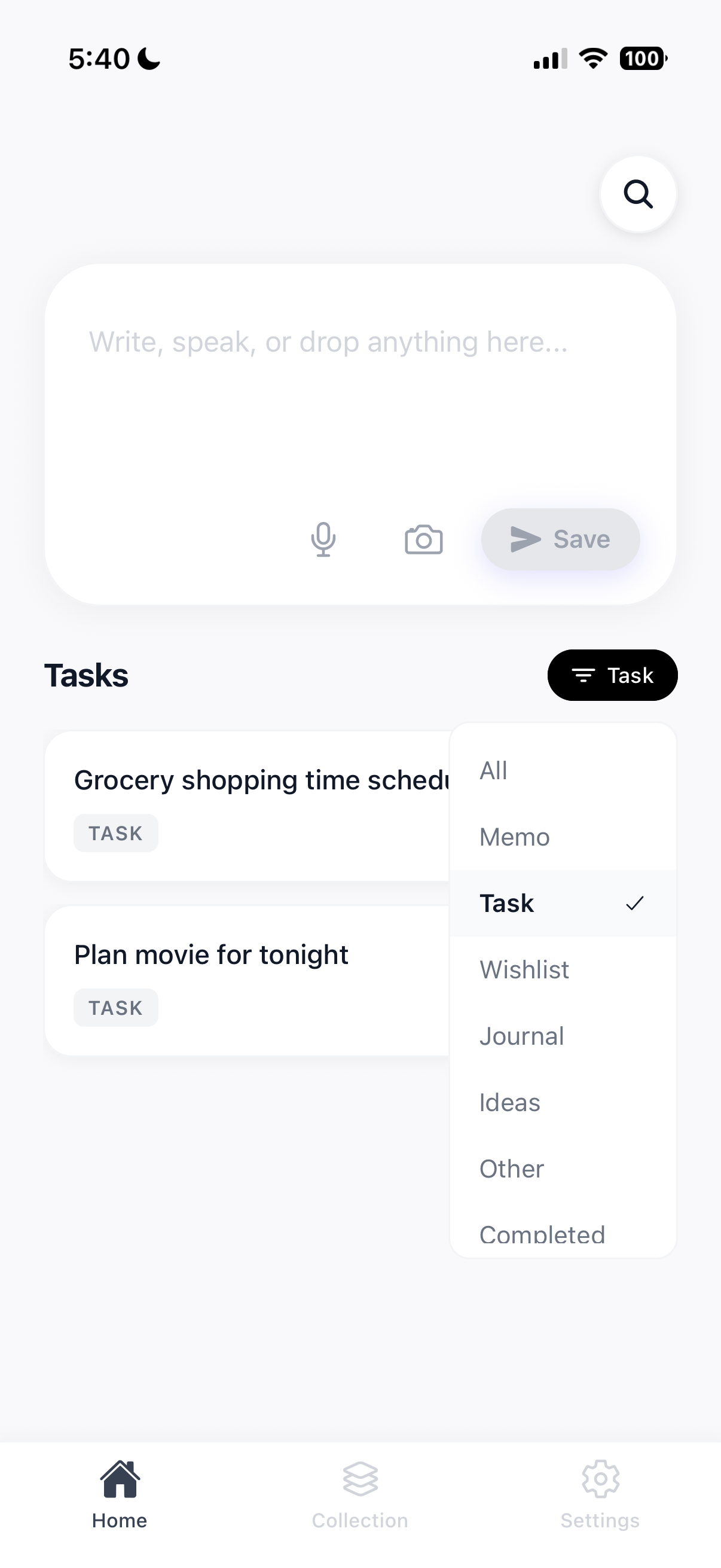
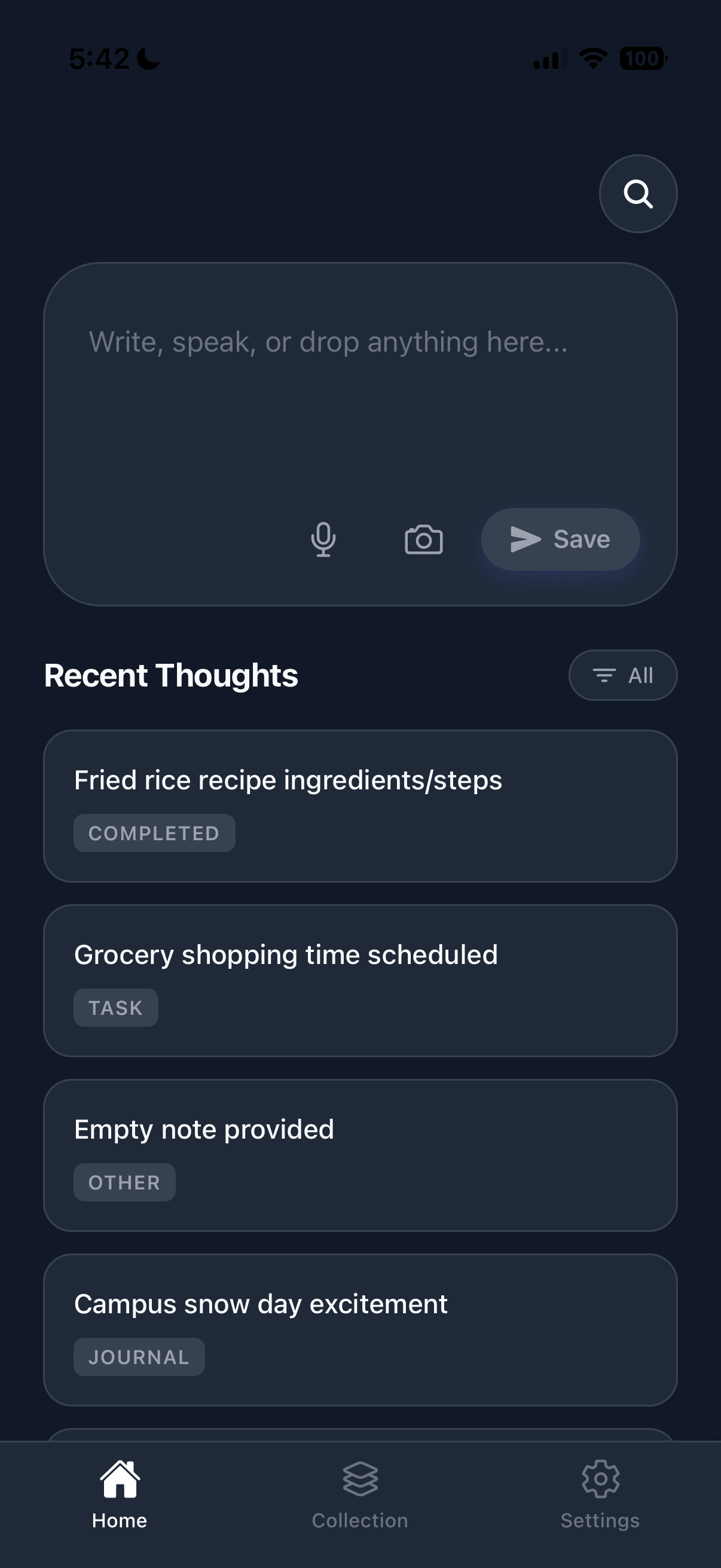
Landing Page
-
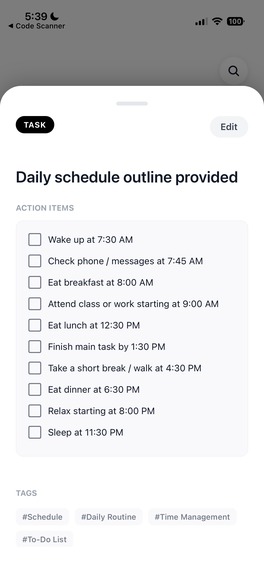
Thoughts captured, summarized and generated by AI
-
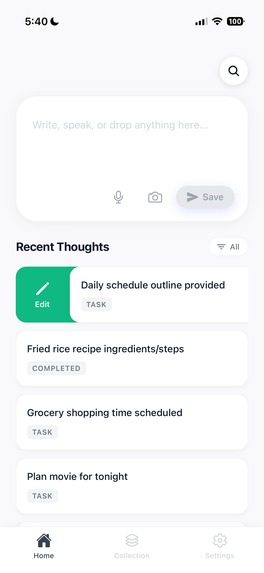
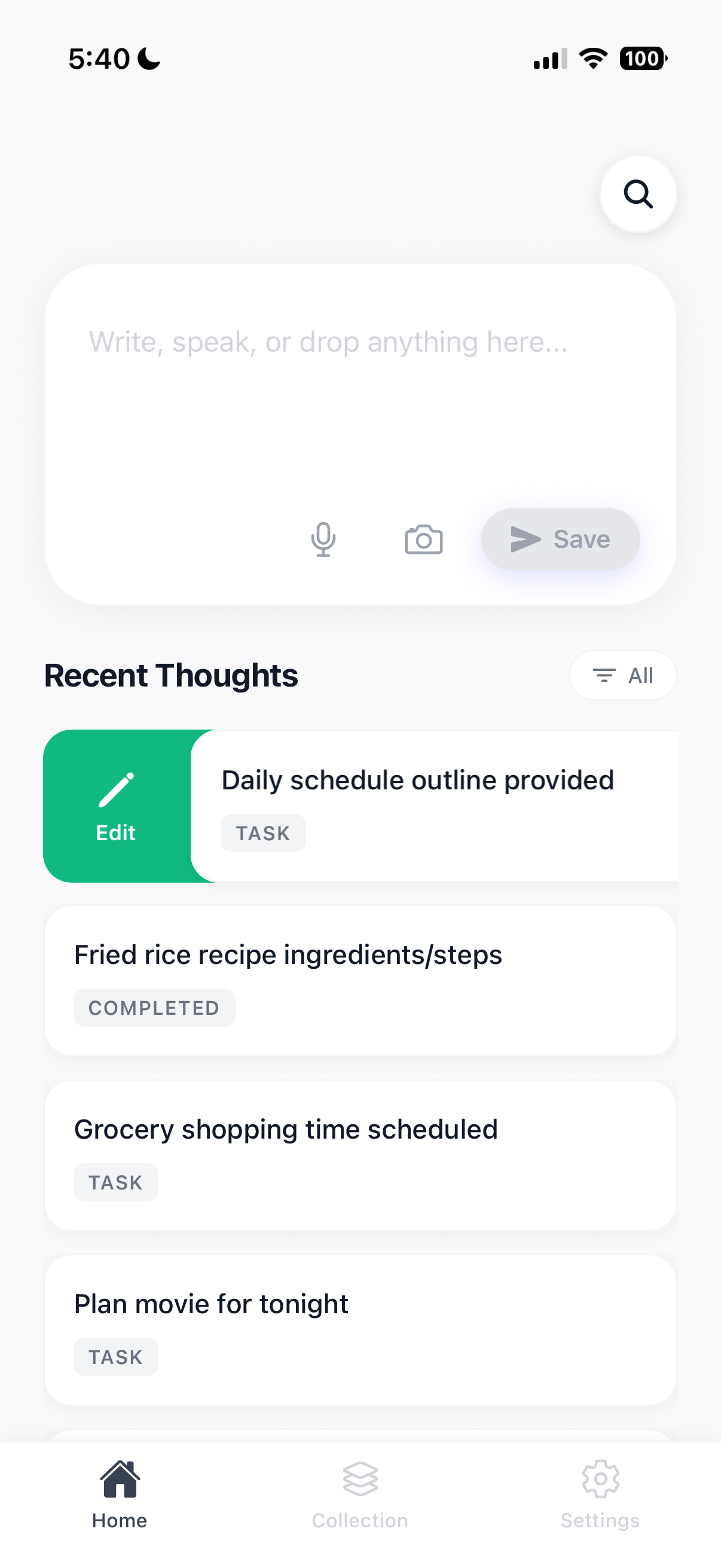
Swipe right to edit note
-
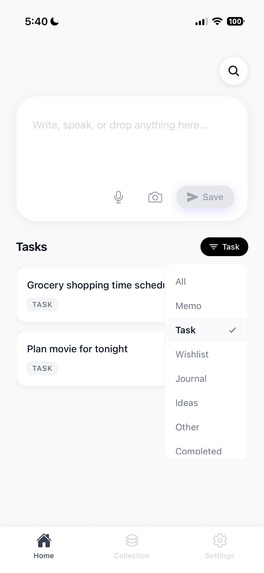
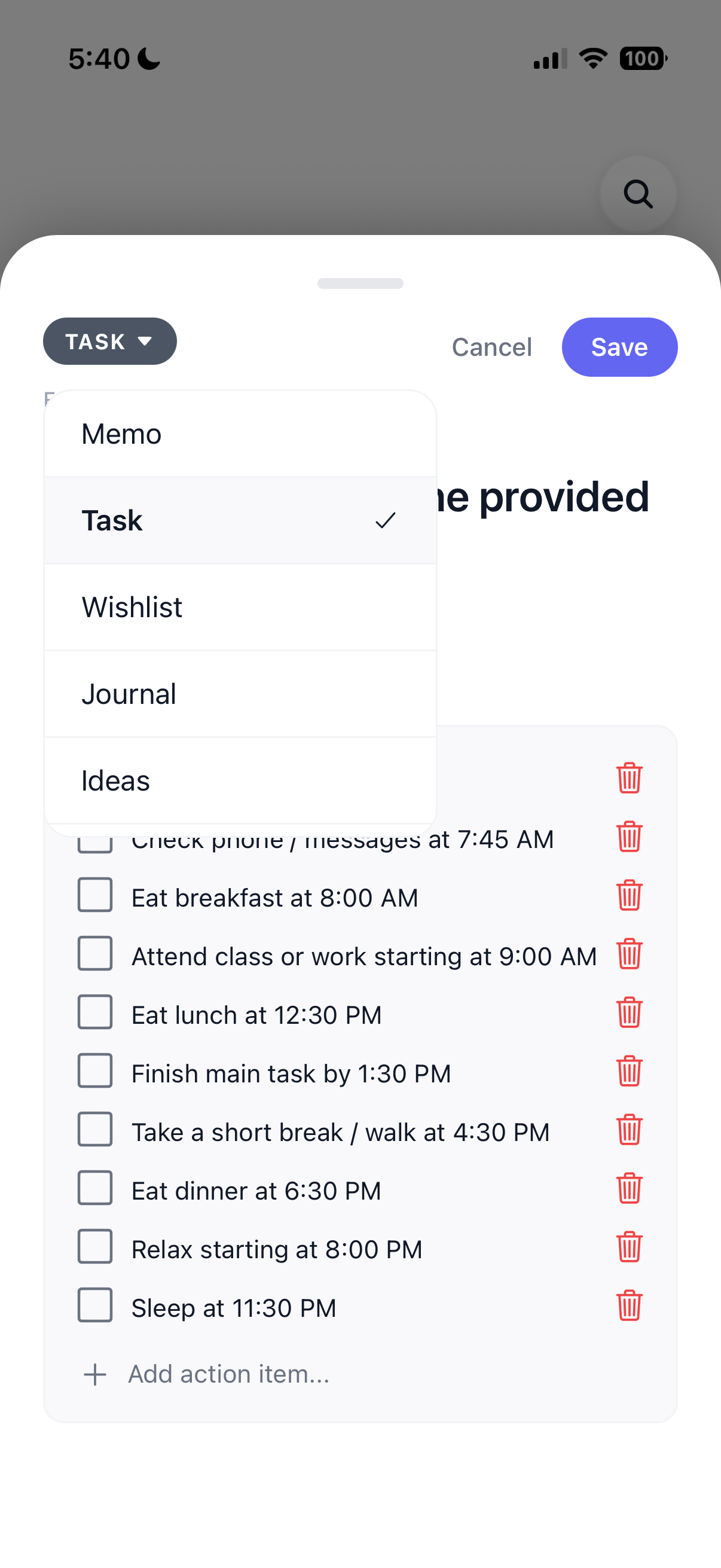
Categories, customizable
-
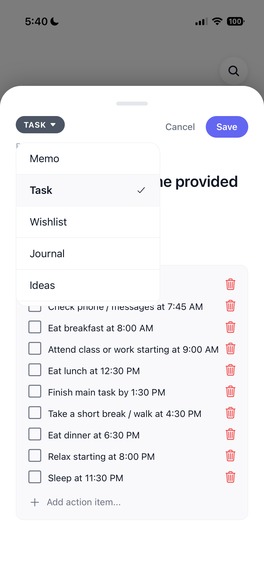
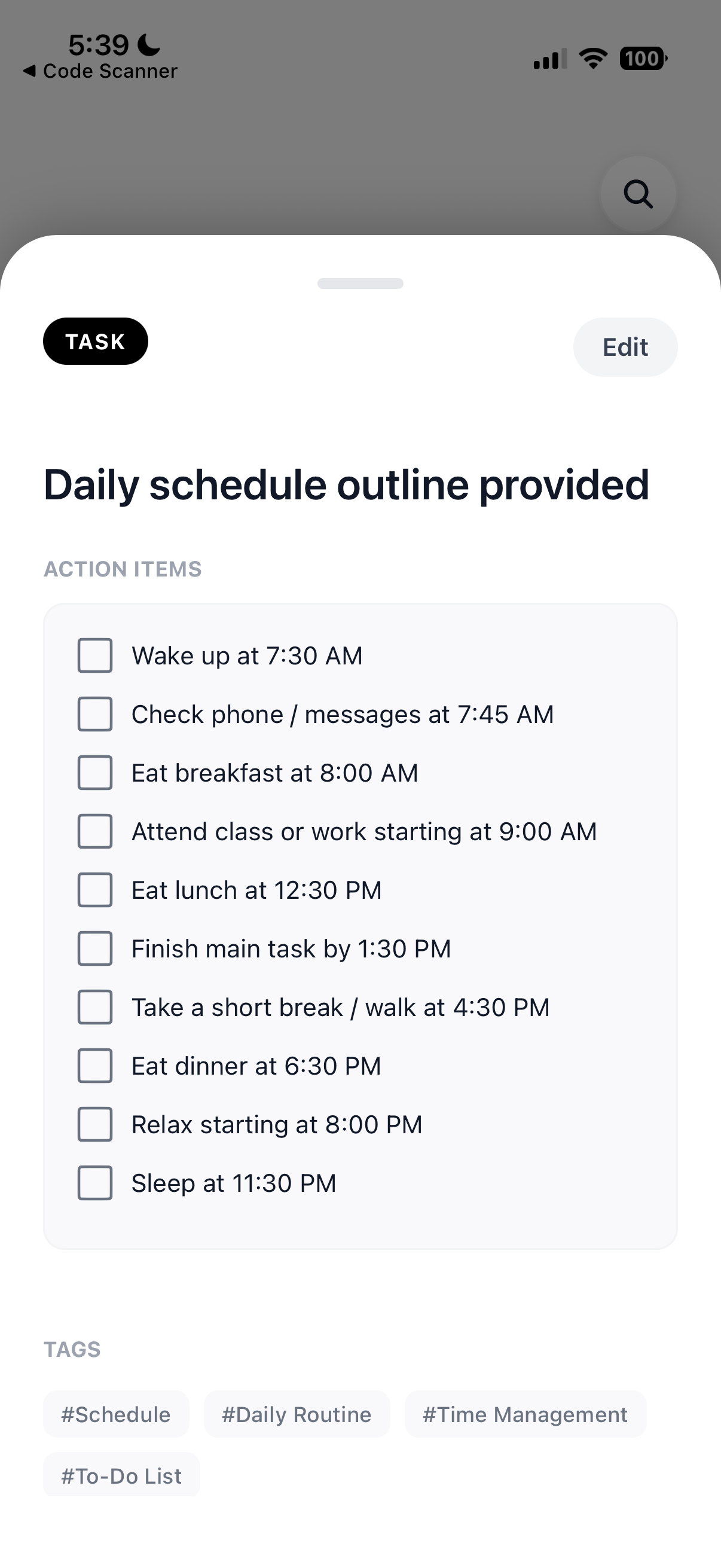
Note edit
-
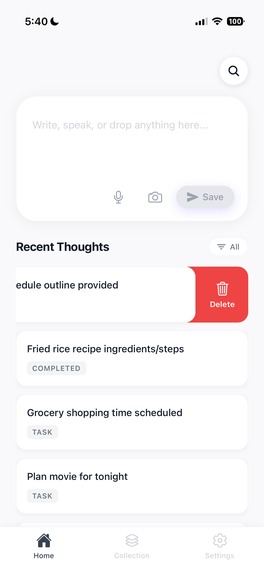
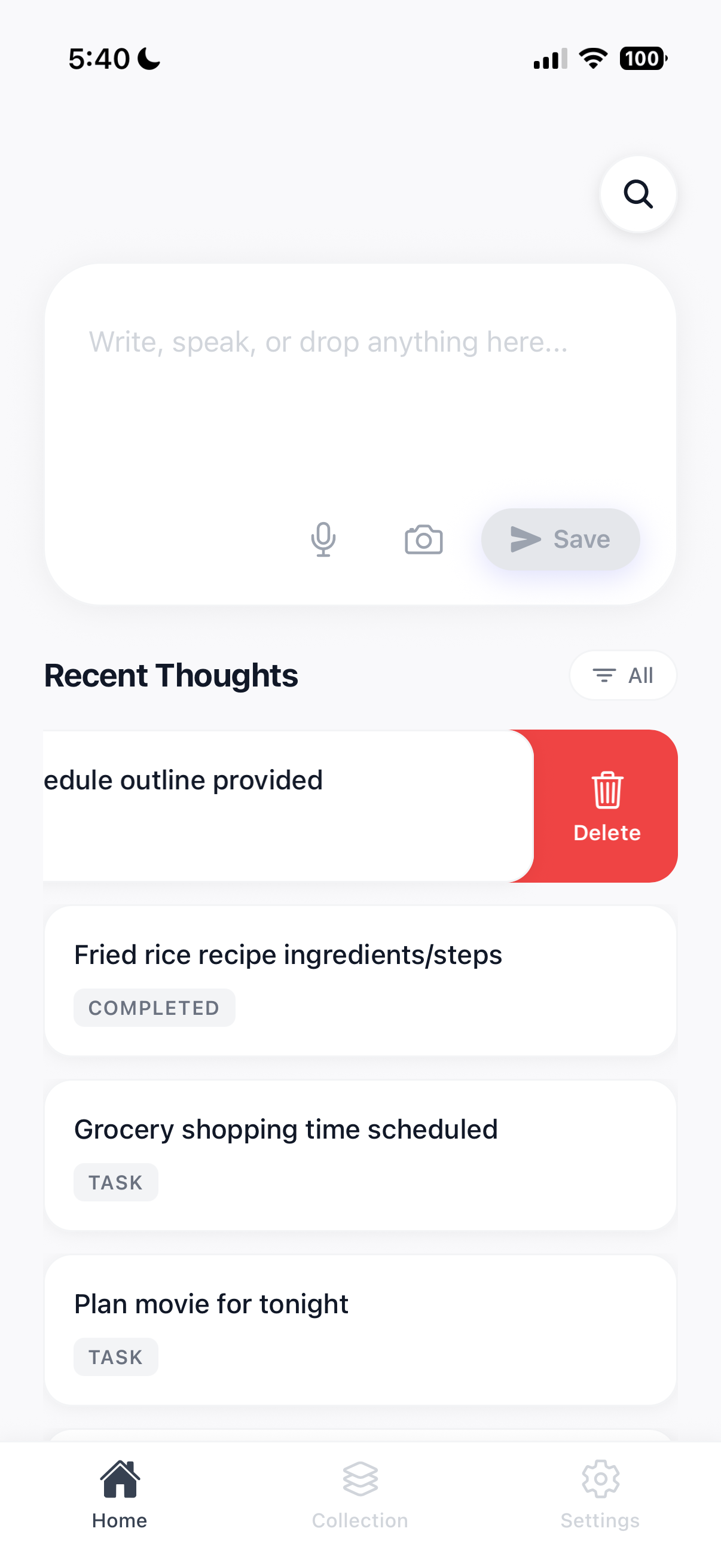
Swipe left to delete note
-
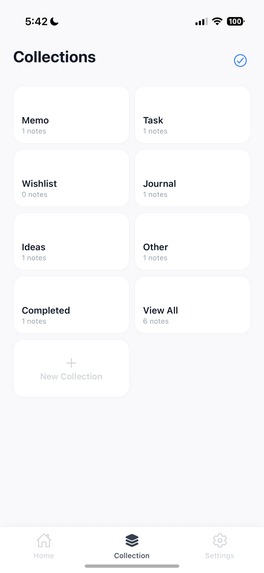
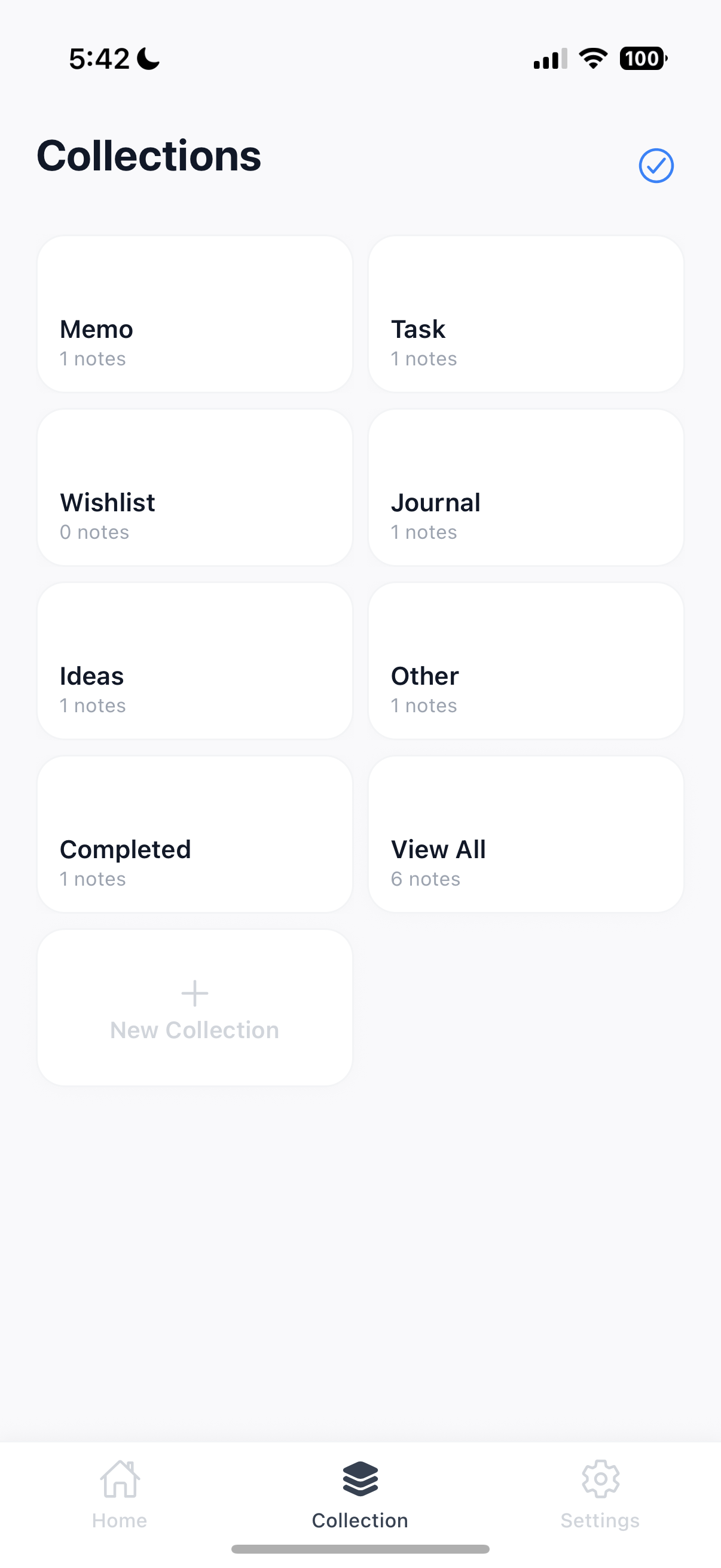
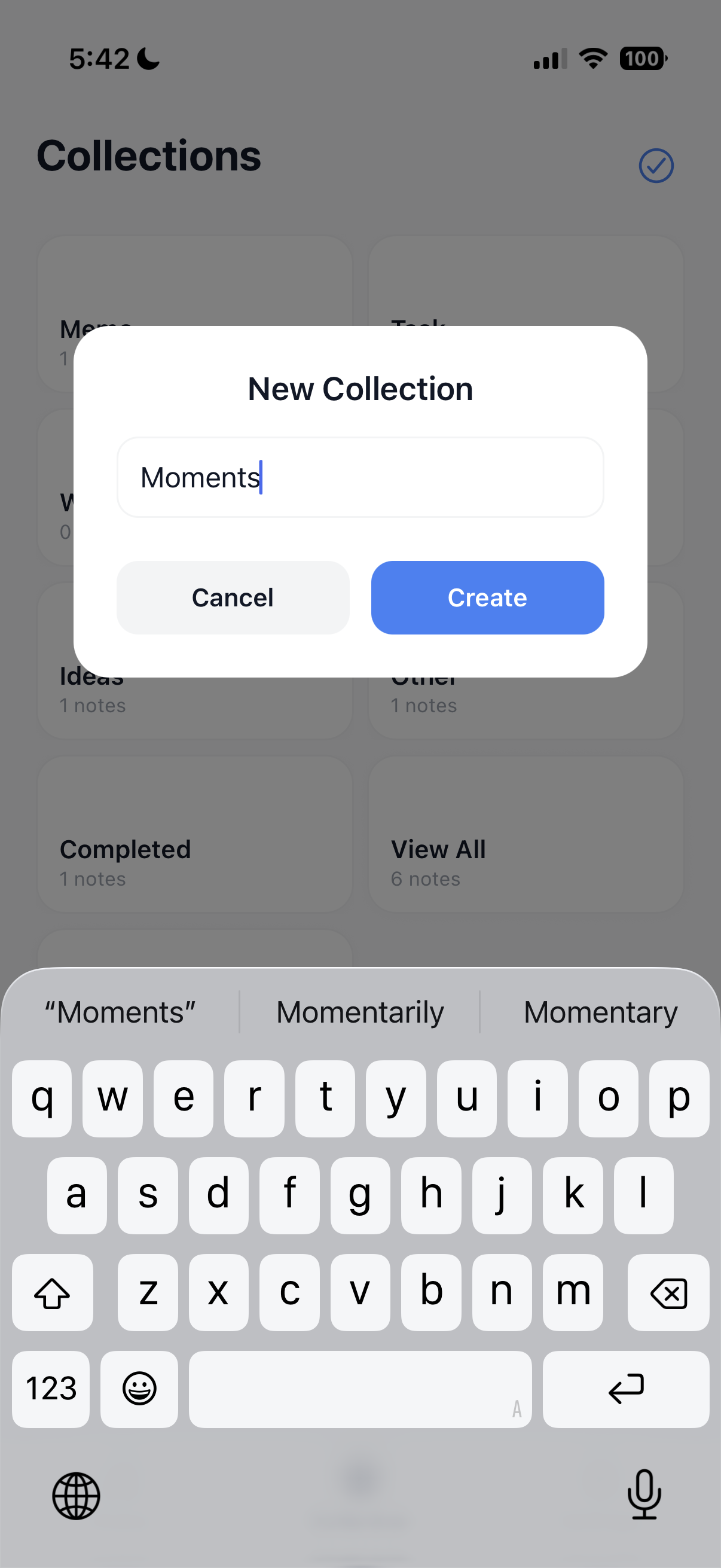
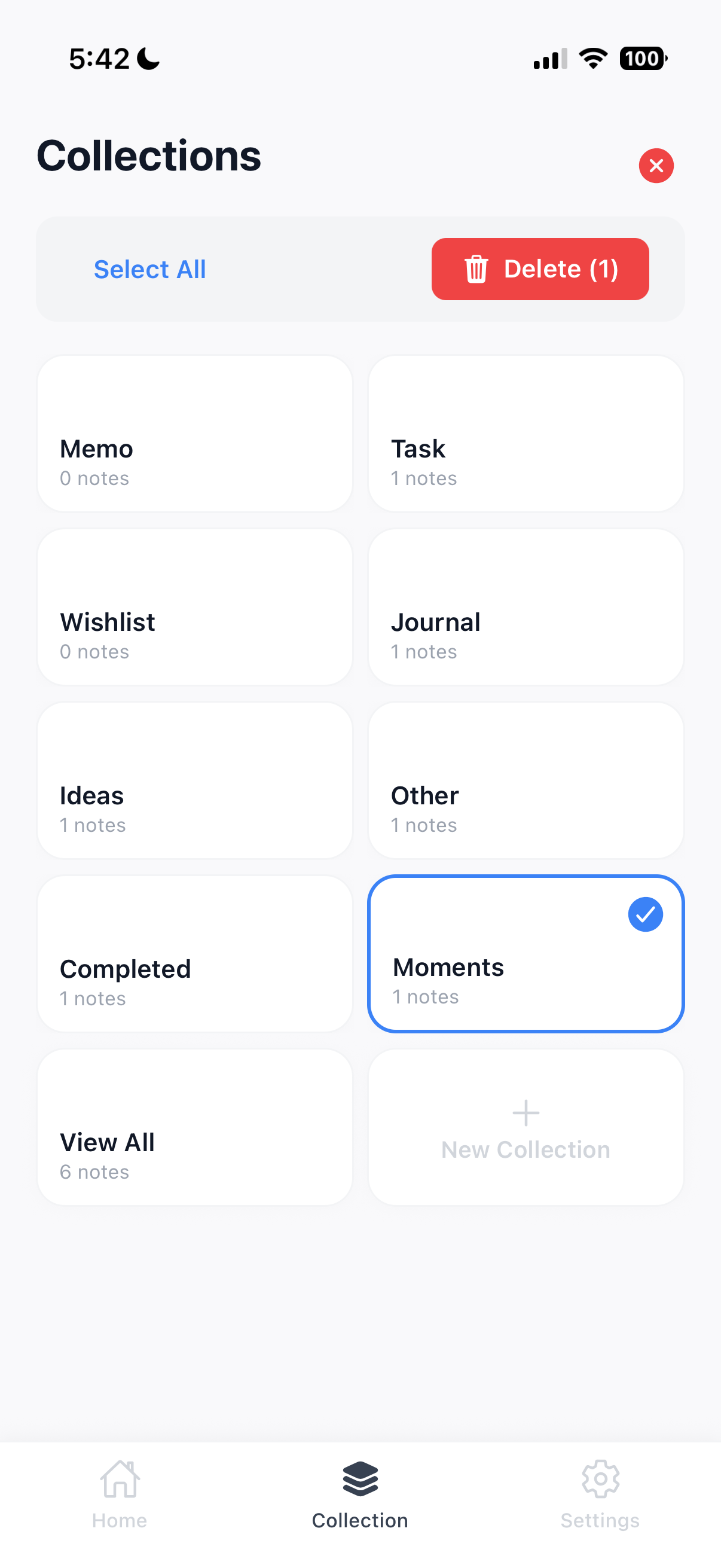
Collection page
-
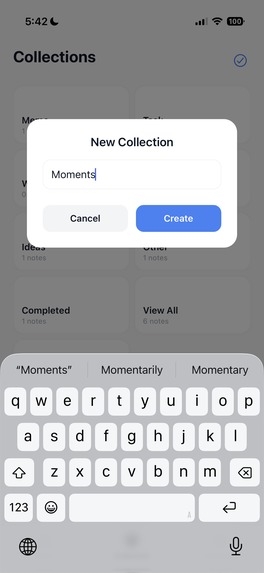
Create custom collection
-
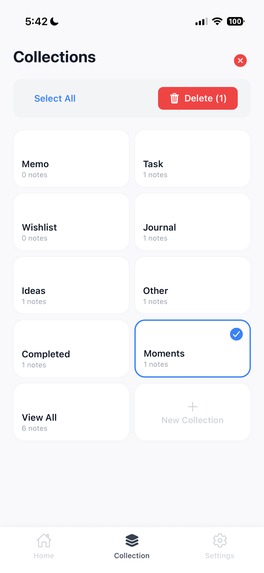
Delete collection (Bulk delete or swipe left)
-

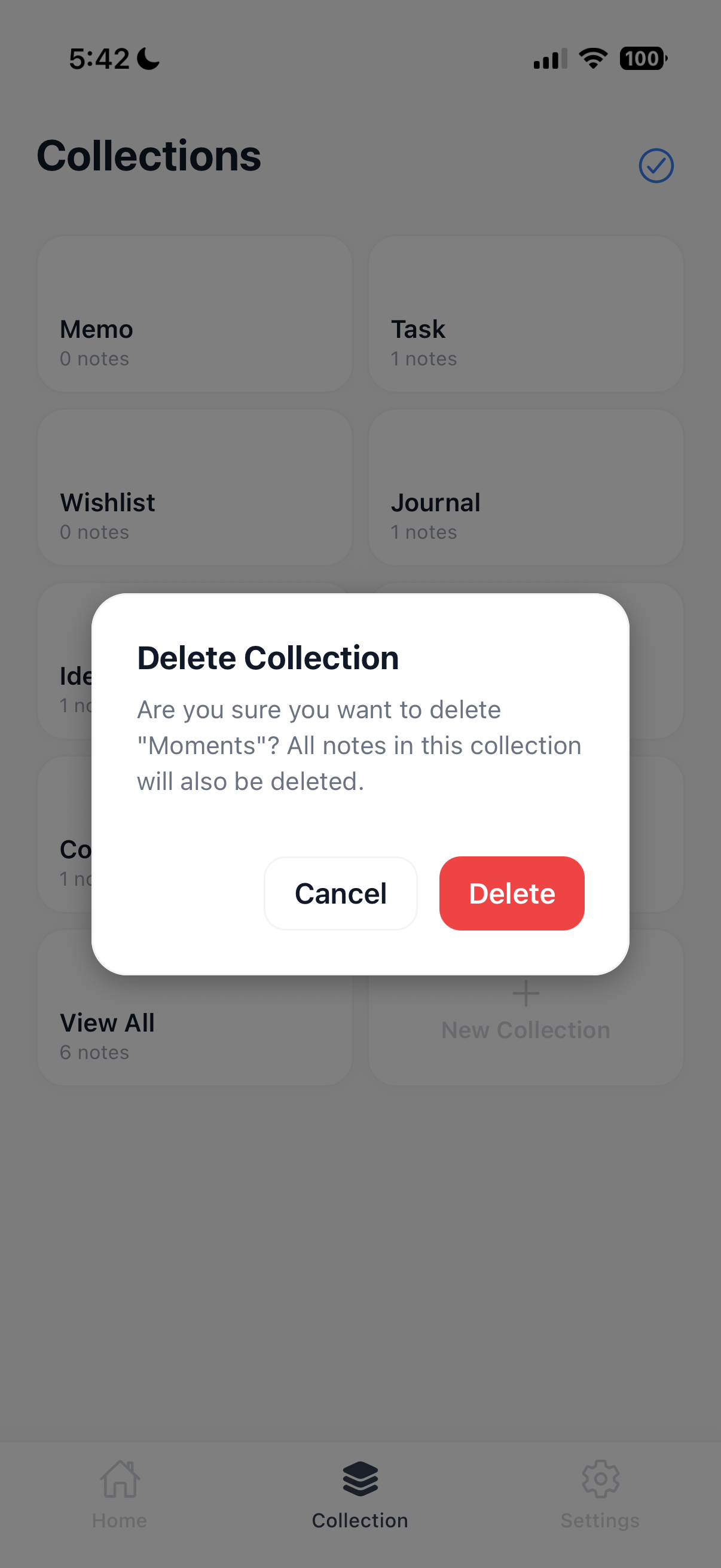
Prompt before deletion
-
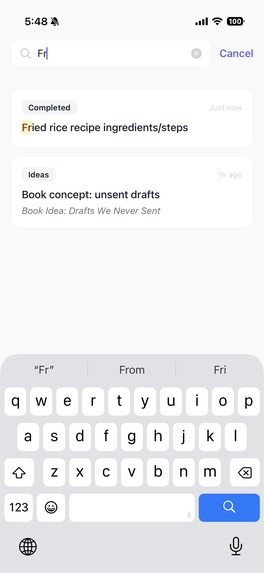
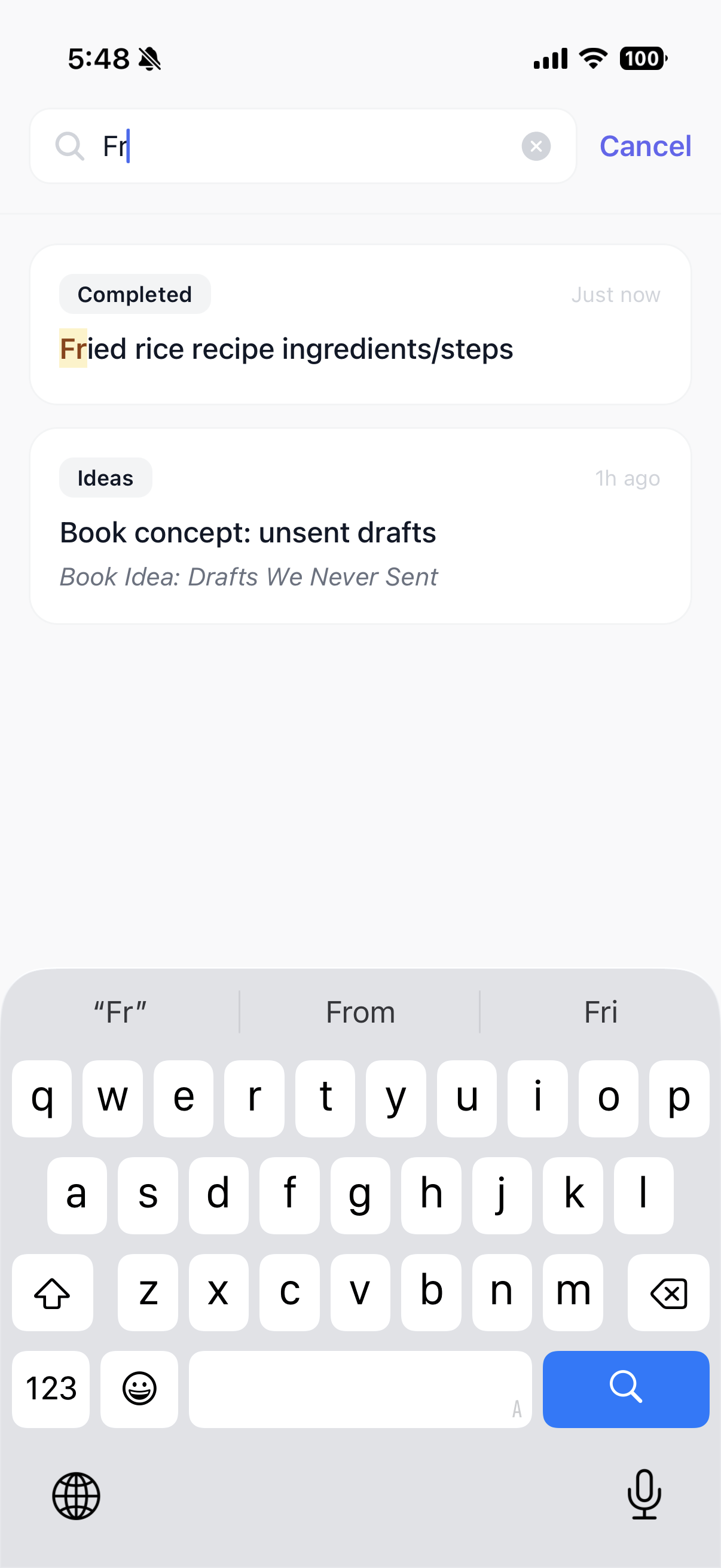
Fuzzy search
-
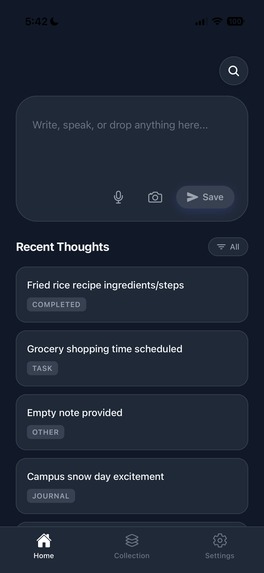
Dark mode
-
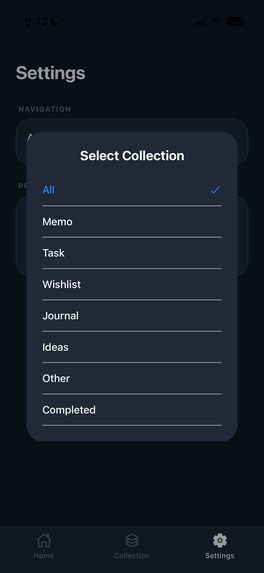
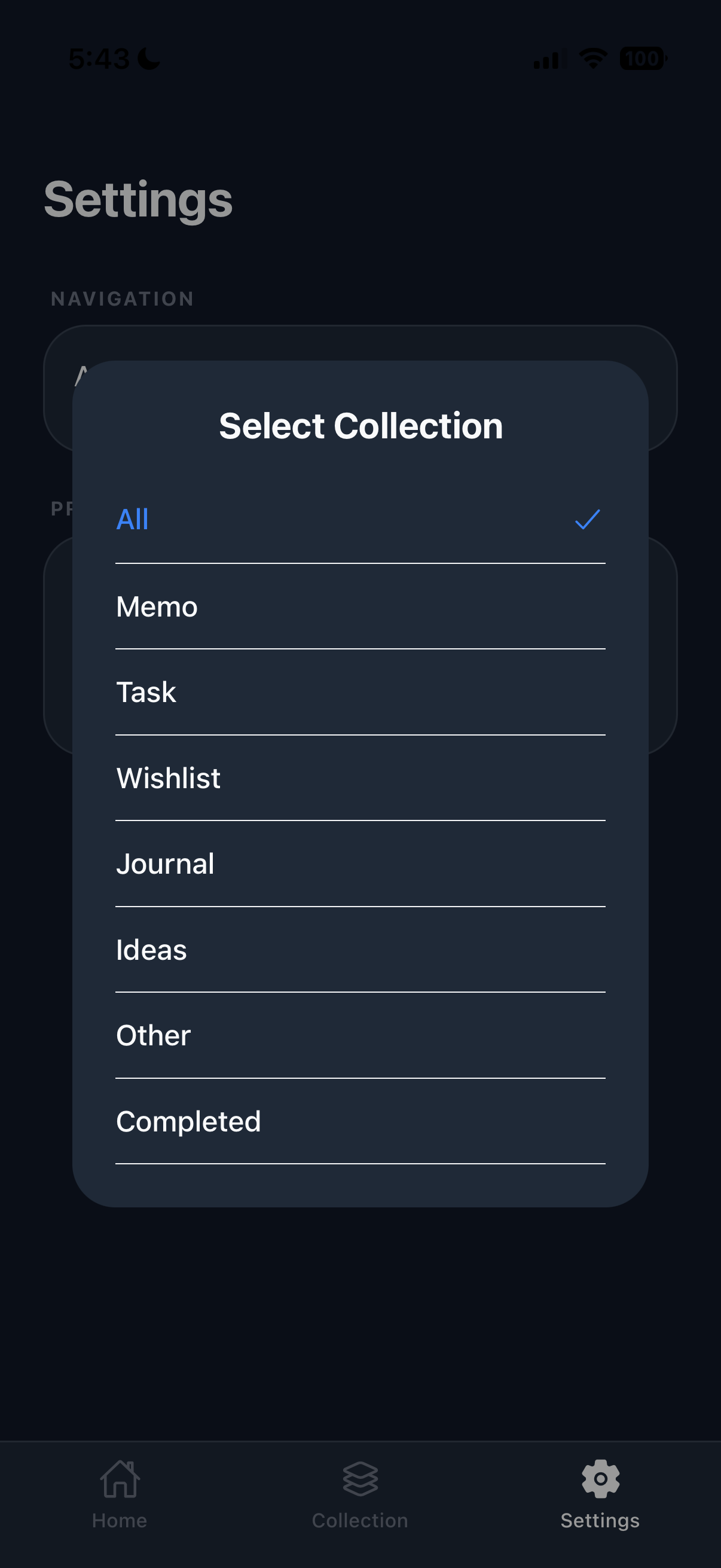
Setting page, choose collection to display
-
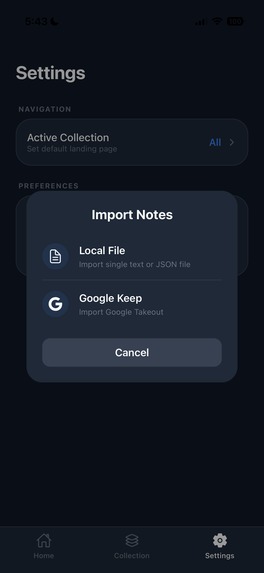
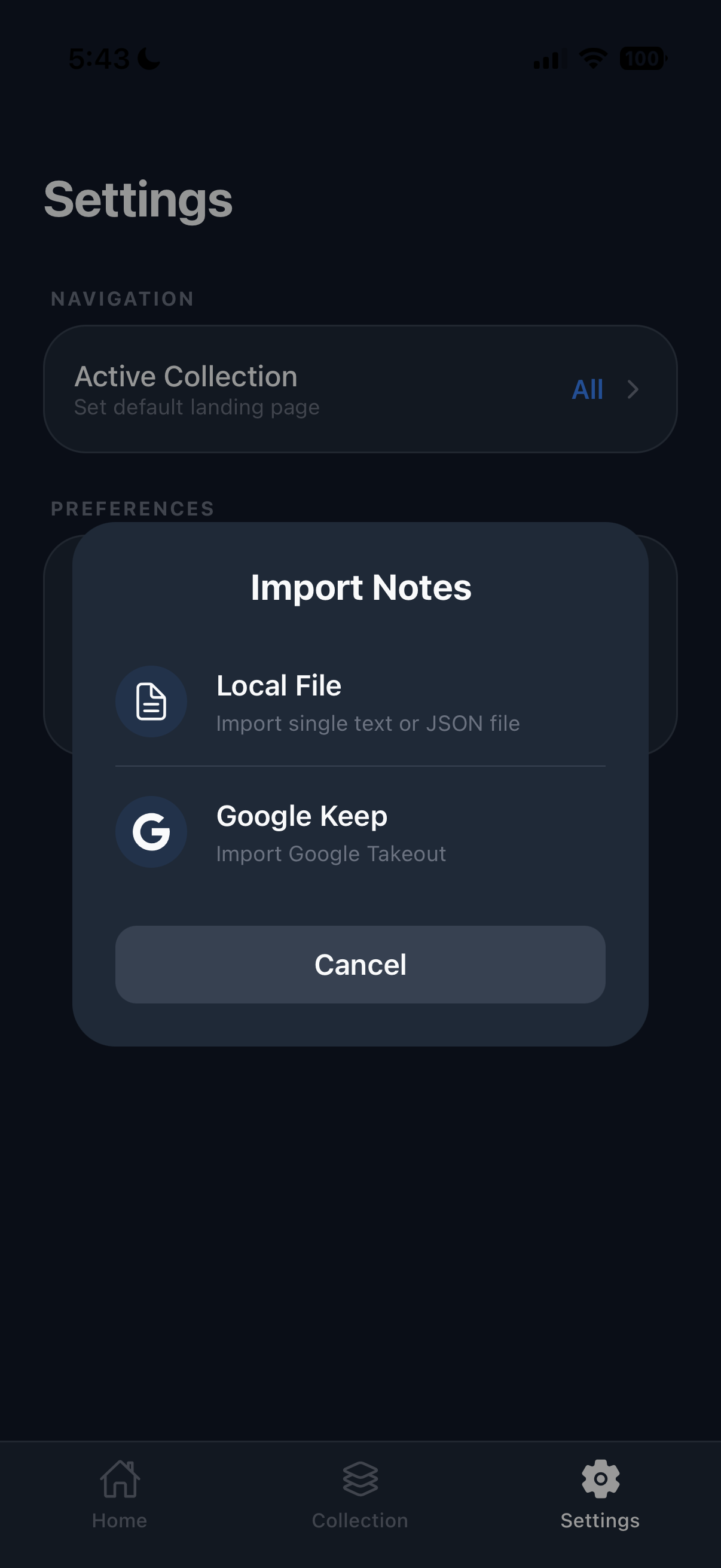
Notes (From Apple Note or Google Keep etc) import
Inspiration
We live with constant mental noise. Ideas, reminders, emotions, inspirations arriving at random moments. Most tools force us to organize before we think. We wanted the opposite.
Cognitive Inbox is inspired by a simple belief: We remember the past and plan the future, so we can stay present.
What it does
Cognitive Inbox is a calm, multimodal personal AI assistant that lets users capture raw thoughts instantly, via text, voice, or images, without categorizing or deciding what to do next.
Behind the scenes, AI gently organizes inputs into meaningful groupings (ideas, tasks, reflections, wishlists), surfaces lightweight summaries, and offers optional assistance only when the user asks.
It’s a thinking space, not a productivity dashboard.
How we built it
We built Cognitive Inbox using Google Gemini’s multimodal and long context capabilities as the core intelligence layer.
Key components:
- Multimodal input: text, voice (speech to text), and images
- Gemini powered processing:
- Transcription for voice
- Image understanding (objects, text, context)
- Intent detection and emotional tone analysis
- Soft, probabilistic multi-label classification
- Two-layer architecture:
- Layer 1: Capture & Organize (always on, low pressure)
- Layer 2: Assist & Execute (explicitly triggered)
- Structured memo objects derived from raw inputs for grouping, summaries, and search
The system prioritizes human-centered interpretation over rigid schemas.
Challenges we ran into
- Avoiding over-structuring
Allowing ambiguity without losing usefulness - Emotional interpretation risk
Ensuring reflections feel safe and non-invasive - Balancing intelligence with calmness
Making the AI helpful without becoming noisy or pushy
Accomplishments that we're proud of
- Thought capture in under 1 second, with zero required fields
- Multimodal understanding using Gemini across text, voice, and images
- Clear separation between memory and action
- Gentle summaries that feel reflective, not judgmental
- A product experience that feels quiet and non-demanding
What we learned
- People don’t want to optimize thinking—they want to feel understood
- The best AI assistants know when not to act
- Soft, probabilistic organization feels more human than rigid rules
- Emotional safety is as important as technical accuracy
What's next for Cognitive inbox
- Long-term pattern detection (themes, cycles, recurring thoughts)
- Memory with emotional context over time
- User adjustable sensitivity for categorization
- Calendar and timeline views
- Cross device sync and deeper personalization
Cognitive Inbox aims to be a quiet companion, holding thoughts gently until users are ready to shape them.
Built With
- ai-agent-design
- browser-media-apis
- fastapi
- google-ai-studio
- google-gemini-3
- javascript
- multimodal-ai
- next.js
- next.js-api-routes
- prompt-engineering
- react-native
- restful
- speech-to-text
- sqlite
- tailwind-css
- typescript
- uvicorn
- vercel


Log in or sign up for Devpost to join the conversation.