Inspiration
What it does
How we built it
Challenges we ran into
Accomplishments that we're proud of
What we learned
What's next for Untitled
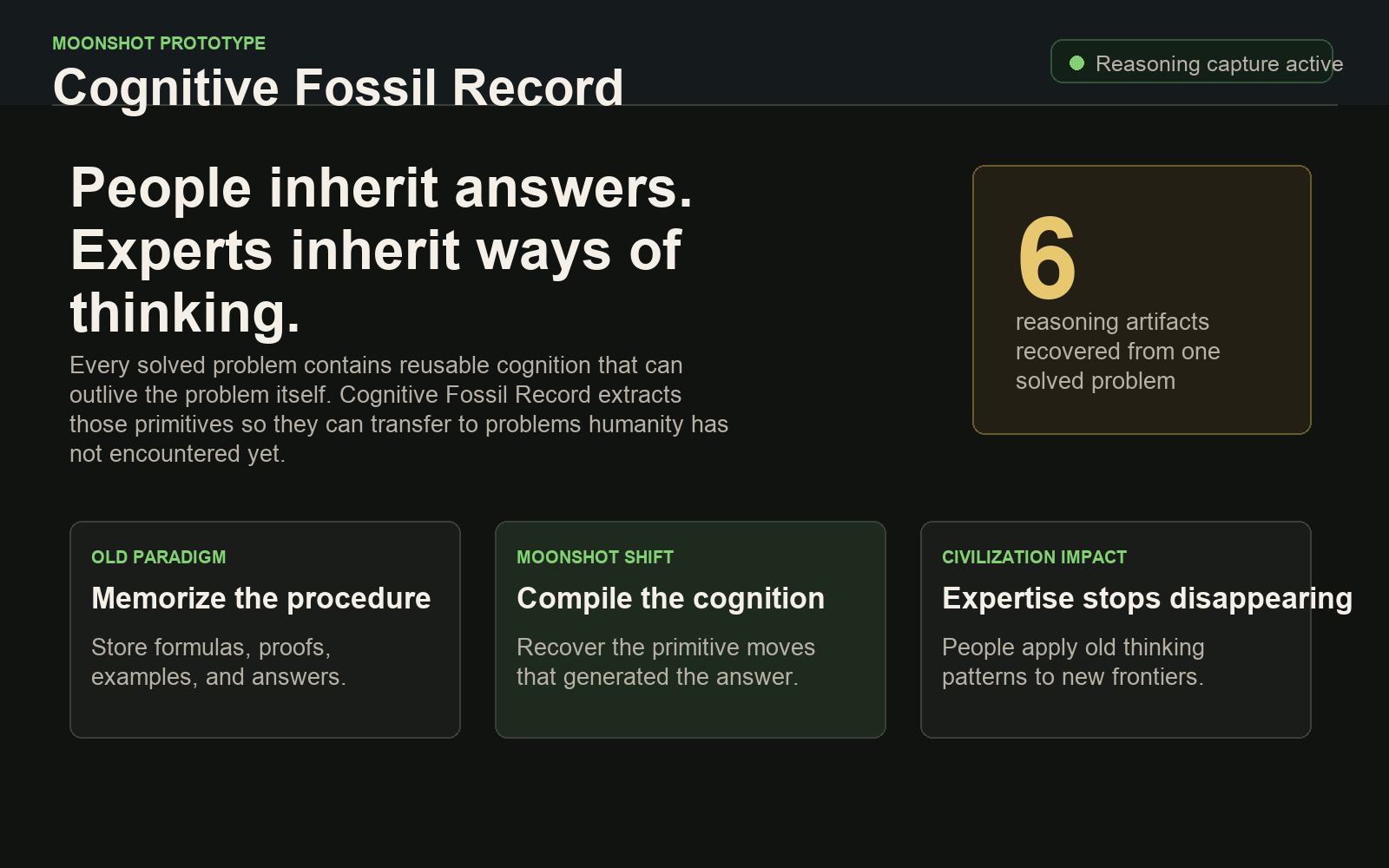
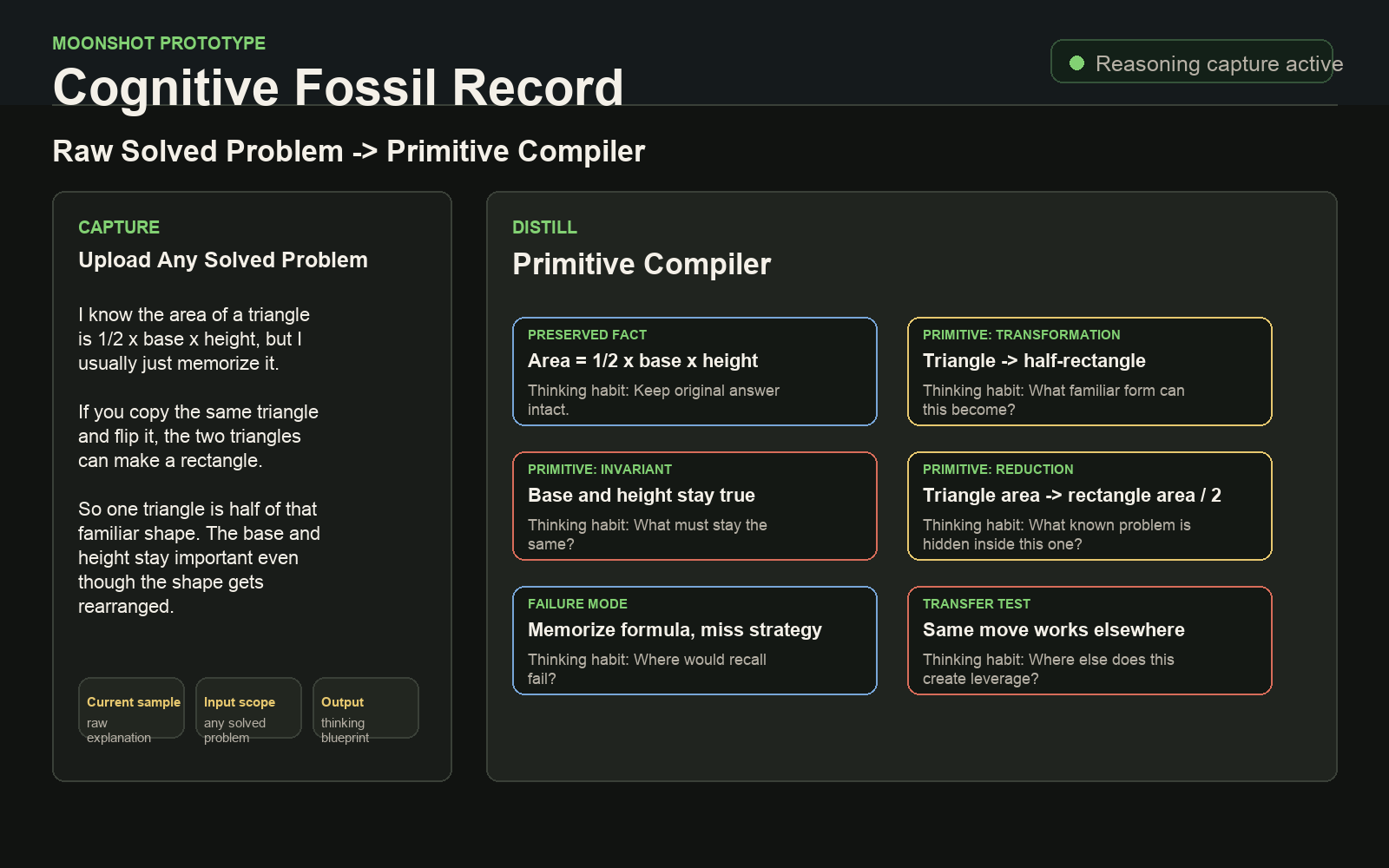
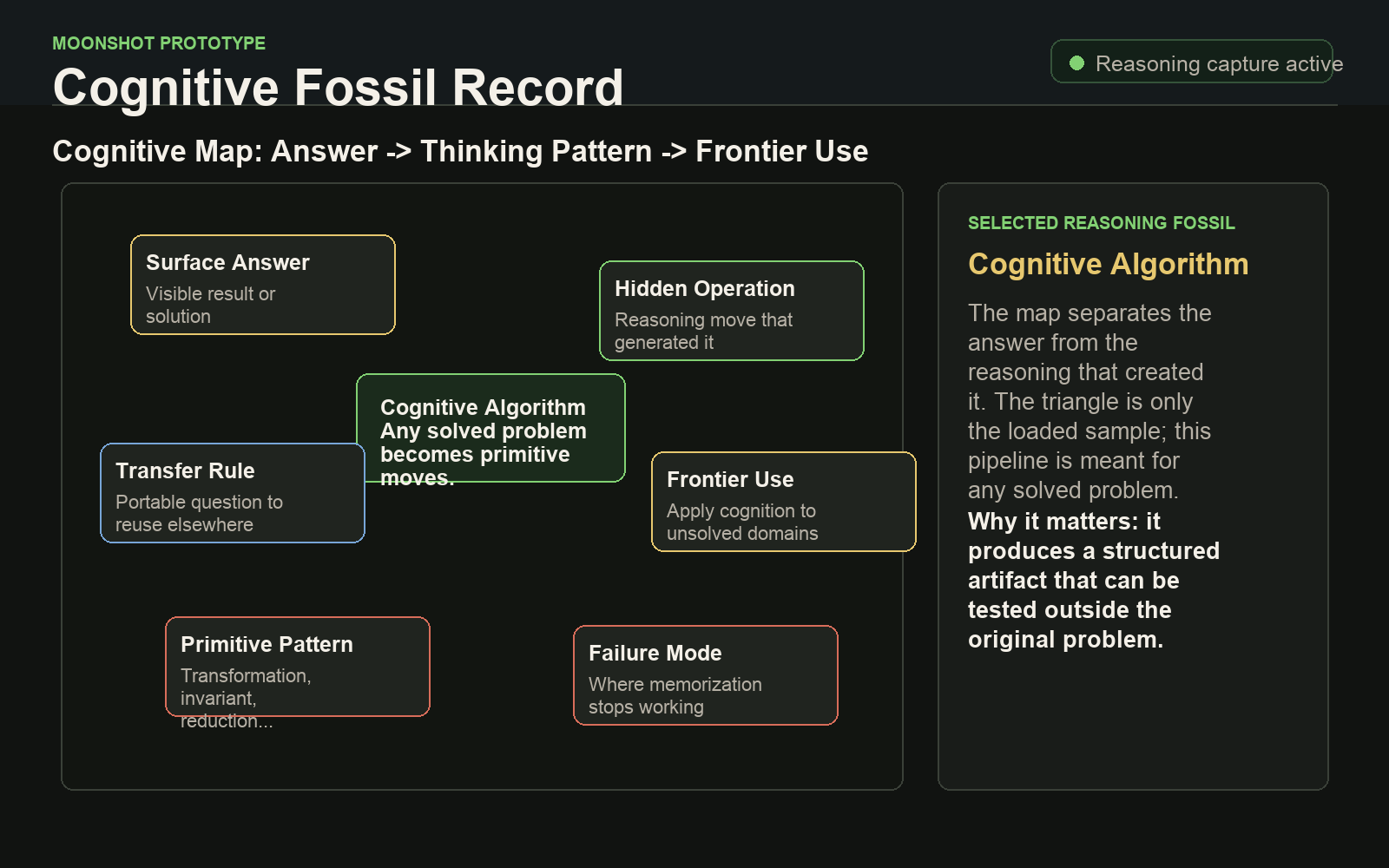
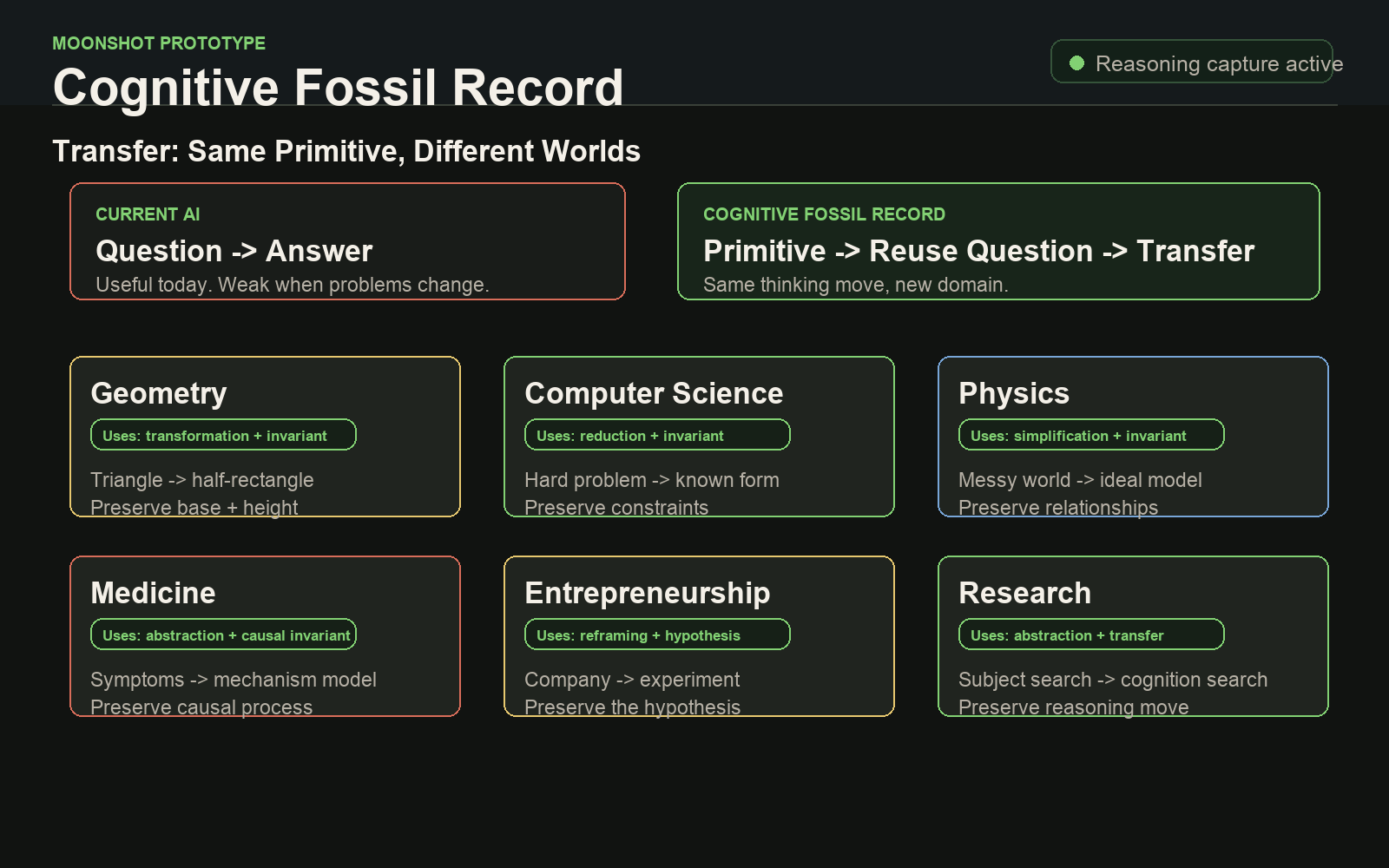
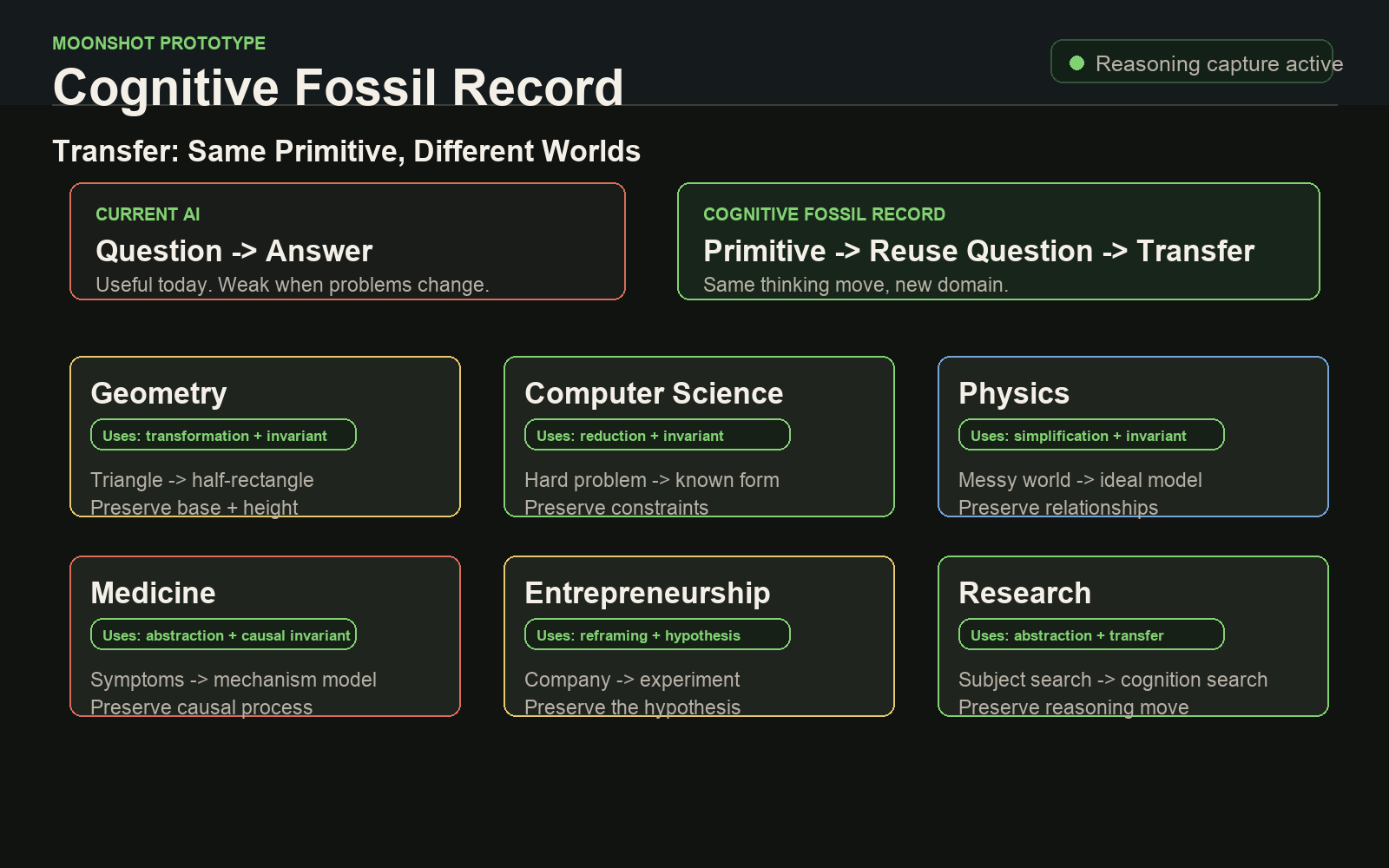
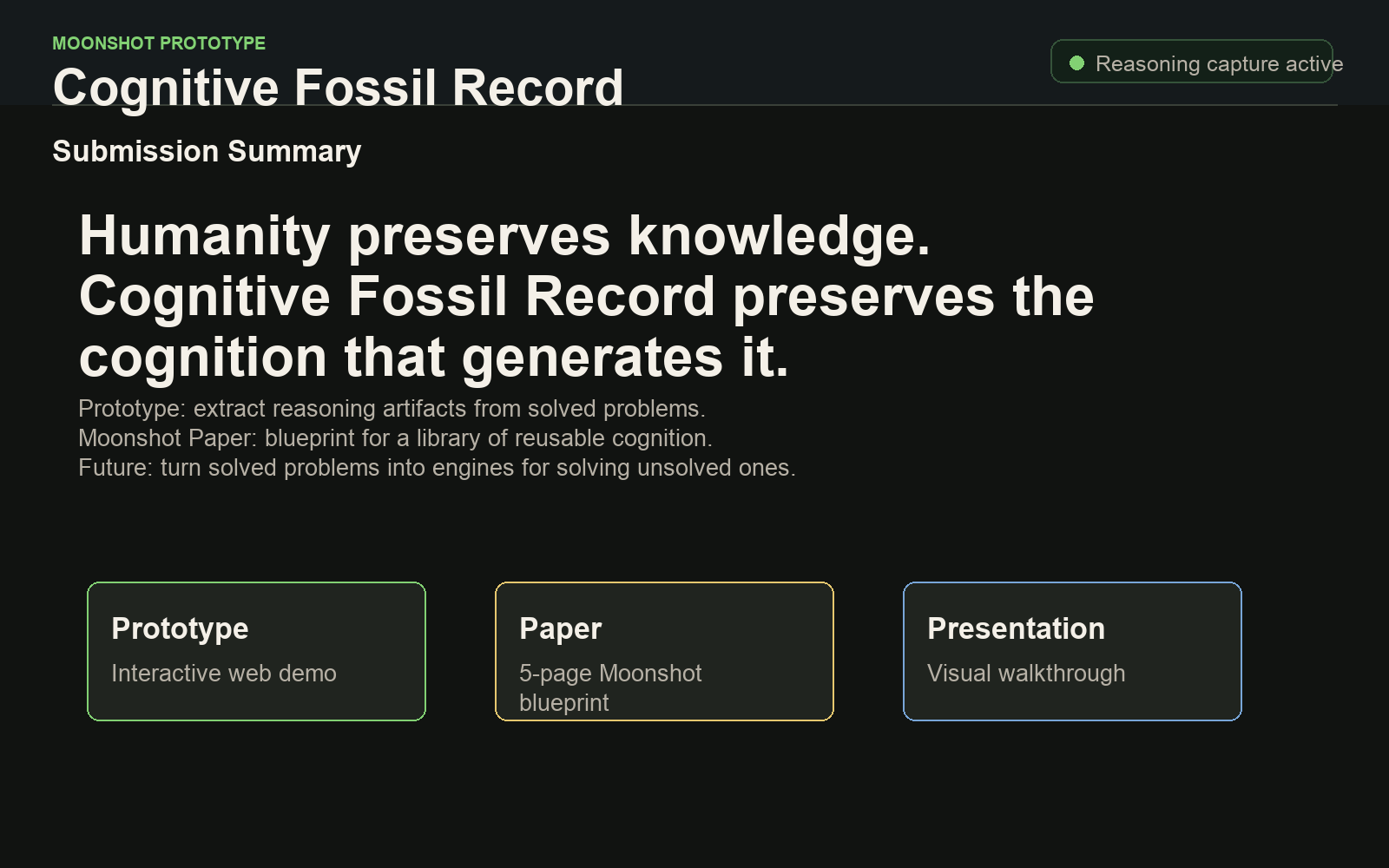
Inspiration I started thinking about how we learn. Most of us can memorize formulas, algorithms, or procedures, but if we forget them, we often cannot recreate them because we never learned the reasoning behind them. A simple example is the area of a triangle. Many people know the formula, but far fewer understand why it works. Once I realized that, I started wondering how often this happens outside of school. Scientists, engineers, doctors, and programmers all make decisions using ways of thinking that are rarely written down. We preserve the final answer, but not the thinking that created it. That question became the idea behind Cognitive Fossil Record. What if we could preserve the reasoning behind solved problems instead of only the solutions? How I built it I started by thinking about what experts actually do when they solve problems. After looking at examples from different fields, I noticed that many of them seemed to use the same kinds of thinking over and over again. They change the way they look at a problem, look for patterns that stay the same, compare new situations to familiar ones, or simplify something complicated before trying to solve it. I grouped these ideas into what I call cognitive primitives. From there, I designed a system where a solved problem is broken into those reusable pieces. The prototype takes an explanation, identifies the important reasoning behind it, organizes it into a visual blueprint, and then shows how that same way of thinking can be used in a completely different field. I built the interface around that process so the focus stays on how experts think instead of only what they know. Challenges The hardest part was deciding what should actually count as reasoning. Facts are easy to identify. Reasoning is much harder. I spent a lot of time changing the categories, combining ideas that overlapped, and trying to make the cognitive primitives broad enough to work across many different subjects. Another challenge was making sure the project did not become just another chatbot. I wanted users to leave with something they could actually apply to future problems instead of simply reading another explanation. What I learned This project completely changed the way I think about learning. Before this, I thought learning was mostly about collecting knowledge. Now I think it is much more about collecting ways of thinking. I also learned how difficult it is to represent reasoning in a structured way. Even something as simple as explaining the area of a triangle contains assumptions, mental shortcuts, and patterns that usually stay hidden. Trying to make those visible made me realize how much of expertise exists beneath the final answer. Future work Right now the prototype demonstrates the idea using a geometry example, but I would love to expand it to scientific papers, engineering design decisions, code reviews, medical case studies, and other situations where the reasoning matters just as much as the final result. The long term goal is not to build another way to store information. It is to make it possible to preserve the ways of thinking that help people solve problems in the first place.
Built With
- css
- html
- javascript
- netlify
- openai

Log in or sign up for Devpost to join the conversation.