Cognistration: Take Back the Signal
Meditation is supposed to create space, but modern life rarely gives us a truly quiet place to begin.
Highways, trains, construction, HVAC systems, fans, electronics, and the constant hum of infrastructure all compete for attention. We become good at tuning these sounds out, but tuning something out is not the same as feeling in control of our environment.
I built Cognistration because my own meditation sessions kept getting cloudy. I wanted a way to create a more intentional listening environment, regain control of my attention, and make it easier to enter a focused state even when the world around me was still making noise.
From curiosity to control
I started studying the science behind binaural audio and discovered the frequency-following response, or FFR: the way measurable neural activity can track repeating patterns in sound.
That research did not convince me that tones could magically switch the brain into a guaranteed state. It gave me a more interesting and grounded idea: intentional sound can act as a cue. It can help shape the conditions around a session and give attention somewhere consistent to settle.
The problem was that most of the binaural audio tools I tried gave me a preset and a play button. The left and right channels were synchronized for me, but I had little control over the relationship between them. If a session did not feel right that day, I could either tolerate it or leave.
I wanted a machine, not just a playlist.
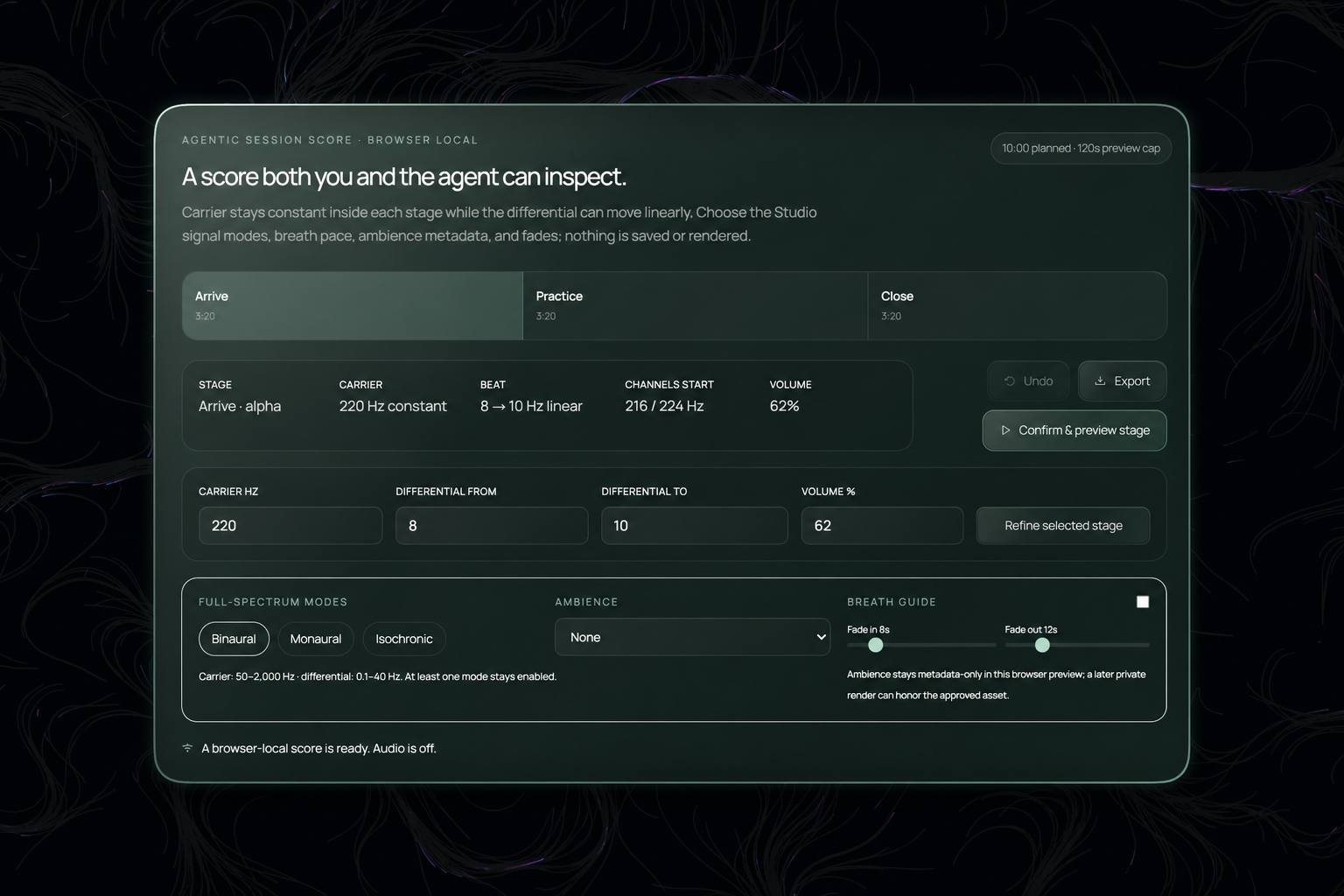
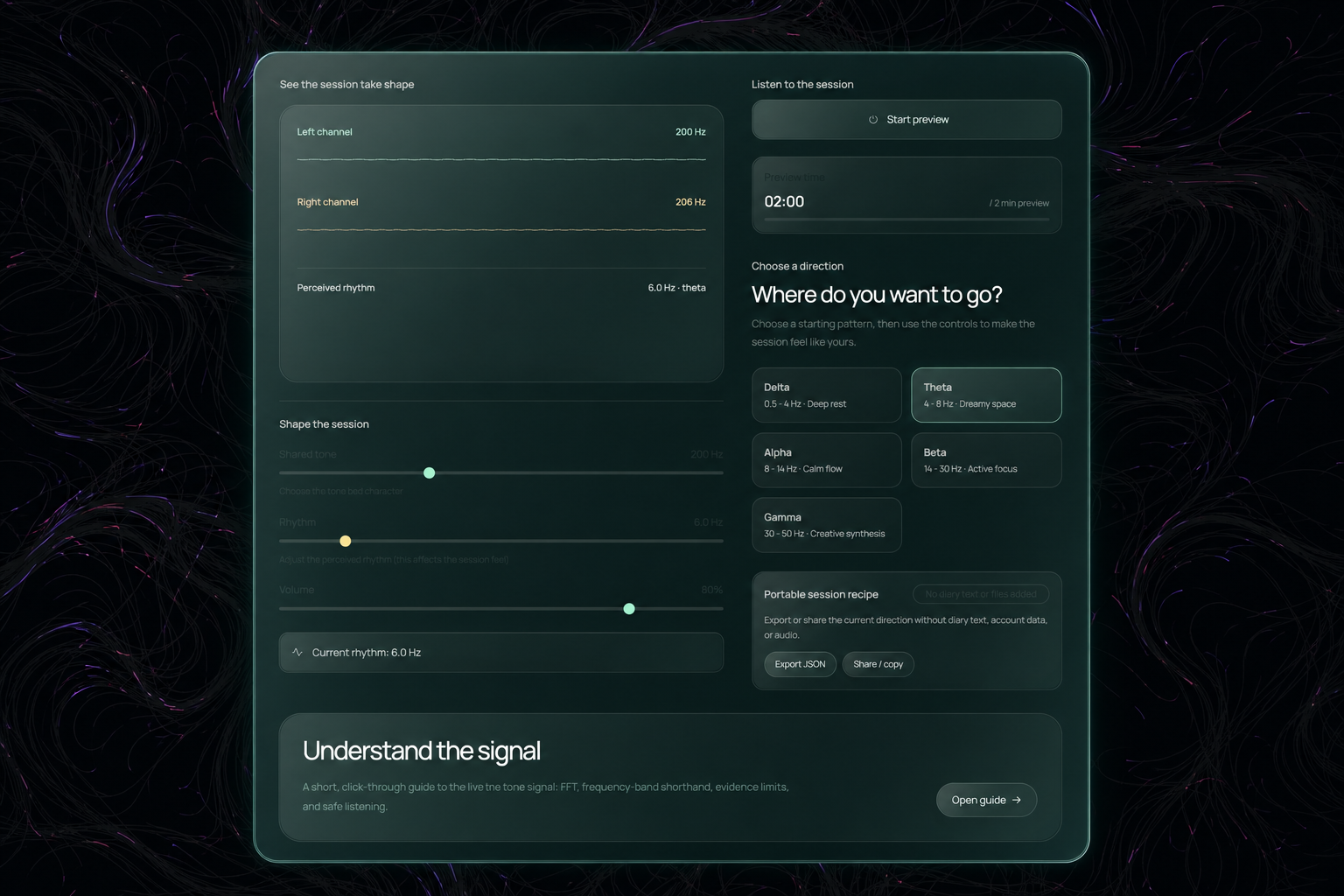
Cognistration exposes the controls that matter: carrier frequency, beat frequency, volume, listening direction, and playback state. I can begin with a Gamma session, adjust the carrier, move toward Alpha, make the beat faster, or stop the preview without losing the rest of my settings.
Why WebMCP makes it different
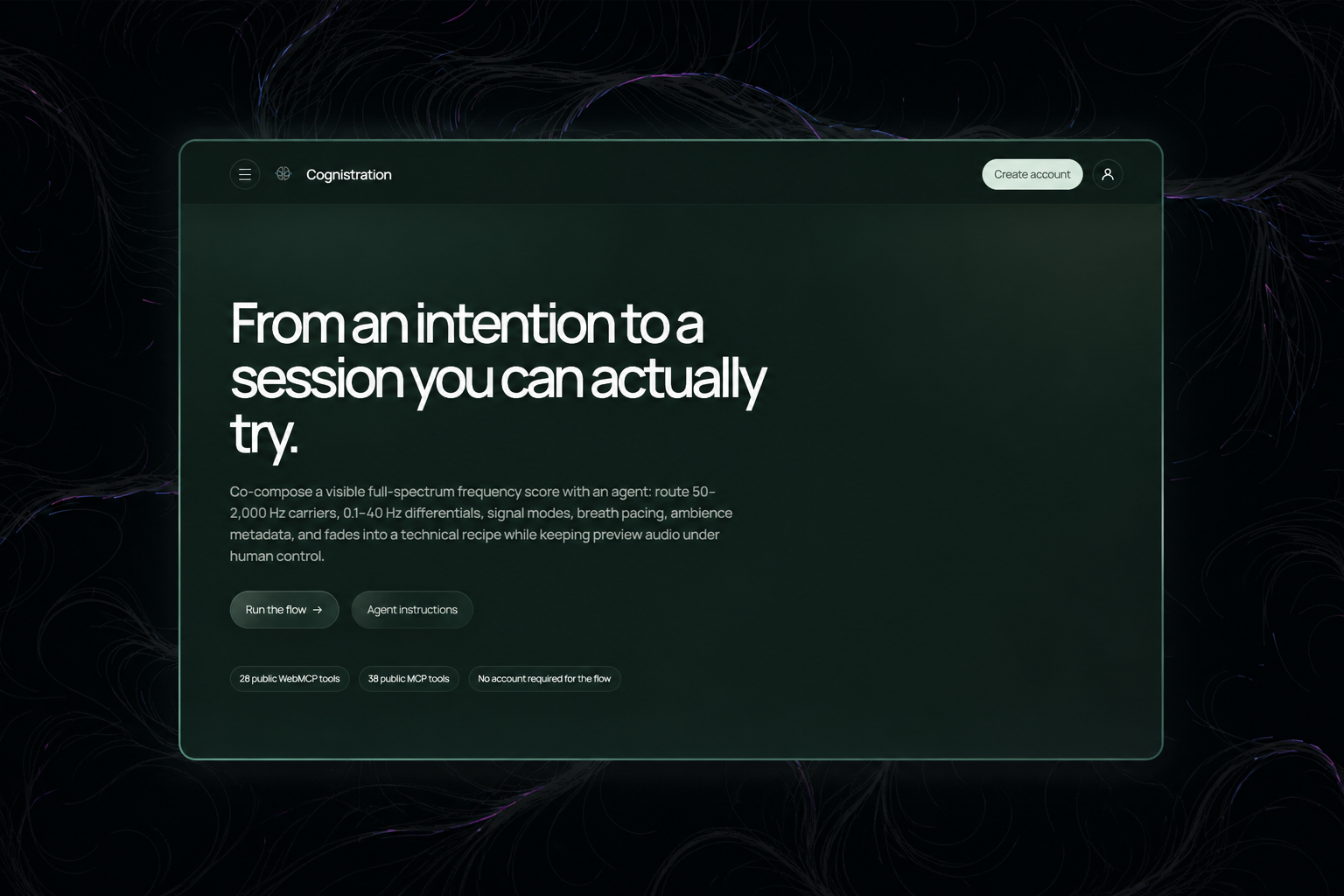
The most important part of Cognistration is not just the tone generator. It is the agentic layer built with WebMCP.
Instead of forcing someone to learn a complicated interface, they can describe what they want:
“Open the tone machine for a Gamma session with a 246 Hz carrier.”
Or:
“Move this to Alpha and make the beat a little slower.”
The agent uses Cognistration’s typed MCP tools to make those changes directly. It does not need to guess where a button is, navigate through the website, or simulate computer use. Each tool returns the current machine state, and the visible widget stays synchronized with the agent’s actions.
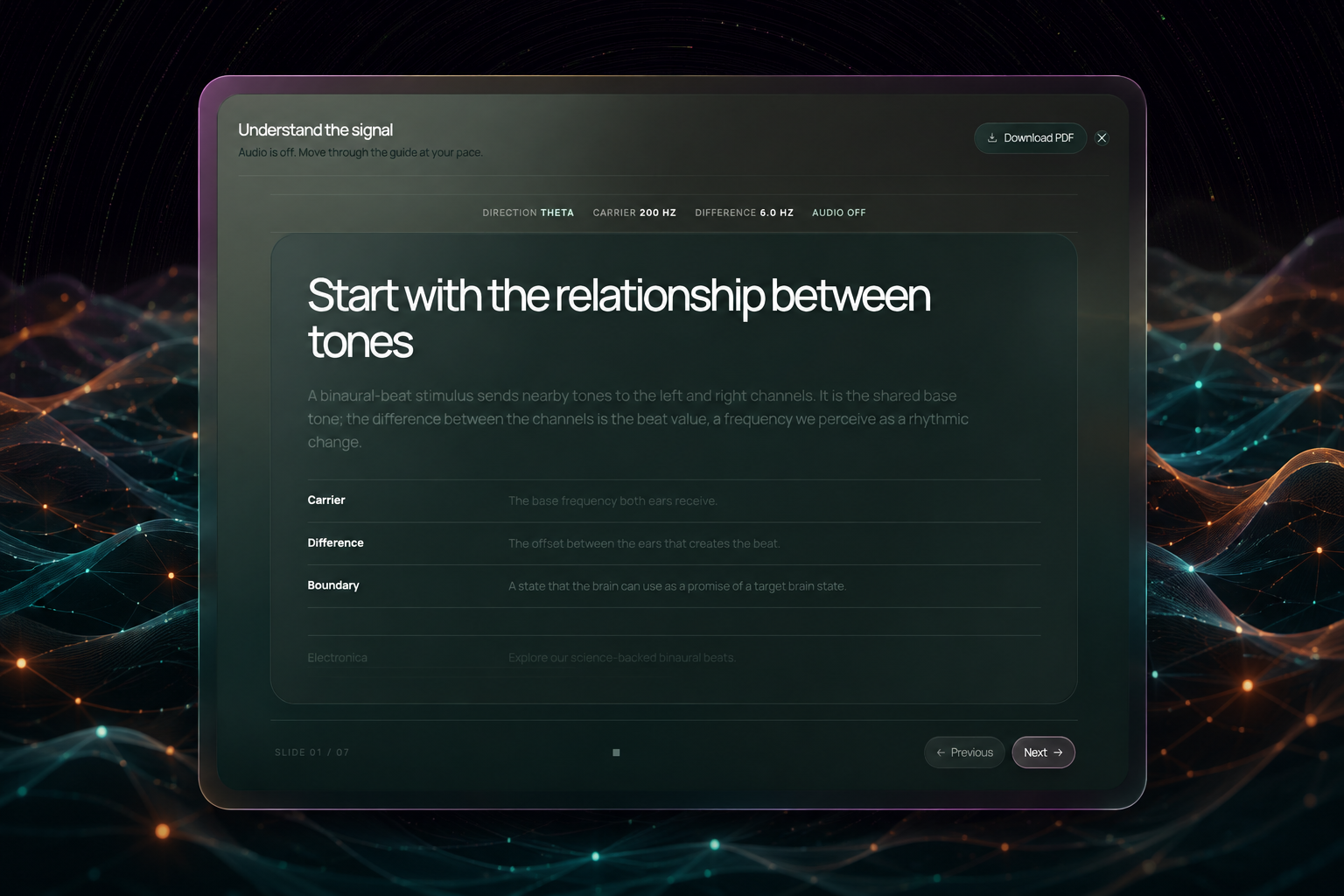
The same flow can open the science guide, explain why a session may fit a particular intention, present the signup experience, show available tone packs, or open the checkout screen without submitting payment. Playback, account creation, and final payment remain under the listener’s control.
That separation was important to me. The agent can coordinate the experience, but it should never pretend to be the person making the final decision.
Sessions that become personal
Over time, I noticed that certain sessions worked better on certain days. Sleep, stress, workload, and the surrounding environment all changed what felt useful.
That is why Cognistration includes a journal for members. It gives people a place to record what they tried, how the session felt, and which combinations seem to help them settle in. The goal is not to prescribe one perfect frequency. It is to help each person notice their own patterns.
I also built a full 60-minute generator with structured phases so a session can unfold gradually instead of starting and stopping abruptly. A listener can settle in, move through a focused middle period, and close the session intentionally.
What I hope Cognistration demonstrates
Cognistration is an experiment in giving people more agency over the sound around them and the attention they bring to a moment.
It does not claim to force a brainwave state, cure a condition, or replace professional care. It offers a controllable listening ritual informed by neuroscience, shaped by personal experience, and made easier to use through an agent.
As a full-time father and contractor, focused time matters to me. I built Cognistration to create a small pocket of control in a noisy world, and WebMCP allowed me to make that experience conversational, transparent, and genuinely agentic.
Built With
- audio
- ffmpeg
- javascript
- mcp
- next.js
- node.js
- openai
- openapi
- postgresql
- react
- stripe
- supabase
- tailwind
- typescript
- vercel
- web
- webgpu
- webmcp
- wgsl
- zod


Log in or sign up for Devpost to join the conversation.