-
-
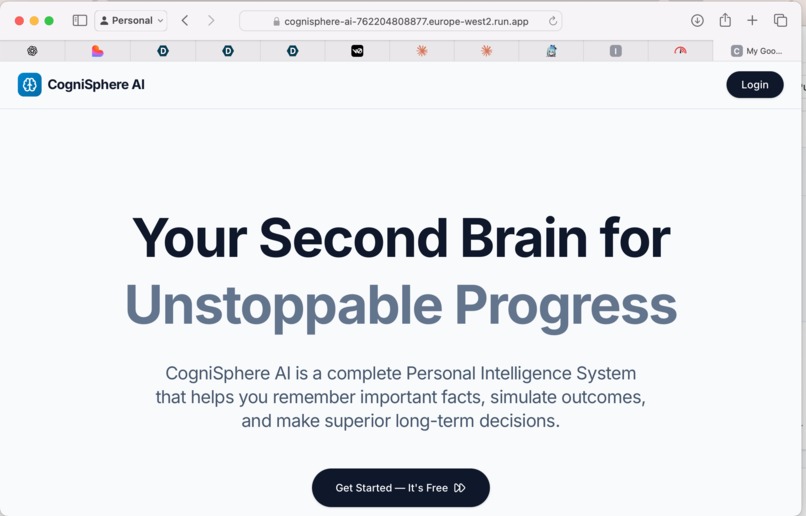
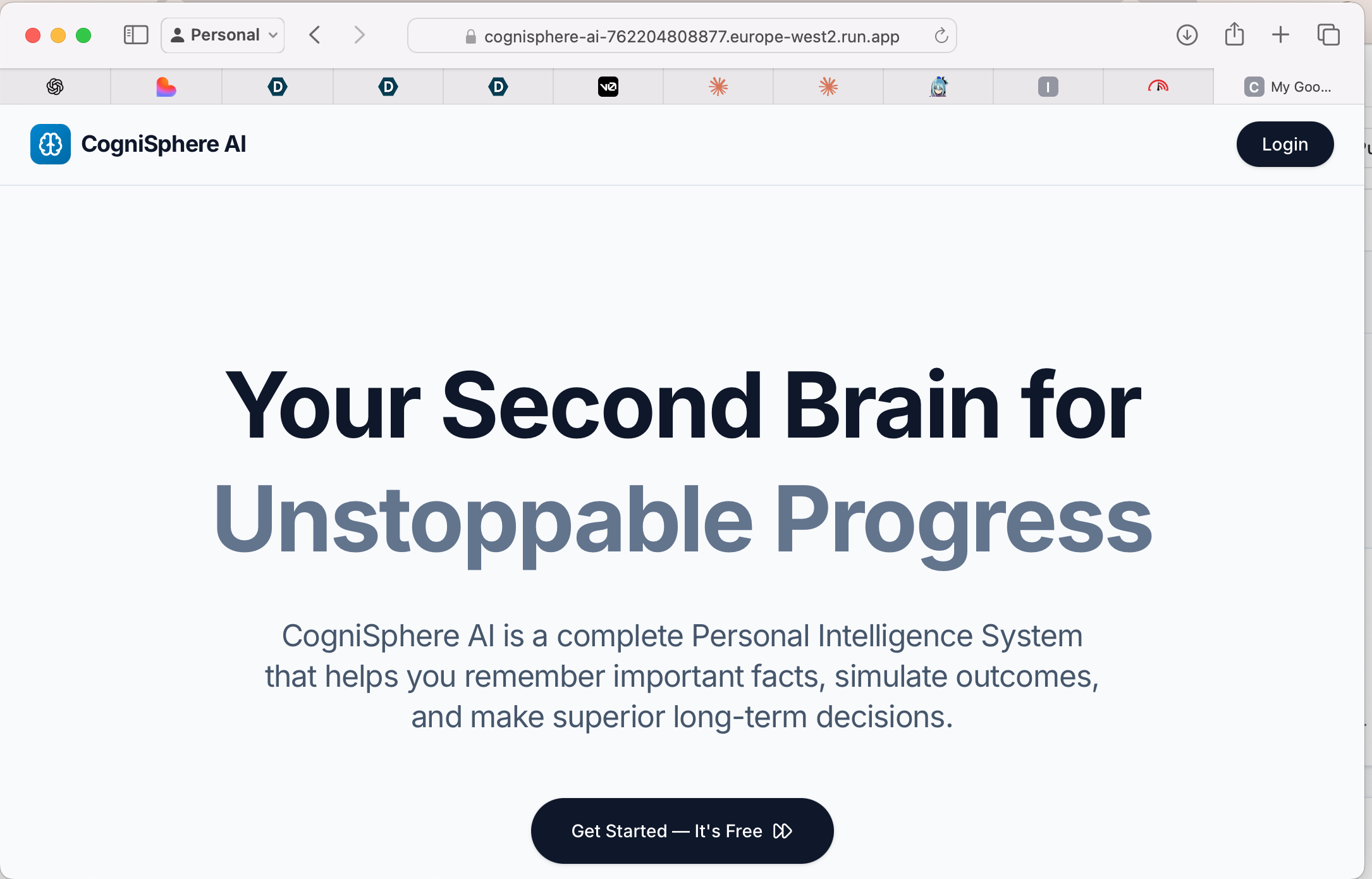
Hompage
-
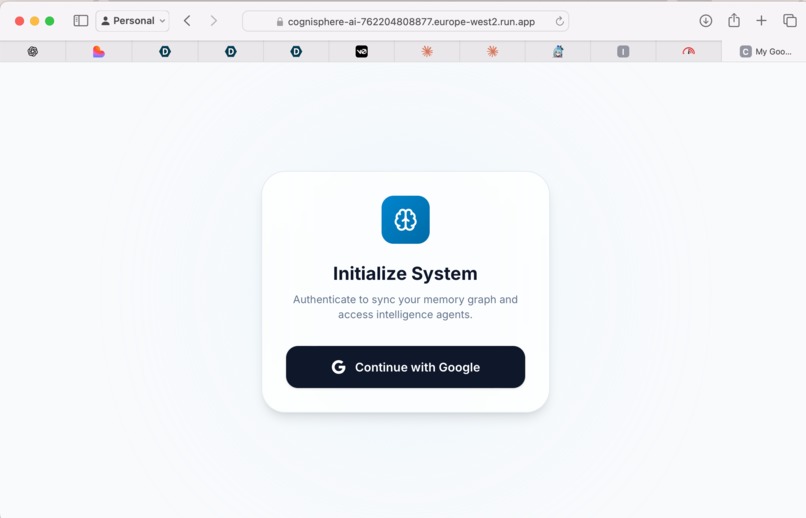
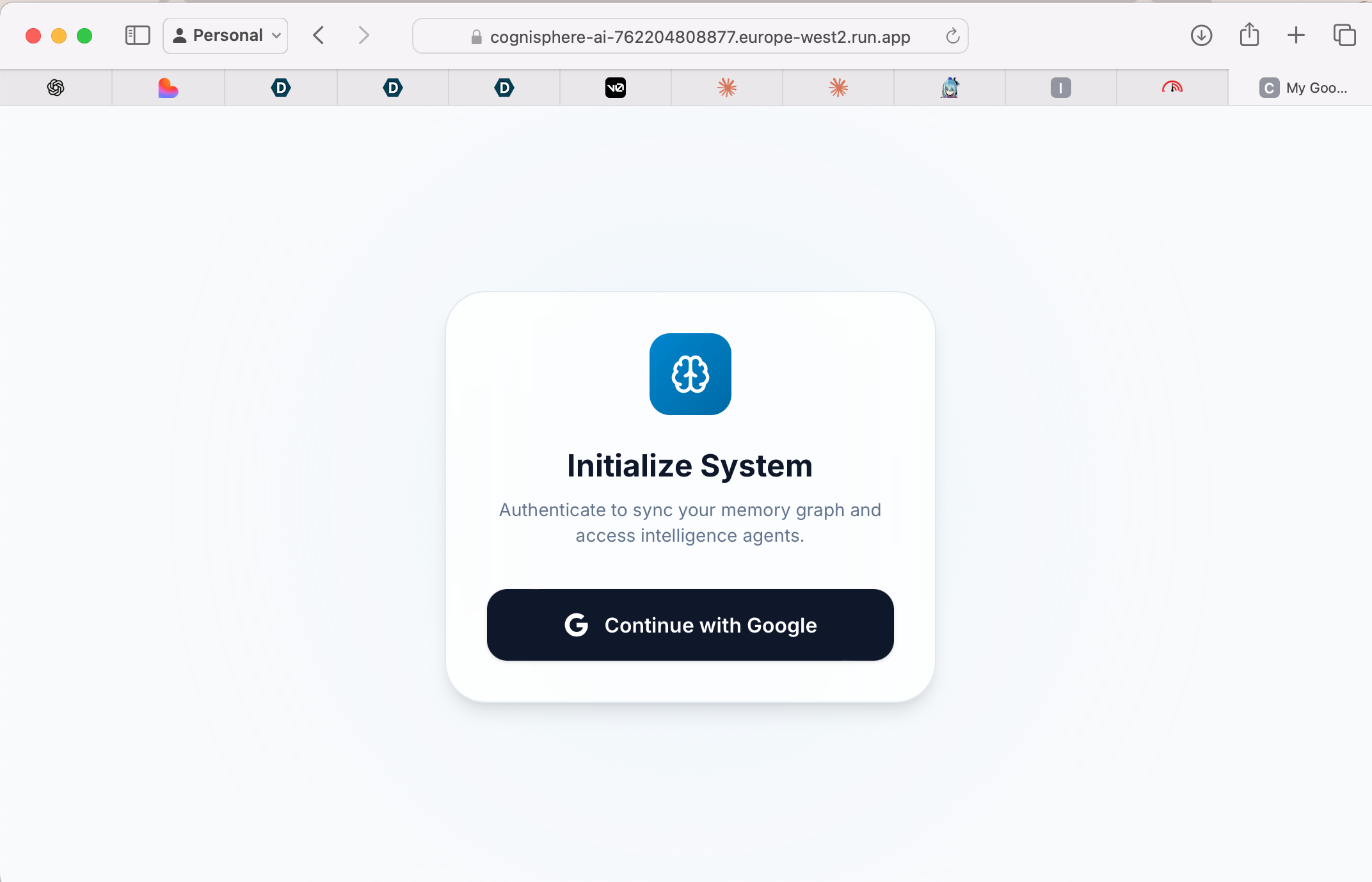
Simple login authentication page using google
-
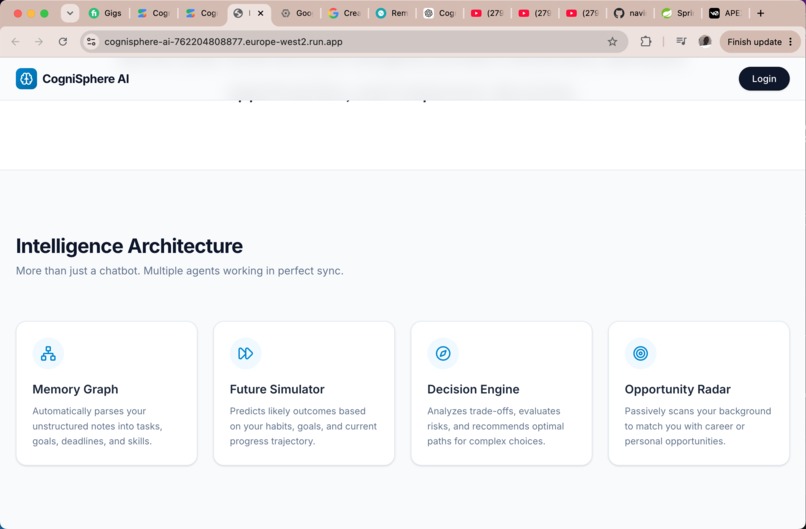
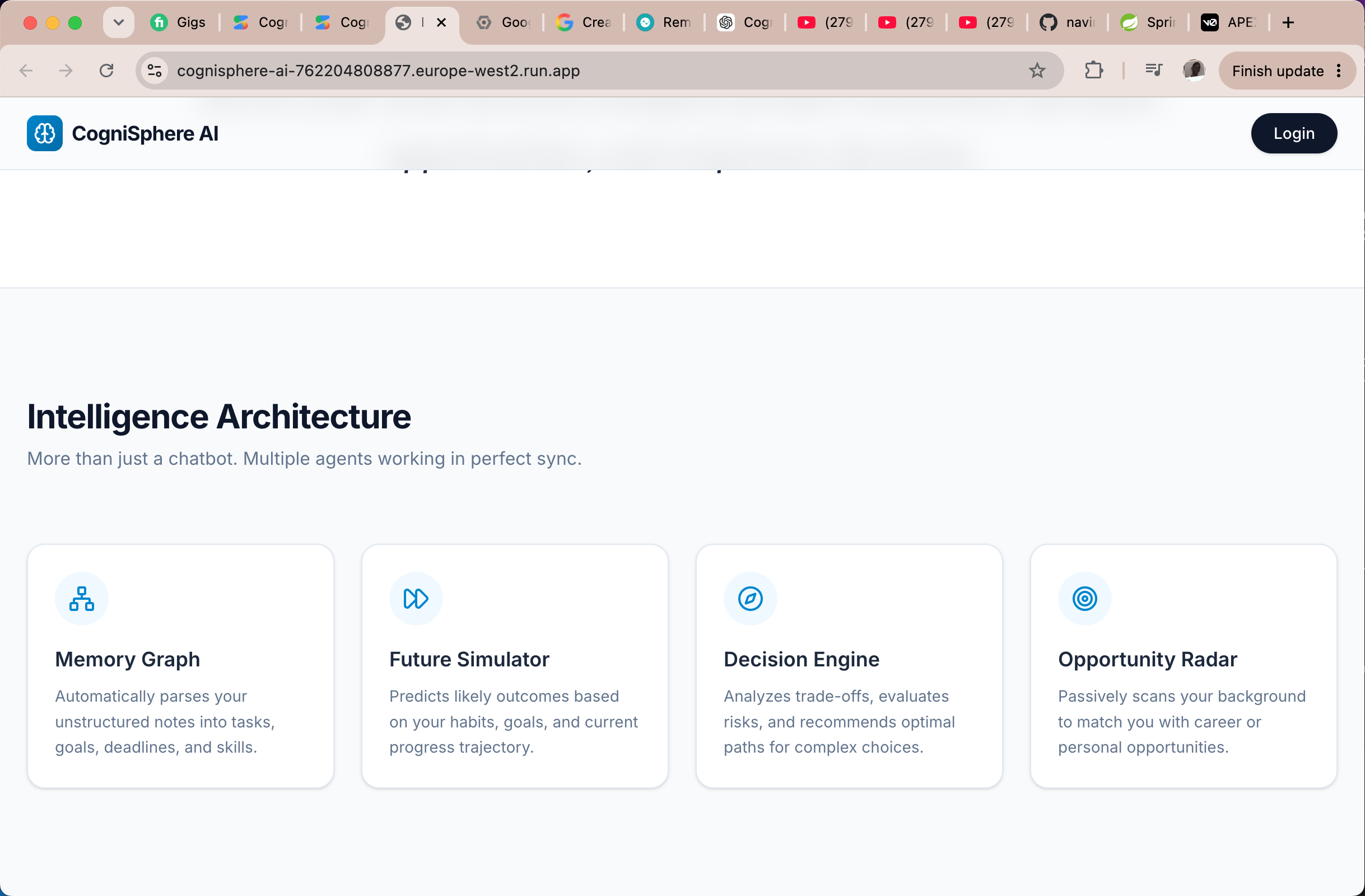
Features of our Product
-
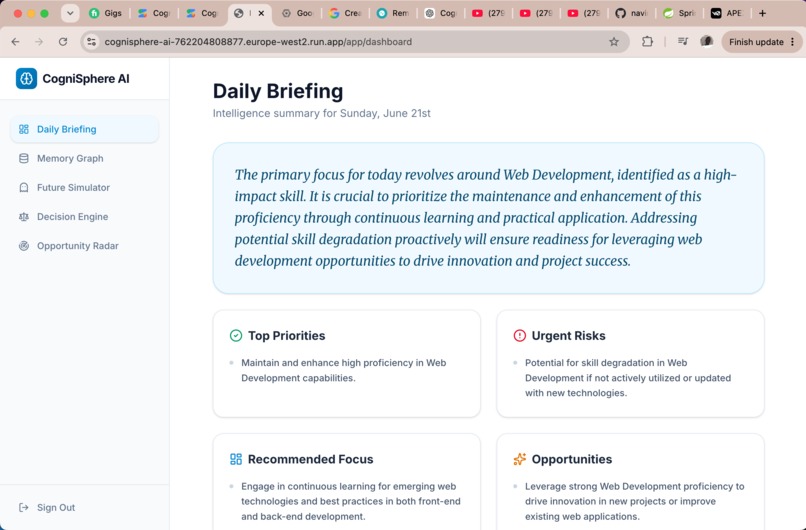
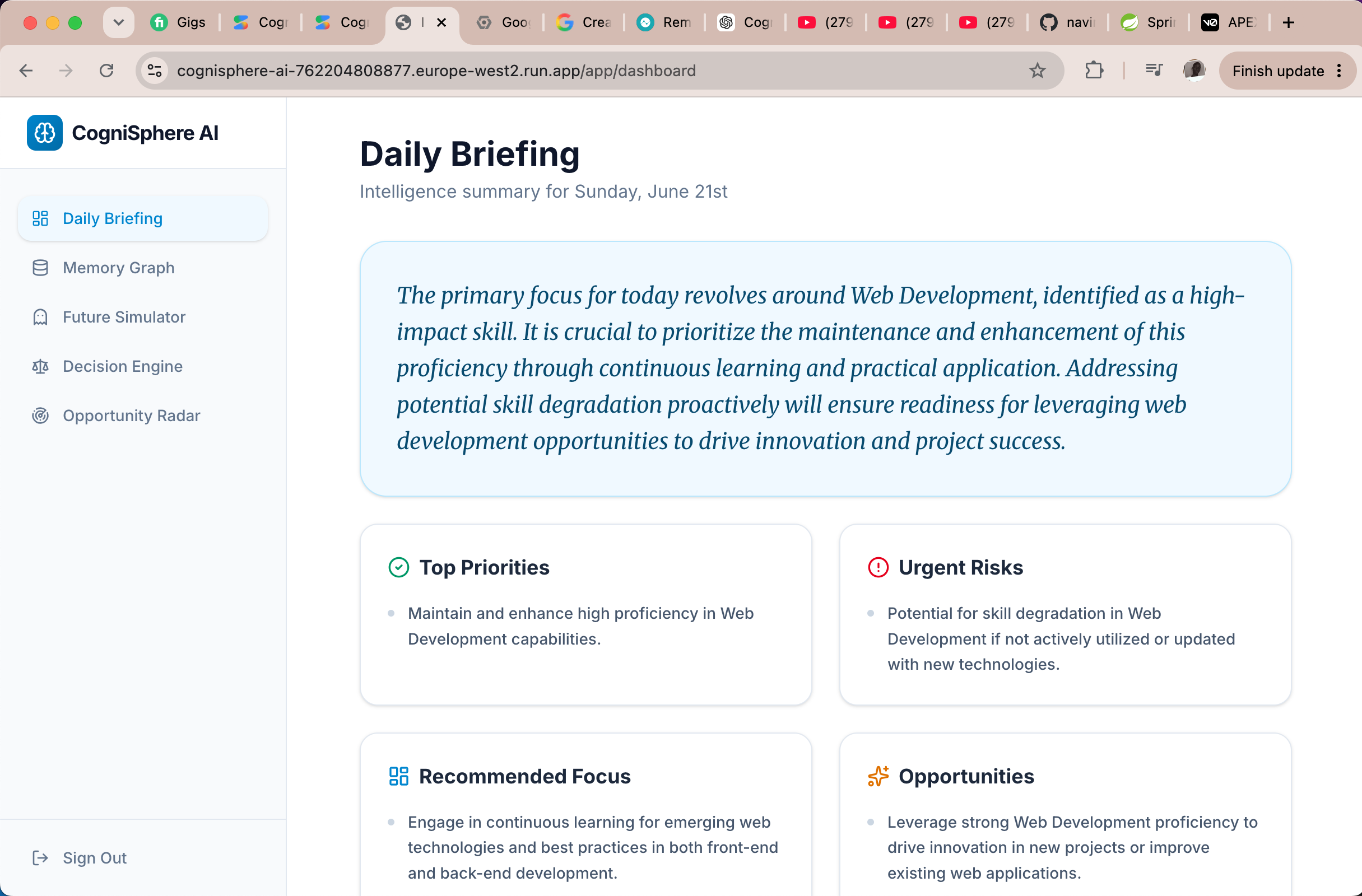
my account dashboard
Inspiration
In today's world, people are overwhelmed by information. Students manage assignments, deadlines, notes, and career opportunities. Professionals juggle meetings, projects, goals, and decisions across multiple platforms. Despite having access to powerful productivity tools, many still forget important information, miss opportunities, and struggle to prioritize what matters most.
We realized that most tools are designed to store information, not understand it. Likewise, most AI assistants are reactive they answer questions when asked but rarely help users think ahead.
This inspired us to build CogniSphere AI, a true AI-powered Second Brain that remembers, connects, predicts, and guides. Our vision was to create a system that helps users make better decisions, stay aligned with their goals, and proactively discover opportunities before they are missed.
What it does
CogniSphere AI is a personal intelligence platform that transforms scattered information into actionable insights. The platform acts as a digital Second Brain by combining memory, prediction, and decision intelligence. Key features include:
Memory Graph
Connects notes, goals, tasks, documents, and conversations into a unified knowledge network.
Future Simulator
Predicts likely outcomes based on current habits and progress, helping users understand where their current path may lead.
Opportunity Radar
Identifies relevant internships, scholarships, grants, jobs, and competitions that match the user's skills and goals.
Decision Engine
Provides explainable recommendations for important decisions by evaluating multiple factors and possible outcomes.
Daily Intelligence Briefing
Generates personalized daily summaries containing priorities, risks, opportunities, and recommended actions.
How we built it
We designed CogniSphere AI as a modern AI-powered web platform. Frontend
React: The primary JavaScript library for building the user interface.
Vite: The build tool and development server, chosen for its speed and efficient module bundling.
Express: A fast, unopinionated web framework for Node.js used for the backend server (server.ts) to handle API requests and communicate securely with external services.
TypeScript: Used across both the client and server for type-safe code, reducing errors and improving maintainability.
Styling & UI:
Tailwind CSS: A utility-first CSS framework for rapid UI styling directly within the React components.
Lucide React: A clean, modern icon library used for all the visual icons throughout the app.
AI & Functionality:
Google Gen AI SDK (@google/genai): The official SDK used on the backend to interact with the Gemini 2.5 Flash model. This powers the AI analysis, generation, and opportunity radar features, as well as accessing Google Search Grounding for real-time web results.
React Router Dom: Handles the client-side navigation between different pages in the application.
Build & Execution:
esbuild: Used in the build process to quickly bundle the Node.js Express server into a standalone commonjs file for production deployment.
tsx: Used to seamlessly execute the TypeScript backend server during development.
AI Layer
- Large Language Models (LLMs)
- Retrieval-Augmented Generation (RAG)
- Semantic search and embeddings
- Recommendation and prediction engines
System Workflow User Inputs ↓ Memory Graph ↓ Semantic Retrieval ↓ Reasoning Engine ↓ Predictions & Recommendations ↓ Personalized Actions
The system continuously learns from user interactions, allowing it to provide increasingly relevant insights over time.
Challenges we ran into
One of the biggest challenges was designing a memory system that could remain useful as information grows over time. We needed a way to retrieve the right memories at the right moment without overwhelming the user.
Another challenge was balancing predictive intelligence with transparency. While AI can generate recommendations, users need to understand why those recommendations are being made. We addressed this by incorporating explainable reasoning into every major suggestion. Building meaningful connections between notes, goals, tasks, and opportunities also required careful planning to ensure the system could reason across different types of information rather than treating each item independently.
Finally, creating a product that feels proactive rather than reactive pushed us to rethink how AI assistants should interact with users.
Accomplishments that we're proud of
Successfully designed an AI-powered Memory Graph capable of connecting information across multiple domains.
Built a Future Simulator that helps users understand the long-term impact of their current decisions.
Developed the Opportunity Radar system to proactively surface opportunities instead of waiting for users to search for them.
Created an explainable Decision Engine that helps users make informed choices.
Designed a scalable architecture capable of supporting long-term memory and intelligent reasoning.
Most importantly, we created a solution that goes beyond answering questions and actively helps users achieve their goals.
What we learned
This project taught us that building a true AI assistant requires much more than integrating a language model.
We learned about:
- Knowledge graph design
- Retrieval-Augmented Generation (RAG)
- Semantic search
- Recommendation systems
- Predictive analytics
- Explainable AI
- User-centered AI design
We also learned that the most impactful AI systems are not necessarily the ones with the most features, but the ones that provide meaningful guidance at the right time. The biggest lesson was that AI becomes significantly more valuable when it helps people make better decisions rather than simply providing information.
What's next for CogniSphere AI
Our long-term vision is to evolve CogniSphere AI into a complete Personal Operating System for life and work.
Future developments include:
- Voice-based memory capture and retrieval
- Calendar and email integrations
- Personalized productivity coaching
- Team and collaborative memory graphs
- Advanced predictive analytics
- Real-time opportunity discovery
- Multi-agent AI workflows
- Cross-platform mobile applications
- AI Life Twin™ it create a behavioral model of the user to identify patterns, predict challenges, and provide highly personalized guidance. And we also plan to enhance the AI Life Twin™ so it can continuously adapt to changing user behaviors and provide increasingly personalized recommendations.
Ultimately, our goal is to build an AI-powered Second Brain that helps people remember more, decide better, and achieve their goals with confidence.
CogniSphere AI - Remember. Predict. Guide.
Built With
- esbuild
- express.js
- firebase
- google-gen-ai-sdk
- lucide-react
- react
- react-router-dom
- tailwind
- tsx
- typescript
- vite


Log in or sign up for Devpost to join the conversation.